
Toyota does not publish one transmission-fluid change interval that fits every Camry. The correct schedule depends on the model year, powertrain, operating conditions, and the maintenance guide issued for that vehicle. For example, Toyota’s U.S. guides for the 2018 and 2026 Camry use different inspection details, while both reserve scheduled fluid replacement for defined special operating conditions.
Quick Answer
Check the maintenance guide for your exact Camry year and powertrain. Do not rely on a universal 30,000-, 60,000-, or 100,000-mile rule. Toyota commonly schedules inspections under normal use and fluid replacement at specific mileage points only for listed special conditions. Leaks or shifting symptoms require diagnosis regardless of mileage.
Key Takeaways
- Use Toyota’s maintenance guide for your exact model year instead of a universal mileage rule.
- Toyota distinguishes routine inspections from replacement under specified special operating conditions.
- Many modern Camrys have sealed transmissions without an owner-accessible dipstick.
- Slipping, delayed engagement, leaks, warning lights, or unusual noises should be diagnosed before assuming a fluid change will fix the problem.
- Confirm the exact fluid specification and whether a shop proposes a drain-and-fill, pan service, fluid exchange, or machine flush.
At a Glance
| Time Required | About 10 minutes to check the official schedule; a professional service commonly requires one to two hours, depending on the procedure and shop. |
| Difficulty | Easy to verify the schedule; advanced to service a sealed transmission correctly. |
| Tools Needed | Owner’s manual or maintenance guide; sealed-system service may require a level lift, fluid pump, torque wrench, scan tool, and fluid-temperature monitoring. |
| Cost | A June 2026 third-party estimate lists an average of $257–$331 before taxes, fees, location adjustments, diagnosis, or repairs. |
Understanding the Importance of Transmission Fluid Changes
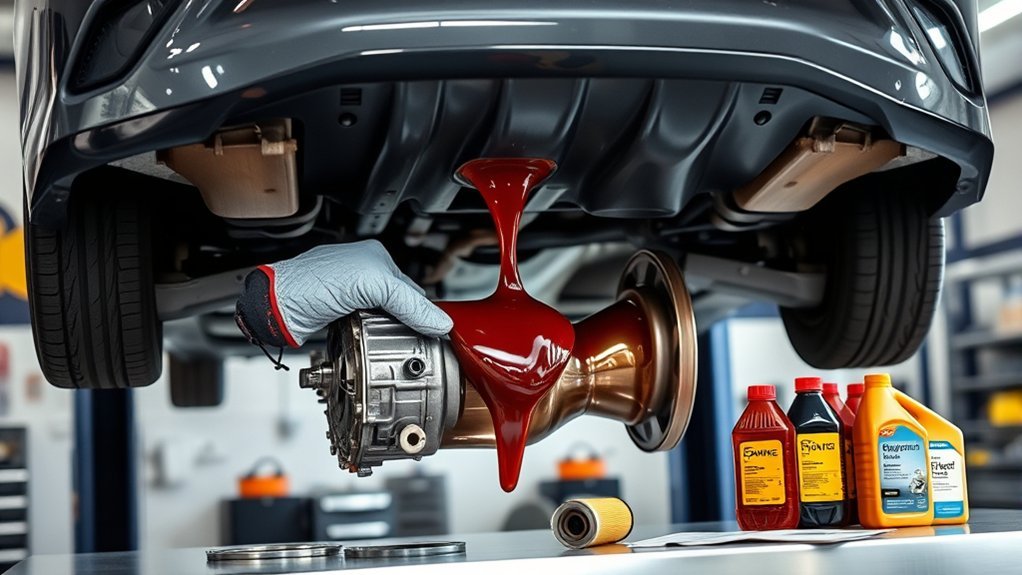
Transmission fluid lubricates internal components, helps manage heat, supports hydraulic operation, and carries contamination away from working surfaces. As fluid ages, heat and normal wear can reduce its ability to perform those jobs.
That does not mean every Camry needs fluid replacement at the same mileage. Toyota’s schedule for a particular model year is the correct starting point. Maintenance history, fluid leaks, operating conditions, and transmission symptoms also matter.
Fluid service is preventive maintenance, not a guaranteed repair. If the transmission is slipping, hesitating, grinding, entering fail-safe mode, or displaying a warning light, the vehicle may need diagnosis before any maintenance service is authorized.
There is no single Toyota Camry transmission-fluid interval for every model year. The vehicle’s official maintenance guide should decide the schedule.
How Often Should You Change Your Toyota Camry’s Transmission Fluid?
Start with the Toyota Manuals and Warranties lookup. Select the exact model year and review the Warranty and Maintenance Guide rather than relying only on a general interval found online.
Toyota’s published schedules distinguish between inspecting the transmission and replacing its fluid. They also identify special operating conditions that trigger additional maintenance. The following examples show why the model year matters.
| Toyota guide | Normal schedule example | Special-condition example |
|---|---|---|
| 2018 Camry Warranty and Maintenance Guide | At 60,000 miles or 72 months, the normal schedule includes transmission-related inspections but does not list routine automatic-transmission-fluid replacement for every driver. | Replace the automatic transmission fluid at 60,000 miles or 72 months when the vehicle is primarily used for towing, carrying a car-top carrier, heavy loading, or certain extensive idling and low-speed commercial-type use described in the guide. |
| 2026 Camry Warranty and Maintenance Guide | Inspect the automatic transmission fluid at 60,000, 90,000, 120,000, and 150,000 miles. | Replace the fluid at 60,000 and 120,000 miles when most driving involves towing, a car-top carrier, or heavy vehicle loading, as specified in the guide. |
Note: These examples do not replace the guide for another year. Toyota may change inspection points, terminology, powertrains, or special-condition requirements between Camry generations.
Manufacturer’s Recommended Intervals
Toyota’s maintenance guide is more reliable than a broad statement that the fluid is “lifetime” or that every Camry needs service at 30,000, 60,000, or 100,000 miles. Use the mileage and time interval listed in the exact guide, whichever comes first when the schedule states both.
Do not link transmission service to an arbitrary number of oil changes. Engine-oil intervals and transmission-fluid requirements are separate maintenance items.
How Driving Conditions Affect the Schedule
Use only the special operating conditions listed in your Camry’s guide. Depending on the year, these may include towing, heavy vehicle loading, use of a car-top carrier, or prolonged low-speed commercial-style operation.
Do not assume that one occasional traffic jam, hill, hot day, or road trip automatically places the vehicle on the special schedule. The guide may specify that the condition must represent a substantial or majority portion of the vehicle’s operation.
Pro Tip: Save the maintenance-guide PDF for your exact model year and record every inspection or fluid service with the date, mileage, fluid specification, and invoice.
Signs That Require Attention
Mileage is not the only reason to inspect the transmission. Arrange diagnosis when you notice any of the following:
- Fluid leaking under the vehicle
- Delayed engagement when shifting into Drive or Reverse
- Harsh, slipping, or inconsistent shifts
- Shuddering, grinding, whining, or other new noises
- A burning odor
- A transmission, hybrid-system, or check-engine warning light
- Reduced-power or fail-safe operation
These symptoms can have causes other than old fluid. Adding or replacing fluid without identifying the problem may delay a needed repair.
Recognizing When Your Toyota Camry Needs Transmission Service
A scheduled replacement entry in the official maintenance guide is the clearest reason for service. A technician may also recommend service after finding a leak, contamination, an incorrect level, or evidence that the fluid no longer meets the transmission’s requirements.
Fluid Condition and Diagnosis
Fresh automatic transmission fluid is often translucent and may be red or another manufacturer-specified color. Color alone, however, does not determine whether service is due. Fluid formulation, age, heat exposure, suspended wear material, odor, level, and transmission behavior all need context.
A strong burnt odor, visible debris, foaming, milkiness, or a significant leak deserves prompt professional attention. Milky fluid can indicate contamination, while foaming may point to an incorrect level or aeration. Do not continue driving a vehicle that is rapidly losing fluid.
High Mileage or Unknown Service History
Reaching 100,000 miles does not automatically make a fluid change “too late.” Before servicing a high-mileage Camry with an unknown history, have a qualified technician review:
- The model-year maintenance schedule
- Available service records
- Current shift quality and engagement
- Leakage and fluid level
- Diagnostic trouble codes and warning lights
- Fluid condition, where it can be inspected correctly
- Whether the proposed procedure is a drain-and-fill or a powered exchange
If the transmission already slips, bangs into gear, or has internal damage, a fluid service may not correct the fault. Ask for diagnosis and a written explanation before approving the work.
How to Determine the Correct Service for Your Camry
- Identify the vehicle: Record the model year, mileage, engine or hybrid powertrain, and VIN.
- Open the official guide: Use Toyota’s manual lookup and find the maintenance table for the exact year.
- Classify the vehicle’s use: Compare normal operation with every special condition listed by Toyota.
- Review the history: Check invoices for previous fluid service, the fluid used, and the procedure performed.
- Evaluate symptoms: Diagnose leaks, warning lights, slipping, delayed engagement, or unusual noises before treating the issue as routine maintenance.
- Confirm the service: Ask the shop to identify the exact fluid specification, service method, quantity, labor charge, and reason the work is due.
How to Check Your Toyota Camry’s Transmission Fluid
The correct checking method depends on whether the transmission has an owner-accessible dipstick.
Older Dipstick-Equipped Models
Follow the exact owner’s-manual procedure. The required fluid temperature, engine condition, selector position, and warm-up sequence can vary. Park on a level surface, keep clear of moving or hot components, and use only the markings and instructions specified for that vehicle.
If the level is low, do not simply top it off and ignore the cause. Transmission fluid is not normally consumed like fuel. A low reading can indicate leakage or an earlier filling error.
Sealed or Non-Dipstick Models
Many newer Camrys do not provide a conventional owner-accessible transmission dipstick. Their level may be set through fill and overflow plugs while the vehicle is level and the fluid is within a specified temperature range.
That process can require a lift, scan tool or temperature-monitoring method, a fluid pump, replacement sealing washers, and exact torque specifications. A Toyota dealer or a repair shop experienced with the specific Camry transmission is generally the safer choice.
Warning: Never work under a vehicle supported only by a jack. Transmission fluid and exhaust components can be hot enough to cause burns. An incorrect fluid, fill temperature, or fluid level can damage the transmission. Use the exact Toyota procedure or hire a qualified technician.
How to Change Transmission Fluid in Your Toyota Camry

There is no safe universal fluid-change procedure for every Camry. Drain-plug location, fluid quantity, filter design, pan access, fill method, temperature range, and torque values vary by year and transmission.
A correct professional service generally includes the following model-specific work:
- Confirm the exact Toyota fluid specification and required quantity.
- Inspect the transmission, cooler lines, seals, and surrounding area for leakage or damage.
- Bring the fluid to the temperature required by the service procedure.
- Keep the vehicle level and safely supported.
- Drain the measured amount of fluid using the specified plug or pan procedure.
- Replace required washers, gaskets, filters, or strainers only where the applicable procedure calls for them.
- Refill with the specified fluid and set the level by the required dipstick or overflow method.
- Cycle the transmission through the required operating sequence and recheck for leaks.
- Document the fluid, amount, mileage, and service method.
Drain-and-Fill Versus Fluid Exchange or Flush
A drain-and-fill removes the fluid that drains from the pan or case and replaces approximately that amount. It does not remove every drop held in internal passages and other components.
A pan service may include removing and cleaning the pan and replacing a serviceable filter or strainer, but not every Camry requires or supports the same pan procedure.
A fluid exchange replaces a larger portion of the old fluid. A powered or chemically assisted flush is not the same as a routine drain-and-fill. Ask the shop which method it proposes and whether that method is appropriate for the exact transmission and its service history.
Verify the Fluid Specification
Do not purchase fluid based only on the words “Toyota Camry” or on a general statement that all Camrys use the same product. Verify the specification in the owner’s manual, maintenance information, or Toyota repair procedure for the exact model year and powertrain.
Using an incompatible fluid can change friction characteristics, shift operation, lubrication, and seal compatibility. A shop invoice should identify the product used rather than listing only “transmission fluid.”
How Driving Conditions Affect Your Transmission Fluid Change Schedule
Special operating conditions can increase transmission heat or load, but the qualifying conditions and service intervals must come from the correct Toyota guide.
- Towing: Use only a vehicle and configuration Toyota identifies as suitable for towing, and follow the maintenance schedule associated with that use.
- Heavy vehicle loading: Repeated operation near high load may place the vehicle on a special schedule when the guide says so.
- Car-top carrier use: Some Toyota schedules group this with towing and heavy loading.
- Extended idling or low-speed commercial operation: Certain older guides include police, taxi, or delivery-style operation as a special condition.
Ordinary commuting, occasional stop-and-go traffic, one mountain trip, or seasonal weather does not automatically create a 30,000-mile replacement requirement. Read the exact definition in your guide.
What Does It Cost to Change Transmission Fluid in Your Toyota Camry?
Prices vary by model year, local labor rate, fluid quantity, service method, and whether the vehicle needs diagnosis, leak repair, pan removal, or replacement parts. A RepairPal estimate updated June 18, 2026, lists an average Toyota Camry transmission-fluid-change cost of $257–$331 before taxes, fees, and location adjustments.
| Cost item | Typical consideration |
|---|---|
| Published average estimate | $257–$331 before taxes, fees, and local adjustments, according to the June 2026 RepairPal estimate. |
| Dealer versus independent shop | Labor rates and parts pricing differ. An independent shop should still use the exact specified fluid and procedure. |
| Drain-and-fill versus pan service or exchange | More labor, fluid, gaskets, filters, or diagnostic work can raise the total. |
| Leaks or transmission faults | Diagnosis and repair are separate from routine fluid maintenance. |
Before approving service, request a written estimate that identifies the labor, fluid specification, quantity, parts, fees, and proposed procedure. The Federal Trade Commission’s Auto Repair Basics guide also recommends asking questions and understanding what the shop intends to do.
Questions to Ask the Repair Shop
- Which Toyota maintenance-guide entry says the service is due?
- What exact fluid specification and brand will you use?
- Is this a drain-and-fill, pan service, fluid exchange, or flush?
- Will you inspect for leaks and scan for relevant trouble codes first?
- How will you set the level on this transmission?
- Are gaskets, sealing washers, filters, taxes, and disposal fees included?
- Will the invoice document the fluid and quantity used?
Used Fluid Disposal
Collect drained fluid in a clean, leak-resistant container and take it to an appropriate automotive-fluid collection or recycling location. Do not pour it onto the ground, into a storm drain, into a household drain, or into ordinary trash. See the U.S. Environmental Protection Agency’s used-oil guidance and follow local disposal rules.
Frequently Asked Questions
How often should I change the transmission fluid in my Toyota Camry?
Use the maintenance guide for the exact model year and powertrain. Toyota does not publish one replacement interval for every Camry. Some schedules call for inspection under normal use and replacement at specified mileage points only when the vehicle is primarily operated under listed special conditions.
At what mileage does Toyota recommend a transmission flush?
Toyota maintenance guides generally list inspection or fluid replacement rather than one universal machine-flush mileage. Ask whether the proposed service is a drain-and-fill, pan service, fluid exchange, or powered flush, and confirm that it matches Toyota’s procedure for your transmission.
Is 100,000 miles too late to change Toyota Camry transmission fluid?
Not automatically. Review the maintenance history, official schedule, fluid level, leaks, diagnostic codes, and current transmission behavior. If the vehicle slips, engages late, makes unusual noises, or shows a warning light, obtain a diagnosis before authorizing routine fluid service.
Should I change Toyota “lifetime” transmission fluid?
Do not base the decision on the word “lifetime” alone. Follow the inspection and replacement entries in the maintenance guide for your exact Camry. Special operating conditions, leakage, contamination, or a prior service error can change what the vehicle needs.
Can I check my Camry’s transmission fluid myself?
Possibly, if the vehicle has a dipstick and the owner’s manual provides an owner-level procedure. Many newer Camrys use a sealed system whose level must be checked while the vehicle is level and the fluid is within a specified temperature range. That procedure is usually better handled by an experienced technician.
What transmission fluid should I use in a Toyota Camry?
Use only the fluid specification listed for the exact model year, powertrain, and transmission. Do not assume that every Camry uses the same fluid. Verify the specification in Toyota’s owner or repair information and require the shop invoice to identify the product used.
Conclusion
The safest answer is not a universal mileage number. Find the Toyota maintenance guide for your exact Camry, determine whether the vehicle qualifies for a special operating-condition schedule, and distinguish a scheduled inspection from a required replacement.
Address leaks and drivability symptoms promptly, but do not assume that new fluid will repair an existing transmission fault. When the vehicle uses a sealed system, have the level and service completed with the correct temperature procedure, fluid specification, and equipment. Keep the invoice so the next service decision is based on records rather than guesswork.
Sources
- Toyota 2018 Camry Warranty and Maintenance Guide — supports the 2018 normal and special operating-condition schedule examples.
- Toyota 2026 Camry Warranty and Maintenance Guide — supports current inspection points and special-condition replacement entries.
- Toyota Manuals and Warranties — official lookup for model-year owner manuals and maintenance guides.
- Federal Trade Commission: Auto Repair Basics — supports written-estimate and repair-shop guidance.
- U.S. Environmental Protection Agency: Managing Used Oil — supports safe collection and recycling guidance.
- RepairPal Toyota Camry Transmission Fluid Change Cost Estimate — provides the third-party cost estimate updated June 18, 2026.
