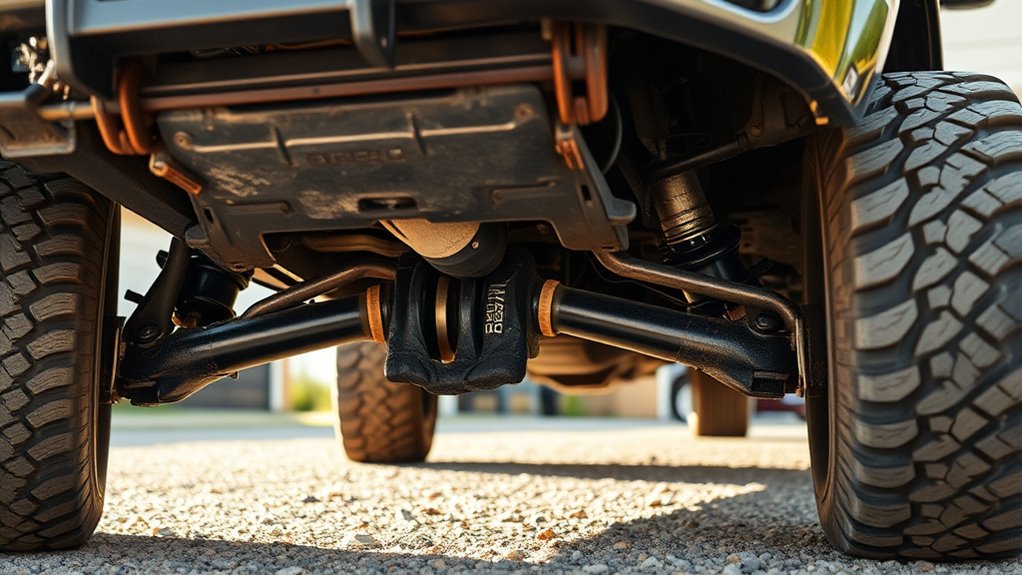
A 2006 Toyota Tacoma 4WD with a front-end knocking noise usually points to a loose or worn suspension component. The most common suspects are body mount bushings, sway bar links, ball joints, and tie rod ends. The sound often appears over bumps or during turns, but the source is not always obvious at first glance. A basic inspection can narrow it down quickly, yet some faults hide until the truck is loaded or lifted.
Tacoma Front-End Clunk: Start With the Usual Causes
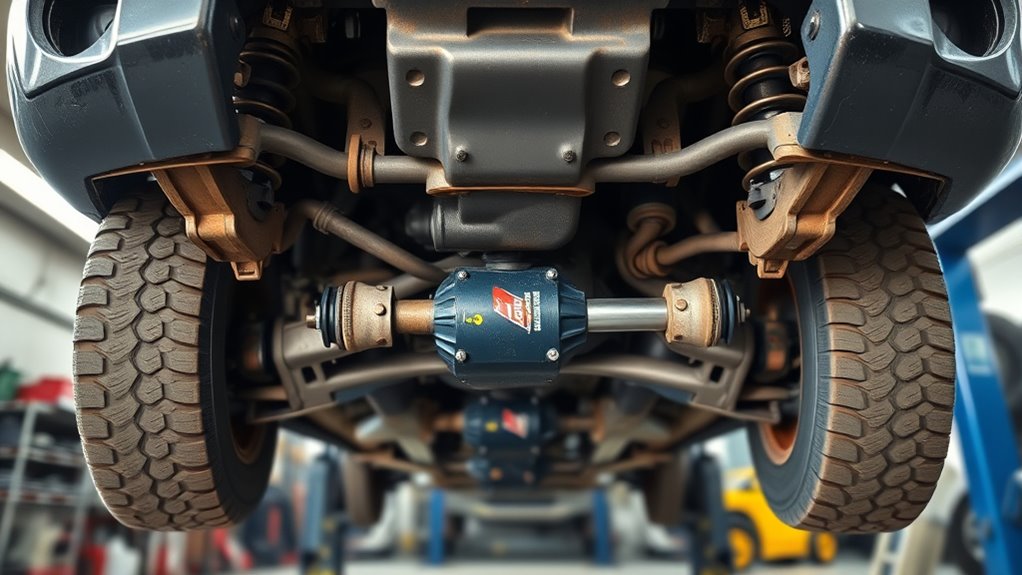
A front-end clunk on a 2006 Toyota Tacoma is often traced to worn body mount bushings, loose sway bar links, control arms, or upper and lower ball joints. A damaged body mount bushing can permit excess chassis motion, especially during turns and bump impacts. That movement transmits as a sharp knock.
Suspension joints should then be checked for play, torn boots, or metal-to-metal contact. Loose control-arm hardware, worn sway bar links, and fatigued ball joints are common noise sources.
Aftermarket lifts or coil changes can alter geometry and loosen lower control arm cam bolts, so re-torque values matter. A disciplined inspection of fasteners and visible wear can isolate the fault before more parts fail. This method supports mechanical clarity and helps the owner reclaim quiet, controlled travel without guesswork.
If the source remains unclear, community reports from other Tacoma owners often point to the same recurring wear points.
Check the Body Mount Bushings First
Body mount bushings should be checked early when a 2006 Toyota Tacoma develops a front-end knock, since worn or separated bushings can create clunks during turns, bumps, and load changes.
These body mount bushings isolate the cab from frame movement, and when the rubber degrades, noise can travel directly into the front structure.
Inspection should focus on cracks, separation, flattening, and excessive wear at each mount point.
Higher-mileage trucks and vehicles used off-road deserve closer attention because repeated impact accelerates deterioration.
If damage is present, replacement with quality aftermarket body mount bushings, such as polyurethane units, can restore tighter feel and reduce noise transmission.
This correction supports more controlled handling and less unwanted movement.
A disciplined maintenance approach helps keep the Tacoma free from avoidable front-end clatter and preserves mechanical integrity for drivers who expect reliable, independent motion on rough terrain.
Test For Play by Rocking the Front End
With the 2006 Toyota Tacoma securely lifted and supported on jack stands, the front end can be checked for play by gripping each tire at the 9 o’clock and 3 o’clock positions and rocking it back and forth.
Any movement beyond 1/4 inch indicates looseness that should not be ignored. This test helps isolate wear in steering and suspension hardware that can transmit knocking through the front body and into the cab.
The examiner should observe the tire, hub, and mounting points while the wheel is moved, noting any clunk, shift, or visible deflection. A brief visual inspection of the surrounding components and fasteners can reveal loose bolts, damaged brackets, or separated bushings.
If play is present, further diagnosis is required to identify the exact source before repair work begins. The goal is precise fault isolation, not guesswork, so the vehicle can be restored to stable, quiet operation.
Inspect Sway Bar Links and Ball Joints
Sway bar links should be inspected next for visible wear, damaged bushings, looseness, or broken hardware, since excessive play can produce knocking during turns and over bumps.
The technician should verify each link is secure and free of abnormal movement. Ball joints also require close evaluation, because looseness at the front end can create clunking on uneven surfaces and erode handling precision.
Verify each link is secure and free of abnormal movement; inspect ball joints for looseness that causes clunking and handling issues.
- Check sway bar links for cracked bushings.
- Confirm fasteners are tight and intact.
- Look for torn ball-joint boots.
- Rock the wheel at 9 and 3 o’clock.
- Replace worn parts without delay.
Any detectable free play, damage, or contamination suggests replacement.
Regular maintenance of sway bar links and ball joints helps preserve suspension control, reduce noise, and support a reliable, liberated driving feel.
Check the Tie Rods, CV Axles, and Shocks
Next, the tie rods, CV axles, and shocks should be inspected for wear or damage that can create knocking noise on a 2006 Toyota Tacoma.
Tie rods should be checked for excess play, bent sections, or worn ends, because looseness can produce sharp front-end knocks and reduce steering precision.
CV axles should be examined for torn boots, grease loss, and noise during turns; a failing axle often clunks under load transfer.
Shocks should be reviewed for leaks, dented bodies, or weak damping, since worn units can amplify impact noise over bumps and let the front end feel uncontrolled.
All suspension fasteners, including tie rod ends and shock mounts, should be torqued to specification to prevent movement at the joints.
Regular visual inspection and prompt replacement of damaged parts preserve alignment, limit noise, and support stable, independent motion over rough terrain, which helps keep the truck responsive and mechanically free.
Look for Loose Skid Plate or Brake Parts
After the tie rods, CV axles, and shocks have been checked, attention should turn to the skid plate and brake hardware. A loose skid plate can strike adjacent parts and create a front-end knock, especially if its bolts have backed out from vibration.
Every fastener should be tightened to manufacturer specification, with damaged threads or bent mounting points corrected. Brake components deserve equal scrutiny, because a caliper that shifts or pads with excess wear can also generate noise during steering or braking.
Every fastener should be secured to spec, and brake components inspected for wear or movement that can create noise.
- Inspect the loose skid plate for contact marks
- Verify all skid plate bolts are secure
- Check caliper mounts for movement
- Examine brake pads for uneven wear
- Look for damaged or missing hardware
A brief visual inspection often reveals the source. Regular maintenance of these parts reduces noise, preserves control, and supports a safer, more independent driving experience.
Why Speed Bumps Trigger the Clunk
Speed bumps often make a Tacoma’s front-end clunk more noticeable because the suspension is forced through rapid compression and rebound, increasing load on control arms, bushings, ball joints, and sway bar links.
On speed bumps, worn body mount bushings or dry contact points can shift under load and produce a sharp knock. If lubrication is insufficient, metal-to-rubber interfaces bind, then release abruptly, amplifying the clunk.
Misalignment or incorrect torque after suspension changes can also let parts move more than intended when the front end rises and settles. The result is a brief, distinct noise that may be absent on smooth pavement yet clear on uneven surfaces.
Regular inspection for play in ball joints, sway bar links, and related suspension hardware helps isolate the source before the issue grows.
For a driver seeking control and mobility, identifying these stress points restores confidence and keeps the Tacoma ready for rough roads.
Tighten Loose Bolts and Suspension Hardware
Tightening loose suspension hardware can eliminate many front-end knocking noises in a 2006 Toyota Tacoma 4WD. Each bolt, link, and bracket should be checked for secure fit and correct torque.
After repairs or modifications, confirmation with a torque wrench is essential to preserve factory specifications and avoid clunking sounds. This disciplined inspection supports mechanical order and driver autonomy.
- Control arm bolts
- Sway bar links
- Cam bolts on lower control arms
- Body mount bushings
- Torque readings after service
Worn or damaged body mount bushings can also create unwanted movement and noise. If any component shows looseness, damage, or incorrect torque, it should be corrected immediately.
Recording each noise event and maintenance action adds useful evidence for later dealership or warranty discussions. Precise hardware control reduces uncertainty, restores confidence, and keeps the front end aligned with its intended function.
When To Put Your Tacoma on a Lift
A lift inspection is warranted when the Tacoma begins to exhibit knocking over rough trails, suspension travel changes, or contact-related noises that suggest reduced clearance or front-end stress.
Raising the vehicle permits direct assessment of front-end components, including control arms, ball joints, tie rods, and bushings, where looseness or wear may be present.
If the truck is expected to see frequent off-road use, a lift can also support larger tires and improved alignment after suspension changes.
Lift Inspection Triggers
When a 2006 Toyota Tacoma develops unusual clunking or knocking from the front end, especially after a suspension lift or modification, a lift inspection is warranted. The goal is to identify geometry errors and looseness before they spread damage or reduce freedom of movement.
- Alignment drift after lift work
- Loose lower control arm cam bolts
- Noise over bumps or during turns
- Excessive play in suspension travel
- Uneven tire wear or poor handling
A lift allows fast confirmation of abnormal angles, shifting hardware, and unstable components.
It also helps verify whether the modification has introduced stress that demands correction. For a driver seeking reliable control, inspection timing matters.
When symptoms appear, delay only increases the chance of instability, wear, and avoidable repair cost.
Front-End Component Checks
On a lift, the front end of a 2006 Toyota Tacoma 4WD can be checked methodically for the source of a knocking noise. Inspection should focus on the control arms, ball joints, sway bar links, and front body mounts, where worn bushings can create clunking over turns or bumps. Bolts, especially lower control arm cam bolts, must be verified for proper torque. Tire play should be tested at 9 and 3 o’clock to assess tie rod and ball joint integrity. The skid plate and loose plastic trim also deserve close review.
| Component | Check | Concern |
|---|---|---|
| Control arms | Wear | Noise |
| Ball joints | Play | Front |
| Body mounts | Bushings | Clunk |
A disciplined lift inspection restores mechanical autonomy and exposes hidden faults before they deepen.
Document the Noise for Warranty Claims
The knocking noise should be recorded with each occurrence, including the driving conditions, frequency, and exact location on the Tacoma.
Video or audio evidence can strengthen the claim by providing direct proof for the dealership or manufacturer.
Any dealer inspections, repair attempts, and outcomes should be logged by date to establish a clear warranty history.
Record Clunk Occurrences
A documented trail helps substantiate a Tacoma clunking complaint for warranty review. Each popping or clunking noise should be logged with date, mileage, road input, and load state. Precise records help expose patterns and preserve autonomy in service discussions.
- Note speed bumps, turns, braking, and rough pavement.
- Record mileage and any recent modifications or tire changes.
- Capture short video or audio files during the event.
- Track prior inspections, repairs, dates, and outcomes.
- Save forum reports from similar Tacoma owners.
This evidence creates a clear chronology, useful when the front end noise repeats under comparable conditions.
Consistent documentation strengthens claims, reduces dispute, and supports a disciplined approach to warranty evaluation.
Log Dealer Inspections
Every dealership inspection should be logged with the date, mileage, complaint details, technician findings, and any repair attempts or recommendations. This record builds a disciplined case for warranty review of the noise in the front. Document conditions, frequency, and any temporary change after service. Preserve TSB references and compare them with dealer notes.
| Date | Mileage | Result |
|---|---|---|
| 2026-01-10 | 82,140 | Noise verified |
| 2026-01-18 | 82,410 | Inspected, no fix |
| 2026-01-26 | 82,690 | Temporary reduction |
If the sound persists, the owner should escalate to Toyota customer service with copies of all inspections, repair attempts, and TSBs. Precise logs reduce denial risk and strengthen a fair claim.
Frequently Asked Questions
Why Does My Car Sound Like It’s Knocking in the Front End?
The car likely sounds like it is knocking because of suspension issues affecting front-end components.
Worn ball joints, control arms, sway bar links, or body mount bushings can create clunks over bumps or during turns. Loose lower control arm cam bolts after prior work may also cause the noise.
Inspection for play at the tires’ 9 and 3 o’clock positions helps identify damage before handling and safety are compromised.
How to Tell if a Wheel Bearing Is Bad in Tacoma?
A bad Tacoma wheel bearing is often identified by Bearing Symptoms: humming, grinding, or roaring that rises with speed and changes in turns.
About 50% of bearing failures first reveal themselves through noise before visible damage appears.
A lifted wheel should be checked for play at 9 and 3 o’clock; looseness suggests wear.
Steering vibration, clicking in sharp turns, and uneven tire wear further confirm a failing bearing.
Why Does My Truck Clunk When I Put It in 4WD?
It clunks because torque is abruptly loading slack or wear in the driveline. The Transfer Case may engage with worn mounts, low fluid, or internal lash, while the front differential, CV joints, U-joints, or drive shaft can also bind or shift under load.
Loose fasteners or damaged bushings amplify the impact. A precise inspection of lubrication, torque, and component play is required to restore smooth, liberated four-wheel-drive engagement.
Why Does My Toyota Tacoma Clunk When I Drive Over Bumps?
Worn suspension parts usually cause the clunk over bumps.
On one inspection, a Tacoma’s sway bar link was loose enough to mimic a hammer inside the front end, a small fault with a loud voice.
Suspension Issues often involve control arms, bushings, cam bolts, or skid plates that are not torqued correctly.
A careful inspection and retorque free the truck from needless noise and restore precise, quiet movement.
Conclusion
A 2006 Toyota Tacoma 4WD front-end knocking noise, when present over bumps or during turns, typically points to worn body mount bushings, loose sway bar links, or play in ball joints and tie rods. Like a loose hinge in a door, small suspension faults can create a pronounced clunk. Careful inspection, torque verification, and lift-based diagnosis help isolate the source. Prompt repair restores alignment, reduces wear, and preserves safe, stable handling.

