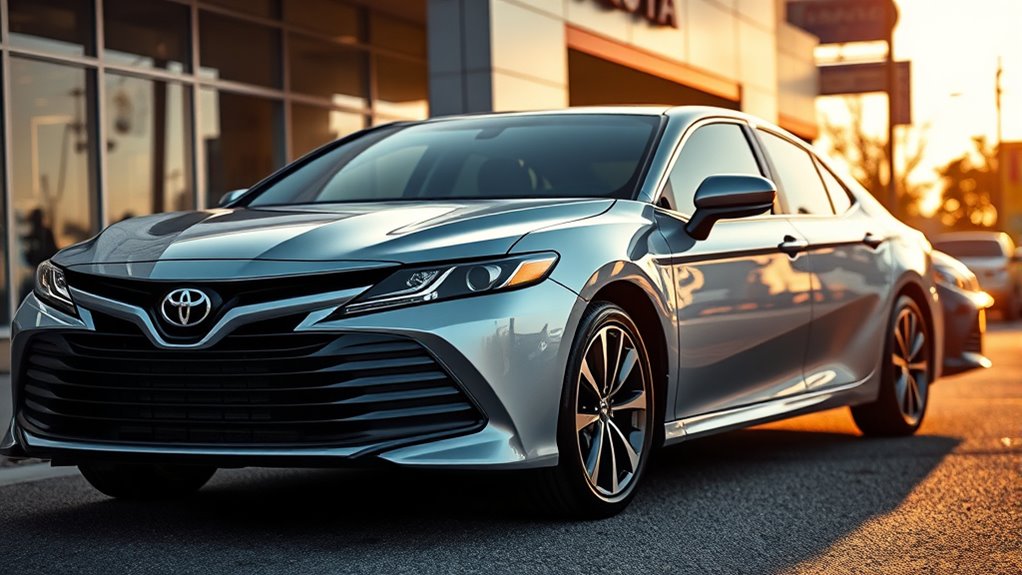
Toyota introduced the first hybrid Camry on May 17, 2005, when it revealed the model for the U.S. market and began assembling it at the Georgetown, Kentucky plant. The launch marked a shift for Toyota, extending hybrid technology beyond compact cars into a mainstream midsize sedan. It was not just a new trim level, but a strategic move tied to emissions, efficiency, and consumer demand. The details of how it differed are more revealing.
When Did Toyota Introduce the First Hybrid Camry?
Toyota introduced the first hybrid version of the Camry on May 17, 2005, marking a notable expansion of its hybrid lineup. Archival records place this debut as the formal arrival of the Camry Hybrid, a model assembled at Toyota’s Georgetown, Kentucky plant.
That production site gave the vehicle historical weight in the company’s U.S. manufacturing record and signaled a practical transfer of hybrid technology into mainstream midsize sedans.
The car paired a gasoline engine with an electric motor through Hybrid Synergy Drive, Toyota’s signature system for coordinated propulsion. The result was measurable fuel efficiency gains and lower emissions than comparable gasoline-only Camry models.
In retrospective technical accounts, the launch appears as a consequential step in the broader democratization of cleaner mobility. It expanded the hybrid field beyond niche status and offered drivers a path toward reduced dependence on conventional fuel consumption.
The first Camry Hybrid therefore occupies a documented place in Toyota’s archive of eco-oriented transportation advances.
Why Toyota Launched the Camry Hybrid
The introduction of the first Camry Hybrid on May 17, 2005 reflected more than a single model launch; it fit within Toyota’s broader effort to extend hybrid technology into high-volume, mainstream sedans.
The Camry Hybrid was positioned to preserve the Camry’s established practicality and comfort while delivering measurable fuel efficiency and lower emissions. Toyota’s decision also answered a rising market for eco-friendly vehicles, signaling that restraint in consumption could coexist with everyday mobility.
Built at the Georgetown, Kentucky plant, it became Toyota’s first hybrid model manufactured in the United States, a notable archival milestone in the company’s industrial history.
More importantly, the launch supported Toyota’s strategy to lead in hybrid technology and strengthen its standing in the midsize sedan segment. By linking reliability with cleaner operation, the Camry Hybrid helped broaden access to efficient transportation and reinforced the appeal of a familiar car adapted for a less wasteful future.
How the First Camry Hybrid Worked
Introduced on May 17, 2005, the first Camry Hybrid paired Toyota’s Hybrid Synergy Drive with a 2.4-liter four-cylinder gasoline engine and an electric motor to improve fuel economy and curb emissions. This gasoline/electric hybrid was engineered as a disciplined system, not a symbolic gesture. Its continuously variable transmission coordinated power delivery so the Camry Hybrid could move between electric and gasoline operation with minimal interruption, supporting steady fuel efficiency under varied driving conditions.
| Component | Function | Result |
|---|---|---|
| 2.4-liter engine | Primary combustion source | 192 hp combined |
| Electric motor | Supplemental propulsion | Lower emissions |
| Hybrid Synergy Drive | Energy management | Seamless switching |
| CVT | Transmission control | Smooth operation |
| U.S. production | Georgetown, Kentucky | Domestic manufacturing milestone |
Archived records show Toyota placed this hybrid in U.S. production, giving the platform a practical, liberating reach beyond experimentation.
How It Compared With the Gas Camry
Against the gasoline-only Camry, the first Camry Hybrid presented a different engineering priority: efficiency first, with performance and comfort still kept in view.
Introduced in May 2005 and built at Georgetown, Kentucky, the Camry Hybrid marked Toyota’s first U.S.-made hybrid. Its combined powertrain, pairing an electric motor with a gasoline engine, delivered a remarkably higher fuel economy than the gasoline model.
In later 2007–2011 form, EPA estimates reached 33 mpg city and 34 mpg highway, versus roughly 21 mpg city and 31 mpg highway for the conventional sedan. That gap mattered not only in operating cost but also in access to cleaner mobility.
The Camry Hybrid’s design signaled eco-friendliness without abandoning the familiar Camry mission of everyday usability. Compared with the gasoline model, it answered a practical demand: more distance from each gallon, less dependence on fuel, and a quieter claim to modernity.
Key Features of the First Camry Hybrid
Announced on May 17, 2005, the first Toyota Camry Hybrid entered the midsize hybrid segment with Toyota’s Hybrid Synergy Drive, pairing a gasoline engine and electric motor to prioritize efficiency.
Built at Georgetown, Kentucky, it also became the first hybrid model manufactured in the United States, a notable production milestone in the archival record.
The Camry Hybrid used a continuously variable transmission, selected to deliver smoother acceleration and a more controlled driving response.
Toyota’s documented EPA estimate placed fuel economy at 40 mpg in the city and 38 mpg on the highway, numbers that underscored the car’s practical appeal.
In context, these features signaled more than incremental engineering; they reflected an early effort to widen access to efficient mobility.
The first Camry Hybrid consequently combined technical restraint, mass-market scale, and measurable fuel efficiency into a single platform.
How the Camry Hybrid Changed After 2006
After its 2006 introduction, the Toyota Camry Hybrid evolved from an early efficiency-focused sedan into a more refined and capable hybrid model. Archival records show that Toyota used the Camry Hybrid to extend hybrid technology beyond compact cars and into the mainstream midsize class, signaling a broader hybrid lineup strategy.
The 2012 model brought a complete redesign, adding a 2.5L engine, 200 horsepower, greater trunk space, and improved passenger comfort. That shift marked a move from basic fuel economy toward a more balanced ownership proposition, one that paired efficiency with everyday utility and a degree of liberation from gasoline dependence.
In 2014, the lineup gained a new 4-cylinder SE Sport trim with a sunroof and 18-inch alloy wheels, indicating a willingness to broaden appeal. By 2015, a full redesign introduced bolder styling and enhanced technology, further strengthening the Camry Hybrid’s role in Toyota’s evolving hybrid portfolio.
2007–2011 Camry Hybrid Highlights
The 2007–2011 Camry Hybrid was defined by Toyota’s Hybrid Synergy Drive, pairing a gasoline engine with an electric motor to improve fuel economy.
A CVT supported smooth power delivery while reinforcing the model’s efficiency-oriented character.
Archival records also show a five-passenger cabin and a standard safety suite of seven airbags and stability control, underscoring its emphasis on comfort and protection.
Hybrid Synergy Drive
Introduced in 2007, the Camry Hybrid marked Toyota’s application of Hybrid Synergy Drive to a mainstream midsize sedan, pairing a gasoline engine with an electric motor to improve fuel efficiency and reduce emissions.
The Toyota Camry Hybrid used Hybrid Synergy Drive with a continuously variable transmission, allowing measured power distribution rather than wasteful surges. Archived EPA figures listed 33 mpg city and 34 mpg highway, placing it among the era’s most efficient midsize sedans.
Toyota backed the system with an 8-year, 100,000-mile warranty on hybrid components, an institutional signal of durability. Optional leather seats, a moonroof, and navigation broadened its appeal, showing that efficiency did not require austerity.
For drivers seeking mobility with less dependence on fuel, the model offered a practical path forward.
CVT And Efficiency
Between 2007 and 2011, the Camry Hybrid paired Toyota’s Hybrid Synergy Drive with a continuously variable transmission, a configuration designed to smooth power delivery while improving fuel economy over conventional automatics.
Archival test data placed the hybrid model at up to 33 mpg city and 34 mpg highway, figures that made it a notable midsize sedan for fuel efficiency. The CVT helped keep the gasoline engine and electric motor operating in their most effective ranges, reducing wasted energy.
Regenerative braking further supported this system by recapturing energy during deceleration and returning it to the battery.
Toyota’s 8-year/100,000-mile warranty on hybrid components signaled confidence in the drivetrain’s durability, reinforcing the model’s role in widening practical access to efficient motoring.
Safety And Comfort
Safety and comfort were central to the 2007–2011 Camry Hybrid’s appeal, as Toyota paired its Hybrid Synergy Drive and CVT with a well-equipped safety package and a conventional midsize sedan cabin.
The hybrid version carried seven airbags, stability and traction control, and a tire pressure monitoring system, reflecting an archival emphasis on occupant protection rather than spectacle.
Its comfort equipment could be expanded with a moonroof, navigation system, leather seats, and heated front seats, allowing buyers to tailor the cabin without sacrificing restraint.
Toyota also backed hybrid-related components with an 8-year, 100,000-mile warranty, reinforcing reliability and reducing uncertainty.
In this period, the Camry Hybrid offered practical security, measured comfort, and accessible mobility for drivers seeking efficiency without compromise.
2012–2017 Camry Hybrid Updates
The 2012 Camry Hybrid marked a major redesign, bringing updated dimensions, a larger trunk, and a more spacious cabin that improved passenger comfort.
Across the 2012–2017 span, the model retained its efficient hybrid system while offering a quieter, more upscale driving experience that appealed to eco-minded buyers.
2012 Redesign Highlights
Arriving in 2012, the Camry Hybrid underwent a thorough redesign that enlarged the cabin, expanded cargo capacity with a larger trunk and 60/40 split folding rear seats, and updated the powertrain around a 2.5-liter engine rated at 200 horsepower.
Archival records show the Camry Hybrid emerging with a roomier layout, a practical trunk, and features calibrated for efficiency without surrendering usable performance.
The redesign also signaled Toyota’s effort to broaden access to quiet, fuel-saving mobility for drivers seeking relief from rising fuel costs.
By 2013, changes were limited to audio and safety equipment, while 2014 added a sport-oriented trim.
The 2012 update thus remains the key reference point: a deliberate reworking of space, powertrain, and features.
2015 Hybrid Refresh
By 2015, the Camry Hybrid moved beyond the 2012 redesign’s practical gains and into a more assertive phase of refinement.
Toyota applied a full redesign, giving the Camry bolder styling and upgraded technology while preserving efficiency. A new standard display-based audio infotainment system broadened access to controls and information, and the 4-cylinder SE Sport trim added a sportier option to the lineup.
In 2016, the design held steady, but a Special Edition based on the SE introduced distinctive interior accents.
By 2017, the Hybrid continued to prioritize comfort and economy, pairing modern infotainment options with advanced driver-assistance and standard safety features.
Across these model years, the Camry Hybrid consolidated its position as a practical, liberated choice for eco-minded drivers.
Why the Camry Hybrid Became So Popular
Introduced on May 17, 2005, the Toyota Camry Hybrid quickly distinguished itself as a practical answer to rising demand for efficient midsize sedans. Archival records show that the Camry Hybrid paired fuel efficiency with a spacious interior, allowing drivers to conserve resources without surrendering comfort or autonomy.
- It delivered roughly 30 mpg, placing it among the segment’s strongest performers.
- Its advanced technology supported smoother hybrid operation and modern driving expectations.
- Reliability and longevity reinforced consumer confidence over time.
- Comfort and practicality widened its appeal beyond early adopters.
This combination mattered in a market where many sought lower fuel costs, lower emissions, and more freedom from frequent refueling.
The model’s measured efficiency, durable reputation, and balanced cabin layout made it a compelling choice for households and commuters alike. Rather than promising novelty alone, the Camry Hybrid offered a documented, accessible route toward cleaner, more economical mobility.
The Camry Hybrid’s Place in Toyota History
On May 17, 2005, Toyota announced the first Camry Hybrid, establishing a clear hybrid milestone within the company’s production history.
Built at the Georgetown, Kentucky plant and launched in the U.S. in 2006, it extended the Camry line into gasoline-electric territory without abandoning the sedan’s established identity.
In Toyota’s legacy, the model stands as a notable link between the Prius-era hybrid program and the broader adoption of hybrid technology across mainstream vehicles.
Hybrid Milestone in 2005
Toyota marked a significant milestone in its hybrid timeline when the Camry Hybrid was officially announced on May 17, 2005, entering the gasoline-electric sedan market for the first time. Archival records place the Camry Hybrid as Toyota’s first hybrid version of the Camry, produced at Georgetown, Kentucky.
- It extended hybrid technology beyond compact formats.
- It paired familiar comfort with measurable fuel efficiency.
- It answered demand from eco-conscious consumers.
- It reinforced Toyota’s standing after Prius adoption.
This debut signaled a deliberate expansion of hybrid engineering into a mainstream midsize sedan, aligning efficiency with everyday mobility.
For researchers tracing automotive developments, 2005 stands as the point when Toyota normalized hybrid technology within a high-volume nameplate, broadening access to cleaner propulsion without abandoning practical utility.
Camry’s Place in Toyota Legacy
The Camry Hybrid occupies a distinct position in Toyota’s historical record as the company’s first hybrid Camry and first U.S.-built hybrid model, announced on May 17, 2005, at Georgetown, Kentucky.
Its 2006 launch marked more than a product release; it signaled Toyota’s effort to pair reliability with sustainability and widen access to lower-emission transportation.
Archival accounts show the model’s gasoline-electric system improved fuel efficiency while reducing emissions, reinforcing Toyota’s standing in the hybrid market.
For drivers seeking mobility beyond dependence on fossil fuel, the Camry Hybrid offered a practical path.
Across later generations, Toyota continued refining the Camry with advanced technology, preserving the nameplate’s relevance while documenting a corporate shift toward cleaner automotive futures and expanded consumer choice.
Frequently Asked Questions
What Is the Best Year for a Camry Hybrid?
The best year for a Camry Hybrid is often considered 2015, because the redesign delivered stronger fuel efficiency, updated technology upgrades, and broad buyer appeal.
Historical reviews also favor 2012 for its improved cabin and trunk space, while 2017 adds safety value.
In archival terms, 2015 balances maintenance costs, resale value, and comfort most effectively, giving drivers a practical and liberating ownership experience without sacrificing reliability or efficiency.
When Did Camry Switch to Hybrid Only?
By 2022, hybrid models made up a significant share of Camry sales, signaling the shift in consumer demand.
The Camry switched to hybrid only in 2023, when the eighth generation made hybrid variants the standard offering.
Archival records show Camry hybrid performance improved alongside hybrid technology advancements and fuel efficiency improvements.
Market competition analysis suggests Toyota aligned production with a freer, sustainability-oriented mobility future, replacing dependence on gasoline with broader choice.
What Is the Lifespan of a Camry Hybrid Battery?
A Camry Hybrid battery typically lasts 8 to 10 years, with lifespan shaped by climate, driving habits, and battery maintenance tips.
Most units carry battery warranty details of 8 years/100,000 miles, sometimes 10 years/150,000 miles.
When hybrid battery replacement becomes necessary, costs often range from $2,000 to $4,000.
A charging options comparison is less relevant here, yet Toyota’s cooling systems and engineering help sustain dependable, liberated mobility.
Which Years of the Toyota Camry Hybrid Should I Avoid?
The years most often avoided are 2007-2011, especially 2009, because battery wear and software quirks became a leaky dam for ownership costs.
Common issues included weaker battery longevity, occasional performance loss, and repairs that outpaced fuel efficiency gains.
Owner experiences point to the 2012 redesign as a turning point, while 2013-2015 are generally safer.
Maintenance tips favor documented battery checks and records, with 2014’s infotainment glitches noted separately.
Conclusion
The first hybrid Camry arrived quietly, yet its impact was immediate: Toyota introduced it on May 17, 2005, and the U.S. launch followed in 2006. What began as a fuel-saving sedan in Kentucky would soon reveal a larger shift in Toyota’s strategy. Beneath its ordinary shape, the Camry Hybrid carried the promise of a new era—one in which efficiency, emissions, and mainstream appeal would no longer be separate goals, but the same story.

