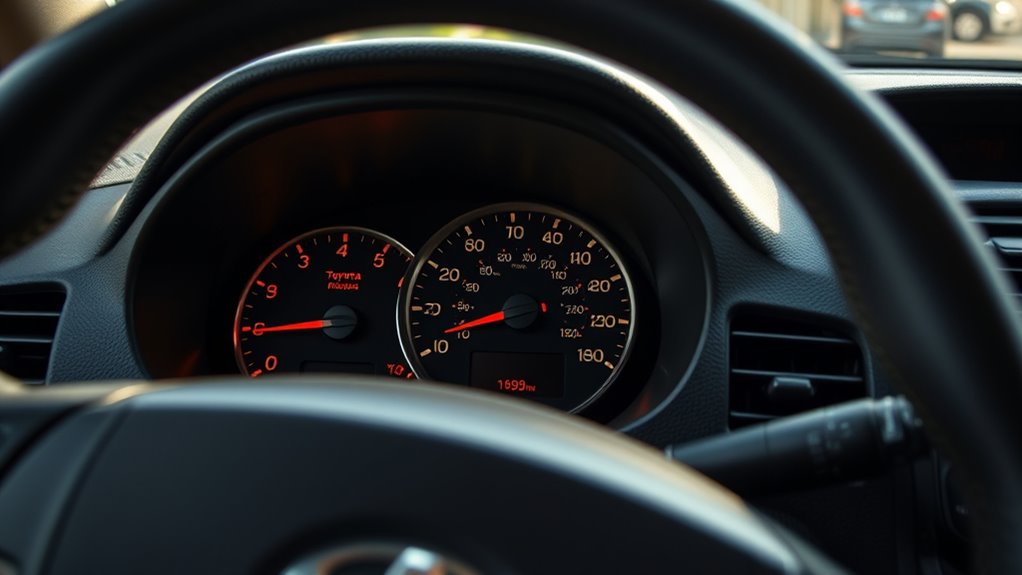
A 2006 Toyota RAV4 that idles too low often points to a fault in airflow, ignition, or idle control. Vacuum leaks, a dirty throttle body, or a failing MAF sensor can pull rpm down. Weak plugs, coils, or low battery voltage may worsen the condition. If the idle drops further in gear, with AC, or at stops, the diagnosis becomes more specific. The next clues can narrow it quickly.
Common Causes of RAV4 Low Idle
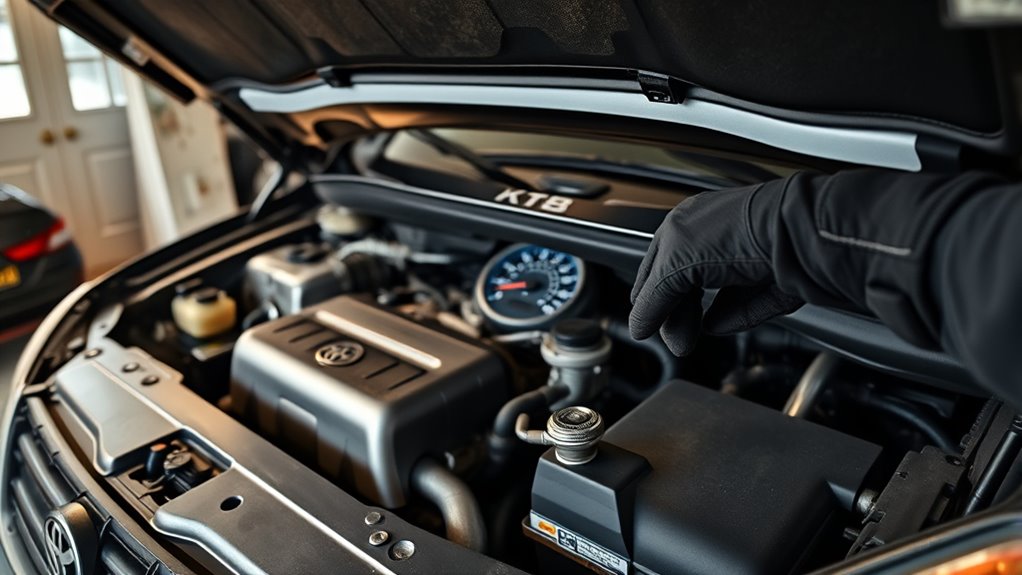
A 2006 Toyota RAV4 with low idle speed is often affected by a vacuum leak, which alters the air-fuel ratio and can produce rough or unstable idling.
In diagnostic terms, vacuum leaks are a primary fault source because unmetered air lowers manifold vacuum control and destabilizes combustion.
Faulty spark plugs or ignition coils may also reduce idle speed by creating misfires, weakening torque delivery and fuel efficiency.
Faulty spark plugs or ignition coils can lower idle speed by causing misfires and weakening engine performance.
The idle air control valve can fail to regulate bypass air, leaving the engine unable to maintain a steady idle, especially when shifted into gear.
A dirty mass airflow sensor may misreport intake volume, causing the control module to command an improper mixture.
Carbon accumulation in the throttle body can similarly restrict airflow and depress idle RPM.
Each of these conditions limits the engine’s ability to self-correct, so precise inspection supports a freer, more reliable driving experience.
Check for Vacuum Leaks and Airflow Issues
Vacuum leaks can disrupt the air-fuel mixture in a 2006 Toyota RAV4, often causing low RPM and a rough or unstable idle. A disciplined inspection of vacuum leaks and airflow components helps restore control and reveal hidden faults without dependency on guesswork.
Hissing near the intake, brittle hoses, or loose fittings indicate unwanted air entry. Even minor leakage can lower idle quality and weaken efficiency.
- Inspect vacuum hoses for cracks, splits, or disconnection.
- Check intake ducting and clamps for secure fit.
- Clean the MAF sensor to correct airflow measurement.
- Clean the throttle body to remove carbon restriction.
If RPM remains unstable, monitor the engine for repeat symptoms and address them promptly. Precise diagnostics protect performance, support fuel economy, and give the driver the freedom of a smoother, steadier idle.
Why Idle Drops in Drive and Reverse
When a 2006 Toyota RAV4 is shifted into drive or reverse, the added drivetrain load naturally lowers idle speed, and a healthy system compensates by stabilizing combustion and throttle control. In neutral or park, idle commonly rests at 720-820 RPM; in gear, about 500 RPM may be observed. If the drop becomes severe, the cause is often a vacuum leak, a disturbed air-fuel balance, or weak idle air regulation. Vibration with the brake applied suggests the engine is near its torque limit and cannot hold RPM freely.
| Condition | Diagnostic meaning |
|---|---|
| Neutral/park idle | Baseline control |
| Drive/reverse idle | Load response |
| Brake vibration | RPM margin too low |
| A/C on | Extra demand exposed |
| Idle air circuit | Compensation path |
A/C engagement can further reduce idle speed, revealing marginal control. Inspecting the idle air control circuit and leak paths supports a freer, more stable idle.
Check Battery Voltage and Idle Relearn
Battery voltage should be verified first, with a fully charged 2006 Toyota RAV4 typically reading 12.6 to 12.8 volts.
If idle speed remains low after a battery replacement, an idle relearn procedure may be required to restore ECM control of the throttle and target RPM.
A rough or unstable idle can also be addressed by resetting the system through EFI fuse removal and a brief negative battery disconnect before reassessing engine speed.
Battery Voltage Check
After a battery replacement, the 2006 Toyota RAV4 should have its battery voltage checked before any further diagnosis, as low system voltage can contribute to rough or low idle behavior.
A precise battery voltage check should show 12.4 to 12.6 volts with the engine off, confirming a stable electrical foundation for free and dependable operation. If voltage is outside range, the idle strategy may not relearn correctly.
- Disconnect the battery for 10 minutes to allow ECU reset.
- Turn the ignition on without starting.
- Press the brake pedal several times, then start the engine.
- If idle stays low, inspect charging voltage with the engine running.
This process helps the powertrain relearn, restoring calm, controlled idle response.
EFI Fuse Reset
An EFI fuse reset can help clear minor electrical glitches that may contribute to low idle on a 2006 Toyota RAV4, especially after a battery replacement.
A proper EFI fuse reset typically involves removing the EFI fuse and disconnecting the negative battery terminal for about 10 minutes. This power interruption may restore ECU logic and remove transient faults.
Battery condition should remain within specification, ideally 12.6 volts engine off and 13.7 to 14.7 volts running, because unstable voltage can keep idle speed low.
After reinstalling the fuse, ignition-on brake pedal pumping may initiate relearn activity. If idle remains rough or RPM stays depressed, the ECU may not have relearned yet.
Continued monitoring is essential before pursuing deeper mechanical diagnosis.
Idle Relearn Procedure
Following a battery replacement on a 2006 Toyota RAV4, the ECU should be allowed to relearn idle parameters to stabilize engine speed.
Battery voltage should be verified first: 12.4 to 12.8 volts with the engine off, and 13.7 to 14.7 volts running. If readings are outside range, idle correction may be compromised.
Procedure:
- Disconnect the negative battery terminal for 10 minutes.
- Reconnect it securely.
- Start the engine and let it idle in park for about 5 minutes.
- Keep accessories off so idle calibration remains accurate.
This relearn restores ECU control and supports a free, smooth idle response.
If rough idle persists, inspect vacuum leaks, fuel delivery, and sensor faults.
Inspect Spark Plugs, Coils, and Sensors
Spark plug wear and fouling should be checked first, since misfires can reduce idle speed and degrade combustion quality.
Ignition coils should then be tested for consistent spark output, with any weak unit identified for replacement.
The MAF and O2 sensors should also be verified for proper operation, because inaccurate air-fuel data can produce unstable low-RPM idle behavior.
Spark Plug Wear Checks
A careful inspection of the ignition system should begin with the spark plugs, since worn, fouled, or corroded plugs can weaken spark quality, contribute to rough idle, and lower engine speed at idle.
These spark plug wear checks should confirm electrode condition, gap stability, and deposit level without delay.
- Inspect for carbon buildup.
- Look for blistering or erosion.
- Verify uniform wear across cylinders.
- Replace any plug with corrosion or heavy fouling.
Clean plugs support stable combustion and preserve responsive idle behavior.
In a 2006 Toyota RAV4, neglected plugs can quietly reduce efficiency and make the engine less willing to hold steady RPM.
A disciplined inspection restores control, supports performance, and prevents avoidable repair costs while keeping the vehicle operating with more freedom and less mechanical drag.
Coil And Sensor Testing
Ignition diagnosis should extend beyond the plugs to the coils and sensors, since weak spark delivery, misfires, and air-fuel imbalance can all suppress idle RPM in a 2006 Toyota RAV4.
The coil should be tested for output stability and primary resistance, because intermittent failure often appears as rough idle before a complete fault.
Spark plugs must still be inspected for wear or fouling, since degraded electrodes can mask the true source.
An OBD-II scanner should be used to read ignition-related codes, guiding targeted testing.
The MAF sensor must be clean and responsive, as distorted airflow data can lower idle speed.
Oxygen sensor voltage should also be monitored; erratic readings point to mixture control problems that restrict smooth engine operation and reduce the driver’s mechanical freedom.
Clean the Throttle Body and MAF Sensor
Cleaning the throttle body and MAF sensor can address low idle RPM in a 2006 Toyota RAV4 by restoring proper airflow and air-fuel measurement.
To clean the throttle body, remove carbon deposits that restrict the plate and bore, then verify smoother idle response. The maf sensor must be handled carefully, since its readings govern fueling accuracy and engine efficiency.
Clean the throttle body to remove carbon buildup and restore smoother idle response.
- inspect for visible carbon buildup at the throttle plate
- use a dedicated cleaner to clean the throttle body without harsh abrasion
- apply MAF-safe cleaner to the maf sensor and let it dry fully
- restart, idle, and confirm steadier RPM under light load
A dirty throttle body often produces rough idling and weak acceleration; a contaminated MAF sensor can skew mixture control.
Following manufacturer guidance preserves components and supports clean operation. Regular maintenance helps the RAV4 reclaim stable idle behavior and durable performance, giving the driver more control and less mechanical friction.
See How AC and Brakes Affect Idle
After the throttle body and MAF sensor are verified clean, the next step is to observe how accessory and load changes affect idle speed.
When the air conditioning is switched on, the compressor adds engine load. A healthy control system should raise airflow and maintain roughly 720-820 RPM; if speed falls near 500 RPM, the ECU is not compensating adequately. That drop often produces a rough idle, especially when the cabin air demand is high.
Braking at idle, particularly in gear, adds further load through the brake booster and drivetrain. If RPMs sag or vibration appears, the engine may be exposed to common symptoms of an unstable idle strategy.
A faulty idle air control valve or a vacuum leak can worsen the response when AC and brakes are used together. Regular attention to AC efficiency and brake condition supports stable idle behavior and preserves driver autonomy.
When a Toyota Mechanic Should Step In
A Toyota mechanic should step in when low idle RPM persists despite basic checks, especially if the engine idles roughly or vibrates while in gear. At that point, self-diagnosis has likely reached its limit, and a mechanic’s tools can restore clarity and control.
- If an OBD scan shows no codes but the idle remains low, hidden mechanical faults may exist.
- Vacuum leaks, idle air control circuit faults, and MAF or MAP sensor drift require specialized testing.
- Warning lights combined with low RPM behavior justify immediate mechanic intervention.
- An experienced mechanic can assess idle speed and fuel mixture adjustments that basic checks miss.
This diagnostic path helps free the owner from guesswork. The goal is not replacement by instinct, but precise verification.
When symptoms persist, professional inspection is the most direct route to stable idle, reliable response, and liberated driving confidence.
Frequently Asked Questions
What RPM Should a RAV4 Idle At?
A RAV4 should idle at about 700 to 800 RPM in park or neutral, while drive or reverse may drop near 500 RPM.
Consistent readings below 700 can signal Idle Issues, including vacuum leaks, faulty sensors, or ignition faults. A stable idle is diagnostic of proper engine control and supports liberated, efficient driving.
Fluctuation, vibration, or stalling suggests further inspection of airflow, fuel delivery, and electronic management systems.
Why Is My RPM so Low When I Idle?
Low idle RPM usually indicates an intake, ignition, or airflow fault.
Idle fluctuations often arise from vacuum leaks, a dirty or failing mass airflow sensor, or an idle air control valve that cannot stabilize engine speed.
Worn spark plugs or weak coils can also cause misfires and unstable combustion.
A disciplined diagnostic scan, with live RPM monitoring, allows the vehicle’s systems to be restored to reliable, liberated operation.
How Do I Reset My Toyota Idle?
He resets the Toyota idle by disconnecting the negative battery terminal for about 10 minutes—then the ECU begins its quiet recalibration.
After reconnection, the engine should idle untouched for at least 5 minutes. Ignition cycling may refine the relearn, and pumping the brake pedal 8 times with key ON can assist.
This Idle Adjustment is diagnostic, precise, and restores control, giving the driver liberation from unstable idle behavior.
What Are the Common Causes of Rough Idle in a Toyota RAV4?
Common causes of rough idle in a Toyota RAV4 include vacuum leaks, fouled spark plugs, weak ignition coils, and faulty MAF or MAP sensors.
These faults disturb air-fuel control and create unstable RPM.
Engine Maintenance should also include throttle body cleaning and inspection of intake hoses, fuel delivery, and electrical connections.
Timely diagnosis restores mechanical reliability, reduces vibration, and frees the engine from preventable instability and inefficiency.
Conclusion
In a 2006 Toyota RAV4, a low idle often signals an imbalance in the engine’s air, fuel, or spark systems. Like a watch with a weak spring, the engine may run but struggle to hold steady rhythm. Vacuum leaks, dirty throttle passages, failing coils, or sensor drift can all pull RPM downward, especially in drive or reverse. When cleaning and basic checks do not restore idle stability, a qualified Toyota technician should trace the hidden fault.

