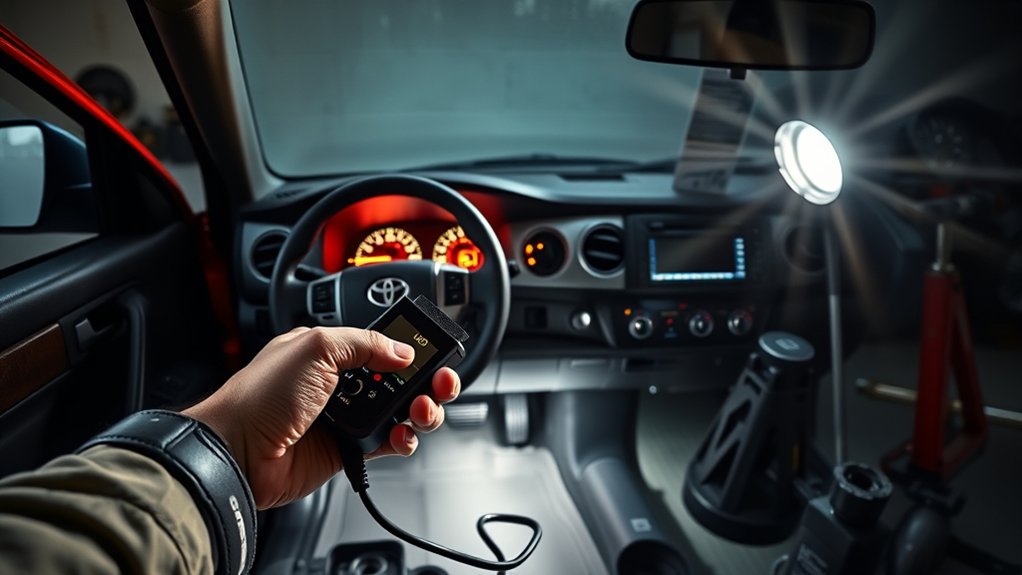
Why Is My Toyota Tacoma’s 4WD Light Flashing?

Last updated: September 16, 2026
If your Toyota Tacoma’s 4WD light is flashing, the truck has not yet confirmed the requested four-wheel-drive state. Brief flashing can be normal while the system is shifting. A light that continues flashing after you follow the correct procedure can point to an incomplete shift, drivetrain bind, an actuator or position-switch problem, damaged wiring, or another 4WD-system fault.
Do not assume the transfer-case actuator has failed based on the light alone. Tacoma 4WD controls differ by generation, transmission, trim and drivetrain. Current Tacoma lineups even include both part-time and full-time 4WD configurations, so the correct diagnostic sequence starts by identifying your exact model year and 4WD system.
One important correction: Neutral is not a universal requirement for engaging 4H. Toyota’s current part-time 4WDemand guidance allows a 2H-to-4H shift below the specified speed threshold, while shifting between high and low range uses a different procedure. Check the owner’s manual for your exact Tacoma before diagnosing a failure.
Quick Answer
- What flashing means: The requested 4WD change has not yet been confirmed. Brief flashing during a shift can be normal; persistent flashing needs further checking.
- First step: Identify your Tacoma’s model year, transmission and 4WD system, then repeat the correct owner-manual shift procedure.
- Common diagnostic areas: Depending on the generation, inspect the transfer case, front ADD/differential actuator, position switches, connectors, wiring and related control circuits.
- 2024–2025 Tacoma note: Toyota TSB T-SB-0093-25 covers certain trucks with flashing 4WD lights, a check-engine/MIL condition and DTC P277111, P178462 and/or P17AC62.
- Get professional help: Seek diagnosis if the light keeps flashing, the truck will not engage or disengage 4WD, additional warning lights appear, or you hear grinding or severe drivetrain noise.
If you need the normal operating sequence rather than fault diagnosis, see our Toyota Tacoma 4WD system guide. For low range specifically, see how to shift a Tacoma into 4LO.
What Causes a Tacoma 4WD Light to Keep Flashing?
Persistent flashing does not identify one failed component by itself. It means the 4WD system has not confirmed the position or operating state it expected.
| What You Notice | What It Can Mean | First Check |
|---|---|---|
| Light flashes briefly during a requested shift | The shift may still be in progress | Follow the model-year owner’s-manual procedure and wait for confirmation |
| Light keeps flashing after the correct procedure | The requested shift did not complete or the system cannot confirm it | Check for warning messages, stored 4WD-related codes, wiring or actuator problems |
| You hear an actuator operate but 4WD does not fully engage | One stage of the engagement sequence may have moved while another did not | Diagnose the transfer-case and front-axle engagement systems separately where applicable |
| No light change, sound or response from the selector | Power, fuse, switch, wiring or control-system diagnosis may be needed | Check the appropriate circuit using the model-year repair information |
| 4WD lights flash with the MIL/check-engine light on a 2024–2025 Tacoma | A Toyota technical service bulletin may apply if specific DTCs are present | Check for P277111, P178462 and P17AC62 and compare the truck with T-SB-0093-25 |
On applicable part-time 4WD Tacomas, possible causes include a transfer-case shift actuator, a front ADD or differential actuator, position switches, electrical connectors, damaged wiring or mechanical resistance that prevents the shift from completing.
Do not diagnose a 4WD ECU simply because the indicator flashes. The module depends on feedback from multiple switches and actuators, so another component can create the symptom even when the ECU itself is functioning.
Also confirm which drivetrain you have. Toyota has sold Tacomas with different 4WD arrangements, and current Limited configurations can use full-time 4WD rather than the selectable part-time system used on many other Tacoma trims. See our Tacoma part-time vs. full-time 4WD guide if you are unsure which system is fitted.
How Do You Diagnose a Flashing Tacoma 4WD Light?
Start with the operating conditions before replacing a part. A Tacoma can flash its 4WD indicator because a shift is still underway, because the required conditions for the requested range were not met, or because the system tried to shift and could not complete it.
- Identify the truck: Confirm the model year, transmission, trim and whether the truck uses part-time or full-time 4WD.
- Identify the requested change: Note whether you were shifting into 4H, out of 4H, into 4LO or out of 4LO when the flashing began.
- Repeat the correct procedure: Use the owner’s manual for the exact truck. Do not apply a 4LO Neutral requirement to every 2H-to-4H shift.
- Unload the drivetrain: If the manual permits movement during the shift, keep the wheels nearly straight and use gentle acceleration or deceleration on an appropriate loose or slippery surface. Do not make tight turns on dry pavement to force engagement.
- Read the cluster: Record any additional warning message, MIL/check-engine light, 4LO indicator, differential-lock indicator or other warning that appears with the flashing 4WD light.
- Scan before clearing: If a capable scan tool can communicate with the relevant drivetrain modules, save stored and pending DTCs before erasing anything.
- Inspect before replacing: Check connectors, harness routing, corrosion, moisture and visible damage at the relevant 4WD components.
If the light becomes steady and the truck completes the requested shift, the flashing may have been part of the normal shift process rather than proof of a failed actuator. If the indicator continues indefinitely or the truck repeatedly refuses to change modes, continue with component-level diagnosis.
How to Inspect the Actuator and ECU for Common Issues
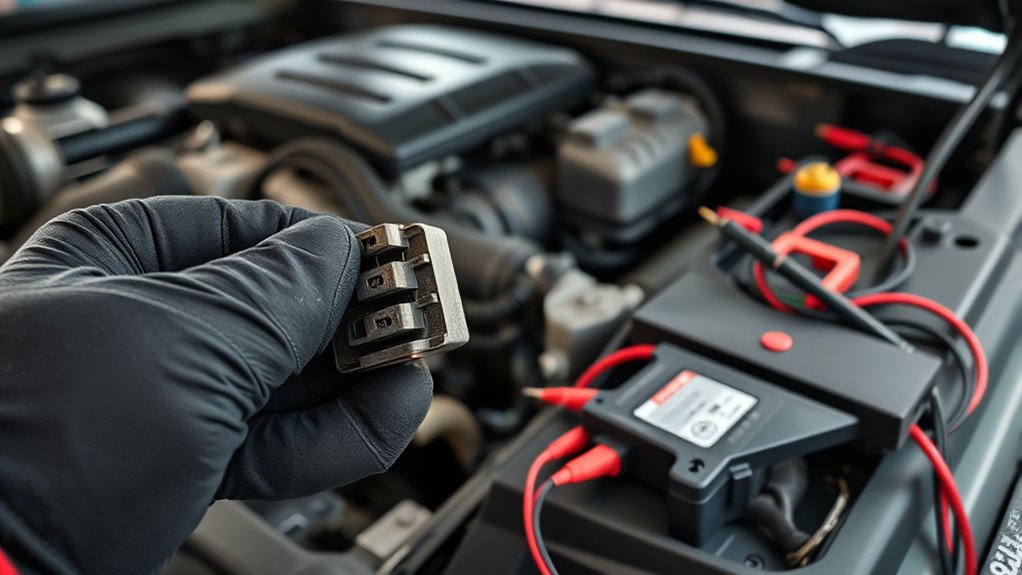
Inspect the 4WD actuator system methodically rather than assuming one actuator is bad. Depending on the Tacoma generation, the transfer case and front differential may use separate actuators or position-confirmation circuits.
Start with a visual inspection of exposed connectors and harnesses. Look for damaged insulation, loose plugs, bent terminals, moisture or corrosion. A connector problem can interrupt actuator power or the position-feedback signal used to confirm engagement.
Before performing voltage, resistance or continuity tests, obtain the factory repair information for the exact model year and drivetrain. Connector pinouts and specifications are not universal across Tacoma generations.
Actuator Inspection Steps
Use the symptoms to determine which part of the engagement sequence needs testing.
- Safely secure the vehicle before working underneath it.
- Inspect the relevant transfer-case and front-differential actuator connectors for contamination, moisture, damaged wiring or loose terminals.
- Have a helper operate the 4WD control only under the conditions specified in the owner’s manual while you listen for actuator movement from a safe position.
- If one actuator operates but the requested mode is never confirmed, follow the factory diagnostic procedure for the remaining actuator and position switches.
- Use only the year-specific repair-manual pinout and specifications for electrical testing.
Do not treat a generic resistance reading from another Tacoma generation as a valid specification. Likewise, do not replace an actuator merely because the indicator flashes.
ECU Connection Check
The 4WD control module relies on power, grounds, driver commands and feedback from switches or actuators. Before condemning the ECU, verify the circuits feeding it and the components it controls.
Check for loose or corroded connectors, damaged harness sections and evidence of water intrusion. If diagnostic trouble codes are available, record them and follow the corresponding model-year diagnostic tree.
A known-good-module swap should not be the first diagnostic step. Module compatibility, calibration requirements and network architecture vary by year. Confirm wiring, actuator operation and position-feedback circuits before replacing an ECU.
Which Community 4WD Fixes Are Worth Trying?
Tacoma owner communities contain useful troubleshooting observations, but an anecdotal fix should not replace the model-specific diagnostic procedure.
The safest DIY checks are the ones that do not force the drivetrain or damage components: repeat the correct shift sequence, reduce drivetrain load, inspect accessible connectors and wiring, and confirm whether the actuator is receiving the commands and feedback expected by the repair manual.
Common DIY Solutions
These low-risk checks can help before you buy parts:
- Repeat the correct 4WD shift procedure for your exact model year.
- If movement is permitted by the manual, keep the steering nearly straight and move gently on a loose or low-traction surface to reduce driveline load.
- Inspect accessible actuator connectors for corrosion, dirt, moisture or poor terminal fit.
- If cleaning is required, use an automotive electrical-contact cleaner that is compatible with the connector materials and follow the cleaner manufacturer’s instructions.
- Record diagnostic codes and warning messages before disconnecting components or clearing faults.
Avoid using tight turns on dry pavement to “make the splines line up.” Also avoid striking an actuator with a hammer as a normal repair procedure. Either tactic can hide the underlying problem or create additional damage.
What Owner Reports Can Tell You
Owner reports can help reveal patterns, such as a problem that occurs only after long periods without 4WD use or only in wet conditions. Treat those observations as diagnostic clues rather than proof that a specific component has failed.
For example, if engagement becomes intermittent after water exposure, connector or breather inspection becomes more relevant. If the transfer case can be heard shifting but the front axle never confirms engagement on a system with a separate front ADD actuator, the front engagement circuit deserves closer testing.
The goal is to narrow the fault before replacing parts.
When Should You Call a Mechanic for a Flashing Tacoma 4WD Light?
Professional diagnosis is appropriate when the 4WD light keeps flashing after the correct shift procedure, the truck will not engage or disengage 4WD, or the problem returns repeatedly.
Stop attempting to force the system if you hear grinding, repeated hard clunks or other abnormal drivetrain noise. Seek service promptly if the truck appears stuck in part-time 4WD on a dry, high-traction road, because continued driving and turning can load the drivetrain.
A technician with Toyota-capable diagnostic equipment can check module data, commands, position-switch feedback and actuator operation before replacing parts. This is especially useful when several electrical components could produce the same dashboard symptom.
Special Note for 2024–2025 Tacoma: Toyota TSB T-SB-0093-25
Toyota issued Technical Service Bulletin T-SB-0093-25 for certain 2024–2025 4WD Tacoma and Tacoma Hybrid vehicles. The bulletin applies to a specific condition involving flashing 4WD lights plus an illuminated MIL/check-engine light with one or more of these DTCs:
- P277111 — Four Wheel Drive (4WD) Low Switch Circuit Short to Ground
- P178462 — 4WD/AWD Transfer Case Shift Motor Limit Switch and Transfer Case H4-L4 Position Switch Signal Compare Failure
- P17AC62 — 4WD/AWD Transfer Case Shift Motor Limit Switch Signal Compare Failure
For vehicles that meet the bulletin conditions, Toyota’s repair procedure includes replacement of the transfer-case shift actuator and installation of an updated breather hose. The bulletin does not mean every 2024–2025 Tacoma with a flashing 4WD indicator needs those parts; the listed condition and diagnostic codes must be confirmed.
If your truck falls within those model years, give the technician the TSB number and recorded DTCs rather than replacing an actuator by guess.
You can also check for open recalls or service information through the Toyota Owners recall page.
How Can You Reduce Future Tacoma 4WD Problems?
Good 4WD maintenance is less about forcing the system to move and more about using it correctly, keeping electrical connections protected and responding early when engagement changes.
- Follow the correct operating procedure: Use the instructions for your exact Tacoma model year, transmission and drivetrain.
- Exercise part-time 4WD only in appropriate conditions: If periodic operation is recommended, use a surface that permits tire slip and keep the truck reasonably straight rather than making tight turns on dry pavement.
- Watch for changes: Delayed engagement, repeated flashing or a new warning message is worth investigating before the system stops working completely.
- Inspect exposed wiring and connectors: Look for damage or contamination after off-road use, deep mud, water exposure or underbody repairs.
- Diagnose before replacing: Record DTCs and confirm actuator or circuit failure with model-specific service information.
For scheduled service information, refer to the official Toyota maintenance guide.
Frequently Asked Questions
What Does It Mean When Your Tacoma 4WD Light Is Flashing?
A flashing Tacoma 4WD indicator means the truck has not yet confirmed the requested four-wheel-drive state. Flashing can be normal while a shift is taking place. If it continues after the correct model-specific procedure, diagnose the transfer case, front-axle engagement system where applicable, position switches, wiring and related control circuits.
Do You Need to Shift a Tacoma Into Neutral to Engage 4H?
Not as a universal rule. On Toyota’s current part-time 4WDemand system, 2H-to-4H can be selected below the specified shift-speed threshold. Neutral is associated with shifting between high and low range on applicable models. Tacoma procedures vary by year and drivetrain, so use the owner’s manual for the exact truck.
Why Does the Tacoma 4WD Light Keep Flashing After I Select 2WD or 4WD?
Continuous flashing means the requested change has not been confirmed. The drivetrain may still be loaded, the operating conditions may not be correct, or an actuator, position switch, connector, wiring circuit or other 4WD component may be preventing the shift from completing.
What Is the First Step to Diagnose a Flashing Tacoma 4WD Light?
First identify the Tacoma’s model year, transmission and 4WD system, then repeat the exact owner-manual shift procedure. Record any additional warning messages or diagnostic codes before testing or replacing components.
Can You Drive a Tacoma With the 4WD Light Flashing?
It depends on the truck’s actual drivetrain state and symptoms. If the Tacoma is confirmed in 2WD, drives normally and has no abnormal noises or additional warnings, cautious pavement driving may be possible while you arrange diagnosis. If it is stuck in part-time 4WD, binds during turns, grinds, will not shift, or shows additional drivetrain warnings, avoid unnecessary driving and have it inspected.
Does Toyota Have a Bulletin for 2024–2025 Tacoma 4WD Lights Flashing?
Yes. Toyota TSB T-SB-0093-25 covers certain 2024–2025 4WD Tacoma and Tacoma Hybrid vehicles with flashing 4WD lights, an illuminated MIL/check-engine light and DTC P277111, P178462 and/or P17AC62. The bulletin applies only when its specified conditions are present.
Conclusion
A flashing Toyota Tacoma 4WD light does not automatically mean the transfer-case actuator has failed. It means the system has not yet confirmed the requested 4WD state. Start by identifying your model year and drivetrain, repeat the correct shift procedure, record any warning messages or DTCs, and inspect the relevant connectors and circuits before replacing parts.
For 2024–2025 trucks with the check-engine light and DTC P277111, P178462 or P17AC62, check Toyota TSB T-SB-0093-25 before authorizing a repair. For other Tacomas, use the factory diagnostic procedure that matches the exact generation rather than applying one actuator test or shift sequence to every model.
