Choosing between a Toyota Tacoma Access Cab and Double Cab starts with the model year. The Access Cab applies to 2023 and older Tacomas. Toyota replaced it for 2024 with the XtraCab, a two-seat configuration with no rear doors or rear seat. The Double Cab remains the better choice when you regularly carry passengers.
Last updated: July 14, 2026
Quick Answer
For a 2023-or-older Tacoma, choose Access Cab for four-seat capacity, a 6-foot bed, and compact dimensions. Choose Double Cab for five seats, full rear doors, and much more rear legroom. For 2024–2026 trucks, Toyota replaced Access Cab with a two-seat, storage-focused XtraCab.
Key Takeaways
- Access Cab ended after 2023. The current 2026 Tacoma offers XtraCab or Double Cab.
- Passenger use favors Double Cab. A 2023 Double Cab seats five and provides 32.6 inches of rear legroom, compared with four seats and 24.6 inches in Access Cab.
- Bed choices depend on year and trim. A 2023 Access Cab has a 73.7-inch bed, while Double Cab may have a 60.5-inch or 73.7-inch bed.
- Cab name does not determine towing or payload. Engine, drivetrain, transmission, bed, trim, equipment, and passengers all affect the final rating.
- Current XtraCab models are work-focused. The 2026 XtraCab is offered on SR, SR5, and TRD PreRunner grades with a 6-foot bed.
Quick Verdict: Which Tacoma Cab Should You Pick?
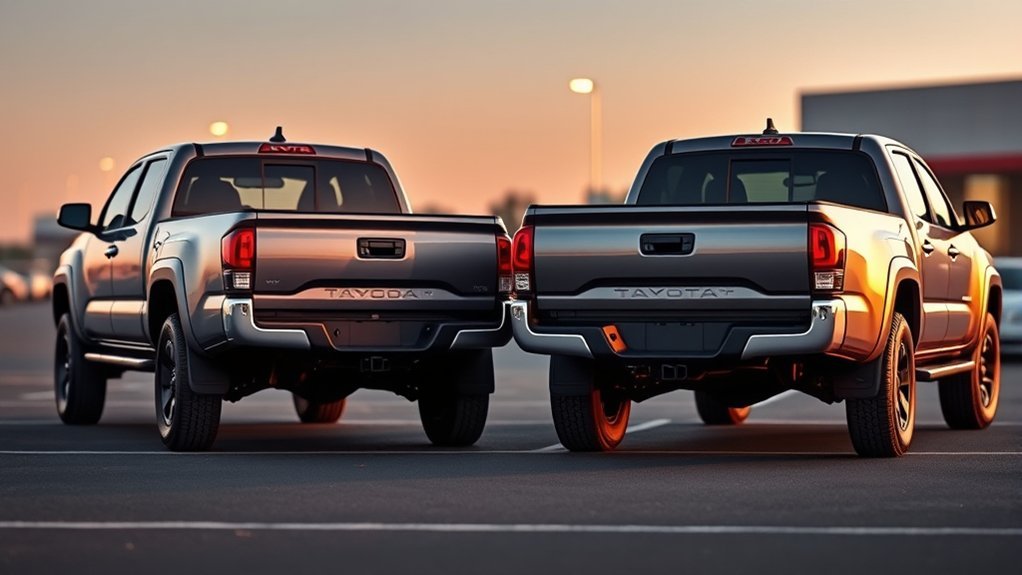
Choose a 2023-or-older Access Cab when you mainly carry one or two people, need a full 6-foot bed, and only use the small rear seats occasionally. Choose a Double Cab when adults, children, or child seats will regularly occupy the second row.
For a new Tacoma, the choice is different. Toyota’s 2026 Tacoma lineup uses the names XtraCab and Double Cab. XtraCab has two seats, a 6-foot bed, and storage behind the front seats. It is not a renamed four-seat Access Cab.
| Feature | Access Cab 2023 and older |
Double Cab | XtraCab 2024–2026 |
|---|---|---|---|
| Seats | Up to four | Five | Two |
| Rear access | Small rear-hinged doors | Two full-size front-hinged doors | No rear doors |
| Bed | 6-foot class | 5-foot or 6-foot class, depending on year and trim | 6-foot class |
| Best use | Work, long cargo, occasional rear passengers | Families, crews, regular rear passengers | Two-person work use and secure cabin storage |
Note: Confirm the model year before comparing listings. A seller may casually call a 2024–2026 XtraCab an “Access Cab,” but the seating and door layout are completely different.
How Seating and Passenger Space Compare
For the third-generation Tacoma, the Access Cab seats four and the Double Cab seats five. Toyota’s 2023 Tacoma brochure lists 24.6 inches of rear legroom in Access Cab and 32.6 inches in Double Cab. That is an exact 8.0-inch difference.
The Access Cab’s rear seats work best for short trips, children who fit the seating position and restraint requirements, or occasional adult use. Its small rear-hinged doors also require the front doors to be opened first. The Double Cab has a full rear bench and independent rear doors, making entry, loading, and daily passenger use much easier.
The current XtraCab removes the rear passenger question entirely. Toyota describes the 2024-generation XtraCab as a two-seat layout with no rear doors and no rear seat. The area behind the front seats is designed for tools, packs, fishing equipment, and other secure storage.
Pro Tip: Sit in the rear seat before buying a used Access Cab. Move the front seat to your normal driving position, then check knee room, headroom, door access, and seat-belt fit. Specifications cannot show how comfortable the space will feel to you.
Bed Length and Cargo: Real-World Tradeoffs
A longer bed helps with lumber, ladders, motorcycles, camping gear, and bulky work equipment. A shorter bed makes the truck easier to park while still providing useful cargo space.
- 2023 Access Cab: Toyota lists a 73.7-inch bed.
- 2023 Double Cab short bed: Toyota lists a 60.5-inch bed.
- 2023 Double Cab long bed: Toyota lists a 73.7-inch bed on supported trims.
- 2026 XtraCab: Toyota pairs it with a 6-foot bed.
- 2026 Double Cab: Toyota offers 5-foot or 6-foot configurations, depending on the grade.
The 2023 Access Cab and short-bed Double Cab both measure 212.3 inches long. A 2023 Double Cab long bed measures 225.5 inches, adding 13.2 inches to the truck’s overall length. Toyota also lists a 44.1-foot turning circle for certain long-bed Double Cabs, compared with 40.6 feet for the shorter configurations.
Choose the longer bed when cargo length matters every week. Choose the short-bed Double Cab when you need rear-seat space but also park in garages, city lots, or tight trails.
Towing and Payload: Check the Exact Configuration
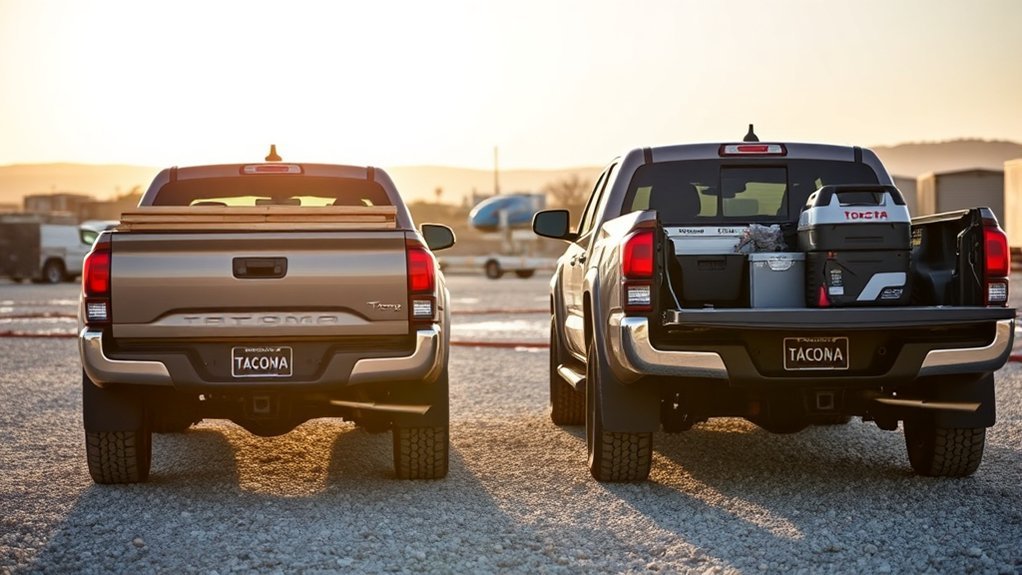
Do not assume a Double Cab automatically tows or carries more. Toyota’s 2023 specification table lists a maximum payload of 1,685 pounds and a maximum towing capacity of 6,800 pounds for certain Access Cab configurations. The highest listed Double Cab figures are 1,560 pounds of payload and 6,700 pounds of towing.
Those are maximum examples, not ratings for every truck. Four-wheel drive, long beds, manual transmissions, off-road equipment, added options, and heavier trim packages can reduce available payload or towing capacity.
The redesigned fourth-generation Tacoma uses different ratings. Toyota’s 2024 launch information listed a maximum towing capacity of 6,500 pounds and a maximum payload of 1,709 pounds, but those figures apply to specific current-generation configurations, not to the discontinued Access Cab. You can review Toyota’s current-generation details in its official Tacoma launch information.
Warning: Never tow based only on a model-wide maximum. Confirm the exact truck’s payload label, owner’s manual, hitch rating, gross combined weight rating, and towing chart. Passenger weight, cargo, accessories, and trailer tongue weight all use part of the truck’s available payload.
A practical payload calculation looks like this:
Available payload for additional cargo = door-label payload minus passengers, installed accessories, in-cab cargo, bed cargo, and trailer tongue weight.
Use Toyota’s manual and warranty portal to locate the instructions for the exact model year and configuration.
Tacoma Cab Handling in Snow
Cab style alone does not determine winter performance. Tire type, tire condition, cold tire pressure, drivetrain, speed, visibility, and driver input have a much larger effect than the Access Cab or Double Cab name.
A long-bed Double Cab has a longer wheelbase than a short-bed truck, but no verified Toyota test shows that one cab is universally safer in snow. Road conditions can also change faster than any small difference in truck dimensions.
- Use tires suited to your climate and expected snow depth.
- Check cold tire pressure using the driver-door label.
- Reduce speed before reaching a curve or downhill section.
- Increase following distance so you have more time to stop.
- Make gentle steering, throttle, and braking inputs.
- Secure all emergency supplies and cargo so they cannot move during a sudden stop.
The National Highway Traffic Safety Administration recommends slowing down, increasing following distance, checking tires when cold, inspecting tread and sidewalls, and considering winter tires where conditions justify them.
Do not add a fixed amount of sandbags or ballast by default. Extra weight reduces available payload and can become hazardous if it is poorly positioned or unsecured. Follow the vehicle manual and stay within the truck’s listed limits.
Everyday Usability: Doors, Access, and Storage
The older Access Cab works well when the rear area is used more often for bags, tools, groceries, or occasional passengers than for daily adult seating. Its rear-hinged doors create a wide opening when both front and rear doors are open, but they are less convenient in narrow parking spaces.
The Double Cab is easier when you regularly load passengers, child seats, pets, work crews, or valuable gear. Each rear door opens independently, and the rear bench provides more usable seating and interior storage flexibility.
The current XtraCab is designed around secure storage rather than passengers. Toyota provides lockable storage behind the front seats, a long-slide driver’s seat for access, and a front passenger seat that can fold flat for use as a work surface. Current Double Cab models use folding rear seating and under-seat storage on supported configurations.
For child-seat use, the Double Cab is normally the practical starting point because it provides full rear doors and a larger rear seating area. Always confirm the child restraint’s fit and installation requirements using the truck manual and the seat manufacturer’s instructions. The NHTSA child-seat guide provides additional selection and installation guidance.
Trim Availability and Feature Differences by Cab
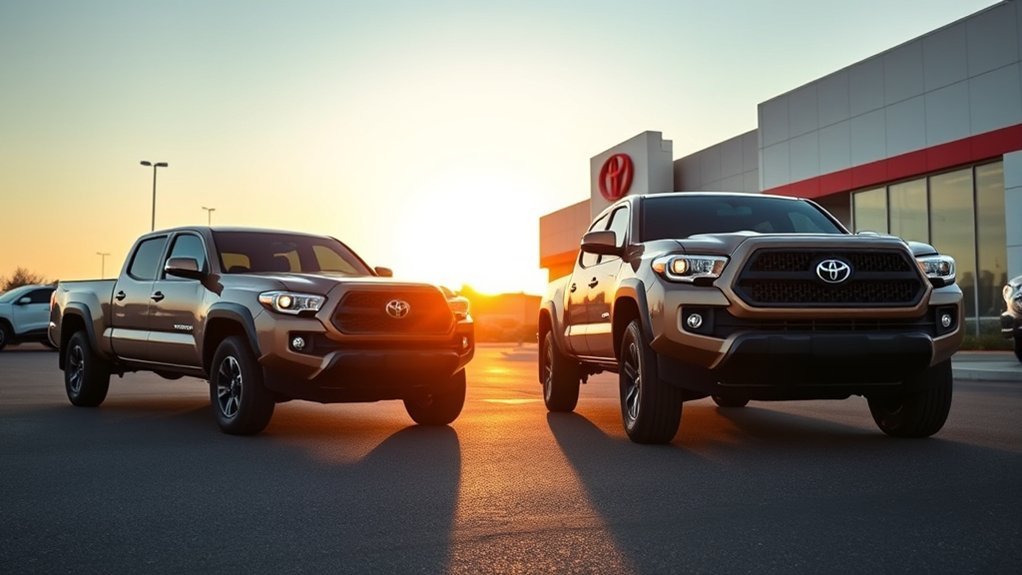
Trim availability is one of the clearest reasons to separate older Access Cab trucks from the current XtraCab. The same trim name may also have different engines, suspension, packages, and bed combinations across model generations.
Trim Availability by Model Year
| Model year and cab | Verified grade availability | Typical bed choice |
|---|---|---|
| 2023 Access Cab | SR, SR5, TRD Sport, TRD Off-Road | 73.7-inch bed |
| 2023 Double Cab | SR, SR5, Trail Special Edition, TRD Sport, TRD Off-Road, Limited, TRD Pro | 60.5-inch or 73.7-inch bed, depending on grade |
| 2026 XtraCab | SR, SR5, TRD PreRunner | 6-foot bed |
| 2026 Double Cab | Available across the broader current range, including TRD Sport, TRD Off-Road, Limited, hybrid grades, Trailhunter, and TRD Pro | 5-foot or 6-foot bed where supported |
Feature Differences per Trim
SR and SR5 focus on general utility and offer the broadest current cab choices. For 2026, SR is available as a Double Cab with a 5-foot bed or an XtraCab with a 6-foot bed. SR5 adds a Double Cab 6-foot option as well as XtraCab availability.
The current TRD PreRunner is a two-wheel-drive XtraCab with a 6-foot bed, an electronically locking rear differential, all-terrain-oriented equipment, and utility-focused rear storage. Current TRD Sport, TRD Off-Road, Limited, Trailhunter, and TRD Pro models focus on Double Cab configurations.
Higher trims may add upgraded suspension, larger displays, premium audio, off-road hardware, power features, or hybrid power. Availability changes by model year, drivetrain, transmission, and bed length, so trim names alone do not confirm the full specification.
Options and Package Limits
Cab and bed selection can affect more than passenger space. It may also change the available engine, transmission, rear suspension, drivetrain, towing equipment, audio package, safety technology, and off-road hardware.
- 2023 Access Cab: No Limited or TRD Pro configuration.
- 2023 Double Cab: Broader luxury and off-road trim access.
- 2026 XtraCab: Limited to SR, SR5, and TRD PreRunner.
- 2026 Double Cab: Required for the wider current performance, luxury, and hybrid range.
- Bed availability: A trim may support only one bed length even when another Double Cab trim supports both.
Verify the full configuration with the original window sticker, VIN-specific build information, current Toyota configurator, and owner’s manual.
Who Each Cab Is Best For: Work, Family, or Weekend Use
The best cab depends on how many people you carry, how often you use the rear seat, what you place in the bed, and where you park. Model year matters because a current XtraCab cannot carry rear passengers.
Best for Daily Work
A used Access Cab works well for one- or two-person crews that occasionally need two small rear seating positions. Its 6-foot bed handles long tools and building materials without requiring the longer Double Cab long-bed body.
A current XtraCab is even more work-focused. It gives you two seats, a 6-foot bed, and lockable storage behind the front seats. Choose it when secure tool storage matters more than carrying rear passengers.
A Double Cab is better for multi-person crews. It also keeps bags, electronics, and weather-sensitive equipment inside the cab while leaving the bed available for larger cargo.
Family Comfort and Space
Choose Double Cab for regular family use. It seats five, provides full rear doors, and offers much more second-row legroom than the older Access Cab.
An Access Cab may work when rear-seat use is rare and every passenger fits the seat, belt, and restraint requirements. It is not the best choice for frequent adult rear passengers or repeated child-seat loading.
The 2024–2026 XtraCab is not a family-carrying substitute because it has no rear seat. A family shopping for a current Tacoma should start with Double Cab.
Weekend Off-Road Fun
For off-road trips, trim hardware usually matters more than cab name. Tires, suspension, ground clearance, skid protection, recovery points, four-wheel drive, locking differentials, and driver experience have a greater effect on trail capability.
- Double Cab: Best for group trips, rear passengers, and keeping equipment inside the cabin.
- Access Cab: Useful for solo or two-person trips in a 2023-or-older truck when the 6-foot bed is a priority.
- XtraCab: Useful for two-person trips that need secure storage and a 6-foot bed.
- Double Cab long bed: Adds cargo length but also increases overall length and turning space.
Quick Checklist to Choose the Right Tacoma Cab
- Identify the model year. Access Cab applies to 2023 and older trucks. XtraCab applies to the current generation.
- Count regular passengers. Choose Double Cab for more than two regular occupants or routine family use.
- Measure your longest common cargo. Decide whether a 5-foot bed is enough or whether you need the 6-foot class bed.
- Check parking space. A long-bed Double Cab requires more garage depth and turning room.
- Verify payload and towing. Use the exact truck’s label and manual, not a general internet maximum.
- Confirm trim availability. Cab, bed, drivetrain, transmission, and trim combinations change by model year.
- Test rear access. Sit in the rear, open the doors in a normal parking space, and test any child-seat or equipment setup before buying.
Related Guides
Frequently Asked Questions
What is the difference between a Tacoma Access Cab and Double Cab?
On 2023 and older Tacomas, Access Cab seats four, uses small rear-hinged rear doors, and has a 6-foot-class bed. Double Cab seats five, has four full-size front-hinged doors, and may have a 5-foot or 6-foot bed depending on the year and trim.
Does Toyota still make the Tacoma Access Cab?
No. Toyota ended Access Cab after the 2023 model year. The 2024–2026 Tacoma uses a two-seat XtraCab with no rear doors or rear seat, plus a 6-foot bed.
Is the 2024–2026 Tacoma XtraCab the same as the old Access Cab?
No. The old Access Cab had small rear doors and rear seats for up to four occupants. The current XtraCab has two seats, no rear doors, and lockable storage behind the front seats.
Which Tacoma cab has more rear legroom?
For 2023, Toyota listed 24.6 inches of rear legroom in Access Cab and 32.6 inches in Double Cab. Double Cab therefore provides 8.0 additional inches.
Which Tacoma cab tows more?
Cab name alone does not determine towing. In Toyota’s 2023 brochure, the highest listed Access Cab rating was 6,800 pounds and the highest Double Cab rating was 6,700 pounds. Exact ratings depend on engine, drivetrain, transmission, bed, equipment, and trim.
Does a Tacoma Double Cab come with a 6-foot bed?
Yes, on certain years and grades. Toyota’s 2023 brochure lists supported Double Cab long-bed configurations, and the 2026 SR5 is available as a Double Cab with either a 5-foot or 6-foot bed.
Why did Toyota get rid of the Access Cab?
Toyota replaced the Access Cab during the 2024 Tacoma redesign with a utility-focused XtraCab. The new layout uses two seats, a 6-foot bed, and lockable storage instead of rear doors and rear seats.
What are the disadvantages of a Double Cab?
A Double Cab with a 6-foot bed is longer and needs more turning and parking space than a short-bed Double Cab or older Access Cab. A 5-foot Double Cab is easier to maneuver but gives up about 13 inches of bed length compared with the 2023 6-foot-class bed.
Conclusion
Choose a Double Cab when rear passengers, children, or full-size rear doors are part of normal use. Choose a 2023-or-older Access Cab when you want a 6-foot bed, compact overall length, and only occasional rear seating. For a new 2026 Tacoma, compare Double Cab with XtraCab instead. XtraCab is best for two-person utility use, while Double Cab provides the passenger space and broader trim selection most mixed-use owners need.
Before buying, confirm the exact model year, bed length, drivetrain, payload label, towing chart, and trim configuration. Those details matter more than a broad cab-name comparison.
Sources
- 2026 Toyota Tacoma product page — current XtraCab and Double Cab availability, trims, beds, and storage features.
- Toyota USA Newsroom: 2024 Tacoma launch — XtraCab seating, doors, storage, trims, launch towing, and payload information.
- 2023 Toyota Tacoma brochure — Access Cab and Double Cab dimensions, seating, payload, towing, bed lengths, and trim availability.
- Toyota manuals and warranties — model-year-specific owner manuals and vehicle instructions.
- NHTSA winter-driving guidance — winter tires, cold tire pressure, following distance, and safe driving practices.
- NHTSA child-seat guidance — selecting and installing appropriate child restraints.