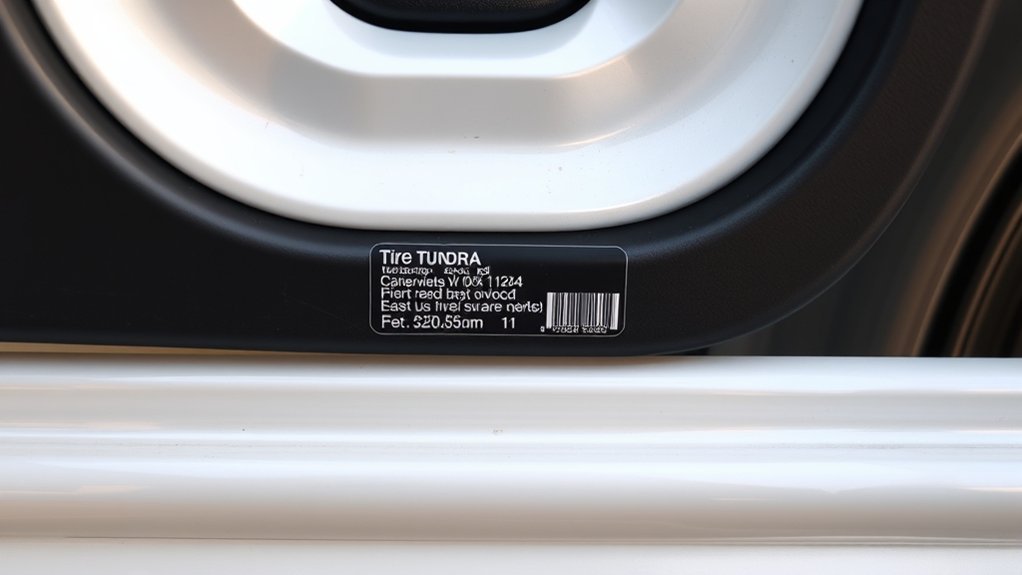
Your Toyota Tundra’s tire information label is the quickest, most reliable place to find the original tire size, the manufacturer-recommended cold tire pressure, and the maximum combined weight of occupants and cargo for your specific truck. Because these values vary by model year, trim, wheel package, and configuration, use the label on your own Tundra rather than a generic PSI chart.
Quick Answer
Open the driver’s door and read the Tire and Loading Information label on the door jamb or B-pillar. Inflate the original-size tires to the listed front and rear pressures when the tires are cold. Do not substitute the maximum pressure molded on the tire sidewall or automatically add pressure for towing.
Key Takeaways
- The correct PSI is the cold pressure printed on your truck’s label or specified in its owner’s manual—not a universal Tundra number.
- The label shows original tire sizes and the maximum combined weight of occupants and cargo.
- Trailer tongue weight, passengers, accessories, and bed cargo all consume available payload.
- Do not add 5–10 PSI for towing unless Toyota or the tire manufacturer provides a load-specific recommendation for your exact setup.
- Replacement tires must have suitable size, load capacity, speed capability, wheel compatibility, and TPMS compatibility.
At a Glance
| Time Required | 5–10 minutes for a label and pressure check |
| Difficulty | Easy |
| Tools Needed | Accurate tire-pressure gauge and an air source |
| Cost | Usually no cost if you own a gauge; otherwise the price of a basic tire-pressure gauge |
Understanding the Importance of the Tire Information Label
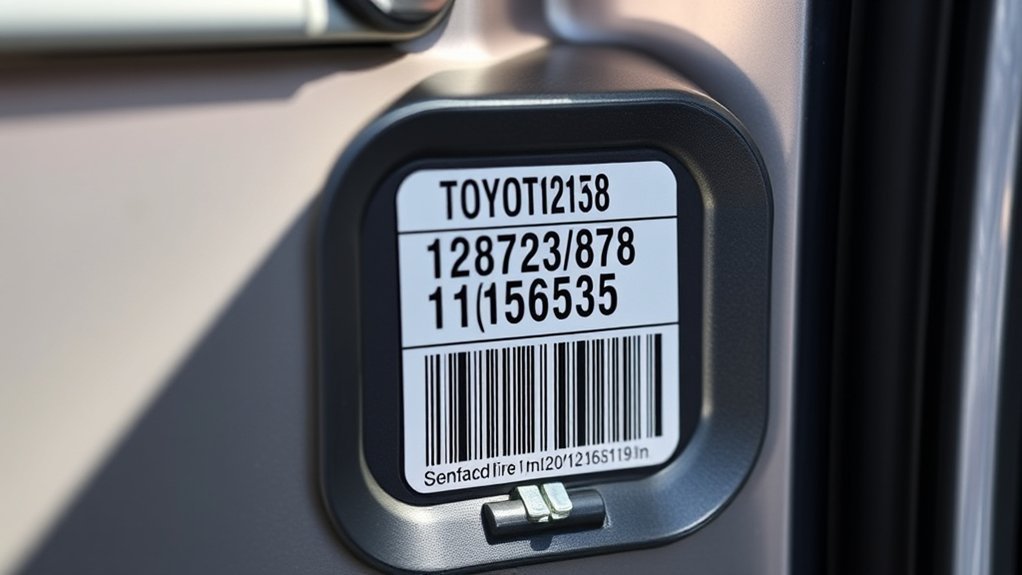
The tire information label is matched to the way your Tundra was configured when it left the factory. Under U.S. tire-labeling safety rules, the label identifies the vehicle manufacturer’s recommended cold pressure and original tire size, along with passenger and cargo information. It is normally attached to the driver-side B-pillar or another approved location near the driver’s door.
That makes the label more useful than a generic chart. Two Tundras from different years—or even two trucks from the same year with different wheel, tire, cab, bed, or package combinations—may not share the same tire size or pressure specification.
Proper inflation supports load carrying, braking, handling, tread life, and fuel economy. FuelEconomy.gov also advises using the vehicle label or owner’s manual rather than the tire sidewall’s maximum pressure. Underinflation creates excess flex and heat, while excessive pressure can reduce ride quality and change the tire’s contact with the road.
The correct pressure is the vehicle manufacturer’s cold-pressure specification for your exact Tundra—not the tire sidewall’s maximum-pressure marking.
What Information Is Included on the Tire Information Label?
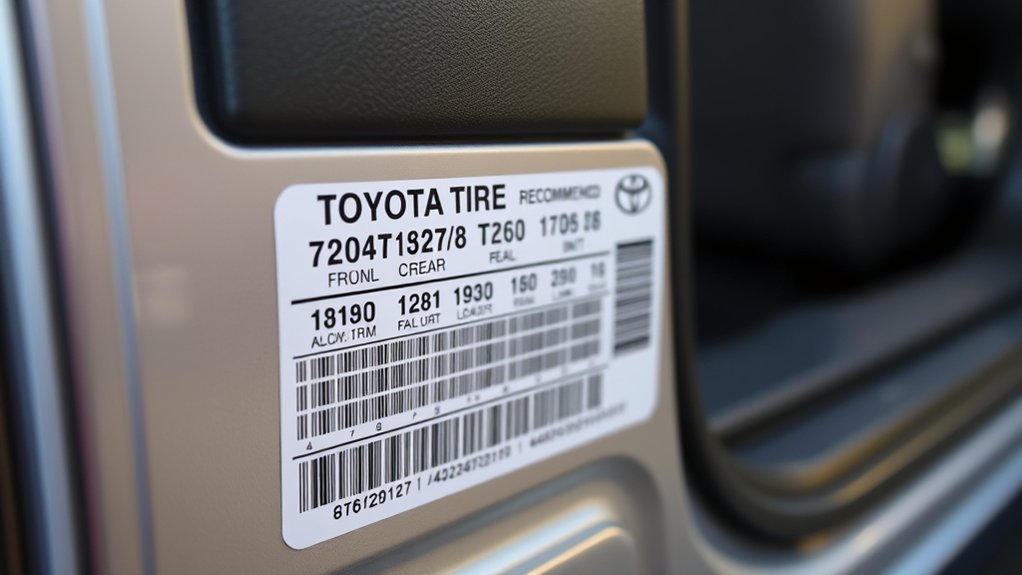
A North American Tire and Loading Information label generally gives you four pieces of information that matter during everyday use:
- Combined occupant-and-cargo limit: the maximum total weight of people and cargo that the vehicle may carry.
- Seating capacity: the designated number and location of occupants.
- Original tire size: the tire size installed for the vehicle’s original configuration, plus spare-tire information when applicable.
- Recommended cold tire pressure: separate front, rear, and spare values when the specifications differ.
The tire label does not replace the certification label. The nearby certification label contains ratings such as gross vehicle weight rating (GVWR) and gross axle weight ratings (GAWR). When hauling or towing, you must remain within the payload statement, GVWR, each GAWR, tire limits, hitch limits, and the truck’s applicable towing limits.
Note: Factory or dealer-installed accessories can reduce the payload available for people, cargo, and trailer tongue weight. Use the labels on the actual truck rather than a brochure’s maximum payload figure.
What Tire Pressure Should I Use for My Toyota Tundra?
Use the front and rear cold tire pressures printed on your own Tundra’s label. There is no single correct PSI for every Toyota Tundra. The pressure can vary with model year, tire size, axle configuration, and equipment.
“Cold” means the truck has been parked long enough for tire heat from driving to dissipate. Federal TPMS instructions define the normal maintenance check as monthly, when cold. A practical routine is to check the tires before driving in the morning or after the truck has been parked for at least three hours.
How to Check and Adjust Tundra Tire Pressure
- Park on a safe, level surface and let the tires cool.
- Open the driver’s door and photograph the Tire and Loading Information label for easy reference.
- Remove the valve cap and press an accurate gauge firmly onto the valve stem.
- Compare the reading with the label’s front or rear cold-pressure value.
- Add air in short bursts if pressure is low. If it is high while the tire is cold, release small amounts and recheck.
- Repeat for all road tires and the spare if your Tundra has one with a listed pressure.
- Reinstall the valve caps and inspect the tires for nails, cuts, bulges, cracking, or uneven wear.
Warning: Do not inflate the tires to the “maximum pressure” molded on the sidewall unless that pressure is specifically required for an approved load application. The sidewall marking is not a replacement for the vehicle’s placard pressure.
What the TPMS Light Means
The tire-pressure monitoring system is a warning system, not a precision maintenance schedule. Federal requirements allow the low-pressure warning to activate only after a tire becomes significantly underinflated, so a tire can need adjustment before the warning appears.
- Steady warning light: stop safely, inspect the tires, and check pressure as soon as possible.
- Light that appears on a cold morning and later turns off: pressure may be close to the warning threshold; check all tires cold rather than ignoring it.
- Light that flashes for about a minute and then stays on: the system may have a malfunction or incompatible sensor/wheel issue and should be inspected.
How to Read Tire Size Specifications for Your Toyota Tundra
A size such as 265/60R20 can be used to understand the format, but it is only an example—not a recommendation for every Tundra.
- 265: nominal tire section width in millimeters.
- 60: aspect ratio; the sidewall height is 60% of the nominal section width.
- R: radial construction.
- 20: wheel diameter in inches.
The sidewall may also show a load index and speed symbol, such as “112H,” plus service descriptions such as P-metric, LT, XL, or a load range. These markings affect load capability and operating limits. They are not interchangeable simply because the overall dimensions look similar.
Pro Tip: When buying replacements, take a clear photo of both the door label and the complete sidewall marking. A qualified tire professional can compare size, load index, speed rating, wheel width, and inflation requirements without relying on memory.
What’s the Right Load Capacity for Safe Driving?
Start with the statement on the label: “The combined weight of occupants and cargo should never exceed …” That figure is the vehicle’s available occupant-and-cargo capacity as labeled. It is not the amount you can place in the bed after filling every seat.
Count all load added to the truck, including:
- the driver and passengers;
- cargo in the cab and bed;
- toolboxes, racks, caps, steps, winches, and other accessories added after certification;
- the portion of trailer weight pressing down on the hitch;
- the weight of a weight-distributing hitch or other towing equipment.
For example, if a label allows 1,400 pounds of combined occupants and cargo, and the truck carries 500 pounds of people, 350 pounds of cargo, and 600 pounds of trailer tongue weight and hitch equipment, the total is 1,450 pounds. That setup is 50 pounds over the labeled capacity even if the trailer itself is below the advertised tow rating.
Load Rating, Load Index, and Load Range
A tire’s load index is a code tied to a maximum load under standardized conditions. An LT tire’s load range identifies a strength and inflation category, but the letter alone does not prove that a tire is correct for your truck.
Do not assume every Tundra requires Load Range E tires. The correct replacement must meet the vehicle manufacturer’s requirements for the actual configuration. A heavier-duty tire can also require different inflation guidance, affect ride and handling, and create wheel or TPMS compatibility issues.
How Do I Adjust Tire Pressure for Towing?
Do not automatically add 5–10 PSI when towing. For original-equipment tire sizes, begin with the cold pressures on the Tire and Loading Information label and follow the towing section of the Toyota owner’s manual for your exact model year.
Warning: Extra air does not create extra payload, raise GVWR or GAWR, increase hitch capacity, or make an overloaded tire safe. Never exceed the tire, wheel, axle, or vehicle limits.
When a Different Towing Pressure May Be Appropriate
A different pressure may be appropriate only when supported by Toyota’s instructions or by a tire manufacturer’s load-and-inflation data for an approved replacement tire. This situation is more common after changing from the original tire type or size, especially when fitting LT tires.
Because load tables depend on the exact tire designation and actual axle load, a generic “5 PSI rule” is not a safe substitute. Have the loaded truck and trailer weighed and obtain a written pressure recommendation from the tire manufacturer or a qualified commercial tire professional when the factory placard no longer matches the installed tire specification.
Monitor Weight Distribution Regularly
For a meaningful towing check, load the truck and trailer exactly as they will travel, including passengers, fuel, cargo, hitch equipment, and water or supplies. Use a certified scale to record the truck’s front and rear axle weights and the combination weight.
Compare the results with the truck’s GVWR and GAWR labels, the tire capacities at the approved pressure, the hitch rating, and the towing limits in the owner’s manual. Correct overloading or poor weight distribution by reducing or repositioning cargo—not by using pressure alone as a workaround.
How to Choose Replacement Tires for a Toyota Tundra
The safest starting point is the same size and service specification shown on the vehicle label or another combination specifically approved by Toyota. A replacement tire should provide suitable load capacity and speed capability and must fit the wheel correctly.
Also confirm:
- wheel width, diameter, offset, and load rating;
- clearance at full steering lock and through suspension travel;
- compatibility with four-wheel-drive, ABS, stability-control, and TPMS systems;
- the correct pressure for any non-original tire type or size;
- whether the spare remains compatible with the road tires.
What About the 3% Tire Rule?
The often-repeated “3% rule” is a fitment heuristic that aims to keep replacement tire diameter close to the original. It is not a Toyota approval, a federal safety guarantee, or proof that a tire will clear the bodywork and carry the required load.
Even a small diameter change can affect speedometer and odometer readings, gearing, spare-tire compatibility, driver-assistance calibrations, and clearance. Verify the complete fitment with Toyota guidance and a qualified tire professional rather than relying on diameter alone.
Tips for Maintaining Optimal Tire Health and Performance
A simple maintenance routine can prevent many pressure, wear, and handling problems.
Regular Tire Pressure Checks
- Check all tires at least monthly and before long trips, towing, or heavy hauling.
- Measure pressure when the tires are cold.
- Recheck after a major seasonal temperature change.
- Inspect tread and sidewalls for cuts, punctures, bulges, cracking, and uneven wear.
- Investigate repeated pressure loss instead of continually topping off the tire.
- Do not rely on appearance; a radial tire can be seriously underinflated without looking flat.
Scheduled Tire Rotations
Follow the rotation interval and pattern in the maintenance guide for your Tundra and tire setup. As general NHTSA guidance, many vehicles use a 5,000- to 8,000-mile interval when rotation is recommended, but different-size front and rear tires, directional tires, or special wheel packages can limit the available patterns.
During rotation, ask for an inspection of tread depth, irregular wear, wheel damage, valve stems, balance, and alignment symptoms. Record the mileage so emerging wear patterns are easier to spot.
Frequently Asked Questions
How do I read Toyota Tundra tire loading information?
Find the driver-door Tire and Loading Information label. Note the maximum combined weight of occupants and cargo, original tire sizes, and cold front, rear, and spare pressures. Then check the nearby certification label for GVWR and GAWR. Stay within every applicable limit.
What tire load rating should I use for a Tundra?
Use a tire that meets or exceeds Toyota’s required load capability for your exact year, configuration, wheel, and tire size. Do not choose solely by a Load Range C, D, or E letter. Match the full size and service description and obtain approved pressure guidance for non-original tires.
What is the 3% tire rule?
It is a common aftermarket guideline for keeping overall tire diameter near the original size. It does not verify load capacity, wheel fit, clearance, TPMS operation, or Toyota approval, so it should not be treated as a safety rule.
What is the 5 PSI rule?
There is no universal Toyota rule that says to add 5 PSI for a heavy load or trailer. Use the placard and owner’s manual for original tires. For approved replacement LT tires, use the tire manufacturer’s load-and-inflation data based on actual axle weight.
Should I use the door-label PSI or the pressure on the tire sidewall?
For the original tire specification, use the cold PSI on the vehicle label. The sidewall pressure is associated with the tire’s rated limits and is not the normal vehicle recommendation.
Does trailer tongue weight count against Tundra payload?
Yes. The downward load applied by the trailer at the hitch, plus hitch equipment, passengers, accessories, and cargo, uses the truck’s occupant-and-cargo capacity and contributes to axle and gross vehicle weight.
Conclusion
Your Toyota Tundra’s tire information label is the starting point for safe inflation, tire replacement, hauling, and towing decisions. Read the cold front and rear pressures from your own truck, account for every person and item that consumes payload, and verify axle and tire limits before a loaded trip. If the installed tires no longer match the label, get load-specific guidance rather than guessing at a new PSI.
Sources
- Toyota Manuals and Warranties — model-year owner’s manuals and maintenance guidance.
- NHTSA TireWise — tire pressure, label location, replacement sizing, inspection, TPMS, and rotation guidance.
- 49 CFR § 571.110 — required tire placard contents, location, and tire-load requirements.
- 49 CFR § 571.138 — TPMS warning thresholds and required owner instructions.
- FuelEconomy.gov Vehicle Maintenance Guidance — proper pressure location and fuel-economy effects of underinflation.