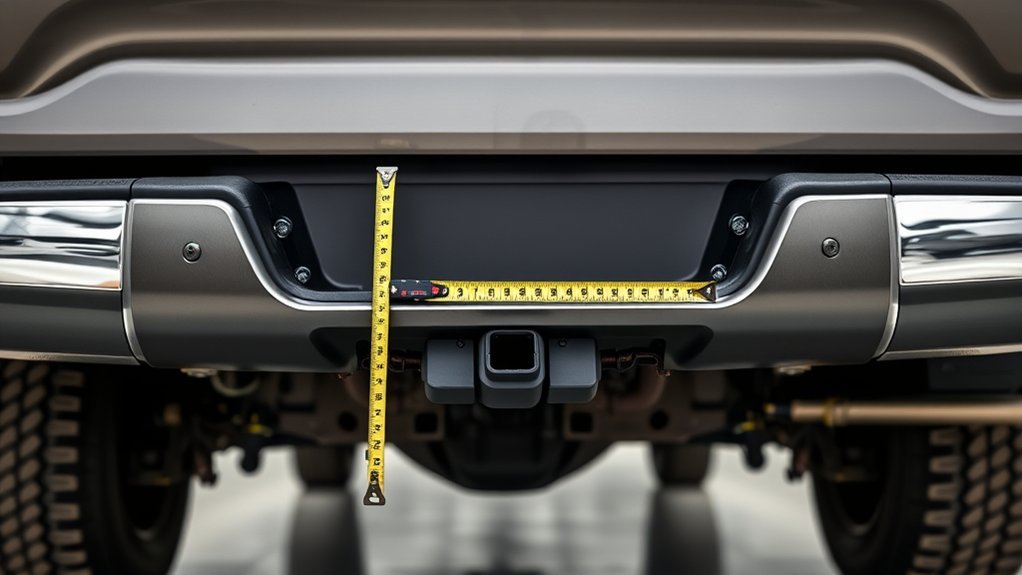
Most modern factory-equipped Toyota Tundras use a 2-inch square hitch receiver, but the opening size alone does not tell you how much the truck can tow. Your actual limit depends on the model year, cab, bed, drivetrain, powertrain, payload, hitch label, trailer weight, tongue weight, and every towing component you use.
Quick Answer
Most modern factory-equipped Toyota Tundras use a 2-inch receiver. Recent U.S. models have a Class IV factory hitch, while selected configurations are rated to tow up to 12,000 pounds. Measure the inside opening and check the receiver label and owner’s manual before buying a ball mount or towing.
Key Takeaways
- A modern Toyota Tundra factory receiver normally has a 2-inch by 2-inch inside opening.
- Receiver size, hitch class, ball-mount shank size, hitch-ball diameter, and trailer-coupler size are different measurements.
- Recent Tundra tow ratings vary by configuration and can range from about 8,300 to 12,000 pounds.
- Your safe limit is the lowest rating among the truck, receiver, ball mount, ball, coupler, trailer, tires, and other components.
- Installing a larger or stronger receiver does not increase Toyota’s published towing, payload, axle, or combination-weight limits.
What Size Hitch Receiver Is on a Toyota Tundra?
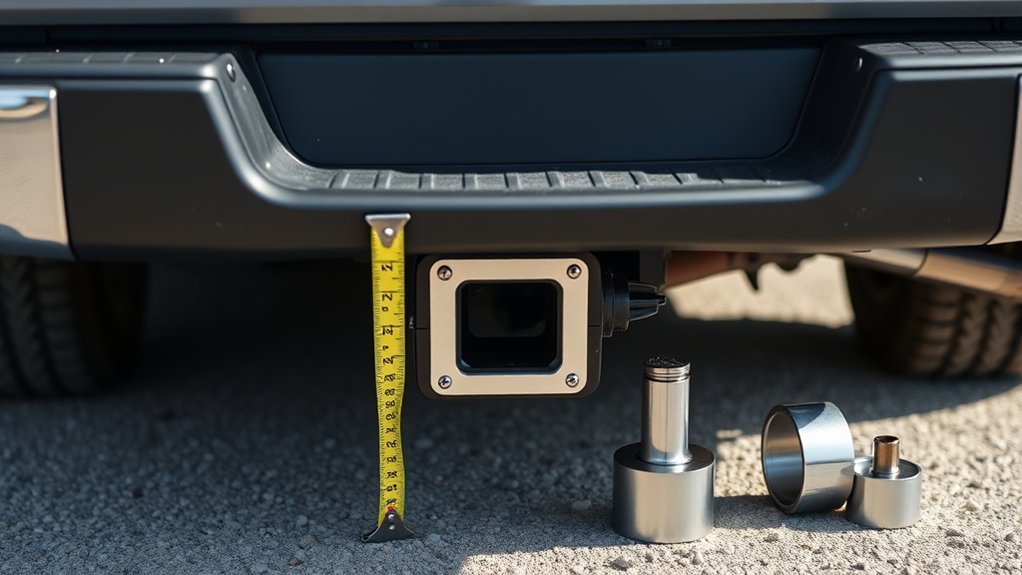
The standard answer for most modern factory-equipped Toyota Tundras is a 2-inch square receiver. Toyota identifies the factory towing equipment on recent models as a Class IV towing hitch receiver, and Class IV receivers normally use a 2-inch by 2-inch opening.
That means a compatible ball mount, bike rack, cargo carrier, or other receiver-mounted accessory needs a 2-inch shank. The receiver measurement does not refer to the trailer ball. A truck can have a 2-inch receiver while using a 1-7/8-inch, 2-inch, or 2-5/16-inch trailer ball.
Note: Factory equipment and availability differ by model year and configuration. Older trucks, trucks without a factory tow package, and trucks with aftermarket receivers may not match current specifications. Verify your individual truck before ordering an accessory.
How to Measure Your Tundra’s Receiver
- Park the truck safely, set the parking brake, and remove any installed ball mount or accessory.
- Clean dirt or rust from the mouth of the receiver so you can see the inside edges.
- Measure the inside width and inside height of the square opening, not the outside dimensions.
- An opening measuring approximately 2 inches wide by 2 inches high accepts a 2-inch shank.
- Read the receiver’s label or stamped rating for gross trailer weight, tongue weight, and any separate weight-distribution rating.
You should also check the towing section of the owner’s manual for your exact year. Toyota provides current and older manuals through its official Tundra owner-manual portal.
Receiver Size, Hitch Class, and Ball Size Are Different
Several towing measurements are often called “hitch size,” which causes confusion. You need to identify each part separately before connecting a trailer or buying an accessory.
| Term | What It Measures | Tundra Example |
| Receiver opening | The inside width and height of the square tube | Normally 2 inches by 2 inches on modern factory-equipped trucks |
| Ball-mount shank | The square section that slides into the receiver | Must match the 2-inch receiver opening |
| Hitch class | A category based on construction, application, receiver size, and ratings | Toyota lists a Class IV factory receiver on recent models |
| Hitch-ball diameter | The diameter of the ball attached to the ball mount | Must match the size stamped on the trailer coupler |
| Trailer coupler | The trailer component that locks over the ball | Common sizes include 1-7/8, 2, and 2-5/16 inches |
How Does the 2-Inch Receiver Compare With Other Sizes?
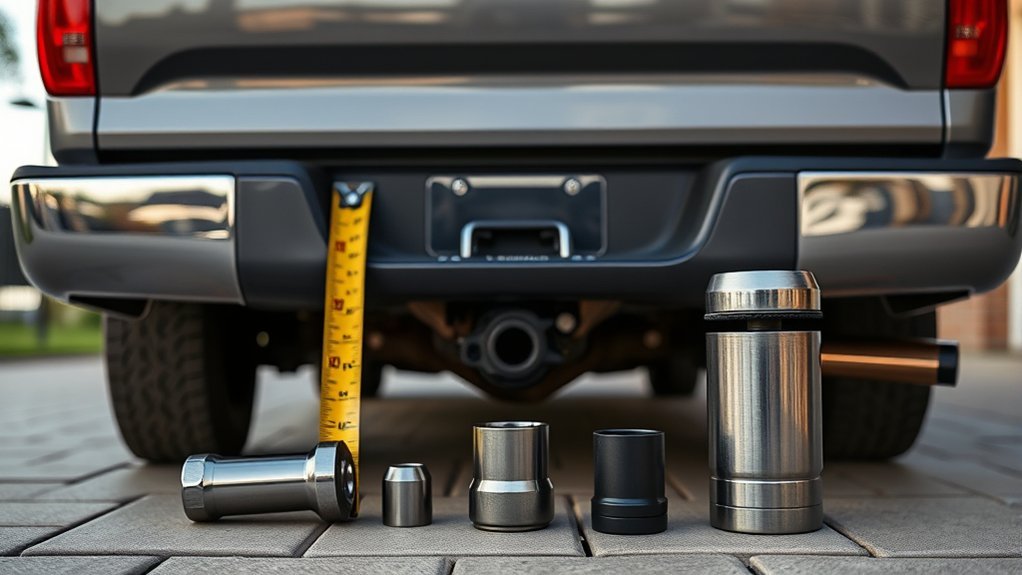
A 2-inch receiver is popular because it accepts a broad range of towing and carrying accessories. However, receiver dimensions do not establish a universal towing limit. Two receivers with the same opening can have different ratings because their materials, mounting systems, vehicle applications, and testing differ.
| Receiver Opening | Common Classes | Typical Applications |
| 1-1/4 inches | Class I and II | Cars, crossovers, small SUVs, light trailers, and lightweight carriers |
| 2 inches | Class III, Class IV, and some Class V products | Pickup trucks, full-size SUVs, vans, travel trailers, boats, and cargo accessories |
| 2-1/2 inches | Heavy-duty Class V | Heavy-duty pickups, commercial towing, equipment trailers, and large campers |
| 3 inches | Heavy-duty OEM or aftermarket systems | Selected modern heavy-duty trucks and high-capacity towing components |
Industry class charts are useful for comparing products, but you must use the ratings printed on the exact receiver and accessories installed on your truck. The CURT hitch-class guide shows that identical receiver sizes can appear in more than one class.
What Vehicles Typically Use a 2-Inch Hitch Receiver?
Two-inch receivers are common on vehicles designed for moderate or heavy towing and on vehicles that carry larger hitch-mounted accessories. Typical examples include:
- Full-size pickups and many midsize pickups
- Full-size SUVs and selected midsize SUVs
- Full-size vans and some properly equipped minivans
- Crossovers equipped with vehicle-specific Class III receivers
The Toyota Tundra belongs to the full-size pickup segment, where the 2-inch receiver remains widely used. Heavy-duty pickups may instead use 2-1/2-inch or 3-inch receivers, depending on model year and factory equipment.
How Model Year, Trim, and Configuration Affect Towing Capacity
A Tundra’s tow rating is not determined by trim level alone. The cab, bed length, drivetrain, engine or hybrid powertrain, installed towing equipment, curb weight, passengers, cargo, and optional equipment can all change the published limit.
For example, Toyota’s 2025 specifications list several SR configurations at 8,300 pounds, while a properly configured SR5 4×2 Double Cab reaches 12,000 pounds. Other Limited, Platinum, 1794 Edition, TRD Pro, and Capstone configurations have their own ratings. Toyota also lists a maximum of up to 12,000 pounds for the 2026 Tundra.
For 2026, Toyota states that a tow hitch and 7/4-pin connector are standard on all models. Earlier model years may make the receiver or other towing equipment standard, optional, or part of a package.
Warning: Never use the lineup’s advertised maximum as the rating for your individual truck. Check the towing table for your exact configuration and account for passengers, cargo, accessories, payload, tongue weight, axle ratings, and the ratings of every towing component.
Payload and Tongue Weight Matter
Trailer tongue weight presses down on the truck and uses part of its available payload. Passengers, tools, cargo, a bed cap, running boards, and other equipment also consume payload. A truck may reach its payload or rear-axle limit before reaching its advertised maximum trailer weight.
Use the certification and tire-loading labels on your truck together with the owner’s manual. Do not rely only on an online maximum or a generic trim description.
Understanding Class III vs. Class IV Hitch Features
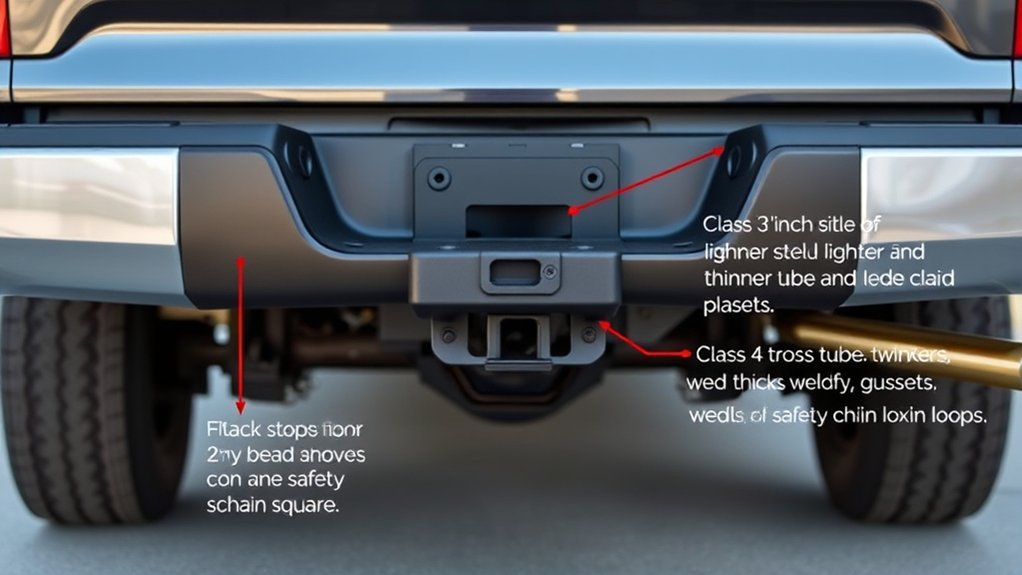
Class III and Class IV receivers commonly share a 2-inch opening, but they are not automatically rated the same. As a general aftermarket guide, CURT lists Class III products up to about 8,000 pounds and Class IV products up to about 10,000 pounds in weight-carrying use. Some products have higher separate weight-distribution ratings.
Those figures are general class guidance, not a replacement for the rating label on a specific receiver. Toyota’s factory-engineered system may be paired with a Tundra configuration rated above the generic 10,000-pound Class IV figure. Follow Toyota’s configuration-specific limit and the lowest rating marked on the installed equipment.
The safe towing limit is always the lowest rating in the complete system, not the largest number printed in an advertisement.
Weight-Distribution Considerations
A weight-distribution hitch transfers part of the trailer’s tongue load through spring bars to help manage load across the tow vehicle and trailer axles. It can improve the setup when the vehicle, receiver, trailer, and weight-distribution-hitch manufacturers approve its use.
Do not rely on a rule stating that you need weight distribution whenever the trailer weighs more than half the truck. Instead, follow the instructions and limits for your exact Tundra, receiver, trailer, and weight-distribution system. Incorrect adjustment can overload components or create poor handling.
Choosing the Best Accessories for Your 2-Inch Receiver
Start with a ball mount that has a 2-inch shank and a weight rating that meets or exceeds the loaded trailer’s requirements. Then confirm each of the following:
- Ball diameter: Match the size stamped on the trailer coupler. Common sizes are 1-7/8, 2, and 2-5/16 inches.
- Ball capacity: The ball must be rated for at least the trailer’s loaded gross weight.
- Ball-mount capacity: Check both gross trailer weight and tongue-weight ratings.
- Rise or drop: Select a ball mount that keeps the loaded trailer approximately level.
- Hitch pin: Many 2-inch receiver accessories use a 5/8-inch pin, but verify the accessory instructions.
- Wiring: Confirm that the trailer lights, connector, breakaway system, and electric brakes operate correctly.
- Safety chains: Use properly rated chains and attach them according to the truck, hitch, and trailer instructions.
Pro Tip: Measure the receiver height and the loaded trailer-coupler height on level ground. Their difference helps you choose the correct ball-mount rise or drop and prevents the trailer from riding noticeably nose-high or nose-low.
Common 2-Inch Hitch Mistakes
Ignoring Component Ratings
Two ball mounts may fit the same 2-inch receiver but carry very different ratings. Check the truck, receiver, ball mount, hitch ball, coupler, safety chains, trailer, and tires. The lowest-rated component sets the limit.
Mismatching the Ball and Coupler
A 2-inch receiver does not mean you automatically need a 2-inch trailer ball. Read the size stamped on the trailer coupler and install a ball with the exact matching diameter. A coupler placed over the wrong ball can disconnect or move excessively.
Overlooking the Hitch Class and Label
Do not identify a receiver’s capacity from its opening alone. Read its label for weight-carrying and weight-distribution ratings. If the label is missing or unreadable, obtain the correct specifications from Toyota, the receiver manufacturer, or a qualified towing professional before use.
Confusing Receiver Size With Ball Size
The receiver opening determines the ball-mount shank size. The trailer coupler determines the ball diameter. Both must match their connecting parts, but they do not need to have the same measurement.
Using an Adapter or Extender Without Checking Its Effect
Reducers, adapters, and extenders can create additional leverage and may lower allowable tongue weight or towing capacity. Use one only when the manufacturer approves it for the application, and follow any reduced rating shown in its instructions.
When Does a Higher-Capacity Receiver Make Sense?
Replacing a receiver may make sense when the existing unit is damaged, badly corroded, missing, incompatible with a required accessory, or rated below the truck’s intended towing setup. A properly engineered replacement may also provide a more suitable attachment point or accessory fit.
However, a higher-rated receiver does not increase Toyota’s published towing capacity, payload, GVWR, GAWR, or GCWR. It only prevents the receiver from being a lower-rated weak link. The truck must still remain within every factory limit.
Do not install a 2-1/2-inch or 3-inch receiver simply because a larger opening appears stronger. Use a vehicle-specific product that is designed, tested, and rated for your exact Tundra model year and configuration.
Maintenance Tips for Your 2-Inch Hitch
Regular inspection helps you find wear before it affects the towing connection. Include these checks in your towing routine:
- Inspect the receiver, mounting points, welds, and surrounding frame area for damage, cracks, loose hardware, or severe corrosion.
- Remove packed dirt, road salt, and rust scale from the receiver opening.
- Check the hitch pin, clip, or lock for bending, wear, and full engagement.
- Inspect the ball mount and hitch ball for looseness, damage, or excessive wear.
- Apply a light coat of suitable grease to the hitch ball when the ball or coupler manufacturer recommends it.
- Inspect the electrical connector for corrosion, damaged pins, or loose wiring.
- Confirm that safety-chain attachment points remain solid and undamaged.
An anti-rattle device may reduce movement or noise from a compatible accessory, but it does not increase the receiver’s capacity. Make sure it does not interfere with the hitch pin, safety devices, or accessory instructions.
Pre-Tow Safety Checklist
- Confirm the truck’s exact towing and payload limits.
- Verify the loaded trailer weight and tongue weight.
- Check that the receiver, ball mount, hitch ball, coupler, and chains have adequate ratings.
- Lock the coupler fully and install its retaining pin or lock.
- Insert the hitch pin completely and secure its clip or lock.
- Cross and attach the safety chains as directed, leaving enough slack for turns.
- Connect the breakaway cable independently from the safety chains where applicable.
- Test the running lights, brake lights, turn signals, trailer brakes, and brake controller.
- Check truck and trailer tire pressures and inspect the tires for damage.
- Secure the trailer load and confirm that the truck and trailer sit correctly.
- Recheck the connection after driving a short distance.
Warning: Towing changes acceleration, braking distance, steering response, and stability. Reduce speed, leave additional following distance, avoid abrupt inputs, and follow all instructions in the truck, receiver, brake-controller, and trailer manuals.
Related Guides
Frequently Asked Questions
What size hitch receiver is on a Toyota Tundra?
Most modern factory-equipped Toyota Tundras use a 2-inch square receiver. Recent Toyota specifications identify the factory hitch as Class IV. Measure the inside opening and check the receiver label because model-year equipment and aftermarket installations can differ.
How do I measure my Tundra’s receiver?
Remove the accessory and measure the inside width and height of the square opening. A measurement of approximately 2 inches by 2 inches indicates a 2-inch receiver. Do not measure the receiver’s outside walls.
What is the difference between a 2-inch and 2-1/2-inch receiver?
The measurement describes the receiver’s inside opening. A 2-1/2-inch receiver accepts a larger shank and is common on heavy-duty Class V applications. It is not automatically safer or more capable on a Tundra, and it does not increase the truck’s factory tow rating.
Does a stronger receiver increase Toyota Tundra towing capacity?
No. A stronger receiver can keep that component from being the lowest-rated part, but it cannot raise Toyota’s published towing capacity, payload, axle ratings, GVWR, or GCWR.
What hitch-pin size does a 2-inch receiver use?
Many 2-inch receiver accessories use a 5/8-inch hitch pin. Verify the receiver and accessory instructions because pin length, design, and required rating may differ.
What trucks commonly have a 2-1/2-inch receiver?
Certain heavy-duty Ford Super Duty, Chevrolet Silverado HD, GMC Sierra HD, and Ram Heavy Duty configurations use 2-1/2-inch receivers. Equipment varies by year, model, package, and manufacturer, so check the individual truck.
Can I use a receiver adapter or extender on a Tundra?
You can use one only when the adapter, receiver, accessory, and vehicle manufacturers approve the setup. Adapters and extenders may reduce allowable capacity because they move the load farther behind the receiver.
Sources
- Toyota 2025 Tundra Brochure — factory Class IV receiver equipment and configuration-specific towing and payload ratings
- Toyota Vehicles for Towing — current Tundra maximum towing guidance and towing limitations
- Toyota 2026 Tundra Announcement — 2026 towing capacity and standard tow-hitch equipment update
- Toyota Tundra Owner’s Manuals — model-specific towing procedures, limits, and safety instructions
- CURT Trailer Hitch Classes Guide — receiver dimensions, hitch classifications, and general class-rating differences
Conclusion
Most modern Toyota Tundras with a factory towing receiver use a 2-inch opening, giving you access to a wide range of ball mounts and hitch-mounted accessories. However, the opening size does not establish the truck’s towing capacity.
Measure the receiver, read its label, check the owner’s manual for your exact configuration, and match every component to the loaded trailer. When all ratings, dimensions, wiring, tongue weight, and payload limits agree, your Tundra will have a safer and more stable towing setup.