Last updated: September 22, 2026 — factory-size references, load-rating guidance, upsizing checks, and FAQ answers re-verified.
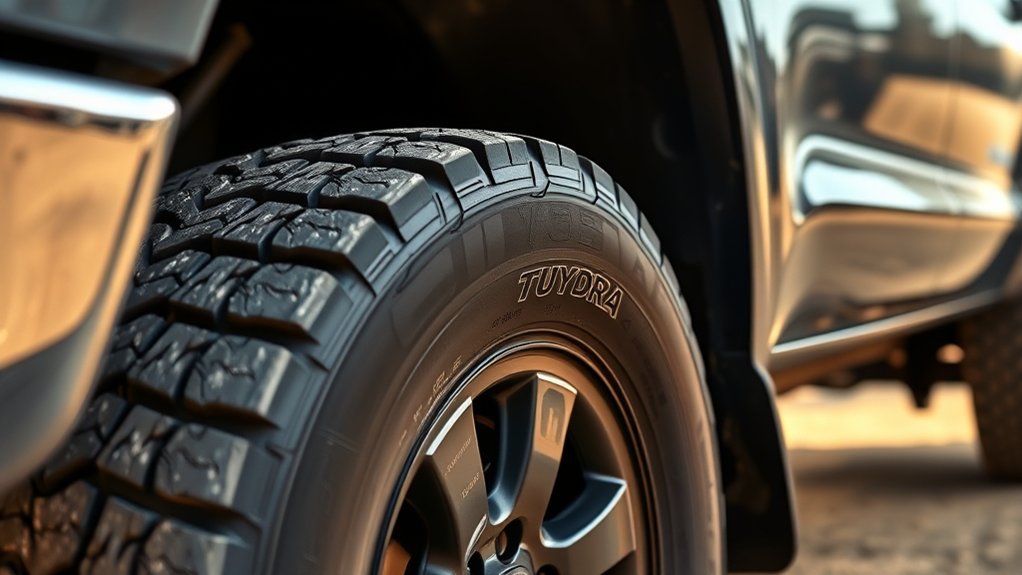
The correct Toyota Tundra tire size is the size printed on your truck’s driver-side Tire and Loading Information label. Use that label as the starting point, then confirm the wheel diameter, load index or load capacity, speed rating, and tire construction before buying a replacement. This matters most if you tow, haul, drive off-road, switch between P-metric and LT tires, or plan to upsize.
Quick Answer
Your Toyota Tundra’s correct factory tire size is the size listed on the driver-side Tire and Loading Information label or in the owner’s manual. A sidewall code such as 265/60R20 shows width, aspect ratio, radial construction, and wheel diameter. For a stock replacement, preserve the required load capacity and the original service-description requirements unless Toyota or the tire manufacturer approves a different fitment. Do not use the tire sidewall’s maximum PSI as your everyday pressure target.
Key Takeaways
- Use your Tundra’s door placard as the first source for factory tire size and recommended cold tire pressure.
- Do not treat 33-inch or 35-inch tires as universal factory sizes. Fitment changes by model year, trim, package, wheel, tire model, and suspension setup.
- Load index is a numbered load-capacity code. Load range describes an LT tire’s strength/inflation category; XL is a different designation used on reinforced passenger/Euro-metric tires.
- Load Range E is not automatically the best choice. The tire still needs the correct size, load capacity, wheel fit, and inflation requirement for your truck.
- Before upsizing, check actual tire dimensions, rubbing clearance, wheel width and offset, spare-tire compatibility, speedometer effects, TPMS, and payload needs.
At a Glance
| Time Required | 10 to 20 minutes to confirm size, pressure, and load rating |
| Difficulty | Easy for stock replacement, moderate for upsizing |
| Tools Needed | Door placard, owner’s manual, tire sidewall, tire-pressure gauge, and a flashlight |
| Cost | Free to check; tire-shop inspection may cost extra if your truck is modified |
What Does a Toyota Tundra Tire Size Mean?

A Toyota Tundra tire size such as 265/60R20 gives you several pieces of information. The number 265 is the tire’s section width in millimeters. The number 60 is the sidewall height as a percentage of that width. The letter R means radial construction, and 20 means the tire fits a 20-inch wheel.
You may also see letters before or after the size. A P prefix identifies a passenger-metric tire. An LT marking identifies light-truck construction. A flotation size, such as 35×12.50R20LT, lists approximate tire diameter, section width, wheel diameter, and light-truck type. These formats can all appear in Tundra discussions, but they are not interchangeable and they do not all fit every Tundra.
The sidewall also shows a load index and speed rating, often after the size. For example, a tire may show a number such as 113, 116, or 121 followed by a letter. The number points to a rated carrying capacity in a load-index table. It is not the same thing as load range.
Note: The maximum pressure printed on the tire sidewall is not automatically the pressure you should use every day. NHTSA directs drivers to use the vehicle manufacturer’s recommended cold pressure on the Tire and Loading Information label or in the owner’s manual. If you change tire construction or size, verify whether the new tire requires a different pressure for the needed load.
How Do You Choose the Right Toyota Tundra Tire Size?
Start with the original equipment size when replacing tires on a stock Tundra. You can find it on the driver-side door-jamb Tire and Loading Information label, in your Toyota owner’s manual resources, and on the sidewall of the tires currently installed on the truck. If you need help decoding the placard itself, see the Toyota Tundra tire information label guide.
- Confirm the factory size: Match the tire size listed on the door placard instead of relying on a generic online chart.
- Confirm load capacity: Make sure the replacement provides the load capacity required for your exact truck and axle ratings.
- Check the service description: Verify load index and speed symbol against the original requirement or an approved replacement specification.
- Match the wheel: Confirm wheel diameter and the tire manufacturer’s approved rim-width range before buying a wider or taller tire.
- Check your actual use: Highway driving, towing, off-road trails, winter weather, and heavy payloads can call for different tire constructions and tread designs.
If your Tundra has a lift kit, leveling kit, aftermarket wheels, or a different wheel offset, factory-size advice may no longer be enough. Have a qualified installer verify clearance at full steering lock and through the suspension’s usable travel; a static driveway check alone can miss rubbing under load or articulation.
Which Setup Matches How You Use Your Tundra?
| Use case | Priority | What to verify |
|---|---|---|
| Stock replacement | Preserve factory fit, ride, and load capacity | Placard size, wheel diameter, load index/capacity, speed symbol, and cold pressure |
| Towing or hauling | Adequate tire and axle load capacity before tread aggressiveness | GAWR, payload, trailer tongue weight, actual loaded weight when needed, tire load rating, and pressure |
| Off-road use | Tread, sidewall durability, terrain performance, and on-road compromise | Rim-width range, offset, full-lock clearance, suspension travel, load capacity, and severe-snow rating if needed |
| Upsizing | Actual dimensions and clearance, not the nominal size alone | Actual diameter and width, wheel width/offset, rubbing, spare compatibility, load capacity, pressure, and speedometer effects |
What Tire Sizes Are Common by Toyota Tundra Generation?
Tundra tire sizes vary by model year, trim, package, cab, drivetrain, and wheel option. Treat this table as a practical set of documented examples, not a replacement for your own truck’s Tire and Loading Information label.
| Tundra generation | Model years | Documented size examples | What to verify |
|---|---|---|---|
| First generation | 2000–2006 | Late first-generation examples include 245/70R16, 265/70R16, and 265/65R17. Earlier years and packages vary. | Exact year, trim, wheel size, brake clearance, and placard specification. |
| Second generation | 2007–2021 | Examples include 255/70R18, 275/65R18, and 275/55R20. TRD and other wheel packages vary by year. | Exact year, trim, wheel package, load specification, and aftermarket suspension or wheel changes. |
| Third generation | 2022 and newer | Toyota’s 2025 specifications include 245/75R18, 265/70R18, 265/60R20, 285/65R18 on TRD Pro, and 265/50R22 on Capstone, depending on trim and package. | Model year, trim, wheel option, TRD package, placard size, and payload requirements. |
Toyota’s 2025 Tundra specifications document the third-generation examples above. For an individual truck, the safest rule remains simple: if an online chart does not match your Tundra’s Tire and Loading Information label, use the vehicle-specific label and owner’s manual first. If the label is missing or unreadable, use your VIN with a Toyota dealer or qualified tire professional.
What Should You Check Before Upsizing Tundra Tires?
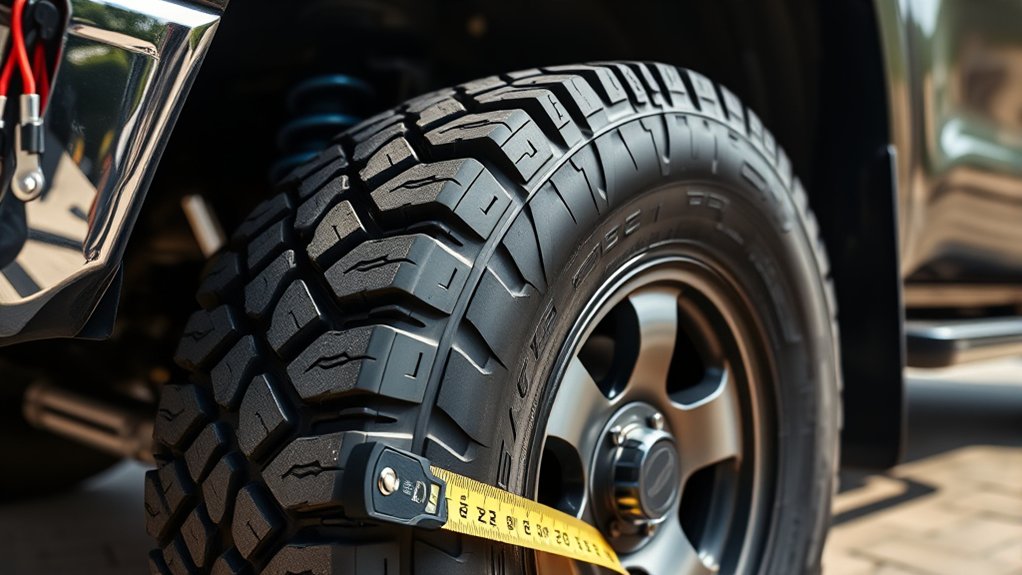
Upsizing can improve ground clearance and change the look of your Toyota Tundra, but it also changes the fitment problem. A taller or wider tire may contact the fender liner, mud flap, upper control arm, sway bar, or body mount depending on the generation, wheel, suspension, alignment, tire model, and how the truck moves under load. A larger rolling diameter can also change speedometer accuracy, acceleration, shift behavior, braking response, and fuel economy.
A bigger tire is not automatically a safer or more capable tire. The right tire must fit the truck, clear the suspension and body through normal movement, match the wheel, and provide the load capacity your Tundra requires.
- Actual overall diameter: Compare the tire manufacturer’s published dimensions instead of assuming every tire with the same nominal size measures identically.
- Section and tread width: A wider tire needs enough room inside and outside the wheel well.
- Wheel offset: Aftermarket wheels can move the tire inward or outward, changing where interference occurs.
- Wheel width: Tires have approved rim-width ranges. Do not mount a tire on a wheel outside the tire manufacturer’s approved range.
- Steering and suspension clearance: Check full steering lock and clearance through the suspension’s usable travel. Modified trucks should be checked by a qualified installer.
- Spare-tire strategy: Compare the spare’s overall diameter with the road tires. If they differ materially, follow Toyota’s owner-manual guidance before using the spare on a driven axle.
- Load and speed requirements: Do not choose a replacement that falls below the load capacity or service requirement specified for the truck without an approved alternative.
- Pressure: A different size or a switch from P-metric to LT construction may require a different cold pressure to carry the necessary load.
Warning: Do not install tires that reduce required load capacity, conflict with the vehicle’s fitment requirements, or exceed wheel and suspension limits. Incorrect fitment or inflation can increase heat buildup, tire-damage risk, rubbing, poor handling, and braking problems.
Which Toyota Tundra Tire-Sizing Myths Cause Problems?
Many Tundra tire problems start with oversimplified advice. Tire fitment depends on more than diameter alone, and two tires with the same printed size can still differ in actual diameter, tread width, weight, load capacity, tread design, and sidewall construction.
| Myth | Reality |
|---|---|
| Any 33-inch tire fits a Tundra. | Fit depends on generation, trim, actual tire dimensions, wheel width and offset, suspension, and available clearance. |
| Wider tires always improve traction. | A wider footprint may help in some conditions, but tire compound, tread design, temperature, surface, pressure, and vehicle setup also matter. Wider tires can add weight, rolling resistance, road noise, and fitment problems. |
| Load Range E is always better. | An LT Load Range E tire may suit some heavy-duty uses, but the letter alone does not prove it is the right tire. Check actual load capacity, required pressure, wheel compatibility, ride tradeoffs, and the truck’s ratings. |
| Sidewall max PSI is the correct daily pressure. | For an original-type fitment, daily cold pressure comes from the vehicle placard or owner’s manual. A changed tire size or construction may require a verified load/inflation calculation rather than simply using the sidewall maximum. |
How Do You Maintain Tundra Tire Performance and Safety?
Regular tire maintenance helps your Tundra handle, brake, tow, and ride properly. NHTSA recommends checking tire pressure at least monthly when the tires are cold and says tires are unsafe once tread is worn to 2/32 inch.
- Check cold pressure monthly: Check all road tires and the spare before driving far. NHTSA defines a cold check as one performed after the vehicle has not been driven for at least three hours.
- Inspect before towing or hauling: Look for cracks, bulges, punctures, uneven wear, exposed cords, and objects embedded in the tread.
- Rotate on schedule: Follow Toyota’s maintenance schedule and the tire manufacturer’s guidance. Some fitments may have restrictions on rotation patterns.
- Watch tread depth: Do not run tires below the legal/safety minimum. Rain, snow, towing, or damage may justify replacement before the tread reaches that point.
- Check alignment: Uneven shoulder wear, pulling, or a crooked steering wheel can indicate alignment or suspension problems.
- Read the DOT date code: Tire age matters even when tread remains, especially on trucks that sit for long periods.
The NHTSA tire safety guide covers tire pressure, tread, aging, recalls, replacement sizing, and sidewall information. For a deeper pressure-specific explanation, see the Toyota Tundra tire pressure guide.
Pro Tip: Check pressure when tires are cold. Heat from driving raises pressure, so a warm reading is not the same as the vehicle manufacturer’s specified cold pressure.
What Load Range Does a Toyota Tundra Need?
There is no single load-range letter that every Toyota Tundra needs. The correct replacement must provide enough load capacity for the truck’s required tire load, axle ratings, passengers, cargo, trailer tongue weight, and installed accessories. Start with the original tire specification and the vehicle labels instead of assuming that a Load Range E tire is automatically an upgrade.
What Is the Difference Between Load Index, Load Range, and XL?
| Marking | Example | What it tells you |
|---|---|---|
| Load index | 112, 116, 121 | A numerical code tied to the tire’s rated load capacity. Check the tire manufacturer’s load-index table and the vehicle requirement. |
| Speed rating | R, S, T, H | A service-description symbol tied to the tire’s rated speed capability under specified conditions. Use the OE requirement or an approved replacement specification. |
| LT load range | C, D, E, F | A light-truck tire construction/inflation category. It is not a substitute for checking the tire’s actual load rating at the required pressure. |
| XL | 265/50R22 XL | “Extra Load” on an applicable passenger/Euro-metric tire. XL is not the same designation as an LT Load Range E tire. |
Federal Motor Vehicle Safety Standard 110 contains a truck-specific rule worth knowing: when a passenger-car tire is installed on a truck, its maximum load rating is divided by 1.10 for the regulation’s axle-load calculation. That is one reason not to compare P-metric and LT tires by sidewall numbers alone.
If you switch from a P-metric tire to an LT tire, do not assume the LT tire should automatically use the original placard PSI unchanged. P-metric and LT tires use different load/inflation relationships, so the exact replacement tire may need a different pressure to support the required load. Have the proposed size, load capacity, wheel fit, and cold inflation requirement verified by the tire manufacturer or a qualified tire professional.
Why Does Load Capacity Matter on a Tundra?
The tire capacity must work with your Tundra’s GVWR, GAWR, payload, and trailer tongue weight. The certification label provides vehicle and axle weight ratings, while the Tire and Loading Information label provides tire/loading information. Federal tire-selection and placard requirements are described in 49 CFR 571.110.
Overloading a tire can create excess heat and increase the risk of damage or failure. Heavy accessories such as bumpers, winches, racks, bed caps, and rooftop tents also use part of the truck’s available payload. Before towing or loading heavily, verify the vehicle limits as well as the tire limits. The Toyota Tundra payload capacity guide explains the vehicle-side calculation in more detail.
Which Tire Type Fits Your Tundra Driving Conditions?
Once you confirm the correct size, wheel compatibility, and load capacity, choose a tread and construction that match how you actually use the truck. A tire optimized for towing and quiet highway travel may not be the best choice for mud, deep snow, or rocky trails.
Which Tread Type Fits Your Terrain?
- Highway tires: Suited to drivers who prioritize paved-road comfort, low noise, efficiency, and tread life.
- All-terrain tires: A middle ground for drivers who divide time among pavement, gravel, job sites, snow, and light-to-moderate trails.
- Mud-terrain tires: Designed for aggressive off-road traction, with tradeoffs that commonly include more noise, weight, and on-road compromise.
- Winter tires: Designed for sustained cold-weather, snow, and ice performance where an all-season or some all-terrain tires may not provide enough winter grip.
What Should You Check for Snow or Hot-Weather Towing?
If you drive in severe snow, look for the three-peak mountain snowflake symbol on tires qualified for severe snow service. If you tow in hot weather, pay close attention to load capacity, correct inflation, tire condition, and age because sustained heat and load increase tire stress. If most of your driving is on pavement, a lighter highway-oriented tire may provide a smoother and quieter ride than a heavy LT all-terrain tire.
What Makes a Tire Truly Compatible?
Good compatibility means more than “it bolts on.” Confirm tire diameter, width, load index or load capacity, speed rating, wheel diameter, approved rim-width range, wheel offset, brake and suspension clearance, TPMS compatibility, and spare-tire strategy. If aftermarket wheels are part of the change, also review the Toyota Tundra wheel bolt-pattern and fitment guide. Federal DOT tire-identification rules are listed in 49 CFR 574.5.
Where Should You Verify Toyota Tundra Tire Fitment?
Use these sources in this order before buying tires for your Toyota Tundra:
- Driver-side Tire and Loading Information label: Best first source for the truck’s original tire-size specification and recommended cold pressure.
- Owner’s manual: Use Toyota’s manual resources for model-specific instructions, warnings, spare use, and tire guidance.
- Current tire sidewall: Confirms what is installed now, but do not assume it is factory-correct if the truck was bought used or modified.
- Tire manufacturer specifications: Use the exact model’s published overall diameter, section width, approved rim-width range, load rating, and inflation data when changing fitment.
- Wheel specifications: Confirm diameter, width, offset, bolt pattern, and load suitability.
- Certification and payload labels: Confirm GVWR, GAWR, and payload before selecting tires for heavy towing or hauling.
- Qualified tire shop or Toyota dealer: Use professional fitment help for lifted trucks, aftermarket wheels, alternative sizes, P-to-LT changes, towing setups, or unclear placard information.
You can also review Toyota’s current model information on the official Toyota Tundra page. For factory replacement, however, your own truck’s Tire and Loading Information label remains the vehicle-specific starting point.
Frequently Asked Questions
What size tires go on a Toyota Tundra?
The correct tire size depends on your Tundra’s model year, trim, wheel package, and suspension setup. Check the Tire and Loading Information label on the driver-side door jamb first. Examples across Tundra generations include 245/70R16, 265/70R16, 255/70R18, 275/65R18, 275/55R20, 245/75R18, 265/70R18, 265/60R20, 285/65R18, and 265/50R22, but these are not universal fitments.
Are 33 tires the same as 285 tires?
No. “33-inch” describes approximate overall tire diameter, while “285” normally describes section width in millimeters in a metric size. For example, 285/70R17 is close to 33 inches tall, but 285/65R18 and 285/55R20 have different overall diameters. Compare the complete size, actual manufacturer dimensions, wheel fit, and load rating.
What load range tires should I use on a Toyota Tundra?
There is no single load-range letter for every Toyota Tundra. Use a tire that provides the load capacity required for your exact truck, axle ratings, wheel setup, and intended load. A Load Range E LT tire may suit some heavy-duty applications, but it is not automatically better and may require different inflation than the original P-metric tire.
Can I replace P-metric Tundra tires with LT tires?
Potentially, but matching the printed tire size does not prove the load and inflation requirements are equivalent. P-metric and LT tires use different load/inflation relationships, and an LT replacement may need a different cold pressure to carry the required load. Verify the exact tire size, load capacity, rim compatibility, and required pressure with the tire manufacturer or a qualified tire professional.
Can I put 35-inch tires on a Toyota Tundra?
Some Tundra builds can use tires marketed as 35-inch sizes, but there is no universal no-rub 35-inch setup. Fit depends on generation, actual tire dimensions, wheel width and offset, suspension, alignment, body and suspension clearance, and intended articulation. Verify the exact tire and wheel combination before buying, and do not reduce required load capacity.
Conclusion
The best Toyota Tundra tire choice starts with your own truck’s Tire and Loading Information label. Record the factory size and recommended cold pressure, identify the wheel size, and verify the replacement tire’s load capacity and service description before buying. If you change size or construction, also verify the tire manufacturer’s approved rim range and load/inflation requirement.
For an upsized or modified setup, have wheel offset, full-lock clearance, suspension travel, spare compatibility, and payload needs checked before driving. A tire that looks right can still be wrong if it rubs, does not suit the wheel, provides inadequate load capacity, or is run at an inappropriate pressure.
Sources
- Toyota Owner’s Manuals and Warranty Resources — owner-manual verification for vehicle-specific tire and operating guidance.
- Toyota 2025 Tundra Specifications — supports third-generation factory tire-size examples including 245/75R18, 265/70R18, 265/60R20, 285/65R18, and 265/50R22 depending on configuration.
- Toyota Tundra Official Model Page — current Tundra model and trim context.
- Goodyear 2006 Toyota Tundra Fitment — supports late first-generation examples including 245/70R16, 265/70R16, and 265/65R17 depending on configuration.
- NHTSA Tire Safety — supports tire-size verification, cold-pressure guidance, monthly checks, tread-depth safety, replacement sizing, and sidewall guidance.
- 49 CFR 571.110 — Tire Selection and Rims — supports vehicle tire/loading information requirements and the passenger-car-tire load-rating adjustment used when such tires are installed on trucks.
- 49 CFR 574.5 — Tire Identification Requirements — supports DOT tire-identification guidance.
- Michelin Toyota Tundra Tire Fitment — additional size, load/speed, and replacement-pressure context across Tundra applications.