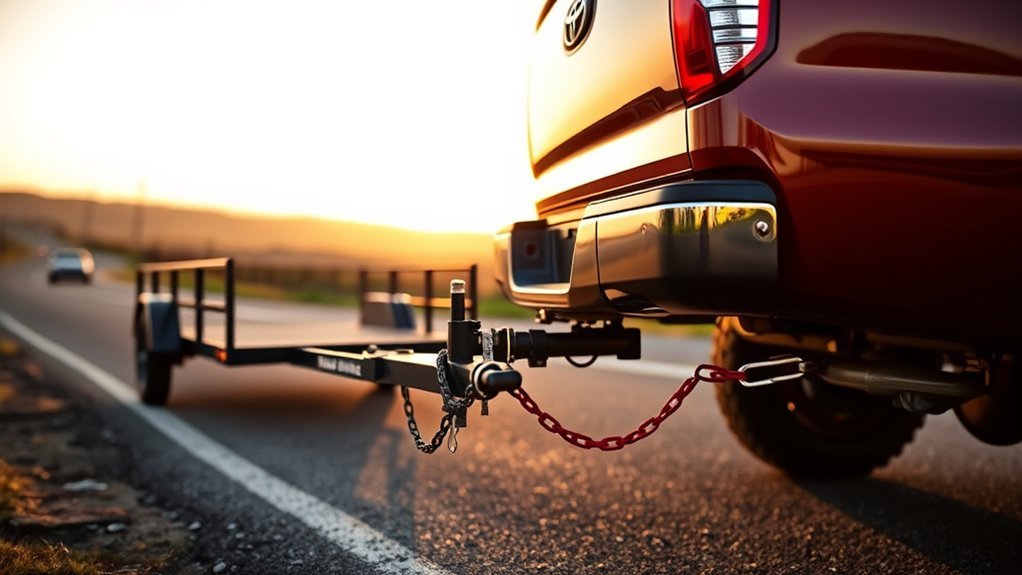
A new Toyota Tundra may be ready for work, but its first miles should be relatively gentle. Before connecting a trailer, follow the break-in instructions in the owner’s manual for your exact model year and powertrain. Recent Tundra guidance commonly separates a 500-mile no-towing period from a longer period of careful acceleration and varied road speeds.
Quick Answer
Wait until your Toyota Tundra has at least 500 miles before towing when that restriction appears in your model-year owner’s manual. During the broader initial break-in period, avoid sudden acceleration, extremely high speeds, prolonged low-gear driving, and long stretches at one constant speed. Your exact manual overrides general advice.
Key Takeaways
- Do not tow during the first 500 miles when your Tundra owner’s manual gives that restriction.
- A 500-mile no-tow period and a longer gentle-driving period are not the same rule.
- Toyota does not establish one universal 4,000-RPM break-in limit for every Tundra in the guidance discussed here.
- Long, uninterrupted constant-speed driving is best limited during break-in, but cruise control is not automatically prohibited in every situation.
- Before towing, verify your truck’s payload, axle, hitch, tire, trailer, and configuration-specific towing limits.
At a Glance
| Time Required | At least the first 500 miles before towing, plus the longer initial break-in period listed in your manual |
| Difficulty | Easy, provided you plan trips and avoid heavy use |
| Tools Needed | Owner’s manual, odometer, tire-pressure gauge, and trailer-weight information |
| Cost | No added cost unless an inspection, scale ticket, hitch adjustment, or trailer repair is needed |
Towing Restrictions in the First 500 Miles
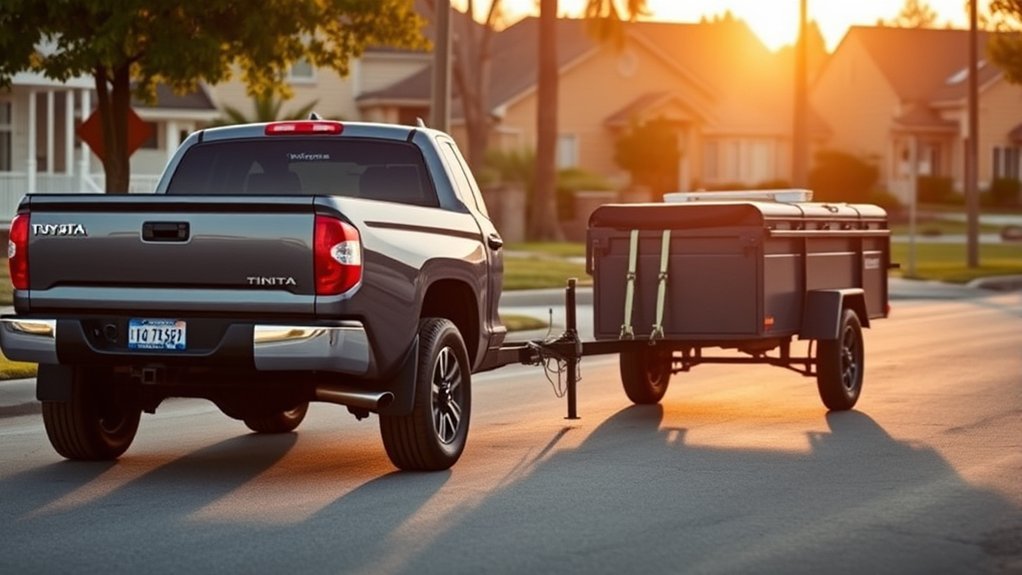
During the first 500 miles of a new Toyota Tundra, avoid towing when your model-year owner’s manual includes Toyota’s standard no-trailer break-in instruction. A trailer adds sustained load to the engine, transmission, cooling system, brakes, tires, axle, and driveline before the truck has completed its initial driving period.
Warning: Do not treat 500 miles as permission to tow any trailer. The truck, hitch, tires, passengers, cargo, tongue weight, axle loads, and trailer must all remain within their individual ratings.
Use these early miles for ordinary unloaded or lightly loaded driving. Accelerate smoothly, leave enough distance to brake gradually, and avoid repeatedly asking for maximum power. You do not need to drive unusually slowly or create unsafe speed changes in traffic.
The correct towing date is based on mileage, vehicle condition, trailer setup, and the instructions for your exact Tundra, not simply the day you bought the truck.
Why Your Tundra’s Break-In Period Is Important
The break-in period limits unnecessary high-load operation during the truck’s earliest use. It is better understood as a set of temporary driving precautions than as a complicated mechanical procedure you must perform perfectly.
Toyota instructions can vary by model year and market, so use the official Toyota Manuals and Warranties portal to locate the manual for your truck. A commonly used Toyota break-in pattern includes the following stages, but your manual remains the controlling source.
| Mileage Stage | Recommended Approach | Main Goal |
|---|---|---|
| First 200 miles | Avoid unnecessary sudden stops when road and traffic conditions allow. | Use the brakes progressively while preserving normal emergency-braking ability. |
| First 500 miles | Do not tow a trailer when specified by the owner’s manual. | Avoid sustained trailer load during initial operation. |
| Initial 1,000 miles | Avoid sudden acceleration, extremely high speeds, prolonged low-gear driving, and extended operation at one constant speed when these instructions appear in your manual. | Keep early driving conditions varied and moderate. |
The longer gentle-driving period does not automatically extend the no-towing restriction from 500 to 1,000 miles. These are separate instructions with different purposes.
Acceleration Guidelines for New Owners
Use smooth accelerator inputs during the initial break-in period. You can merge, pass, climb hills, and respond to traffic normally, but avoid full-throttle starts and repeated hard acceleration when they are not necessary.
- Build speed progressively instead of flooring the accelerator from a stop.
- Avoid testing maximum acceleration or top speed during the break-in period.
- Do not hold the truck in a low gear for a long distance without a driving need.
- Leave extra following distance so you can slow down gradually.
- Let traffic, weather, visibility, and road safety take priority over break-in technique.
Avoid using an invented universal RPM ceiling. The original 4,000-RPM claim was not supported for every Tundra model year, engine, and powertrain. Follow any numeric limits that appear in your exact manual rather than applying a number from another vehicle.
Pro Tip: Plan several mixed local and highway trips instead of completing the entire break-in period during one long, steady-speed interstate drive.
Engine Speed Variation Techniques
Varying engine and road speed does not mean constantly accelerating and braking. It means avoiding hours of uninterrupted operation at exactly the same speed and load when you have a safe, practical alternative.
Normal suburban driving usually creates enough variation through traffic lights, turns, hills, and changing speed limits. On a highway trip, occasional rest stops, route changes, or modest changes in legal cruising speed can provide variation without disrupting traffic.
Cruise control is not universally banned for exactly 621 miles. However, using it continuously on a long, flat highway can hold the truck at nearly one speed for an extended period. During early break-in, consider limiting long uninterrupted cruise-control sessions while keeping every speed change smooth and legal.
Note: Never vary speed abruptly, impede traffic, exceed the speed limit, or avoid needed braking just to follow break-in advice.
How to Use Your Owner’s Manual for Break-In Success
Your owner’s manual is more reliable than a generic mileage rule because Toyota can revise instructions between generations, powertrains, markets, and model years. The manual also connects break-in guidance with towing equipment, loading limits, warning systems, and maintenance requirements.
Manual Break-In Recommendations
Open the index or search the digital manual for terms such as “break-in,” “breaking in your new Toyota,” “trailer towing,” “towing precautions,” and “vehicle load limits.” Record any mileage-specific instructions that apply to your truck.
- Confirm the no-towing mileage for your model year.
- Review acceleration, speed, braking, and constant-speed precautions.
- Check whether Toyota gives added instructions after a replacement engine, transmission, differential, bearing, or other driveline component is installed.
- Read the towing section before buying or connecting a trailer.
- Use the warranty and maintenance guide for service intervals rather than relying on a generic internet schedule.
Model-Specific Guidelines Importance
Tundra towing ratings vary by cab, bed, drivetrain, trim, equipment, powertrain, and model year. Toyota may advertise a maximum capability for the lineup, but that figure does not apply to every truck.
Check the certification label, Tire and Loading Information Label, owner’s manual, towing documentation, hitch label, and configuration-specific specifications. Include occupants, cargo, accessories, aftermarket equipment, and trailer tongue weight when calculating how much load the truck carries.
Tow/Haul mode does not increase the truck’s maximum trailer weight, payload, GVWR, GCWR, GAWR, receiver rating, tire rating, or tongue-weight limit. It only changes vehicle behavior as designed when the system is equipped and selected.
Maintenance Schedule Insights
A 1,000-mile break-in oil change should not be presented as a universal Toyota requirement. Follow the maintenance schedule for your exact model year and operating conditions through the ToyotaCare and Maintenance Plans portal or the maintenance guide supplied with the truck.
Towing, frequent short trips, dusty roads, heavy loading, extensive idling, and other demanding use may affect inspection or service needs. Use the schedule’s definitions rather than assuming every towing trip automatically requires the same shortened interval.
Preparing for Your First Tow
Reaching the required mileage is only the first step. Before the first towing trip, confirm that the truck and trailer are correctly matched and ready for road use.
- Identify your truck’s ratings. Confirm the configuration-specific trailer-weight, payload, GVWR, GCWR, front and rear GAWR, hitch, and tongue-weight limits.
- Calculate the real payload. Include the driver, passengers, cargo, bed equipment, accessories, hitch hardware, and trailer tongue weight.
- Check the trailer’s loaded weight. Do not rely only on an empty or “dry” advertised figure. Water, batteries, propane, tools, food, and cargo add weight.
- Inspect the hitch and coupler. Confirm the correct ball size, secure latching, hitch-pin installation, safety-chain routing, breakaway cable, and weight-distribution setup when applicable.
- Test the lights and brakes. Verify running lights, brake lights, turn signals, trailer brakes, brake-controller settings, and the breakaway system.
- Check tires cold. Use the pressures listed by the vehicle and trailer manufacturers. For the truck, use the doorjamb label or owner’s manual rather than the maximum pressure molded into the tire sidewall.
- Secure the load. Prevent cargo from moving and confirm that the trailer sits level enough for its design.
- Perform a low-speed test. Practice braking, turning, backing, and checking trailer response in a safe open area before entering fast traffic.
The National Highway Traffic Safety Administration’s tire guidance recommends checking cold tire pressure against the vehicle manufacturer’s Tire and Loading Information Label or owner’s manual.
Warning: A trailer can remain below the truck’s advertised towing capacity while still exceeding payload, rear-axle, tire, receiver, or tongue-weight limits. Every applicable limit must be respected.
What to Do If You Towed Before 500 Miles
Accidentally towing before the recommended mileage does not prove that damage occurred. Stop additional towing until you have reached the manual’s minimum mileage and review how much weight was towed, how far you traveled, and whether the truck showed any abnormal behavior.
Inspect the truck for warning lights, fluid leaks, unusual smells, overheating messages, rough shifting, loss of power, new vibration, abnormal noises, or braking changes. Check the trailer connection and verify that the combination was not overloaded.
Contact a Toyota dealer or qualified technician if a warning appeared, the truck overheated, the transmission behaved abnormally, fluids leaked, or a new noise or vibration remains. Describe the trailer’s loaded weight, tongue weight, distance, road grade, speed, and any warning messages instead of only saying that you towed early.
What Owner Experiences Can and Cannot Tell You
Tundra owners report many different break-in experiences. Some drive mostly in town, while others collect their first miles on highways or in rural areas. Some begin towing immediately after the manual’s minimum mileage, while others wait longer for convenience or added peace of mind.
These experiences can offer practical ideas, but they do not replace Toyota’s instructions or prove that an unsupported method is safe. A truck that showed no immediate problem after early towing does not establish that the practice is recommended. Likewise, waiting 1,000 miles is a personal margin unless the exact manual requires it.
Use owner discussions for practical topics such as trailer-storage ideas, hitch adjustments, scale procedures, and trip planning. Use the owner’s manual, labels, equipment documentation, and qualified professionals for limits and safety decisions.
Related Guides
Frequently Asked Questions
Does Toyota recommend a break-in period for the Tundra?
Yes. Toyota owner’s manuals commonly provide temporary precautions for a new vehicle’s first few hundred or thousand miles. These may address sudden stops, trailer towing, acceleration, high-speed operation, low gears, and extended constant-speed driving. Check the manual for your exact model year.
How should I break in a new Toyota Tundra?
Drive normally but smoothly. Avoid towing during the prohibited mileage, unnecessary hard acceleration, extremely high speeds, prolonged low-gear operation, and long uninterrupted periods at one constant speed when your manual lists those precautions. Always prioritize traffic and road safety.
How long should I wait before towing with a new Tundra?
Wait at least 500 miles when that is the no-towing period stated in your model-year manual. Do not confuse the 500-mile towing restriction with separate gentle-driving precautions that may continue through a longer initial period.
Can I use cruise control during the Tundra break-in period?
Cruise control is not automatically prohibited for exactly 621 miles. The concern is extended operation at one constant speed. Brief use may be reasonable when conditions require steady, safe traffic flow, but avoid relying on it continuously for a long, flat highway trip during early break-in.
When should I use Tow/Haul mode?
Use Tow/Haul mode when equipped and when your owner’s manual recommends it for the trailer or load. It may adjust transmission, throttle, or related control behavior, but it does not increase any towing, payload, axle, hitch, tire, or weight rating.
Does a new Tundra need an oil change at 1,000 miles?
Do not assume a 1,000-mile oil change is required. Follow the maintenance and warranty guide for your exact model year, engine, and operating conditions. A dealer can also confirm whether any special service applies after a major powertrain repair or replacement.
What if I already towed before reaching 500 miles?
Stop further towing until you meet the manual’s mileage requirement. Check for warning lights, overheating, leaks, unusual smells, abnormal shifting, vibration, braking changes, or new noises. Contact a Toyota dealer or qualified technician if any symptom appeared or remains.
Conclusion
Respecting your Toyota Tundra’s break-in instructions is straightforward: use the manual for your exact truck, avoid towing during the stated initial mileage, and keep early acceleration and driving conditions moderate. Do not rely on an unsupported 4,000-RPM limit, a fixed 621-mile cruise-control ban, or an assumed 1,000-mile oil change.
After the no-towing period, verify the truck’s configuration-specific limits and inspect the trailer, hitch, brakes, lights, tires, and load. A careful setup matters more than simply reaching a number on the odometer.
Sources
- Toyota Manuals and Warranties — official portal for model-year owner’s manuals and warranty guides.
- Toyota Tundra Specifications and Features — current lineup capabilities, equipment, and maximum advertised ratings.
- ToyotaCare and Maintenance Plans — official maintenance-plan and vehicle-specific service information.
- NHTSA TireWise — cold tire-pressure, doorjamb-label, tire-condition, and loading-related safety guidance.
- SAE J2807 Tow-Vehicle Rating Standard — performance requirements used to determine tow-vehicle and trailer-weight ratings.