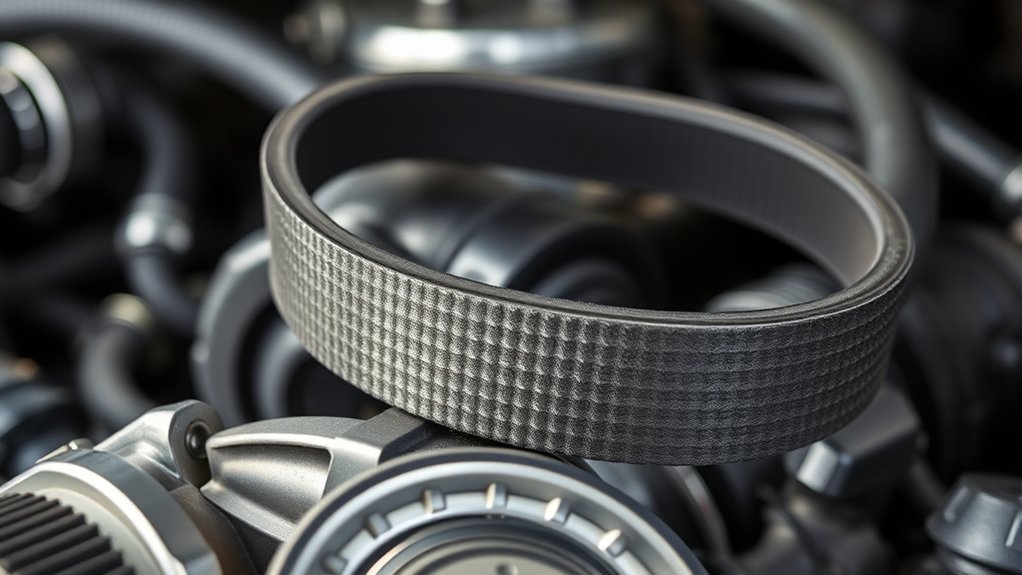
Your Toyota Tundra serpentine belt should be inspected according to the maintenance schedule for its exact model year—not an assumed universal replacement interval. A careful inspection can reveal belt damage, contamination, poor tension, or problems with related pulleys before the accessory-drive system fails. This guide explains the inspection interval, warning signs, replacement triggers, current cost range, and when a belt problem means you should stop driving.
Last updated: September 19, 2026 — rechecked Toyota maintenance guidance, current-generation belt-system fitment references, and replacement-cost data.
Quick Answer
Inspect your Toyota Tundra’s drive belt on the schedule for its exact model year. Toyota’s 2024 guide starts inspection at 60,000 miles or 72 months and repeats it every 15,000 miles or 18 months; the 2026 schedule likewise begins drive-belt checks at 60,000 miles and continues at 15,000-mile checkpoints. Replace the belt when it is damaged, excessively worn, oily, frayed, or unable to maintain proper tension—not at one universal mileage.
Key Takeaways
- Use the maintenance guide for your Tundra’s model year. For example, Toyota’s 2024 guide calls for the first drive-belt inspection at 60,000 miles or 72 months and another inspection every 15,000 miles or 18 months afterward.
- Toyota does not give every Tundra a universal serpentine-belt replacement mileage. Belt condition, tension, contamination, and related component condition determine when replacement is needed.
- Squealing or chirping may come from the belt, but it can also indicate a weak tensioner, misaligned pulley, worn idler, contamination, or failing accessory bearing.
- Stop driving if the belt is missing or shredding, smoke is present, or a battery or high-temperature warning appears.
- Inspect the complete accessory-drive system rather than replacing the belt without checking the tensioner, idlers, pulleys, and contamination source.
At a Glance
| Time Required | About 10–15 minutes for a basic visual inspection; replacement time varies by model year, engine layout, access, and related repairs. |
| Difficulty | Beginner for a visual inspection; intermediate or advanced for replacement because routing, tensioner access, and belt seating must be correct. |
| Tools Needed | Flashlight, protective gloves, phone or camera, clean cloth, and an appropriate belt-wear gauge if available. Replacement may require model-specific sockets, a breaker bar, or a tensioner tool. |
| Cost | A home visual inspection costs little or nothing. RepairPal currently estimates Toyota Tundra serpentine-belt replacement at about $185–$247 on average before taxes, fees, and location adjustments; related tensioner, pulley, accessory, or leak repairs can raise the total. |
Understanding the Role of the Serpentine Belt in Your Toyota Tundra
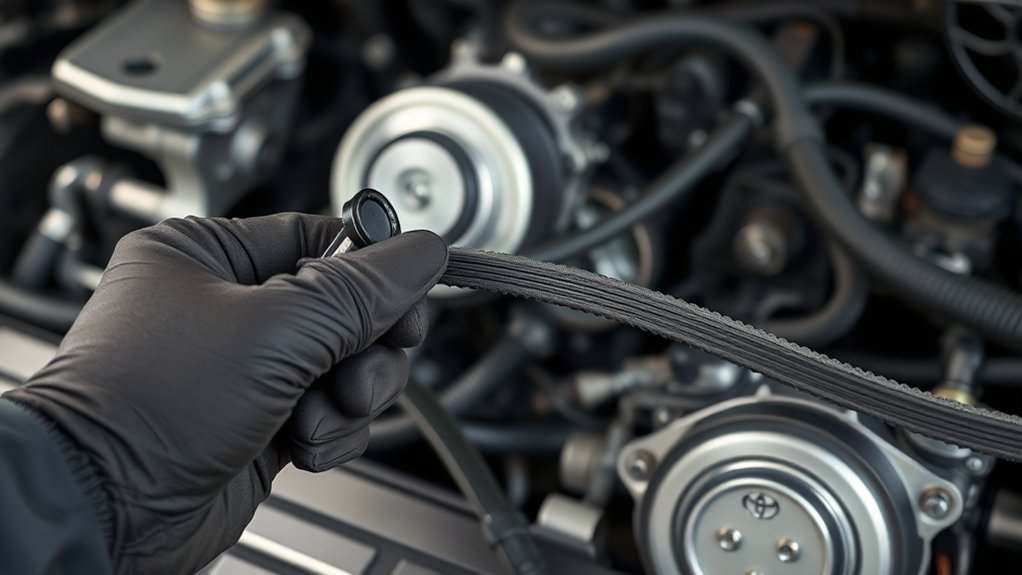
The serpentine belt, also called an accessory-drive belt or drive belt, transfers engine rotation to one or more accessories. Depending on the Tundra’s model year and engine, those accessories may include the alternator, air-conditioning compressor, coolant pump, hydraulic power-steering pump, or other equipment.
The exact configuration matters. Some Tundras use more than one drive belt, and not every engine uses a belt to power the same accessories. Before buying a replacement or following a routing diagram found online, verify the model year, engine, and part application by VIN.
Current-generation fitment note: Toyota dealer parts catalogs for 2026 3.4L gasoline Tundras list separate belt-drive positions for the alternator/water-pump route and the A/C-compressor route, with separate tensioner listings. Hybrid fitment can differ, so confirm the VIN and powertrain before ordering a belt or following a routing diagram.
The belt works as part of a larger system that includes:
- The tensioner: Maintains the pressure needed to keep the belt engaged with the pulleys.
- Idler pulleys: Guide the belt around the correct path.
- Accessory pulleys: Transfer belt movement to the components being driven.
- Bearings: Allow the pulleys and accessories to rotate smoothly.
- The belt ribs and backing: Maintain grip while bending repeatedly around the pulley system.
A new belt cannot correct a seized bearing, weak tensioner, damaged pulley, fluid leak, or alignment problem. For that reason, inspect the complete accessory-drive system whenever belt wear or noise is found. Gates likewise recommends treating the belt, tensioner, idlers, and pulleys as a coordinated system rather than unrelated parts.
Note: The serpentine belt is separate from the engine’s timing belt or timing chain. Replacing an accessory-drive belt does not replace or service the timing system.
What Happens When Your Serpentine Belt Wears Out?
As the belt wears, it may lose material, develop damaged edges, become contaminated, or stop maintaining proper contact with the pulleys. A weak tensioner or misaligned pulley can accelerate that damage.
Replace a Toyota Tundra drive belt because inspection shows damage or unreliable operation—not simply because a generic mileage estimate says its life is over.
The result of a belt failure depends on which components that belt drives. Possible consequences include:
- Loss of charging: If the alternator stops turning, the battery warning may appear and the truck will eventually lose electrical power.
- Loss of belt-driven cooling: On an application where the belt drives a coolant pump, belt failure may lead to rapid overheating.
- Loss of hydraulic steering assist: On a truck equipped with a belt-driven hydraulic power-steering pump, steering effort may increase sharply.
- Loss of air conditioning: The A/C compressor may stop operating.
- Secondary damage: A shredded belt can strike nearby wiring, hoses, seals, or other components.
A belt may also come off without being broken. Common causes include a failed tensioner, seized pulley, incorrect routing, severe misalignment, fluid contamination, or an accessory that has begun to lock up. Installing another belt without finding the cause can produce a second failure.
Warning Lights After a Belt Failure
A battery-shaped warning light after a belt problem usually indicates that the charging system is no longer operating normally; it does not necessarily mean the battery itself suddenly failed. A high-temperature warning or rising temperature gauge is more urgent because continued driving while the engine overheats can cause severe damage.
Toyota Tundra Serpentine Belt Inspection Intervals
Toyota’s schedule uses the term drive belts. The correct interval depends on the model year, so consult the maintenance guide for your truck rather than applying one interval to every Tundra.
| Model-Year Guide | Drive-Belt Schedule | Replacement Guidance |
|---|---|---|
| 2024 Tundra | Initial inspection at 60,000 miles or 72 months; inspect every 15,000 miles or 18 months afterward. | Inspect for cracks, excessive wear, oiliness, and proper tension. Replace damaged belts. |
| 2026 Tundra | The chart lists inspections at 60,000, 75,000, 90,000 miles and subsequent 15,000-mile points through the published schedule. | Inspect for cracks, excessive wear, oiliness, and proper tension. Replace damaged belts. |
| Other model years | Use the maintenance guide assigned to the truck’s exact year and configuration. | Inspect sooner whenever noise, visible damage, contamination, warning lights, or accessory problems occur. |
You can find the applicable documents through Toyota’s Manuals and Warranties portal. Selecting the exact vehicle or adding its VIN reduces the risk of following a schedule or procedure intended for another engine. For the broader service cadence, see the Toyota Tundra maintenance schedule by mileage.
An inspection interval is not automatically a replacement interval. Toyota’s published guidance directs inspection and replacement when the belt is damaged; it does not establish one fixed replacement mileage that applies to every Tundra.
Pro Tip: Record the date, mileage, belt condition, and any noise found during each inspection. A simple photo of the ribs and edges makes it easier to identify changes at the next service.
Top Warning Signs Your Serpentine Belt Needs Replacement
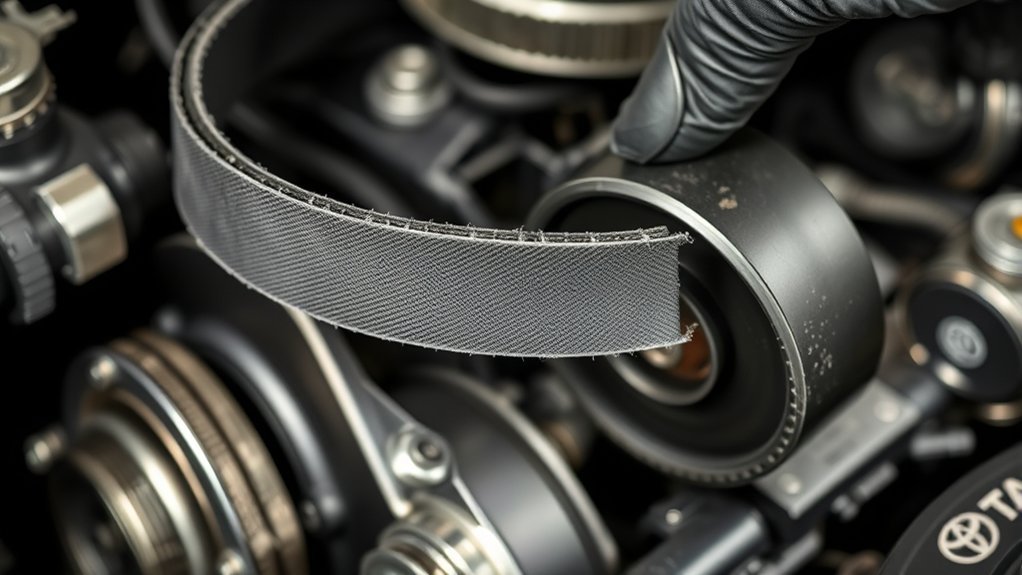
Replace the belt when inspection shows damage that can affect its grip, strength, tracking, or ability to drive the accessories reliably. Warning signs include:
- Cracks or splits: Cracking through the ribs, backing, or belt body indicates deterioration.
- Frayed or damaged edges: Edge wear may indicate pulley misalignment, incorrect routing, or contact with another component.
- Missing rib material: Chunks, torn ribs, severe rounding, or uneven wear reduce contact with the pulley grooves.
- Glazing or a polished surface: A shiny surface can result from slipping, heat, low tension, or pulley trouble.
- Oil or coolant contamination: Fluid can soften the belt, reduce grip, and cause swelling or deterioration. The leak must be repaired as well as the belt.
- Repeated squealing or chirping: Noise warrants inspection of the belt, tensioner, pulleys, alignment, and accessories.
- Visible belt movement or poor tracking: A belt that wanders toward a pulley edge may be misrouted, misaligned, or affected by a damaged component.
- Tensioner problems: A tensioner that rests outside its normal indicator range, binds, leaks damping fluid, or cannot maintain tension requires diagnosis.
- Accessory warning symptoms: A charging warning, loss of air conditioning, unusual steering effort on applicable trucks, or rising engine temperature may indicate that an accessory is no longer being driven.
Symptom Troubleshooting
| Symptom | Possible Causes | Recommended Action |
|---|---|---|
| Squeal during startup or acceleration | Low tension, contamination, belt wear, heavy accessory load, or a binding component. | Inspect the belt and complete tensioner/pulley system. Do not apply belt dressing. |
| Rhythmic chirp | Pulley misalignment, damaged belt edge, debris in a groove, or bearing trouble. | Check alignment, routing, pulley grooves, edges, and bearings. |
| Grinding or rough rotating sound | Worn idler, tensioner bearing, accessory bearing, or a component beginning to seize. | Arrange prompt diagnosis. Replacing only the belt is unlikely to correct the cause. |
| Battery warning light | Belt off or slipping, alternator fault, tensioner failure, or another charging-system problem. | Reduce electrical loads and stop safely. Inspect before continuing. |
| High engine temperature | Cooling-system fault or loss of a belt-driven coolant component on an applicable engine. | Stop the engine safely. Do not continue driving an overheating truck. |
| Belt repeatedly comes off | Misrouting, damaged tensioner, pulley misalignment, seized component, or incorrect belt. | Do not install another belt until the underlying fault is identified. |
How to Inspect Your Serpentine Belt on Your Toyota Tundra
Warning: Park on level ground, switch off the engine, remove the key or disable keyless starting, apply the parking brake, and let the engine cool. Never place your hands, clothing, hair, or tools near the belt while the engine is running. An automatic engine-start feature or remote starter must not be able to activate during the inspection.
- Identify the correct belt system. Confirm the truck’s model year and engine. Locate the under-hood routing label or a model-specific service diagram.
- Use a flashlight to inspect the exposed belt. Look along the backing, both edges, and as much of the ribbed surface as you can see.
- Check for physical damage. Look for cracks, splits, fraying, torn ribs, missing material, glazing, bulges, or sections that appear narrower than the rest of the belt.
- Look for contamination. Oil, coolant, or another fluid on the belt or nearby pulleys indicates a leak that must be corrected. Simply wiping the belt does not solve the cause.
- Inspect belt tracking. The belt should sit squarely in the pulley grooves, with no ribs hanging over an edge and no evidence that the sides are rubbing.
- Inspect the tensioner visually. Check whether its indicator appears within its marked operating range, where visible. Look for a crooked pulley, damaged stop, corrosion, or signs of fluid leakage from a damped tensioner.
- Check accessible pulleys with the engine off. If the belt has been removed by a qualified person, pulleys should rotate as intended without grinding, severe roughness, wobble, or binding. Do not force or disassemble accessories without the correct procedure.
- Use a wear gauge correctly. A compatible gauge may help assess rib material loss, but follow the gauge manufacturer’s instructions. “Deep grooves” alone are not a universal replacement test.
- Record the result. Note the mileage, date, visible condition, warning lights, and noises. Schedule diagnosis if anything is uncertain.
| Inspection Area | Concerning Condition | Action |
|---|---|---|
| Belt backing and body | Cracks, splits, bulges, glazing, missing material, or heat damage | Replace the damaged belt and diagnose the cause. |
| Ribs | Torn, rounded, uneven, or missing rib material | Replace as needed and inspect pulley grooves and alignment. |
| Belt edges | Fraying, exposed cords, narrowing, or one-sided wear | Check routing, pulley alignment, guards, and nearby contact points. |
| Belt and pulleys | Oil, coolant, debris, or sticky residue | Repair the leak or contamination source and replace an affected belt. |
| Tensioner | Poor position, binding, crooked pulley, damaged stop, leakage, or weak tension | Have the tensioner tested and replaced if defective. |
| Idlers and accessory pulleys | Wobble, roughness, grinding, binding, or misalignment | Diagnose and replace the failed component before fitting another belt. |
| Routing | Ribbed surface on the wrong pulley, skipped pulley, or belt not seated fully | Correct the routing using the vehicle-specific diagram before starting the engine. |
Pro Tip: Before removing a belt, photograph the original routing and compare it with the under-hood diagram. After installation, check every pulley from more than one angle to confirm that each rib is seated correctly.
Note: Do not spray belt dressing, oil, cleaner, or another chemical on the belt to hide a noise. A temporary change in sound does not repair wear, misalignment, contamination, or a failing bearing.
When to Stop Driving Your Tundra
A minor noise should be inspected promptly, but some conditions require you to stop driving as soon as it is safe. Shut off the engine and arrange diagnosis or towing when:
- The belt is missing, partly off a pulley, or actively shredding.
- You see smoke, smell burning rubber, or hear grinding from the belt area.
- The battery or charging warning appears after a belt-related noise.
- The engine-temperature warning appears or the temperature gauge rises abnormally.
- Steering effort suddenly becomes much heavier on a truck with belt-driven hydraulic steering assist.
- The belt repeatedly comes off after being reinstalled.
- A pulley visibly wobbles or an accessory appears seized.
Continuing to drive may turn a belt-system repair into an overheated engine, discharged electrical system, damaged wiring, broken hoses, or a roadside breakdown. Do not open a hot cooling system or reach into the accessory-drive area to reposition a belt.
Scheduling Your Serpentine Belt Replacement: What to Expect
When scheduling service, provide the truck’s VIN, model year, engine, current mileage, symptoms, and any warning lights. That information helps the shop identify the correct belt configuration and estimate the repair more accurately.
What the Technician Should Inspect
A complete diagnosis should include more than fitting a new belt. Ask the technician to check:
- The belt’s ribs, backing, edges, width, and routing
- The automatic tensioner and its pulley
- All idler pulleys
- Pulley alignment and groove condition
- Alternator, A/C compressor, pumps, and other belt-driven accessories
- Oil or coolant leaks near the belt
- Guards, brackets, bolts, and nearby components that could contact the belt
- Charging voltage or cooling operation when the original symptoms involved those systems
A worn tensioner can cause slipping, noise, poor tracking, or repeated belt failure even when the belt is new. Likewise, a seized idler or accessory can destroy a replacement belt within a short distance.
DIY Versus Professional Replacement
A visual inspection is suitable for many owners. Replacement is more demanding because the tensioner is spring-loaded, access may be tight, and incorrect routing or incomplete rib engagement can cause immediate failure.
DIY replacement may be reasonable when you have:
- The correct belt and routing diagram for the VIN and engine
- The specified tools and enough access to control the tensioner safely
- Experience confirming pulley and tensioner condition
- A way to inspect every pulley before starting the engine
Professional service is the safer choice when the belt is shredded, the routing label is missing, a pulley is noisy or misaligned, the tensioner is damaged, a fluid leak is present, or access requires removing additional components.
What Affects the Replacement Cost?
There is no single reliable replacement price for every Toyota Tundra. The total depends on:
- Model year, engine, and belt configuration
- Whether the truck uses one drive belt or multiple belts
- Local labor rates and required access time
- Original-equipment, premium aftermarket, or economy parts
- Whether the tensioner, idler pulleys, or another accessory has failed
- Whether an oil or coolant leak must be repaired
- Taxes, shop fees, diagnostic charges, and regional pricing
For a current benchmark, RepairPal’s Toyota Tundra estimator showed an average serpentine-belt replacement range of $185–$247 when checked September 19, 2026. The estimate excludes taxes and fees and does not account for location; related repairs can increase the total.
Request an itemized, VIN-based estimate that separates diagnosis, belt cost, related parts, labor, and fees. A quote for “belt replacement only” may not remain accurate if inspection finds a failed tensioner or pulley.
Checks After the Belt Is Replaced
Before normal driving resumes, verify that:
- The belt follows the correct route.
- Every rib is seated fully in every grooved pulley.
- The smooth side and ribbed side contact the correct pulleys.
- The tensioner rests in its normal operating range.
- No tool, cloth, or loose component remains in the engine compartment.
- The belt tracks centrally after startup.
- No charging, temperature, or accessory warning remains.
- The original squeal, chirp, vibration, or grinding sound has been corrected rather than merely reduced.
Frequently Asked Questions
How often should I change the serpentine belt on my Toyota Tundra?
Toyota does not publish one universal replacement mileage for every Tundra. Follow the drive-belt inspection schedule for your exact model year and replace the belt when it is damaged, excessively worn, contaminated, frayed, or unable to maintain reliable operation. The 2024 guide, for example, starts inspections at 60,000 miles or 72 months and repeats them every 15,000 miles or 18 months.
What are the signs that I need a new serpentine belt?
Replacement signs include cracks, splits, frayed edges, exposed cords, missing rib material, severe glazing, oil or coolant damage, poor tracking, and repeated slipping. Noise alone does not prove the belt is bad, so the tensioner, idlers, pulleys, alignment, and accessories should also be inspected.
How long does a serpentine belt last on a Toyota?
Service life varies with belt material, engine layout, heat, contamination, tension, alignment, driving conditions, and related component condition. Treat mileage estimates as general planning information, not as a substitute for Toyota’s model-year inspection schedule and an examination of the actual belt.
How much does it cost to replace a serpentine belt on a Toyota Tundra?
RepairPal’s current Toyota Tundra estimate is $185–$247 on average before taxes, fees, and location adjustments. Your total can be higher or lower depending on model year, engine, belt count, labor rate, access, and whether the tensioner, idlers, pulleys, accessories, or a fluid leak also require repair. Ask for an itemized, VIN-based quote.
Can I drive my Tundra with a squealing serpentine belt?
A brief squeal does not identify the cause, but repeated or worsening noise should be inspected promptly. Stop driving if the belt is damaged or displaced, smoke or a burning smell is present, steering changes suddenly, or a battery or high-temperature warning appears. Arrange towing when continued operation could cause overheating or loss of electrical power.
Should the tensioner and idler pulleys be replaced with the belt?
They do not automatically require replacement every time, but they should always be inspected. Replace a tensioner or pulley that is weak, leaking, binding, rough, noisy, misaligned, wobbling, or unable to keep the belt tracking correctly. A defective component can quickly damage a new belt.
Do all Toyota Tundras use one serpentine belt?
No. Belt count and routing vary by model year and powertrain. Toyota dealer parts catalogs for 2026 3.4L gasoline Tundras list separate belt-drive positions for the alternator/water-pump route and the A/C-compressor route. Hybrid fitment can differ, so verify the VIN, engine, and parts catalog before ordering.
Is the serpentine belt the same as the timing belt?
No. The serpentine or drive belt powers external accessories. A timing belt or timing chain synchronizes internal engine operation. They have different locations, functions, inspection methods, and service requirements.
Sources
- Toyota 2026 Tundra Warranty & Maintenance Guide — current drive-belt inspection chart and condition-based inspection guidance.
- Toyota 2024 Tundra Warranty & Maintenance Guide — initial 60,000-mile/72-month inspection and recurring 15,000-mile/18-month interval.
- Toyota Manuals and Warranties — vehicle and model-year-specific owner and maintenance documents.
- Gates Micro-V Belt Drive Systems — belt, tensioner, idler, and pulley system information.
- Gates Automotive Micro-V Belts — information about modern automotive accessory-drive belt construction.
- RepairPal Toyota Tundra Serpentine Belt Replacement Cost — current national cost benchmark; excludes taxes, fees, and location adjustments.
- Toyota Parts Express — 2026 Tundra 3.4L Gas Belts & Pulleys — current belt-route and tensioner fitment listings for a gasoline application.
Conclusion
Maintaining your Toyota Tundra’s serpentine belt starts with using the correct model-year schedule and inspecting the entire accessory-drive system. Do not rely on a universal 10,000-mile inspection rule or automatically replace the belt at a generic mileage. Look for cracks, excessive wear, damaged ribs or edges, oiliness, poor tracking, and unreliable tension.
Noise, charging problems, overheating, or repeated belt displacement require more than a quick belt swap. Check the tensioner, idlers, pulleys, accessories, routing, and contamination source before installing another belt. Stop driving when the belt is missing or shredding, smoke is present, or charging or temperature warnings appear. Timely, accurate diagnosis protects the replacement belt and reduces the chance of a roadside failure.
