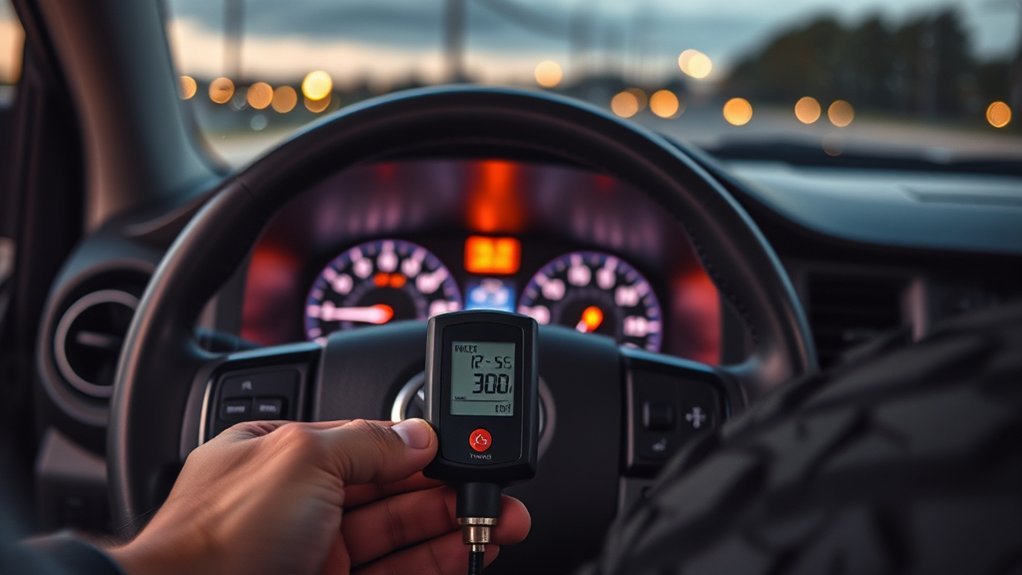
The TPMS light in your Toyota Tundra can indicate a low tire, a developing leak, or a fault in the Tire Pressure Monitoring System. The correct response depends on whether the light stays solid or flashes before remaining on. Check every tire with a gauge before attempting a reset, because resetting the system does not repair a puncture or failed sensor.
Quick Answer
A solid Toyota Tundra TPMS light usually means at least one tire is significantly underinflated. A light that flashes for about 60–90 seconds and then stays on indicates a system malfunction. Inspect the tires, set them to the cold pressures on the driver-door placard, and use the reset procedure specified for your exact model year.
Key Takeaways
- A solid TPMS light normally points to low tire pressure; a flashing-then-solid light points to a system malfunction.
- Use the cold pressure on the driver-door placard, not the maximum pressure molded into the tire sidewall.
- Check for punctures, sidewall damage, bulges, and leaking valve stems before resetting anything.
- Reset and initialization procedures differ between Tundra model years.
- Replacing a sensor may require tire service and electronic sensor-ID registration, not merely a dashboard reset.
At a Glance
| Time Required | 10–20 minutes for inspection and inflation; longer if a leak or sensor fault is found |
| Difficulty | Easy for checking pressure; professional equipment may be needed for sensor diagnosis or registration |
| Tools Needed | Accurate tire-pressure gauge, air compressor, flashlight, and the owner’s manual for your model year |
| Cost | Often little or nothing for inflation; leak repair, diagnosis, sensor replacement, balancing, and registration vary by shop and model year |
Understanding the TPMS Light on Your Toyota Tundra

The Toyota Tundra uses its Tire Pressure Monitoring System to warn you when tire pressure is significantly low or when the monitoring system cannot operate correctly. The lamp’s behavior is the first clue:
| Warning-light behavior | Likely meaning | First action |
|---|---|---|
| Stays on continuously | At least one tire is significantly underinflated | Inspect and measure every tire as soon as it is safe |
| Flashes for roughly 60–90 seconds, then stays on | TPMS malfunction or lost sensor communication | Check pressure manually, then arrange diagnosis if the pattern repeats |
| Comes on during a cold morning, then turns off | Pressure may be near the warning threshold and rising as the tires warm | Check and correct all tires while cold instead of waiting for the light to disappear |
The National Highway Traffic Safety Administration explains that TPMS warns only after a tire is already significantly underinflated. It is not a substitute for checking pressure with a gauge.
A TPMS light is a warning to inspect the tires, not a diagnosis by itself and not proof that a dashboard reset will solve the problem.
What to Do When the TPMS Light Comes On
- Slow down and assess the truck. Notice any pulling, vibration, thumping, steering change, or visible loss of tire height.
- Stop in a safe location. Inspect all four road tires for nails, cuts, bulges, separated tread, damaged valve stems, and obvious deflation.
- Check each tire with an accurate gauge. For the best reading, measure when the tires are cold—before driving or after the truck has been parked for at least three hours.
- Use the driver-door placard. Inflate the front and rear tires to the pressures Toyota specifies for that truck and tire configuration.
- Do not use the tire-sidewall maximum as the target. The sidewall number is a tire limit, not the normal inflation pressure selected for your Tundra.
- Recheck a low tire. A tire that loses pressure again may have a puncture, bead leak, wheel damage, or valve-stem problem.
- Allow the system to update. Depending on the model year and cause, the warning may clear after pressure is corrected and the truck is driven. Perform initialization only when your owner’s manual calls for it.
Warning: Do not continue driving on a visibly flat tire, a tire with a bulge or exposed cords, or a tire that is rapidly losing pressure. Move out of traffic safely and install the spare or request roadside assistance.
What Does a Flashing TPMS Light Mean?
A TPMS lamp that flashes for approximately 60–90 seconds and then remains illuminated indicates that the monitoring system is not functioning correctly. The sequence normally repeats when the truck is restarted until the malfunction is corrected.
Common reasons include a failed wheel sensor, a depleted internal sensor battery, an unregistered replacement sensor, incompatible aftermarket sensors, or lost communication after wheel or tire service. The system may also be unable to identify a second wheel set if its sensor IDs have not been registered.
Check the tires manually even when the problem appears to be electronic. A TPMS malfunction can prevent the truck from warning you about a separate low-pressure condition.
Note: A flashing malfunction light cannot normally be repaired by repeatedly pressing a reset button. The underlying communication, registration, wiring, receiver, or sensor problem must be diagnosed.
Common Causes of TPMS Issues and Their Fixes
Low Pressure or a Slow Leak
A solid warning most often begins with low air pressure. Natural pressure loss, a nail, wheel corrosion, a leaking bead, or a damaged valve stem can all lower pressure. Inflate the tire to the placard specification and monitor it. If it drops again, have the leak located and repaired rather than repeatedly adding air.
Weather Impact on Pressure
Cold weather lowers the pressure inside a tire and can trigger the warning when a tire was already close to the threshold. Driving warms the tire and may make the lamp turn off, but that does not mean the cold pressure is correct.
Check the tires cold after a major seasonal temperature change. Do not bleed air from a warm tire merely because its measured pressure is higher than the cold placard value.
Recent Tire or Wheel Service
The warning may appear after new tires, replacement wheels, a repaired valve stem, a sensor replacement, or installation of a seasonal wheel set. The sensors must be compatible with the truck, and their electronic IDs may need to be registered.
Tire rotation alone does not mean every Tundra requires a new sensor registration. Follow the procedure in the exact owner’s manual and ask the service provider whether the wheel positions or sensor IDs need to be relearned.
Sensor Malfunction Solutions
Direct TPMS sensors contain sealed electronic components and an internal battery. When a sensor stops transmitting, a technician can test each wheel with a TPMS activation tool and scan the truck for system faults.
- Confirm that every installed wheel has a compatible sensor.
- Check whether replacement sensor IDs were registered.
- Inspect metal valve stems for damage or corrosion.
- Ask the tire shop to test sensor output before replacing parts.
- Use sensor-safe service parts designed for the installed sensor.
When to Call a Pro for TPMS Troubles
Persistent Warning Light
Arrange service when all tires are set correctly while cold but the solid warning remains after the system has had time to update. The shop should first confirm actual tire pressure and check for leaks before assuming an electronic failure.
Professional help is also appropriate when one tire repeatedly loses pressure, the truck displays dashes instead of tire readings, or the lamp appeared immediately after tire or wheel service.
Sensor Malfunctions Detected
A repeated flashing-then-solid sequence calls for system diagnosis. A TPMS-capable scan tool or sensor activation tool can help identify a nonresponsive sensor, unregistered ID, receiver problem, or stored fault.
| Sign | Appropriate action |
|---|---|
| Solid light | Inspect and measure every tire before seeking electronic diagnosis |
| Flashing, then solid | Check pressure manually and schedule TPMS diagnosis |
| One tire repeatedly low | Inspect for a puncture, bead leak, wheel damage, or leaking valve stem |
| Light after new wheels or sensors | Verify sensor compatibility and ID registration |
| No individual pressure reading | Drive briefly if the manual instructs; diagnose if readings do not appear |
Inaccurate Pressure Readings
Compare the displayed pressure with a trusted hand gauge while the tires are cold. Small differences can occur because the measurements were taken at different times or temperatures. A large or repeated difference may indicate a gauge problem, delayed sensor update, incorrect wheel identification, or sensor fault.
Replace or verify the hand gauge before condemning a sensor. If one wheel consistently reports an implausible value, have that sensor and its registered position checked.
How to Properly Reset the TPMS System
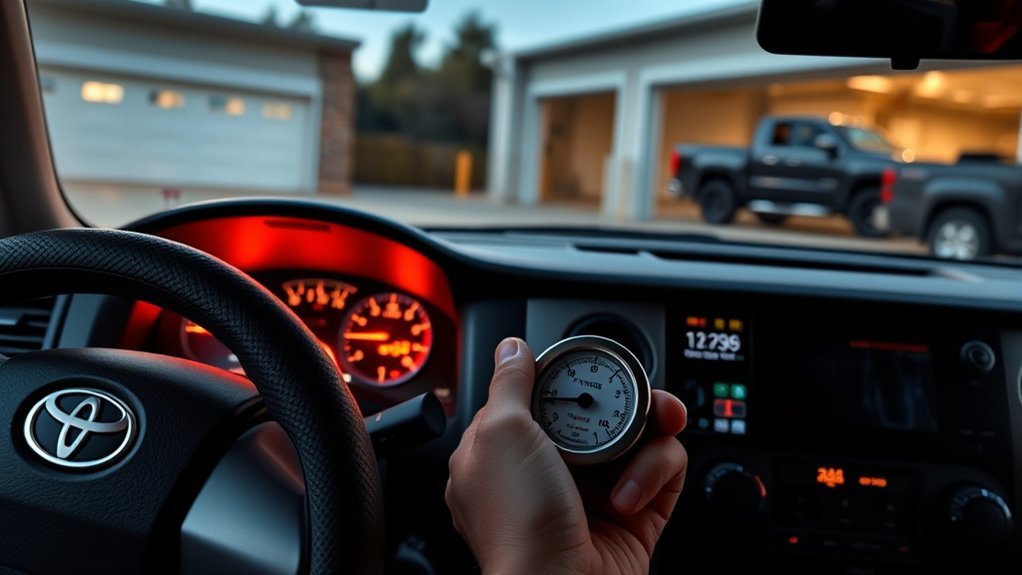
Before resetting or initializing the system, inspect the tires and set each one to the correct cold pressure. Never initialize TPMS to hide a warning or while a tire is known to be low.
Reset, Initialization, and Registration Are Different
- Warning clearing: The lamp turns off after the low-pressure condition is corrected and the system receives updated readings.
- Initialization: The truck stores the current properly adjusted pressures as its reference when the model provides this function.
- Sensor registration or relearn: The TPMS computer is taught the electronic IDs of new or alternate wheel sensors. This may require a scan tool.
- Repair: A puncture, leaking valve, damaged wheel, failed sensor, wiring fault, or receiver problem is physically corrected.
Many 2022-and-Newer Tundras
Newer Tundras commonly provide TPMS settings through the multi-information display. After correcting all cold tire pressures, use the steering-wheel meter controls to open the vehicle settings and look for a TPWS or tire-pressure setting such as Set Pressure. Press and hold the confirmation control as instructed until the truck acknowledges initialization.
Menu names, required ignition mode, and completion conditions can differ by year and equipment. Confirm the exact sequence in Toyota’s owner’s manual portal.
Many 2007–2021 Tundras
Many second-generation Tundras use a physical tire-pressure warning reset switch beneath the lower dashboard. A typical procedure is to:
- Park safely and set all tires to their specified cold pressure.
- Place the ignition in the mode specified by the owner’s manual, often ON without starting the engine.
- Press and hold the tire-pressure reset switch until the warning lamp blinks slowly three times.
- Release the switch and leave the ignition in the specified mode long enough for initialization to begin.
- Turn the ignition off when instructed, then drive normally so the sensors can update.
Do not rely on a fixed six-second hold or three-minute engine-running period unless those instructions appear in the manual for your exact year.
Older Tundras
First confirm that the truck has a factory TPMS. U.S. federal requirements apply to model-year 2008 and newer passenger vehicles and covered light trucks, while some 2006 and 2007 vehicles also have the system. An older truck may instead have an aftermarket system with a completely different procedure.
Pro Tip: Take a photo of the driver-door pressure placard and save the owner’s-manual TPMS page on your phone. That prevents accidental initialization at the wrong pressure when seasonal tires or replacement wheels are installed.
If the Light Does Not Clear
Recheck every tire cold and look for continuing pressure loss. Then confirm that the correct model-year procedure was used. If the lamp flashes, the pressure display remains blank, or the warning persists with correct pressures, stop repeating the reset and have the system scanned.
TPMS Maintenance Tips for Optimal Performance
- Check pressure monthly. Use an accurate gauge while the tires are cold, including the spare even when it is not monitored.
- Use the placard values. Front and rear specifications may differ, so do not assume all tires require the same pressure.
- Inspect for damage. Look for nails, cracks, bulges, irregular tread wear, and damaged valve stems.
- Follow Toyota’s rotation schedule. Use the maintenance guide for the exact model year, tire type, and driving conditions.
- Protect TPMS valve stems. Avoid forcing corroded metal caps or using incompatible valve cores and service kits.
- Plan for seasonal wheels. Confirm that winter or aftermarket wheels have compatible sensors and that the truck can recognize their IDs.
- Tell the technician about sealant use. Tire sealant may require additional sensor inspection and cleaning.
- Do not wait for the warning. TPMS normally activates only after pressure has fallen significantly.
According to FuelEconomy.gov, keeping tires properly inflated can improve fuel economy by about 0.6% on average and by up to 3% in some cases. Correct inflation also supports tire durability and handling.
Frequently Asked Questions
Is it okay to drive if the Toyota Tundra TPMS light is on?
Inspect the truck before continuing. Do not drive on a visibly flat, damaged, bulging, or rapidly leaking tire. When the tires look normal, measure them immediately and correct the pressure before normal driving. A flashing malfunction lamp means you must rely on a hand gauge until the monitoring system is repaired.
Can I fix a TPMS error myself?
You can inspect the tires, adjust cold pressure, and perform the owner-manual initialization procedure. A puncture, leaking valve stem, nonresponsive sensor, unregistered sensor ID, or flashing malfunction usually requires tire-service or diagnostic equipment.
How do I reset the TPMS sensor on a Toyota Tundra?
First set every tire to the correct cold pressure. Many 2022-and-newer Tundras use a TPWS setting in the multi-information display, while many 2007–2021 trucks use a physical reset switch under the dashboard. Use the exact instructions for your model year because ignition mode, menu wording, and timing vary.
Why is the TPMS light still on after I added air?
Another tire may still be low, the pressure may have been checked while warm, a tire may be leaking, or the sensors may not have updated yet. A flashing-then-solid light indicates a system malfunction. Recheck all tires cold and follow the exact owner-manual update or initialization procedure.
Does the Toyota Tundra TPMS monitor the spare tire?
Coverage varies by model year and equipment, and federal TPMS requirements do not guarantee that a spare is monitored. Check the spare manually at least once a month and before towing or long trips.
How much does it cost to fix a tire-pressure sensor?
The total depends on whether the truck needs only a relearn, a leak repair, or a new sensor. Sensor replacement may include the sensor, a service kit, tire dismounting and remounting, wheel balancing, diagnostics, and ID registration. Request an itemized estimate rather than comparing sensor-part prices alone.
Conclusion
A solid Toyota Tundra TPMS light should lead to an immediate tire-pressure and damage check. A flashing-then-solid light means the monitoring system itself needs attention. Set every tire to the cold pressure on the driver-door placard, repair any leak, and use only the reset or initialization procedure specified for your exact model year.
Proper inflation supports safer handling, longer tire life, and better fuel economy, but TPMS remains a warning aid—not a replacement for monthly checks with an accurate gauge.
Sources
- Toyota Manuals and Warranties — exact model-year TPMS controls, warnings, and initialization procedures
- NHTSA TireWise — tire-pressure checks, TPMS warning behavior, maintenance, and tire-safety guidance
- FuelEconomy.gov: Keeping Your Vehicle in Shape — placard-pressure guidance and fuel-economy effects of correct inflation
- 49 CFR §571.138, Tire Pressure Monitoring Systems — federal TPMS performance and malfunction-warning requirements
