
When you work with metal art, the best plasma cutter is the one that matches your power supply, compressor capacity and typical material thickness. A well-matched machine can help you make cleaner cuts on signs, panels, brackets, repair pieces and decorative shapes with less cleanup afterward.
Choose for your actual workflow, not the highest amp number. For light garage projects, portability and 120V convenience may matter most. For rusty, painted or textured metal, a pilot arc can be more useful. For thicker stock or longer shop sessions, 220V/240V power and a capable air supply become more important.
This roundup is reader-supported. When you click through qualifying Amazon links, we may earn a referral commission at no extra cost to you. As an Amazon Associate I earn from qualifying purchases.
Quick Verdict
Best portable pick: ARCCAPTAIN CUT 50 is a practical choice when you want a compact dual-voltage cutter for garage projects and lighter metal art.
Best control features: ARCCAPTAIN CUT55 Pro and CUT55 Prolux are the feature-rich choices if app control, a clear display and non-touch starting matter to your workflow.
Best performance-per-dollar pick: Reboot RBC6000D is a strong fit if you want a simple portable kit with a higher advertised output class.
Best heavy-duty option: YESWELDER CUT-65DS PLUS is the better fit when you want more output headroom and multiple cutting-related modes in a shop setup.
Top Picks
|
Category |
Product |
Best For |
|---|---|---|
|
🏆 Best Portable |
Portable garage projects |
|
|
🎯 Best App Control |
App-guided setup and home-shop control |
|
|
🔰 Best Pilot Arc |
Rusty, painted or textured metal |
|
|
💰 Best Value Power |
Non-HF starting and value-focused shop use |
|
|
🚀 Best Heavy-Duty |
Higher-output shop work |
|
|
⭐ Most Versatile |
Mesh, art and mixed cutting tasks |
|
|
💼 Best for Home DIY |
Home DIY with app control |
|
|
🎨 Best For Hobbyists |
Occasional hobby cutting |
|
|
⚡ Best Performance Per Dollar |
Simple controls and value-focused power |
|
|
🔧 Best For Beginners |
Beginners who want pilot-arc starting |
How We Chose These Cutters
This comparison focuses on practical buying factors shown in the source listings and product documentation: advertised output, clean-cut guidance, 120V versus 220V/240V flexibility, pilot-arc or non-touch starting, air-supply needs, portability, included consumables, control layout and cooling features.
We did not treat advertised maximum-cut numbers as guaranteed real-world performance. Your actual cut quality depends on input voltage, material type and condition, air pressure and flow, consumable condition, grounding and travel speed. For repeatable work, prioritize the rated or recommended clean-cut range rather than the largest marketing number.
Before You Buy
- Check your outlet: 120V is convenient for light cuts, while 220V or 240V usually gives better performance on thicker metal.
- Match your compressor: Plasma cutters need steady, dry air. A small compressor may work for short cuts but can slow you down on long panels.
- Decide on pilot arc: A pilot-arc or non-touch start helps with rusty, painted, expanded or uneven metal.
- Plan for consumables: Keep nozzles, electrodes and tips on hand so one worn part does not stop a project.
- Think about safety: Use proper eye protection, gloves, flame-resistant clothing, ventilation and a clear work area before cutting.
Accuracy note: Amp ratings, cut-capacity figures and feature names can vary by voltage, listing revision and test conditions. Treat thickness figures as manufacturer or seller claims unless your own material, power and air setup confirms the result.

This compact cutter is built for practical home-shop work. You get a dual-voltage unit for 110V household outlets or 220V shop power, a clear LED display for fast setting checks, and a built-in air regulator that helps simplify setup.
It is a strong fit for metal art, brackets, light fabrication, automotive repair and on-site jobs where portability matters. For thicker material, expect better results with 220V power and a compressor that can keep up.
Who should buy this: DIY users who value portability and dual-voltage flexibility. Consider another model if: you regularly cut rusty or painted material and want a dedicated non-touch pilot arc.
Source Feedback Summary
The source article summarizes buyer feedback as generally positive for portability, simple setup and typical DIY cutting. Repeated watch-outs include air demand, moisture control and stronger performance on 220V for thicker material. Current review counts and ratings were not independently verified here.
Source Summary: Generally positive; verify current Amazon reviews for the latest pattern.

Versatility
You can use this for cutting shapes for metal art, trimming exhaust pieces, making brackets, patching sheet metal and handling light fabrication. It is easy to move between a garage and a job site.
Safety Features
Adjustable post-flow cooling helps protect consumables, the LED screen can show error codes, and the built-in regulator helps manage air pressure when your compressor is suitable. Always follow grounding, air pressure and PPE guidance.
Key Benefits
- Dual-voltage 110/220V design for home or workshop flexibility
- Large LED display for quick setting checks
- Built-in air regulator for simpler setup
- Portable design with shoulder strap
- Good fit for thin to moderate metal art and repair work
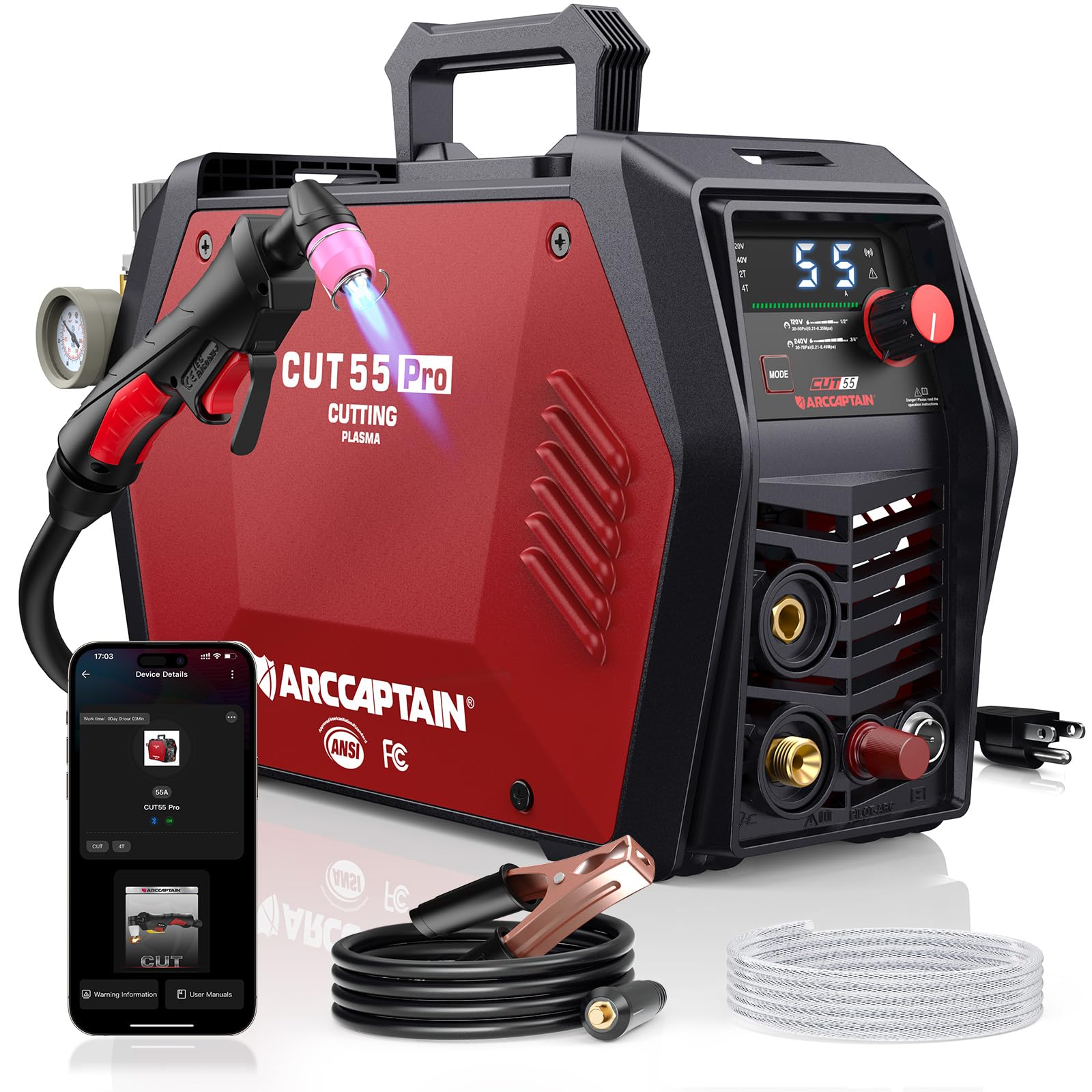
This model is a good match when you want a modern control setup without making the machine harder to use. The app control helps you adjust settings away from the unit, while the large LED readout keeps current and error information easy to see.
The non-touch pilot arc is useful for painted, rusty or uneven pieces, and the built-in regulator and filter reduce setup steps. It suits decorative panels, shop repairs, metal signs and thicker hobby work when paired with 240V power and enough air.
Who should buy this: users who want app-based adjustments and a non-touch pilot arc. Consider another model if: you prefer the simplest possible controls and do not need connected features.
Source Feedback Summary
The source article summarizes feedback as positive for cutting performance, app control and the LED display. Common watch-outs include air-fitting preferences, compressor requirements and setup details. Current review counts and ratings were not independently verified here.
Source Summary: Generally positive; verify current Amazon reviews for the latest pattern.

Versatility
You can use it for trimming brackets, cutting exhaust parts, patching sheet metal and making decorative panels. It is compact enough for a garage but offers more control than a basic entry-level cutter.
Safety Features
The source listing describes overcurrent, overvoltage, overload and overheating protection. A smart fan, post-blow cooling and error-code display help protect the machine and consumables.
Key Benefits
- Non-touch pilot arc for painted, rusty or uneven surfaces
- App control and large LED display for easier setting changes
- Dual-voltage 120V/240V operation
- Built-in air regulator and filter for quicker setup
- 2T/4T modes and intelligent post-blow for longer cuts
- Useful protections for durability and troubleshooting
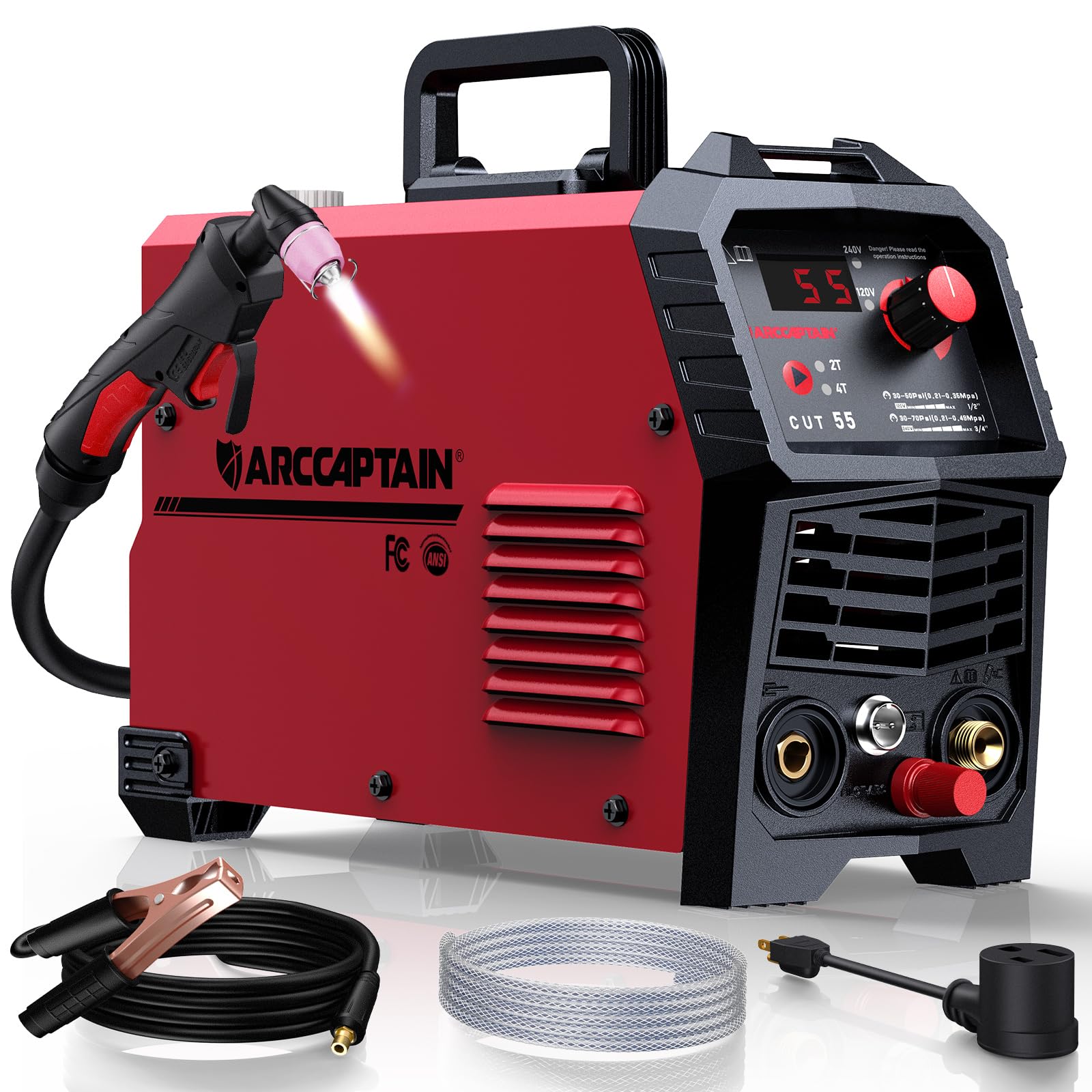
This is the better ARCCAPTAIN pick when your work often includes painted, rusty or less-than-perfect metal. The pilot arc helps you start without dragging the torch across the surface, which can save time on recycled steel, expanded metal and outdoor art materials.
It ships with air-handling accessories and gives you flexible 120V or 240V operation. Use 120V for lighter work and 240V when you want stronger cutting performance.
Who should buy this: metal artists who often work with rusty, painted, expanded or textured steel. Consider another model if: most of your work is clean thin sheet and low cost matters more than pilot-arc convenience.
Source Feedback Summary
The source article summarizes feedback as positive for cutting power, startup and pilot-arc usefulness. Common caveats include air consumption, hose or fitting preferences and the need for a suitable compressor. Current review counts and ratings were not independently verified here.
Source Summary: Generally positive; verify current Amazon reviews for the latest pattern.

Versatility
This cutter works for brackets, exhaust trimming, sheet-metal patches, metal signs, garden art and decorative panels. It is especially helpful when the metal is rusty, painted or textured.
Safety Features
The source listing describes overcurrent, overvoltage, overload and overheating protection. Post-blow timing helps cool the torch and extend consumable life. Always clamp the ground securely and wear appropriate PPE.
Key Benefits
- Non-touch pilot arc for painted or rusty surfaces
- Dual-voltage 120V/240V inverter design
- Built-in air regulator and filter for easier setup
- 2T/4T modes and post-flow cooling
- Portable design for garage, shop or site use
- Useful protections for safer operation

This YESWELDER model is a practical pick when you want useful power, non-touch starts and straightforward controls without moving into a much larger shop machine. The non-high-frequency start is also attractive if you plan to work near sensitive electronics or want a more CNC-friendly starting method.
It fits automotive repair, metal art, bracket work, scrap cutting and small fabrication. For best results, pair it with dry air, a stable ground and the correct voltage for your metal thickness.
Who should buy this: buyers who want non-HF starting and straightforward shop controls. Consider another model if: app control or the lightest carry weight is a priority.
Source Feedback Summary
The source article summarizes feedback as positive for cutting power, compact size and the digital display. Repeated cautions involve dry air, fittings and learning the right speed, amperage and pressure for each material. Current review counts and ratings were not independently verified here.
Source Summary: Generally positive; verify current Amazon reviews for the latest pattern.

Versatility
This unit handles trimming brackets, cutting exhaust pieces, prepping weld edges, decorative panels and small fabrication runs. Use 110V for lighter jobs and 220V when you need more cutting strength.
Safety Features
The source listing describes overload, overcurrent and overheating protection, plus splash-resistance language. The digital display helps surface pressure, current and fault information.
Key Benefits
- Non-touch pilot arc for painted, rusty or uneven surfaces
- Dual 110V/220V operation for home or shop use
- Large LED display for pressure, current and error feedback
- Built-in air regulator and filter for easier setup
- 2T/4T and adjustable post-flow for longer cuts
- Non-high-frequency start for reduced electrical interference
This is the stronger pick for users who expect heavier shop work, thicker stock or more than basic straight cutting. The source listing describes a 65A output class plus cutting, grid-cutting, marking and gouging modes for broader shop use.
It is still a portable-style unit, but it makes the most sense in a shop with a capable compressor and 220V power available. Choose it when you want more headroom than a basic 50A cutter.
Who should buy this: small-shop users who want a higher-output class and multiple cutting-related modes. Consider another model if: you mainly cut thin sheet on 120V or use a small compressor.
Source Feedback Summary
The source article summarizes feedback as positive for cut quality, the digital readout and dual-voltage flexibility. Watch-outs include setup details, regulator or fan quirks and the need to confirm support and consumable availability. Current review counts and ratings were not independently verified here.
Source Summary: Generally positive; verify current Amazon reviews for the latest pattern.

Versatility
This cutter works for brackets, weld prep, automotive repair, decorative panels, small CNC-style setups and heavier fabrication jobs. Use 110V for light tasks and 220V when you need the machine’s stronger output.
Safety Features
The source listing describes overload, overcurrent and overheating protection, plus IP21-style splash-protection language. The display gives pressure, current and fault feedback, and post-flow cooling helps protect consumables.
Key Benefits
- 65A output claim for more cutting headroom
- Dual 110V/220V operation for flexible power choices
- Source-listed cutting, grid-cutting, gouging and marking modes
- Digital display for pressure, current and error feedback
- Non-touch pilot arc for rusty or painted surfaces
- Good fit for small shops that need more power
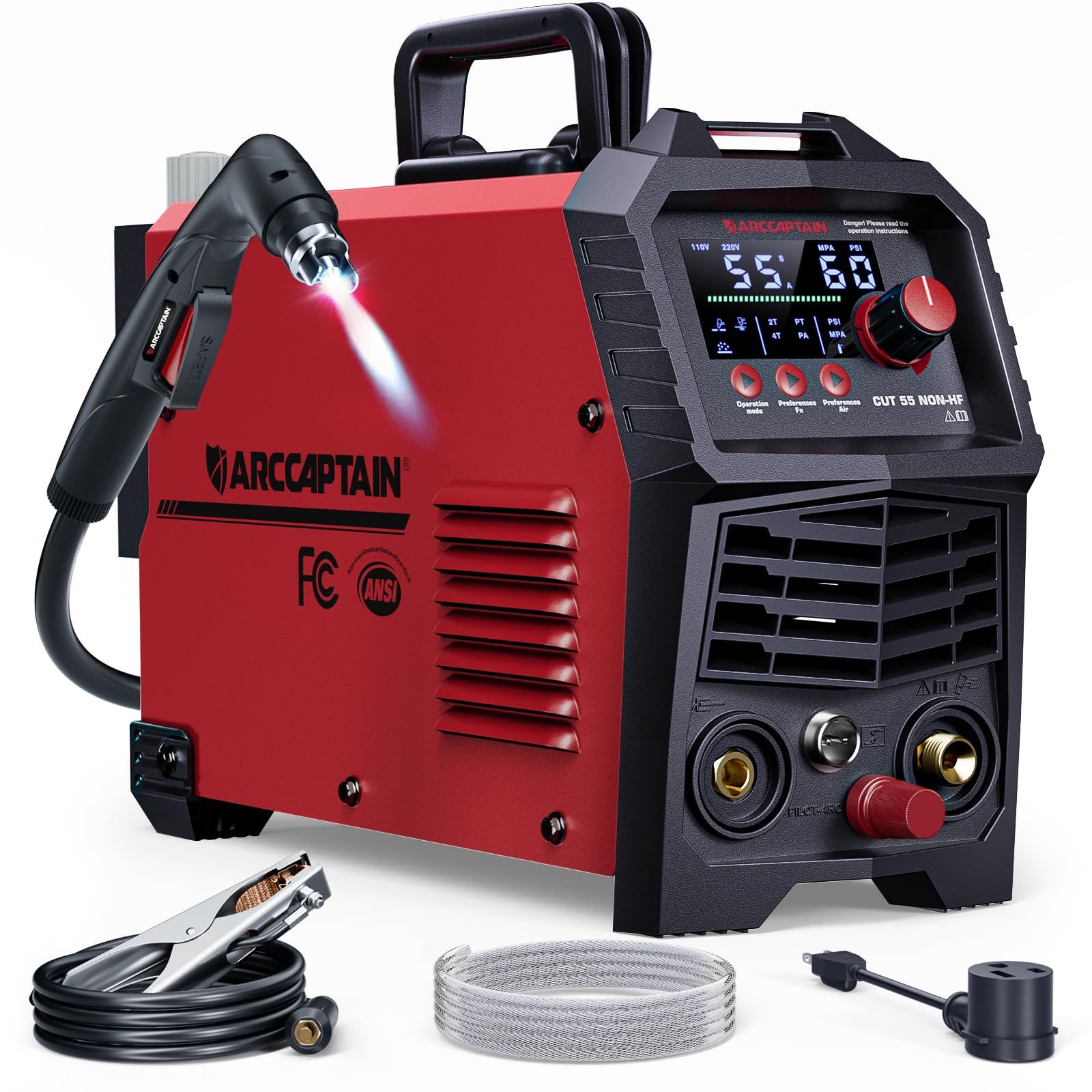
This ARCCAPTAIN model is a strong fit when you want one machine for regular cuts, mesh work, rust-removal-style prep and longer runs. The blowback non-HF pilot arc helps reduce electrical interference while still giving you non-touch starts on rough surfaces.
It is useful for decor pieces, outdoor art, shop repairs and small fabrication. Plan for a steady air supply because more capable cutters can outpace small compressors on long cuts.
Who should buy this: users who want non-HF pilot-arc starting for mixed art, mesh and repair work. Consider another model if: you only need occasional basic straight cuts.
Source Feedback Summary
The source article summarizes feedback as positive for hobby and light-professional cutting, pilot-arc performance and the control panel. Common gripes include air consumption, compressor needs and occasional quality-control comments. Current review counts and ratings were not independently verified here.
Source Summary: Generally positive; verify current Amazon reviews for the latest pattern.

Versatility
This unit covers everyday tasks like trimming brackets, prepping weld edges and cutting exhaust parts. It also works well for decorative panels, patterned sheet metal and smaller CNC-style setups.
Safety Features
The source listing describes overload, overcurrent and overheating protection plus error-code feedback. IP21-style splash resistance and non-HF start add practical shop benefits, but you still need proper grounding and PPE.
Key Benefits
- Blowback non-HF pilot arc for reliable starts
- Dual 110V/220V operation
- Large LED display for current, air pressure and error feedback
- PA/PT/2T/4T modes for mesh work and longer cuts
- IGBT inverter design for stable cutting
- Good fit for metal art, repairs and small fabrication
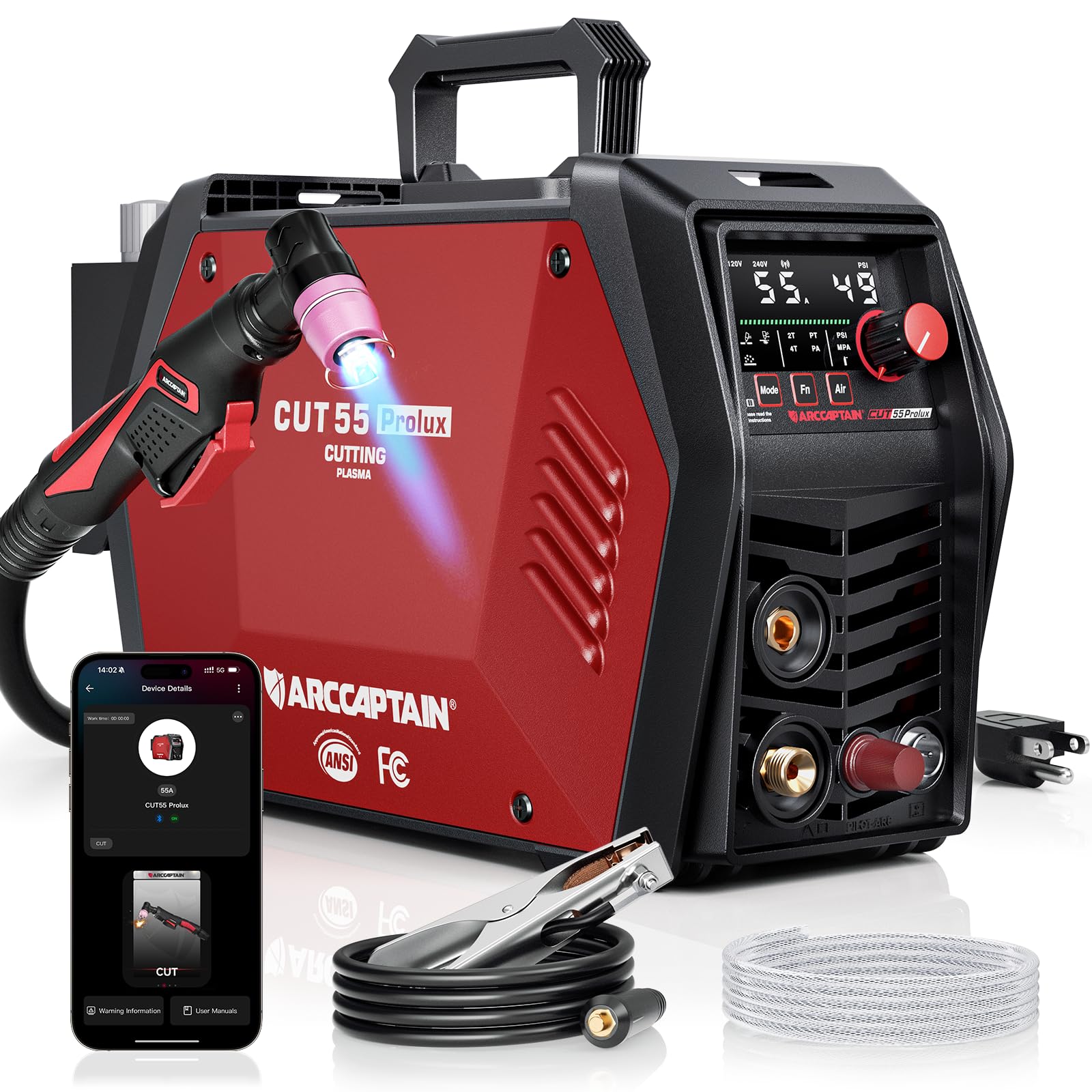
This is a good pick for home users who want modern controls and helpful feedback while still keeping the cutter manageable. App control and a large display make adjustments easier, and the source-listed air-pressure monitoring feature may help you spot an unstable air supply before it affects a cut.
It works well for metal signs, repairs, driveway projects and small-fab work. The main buyer check is your compressor because a feature-rich 55A cutter still needs enough dry air to perform well.
Who should buy this: home-shop users who want app control, a large display and non-touch starting. Consider another model if: connected controls add cost without solving a real need for you.
Source Feedback Summary
The source article summarizes feedback as positive for cutting, monitoring, dual-voltage flexibility and app control. Common concerns include supplied air fittings, compressor requirements and occasional quality-control reports. Current review counts and ratings were not independently verified here.
Source Summary: Generally positive; verify current Amazon reviews for the latest pattern.

Versatility
Use this cutter for brackets, scrap cutting, metal art, silhouettes, decorative panels and mesh work. Source-listed surface-prep and pilot-arc modes may help when you work with older or painted material.
Safety Features
The source listing describes overcurrent, overvoltage and overheating protection, plus air-pressure monitoring, cooling and error-code feedback. Still follow grounding procedures, use PPE and allow cooling time before handling hot consumables.
Key Benefits
- Non-touch pilot arc for painted or rusty surfaces
- Dual 120V/240V operation
- App control and large LED display
- Source-listed air-pressure monitoring
- PA/PT and 2T/4T modes for longer or patterned cuts
- Good feature set for a home shop
The S7 CUT50 is a straightforward hobby choice for people who want to start cutting metal art, repair parts and light fabrication pieces without paying for extra smart controls. It gives you dual-voltage flexibility and arrives with core accessories so you can set up faster.
It is best for learning, occasional shop tasks and creative projects. Check the current listing for exact amperage, cut thickness, start method and consumable details because budget plasma cutter listings can vary.
Who should buy this: occasional hobby users who want a simple dual-voltage entry point. Consider another model if: you need clearly documented pilot-arc behavior, premium controls or frequent production use.
Source Feedback Summary
The source article summarizes feedback as positive for value, cutting ability for the size and included accessories. Common complaints include short leads, air-fitting tweaks and the need for 220V when pushing thicker material. Current review counts and ratings were not independently verified here.
Source Summary: Generally positive; verify current Amazon reviews for the latest pattern.

Versatility
This tool works for silhouettes, decorative panels, scrap cutting, brackets and small repairs. Use 110V for simple portable jobs and 220V when you need smoother cuts on thicker stock.
Safety Features
The source material describes basic electrical protection and cooling. Confirm the current listing for any air-sensing feature before relying on it. Always ground the unit properly and keep sparks away from flammable materials.
Key Benefits
- Dual 110V/220V operation for flexible setup
- Useful for hobby metal art and light shop repairs
- IGBT inverter design
- Air filter regulator to help manage compressed-air setup
- Includes torch, ground clamp and starter consumables
- Good entry point for occasional use
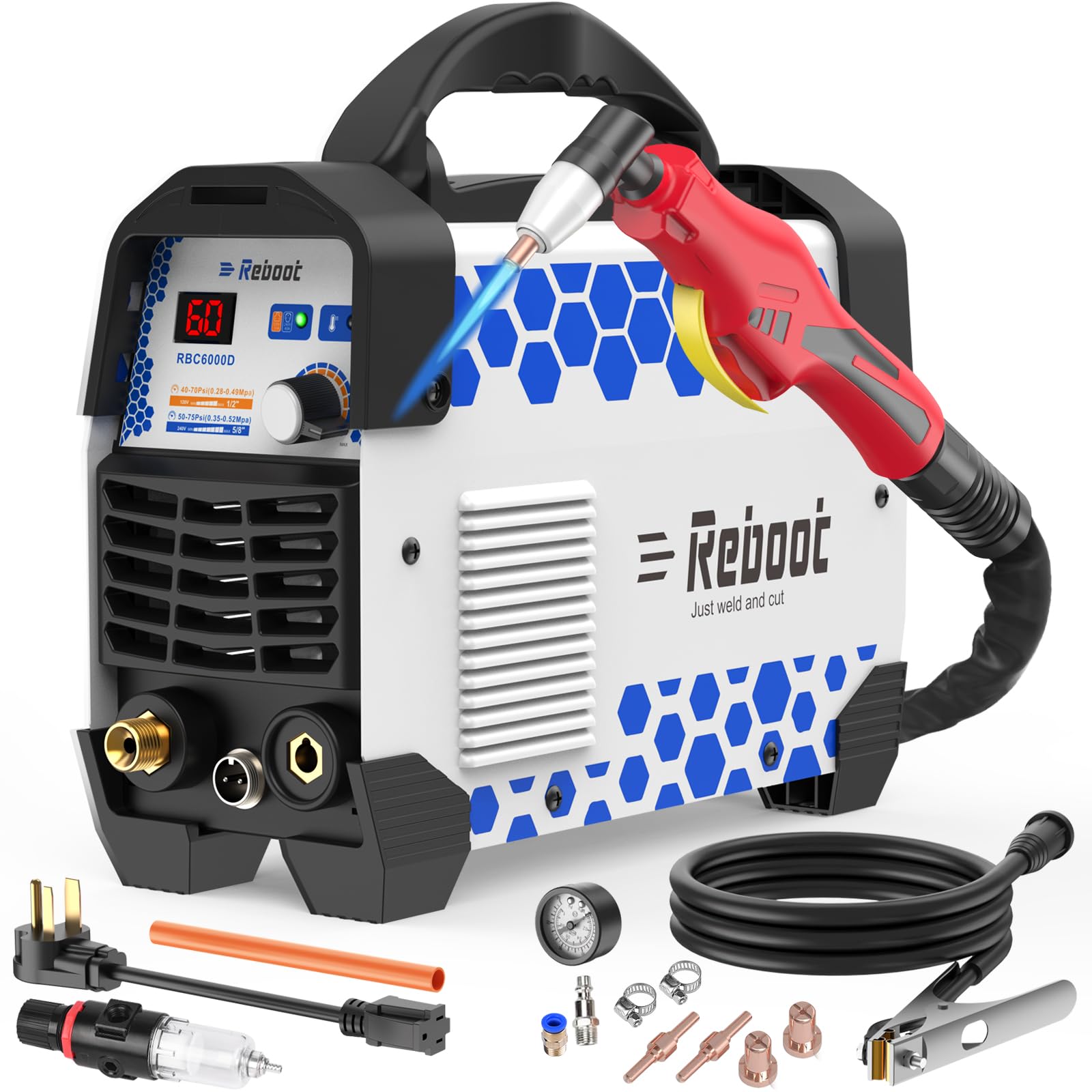
The Reboot RBC6000D is a value-minded choice for hobbyists and small shops that want more claimed output without a complicated interface. It works from household power for light jobs and scales better on 240V for thicker stock.
The included torch, spare tips and ground clamp help you start faster. It is a strong fit for metal art, repair parts, quick fabrication and portable job-site work.
Who should buy this: value-focused users who want simple controls and a portable 60A-class kit. Consider another model if: you want app control, non-HF pilot-arc features or a more documented premium ecosystem.
Source Feedback Summary
The source article summarizes feedback as positive for simple controls, portability and included consumables. Heavier cuts are generally described as better suited to 240V, while household circuits can limit output. Current review counts and ratings were not independently verified here.
Source Summary: Generally positive; verify current Amazon reviews for the latest pattern.

Versatility
This unit works for brackets, rusted hardware, weld prep, scrap cutting, silhouettes, decorative panels and small sculptures. The simple controls make it approachable for quick projects.
Safety Features
The source material describes basic electronic protection, cooling and air-pressure guidance. Use a compatible circuit and compressor, ground the workpiece and wear proper eye, hand and skin protection.
Key Benefits
- Dual 120V/240V operation
- 60A output claim for light fabrication and hobby use
- Portable format for garage or job-site work
- Includes PT31 torch, spare tips and ground clamp
- Beginner-friendly controls
- Good fit for value-focused buyers
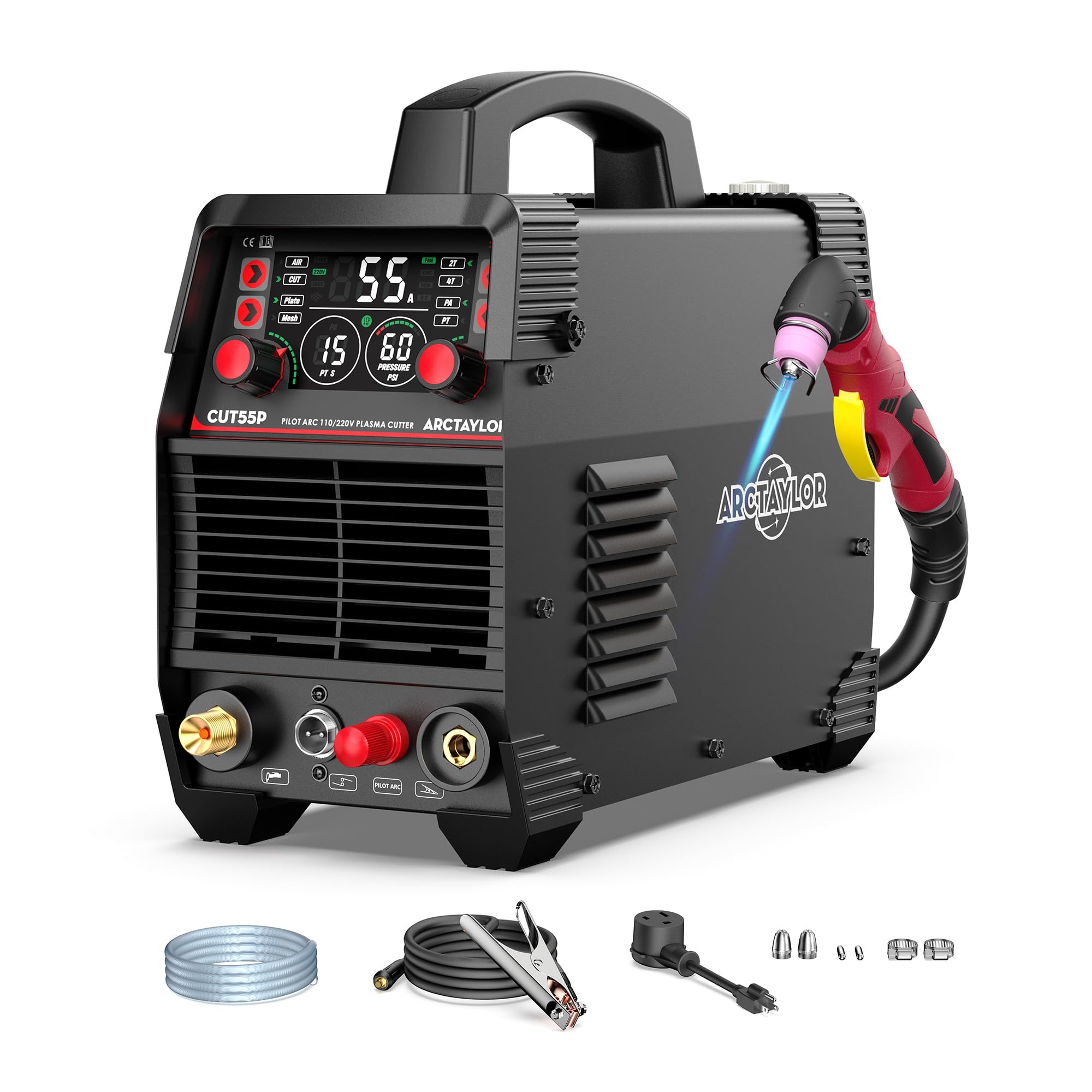
The ARCTAYLOR CUT55P is aimed at beginners and small-shop users who want pilot-arc starting, dual voltage and a readable display without a steep learning curve. Confirm the current listing for the exact air-sensing or pressure-display functions before relying on them.
It works for garden art, metal signs, quick repairs and small fabrication. Check the current listing for exact consumable type and replacement availability before buying.
Who should buy this: beginners who want a pilot-arc cutter with dual-voltage flexibility. Consider another model if: you plan to work around CNC controls or sensitive electronics and specifically need a non-HF start system.
Source Feedback Summary
The source article summarizes feedback as positive for pilot-arc reliability, portability and the digital display. Watch-outs include manual detail, consumable matching and compressor setup. Current review counts and ratings were not independently verified here.
Source Summary: Generally positive; verify current Amazon reviews for the latest pattern.

Versatility
This cutter suits brackets, scrap cutting, weld prep, metal silhouettes, garden art and decorative panels. Use 110V for lighter portable work and 220V when you need cleaner, faster cuts.
Safety Features
The source listing describes over-current, overload and temperature protection plus cooling and error indicators. The display can help with setup feedback, but confirm the current manual for the exact pressure-display behavior. Because this model uses high-frequency pilot-arc starting, check compatibility before using it around CNC controls or sensitive electronics.
Key Benefits
- High-frequency pilot arc for non-touch starting on painted or rusty metal
- Dual 110/220V compatibility
- Large digital display; confirm the current air-sensing configuration
- Compact design for garage use
- Includes torch, ground clamp and starter consumables
- Good beginner-friendly feature mix
FAQ
How Do I Choose The Right Plasma Cutter For My Metal Art Projects?
Start with the metal you cut most often. Thin sheet steel, garden art and decorative signs need less power than plate, structural stock or frequent shop cutting. A dual-voltage cutter gives you flexibility: 110V or 120V is convenient for light portable work, while 220V or 240V usually gives better performance on thicker metal.
Next, decide whether you need a pilot arc. A pilot-arc or non-touch plasma cutter is helpful for rusty, painted, perforated or uneven metal because you do not need to drag the torch to start. Also check duty cycle, consumable availability, air compressor requirements and support before buying.
What Power And Air Setup Will Give Me Reliable, Clean Cuts?
Match the cutter to your outlet and compressor. For heavier cuts, a 220V or 240V circuit is usually the better setup. For lighter art projects, a 110V or 120V outlet can work, but it may limit cut speed and thickness.
For air, use clean, dry compressed air with a regulator and moisture filter. Moisture can shorten consumable life and cause rough, inconsistent arcs. Check the manual for the required PSI and CFM, and make sure your compressor can keep up with longer cuts.
How Do I Get Cleaner Cuts, Maintain Consumables, And Stay Safe While Working?
Cleaner cuts come from matching amperage, air pressure, torch angle, standoff distance and travel speed to the metal. Practice on scrap before cutting the final piece, especially for curves, signs and decorative panels.
Keep spare nozzles and electrodes nearby, inspect worn consumables often, drain your compressor and clean the torch and filters. For safety, wear proper eye protection, gloves and flame-resistant clothing, ventilate your workspace, keep a fire extinguisher nearby and never touch cut metal until it has cooled.
Is A Non-HF Plasma Cutter Better For CNC Or Sensitive Electronics?
A non-HF or blowback-start cutter is often preferred around CNC tables and sensitive electronics because it reduces high-frequency electrical interference. That does not automatically make every non-HF cutter CNC-ready, so check the current Amazon listing and manufacturer details for CNC ports, torch compatibility and recommended setup.
Which Plasma Cutter Is Best For Beginners?
Beginners should look for a clear display, dual-voltage support, understandable air-pressure guidance, available consumables and simple controls. The ARCTAYLOR CUT55P, ARCCAPTAIN CUT 50 and S7 CUT50 can fit beginner use, but compare their start method, consumable availability and compressor requirements before buying.
Quick Decision Guide
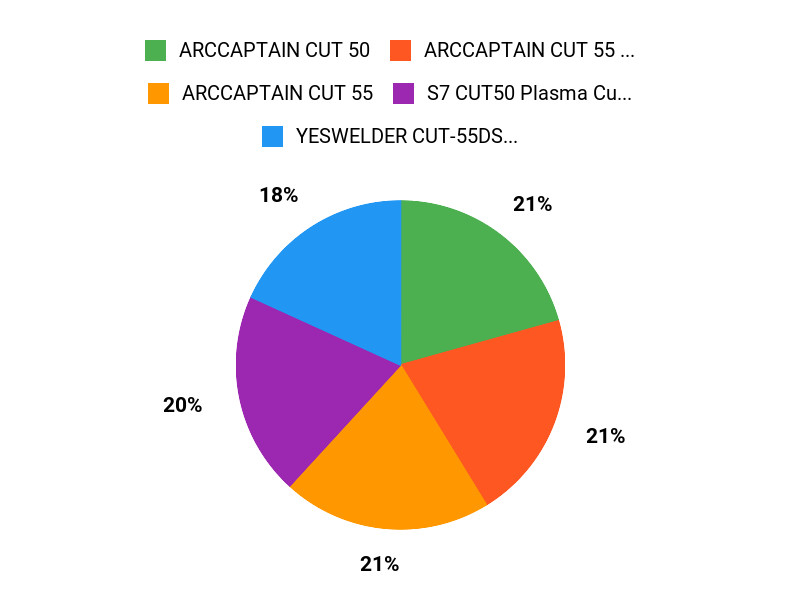
You’ll mainly be weighing power, portability, pilot arc, air demand and control features. Pick the CUT 50 if you want a lighter portable setup, the CUT55 Pro or Prolux if app control matters, the CUT55 Pilot if you often cut rusty or painted material, the Reboot RBC6000D if simple value-focused power is the focus, and the YESWELDER CUT-65DS PLUS if you need more output headroom. The chart below comes from the source article; use the current product listings and the comparison table above for final buying checks.
Wrapping Up
Now that you’ve seen the options, choose the cutter that matches your outlet, compressor and project size. A compact 50A-style unit is easier to move and easier to learn on, while a 55A or 65A model gives you more room for thicker stock and longer shop sessions.
For metal art, pilot arc is worth considering because it helps with painted, rusty and textured material. For cleaner cuts, focus on dry air, stable grounding, fresh consumables and the right travel speed.
Match the cutter to your workflow, compressor and power supply, and you’ll get cleaner cuts, fewer interruptions and faster progress on your metal art.
| Product | Image | Best For | Power Setup | Cut Capacity Notes | Buyer Check |
|---|---|---|---|---|---|
| ARCCAPTAIN Plasma Cutter |
 |
Portable garage work | 110/220V DC inverter | Claimed clean cut around 1/2 inch | Best on clean metal; use 220V for more headroom |
| ARCCAPTAIN iControl Cut55 Pro Plasma Cutter |
 |
App control and pilot arc | 120/240V DC inverter | Check current listing for clean-cut guidance; do not plan from max-severance claims alone | Confirm compressor CFM and current clean-cut guidance |
| ARCCAPTAIN 55A Plasma Cutter |
 |
Painted or rusty metal | 120/240V DC inverter | Ideal clean-cut claim around 1/2 inch | Good fit when non-touch pilot arc matters |
| YESWELDER 55 Amp Plasma Cutter |
 |
Value power and non-HF start | 110/220V digital DC inverter | Check current listing for rated clean cut | Confirm fittings, consumables and clean-cut rating |
| YESWELDER CUT-65DS PLUS Plasma Cutter |
 |
Heavier shop cutting | 110/220V inverter | 65A class; source listing describes multiple cutting-related modes | Use a capable compressor and 220V for heavier work |
| ARCCAPTAIN CUT55 Non-HF |
 |
Versatile shop and art projects | 110/220V IGBT inverter | Check current listing for the rated or recommended clean-cut range | Confirm current mode list and consumable availability |
| ARCCAPTAIN iControl CUT55 Prolux |
 |
Home DIY with smart controls | 120/240V dual-voltage | Check current listing for clean-cut rating | Check app compatibility and compressor capacity |
| S7 CUT50 Plasma Cutter |
 |
Hobby metal art | 110/220V IGBT inverter | Check current listing for exact amp and cut rating | Verify exact output, start method and consumables |
| Reboot 60A Plasma Cutter |
 |
Performance per dollar | 120/240V inverter | Claimed clean cut around 1/2 inch | Check household-circuit limits before heavier cuts |
| ARCTAYLOR 55Amps Plasma Cutter |
 |
Beginners | 110/220V IGBT inverter | Check current listing for exact clean-cut rating | HF start may be less suitable around sensitive electronics |
Affiliate disclosure: This roundup is reader-supported. When you click qualifying Amazon links, we may earn a referral commission at no extra cost to you.
