
Last updated: September 11, 2026
Wheel balancing vs. wheel alignment comes down to weight versus geometry. Balancing corrects uneven mass in each tire-and-wheel assembly and is the better first check for a speed-related vibration. Alignment measures wheel angles and is the better first check when the car pulls, the steering wheel sits off-center, or the tire shoulders wear unevenly. The symptoms can overlap, so tire pressure, tire condition, brakes, steering, and suspension may also need inspection.
Quick Answer
Check cold tire pressure and visible tire condition first. Choose wheel balancing when you feel a speed-related vibration through the steering wheel, seat, or floor. Choose an alignment inspection when the car pulls, the steering wheel sits off-center, or the tire shoulders wear unevenly. You may need both services if several symptoms appear together.
Key Takeaways
- Balancing addresses rotating weight: A technician spins each tire-and-wheel assembly and adds small weights to reduce imbalance.
- Alignment addresses wheel geometry: A technician measures applicable angles and compares them with the vehicle manufacturer’s specifications.
- Vibration and pulling are symptoms, not final diagnoses: Tire damage, pressure differences, bent wheels, brakes, steering parts, and suspension faults can produce similar signs.
- There is no universal service interval: Follow your owner’s manual and arrange an inspection when symptoms, impacts, tire installation, or relevant repairs make one necessary.
What Are Wheel Balancing and Alignment?
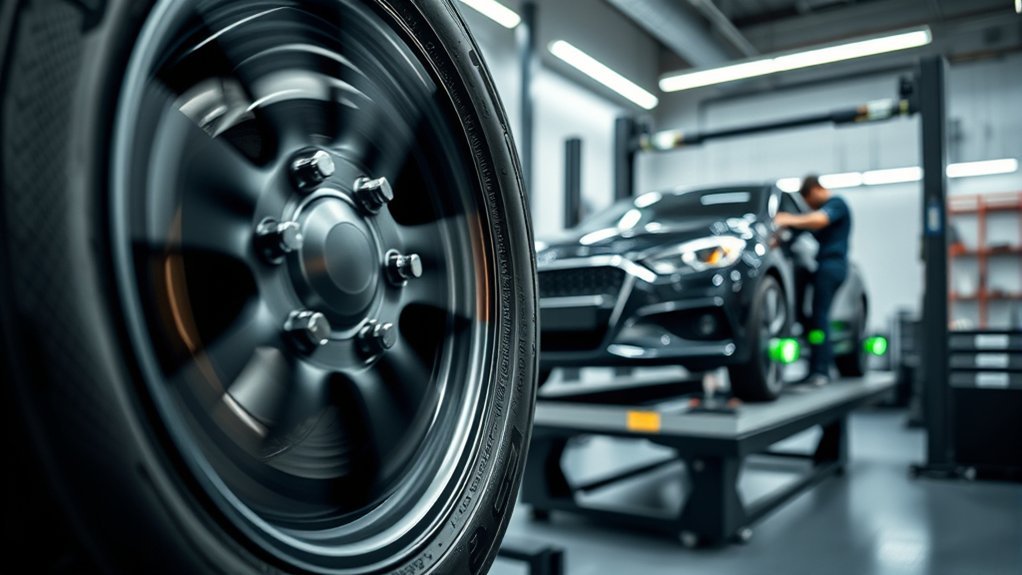
Wheel balancing and wheel alignment are separate tire and chassis services. Both can improve ride quality and help prevent abnormal tire wear, but they use different equipment and correct different conditions.
What Wheel Balancing Does
Wheel balancing corrects uneven mass in a mounted tire-and-wheel assembly. A technician removes the wheel, places it on a balancing machine, and spins it. The machine identifies where corrective weight is needed. Small clip-on or adhesive weights are then attached to the wheel.
The goal is not to make every part of the assembly weigh exactly the same. It is to reduce static and dynamic imbalance to an acceptable service tolerance so the assembly rotates smoothly.
An out-of-balance assembly commonly produces vibration that becomes stronger within a certain speed range. The vibration may be felt through the steering wheel, seat, or floor. The National Highway Traffic Safety Administration recommends balancing new tires when they are installed.
What Wheel Alignment Does
Wheel alignment measures how the wheels point and sit in relation to the vehicle and road. The technician places the vehicle on an alignment rack, attaches sensors or targets, and compares the readings with the manufacturer’s specifications.
The main alignment measurements include:
- Toe: Whether the fronts of the tires point slightly toward or away from each other.
- Camber: The inward or outward tilt of a wheel when viewed from the front.
- Caster: The forward or rearward tilt of the steering axis when viewed from the side.
Not every angle is adjustable on every vehicle. A reading that remains outside specification may indicate a bent part, worn joint, damaged mounting point, incorrect ride height, or another condition that must be repaired before alignment can be completed correctly.
Alignment procedures are vehicle-specific. A shop may measure all four wheels even when only some angles are adjustable. Ask for the measured values and the manufacturer’s specification range rather than relying only on a verbal “it is aligned.”
Note: An alignment does not physically straighten a bent wheel or repair worn suspension parts. Those faults must be corrected separately.
How to Spot Misalignment When Your Car Is Pulling
A vehicle that consistently drifts or pulls on a straight, level road may have an alignment problem. However, pulling alone does not confirm misalignment. Tire pressure, tire construction, uneven wear, brake drag, road slope, or worn steering parts may produce a similar effect.
Check the following signs:
| Symptom | Possible Causes | Best Next Step |
|---|---|---|
| Vehicle pulls to one side | Alignment, unequal tire pressure, tire wear or damage, brake drag, road slope, or steering wear | Check cold tire pressure, then request a tire, brake, steering, and alignment inspection if the pull continues. |
| Steering wheel is off-center while driving straight | Incorrect toe, an improperly centered steering wheel, or a shifted suspension component | Request an alignment inspection and before-and-after readings. |
| One shoulder of a tire wears faster | Camber or toe error, inflation problems, worn parts, load, or driving conditions | Have the tire and suspension inspected before more tread is lost. |
| Steering does not return normally after a turn | Caster, binding steering parts, tire pressure, or power-steering problems | Arrange a steering and alignment inspection rather than assuming alignment is the only cause. |
Inspect all four tires rather than looking at only the front pair. Rear-wheel alignment can affect the vehicle’s thrust direction, steering-wheel position, and tire wear, especially on vehicles with adjustable or independent rear suspension.
Do not test for pulling by releasing the steering wheel. Keep full control of the vehicle and observe whether you need steady steering pressure to maintain a straight path on a safe, level road.
Symptoms of Vibration That May Point to Wheel Balancing
A repeating vibration that changes with road speed is a common sign of wheel imbalance. It may become most noticeable within one speed range and then feel weaker above or below that range.
- Shaking or oscillation through the steering wheel
- Vibration through the seat, floor, or body
- A repeating hop or tremor that changes with vehicle speed
- Cupped, scalloped, or irregular wear that requires further inspection
- Symptoms that began after a tire was mounted, rotated, repaired, or lost a balance weight
A vibration felt mainly in the steering wheel may involve a front tire or wheel. A vibration felt mainly through the seat or floor may involve a rear assembly. This is only a clue, not a final diagnosis.
Other causes can include:
- A bent or cracked wheel
- A damaged, separated, out-of-round, or flat-spotted tire
- Mud, ice, stones, or other material stuck to a wheel
- Loose or incorrectly tightened wheel fasteners
- Worn wheel bearings, steering parts, shocks, or suspension joints
- A driveline fault
- Brake rotor or brake-system problems when vibration appears mainly during braking
Warning: If a vibration starts suddenly, becomes severe, follows a pothole or curb impact, or comes with low tire pressure, noise, bulging, or poor control, reduce speed gradually. Avoid abrupt braking or steering, pull over safely, and inspect the tires. Arrange professional inspection or towing when damage is visible or the cause is unknown.
The U.S. Tire Manufacturers Association recommends consulting a tire professional when you notice a meaningful change in vibration, noise, air loss, or other tire behavior.
Key Differences: Wheel Balancing vs. Wheel Alignment

The simplest distinction is that balancing deals with the rotating tire-and-wheel assembly, while alignment deals with the direction and geometry of the wheels on the vehicle.
| Feature | Wheel Balancing | Wheel Alignment |
|---|---|---|
| Main purpose | Corrects uneven mass in each tire-and-wheel assembly. | Measures and corrects applicable wheel angles to manufacturer specifications. |
| Typical symptom | Speed-related vibration in the steering wheel, seat, or floor. | Pulling, an off-center steering wheel, or shoulder wear. |
| Equipment used | A wheel-balancing machine and corrective weights. | An alignment rack, sensors or targets, and vehicle-specific specifications. |
| What is adjusted | The placement and amount of wheel weight. | Toe and any other adjustable alignment angles or related components. |
| When to request it | With new tire installation, after tire remounting, or when speed-related vibration or suspected imbalance appears. | When alignment symptoms appear, after a significant impact or relevant suspension repair, or according to the owner’s manual. |
| What it cannot fix | A bent wheel, damaged tire, worn bearing, brake fault, or driveline vibration. | A bent component, worn joint, damaged tire, brake drag, or tread already worn away. |
| Service schedule | No universal mileage interval. Follow manufacturer guidance and respond to symptoms. | No universal annual rule. Follow manufacturer guidance and respond to symptoms or impacts. |
How to Decide Whether You Need Balancing, Alignment, or Both
Use the pattern of symptoms to decide which inspection to request:
- Vibration that changes with vehicle speed: Start with tire pressure and a tire-and-wheel inspection. A balance check is appropriate if no obvious damage is found.
- Consistent pulling or an off-center steering wheel: Check tire pressures first, then request an alignment, tire, brake, and steering inspection.
- Uneven shoulder wear: Request an alignment and suspension inspection. Also check inflation and rotation history.
- New tires: The new tire-and-wheel assemblies should be balanced. An alignment is not automatically required unless there is uneven wear, pulling, an off-center wheel, recent impact damage, or manufacturer guidance calling for it.
- Pothole or curb impact: Inspect the tire and wheel for damage first. Check alignment if the vehicle pulls or the steering wheel position changes. Check balance if vibration develops.
- Suspension or steering repair: Ask whether the repair affects alignment geometry. Many control-arm, tie-rod, strut, spring, subframe, and steering-rack repairs require an alignment check.
- Vibration plus pulling or uneven wear: You may need both services, along with an inspection for damaged or worn parts.
Pro Tip: Ask for the alignment machine’s before-and-after printout. If a vibration remains after normal balancing, ask the shop to inspect wheel runout, tire uniformity, mounting, and road-force variation rather than repeatedly adding weights. Hunter Engineering notes that diagnostic road-force balancing can identify issues such as tire uniformity, rim runout, mounting problems, and tire pull that a basic balance may not fully explain.
What Should You Tell the Technician Before Diagnosis?
A short symptom description can make the inspection more efficient. Before the appointment, note these five details:
- Where you feel it: steering wheel, seat, floor, brake pedal, or the whole vehicle.
- When it happens: a certain speed range, braking, acceleration, turning, or steady cruising.
- When it started: after new tires, a rotation, a repair, a pothole, a curb strike, or with no obvious event.
- Whether it is constant: note if the vibration or pull comes and goes or changes with speed.
- What else changed: low tire pressure, a warning light, new noise, visible tire damage, or a steering-wheel position change.
Those details help separate a likely balance or alignment issue from tire damage, brake vibration, driveline faults, or worn steering and suspension parts. They also reduce the chance of paying for one service while the real cause remains.
Why Regular Maintenance, Including Wheel Balancing, Matters
Balancing, alignment, tire pressure, rotation, and physical tire condition work together. Correcting one issue will not compensate for neglecting the others.
Regular tire care can:
- Reduce abnormal or premature tread wear
- Improve ride comfort when imbalance is the cause of vibration
- Help the vehicle track and steer as designed
- Reduce unnecessary tire drag caused by incorrect alignment or inflation
- Reveal bent wheels, damaged tires, or worn chassis parts before they cause more wear
Do not use a fixed 5,000-to-6,000-mile balancing rule for every vehicle. Instead, follow the maintenance information in your owner’s manual and request a balance inspection when:
- New tires are installed
- A tire is removed from and remounted on a wheel
- A balance weight is missing
- A speed-related vibration appears
- Irregular wear or wheel damage is suspected
Request an alignment inspection when:
- The vehicle consistently pulls on a straight, level road
- The steering wheel sits off-center
- The tire shoulders wear unevenly
- You strike a major pothole or curb and notice a change
- Steering, suspension, ride-height, or subframe work may have changed the geometry
- Your vehicle manufacturer specifies an inspection interval
Check tire pressure when the tires are cold at least monthly and before long trips. Use the pressure shown on the vehicle’s tire placard or in the owner’s manual, not the maximum pressure molded on the tire sidewall. Incorrect pressure can cause wear, handling changes, and rolling resistance that may be mistaken for alignment or balance trouble.
Neither balancing nor alignment restores tread that has already worn away. Correcting the cause may stop or slow additional abnormal wear, but a severely worn, damaged, or unsafe tire still needs replacement.
Frequently Asked Questions
Can poor wheel alignment cause pulling?
Yes. Incorrect alignment can make a vehicle pull or require steady steering correction on a straight, level road. However, unequal tire pressure, tire wear, tire construction, brake drag, road slope, and worn steering parts can cause similar symptoms. Check pressure first and request a full inspection if the pull continues.
How do I know whether I need balancing or alignment?
A speed-related vibration points more strongly toward tire or wheel imbalance. Pulling, an off-center steering wheel, or wear on one tire shoulder points more strongly toward alignment. Because damaged tires, wheels, brakes, and suspension parts can copy these symptoms, a technician should inspect the vehicle before confirming the repair.
Can bad wheel balance cause a car to pull?
Wheel imbalance normally causes vibration rather than a steady pull. A pull is more likely to involve alignment, tire pressure, tire condition, brake drag, steering or suspension wear, or the road surface. More than one condition can exist at the same time.
Will an unbalanced wheel cause vibration?
Yes. An out-of-balance tire-and-wheel assembly can create a repeating vibration that changes with speed. Similar vibration may also come from a damaged tire, bent wheel, loose fastener, worn bearing, brake problem, suspension fault, or driveline issue.
Do new tires need balancing and alignment?
New tire-and-wheel assemblies should be balanced when installed. New tires do not automatically require an alignment, but an alignment inspection is sensible when the old tires had uneven wear, the vehicle pulls, the steering wheel is off-center, or the vehicle recently had an impact or suspension repair.
Can balancing or alignment fix existing uneven tire wear?
No service can replace tread that has already worn away. Correct balancing, alignment, inflation, and component repairs may prevent additional abnormal wear. A tire with severe shoulder wear, exposed cords, a bulge, separation, or other unsafe damage must be replaced.
Why does my car still vibrate after the wheels were balanced?
The tire may be out of round, internally damaged, mounted incorrectly, or affected by excessive force variation. The wheel may be bent, or the vibration may come from a bearing, brake, suspension, axle, driveshaft, or engine-mount problem. Ask the shop to diagnose the vibration rather than repeating a standard balance without further testing.
Is it safe to drive with vibration or pulling?
A mild, longstanding symptom still deserves prompt inspection because it can increase tire wear or signal a mechanical fault. Treat sudden or severe vibration, visible tire damage, low pressure, grinding noise, loose steering, or poor control as urgent. Slow gradually, stop safely, and arrange professional help.
Is wheel balancing the same as wheel alignment?
No. Wheel balancing corrects uneven weight in a tire-and-wheel assembly so it rotates smoothly. Wheel alignment measures and corrects applicable wheel angles so the vehicle tracks as designed. Balancing is most closely associated with speed-related vibration; alignment is more closely associated with pulling, an off-center steering wheel, and uneven shoulder wear.
How often should wheel balancing and alignment be checked?
There is no single mileage or yearly interval that fits every vehicle. Follow the owner’s manual. Balance new tire-and-wheel assemblies and check balance when speed-related vibration, remounting, a missing weight, or suspected wheel damage occurs. Check alignment when the vehicle pulls, the steering wheel is off-center, tire shoulders wear unevenly, or an impact or repair may have changed the geometry.
Conclusion
Wheel balancing and wheel alignment are not interchangeable. Balancing corrects uneven mass in a rotating tire-and-wheel assembly and is most closely linked with speed-related vibration. Alignment measures wheel geometry and is more closely linked with pulling, an off-center steering wheel, and uneven shoulder wear.
Check tire pressure and visible condition before assuming either service is the answer. Seek prompt professional inspection when symptoms begin after an impact, become severe, or continue after balancing or alignment. Correct diagnosis protects your tires, steering, ride quality, and control more effectively than following a fixed service interval without considering the vehicle’s actual condition.
Sources
- National Highway Traffic Safety Administration: TireWise — tire pressure, balancing, alignment, rotation, vibration, and tire-safety guidance.
- U.S. Tire Manufacturers Association: Tire Care Essentials — alignment symptoms, impact guidance, maintenance intervals, pressure, and owner-manual recommendations.
- USTMA Tire Care and Safety Guide — abnormal wear, out-of-balance assemblies, wheel damage, suspension conditions, and sudden-vibration safety procedures.
- Hunter Engineering: Road Force Wheel Balancing — diagnostic load-roller balancing, tire-uniformity issues, rim runout, mounting problems, and tire-pull diagnosis.
