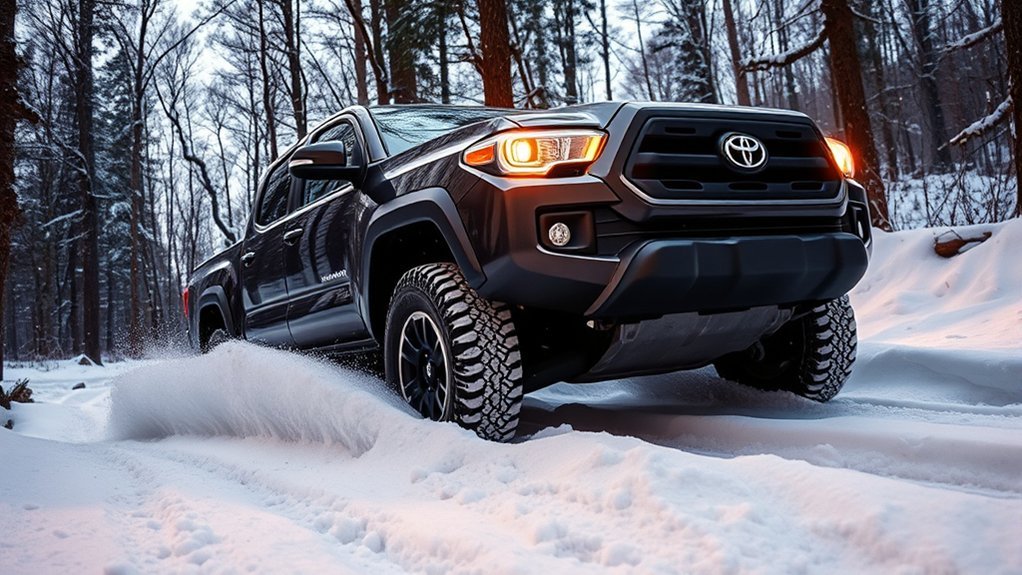
Keep Toyota Tacoma traction control on for normal driving. Turn it off only temporarily when the truck is stuck in loose snow, mud, sand, or another low-speed loose surface and TRAC is cutting engine power before the tires can move the truck. The exact switch behavior is model-specific: Toyota manuals distinguish between TRAC, VSC, Trailer Sway Control, Auto LSD, and off-road modes, so confirm the procedure for your model year, drivetrain, transmission, and trim before changing settings.
Last updated: September 19, 2026
Quick Answer
Leave traction control on for normal driving, including wet, snowy, icy, and public gravel roads. Turn it off only briefly when controlled wheelspin is needed to free a stuck Tacoma or cross deep loose terrain. On the 2024 Tacoma, Toyota’s Quick Reference Guide says to press the VSC/TRAC OFF switch while stopped to disable TRAC, or hold it for at least 3 seconds while stopped to disable VSC, TRAC, and Trailer Sway Control. Older Tacoma logic can differ, especially in 2WD/Auto LSD operation, so use the exact manual for your truck.
Key Takeaways
- Keep traction and stability control active during ordinary road driving.
- Temporary deactivation can help when the truck is stuck and the system keeps cutting engine power.
- Do not use one button duration for every Tacoma. Controls differ by model year, drivetrain, transmission, and trim.
- Use A-TRAC, Multi-Terrain Select, Crawl Control, 4WD Low, or the rear locker when your Tacoma provides them.
- Re-enable the normal safety systems as soon as the recovery or difficult section is complete.
At a Glance
| Time Required | About 1 to 2 minutes |
| Difficulty | Easy, but the correct setting is model-specific |
| Tools Needed | No tools; your Tacoma owner’s manual is recommended |
| Cost | $0 |
Warning: Do not disable traction or stability control for high-speed driving, towing, cornering on public roads, or performing donuts. Turning these systems off reduces the electronic assistance available if the Tacoma begins to skid or rotate, and on some model years it can also restrict other driver-assistance functions.
What Tacoma Traction Control Is and How It Works
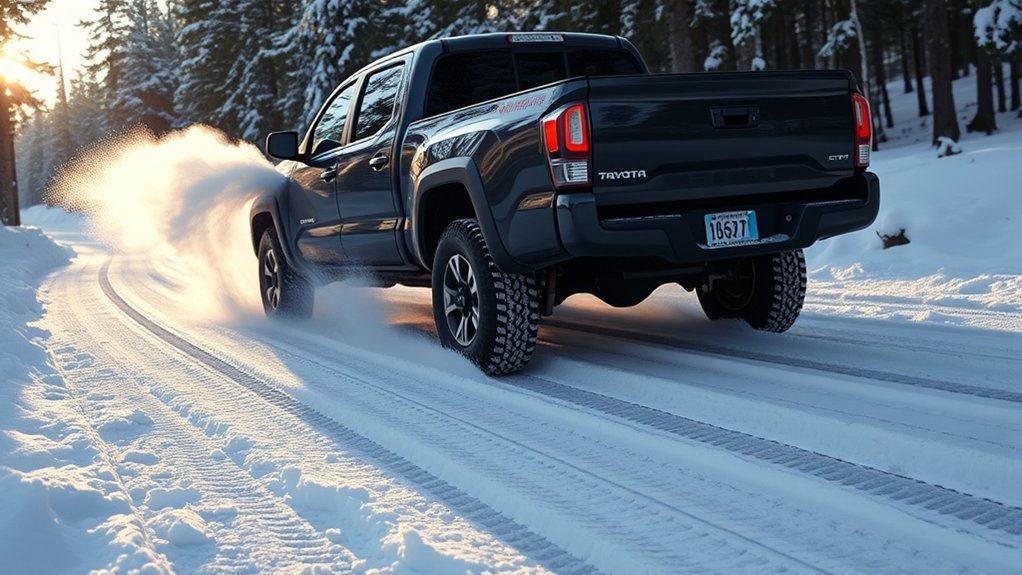
Your Tacoma’s traction-control system monitors individual wheel speeds. If a driven wheel begins spinning much faster than the others, the system can reduce engine torque and apply brake pressure to help that tire regain usable grip.
Traction control works alongside other systems, but they do not all perform the same job:
- TRAC or traction control: Limits excessive wheelspin during acceleration.
- VSC or electronic stability control: Helps keep the truck moving in the direction you intend by comparing steering input with vehicle movement.
- ABS: Helps prevent wheel lock during hard braking.
- A-TRAC: On equipped 4WD Tacomas, uses controlled braking to transfer useful drive force away from a freely spinning wheel.
- Auto LSD: Uses brake intervention to imitate part of the effect of a limited-slip differential in supported driving modes.
Wheel-speed sensors monitor wheel rotation. The yaw-rate sensor measures how quickly the truck rotates around its vertical axis, while the steering-angle sensor helps the system determine where you are trying to go. These inputs allow the truck to manage braking and engine power.
Federal electronic stability control requirements describe ESC as a system that can apply individual wheel braking and modify engine torque to help the driver maintain directional control.
Note: Tacoma controls and indicator names vary. A 2WD Tacoma, a 4WD TRD Off-Road, and a newer Trailhunter may provide different buttons, terrain modes, and levels of intervention.
When to Turn Off Traction Control on a Tacoma
Turning traction control off is a temporary recovery tool, not a normal driving setting. The table below shows when additional wheelspin may help and when the system should remain active.
| Situation | Turn It Off? | Best Approach |
|---|---|---|
| Normal dry, wet, snowy, or icy road | No | Leave TRAC and VSC active and drive smoothly. |
| Truck stuck in loose snow, mud, or sand | Temporarily, if needed | Allow limited wheelspin only if power reduction prevents movement. |
| 2WD or 2WD mode with one rear wheel spinning in a ditch or rough surface | Usually use the model-specific traction aid | On supported Tacomas, Auto LSD may be the intended mode. Check the exact owner’s manual before changing VSC/TRAC settings. |
| Deep loose sand or mud on a controlled trail | Sometimes | Use the approved terrain mode, 4WD setting, or locker first when equipped. |
| Steep, slippery off-road climb | Usually not fully | Use 4WD Low, A-TRAC, Multi-Terrain Select, or Crawl Control as your manual directs. |
| Public gravel road | No | Maintain a safe speed and keep stability assistance available. |
| Towing or carrying a heavy load | No | Leave all stability systems on unless the owner’s manual gives a specific off-road instruction. |
Limited wheelspin can sometimes clean packed material from a tire’s tread or help the truck build gentle momentum. Too much wheelspin does the opposite. It can polish ice, remove loose material from under the tire, dig the truck deeper, or cause a sideways slide.
How to Turn Off Tacoma Traction Control Safely
Do not assume every Tacoma uses the same press duration. Toyota changes control logic between generations and configurations. Use the Toyota manuals and warranties lookup to select your exact model year.
| Tacoma Era | What to Know Before Pressing the Switch |
|---|---|
| 2005–2015 | Second-generation controls vary by drivetrain and equipment. Some 2WD logic uses Auto LSD through the VSC OFF control, so do not copy a newer-model procedure. |
| 2016–2023 | Third-generation manuals distinguish 2WD/Auto LSD behavior from 4WD TRAC-off behavior. In 4WD mode, a quick press is commonly used for TRAC off, while a press-and-hold of more than 3 seconds while stopped is used for the broader TRAC/VSC/Trailer Sway Control off state. |
| 2024 | Toyota’s Quick Reference Guide says to press the switch while stopped to disable TRAC, or hold it for at least 3 seconds while stopped to disable VSC, TRAC, and Trailer Sway Control. |
| 2025–2026 | Use the exact owner’s manual and cluster prompts for your truck. Do not assume every fourth-generation trim, powertrain, or software configuration exposes the same intervention level in the same way. |
- Stop in a safe location. Move away from traffic, straighten the steering wheel, and bring the Tacoma to a complete stop.
- Check the selected drive mode. Confirm whether the truck is in 2WD, 4WD High, or 4WD Low and whether a terrain mode or differential lock is already active.
- Locate the correct control. Depending on the model, it may show a skidding-vehicle symbol or wording such as TRAC OFF or VSC OFF.
- Use the manual-specified action. Some Tacomas use a short press for one function and a longer press for broader intervention changes. Do not rely on a universal 10-second rule.
- Read the instrument panel. Confirm which system has changed. TRAC OFF and VSC OFF do not always mean the same thing.
- Attempt the recovery slowly. Use light throttle and stop if the tires begin digging, the truck moves sideways, or you smell overheated rubber.
- Re-enable the system. Press the control again or restart the truck as directed by your manual once you reach firmer ground.
Driver-assistance note: On newer Tacomas, turning VSC/TRAC off can also make some driver-assistance functions unavailable or restricted. Read the multi-information display after changing the setting and restore normal operation before returning to regular road driving.
Pro Tip: If the truck moves a few inches and then loses progress, stop spinning the tires. Clear material from around the tires, straighten the front wheels, use traction boards or approved recovery equipment, and try again with less throttle.
Driving in Snow and Ice
Keep traction control on during ordinary winter driving. The system can reduce wheelspin as you accelerate and may work with stability control to help the Tacoma remain pointed in the intended direction.
Temporary deactivation may help only when the truck is already stuck in deep loose snow and the system repeatedly cuts power before the tires can climb onto firmer material. Once the truck begins moving normally, turn the system back on.
Do not disable traction control simply to gain speed on an icy hill. More wheelspin does not create more grip. Use smooth throttle, winter-rated tires, approved tire chains when required, and the appropriate 4WD or terrain setting for your Tacoma.
How to Rock a Stuck Tacoma Safely
If your owner’s manual permits a rocking technique, use gentle movement rather than rapid shifting:
- Clear snow or mud from the front and rear of the drive tires.
- Select the appropriate low-speed drive mode.
- Apply light throttle and move a short distance.
- Release the accelerator and stop the truck completely.
- Shift between Drive and Reverse only after the wheels stop turning.
- Repeat a limited number of times without allowing continuous tire spin.
Keep the accelerator released before each direction change. Toyota’s stuck-vehicle guidance warns against shifting with the accelerator depressed because the truck can accelerate unexpectedly.
Stop if the transmission shifts harshly, the tires dig deeper, the truck slides sideways, or the engine and drivetrain begin overheating.
How Wheelspin Affects Performance in Mud, Sand, and Gravel
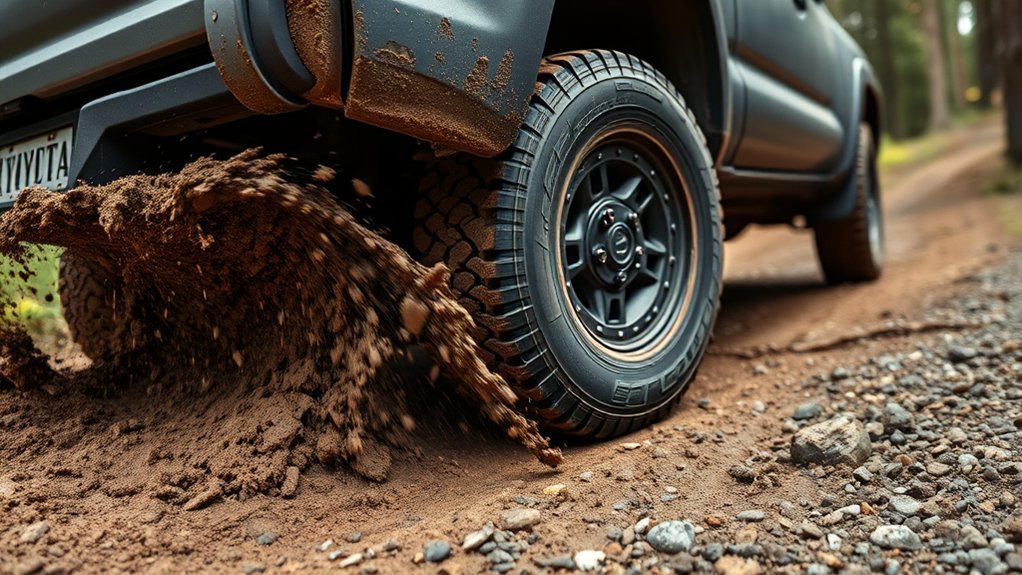
Wheelspin can help in certain loose-surface situations, but only within a narrow range. The goal is controlled tire movement, not maximum engine speed.
- Mud: Limited spin may eject packed mud from open tire tread. Excessive spin can fill the tread, dig holes, and rest the frame or axle on the ground.
- Sand: Smooth momentum usually works better than sudden throttle. Fast wheelspin removes sand from beneath the tires and creates deeper pockets.
- Loose gravel: Some slip is normal, but deliberate high wheelspin reduces steering control and throws stones.
- Ruts: Follow stable existing tracks only when they provide enough clearance. Do not create deep ruts simply to seek grip.
If forward progress stops, reduce throttle. Turning the steering wheel sharply while spinning can increase resistance and make the truck dig in faster.
Use Tacoma Off-Road Systems Before Full Deactivation
Many Tacomas provide systems designed to manage low-traction terrain without removing every electronic safeguard. Availability depends on the model year and trim.
- A-TRAC: Uses selective braking to control a spinning wheel and direct useful torque through the drivetrain.
- Multi-Terrain Select: Adjusts wheelspin and power delivery for surfaces such as mud, dirt, and sand on equipped models.
- Crawl Control: Manages low-speed throttle and braking so you can concentrate on steering.
- 4WD Low: Provides additional gear reduction for controlled low-speed movement.
- Electronic rear differential lock: Helps both rear wheels turn together when traction is extremely limited.
- Downhill Assist Control: Helps regulate vehicle speed during supported descents.
Toyota’s fourth-generation Tacoma information describes A-TRAC and Auto LSD on 4WD models and available systems including Multi-Terrain Select, Crawl Control, Downhill Assist Control, and an electronic rear locker.
Do not activate a locking differential, 4WD Low, or terrain-management system without checking its speed, surface, and steering restrictions. Using the wrong mode on high-traction pavement can strain the drivetrain or make turning difficult.
Understanding Tacoma Traction-Control Warning Lights
Indicator behavior varies, but these general patterns can help you identify what is happening:
- Flashing slip or skidding-vehicle indicator: The system is actively responding to wheelspin or vehicle movement.
- Steady TRAC OFF or VSC OFF indicator after you pressed a control: The corresponding function has been intentionally reduced or disabled.
- Steady warning that appears without a command: The system may have detected a malfunction.
- Multiple ABS, brake, TRAC, or VSC warnings: Shared sensors or control components may have a fault and should be inspected.
If an OFF or warning indicator remains illuminated after you restore the normal mode and restart the Tacoma, avoid demanding driving and check the owner’s manual or arrange diagnosis. A persistent, uncommanded warning should not be treated as a normal driver-selected OFF state because the brake, traction, and stability systems share sensors and control hardware.
Safety Checklist Before and After Disabling It
| Step | Action |
|---|---|
| 1. Assess the surface | Confirm that you are stuck or crossing controlled loose terrain, not simply driving on a slippery public road. |
| 2. Stop safely | Bring the Tacoma to a complete stop before changing recovery settings or shifting direction. |
| 3. Check the manual | Follow the instructions for your exact model year, drivetrain, and trim. |
| 4. Choose the least aggressive change | Use an approved terrain mode or reduced intervention before disabling broader stability functions. |
| 5. Use light throttle | Allow only enough wheelspin to move the truck or clear the tread. |
| 6. Stop if progress ends | Do not continue spinning after the tires begin digging or the truck moves sideways. |
| 7. Restore normal operation | Re-enable traction and stability systems as soon as the difficult section is complete. |
Related Guides
Frequently Asked Questions
When should you turn off traction control on a Toyota Tacoma?
Turn it off only temporarily when the Tacoma is stuck in loose snow, deep mud, or sand and the system is cutting power before the tires can move the truck. Leave it on for normal road driving and restore it after recovery.
Should traction control stay on in snow and ice?
Yes. Keep it on during normal winter driving because it helps limit wheelspin. A brief reduction may help only when the truck is already stuck in deep loose snow and needs controlled wheelspin to reach firmer ground.
Does turning off traction control improve Tacoma handling?
No. It may allow more wheelspin in a narrow off-road recovery situation, but it does not improve general handling. On wet, icy, or loose roads, disabling electronic assistance can make the truck harder to control.
Why does my Tacoma lose power in mud or snow?
The traction-control system may detect wheelspin and reduce engine torque while applying brake pressure. If that intervention prevents a stuck truck from moving, use the approved reduced-intervention or recovery procedure in your owner’s manual.
Does the traction-control procedure differ by Tacoma year?
Yes. Button symbols, press durations, indicator lights, drive modes, and available systems differ among Tacoma generations and trims. Use Toyota’s manual lookup or the printed manual for your exact truck.
Should you use A-TRAC or Multi-Terrain Select instead?
Use the factory off-road system specified for the terrain when your Tacoma has one. A-TRAC, Multi-Terrain Select, Crawl Control, 4WD Low, and the rear locker are designed for particular low-speed conditions and may work better than broadly disabling stability assistance.
What does the TRAC OFF light mean on a Toyota Tacoma?
TRAC OFF means the traction-control function has been disabled or reduced. If you intentionally selected that mode, restore normal operation after the recovery. If the indicator or message appears without a switch press or remains after you re-enable the system, check the owner’s manual and arrange diagnosis if it persists.
Will Tacoma traction control turn back on automatically?
It can, depending on the model year and which function you switched off. Some Tacoma traction-control or Auto LSD states reset after an engine restart or change as vehicle speed increases, while broader VSC/TRAC-off behavior can differ. Confirm the indicators and follow the manual for your exact truck.
Conclusion
Leave your Tacoma’s traction and stability systems on during normal driving. Temporarily reducing traction-control intervention can help when the truck is stuck and needs limited wheelspin, but it should be a controlled, low-speed recovery step.
Before pressing the switch, identify your model year and whether the truck is in 2WD, 4WD High, or 4WD Low. Then follow the exact owner’s-manual procedure, use the Tacoma’s dedicated off-road systems when appropriate, and restore normal traction and stability assistance as soon as you reach firm ground.
Sources
- Toyota Manuals and Warranties — model-specific owner’s manual lookup.
- 2022 Toyota Tacoma Owner’s Manual, OM04037U — Tacoma controls, indicators, Auto LSD, and operating guidance.
- Toyota USA Newsroom: 2024 Tacoma — A-TRAC, Auto LSD, Multi-Terrain Select, Crawl Control, Downhill Assist, and rear-locker information.
- Toyota USA Newsroom: 2026 Tacoma — current fourth-generation off-road-system availability and Multi-Terrain Select/Crawl Control context.
- 49 CFR 571.126, Electronic Stability Control Systems — ESC operation, purpose, controls, reset behavior, and telltale requirements.
