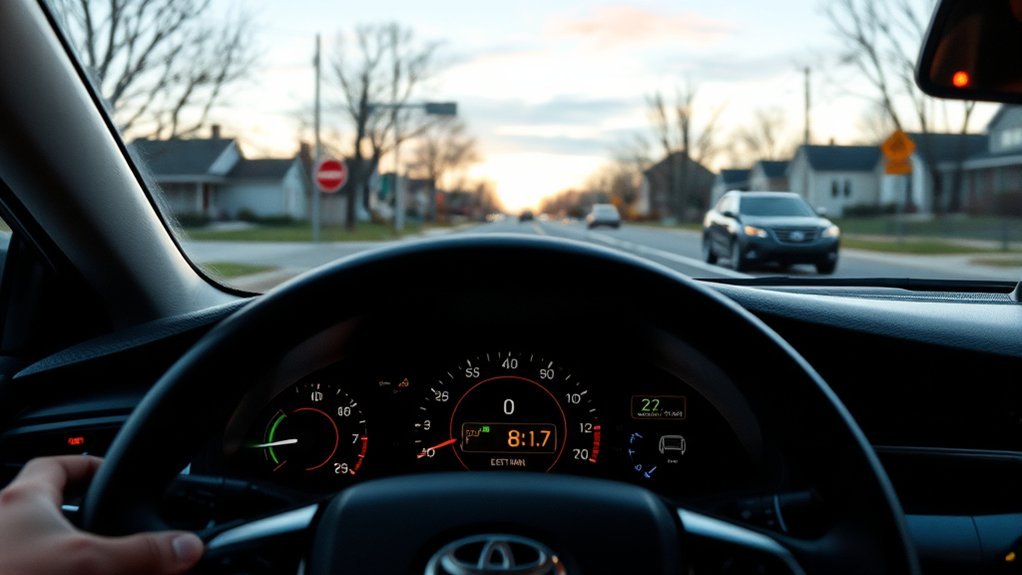
EV Mode in a Toyota Camry Hybrid is a limited, low-speed feature rather than a miniature electric-car setting. It is useful for brief movements through parking lots, driveways, garages, indoor parking structures, or quiet residential streets. Whether the system accepts or maintains the request depends on the Camry’s model year, hybrid-battery charge, temperature, climate-control use, speed, road grade, and accelerator input.
Quick Answer
Use EV Mode for brief, low-speed movement when your Camry accepts the request, such as in a garage, driveway, parking lot, or quiet residential area. Press the EV MODE switch and accelerate gently. Expect the gasoline engine to start whenever speed, power, battery, temperature, heating, or defrost demands require it.
Key Takeaways
- EV Mode is intended for brief, light-load, low-speed operation rather than normal highway travel or a guaranteed electric range.
- Toyota currently describes hybrid EV Mode as working at speeds up to about 25 mph for a short distance, but the exact limits and availability depend on the vehicle and operating conditions.
- Do not rely on a universal three-bar battery requirement; the hybrid computer evaluates several inputs that may not all be visible on the dashboard.
- The gasoline engine can start automatically for power, battery management, cabin heating, windshield defrosting, engine warm-up, or emissions-system operation.
- Gentle acceleration, steady speeds, and progressive braking usually matter more for total-trip efficiency than repeatedly forcing EV Mode.
- Check the owner’s manual for your exact model year and market before relying on a button location, speed, distance, or cancellation rule.
At a Glance
| Time Required | Less than one minute to request and confirm EV Mode |
| Difficulty | Easy |
| Tools Needed | No tools; the owner’s manual for your exact model year is recommended |
| Cost | No additional cost |
What EV Mode Does in a Toyota Camry Hybrid
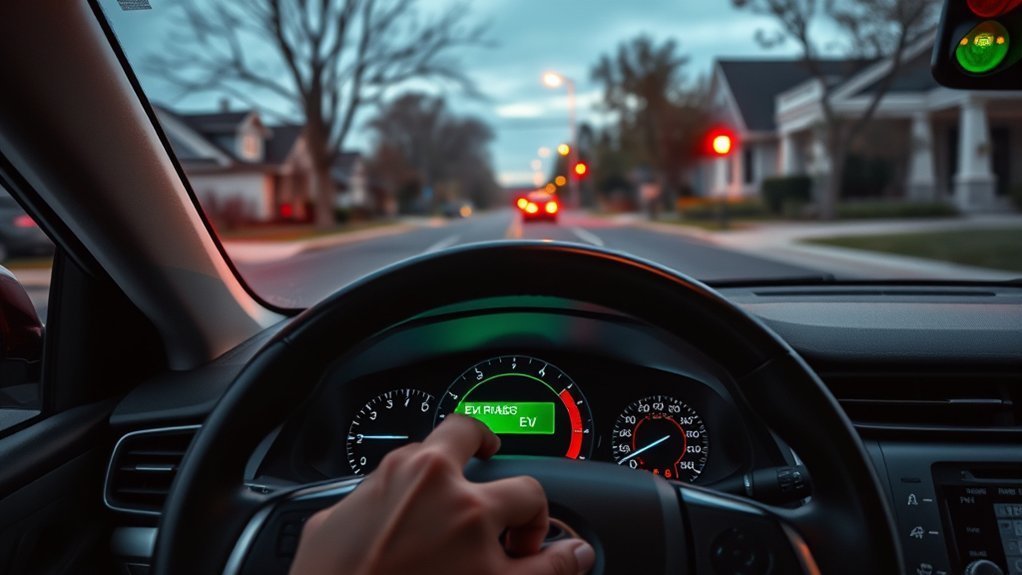
EV Mode asks the hybrid system to propel the Camry with its electric motor while keeping the gasoline engine off when operating conditions allow. The request does not override the hybrid computer. The vehicle can reject EV Mode or restart the engine whenever it needs more power or must manage engine temperature, battery temperature, battery charge, cabin heat, windshield visibility, or emissions-system operation.
The U.S.-market 2025 Toyota Camry Quick Reference Guide shows a separate EV MODE switch near the drive-mode controls. Toyota recommends EV drive mode for short distances where reducing noise is useful, including residential areas, small garages, and indoor parking areas. Controls and operating rules on older Camrys or vehicles sold in other markets may differ.
A standard Camry Hybrid is a conventional, non-plug-in hybrid. You cannot connect it to an external charger, and it does not have the large traction battery or advertised electric range of a plug-in hybrid. Regenerative braking recovers some energy while the vehicle slows, and the gasoline engine and motor-generators manage the battery’s charge during normal operation.
EV Mode Versus Automatic Electric Operation
Your Camry can use motor-only propulsion during normal hybrid driving without you pressing the EV MODE switch. The EV indicator or energy-flow display may show that the gasoline engine is off because the hybrid computer has selected electric operation on its own.
Pressing EV MODE makes a specific request to remain on electric power under permitted conditions. It does not guarantee that the engine will stay off. Some owners informally describe the smooth, quiet sensation as “spaceship mode,” but sound alone does not confirm electric operation. Watch the EV indicator, energy-flow display, or dashboard message provided on your model.
EV Mode Versus ECO Mode
EV Mode requests temporary motor-only propulsion. ECO Mode changes accelerator response and may adjust other efficiency-related controls, depending on the model. ECO Mode can remain active during a normal trip, while EV Mode may cancel after a short distance or as soon as operating conditions change.
For the U.S. 2025 Camry, Toyota documents NORMAL, ECO, and SPORT as selectable drive modes and shows EV drive mode as a separate control. Confirm the layout and operation for another model year through the Toyota owner’s-manual selector.
Note: Toyota’s current general hybrid guidance describes EV Mode as operating at speeds up to about 25 mph for a short distance. Treat that figure as an approximate guideline, not a guaranteed switching point. The exact limit and availability depend on the Camry’s model year, battery condition, temperature, accelerator demand, road grade, and system programming.
Before You Activate EV Mode
Check a few basic conditions before requesting EV Mode. These checks do not guarantee acceptance, but they help you distinguish normal system behavior from a warning that needs attention.
- Confirm that the vehicle is equipped with EV Mode. Look for an EV MODE switch and verify its operation in the owner’s manual.
- Confirm the READY indicator. The hybrid system must be ready to drive even if the gasoline engine is silent.
- Choose a safe, low-speed location. A driveway, garage, parking structure, parking lot, or quiet residential street is more suitable than a highway entrance or fast arterial road.
- Check for warning messages. Do not treat a hybrid-system warning, missing READY indicator, or loss of propulsion as a normal EV Mode rejection.
- Prioritize visibility. Use windshield defrosting or cabin heat whenever needed, even if doing so starts the engine.
- Keep traffic needs first. Do not accelerate too slowly, hold up traffic, or delay a necessary maneuver merely to preserve electric operation.
How to Activate EV Mode
Activate EV Mode only when the hybrid system is ready and you can operate the control without taking attention away from the road. The exact switch location differs between generations, but equipped current U.S. Camrys use a clearly labeled EV MODE control near the center-console drive-mode switches.
- Start the hybrid system. Press the brake pedal, start the vehicle, and confirm that the READY indicator is illuminated.
- Choose a suitable situation. Use a parking lot, driveway, garage, indoor parking structure, or another low-speed area where light acceleration is safe.
- Press the EV MODE switch. Look for an EV drive-mode indicator or confirmation message in the instrument display.
- Accelerate gently. Apply light, progressive pressure. Strong accelerator input can cause the gasoline engine to start immediately.
- Monitor the display and traffic. A cancellation or unavailable message means that the vehicle has returned to normal hybrid control.
- Pressing the EV MODE switch again normally returns the vehicle to standard hybrid operation.
- The system may automatically disengage EV Mode when more power is required.
- The engine may start even though the EV drive-mode indicator appeared moments earlier.
- Use EV Mode primarily for short movements rather than trying to complete an entire commute electrically.
- Normal hybrid operation resumes automatically when EV Mode ends.
Pro Tip: Instead of repeatedly pressing the EV MODE switch, watch the energy-flow display and use smooth accelerator pressure. The Camry can enter motor-only operation automatically when the hybrid computer determines that conditions are suitable.
EV Mode Limits and Operating Conditions
A conventional hybrid stores far less electrical energy than a plug-in hybrid or battery-electric vehicle. EV Mode is therefore designed for brief operation under light load, not sustained electric travel. The conditions below commonly determine whether the system accepts or maintains the request.
| Condition | What the Vehicle May Do | What You Should Do |
|---|---|---|
| Low hybrid-battery charge | Reject or cancel EV Mode and run the engine as needed | Continue driving normally and let the hybrid system manage charging |
| Vehicle speed above the permitted range | Return to normal hybrid operation | Maintain a safe, legal speed rather than slowing solely to keep EV Mode active |
| Strong acceleration or sudden power demand | Start the gasoline engine or combine engine and motor power | Accelerate smoothly when traffic allows, but use the power needed for safety |
| Cold engine or cold hybrid system | Run the engine for warm-up, emissions control, or system protection | Allow normal hybrid operation until the vehicle warms |
| High hybrid-system or battery temperature | Limit electric output or reject EV Mode | Drive normally, keep battery cooling vents unobstructed, and follow dashboard instructions |
| Cabin heat or windshield defrost demand | Start or keep the gasoline engine running | Prioritize visibility and safe cabin conditions rather than EV operation |
| Steep hill, heavy load, or strong headwind | Combine engine and motor power | Let the system select the power source needed to maintain safe progress |
The gasoline engine starting is not a malfunction by itself. It may start to provide power, warm the engine and emissions system, supply cabin heat, protect the traction battery, or restore the battery’s target charge level.
What EV Mode Dashboard Messages Mean
- EV Mode unavailable: One or more operating conditions are outside the permitted range. This message alone does not prove that the traction battery has failed.
- EV Mode canceled: The request was initially accepted, but speed, power demand, battery condition, temperature, climate use, or another condition changed.
- EV indicator without an EV Mode request: The hybrid system has selected motor-only operation automatically during normal driving.
- Check Hybrid System or another warning: Follow the owner’s manual and arrange diagnosis. Do not assume it is merely an EV Mode limitation.
Techniques to Improve Hybrid Efficiency

Efficient hybrid driving depends more on smooth decisions than on keeping an EV indicator illuminated for as long as possible. The system may use gasoline at one point to avoid a less efficient battery-recharging cycle later. Let the vehicle manage its power sources while you control speed, following distance, anticipation, and braking.
Maintain Steady Speeds
Maintain a legal, traffic-appropriate speed and leave enough following distance to avoid repeated acceleration and braking. Smooth driving reduces unnecessary energy demand and gives the hybrid system more opportunities to use its electric motor efficiently.
- Use light, steady accelerator pressure on level roads.
- Ease off the accelerator early when approaching slower traffic or a red light.
- Use cruise control only on suitable open roads and in safe conditions.
- Do not target exactly 24 mph or 50 mph merely to trigger a particular power-flow display.
- Expect wind, temperature, road grade, cargo, and climate-control use to alter power demand.
The U.S. Department of Energy and EPA recommend sensible acceleration, steady driving, appropriate speeds, and planning ahead for fuel economy. Results vary by vehicle and driving environment, so review their efficient-driving guidance alongside Toyota’s instructions.
Use Gentle Acceleration and Progressive Braking
Press the accelerator progressively rather than suddenly. On models with an ECO or hybrid-system indicator, keeping power demand in the lower portion of the display may help the vehicle remain on electric power during light-load situations. Do not accelerate so slowly that you interfere with traffic or cannot complete a maneuver safely.
Plan stops early and press the brake pedal smoothly. Moderate braking gives the regenerative system more opportunity to convert part of the vehicle’s motion into electrical energy. Hard or emergency braking can require greater use of the friction brakes, but you should always brake as firmly as necessary to avoid a collision.
Do Not Force EV Mode
Remaining in EV Mode is not the same as maximizing total-trip fuel economy. Energy removed from the traction battery must eventually be restored through regenerative braking or hybrid-system operation. Repeatedly drawing the battery toward its lower operating range may simply cause the engine to run later.
EV Mode is most useful when you have a specific reason for brief electric operation, such as moving through a garage, repositioning the car, leaving quietly, or traveling a short distance through a low-speed residential or parking area.
EV Mode is a request for brief electric operation—not a promise of a fixed speed, distance, fuel saving, or engine-off trip.
Benefits of Using EV Mode in Pueblo, CO
EV Mode can be useful in Pueblo, Colorado, during short, low-speed movements through parking areas, residential streets, garages, and driveways. Pueblo does not require a special EV Mode procedure. Road grade, temperature, cabin heating, wind, traffic, and battery condition still determine whether the engine remains off.
Potential Fuel-Efficiency Benefits
Brief motor-only operation avoids gasoline use while the engine is off, but it does not create free energy or guarantee a higher trip MPG result. The hybrid computer balances battery energy, engine efficiency, emissions control, temperature, and driver demand across the complete trip.
The often-quoted 51-mpg figure requires model-year and trim context. Toyota listed the 2025 Camry LE with front-wheel drive at a manufacturer-estimated 51 mpg combined. Toyota also lists a manufacturer-estimated 51 mpg combined for the 2026 Camry LE FWD. These figures describe complete vehicles over standardized combined driving, not EV Mode alone, every Camry trim, or every trip in Pueblo.
- Use EV Mode for short movements when the vehicle accepts the request.
- Combine errands when practical to reduce repeated cold-engine trips.
- Use smooth acceleration and planned braking.
- Measure efficiency over several tanks rather than one short dashboard reading.
- Do not expect repeated EV Mode use to increase battery health, capacity, or electric range.
Quieter Low-Speed Driving
Motor-only propulsion can make the cabin and surrounding area quieter than gasoline-engine operation. Some owners appreciate the smoother sensation during early-morning departures, parking maneuvers, or low-speed neighborhood travel.
Your Camry may also produce an exterior vehicle-proximity warning sound at low speeds. Never assume that a pedestrian, cyclist, child, or pet has heard the vehicle. Music, traffic, weather, hearing limitations, nearby buildings, and distractions can mask even a functioning warning sound.
Immediate and Total-Trip Emissions
When the gasoline engine is off, it is not producing gasoline-engine tailpipe exhaust at that moment. However, the electricity stored in a conventional hybrid battery was recovered during driving or generated through the hybrid system. Total fuel use and emissions depend on the complete trip, not only the time during which an EV indicator is visible.
- Use light acceleration when conditions allow.
- Avoid unnecessary idling and repeated short cold-engine trips.
- Let the hybrid system restart the engine when required.
- Evaluate fuel use across complete trips and full tanks.
Pueblo Weather and Elevation Considerations
Pueblo’s elevation does not create a separate EV Mode procedure. Climbing grades still requires more power, while cold mornings can increase engine warm-up, emissions-system warm-up, windshield-defrost, and cabin-heating demand. These conditions can make EV Mode unavailable or cause it to cancel sooner.
Wind and summer air-conditioning loads can also change energy use. The Department of Energy and EPA advise hybrid drivers to use climate control and other accessories thoughtfully because accessory demand can affect fuel economy. Their hybrid-vehicle efficiency tips provide additional guidance.
Safety Tips for Driving in EV Mode in Residential Areas
EV Mode changes the power source, not your responsibilities as the driver. Use the same observation, speed control, following distance, and stopping judgment required during normal hybrid operation.
| Tip | Description |
|---|---|
| Maintain a Safe Speed | Follow the posted limit and slow further when visibility, pedestrians, driveways, or parked vehicles require it. |
| Monitor Surroundings | Scan for pedestrians, cyclists, pets, reversing vehicles, opening doors, and vehicles entering from side streets. |
| Watch for Children | Expect children to move unpredictably between cars, driveways, sidewalks, and play areas. |
| Brake Progressively | Use smooth braking when possible, but brake firmly whenever immediate stopping is necessary. |
| Do Not Rely on Vehicle Sound | Treat the pedestrian-warning sound as a backup. It does not guarantee that another road user has detected the vehicle. |
| Keep Safety Systems Operational | Do not disable, cover, obstruct, or modify exterior warning speakers, cameras, sensors, or lights. |
Warning: Never slow abruptly, coast through an intersection, delay a necessary maneuver, or hold up traffic merely to keep the EV indicator on. Safe and predictable driving takes priority over electric-only operation, regenerative-braking targets, and dashboard fuel-economy readings.
Why EV Mode May Be Unavailable or Canceled
An “EV Mode unavailable” or cancellation message usually means that one or more operating conditions are outside the permitted range. A rejected request by itself does not indicate a failed battery or hybrid-system malfunction.
- Battery charge is too low: Continue driving normally so the hybrid system can restore its target charge.
- The hybrid system is still warming: The gasoline engine may need to run after a cold start.
- The battery or hybrid system is too cold or too hot: Electric output may be limited to protect components.
- Cabin heat or windshield defrost is requested: The engine may run to provide heat or preserve visibility.
- Accelerator demand is too high: The system may combine engine and motor power.
- Vehicle speed is outside the permitted range: Normal hybrid operation resumes automatically.
- The road is steep, the wind is strong, or the vehicle is heavily loaded: More power may be required than EV Mode can provide.
- The traction-battery cooling intake is obstructed: Battery output may be limited if cooling airflow is restricted. Keep the intake area clear according to the owner’s manual.
When to Have the Hybrid System Checked
Arrange professional diagnosis when EV-related behavior occurs with signs that go beyond a normal rejected request, including:
- The READY indicator does not appear after you follow the correct starting procedure.
- A “Check Hybrid System” message or hybrid-system warning remains displayed.
- Several warning lights appear together or return after restarting the vehicle.
- The vehicle loses propulsion, enters a reduced-power condition, or behaves abnormally during ordinary hybrid driving.
- The owner’s manual instructs you to stop driving or have the vehicle inspected.
Stop in a safe location when the manual or dashboard warning directs you to do so. Do not open, probe, disconnect, or attempt to repair the traction battery, orange high-voltage cables, service plug, inverter, or other high-voltage hybrid components. Those systems require trained personnel and approved procedures.
Frequently Asked Questions
When should you use EV Mode in a Camry?
Use it for brief, low-speed movement when light acceleration is practical, such as in a driveway, garage, indoor parking area, parking lot, or quiet residential street. Do not depend on it for highway driving or a fixed electric range.
Does EV Mode always save fuel?
No. It avoids gasoline use while the engine is off, but the battery energy must later be restored. Smooth acceleration, planned braking, sensible speed, and allowing the hybrid computer to manage power can be more effective over a complete trip.
At what speed does Camry Hybrid EV Mode work?
Toyota’s general hybrid guidance describes EV Mode as operating at speeds up to about 25 mph for a short distance. That is an approximate guideline rather than a guaranteed cutoff. The exact behavior depends on model year, battery charge, temperature, accelerator input, grade, and climate demand.
How far can a Camry Hybrid go in EV Mode?
There is no guaranteed distance that applies to every Camry. EV Mode is designed for a short distance under light load. Battery charge, temperature, speed, hills, climate use, and traffic conditions can reduce the distance or prevent EV Mode from operating at all.
Can you switch to EV Mode while driving?
On equipped models, you can generally request EV Mode while moving slowly if operating conditions are acceptable. Watch the instrument display for confirmation or an unavailable message, and never look away from traffic to search for the switch.
What is the difference between EV Mode and the EV indicator?
EV Mode is a driver request made with the EV MODE switch. The EV indicator can also illuminate during normal hybrid driving when the vehicle automatically uses motor-only propulsion or stops the gasoline engine. Seeing the indicator does not mean that you manually activated EV Mode.
Can you plug in a Toyota Camry Hybrid to charge it?
No. A standard Camry Hybrid is not a plug-in hybrid. Its traction battery is managed by the gasoline-electric hybrid system and is recharged through regenerative braking and motor-generator operation.
Does using EV Mode improve hybrid-battery life?
Toyota does not instruct drivers to use EV Mode as a battery-conditioning routine. The hybrid control system automatically manages the battery’s permitted charge range, temperature, output, and protection.
Conclusion
Use EV Mode in your Toyota Camry Hybrid for brief, low-speed situations where gentle acceleration is appropriate. It can be helpful in garages, parking structures, driveways, parking lots, and quiet residential areas, but it is a limited convenience rather than a guaranteed fuel-saving strategy or fixed electric range.
Toyota commonly describes hybrid EV Mode as working up to about 25 mph for a short distance, but do not treat that figure, a three-bar battery display, 24 mph, or 50 mph as a universal rule. Follow the owner’s manual for your model year, watch the dashboard for confirmation, and expect the gasoline engine to start whenever the hybrid system needs more power, heat, battery management, warm-up, or emissions-system operation. Smooth, safe, and predictable driving should always take priority over keeping the EV indicator illuminated.
Sources
- Toyota 2025 Camry Quick Reference Guide — EV MODE switch location, intended short-distance use, and current U.S.-market controls.
- Toyota Manuals and Warranties — model-year-specific operating instructions, warnings, indicators, and limitations.
- Toyota Customer Service: Hybrid Driving Modes — general EV Mode purpose and approximate low-speed guidance.
- Toyota USA Newsroom: 2026 Camry — current hybrid lineup and manufacturer-estimated fuel-economy information.
- U.S. Department of Energy and EPA Hybrid Vehicle Tips — regenerative braking, accessory demand, trip planning, and hybrid-efficiency guidance.
- 49 CFR 571.141 — federal minimum-sound requirements for applicable hybrid and electric vehicles.
