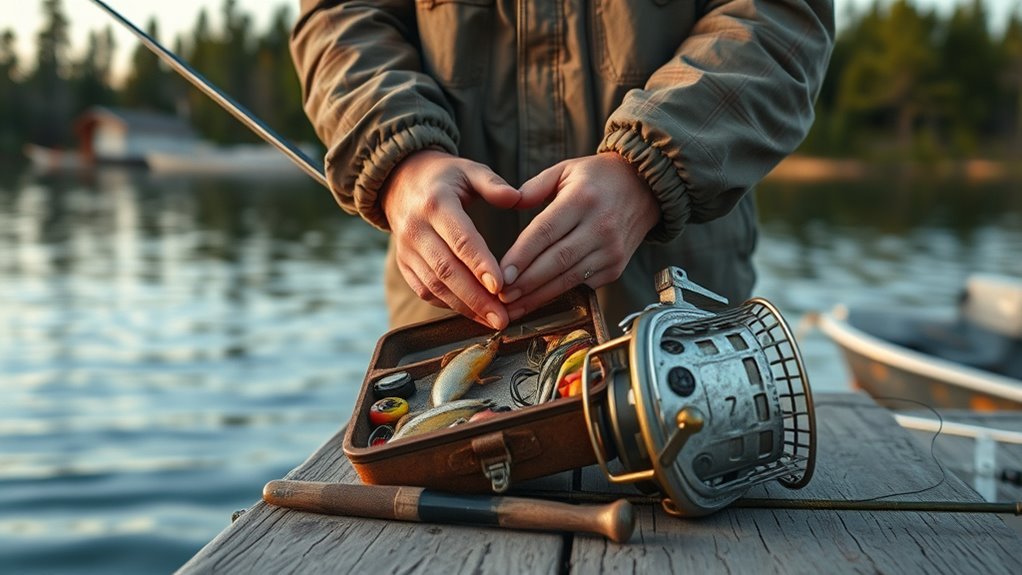
Michigan residents age 65 and older can buy a senior annual all-species fishing license for $11 under the current 2026 Michigan DNR fee schedule. The license covers species that may legally be taken under Michigan fishing regulations, but it does not override seasons, size limits, possession limits, reporting requirements, or method restrictions. The 2026 license remains valid through March 31, 2027.
Quick Answer
Michigan residents age 65 or older can buy the senior annual all-species fishing license for $11. The current Michigan DNR regulations state that the $1 surcharge is included in the listed annual fee. All fishing seasons, possession limits, reporting rules, and method restrictions still apply. The 2026 license is valid through March 31, 2027.
Key Takeaways
- Michigan residents age 65 and older can buy the senior annual all-species fishing license for $11.
- The current 2026 DNR regulation guide states that the $1 surcharge is included in the listed senior annual fee.
- The 2026 fishing license remains valid through March 31, 2027.
- Resident status is based on Michigan domicile or qualifying student or military status; owning Michigan property by itself does not qualify.
- Anglers must still follow all current species, season, size, possession, reporting, and fishing-method regulations.
What Is The Michigan 65+ Fishing License?
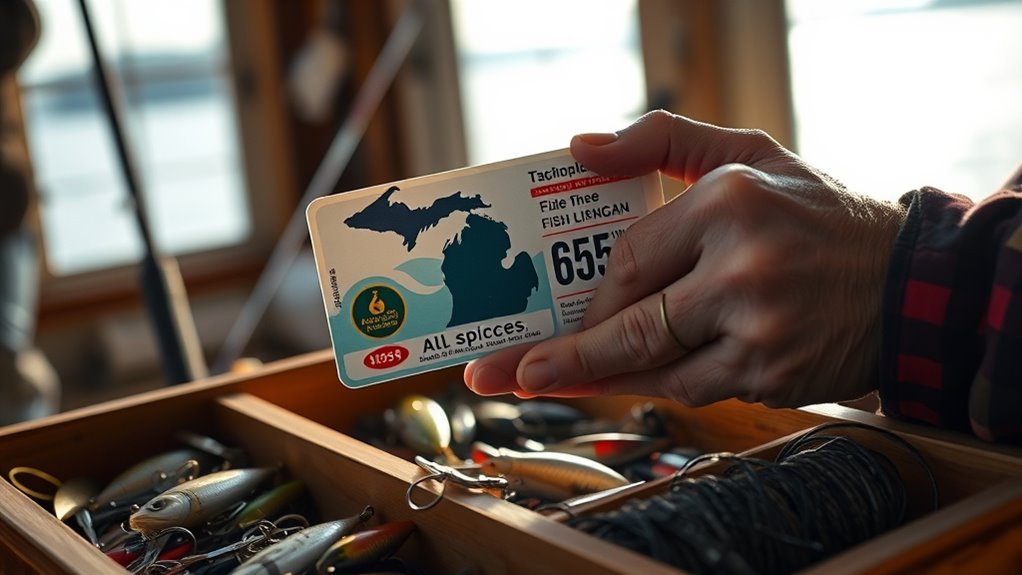
The Michigan 65+ fishing license is the state’s discounted annual all-species fishing license for qualifying Michigan residents who are at least 65 years old. Michigan residents who are legally blind are also eligible to purchase the senior fishing license under the current Michigan DNR licensing rules.
For 2026, Michigan lists the resident senior annual all-species fishing license at $11.
The license is good for species that are legally open to fishing or harvest under the current regulations. That includes ordinary freshwater fishing in Michigan lakes, rivers, streams, Great Lakes waters, and ice-fishing locations where fishing is legally permitted.
The words all species do not mean every aquatic species may be caught or kept anywhere in the state. Protected species, closed waters, possession seasons, size limits, daily limits, and special fishing methods remain controlled by the current Michigan regulations.
The Michigan DNR allows licenses to be purchased online, through the official Hunt Fish app, at authorized license agents, or at DNR customer service centers.
[Amazon Products Picked for You]

Great Gift Item for Sports Fans: Your Team has won the National Championship! Guaranteed to be your most beloved possession as it boasts eye catching graphics and is inscribed with your favorite squad’s name and colors. Proudly display your favorite teams name and color

Great Gift Item: Guaranteed to be your most beloved possession as it boasts eye catching graphics and is inscribed with your favorite squad’s name and colors. Proudly display your favorite teams name and color
Who Qualifies For Resident Pricing?
Michigan resident fishing-license pricing is based on residency rules rather than property ownership. According to the current DNR requirements, a person can qualify as a resident by having a settled or permanent home or domicile in Michigan with the intention of remaining in the state.
Resident status can also apply to a full-time student at a Michigan college or university who resides in Michigan, or to certain full-time U.S. military personnel who are officially stationed in Michigan or maintain Michigan residency.
Owning a house, cabin, or other land in Michigan does not by itself make a person eligible for a resident fishing license.
Resident Qualification Rules
For a Michigan senior fishing license, the current DNR rules do not establish a general six-month residency waiting period. Instead, resident qualification is based on the following standards:
- A settled or permanent Michigan home or domicile with the intention of remaining in Michigan.
- Full-time enrollment at a Michigan college or university while residing in Michigan.
- Full-time U.S. military service while officially stationed in Michigan.
- Full-time military service while maintaining Michigan residency.
Resident status may be claimed in only one state. Property ownership alone does not qualify a nonresident for Michigan resident pricing.
Age And Military Discounts
Michigan residents age 65 and older qualify for the $11 senior annual fishing license. Residents who are legally blind may also purchase the senior license even when age is not the qualifying factor.
Military and veteran provisions are different from the ordinary senior discount. Full-time federal active-duty military personnel who have maintained Michigan resident status can have qualifying fishing-license fees waived. Nonresident active-duty military personnel who are officially stationed in Michigan may qualify for Michigan resident rates.
Qualifying Michigan resident veterans with certain Department of Veterans Affairs disability determinations may obtain fishing licenses that do not require a separate application free of charge. This is different from simply fishing without a license; eligible veterans should obtain the applicable license and retain the required eligibility documentation.
Michigan also has special provisions for some people with developmental disabilities. Under the 2026 rules, qualifying individuals may be eligible for a free inclusive mentored license that includes all-species fishing. Separate permit provisions can apply to qualifying residents of licensed homes for the aged fishing as part of an accompanied group.
Note: Senior status, military status, veteran disability status, legal blindness, and developmental-disability provisions are separate eligibility categories. Check the current Michigan DNR requirements for the category that applies to you.
How Much Does The 65+ License Cost?
For the 2026 season, a Michigan resident who is age 65 or older can purchase the annual senior all-species fishing license for $11. The current digital Michigan Fishing Regulations state that the $1 surcharge is included in the listed resident annual, nonresident annual, and senior annual fishing-license fees.
A March 2026 DNR news release described the surcharge using slightly different wording. Because fees and licensing systems can be updated, anglers should use the current DNR regulation page and the amount shown during the official eLicense purchase process if there is ever a discrepancy.
- Senior annual fee: $11 under the current 2026 fee schedule
- Eligibility: Michigan residents age 65 or older; legally blind Michigan residents also qualify for the senior license
- License type: Annual all-species fishing license
- 2026 expiration: March 31, 2027
- Coverage: Species allowed for fishing or harvest under current Michigan regulations
- Important: Seasons, limits, special-method licenses, and reporting requirements still apply
[Amazon Products Picked for You]

Officially Licensed Product

Michigan Wolverines Fans! A Fan Favorite 12" x 6" Car/Truck Frame - This auto accessory is perfect for the casual and everyday fan. The antique pewter finish gives it an old-fashioned feel. Whether it is game day at the stadium or a home game with friends, this license plate frame will be the highlight of the drive.

Deluxe Super Stock Embossed aluminum license plate mirror finish background with imprint in team colors
What Species And Waters Are Covered By The License?
The senior annual license is an all-species fishing license. Michigan’s 2026 regulations state that fishing licenses are good for species allowed for harvest under the current regulation digest.
A fishing license is required when a person who is subject to licensing requirements targets fish, amphibians, crustaceans, or reptiles in Michigan public waters. However, each species remains subject to its own legal season, size limits, possession limits, approved methods, and protected-species rules.
The annual license also covers ordinary ice fishing; there is no separate general ice-fishing license. The angler still must comply with the regulations for the species and water being fished.
Some activities have additional requirements. For example, Michigan lists a separate no-cost underwater spearfishing license for that activity, and certain species have mandatory harvest-reporting requirements.
Warning: “All species” does not mean every fish can be harvested at any time or from every water. Lake sturgeon, muskellunge, trout, salmon, walleye, bass, and other species can have water-specific seasons, size limits, harvest limits, or reporting requirements.
Michigan currently requires harvested muskellunge and lake sturgeon to be reported under the applicable DNR rules. In general, qualifying harvests must be registered within 24 hours, while special procedures apply to the Black Lake sturgeon season.
[Amazon Products Picked for You]

FISHING LICENSE HOLDER W/ZIP CLOSURE

Fishing & Hunting License Holder: The clear front window allows quickly check your fishing or hunting license without having to remove it, saving time during inspections. The side zippered pocket provides easy access to your permits and helps prevent them from getting lost.

Enough to Use: you will receive 6 pieces of fishing license holders, and 6 pieces of safety pins, abundant in quantity, enough for you to choose and replace, can meet your different needs; You can also share them with your friends
How Do You Buy A Michigan Fishing License?
Michigan fishing licenses can be purchased through the state’s official licensing channels. The simplest option for many anglers is the DNR’s online licensing system, but an account username is not always required because returning customers can also access the system with qualifying identification information and their birth date.
The Michigan DNR Hunt Fish app can also be used to purchase and store licenses, review regulations, access maps, and manage license information.
Purchase Options
Eligible Michigan residents age 65 and older can obtain the annual senior fishing license through several official channels:
- Michigan DNR online licensing system
- Michigan DNR Hunt Fish mobile app
- Authorized Michigan DNR license agents
- DNR customer service centers
Online buyers can also choose the DNR’s optional auto-renew feature so eligible licenses are purchased automatically when the next license becomes available.
Pro Tip: If you keep your license on a phone, make sure the device is charged before fishing. Michigan allows electronic license display, but you must also be able to provide the identification used to purchase the license when required.
License Requirements
Michigan requires suitable identification to purchase a fishing license. Accepted identification can include:
- A valid Michigan driver’s license
- A valid Michigan state identification card
- A valid driver’s license from another state for nonresident purchases
- A Michigan DNR Sportcard
A DNR Sportcard can serve as identification for someone who does not have an appropriate driver’s license or Michigan state ID. When a Sportcard is used to establish Michigan residency, the DNR may require two proofs of Michigan residency.
When fishing, an angler must carry the fishing license and the identification used to purchase it and show them when lawfully requested by a Michigan conservation officer, tribal conservation officer, or other law-enforcement officer.
Michigan permits an electronic fishing license to be displayed on a smartphone or similar device, so carrying a printed copy is not always necessary.
When Does The Annual License Expire?
The Michigan DNR’s current licensing requirements state that annual fishing licenses are valid from March 1 of a given year through March 31 of the following year. The important correction is that they do not expire at the end of February.
For the current cycle, the DNR specifically states that 2026 fishing licenses are valid through March 31, 2027. The DNR also describes the 2026 fishing regulation and license season as beginning April 1, 2026.
Those two statements can appear confusing because licenses became available before the April 1 regulation-season change. For practical purposes, anglers using a 2026 license should use March 31, 2027 as the expiration date and check the DNR licensing system when renewing.
- Do not use the end of February as the expiration date.
- The 2026 license remains valid through March 31, 2027.
- Annual licenses operate on a fixed state licensing cycle rather than 12 months from the individual purchase date.
- Renewal can be completed online, through the Hunt Fish app, or through an authorized agent.
What Rules Still Apply To Michigan Anglers?
A senior fishing license changes the price of the license; it does not create separate fishing rules for older anglers. Seniors remain subject to the same applicable seasons, minimum and maximum sizes, daily possession limits, total possession limits, gear rules, protected-species restrictions, and water-specific regulations as other licensed anglers.
Michigan’s regulations can differ by lake, river, Great Lakes management unit, species, and season. Anglers therefore should check the current regulation for the specific water they plan to fish rather than relying only on statewide general limits.
Michigan also requires special reporting for certain harvested species. Current DNR guidance includes mandatory reporting for qualifying lake sturgeon and muskellunge harvests.
Note: Michigan changed additional fishing regulations on September 10, 2026. The DNR says those later changes are not reflected in the original printed 2026 regulation booklet, so anglers should check the current digital regulations or Hunt Fish app before fishing.
Important 2026 Regulation Changes
Several notable Michigan fishing-rule changes took effect during 2026. Examples include a reduced lake trout and splake possession limit in specified Lake Superior areas and new protected-slot rules for walleye in Lake Independence and Teal Lake in Marquette County.
On September 10, 2026, additional changes took effect for inland trout and salmon regulations and for lake-sturgeon regulations on portions of the Menominee River. The later changes were adopted after the printed regulation booklet was produced.
Because rules can be amended during the season, the current Michigan DNR fishing-regulations page is the safer reference before a trip.
Frequently Asked Questions
Does a 12 Year Old Need a License to Fish in Michigan?
No. Michigan anglers under age 17 may fish without purchasing a fishing license, but they must still follow all fishing regulations. An adult who actively fishes or actively assists a minor generally needs a fishing license, although the DNR allows certain limited help such as baiting a hook, removing a fish, fixing tangles, or casting while the child remains the active angler.
Does a 70 Year Old Need a Fishing License in Michigan?
Yes, in most cases. A 70-year-old Michigan resident who is required to be licensed can purchase the discounted senior annual all-species fishing license for $11 under the current 2026 fee schedule. Separate free-license or permit provisions may apply to certain qualifying military members, veterans, and other individuals.
How Much Is an All-Species Fishing License in Michigan?
For 2026, Michigan lists the resident annual all-species license at $26, the nonresident annual license at $76, and the resident senior annual license at $11. A daily resident or nonresident fishing license is $10 per day. The current digital regulation guide states that the $1 surcharge is included in the listed annual fees.
What Are the New Fishing Regulations for Michigan in 2026?
Michigan’s 2026 changes include revised lake trout and splake possession limits in specified Lake Superior areas and protected-slot rules for walleye in Lake Independence and Teal Lake. Additional trout, salmon, and Menominee River lake-sturgeon rule changes took effect September 10, 2026. Because some later changes are not shown in the printed booklet, anglers should use the current digital Michigan DNR regulations.
Can Michigan Seniors Fish for Free?
Age 65 by itself does not make fishing free. The standard senior resident annual fishing license is $11 for 2026. Free-license provisions can apply separately to qualifying active-duty Michigan residents, certain qualifying disabled veterans, and some individuals eligible for special mentored-license provisions.
Can I Show My Michigan Fishing License on My Phone?
Yes. Michigan allows an electronic copy of a fishing license to be displayed on a smartphone or similar device. Anglers must also carry the identification used to purchase the license and present the required documents when lawfully requested.
Conclusion
Michigan’s senior fishing license gives eligible residents age 65 and older the same broad annual all-species fishing access at a reduced price. For 2026, the senior annual license is listed at $11 and remains valid through March 31, 2027. The discount does not change Michigan’s fishing rules, so seniors should still check current seasons, water-specific restrictions, possession limits, and reporting requirements before every trip.
Sources
- Michigan DNR — Fishing and Hunting License Information — current fishing-license prices, age requirements, military and veteran provisions, and purchasing information.
- Michigan DNR — Fishing Regulations — current 2026 fishing rules, harvest reporting, species restrictions, and regulation updates.
- Michigan DNR — 2026 Michigan Fishing Licenses Now Available — confirms 2026 pricing, availability, and March 31, 2027 expiration.
- Michigan DNR — September 2026 Fishing Regulation Changes — current inland trout, salmon, and Menominee River lake-sturgeon updates.
- Michigan DNR — Hunt Fish Mobile App — official mobile license purchasing, storage, regulations, maps, and reporting information.
