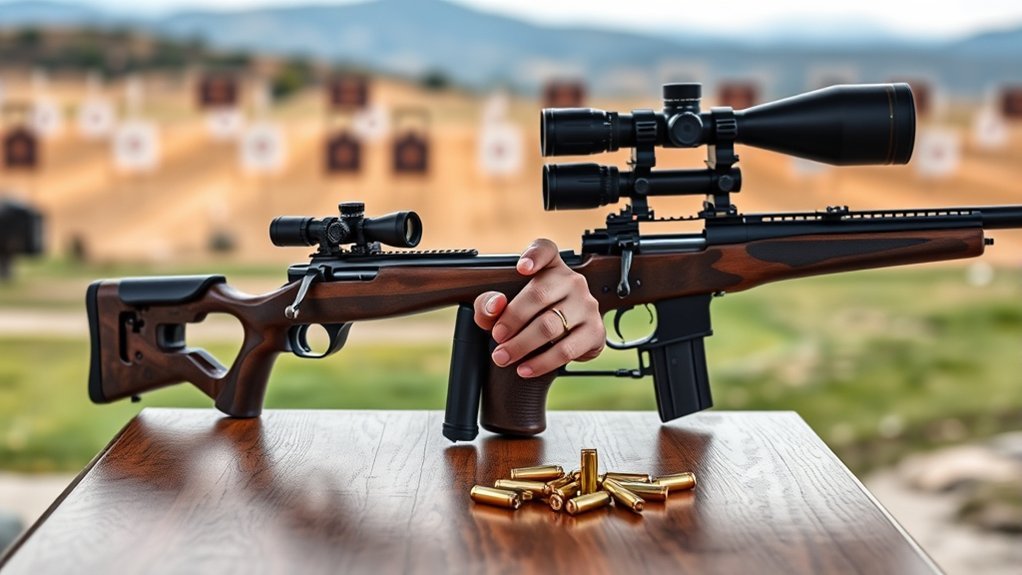
Lower scope magnification is often easier to use when a wide field of view, a steady-looking image, and quick visual orientation matter more than maximum detail. Higher magnification makes distant details appear larger, but it also reduces the visible area around them and makes small movements easier to notice. The best setting therefore depends on the optic, viewing conditions, target size, available support, lighting, and intended use rather than distance alone.
Quick Answer
Lower scope magnification is often better when you need a wider field of view, easier visual tracking, and a steadier-looking image. Higher magnification reveals more distant detail but narrows the view and magnifies visible movement. Neither is automatically better; the useful setting depends on the optic, lighting, target size, support, and purpose.
Key Takeaways
- Lower magnification generally gives a wider field of view and makes visible movement less pronounced.
- Higher magnification enlarges distant detail but shows a smaller portion of the surrounding scene.
- Low-light performance depends on exit pupil, objective size, optical transmission, coatings, and the viewer’s eye—not magnification alone.
- Eye relief is model-dependent and should be checked in the manufacturer’s specifications rather than assumed from magnification.
- There is no universal magnification-to-distance rule; choose an optic by field of view, image quality, intended use, and the conditions in which it will be used.
What Is Scope Magnification?
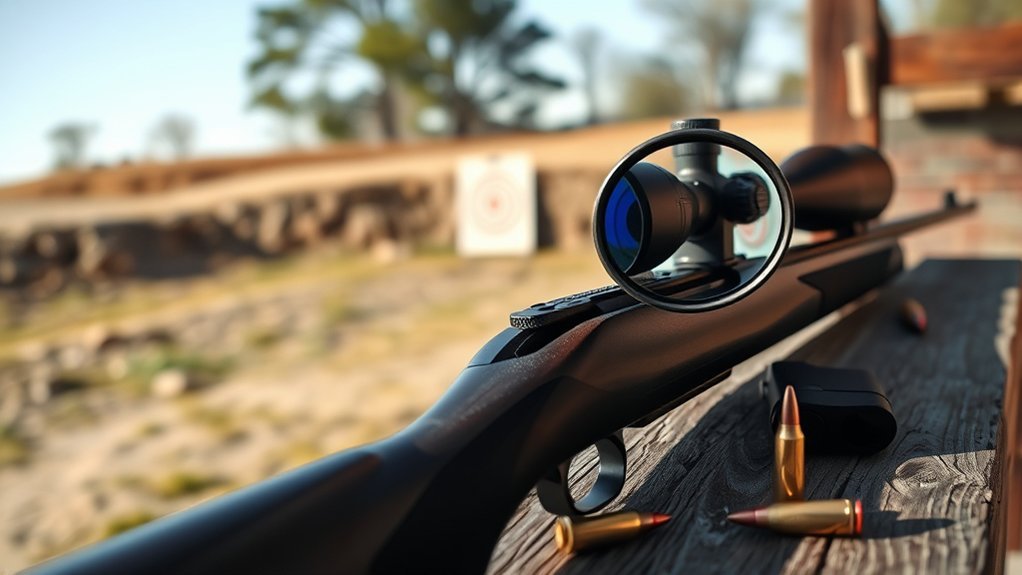
Scope magnification describes how much larger an object appears through the optic compared with the unaided eye. A 4× setting produces roughly four times the apparent angular magnification. Saying that an object looks “four times closer” is common shorthand, but the optic is enlarging its apparent image rather than physically changing the viewing distance. ZEISS explains magnification using the same basic relationship.
Higher magnification reveals more detail, while lower magnification generally preserves a wider view of the surrounding scene.
Scopes may use fixed magnification, such as 4×, or variable magnification, such as 2–12×. A variable optic lets the user change image enlargement within the scope’s designed range.
Magnification affects more than apparent target size. As power rises, field of view normally becomes narrower. ZEISS, for example, lists its Conquest V6 2–12×50 with a field of view of 20.5 meters at 100 meters at the low end and 3.4 meters at 100 meters at the high end. That illustrates why magnification and field of view must be considered together.
Higher power also makes small movements in the optic easier to see. The object appears larger, but so does visible shake or movement of the sight picture. Lower power usually produces a calmer-looking image and a broader view.
Note: Eye relief and magnification are related differently across different optical designs. Do not assume that lower magnification automatically gives more eye relief. Check the specifications for the exact scope model.
Is Lower Scope Magnification Better?
Lower scope magnification can be better when field of view and easy visual orientation matter most. A wider view lets the user see more of the surrounding scene at once and generally makes it easier to follow movement without feeling visually confined.
The relationship between magnification and field of view is well established. ZEISS notes that lower magnification generally produces a larger field of view, although the exact dimensions depend on the optical design.
Lower magnification can also make the image appear steadier because movement is not enlarged as strongly. Leupold similarly notes that higher magnification increases sensitivity to visible movement while reducing field of view.
However, lower power is not automatically superior. When the purpose is to examine small or distant details from a stable position, additional magnification can be useful. The most useful setting is therefore the lowest magnification that still provides the detail needed for the task.
What Scope Magnification Should You Use?
There is no universal scope magnification that corresponds to a particular distance. Distance is only one factor. Target size, field of view, optical quality, lighting, visual acuity, support, atmospheric conditions, and the intended use of the optic can all change what feels practical.
| Condition | What to Prioritize |
|---|---|
| Dense or visually cluttered terrain | Lower magnification and a wide field of view |
| Open terrain or distant observation | Enough magnification for useful detail without unnecessarily restricting field of view |
| Mixed conditions | A variable optic with a practical low end and sufficient upper range for observation |
| Moving subjects | Wider field of view and lower apparent image movement |
| Strong recoil | Adequate manufacturer-specified eye relief throughout the usable zoom range |
Variable magnification provides flexibility when conditions change, but the largest available number should not automatically determine the choice. Leupold’s magnification guidance likewise emphasizes matching magnification to target size, distance, movement, and the situation rather than simply choosing the highest power available.
Pro Tip: Compare the manufacturer’s field-of-view and eye-relief specifications at both ends of a variable scope’s magnification range. Those measurements are more useful than relying on a generic magnification-to-distance chart.
How Does Magnification Affect Your View?
Magnification changes apparent image size, field of view, visible movement, and exit pupil. Increasing power makes details look larger, but it also reduces how much of the surrounding scene is visible through most variable optics.
A lower setting therefore usually gives a wider field of view. This can make it easier to maintain visual context and follow movement. Higher magnification provides a closer apparent view but makes small movements of the optic more obvious.
Magnification and Field of View
Field of view describes how wide an area can be seen through an optic at a specified distance. It is commonly expressed in feet at 100 yards or meters at 100 meters. Actual field of view varies considerably between scope designs, even when their magnification ranges appear similar.
Current ZEISS specifications demonstrate the relationship clearly. Its Conquest V6 1.1–6×24 is listed at 38.1 meters of field of view at 100 meters at its low end, while the same model narrows to 6.6 meters at the upper end. This is why magnification alone does not describe how easy an optic feels to look through.
Magnification, Exit Pupil, and Brightness
Brightness also needs more careful explanation than simply saying that low magnification is brighter. For a conventional optic, exit pupil is closely related to objective diameter divided by magnification. Raising magnification while using the same objective generally reduces the exit-pupil diameter.
ZEISS explains that a larger exit pupil can allow more available light to reach the eye, especially when the viewer’s pupil is enlarged in dim conditions. However, actual perceived brightness also depends on lens coatings, transmission, objective size, optical design, ambient light, and the viewer’s eye.
For that reason, two scopes set to the same magnification can produce noticeably different viewing experiences.
Eye Relief Is Not the Same as Eyebox
Eye relief is the distance between the rear lens and the eye where the full image can be seen. The eyebox is the usable three-dimensional area in which the eye can move while still maintaining a satisfactory sight picture.
These characteristics are determined by the scope’s optical design. They should not be treated as automatic consequences of low or high magnification.
For example, some current Leupold scopes specify slightly different eye relief at minimum and maximum magnification, while ZEISS lists a constant 90 mm eye relief for several Conquest V6 models. Leupold also advises checking eye relief carefully, particularly where recoil could bring the optic close to the user’s face.
Warning: Follow the firearm and optic manufacturer’s safety instructions and maintain the specified eye relief. Never assume that a particular zoom setting provides enough recoil clearance. Firearms should be handled only in accordance with applicable law and established safety practices.
Low vs High Magnification Tradeoffs?
The practical difference between low and high magnification is a tradeoff between field of view, apparent detail, and visible movement.
Low magnification generally provides a broader view of the surroundings. It also makes small movements less visually pronounced, which can make the image feel steadier.
The most useful magnification is not necessarily the highest available setting; it is the setting that provides enough detail while preserving a usable field of view.
Higher magnification enlarges finer details, but the visible area around them becomes smaller. It can also make vibration, hand movement, heat shimmer, and other image disturbances easier to notice.
Low-light performance should be evaluated through the complete optical system rather than magnification alone. A scope’s objective size, exit pupil, glass quality, coatings, transmission, and the observer’s pupil all influence the perceived image.
Eye relief must also be checked by model. A general rule such as “lower power always gives more eye relief” is unreliable because different scopes behave differently across their zoom ranges.
Frequently Asked Questions
Is 20X Magnification Too Much?
Not necessarily. A 20× setting can be useful when examining small or distant details from a stable position, but it produces a narrower field of view and makes movement more noticeable. For general observation or situations where a broad view matters, a lower setting may be easier to use. The appropriate power depends on the optic and the task.
What Magnification Is Needed for 500 Yards?
There is no universal magnification requirement for 500 yards. Distance alone does not determine the useful setting. Target size, eyesight, optical quality, lighting, field of view, atmospheric conditions, stability, and the intended purpose all affect how much magnification is practical. Manufacturer guidance and qualified training should take priority over a generic distance chart.
What Does 20-60X Magnification Mean?
A 20–60× optic has variable magnification from 20× at its lowest setting to 60× at its highest. The apparent image becomes progressively larger as magnification increases, while field of view normally becomes narrower and visible movement becomes more noticeable. Magnification ranges this high are commonly seen on spotting and observation scopes.
What Distance Is 5X Magnification Good For?
There is no fixed distance at which 5× becomes the correct magnification. A 5× view may provide enough apparent detail in some situations and too little or too much in others. Target size, field of view, optical quality, lighting, visual acuity, and the stability of the viewing position matter more than a universal yardage number.
Conclusion
Scope magnification changes more than how large an object appears. Lower magnification generally provides a wider field of view and makes visible movement less pronounced. Higher magnification reveals finer detail but narrows the view and makes movement easier to notice.
Brightness and viewing comfort are also influenced by exit pupil, optical transmission, objective size, eye relief, and eyebox design. Because those characteristics vary from one optic to another, there is no universal magnification setting or distance chart that works for every scope. The most reliable approach is to compare the manufacturer’s specifications and use only as much magnification as the situation actually requires.
Sources
- Leupold — Riflescope Magnification 101 — explains magnification, field-of-view tradeoffs, and increased sensitivity to movement at higher power.
- Leupold — Riflescope Support — provides manufacturer guidance on eye relief and proper viewing position.
- ZEISS — Field of View — explains the relationship between magnification and visible field width.
- ZEISS — Exit Pupil — explains how magnification, objective diameter, exit pupil, and perceived brightness interact.
- ZEISS — Conquest V6 Technical Specifications — provides real-world field-of-view, magnification, exit-pupil, and eye-relief specifications.