You need a hunting shelter that matches how you actually use it. A mobile hunter carrying overnight gear needs a compact sleeping tent, while a hunter staying in one location may care more about concealment, interior room, and wide sightlines.
This guide compares two different shelter types: a one-person, seller-marketed four-season backpacking tent for mobile trips and a 360° hunting blind for stationary setups. They are not interchangeable, so the best choice depends on whether you need an overnight shelter or a concealed place to sit and observe.
This roundup is reader-supported. When you click an Amazon link, we may earn a referral commission on qualifying purchases at no additional cost to you. As an Amazon Associate I earn from qualifying purchases.
Quick Verdict
Choose the Camppal when you need a compact, enclosed sleeping shelter for a solo mobile hunt. Choose the ITEFDTUTNE blind when you plan to remain in one location and prioritize concealment, chair space, and broad visibility.
Important: The blind is not a substitute for a sealed overnight tent, and neither product should be treated as guaranteed protection during severe weather.
Top Picks
|
Category |
Product |
Best For |
|---|---|---|
|
🏕️ Best for Mobile Solo Hunts |
One hunter who needs an enclosed sleeping shelter that packs more easily than a stationary blind. |
|
|
🎯 Best for Stationary Visibility |
Stationary hunts where concealment, chair space, and a broad field of view matter more than packed weight. |
How We Evaluated These Hunting Shelters
These products serve different hunting styles, so we focused on the factors that matter within each category rather than treating them as identical tents. For the solo tent, the main considerations were enclosure, seller-listed water resistance, packed portability, setup simplicity, ventilation, and usable sleeping space.
For the hunting blind, we prioritized concealment, visibility, interior room, window access, portability to a fixed location, and protection from ordinary wind and precipitation. We also considered honest limitations, specification clarity, and the details buyers should verify before ordering.
Selection note: A product described as “four season” by its seller is not automatically an expedition-grade winter shelter. Check the forecast, campsite exposure, anchoring requirements, ventilation, and current manufacturer instructions before relying on any shelter in cold or severe conditions.
The Camppal is the more appropriate choice when your shelter must double as a place to sleep. Its enclosed design, rainfly, bathtub-style floor, and simple single-pole layout address the basic needs of a solo hunter carrying camp between locations.
The seller listing describes an interior approximately 8.2 feet long and 2.95 feet wide, which can accommodate one sleeping person but leaves limited room for organizing bulky hunting gear. The vestibule or a separate covered storage plan may be useful when you are carrying boots, a pack, and wet outer layers.
Why You’ll Like It
You get an enclosed shelter without moving up to the packed bulk of a roomy base-camp tent. The straightforward pole layout may also be easier to manage than a more complicated multi-pole design when daylight is fading or temperatures are dropping.
Who Should Buy This
- Solo hunters who hike or paddle to an overnight location
- Campers who prioritize enclosure and rain protection over standing room
- Buyers who prefer a simple ridge-pole setup
- People who need a relatively narrow shelter for small campsites
Who Should Avoid This
- Hunters who need room for multiple occupants or substantial gear inside
- Anyone who expects to stand upright or spend long daytime sessions in the shelter
- Ultralight backpackers who need a verified packed weight below a strict limit
- Users seeking a certified expedition or extreme-alpine shelter
|
Pros |
Cons |
|---|---|
|
✅ Seller-listed 3,500–4,000 mm fabric water resistance |
❌ Narrow interior limits room for bulky gear |
|
✅ Enclosed sleeping space with rainfly and bathtub-style floor |
❌ Condensation can develop if ventilation is restricted |
|
✅ Simple single-ridge-pole design |
❌ Published weight figures in the listing are inconsistent |
|
✅ Better suited to overnight use than an open hunting blind |
❌ Seller “four-season” wording does not establish expedition-grade performance |
When To Use
|
Situation |
How It Helps |
|---|---|
|
Solo Backpack Hunts |
It provides an enclosed place to sleep without requiring the footprint or transport effort of a large base-camp shelter. |
|
Short Overnight Trips |
The one-person layout is appropriate when you need basic shelter for one or two nights and can store excess equipment separately. |
|
Kayak or Canoe Access |
Its relatively compact form is easier to transport than a full-size blind or multi-person tent when cargo space is limited. |
|
Cool or Wet Conditions |
The enclosed fly-and-floor design offers more complete coverage than a mesh-sided blind, provided the tent is correctly pitched, ventilated, and securely anchored. |
Versatility
This tent is most useful as a compact solo sleeping shelter. It can work for backpacking, paddling trips, hunting camps, and emergency preparedness, but it is less suitable when you need standing height, room for a partner, or enough interior space to organize a large amount of equipment.
Key Benefits
- Enclosed one-person sleeping area
- Seller-listed 3,500–4,000 mm fabric water resistance
- Simple single aluminum ridge-pole design
- Rainfly, stakes, and inner tent listed as included components
Before You Buy
Confirm the current packed weight, package dimensions, warranty terms, color, and included components on Amazon. The listing displays inconsistent weight figures, so do not rely on a single published number when planning a weight-sensitive trip.
Check Product Details on Amazon
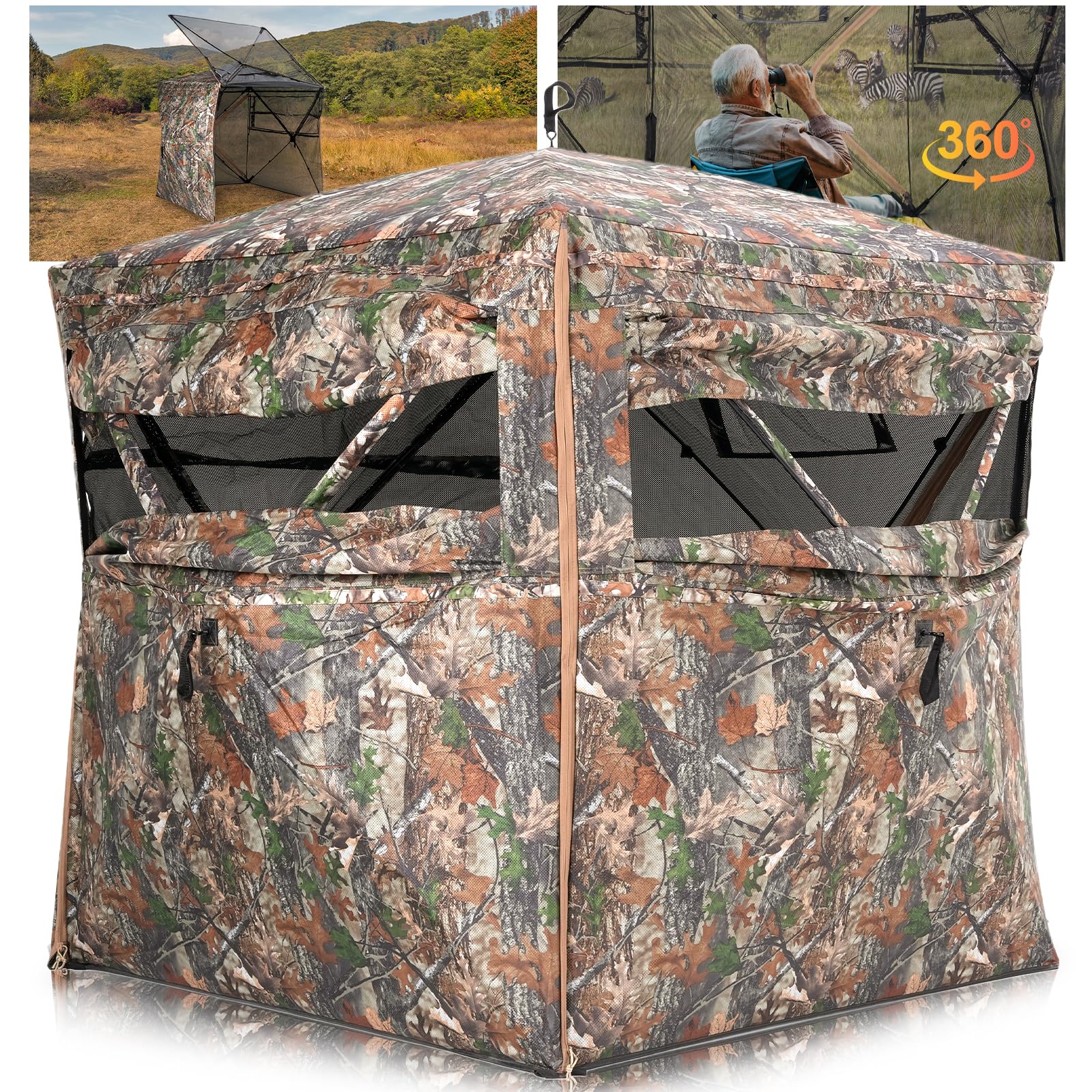
The ITEFDTUTNE is designed for hunters who spend extended periods in one location and want to observe movement without exposing themselves as readily. Its 360° see-through format addresses a different problem from the Camppal: it emphasizes concealment and situational awareness rather than overnight sleeping protection.
A blind of this type may provide room for a chair and field equipment, but it should not be treated as a sealed tent. Mesh viewing areas, window openings, floor design, anchoring, and lower seams can all affect wind and rain protection.
Why You’ll Like It
The wide-view format can reduce the need to lean toward a small window whenever you scan the surrounding area. It is also better suited than a narrow sleeping tent to seated observation, gear access, and stationary turkey or deer setups.
Who Should Buy This
- Hunters who remain in one ground or stand location for long sessions
- Users who prioritize concealment and panoramic visibility
- People who need room for a chair and frequently accessed field gear
- Hunters who can transport a bulkier shelter close to the setup location
Who Should Avoid This
- Backpack hunters who must minimize packed weight and volume
- Anyone seeking an enclosed overnight sleeping tent
- Users who need verified protection for exposed winter or alpine conditions
- Buyers who cannot confirm the current listing’s dimensions and included components
|
Pros |
Cons |
|---|---|
|
✅ 360° see-through format supports broad observation |
❌ Not an enclosed sleeping tent |
|
✅ Better suited to seated, stationary hunting than a narrow solo tent |
❌ Less practical for long-distance backpack carry |
|
✅ Concealment-oriented design for ground or stand setups |
❌ Mesh and openings provide less complete weather coverage than a sealed tent |
|
✅ Offers easier access to a chair and frequently used equipment |
❌ Exact capacity, packed weight, and included parts require current verification |
When To Use
|
Situation |
How It Helps |
|---|---|
|
Turkey Hunting |
The panoramic format helps you monitor a wide area while remaining behind a concealment layer. |
|
Stationary Deer Hunts |
Its seated-use design is better suited to long observation periods than a low sleeping tent. |
|
Stand or Platform Setups |
A freestanding blind may add concealment around a compatible flat setup, provided its footprint, anchoring, and access points are checked first. |
|
Gear-Heavy Sessions |
The stationary format can make it easier to keep a chair, pack, optics, and other frequently used items within reach. |
Versatility
This blind is most appropriate for stationary turkey, deer, or observation setups. It may also work around compatible stands or platforms after you verify the dimensions and anchoring method. It is not intended for backpacking, sleeping, or replacing a fully enclosed weather shelter.
Key Benefits
- Panoramic see-through layout for broad sightlines
- Concealment-oriented format for stationary hunting
- More usable seated space than a narrow solo sleeping tent
- Suitable for setups where packed weight is not the primary concern
Before You Buy
Confirm the current occupancy, footprint, interior height, packed size, weight, fabric, pole materials, window mechanism, floor design, carry bag, warranty, and availability on Amazon. Measure any stand or platform before assuming the blind will fit it.
Check Product Details on Amazon
How to Choose the Right Hunting Shelter
Start With the Main Job
Choose an enclosed tent when the shelter must protect your sleeping system and personal gear overnight. Choose a hunting blind when the main goal is concealment and observation during a stationary session.
Consider How Far You Must Carry It
A solo backpacking tent is generally easier to move over long distances than a roomy blind. For either product, check the current packed dimensions and weight rather than relying only on words such as “lightweight” or “portable.”
Separate Waterproof Ratings From Complete Weather Protection
A fabric hydrostatic-head rating describes the material rather than the performance of every seam, zipper, vent, pole, stake, and setup. Correct pitching and site selection still matter. A mesh-heavy blind may shed ordinary overhead rain while allowing wind-driven moisture through openings or lower edges.
Check Occupancy With Your Gear Included
A shelter’s stated person count may not reflect the room needed for a hunting pack, boots, insulated clothing, chair, optics, or other equipment. Compare interior dimensions with your sleeping system or seated setup before purchasing.
Plan for Anchoring and Site Conditions
Use every appropriate stake and guy point, follow the manufacturer’s instructions, and avoid exposed locations during severe forecasts. Do not rely on either shelter as protection from dangerous winds, flooding, falling branches, lightning, or other hazardous conditions.
FAQ
Are Both Products Four-Season Tents?
No. The Camppal is an enclosed one-person tent marketed by its seller for four-season use. The ITEFDTUTNE is a 360° hunting blind intended for concealment and stationary observation, not an overnight sleeping tent.
Is the Camppal Suitable for Winter Hunting?
It may suit some cold-weather trips when the forecast, campsite, sleep system, anchoring, and user experience are appropriate. However, seller “four-season” wording should not be interpreted as proof that it is suitable for extreme alpine storms or every winter condition.
How Do I Manage Condensation in the Solo Tent?
Use available vents, avoid blocking airflow with gear, keep wet clothing outside the sleeping area when practical, and pitch the fly with enough separation for air to move. Campsites in low, saturated ground can also increase moisture inside the shelter.
Can the Hunting Blind Be Used for Sleeping?
It should not be treated as an overnight sleeping shelter unless the manufacturer explicitly states that use and the design provides an appropriate enclosed floor, weather protection, ventilation, and safe sleeping space. A dedicated tent is the safer match for normal overnight camping.
Which Shelter Is Better for a Mobile Hunt?
The Camppal is the more suitable option when you carry camp between locations and need somewhere to sleep. The ITEFDTUTNE is more appropriate when you can transport the blind near a fixed setup and leave it in place for a stationary session.
What Should I Verify Before Ordering?
Check current dimensions, packed weight, occupancy, included poles and stakes, fabric specifications, floor design, window layout, warranty, return policy, seller, and availability. Product listings can change, and the Camppal listing contains inconsistent published weight figures.
Wrapping Up
Choose the Camppal Tent when you need a one-person enclosed sleeping shelter for a mobile hunt, short backpacking trip, or compact overnight camp. Its seller-listed water resistance and simple ridge-pole design are useful advantages, but buyers should verify the current packed weight and avoid treating the four-season label as an extreme-weather guarantee.
Choose the ITEFDTUTNE Blind when your priority is stationary concealment, room for a seated setup, and a panoramic view of the surrounding area. Confirm its current dimensions, capacity, packed size, materials, and included components before purchasing, and do not rely on it as a substitute for an overnight tent.
| Camppal 1 Person Tent | ITEFDTUTNE 360 See-Through Hunting Blind | |
|---|---|---|
| Product Image |
 |
 |
| Shelter Type | Enclosed one-person sleeping tent | Stationary 360° hunting blind |
| Best For | Mobile solo hunts and overnight trips | Stationary observation and concealment |
| Occupancy | Seller-listed for one person | Confirm current capacity and interior dimensions |
| Weather Coverage | Enclosed fly-and-floor design with seller-listed 3,500–4,000 mm fabric rating | Blind-style coverage; not equivalent to a sealed sleeping tent |
| Portability | More suitable for carrying between camps, but verify the current packed weight | Better for transport to a fixed location than long-distance backpacking |
| Main Limitation | Narrow interior and potential condensation | Not intended for sleeping or extreme-weather shelter |
| Details to Verify | Packed weight, warranty, included parts, and current specifications | Capacity, footprint, packed size, weight, materials, windows, and included parts |
| View Product | Check Amazon Availability | Check Amazon Availability |
This roundup is reader-supported. When you click through links, we may earn a referral commission on qualifying purchases. Prices, specifications, sellers, and availability can change, so confirm the current product details before ordering.