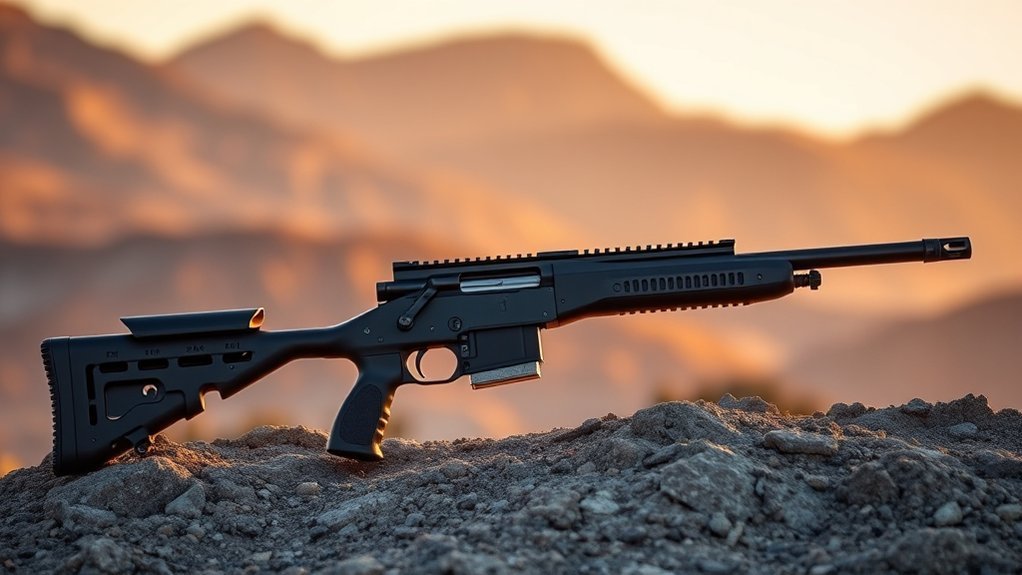
Modern sporting rifle (MSR) is an industry and consumer term most often used for modern semi-automatic rifles such as AR-15-style and some AK-style rifles. It is not a single federal legal classification. A semi-automatic rifle fires one round for each separate trigger pull and automatically chambers the next round, while legal restrictions on a particular rifle depend on its configuration and the jurisdiction.
Last updated: September 19, 2026 — terminology, federal legal references, and safe-storage guidance reviewed.
Affiliate disclosure: This page may contain affiliate links. If you buy through them, GomyReview may earn a commission at no extra cost to you.
Quick Answer
A modern sporting rifle is a modern term commonly applied to semi-automatic rifles such as AR-15-style and some AK-style platforms. “MSR” is not one federal legal category. Under federal regulations, a semi-automatic rifle requires a separate trigger pull for each cartridge fired, even though the action automatically extracts the fired case and chambers the next round.
Key Takeaways
- “Modern sporting rifle” is an industry and consumer term rather than a single federal firearm classification.
- The term is most commonly associated with modern semi-automatic platforms, particularly AR-style rifles and, in some usage, AK-style and other comparable semi-automatic rifles.
- A semi-automatic rifle requires a separate trigger pull for each round fired; that is different from a firearm capable of automatic fire.
- Legal terms and restrictions vary by jurisdiction, so the MSR label alone does not determine whether a particular rifle or configuration is restricted.
- Secure storage, manufacturer-recommended maintenance, proper training, and current legal information are core parts of responsible ownership.
What Is a Modern Sporting Rifle?
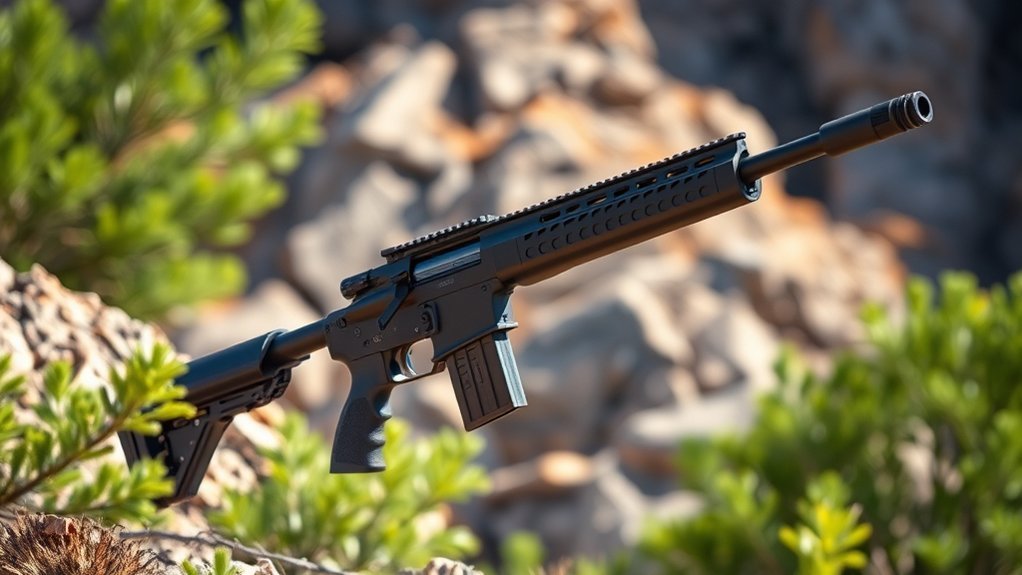
A modern sporting rifle, often shortened to MSR, is a modern term generally used for semi-automatic rifles with contemporary ergonomic and modular features. AR-15-style rifles are the best-known examples, while some sources also include AK-style and other modern semi-automatic rifle platforms.
The label itself does not create a legal classification. The University of Wyoming Firearms Research Center terminology glossary describes MSR as a modern term for semi-automatic firearms and notes that not every MSR is AR-style. The National Shooting Sports Foundation, a firearm-industry trade organization, uses the term for contemporary semi-automatic rifle designs including the AR-15 and similar variants.
What matters mechanically is the rifle’s actual action. Under the federal regulatory definition, a semi-automatic rifle uses energy from the fired cartridge to extract the fired case and chamber the next cartridge but requires a separate pull of the trigger for each cartridge fired.
Common MSR features can include detachable magazines, adjustable or replaceable stocks, modern handguards, optic-mounting surfaces, and other modular components. Not every rifle described as an MSR has every one of these features, and the exact use of the term varies among manufacturers, writers, organizations, and firearm owners.
Modern Sporting Rifle vs. Related Firearm Terms
| Term | General Meaning | Important Distinction |
|---|---|---|
| Modern sporting rifle (MSR) | Industry and consumer term commonly used for modern semi-automatic rifle platforms. | Not a single federal legal classification. |
| Semi-automatic rifle | A repeating rifle that chambers the next round automatically after firing but requires a separate trigger pull for each round. | Describes the firearm’s operating action rather than its appearance or marketing label. |
| Assault rifle | A technical term commonly used for a select-fire rifle capable of both semi-automatic and automatic fire and using an intermediate cartridge. | A standard semi-automatic-only civilian AR-style rifle does not have automatic/select-fire capability. |
| Assault weapon | A legal or legislative term used in some jurisdictions for firearms meeting definitions written into the applicable law. | Definitions differ among jurisdictions and should not be assumed from the MSR label alone. |
For a deeper explanation of military firearm terminology, see GomyReview’s battle rifle vs. assault rifle terminology guide.
What Features Are Common on Modern Sporting Rifles?
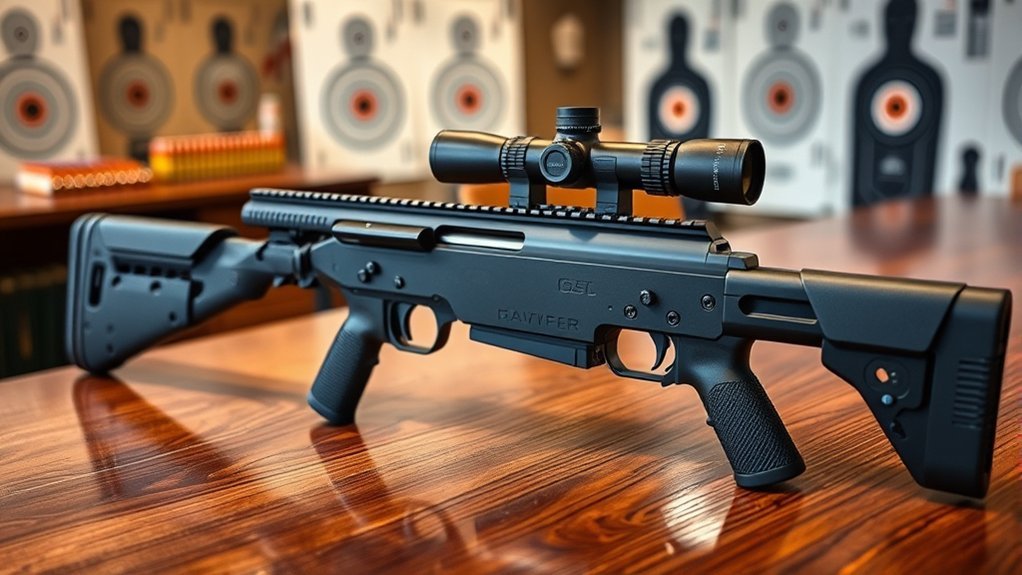
Modern sporting rifles are commonly associated with features that affect fit, handling, mounting options, and configuration. These characteristics vary by rifle and should not be treated as a checklist that legally defines an MSR.
- Modular Design: Many platforms use interchangeable components so the rifle can be configured for fit, lawful sporting use, or a particular shooting discipline.
- Adjustable or Replaceable Stock: Some models allow changes to length of pull or stock configuration. Whether a particular stock or configuration is lawful can depend on jurisdiction and firearm classification.
- Multiple Chambering Options: Different rifle families are produced in different chamberings for target shooting, competition, hunting where legal, and other sporting applications.
- Accessory Mounting Options: Many models provide rails or slots for sights, optics, sling mounts, and other lawful accessories.
- Detachable Magazines: Detachable magazines are common on many MSRs, although magazine restrictions differ among states and localities.
The important point is that these are common design characteristics, not a universal legal definition. A jurisdiction may regulate a firearm using its own definitions, named models, dimensions, features, or other criteria.
Note: “Modern sporting rifle” is a common industry and consumer term, not a single legal category that applies the same way in every jurisdiction.
Where Did Modern Sporting Rifles Come From?
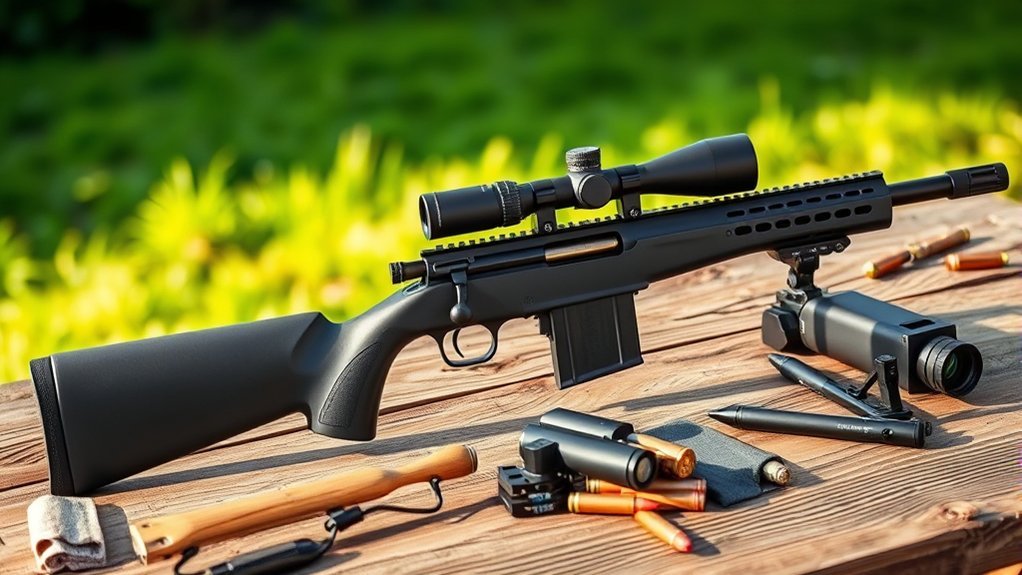
The rifles commonly called MSRs combine technologies developed over many generations of firearm design. Semi-automatic actions predate the modern AR platform, while today’s MSR category is closely associated with postwar designs that use lightweight materials, detachable magazines, modern controls, and modular components.
The term itself is much newer than the underlying technologies. NSSF says it adopted “modern sporting rifle” to describe contemporary semi-automatic designs including the AR-15 and similar variants. Other firearm terminology sources also use MSR for AR-style, AK-style, and related modern semi-automatic firearms rather than for every recently manufactured sporting rifle.
Evolution of Rifle Design
Several developments help explain how modern rifle platforms differ from earlier manually operated designs:
- Breech-loading mechanisms: These allowed cartridges to be loaded from the rear of the barrel rather than through the muzzle.
- Rifled barrels: Spiral grooves in the bore stabilize a projectile in flight and distinguish rifles from smoothbore firearms.
- Self-loading actions: Semi-automatic systems use energy from firing to cycle the action while still requiring a separate trigger pull for each shot.
- Modular construction: Modern platforms may allow stocks, handguards, sights, and other components to be changed without redefining the basic action type.
For a more detailed platform history, see AR-15 Platform Evolution: A Beginner’s Guide.
Influence of Military Technology
Military and civilian firearm development have influenced one another for generations. The AR family is one clear example of shared design lineage: civilian semi-automatic AR-style rifles and military rifles such as the M16 or M4 may share aspects of appearance, ergonomics, and architecture, but their operating capabilities and legal classifications are not automatically the same.
Lightweight materials, synthetic furniture, modular mounting systems, and improved sighting equipment have also moved across military, competition, hunting, and civilian markets. These shared design ideas are more useful for understanding MSRs than appearance alone.
Which Rifles Are Usually Called Modern Sporting Rifles?
The label is most consistently applied to modern semi-automatic rifle platforms. Its exact boundaries vary, but current firearm terminology sources commonly identify these groups:
- AR-Style Semi-Automatic Rifles: Rifles based on the AR family of designs are the category most strongly associated with the term MSR.
- AK-Style Semi-Automatic Rifles: Some terminology sources include civilian semi-automatic AK-pattern rifles within the broader MSR category.
- Other Modern Semi-Automatic Sporting Rifles: Other magazine-fed semi-automatic rifles with contemporary materials and ergonomics may also be called MSRs depending on the manufacturer, writer, or organization.
Bolt-action and lever-action rifles are sporting rifles, but they are not normally the platforms meant when firearm organizations use “modern sporting rifle” in the contemporary MSR sense. Because MSR is not a universally standardized category, identify the actual action type, configuration, and applicable legal classification instead of relying on the label alone.
What Are Modern Sporting Rifles Used For?
Modern sporting rifles are used for several lawful civilian activities, including recreational target shooting, organized competition, training, collecting, and hunting where the rifle’s chambering and configuration comply with applicable game and firearm laws.
Some owners also keep semi-automatic rifles for personal or home defense. That is a separate use case from sporting activity and requires careful consideration of secure storage, training, household circumstances, and local law. The fact that similar-looking platforms may be used by law enforcement or the military does not by itself determine how a civilian rifle operates or how it is classified legally.
Warning: Firearm laws and safe-use requirements vary by location. Before buying, possessing, transporting, modifying, storing, or using any rifle, check current federal, state, and local requirements and obtain qualified firearm-safety instruction.
Which Modern Sporting Rifle Terms Are Commonly Confused?
Most confusion around MSRs comes from treating marketing, technical, and legal terms as though they mean the same thing. They do not.
- MSR is not a universal legal category: “Modern sporting rifle” is a descriptive industry/consumer term. A statute may use completely different definitions.
- Semi-automatic does not mean fully automatic: A semi-automatic rifle requires a separate trigger pull for each shot even though it chambers the next round automatically.
- Appearance does not fully describe operation: Rifles with similar external styling can have different actions, configurations, or legal classifications.
- “Assault rifle” and “assault weapon” are not interchangeable definitions: The first is commonly used as a technical firearm category involving select-fire capability, while the second may be a statutory category defined differently by individual jurisdictions.
Using the specific action type and the applicable statute is more precise than trying to determine legal status from an informal label.
How Are Modern Sporting Rifles Regulated?
There is no single federal regulatory category named “modern sporting rifle.” Federal law regulates firearms according to statutory and regulatory classifications, while states and localities may impose additional rules based on firearm type, features, magazine capacity, age, permits, registration, transport, storage, or other factors.
For purchases from a federally licensed firearms dealer, federal rules generally require the dealer to complete the applicable transfer process and background check, subject to recognized exceptions. The FBI’s National Instant Criminal Background Check System explains how FFL background checks work. Federal law permits licensed dealers to sell rifles and shotguns to people age 18 or older, while applicable state or local law may set a higher minimum age or additional conditions.
State rules are not uniform. The ATF State Laws and Published Ordinances collection provides state-by-state references and specifically advises readers to check the applicable state or territorial authorities for current requirements.
| Regulation Type | What to Check |
|---|---|
| Licensed-Dealer Purchase | Federal transfer, identification, age, and background-check requirements plus any stricter state or local rules |
| State or Local Classification | Whether the jurisdiction regulates named models, semi-automatic rifles, particular features, or other configurations |
| Feature and Configuration Rules | Restrictions that may apply to particular stocks, grips, muzzle devices, dimensions, or combinations of features |
| Magazine Rules | Capacity restrictions or other magazine rules imposed by the applicable state or locality |
This section is general information, not legal advice. Check the law that applies to the specific firearm, configuration, transaction, location, and date before acting.
How Are MSRs Used in Shooting Sports?
MSRs appear in recreational range shooting and organized rifle competitions because semi-automatic operation allows the rifle to chamber the next round without manual cycling. Adjustable fit, sights, and other permitted configuration choices can also help competitors adapt a rifle to a particular discipline.
- Target and Precision Practice: Shooters use semi-automatic rifles in accuracy-focused practice and matches where the rules permit them.
- Practical Competition: Some shooting disciplines use semi-automatic rifles in timed or multi-stage courses governed by the event’s equipment and safety rules.
- Training: Repetition on one consistent platform can help a shooter practice safe handling, sight alignment, trigger control, and range procedures.
- Hunting Where Legal: Some hunters use appropriate semi-automatic rifles when state game laws permit the action, caliber, magazine configuration, and other features.
The permitted equipment and configuration can differ substantially between ranges, competitions, hunting seasons, and jurisdictions, so rules should be checked before use.
The key mechanical distinction is straightforward: a semi-automatic rifle requires a separate trigger pull for each round fired.
How Should an MSR Be Maintained and Stored?
Maintenance should follow the owner’s manual for the exact rifle. Cleaning intervals, disassembly procedures, inspection points, and lubricant recommendations vary by manufacturer and model, so a generic schedule should not replace the manufacturer’s instructions.
Before maintenance, remove the magazine, unload the firearm, open the action, and confirm the chamber is clear while keeping the muzzle pointed in a safe direction. Keep ammunition away from the cleaning area. If you do not understand the manufacturer’s disassembly or inspection instructions, use a qualified gunsmith or certified firearm instructor rather than improvising.
Routine Cleaning Procedures
A basic maintenance routine generally focuses on removing fouling and moisture and looking for visible damage rather than performing unnecessary disassembly.
- Bore Cleaning: Follow the manufacturer’s instructions and use cleaning tools and solvent suitable for the firearm.
- Accessible Action Surfaces: Remove debris from areas the owner’s manual identifies for normal owner maintenance.
- Exterior Wipe Down: Remove moisture, dirt, and fingerprints that can contribute to corrosion.
- Inspection: Look for obvious damage, unusual wear, corrosion, or loose components and obtain qualified service when needed.
Do not force parts, alter components, or exceed the maintenance procedures described in the owner’s manual.
Proper Lubrication Techniques
Use only firearm-compatible lubricant recommended for your rifle and apply it at the locations and in the amounts specified by the manufacturer. Excess lubricant can collect dirt and debris, while too little lubrication may increase friction on surfaces that require it.
Environmental conditions can change maintenance needs. Exposure to rain, dust, extreme temperatures, or extended storage can justify inspection and maintenance sooner than a lightly used firearm kept in controlled conditions.
Pro Tip: Follow the lubricant type, amount, and application points specified by the firearm manufacturer rather than relying on a universal lubrication recipe.
Storage Best Practices
Secure storage is both a firearm-safety issue and a way to protect the rifle from unauthorized access. Project ChildSafe recommends storing firearms unloaded and secured in a locked cabinet, safe, vault, or storage case, with ammunition stored in a separate locked location.
- Use secure locked storage: A safe, locked cabinet, vault, or appropriate locked case can prevent unauthorized access.
- Store the firearm unloaded: Recheck that it is unloaded before placing it into storage and when removing it.
- Secure ammunition separately: Keep ammunition in a separate locked location, particularly where children or other unauthorized people could otherwise gain access.
- Consider an additional locking device: A compatible firearm lock can add another layer of protection but should not substitute for secure storage.
- Control moisture: Follow the firearm and safe manufacturer’s guidance for humidity control to reduce corrosion risk.
Storage requirements can also be regulated by state or local law, so household safety practices should meet or exceed whatever rules apply where the firearm is kept.
What Should You Consider Before Choosing an MSR?
Start with the lawful activity for which the rifle would be used rather than with accessories or appearance. Relevant factors include fit, weight, recoil, ammunition availability, sight compatibility, manufacturer support, maintenance requirements, and whether the particular configuration is legal where it will be owned and used.
For a first-time owner, a straightforward factory configuration, secure storage, appropriate eye and ear protection, and qualified instruction are more important than accumulating accessories. Read the owner’s manual and understand safe loading, unloading, storage, and transport requirements before using the firearm.
When possible, learn on a supervised range and compare fit and handling under the direction of qualified staff rather than making assumptions from specifications alone.
What Does Responsible MSR Ownership Require?
Responsible firearm handling begins with established safety rules: treat every firearm as if it is loaded, keep the muzzle pointed in a safe direction, keep your finger outside the trigger guard until you are ready to fire, and know your target and what is beyond it.
Qualified instruction can also cover safe loading and unloading, range commands, storage, basic maintenance, and how to respond safely when something about the firearm’s condition or operation is unclear.
Responsible ownership includes secure storage, compliance with transport and possession rules, appropriate eye and hearing protection, following range or hunting regulations, and preventing access by children or other unauthorized users.
Why Can MSR Terminology and Rules Change Over Time?
The physical category described by “modern sporting rifle” is not tied to one permanent federal definition. Manufacturers may introduce new configurations, organizations may use terminology differently, and legislatures or courts can change the rules that apply to particular firearms or features.
That is why an older article, product description, forum post, or general MSR label should never be treated as proof of current legality. For time-sensitive questions, use current ATF material together with the applicable state and local authorities.
Frequently Asked Questions
What does modern sporting rifle mean?
Modern sporting rifle, or MSR, is a modern industry and consumer term commonly used for semi-automatic rifles such as AR-15-style and some AK-style rifles. It describes a general type of contemporary rifle rather than one federal legal classification.
Is an AR-15 a modern sporting rifle?
AR-15-style semi-automatic rifles are the firearms most strongly associated with the MSR term. Other modern semi-automatic platforms may also be described as MSRs depending on the source.
Is a modern sporting rifle fully automatic?
The rifles normally described as civilian MSRs are semi-automatic: the action chambers the next cartridge after firing, but a separate trigger pull is required for each round. That differs from automatic fire.
Is “modern sporting rifle” a legal firearm category?
Not as a single federal category. Federal, state, and local laws use their own firearm definitions. Some jurisdictions also regulate particular semi-automatic rifles, models, features, magazines, or configurations, so legal status must be checked under the law that applies in that location.
Can modern sporting rifles be used for hunting?
Some semi-automatic rifles are used for hunting where permitted, but hunting laws can regulate caliber, magazine capacity, firearm type, season, species, and other details. Check the current game and firearm rules for the jurisdiction before hunting.
Conclusion
Modern sporting rifle is best understood as a modern descriptive term, not as a universal legal category. It is most often associated with AR-style and other contemporary semi-automatic rifle platforms, which require a separate trigger pull for each round fired.
For a reliable understanding of any specific rifle, look beyond the MSR label. Identify its actual action and configuration, check current federal, state, and local law, follow the manufacturer’s manual, obtain qualified training, and keep the firearm unloaded and securely stored when it is not in use.
Sources
- ATF / 27 CFR § 478.11 — federal regulatory definitions including semiautomatic rifle and machine gun.
- ATF State Laws and Published Ordinances — current state and territorial firearm-law references.
- FBI National Instant Criminal Background Check System — federal firearms-licensee background-check process.
- University of Wyoming Firearms Research Center — Firearm Terminology — terminology for MSRs, AR-style firearms, assault rifles, and assault weapons.
- National Shooting Sports Foundation Modern Sporting Rifle Resource — firearm-industry usage and history of the MSR term.
- Project ChildSafe — In Your Home — secure firearm and ammunition storage guidance.