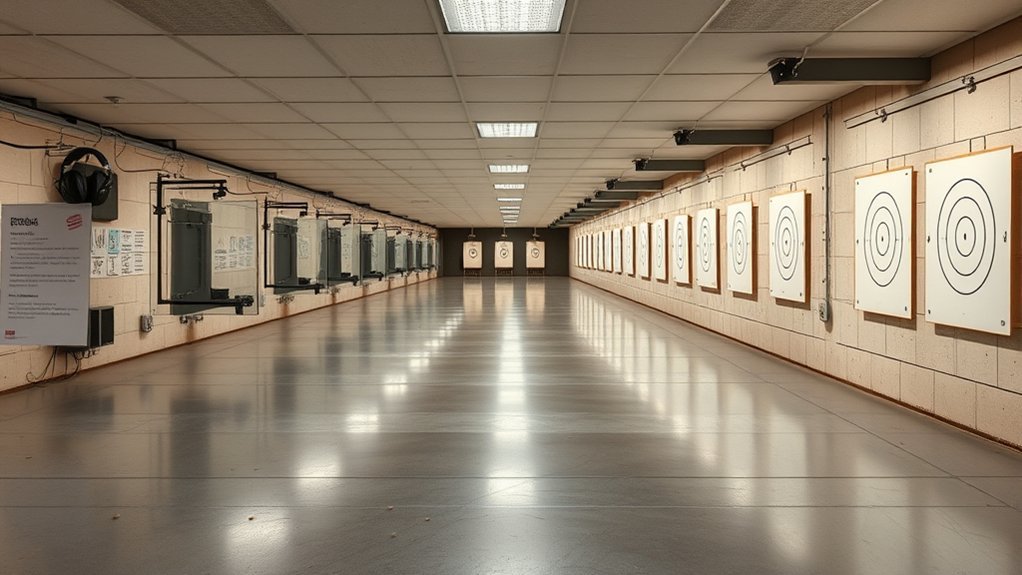
Firearm safety at the range is vital. Adhering to the NRA’s four safety rules, wearing appropriate gear, and understanding range commands are essential. Participants must operate scoring devices only when the range is declared HOT, following established protocols to guarantee safety. Regular inspections and interaction with Range Safety Officers (RSOs) help maintain a secure environment. Additionally, evaluating target performance and post-range practices are important for improvement. More detailed guidance awaits those seeking further knowledge.
Why Firearm Safety Matters at the Range
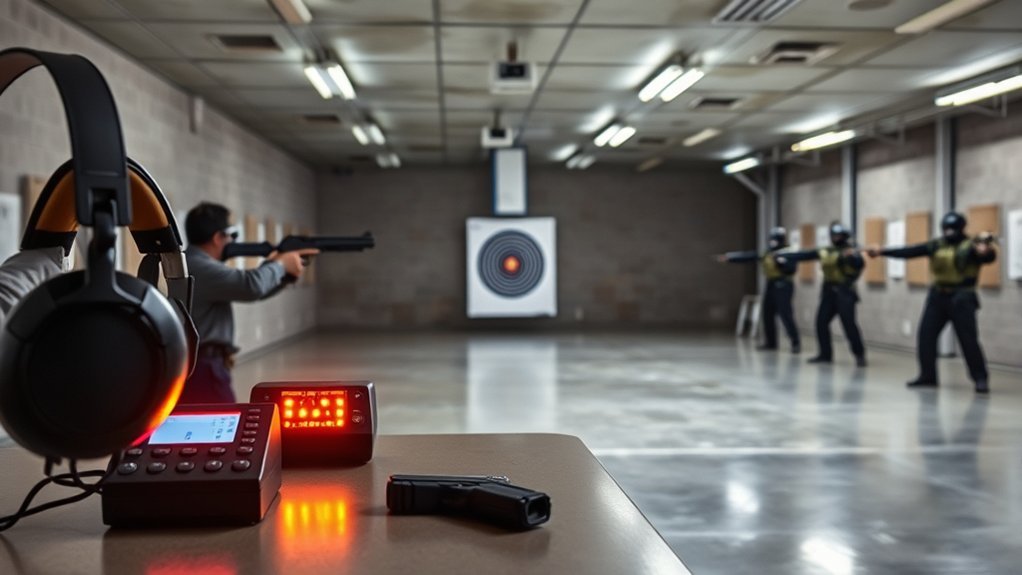
Firearm safety at the range is essential for preventing accidents and ensuring a secure environment for all participants. Adhering to the four NRA safety rules—treat every firearm as loaded, keep the muzzle pointed downrange, keep your finger off the trigger until ready to shoot, and know your target and what lies beyond—is vital for maintaining safety.
Range Safety Officers (RSOs) actively enforce these protocols, providing immediate guidance to uphold established safety standards. Mandatory eye and ear protection is required to shield participants from potential injuries and hearing damage due to loud gunfire.
Additionally, understanding range commands, such as “hot” and “cold,” is vital for preventing dangerous situations during shooting sessions. Practicing proper range etiquette fosters a culture of responsibility and respect, reinforcing the importance of firearm safety in creating a liberating experience for all involved.
Essential Gear and Preparation for Your Range Visit
Preparation for a range visit requires careful attention to essential gear and compliance with safety regulations. Individuals must present a valid government-issued photo ID and a signed safety waiver to guarantee adherence to range rules.
Mandatory safety equipment includes ANSI/ISEA Z87.1 rated safety glasses marked “Z87+” and hearing protection with a Noise Reduction Rating (NRR) of at least 25. Proper attire, such as closed-toe shoes and a high crew-neck shirt, protects against injuries from ejected brass.
Arriving early facilitates completion of check-in, paperwork, and safety briefings, allowing shooters to familiarize themselves with the range layout. Prior to shooting, conducting a thorough pre-range inspection of the firearm is vital; this includes checking for obstructions, confirming the trigger guard is engaged, and verifying ammunition condition.
Following these guidelines, in conjunction with firearm safety training, fosters a safer environment overseen by range safety officers.
Essential Firearm Safety Protocols at the Range
Safety protocols are paramount when engaging in shooting activities at the range, as they greatly reduce the risk of accidents. Adhering to firearm safety principles is essential; participants must always treat every firearm as if it is loaded and keep the muzzle pointed downrange at all times.
Maintaining finger discipline is vital; shooters should keep their fingers off the trigger until ready to shoot. Eye and ear protection is mandatory to prevent injury, ensuring that all individuals are safeguarded against potential hazards.
Familiarizing oneself with range commands, including the distinction between hot and cold range statuses, enhances shooting range safety. Additionally, it is imperative to know your target and what lies beyond it to prevent unintended consequences.
Any unsafe behavior or conditions should be reported immediately to the Range Safety Officer (RSO) to uphold a secure environment for all participants, reinforcing the collective responsibility for safety at the range.
Safe Operation of Scoring Devices
The safe operation of scoring devices at firing ranges is critical to ensuring both accuracy and safety.
Proper use guidelines must be followed rigorously, with all operators trained in the functions and limitations of the equipment.
Additionally, regular maintenance and calibration procedures are necessary to prevent malfunctions that could compromise safety on the range.
Proper Use Guidelines
Operating scoring devices at a firing range requires strict adherence to established guidelines to guarantee a safe shooting environment. Scoring devices should only be operated when the range is declared HOT and all shooters are positioned at the firing line, minimizing the risk of accidents.
Users must familiarize themselves with the specific scoring device, ensuring proper setup and operation before shooting begins. All devices must be kept pointed in a safe direction and securely mounted to prevent movement.
Regular inspections for functionality and safety compliance are essential; any malfunctions must be addressed immediately. It is essential to follow all manufacturer instructions and range protocols to maintain a safe, effective shooting environment.
The Range Safety Officer plays an important role in enforcing these guidelines, especially during cease fire periods.
Maintenance and Calibration Procedures
Regular maintenance and calibration of scoring devices greatly contribute to the safe operation of firing ranges. Routine checks for software updates and hardware integrity are essential for guaranteeing accuracy and reliability.
Calibration procedures must follow manufacturer specifications, requiring verification of scoring accuracy with established standards, especially before and after significant events. Regular inspection of wiring and connections in electronic scoring systems is critical to prevent malfunctions that could compromise both safety and scoring integrity.
Operators should maintain detailed logs of maintenance and calibration activities, documenting dates, actions, and results to ensure compliance with safety regulations and operational standards.
Additionally, staff training on proper maintenance and calibration techniques is crucial for upholding safety protocols, ensuring peak functionality of scoring devices during shooting events.
Avoiding Common Mistakes for Safe Shooting Practices
Ensuring safety at the shooting range requires vigilance and adherence to established protocols. A fundamental principle is to treat every firearm as if it is loaded, which prevents accidental discharges. Shooters must keep their fingers off the trigger until ready to fire, greatly reducing the risk of premature discharges.
Ensuring safety at the shooting range demands treating every firearm as loaded and keeping fingers off the trigger until ready to fire.
Familiarity with range rules and layout is essential; understanding the environment aids in avoiding unsafe situations. Firearms should only be handled when the range is declared HOT, ensuring that no one is downrange before shooting begins.
Compliance with range regulations is also critical; using appropriate targets, while avoiding prohibited items such as human representations or incendiary targets, promotes safety. The role of the Range Safety Officer (RSO) is key in enforcing these protocols within indoor ranges, thereby ensuring a secure shooting experience for all participants.
Adhering to these principles is fundamental to effective gun safety practices.
Post-Range Practices for Continuous Safety and Improvement
Completing a shooting session necessitates a series of critical post-range practices to enhance both safety and skill development.
Properly cleaning and storing firearms is crucial to maintain functionality and guarantee safety for future use. Analyzing target performance allows shooters to identify specific areas for continuous improvement, fostering enhanced shooting skills over time.
Engaging in discussions with fellow shooters not only promotes safety awareness but also cultivates a culture of shared learning. Maintaining detailed records of training sessions, including successes and challenges, is essential for tracking progress and setting future goals.
Additionally, planning future visits to the range and pursuing structured training opportunities can greatly improve proficiency and safety in handling firearms.
Frequently Asked Questions
What Are the Benefits of Electronic Scoring Systems Over Traditional Methods?
Electronic scoring systems enhance competitive fairness through improved electronic accuracy, streamline user experience, enable advanced data analysis, reduce maintenance costs, boost training efficiency, and offer superior integration capabilities compared to traditional scoring methods.
How Often Should I Update My Training on Scoring Devices?
Training frequency should be updated quarterly to guarantee device accuracy, enhance user experience, incorporate safety protocols, address maintenance tips, adapt to technology updates, and improve performance tracking, thereby optimizing overall operational effectiveness and safety standards.
Are There Specific Age Restrictions for Using Scoring Devices at Ranges?
Age limitations for scoring devices vary, with some ranges requiring parental consent for minors. Safety protocols, supervision requirements, and device regulations guarantee youth training adheres to range policies, promoting responsible and safe usage among younger participants.
What Should I Do if I Encounter a Malfunctioning Scoring System?
Upon encountering a malfunctioning scoring system, one should consult troubleshooting tips, inspect for common malfunction signs, perform calibration procedures, consider device replacement options, and contact technical support to prevent user errors during maintenance.
Can I Bring My Own Scoring Device to the Range?
Yes, bringing a personal scoring device is permissible, provided it meets scoring device compatibility and noise level considerations. Users should prioritize device calibration importance and consult user training resources for ideal scoring accuracy factors and portability options.
Conclusion
In summary, prioritizing firearm safety, adhering to essential protocols, and operating scoring devices responsibly guarantees a secure shooting environment. By preparing adequately, avoiding common pitfalls, and engaging in post-range practices, shooters can enhance their skills and maintain a culture of safety. Emphasizing awareness, fostering discipline, and committing to continuous improvement not only protects individuals but also enriches the shooting community. Ultimately, a dedication to safety cultivates a more enjoyable and productive experience at the firing range.
