Disclosure: As an Amazon Associate, we earn from qualifying purchases. Buying through our links costs you nothing extra.
The best helmet earbuds for 2026 have to do more than sound good. Cheek pads press on anything that sticks out of your ear, wind roar at speed buries quiet audio, and sweat or rain can finish off earbuds that aren’t sealed. The 9 picks below are ranked for helmet use: a low-profile fit, transparency or ambient modes for traffic awareness, a published IP water-resistance rating, and battery life that covers long rides. Every pick includes a helmet-fit note so you can match it to a full-face, open-face, or bicycle helmet.
Quick Picks: Best Helmet Earbuds for 2026
- Best Overall: Soundcore Space A40 – low-profile fit, adaptive ANC, and a transparency mode
- Best Battery Life with ANC: TOZO NC9 – up to 59 hours total and an IPX8 rating
- Best Budget Pick: JLab Go Air Pop+ – tiny stemless buds with Be Aware Mode
- Best Waterproof Budget Pick: TOZO T10 – IPX8, wireless charging, and 55 hours total
- Best for Bicycle Helmets: PocBuds – secure earhooks and an IPX7 rating
Helmet Earbuds Comparison Table
| Earbuds | Fit Under Helmet | Noise Control / Awareness | Water Rating | Battery (Per Charge / Total)* | Where to Buy |
|---|---|---|---|---|---|
| 1. Soundcore Space A40 Best Overall |
Low-profile, stemless | Adaptive ANC + transparency | IPX4 | 10 h / 50 h | Check Price |
| 2. TOZO NC9 Best Battery Life with ANC |
Stemless, rounded | Hybrid ANC + Transparent Mode | IPX8 | 14 h / 59 h | Check Price |
| 3. JLab Go Air Pop+ Best Budget Pick |
Tiny, stemless | Be Aware Mode (no ANC) | IPX4 | 9+ h / 35+ h | Check Price |
| 4. TOZO T10 Best Waterproof Budget Pick |
Compact, rounded | Passive isolation only | IPX8 | 15 h / 55 h | Check Price |
| 5. Soundcore P30i Best Budget ANC |
Stem style | Adaptive ANC + transparency | IP54 | 10 h / 45 h | Check Price |
| 6. JBL Vibe Beam Best for Quick Stops and Chats |
Stick (stem) style | Ambient Aware + TalkThru (no ANC) | IP54 (case IPX2) | 8 h / 32 h | Check Price |
| 7. Soundcore P20i Best Bass on a Budget |
Stem style | Passive isolation only | IPX5 | 10 h / 30 h | Check Price |
| 8. Skullcandy Smokin’ Buds Simplest No-App Setup |
Compact bud | Passive isolation only | IPX4 | 8 h / 20 h | Check Price |
| 9. PocBuds Best for Bicycle Helmets and Workouts |
Over-ear hooks | Passive isolation only | IPX7 | 8 h / 80 h | Check Price |
*Manufacturer or listing figures, with ANC off where applicable. ANC, higher volume, and cold weather reduce real-world runtime.
1. Soundcore Space A40 – Best Overall for Helmet Riders
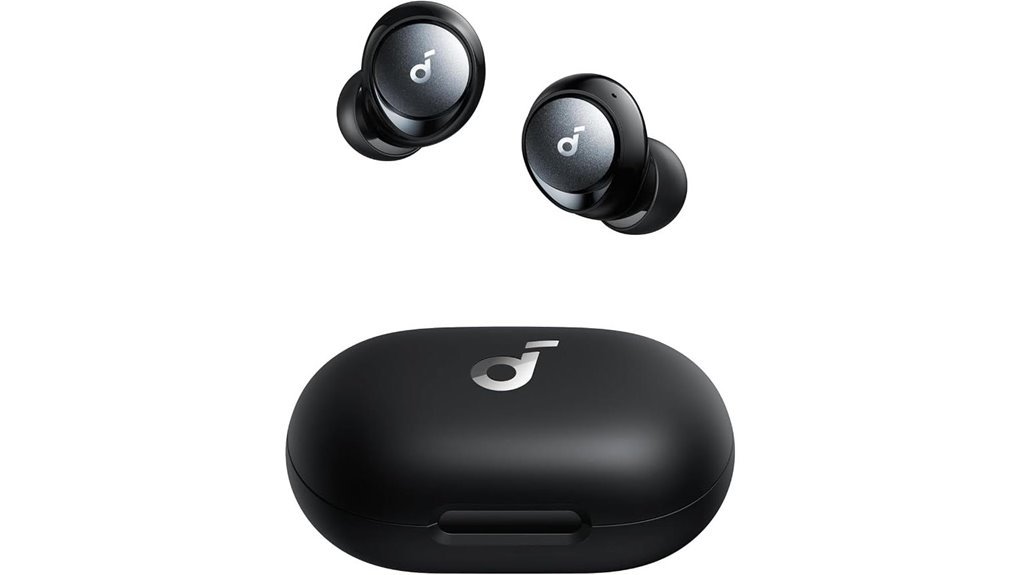
BEST OVERALL
The Soundcore Space A40 takes the top spot because it tackles the two biggest problems with earbuds under a helmet: bulk and noise. Its compact, stemless housing sits in the bowl of the ear instead of sticking out, leaving less for cheek pads to press against. Adaptive noise cancellation, which Anker says reduces noise by up to 98%, adjusts to your surroundings, and a transparency mode lets outside sound back in when you’re filtering through traffic or waiting at a light.
Each earbud weighs about 4.9 g and lasts up to 10 hours per charge (about 8 with ANC on), with 50 hours total from the case; a 10-minute charge adds about 4 hours. The case supports wireless charging, Bluetooth 5.2 multipoint keeps two devices connected, and LDAC enables higher-resolution audio on compatible Android phones. Water resistance is IPX4, which covers sweat and light rain but not heavy downpours or submersion.
Helmet Fit: Low-profile and stemless, making it the best match here for full-face and modular helmets with snug cheek pads.
Best For: Motorcycle and scooter riders who want wind and engine noise turned down on open roads, with a quick switch to transparency mode in traffic.
Skip It If: You regularly ride in heavy rain; the IPX8-rated TOZO NC9 and TOZO T10 are better protected.
Pros:
- Compact, stemless shape leaves more room under helmet padding.
- Adaptive ANC plus transparency mode covers both open-road noise and in-traffic awareness.
- Up to 50 hours total, about 4 hours from a 10-minute charge, wireless charging, and multipoint.
Cons:
- IPX4 is splash-level protection, not suited to downpours or submersion.
- Independent reviews are mixed on how strong the noise cancelling is.
- No wear sensors, and LDAC mode shortens battery life.
2. TOZO NC9 Hybrid ANC Earbuds – Best Battery Life with ANC
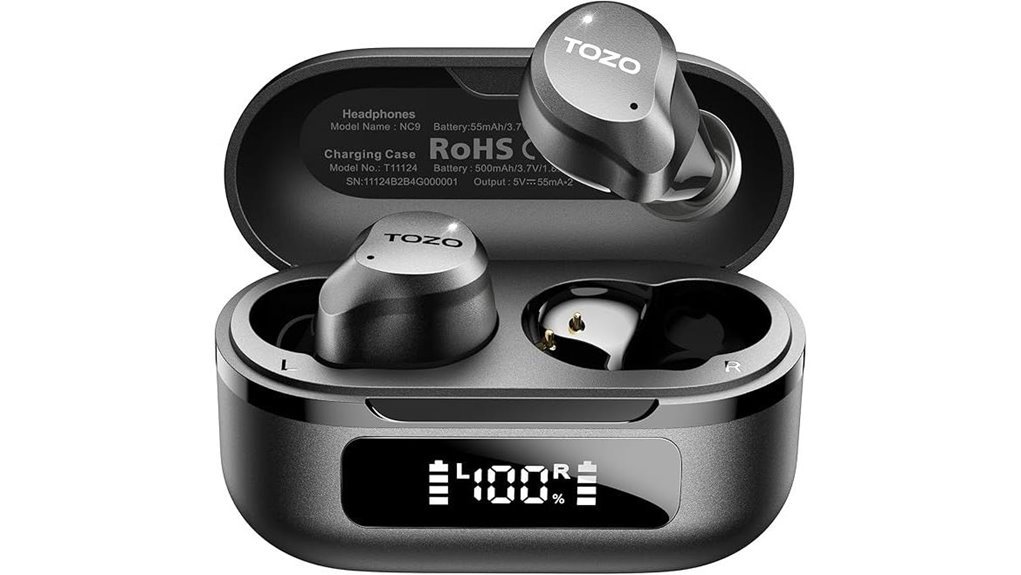
BEST BATTERY LIFE WITH ANC
The TOZO NC9 is built for long days on the road and unpredictable weather. Hybrid active noise cancellation, rated at up to 45 dB, helps take the edge off engine drone and road roar, while Transparent Mode lets surrounding sound through when you need to hear traffic. Ten-millimeter drivers tuned with TOZO’s OrigX Acoustic 2.0 lean toward bass, and the TOZO app’s 32 EQ presets let you flatten the sound or lift vocals for podcasts. Six microphones with environmental noise cancellation handle calls.
Battery life is the headline. TOZO lists up to 14 hours per charge with ANC off (10 with ANC on) and up to 59 hours total with the case (42 with ANC on), and an LED display on the case shows the remaining charge. The earbuds carry an IPX8 rating, connect over Bluetooth 5.3 with a listed range of about 15 meters, and come with six ear-tip sizes.
Helmet Fit: Stemless, rounded buds with six tip sizes. Fit under a tight full-face helmet depends on your ear shape, so test clearance before a long ride.
Best For: Riders who log long days or ride in wet weather and want ANC, a transparency mode, and the longest battery life among the ANC picks here.
Skip It If: You want a neutral sound without EQ tweaks or the smallest possible earbud for a very snug helmet.
Pros:
- Hybrid ANC (rated up to 45 dB) with Transparent Mode for traffic awareness.
- Longest battery life among the ANC picks: up to 59 hours total with ANC off.
- IPX8 rating, LED battery display, six ear-tip sizes, and 32 app EQ presets.
Cons:
- Bass-forward tuning may need EQ adjustment for a balanced sound.
- ANC cuts runtime from 14 to about 10 hours per charge.
- Amazon lists several NC9 versions; confirm the listing shows the LED-display model with these specs.
3. JLab Go Air Pop+ – Best Budget Pick
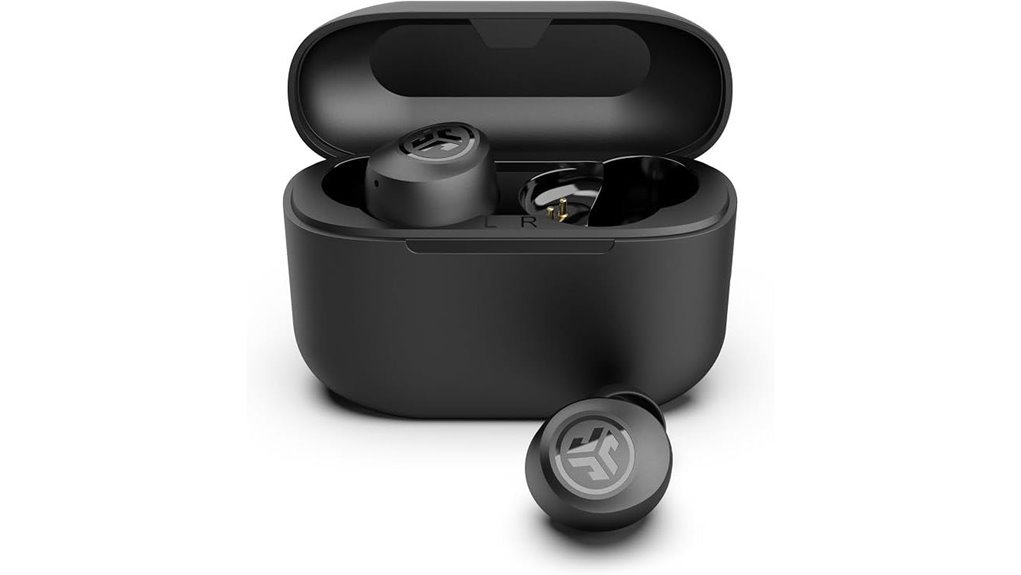
BEST BUDGET PICK
The JLab Go Air Pop+ (sold by JLab as the Go Pop+) shows that helmet-friendly earbuds don’t have to cost much. The tiny, stemless buds are among the smallest in this roundup, so they tuck under cheek pads more easily than most budget earbuds. Be Aware Mode lets ambient sound in for traffic awareness, and Dual Connect lets you use either earbud on its own.
JLab lists 9+ hours per earbud and 35+ hours total with the slim case, and 10 minutes of charging adds about an hour. Bluetooth 5.3 and Google Fast Pair with Find My Device support make pairing and locating a lost bud easier, while the JLab app offers EQ presets (JLab Signature, Balanced, and Bass Boost) plus custom controls. The earbuds are rated IPX4 for sweat and splashes, and three gel tip sizes are included.
Helmet Fit: Tiny and stemless, one of the easiest fits here for full-face and modular helmets.
Best For: Budget-minded riders, commuters, and riders with smaller ears who want an awareness mode and single-earbud listening.
Skip It If: You want active noise cancellation or protection beyond sweat and light rain.
Pros:
- Very small, stemless buds that fit easily under helmet padding.
- Be Aware Mode and single-earbud Dual Connect support situational awareness.
- 35+ hours total, Google Fast Pair with Find My Device, and app-based EQ and controls.
Cons:
- No active noise cancellation.
- IPX4 rating covers sweat and splashes only.
- Call noise reduction is basic compared with the multi-mic ANC picks.
4. TOZO T10 Wireless Earbuds – Best Waterproof Budget Pick
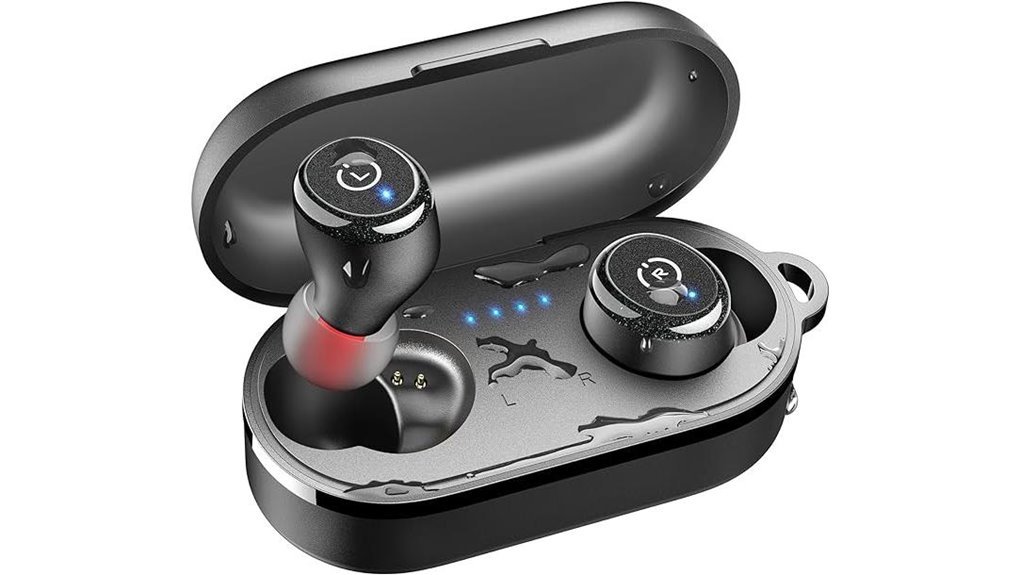
BEST WATERPROOF BUDGET PICK
The TOZO T10 is a long-running budget model, and its current app-supported edition adds upgrades that matter to riders. The compact, rounded buds sit close to the ear, and the IPX8 rating makes it one of the best-protected options here against rain and sweat. Eight-millimeter drivers with OrigX 2.0 tuning deliver bass-rich sound, and the TOZO app adds 32 EQ modes, white-noise tracks, and customizable touch controls, which helps limit accidental taps when a helmet goes on.
TOZO lists up to 15 hours per charge and 55 hours total with the case, which charges by USB-C or a wireless charging pad. Bluetooth 5.3 has a listed range of up to 15 meters, and several ear-cap sizes are included. The T10 has no ANC or transparency mode, so outside sound is blocked only by the ear-tip seal.
Helmet Fit: Compact and rounded with no stem, a good match for most full-face and modular helmets.
Best For: Riders who want waterproof, long-lasting earbuds on a budget and don’t need ANC.
Skip It If: You want a transparency mode for traffic awareness; the Space A40, NC9, and Go Air Pop+ offer one.
Pros:
- IPX8 rating and a compact, rounded shape suited to helmet use.
- Up to 15 hours per charge and 55 hours total, with wireless charging.
- App offers 32 EQ modes and customizable touch controls.
Cons:
- No active noise cancellation or transparency mode.
- Amazon lists several T10 versions; choose the app-supported edition to get these specs.
- The rounded shape may not seat securely in every ear, so try several tip sizes.
5. Soundcore P30i – Best Budget ANC

BEST BUDGET ANC
The Soundcore P30i brings adaptive noise cancellation to a budget price. Anker rates it at up to 42 dB, with automatic adjustment based on the noise around you, and a transparency mode lets traffic sounds through when you need them. Ten-millimeter drivers with BassUp tuning deliver punchy low end, and four microphones with AI processing handle calls.
Soundcore lists 10 hours per charge (6 with ANC on) and 45 hours total (25 with ANC on), and a 10-minute charge adds about 2 hours. Bluetooth 5.4 handles pairing, the earbuds are rated IP54 for dust and splashes, and the case doubles as a phone stand, which is handy at a café stop but irrelevant on the road.
Helmet Fit: Stem-style design. It suits open-face, half, and bicycle helmets best; in snug full-face helmets, the stems can press against cheek pads.
Best For: Budget-minded commuters who want ANC and a transparency mode and ride with an open-face or roomier helmet.
Skip It If: You wear a tight full-face helmet or want wireless charging.
Pros:
- Adaptive ANC (rated up to 42 dB) plus transparency mode at a budget price.
- Up to 45 hours total, IP54 dust and water resistance, and Bluetooth 5.4.
- Four-mic AI call processing and a case that doubles as a phone stand.
Cons:
- Stems may press on cheek pads in snug full-face helmets.
- ANC drops runtime to 6 hours per charge and 25 hours total.
- No wireless charging.
6. JBL Vibe Beam – Best for Quick Stops and Chats
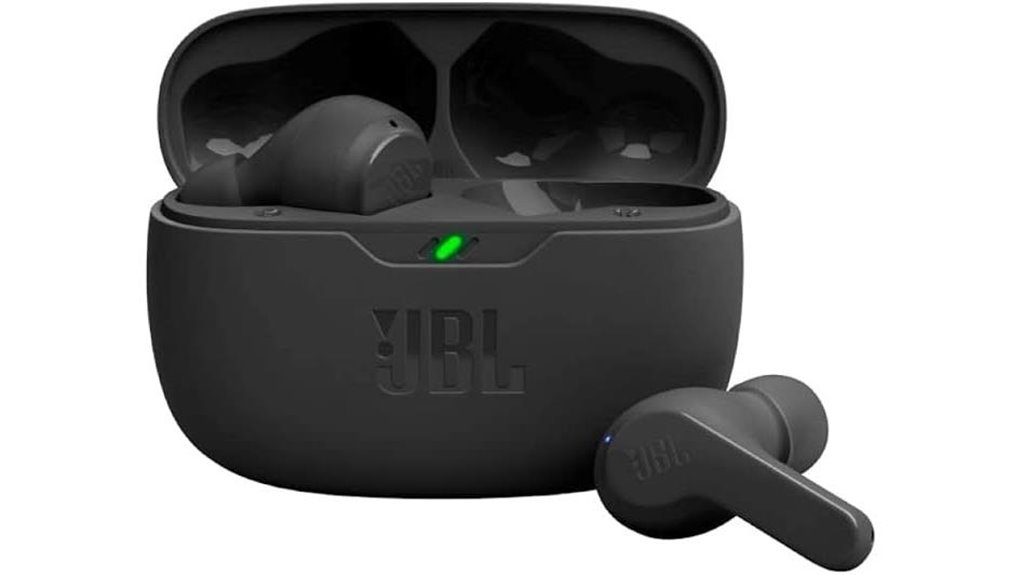
BEST FOR QUICK STOPS AND CHATS
The JBL Vibe Beam pairs JBL Deep Bass Sound from 8mm drivers with Smart Ambient features that suit riders. Ambient Aware keeps music playing while letting surrounding sound in, and TalkThru lowers the music so you can chat at a fuel stop without taking the earbuds out. VoiceAware lets you set how much of your own voice you hear on calls.
JBL lists 8 hours per charge and 32 hours total, with a 10-minute speed charge adding about 2 hours. The earbuds are IP54 dust- and water-resistant, but the case is only IPX2, so keep it dry. Bluetooth 5.2, touch controls, three ear-tip sizes, and JBL Headphones app support round out the package. There’s no active noise cancellation.
Helmet Fit: Stick-style (stem) design, most comfortable with open-face, half, and bicycle helmets.
Best For: Riders who want brand-name bass, dust resistance, and flexible ambient modes for stops and conversations.
Skip It If: You need ANC for highway noise or wear a snug full-face helmet.
Pros:
- Ambient Aware and TalkThru support awareness and quick conversations.
- IP54 dust and water resistance on the earbuds.
- Up to 32 hours total, with about 2 hours from a 10-minute speed charge.
Cons:
- No active noise cancellation.
- Charging case is rated only IPX2.
- The stick design can press on padding in snug full-face helmets.
7. Soundcore P20i – Best Bass on a Budget
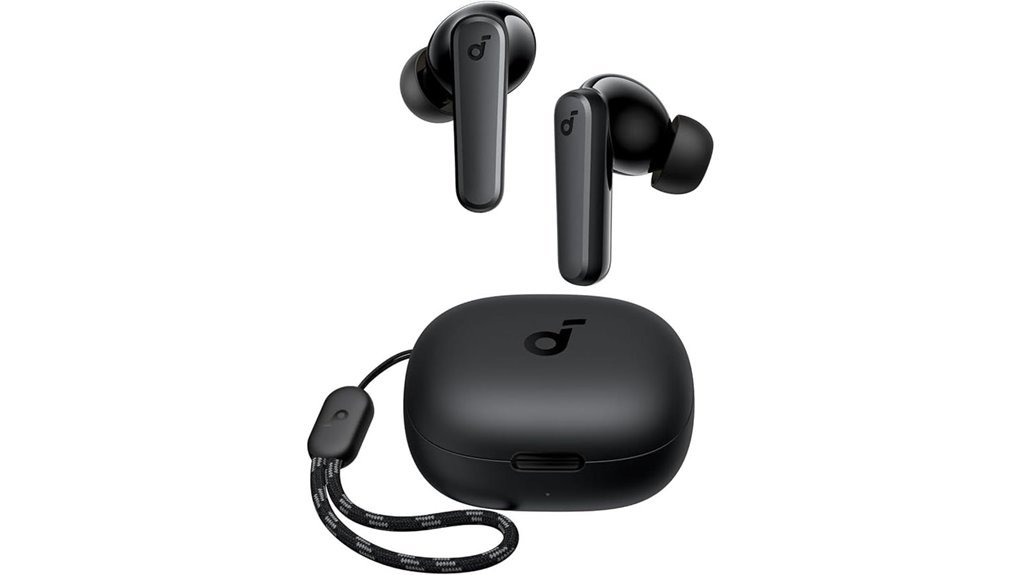
BEST BASS ON A BUDGET
The Soundcore P20i is a low-cost way to get big, bass-forward sound on your commute. Oversized 10mm drivers push strong low end, and the Soundcore app offers 22 EQ presets, customizable controls, and a Find My Earbuds tone to help locate a dropped bud. Two microphones with AI voice pickup handle calls.
Soundcore lists 10 hours per charge and 30 hours total, and a 10-minute charge adds about 2 hours. The earbuds are IPX5 water-resistant against sweat and rain, connect over Bluetooth 5.3, and ship with a compact case that has a lanyard attached. There’s no ANC or transparency mode.
Helmet Fit: Stem-style design, best with open-face, half, and bicycle helmets.
Best For: Riders on a tight budget who want bass-heavy sound and app customization for everyday commuting.
Skip It If: You need an awareness mode or wear a tight full-face helmet.
Pros:
- 10mm drivers deliver bass-forward sound.
- IPX5 rating handles sweat and rain.
- 22 EQ presets, customizable controls, and Find My Earbuds in the app.
Cons:
- No ANC or transparency mode.
- Stems may press on cheek pads in snug helmets.
- Bass emphasis can crowd vocals without EQ adjustment.
8. Skullcandy Smokin’ Buds – Simplest No-App Setup
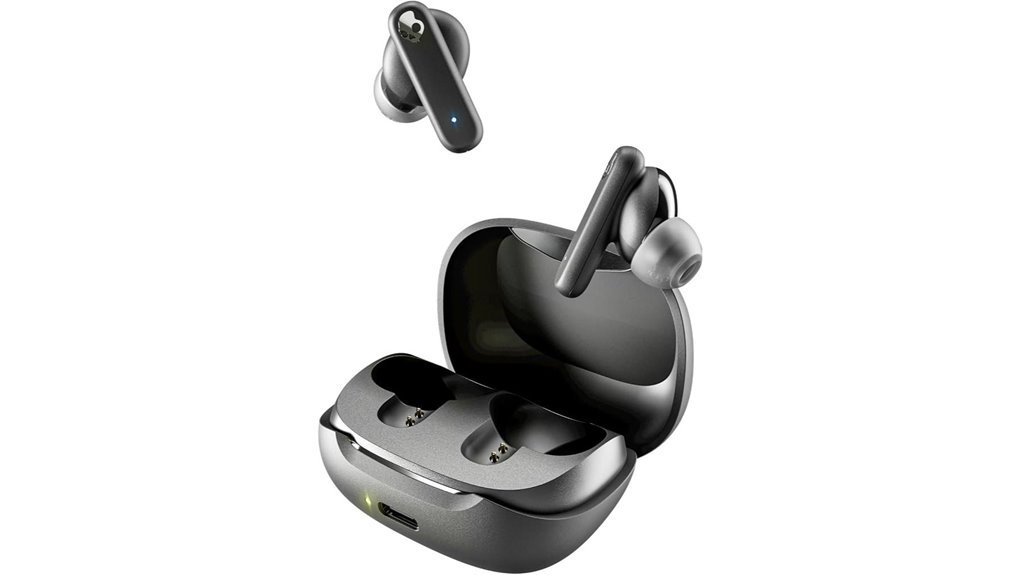
SIMPLEST NO-APP SETUP
Skullcandy’s Smokin’ Buds keep things simple, which suits riders who don’t want another app. Tapping either earbud four times cycles through Music, Movie, and Podcast EQ modes, and touch controls handle volume, calls, and your phone’s voice assistant. You can use either earbud solo, and the buds turn on and connect automatically when you open the case.
Skullcandy lists 8 hours per charge and 20 hours total, with a 10-minute rapid charge adding about 2 hours. An IPX4 rating covers sweat and light rain, each earbud has its own microphone for calls, and the noise-isolating fit blocks outside sound passively. There’s no ANC or ambient mode.
Helmet Fit: Compact buds; check clearance in snug full-face helmets before a long ride.
Best For: Riders who want straightforward earbuds with solo-bud listening and no app to manage.
Skip It If: You want ANC, a transparency mode, or more than 20 hours of total battery life.
Pros:
- Simple tap controls with three built-in EQ modes, no app needed.
- Either earbud works solo, with automatic on and connect.
- IPX4 sweat and water resistance and a 10-minute rapid charge.
Cons:
- No ANC or ambient mode.
- 20 hours of total battery life is the shortest in this list.
- IPX4 protection is meant for sweat and light rain, not heavy weather.
9. PocBuds Earhook Earbuds – Best for Bicycle Helmets and Workouts
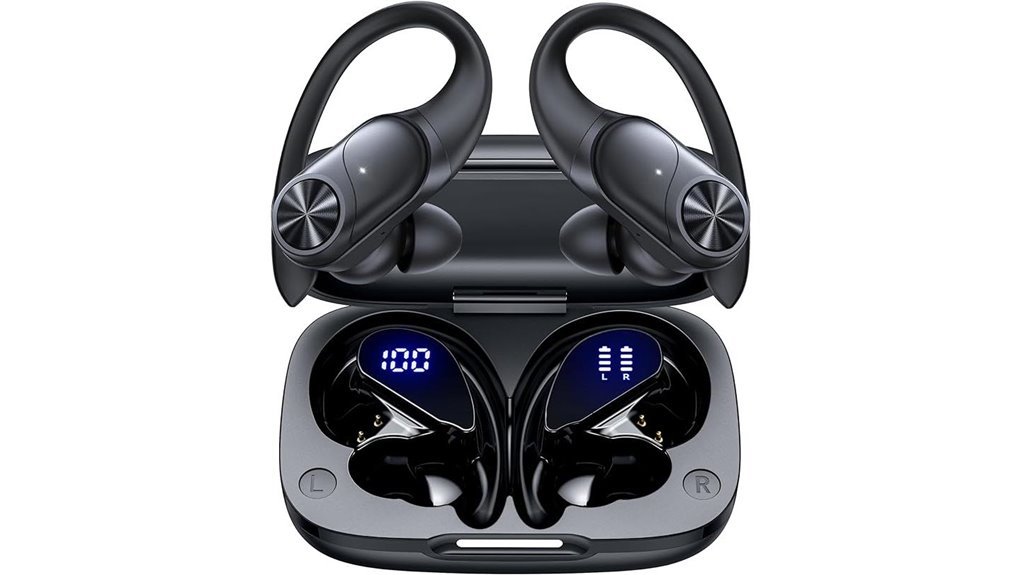
BEST FOR BICYCLE HELMETS AND WORKOUTS
When your ears aren’t enclosed by a full-face shell, the PocBuds’ earhook design adds stability that bud-only designs can’t match. Flexible over-ear hooks and multiple ear-tip sizes keep the buds planted on rough roads, trails, and during workouts, and a physical button instead of touch panels is easier to press with gloves. The listing rates them IPX7, which covers sweat, rain, and brief immersion.
According to the listing, each earbud runs up to 8 hours per charge, with up to 80 hours total from a case that has a dual LED battery display and supports USB-C or Qi wireless charging (pad not included). Thirteen-millimeter drivers, built-in microphones, Bluetooth 5.3 with a listed 30-foot range, auto on/connect, and a single-earbud mode round out the features.
Helmet Fit: Over-ear hooks work well with bicycle, half, and open-face helmets but can catch or shift when you pull on a full-face or modular helmet.
Best For: Cyclists, e-bike and scooter riders with open helmets, and anyone who wants hook-secured earbuds for workouts.
Skip It If: You ride with a full-face helmet or want ANC or a transparency mode.
Pros:
- Earhooks and multiple tip sizes provide a stable, secure fit.
- IPX7 rating, glove-friendly button controls, and a single-earbud mode.
- Up to 80 hours total per the listing, with a battery display and wireless charging support.
Cons:
- Earhooks can interfere with full-face and modular helmets.
- Wireless charging pad is not included.
- Specs come from a smaller brand’s listing, with little independent testing available.
How to Choose Helmet Earbuds in 2026
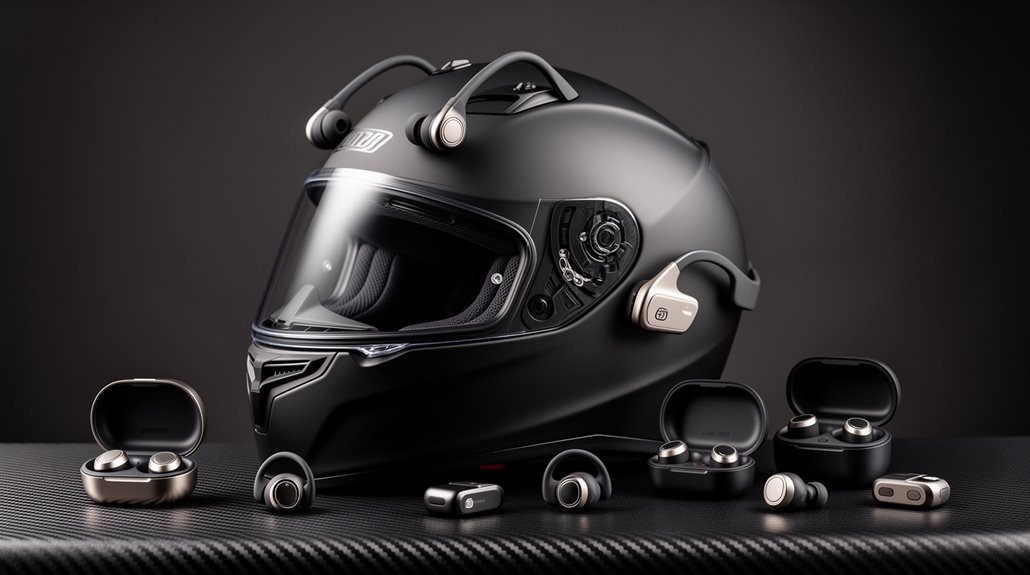
The right helmet earbuds depend on your helmet, your routes, and your local laws. Start with how the earbuds fit under your helmet, then decide how much noise control and situational awareness you need, and finish by checking water resistance, battery life, and how you’ll control them with the helmet on.
Helmet Compatibility
Fit under the helmet comes first. Low-profile, stemless earbuds sit flush in the ear and leave the most room for cheek pads and liners, which makes them the safest choice for full-face and modular helmets. Stem designs can press on or catch against padding in snug helmets, and over-ear hooks can shift when you pull a full-face helmet on, so those styles are easier to live with under open-face, half, and bicycle helmets. Lighter earbuds reduce pressure on long rides, and several ear-tip sizes help each bud stay seated as the helmet goes on and off. A simple routine helps: insert the earbuds first, spread the cheek pads as you slide the helmet on slowly, and take the helmet off before removing the earbuds. Interior shape, padding, and speaker-pocket depth vary by model and size, so test the fit with your own helmet before a long ride.
Audio Quality
At speed, wind and road noise mask detail, so a good seal often matters more than any single spec. Larger drivers and bass-forward tuning can help music cut through, but driver size alone doesn’t guarantee better sound. An app with EQ presets lets you trim bass or lift vocals for podcasts and navigation prompts. If you take calls on the move, look for multi-microphone noise reduction, and expect call quality to suffer in heavy wind with any earbud.
Noise Control and Awareness Modes
Noise control on helmet earbuds is a balancing act. Active noise cancellation reduces steady engine drone and road roar so you can listen at a lower volume; the manufacturer ratings in this list reach 45 dB (TOZO NC9) and 42 dB (Soundcore P30i), though real results depend on fit and your helmet. Transparency or ambient modes matter just as much, because they let horns, sirens, and traffic back in. Earbuds without either mode rely on passive isolation from the ear tips, which you can only reduce by removing an earbud. Whatever you choose, situational awareness comes first.
Comfort and Fit
Comfort gets tested on longer rides, when the helmet presses on everything around your ears. Ergonomic shells that follow the ear’s contours, multiple ear-tip sizes, and low weight all reduce hot spots. Earhooks and fins add stability for cycling and workouts but take up space under a snug helmet. Sweat builds up quickly under a helmet, so look for at least an IPX4 rating even if you rarely ride in the rain.
Battery Life
Match battery life to your longest typical ride. Per-charge runtime matters more than case totals when you can’t stop to recharge; the picks here list 8 to 15 hours per charge with ANC off, and ANC shortens that. A case with 30 or more hours of total playtime covers several days of commuting, fast charging (often about 2 hours of playback from 10 minutes) helps before a last-minute ride, and a battery display on the case, like those on the TOZO NC9 and PocBuds, makes planning easier. Treat all figures as manufacturer maximums, since volume, ANC use, and cold weather reduce real runtime.
Weather Resistance and IP Ratings
Check the IP rating, not just the word “waterproof.” IPX4 means protection from splashing water, which covers sweat and light rain. IPX5 adds resistance to water jets, IPX7 covers temporary immersion up to 1 meter for 30 minutes, and IPX8 means the manufacturer rates the earbuds for continuous immersion under conditions it specifies. Immersion ratings don’t automatically include jet protection, and a first digit, as in IP54, adds a dust rating. Ratings usually cover the earbuds only, since charging cases are often less protected. Seals can also wear over time, so dry your earbuds after wet rides either way.
Connectivity and Controls With a Helmet On
Controls are where helmet use differs most from everyday listening. Once a full-face helmet is on, you can’t reach touch panels, and pulling a helmet on can trigger accidental taps. Plan to control audio from your phone, a voice assistant, or a handlebar remote, and use the companion app to remap or limit touch controls where supported; the Soundcore, TOZO, and JLab apps all offer control customization. Gloves also make touch panels unreliable, so a physical button, like the one on the PocBuds, is easier to use when your ears are accessible. Most picks here use Bluetooth 5.2 or newer, which helps with stable, efficient connections, but real range depends on where your phone rides. Multipoint support, offered on the Soundcore Space A40, is useful if you pair both a phone and a second device.
Before You Buy: Quick Checklist
- Check your local law on wearing earbuds while riding.
- Match the design to your helmet: stemless for full-face and modular, stem or earhook styles for open-face, half, and bicycle helmets.
- Want awareness in traffic? Choose a transparency or ambient mode, or single-earbud support.
- Ride in rain? Aim for IPX5 or higher, and IPX7 or IPX8 for heavy weather.
- Compare per-charge battery life with your longest ride.
- Plan how you’ll control audio once the helmet is on.
Frequently Asked Questions
Can Helmet Earbuds Be Used Legally While Riding in My State or Country?
It depends on where you ride. Some places ban earphones in both ears while you operate a vehicle; California Vehicle Code §27400, for example, applies that rule to motor vehicles and bicycles, with limited exceptions. Other jurisdictions allow a single earbud or helmet communication systems, and rules can differ for motorcycles, bicycles, and learner riders. Check your current state or national vehicle code before riding with any earbuds in.
How Do Helmet Earbuds Affect Hearing Protection and Awareness of Surrounding Traffic?
Any sealed in-ear earbud reduces how much outside sound you hear, and music layered over wind noise can mask horns, sirens, and approaching vehicles. Transparency and ambient modes, found on the Soundcore Space A40, TOZO NC9, Soundcore P30i, JBL Vibe Beam, and JLab Go Air Pop+, help but don’t make riding with earbuds risk-free. Consumer earbuds like these also aren’t rated hearing protectors and carry no noise reduction rating (NRR). Keep the volume low, favor awareness modes in traffic, and use properly rated hearing protection if your goal is protecting your hearing from wind noise.
Can I Use Just One Earbud While Riding?
Often, yes. The JLab Go Air Pop+ (Dual Connect) and Skullcandy Smokin’ Buds let you use either earbud on its own, and the PocBuds listing includes a single-earbud mode. For other models, check the listing or manual. Single-ear listening keeps one ear open to traffic and may be allowed where two-ear use isn’t, but confirm your local law first.
Do Noise-Cancelling Earbuds Block Wind Noise Under a Helmet?
Partly. ANC is most effective against steady, low-frequency sound such as engine drone and road hum, while turbulent wind noise at speed is harder to cancel. Results vary with your helmet, visor, and ear-tip seal, and a snug tip fit often matters as much as the ANC rating. In traffic, switch to transparency mode rather than using ANC to shut out the road.
What Helmet Types and Sizes Are Compatible With These Earbuds?
In-ear earbuds don’t install into a helmet, so compatibility comes down to how far each bud sticks out of your ear and how much room your helmet leaves around it. Full-face and modular helmets with snug cheek pads suit low-profile, stemless buds such as the Soundcore Space A40, TOZO NC9, TOZO T10, and JLab Go Air Pop+. Open-face, half, and bicycle helmets leave more space, so stem designs (Soundcore P30i, Soundcore P20i, JBL Vibe Beam) and the earhook PocBuds are easier to live with. If your helmet has built-in speaker pockets, a helmet speaker or communicator kit is an alternative to earbuds altogether.
How Should Helmet Earbuds Be Cleaned After Exposure to Sweat, Rain, or Dust?
Clean them soon after a sweaty, wet, or dusty ride. Wipe the shells with a soft, slightly damp microfiber cloth, keeping moisture away from speaker mesh, microphone openings, and charging contacts, and use a dry, soft brush to loosen dust. Remove and wash silicone tips only if the manufacturer allows it, then let everything dry completely before reattaching tips or returning the earbuds to the case. Skip harsh cleaners and don’t blast compressed air into the speaker openings. Keep the charging case dry, too, since cases are usually less protected than the earbuds; the JBL Vibe Beam’s case, for example, is rated only IPX2.
Can Replacement Earbuds or Charging Cases Be Purchased Separately?
Often, yes, but it depends on the brand and model. Some manufacturers and authorized retailers sell single replacement earbuds or charging cases, which may need re-pairing after they arrive, and warranty coverage can lower the cost or cover it entirely. Before ordering, confirm the exact model and version (TOZO, for example, sells several NC9 and T10 versions), your region, and which accessories are included.
Final Verdict: Which Helmet Earbuds Should You Buy?
For most riders, the Soundcore Space A40 is the best all-round choice: its stemless, low-profile fit suits snug helmets, and adaptive ANC plus a transparency mode covers both open-road noise and traffic awareness. Choose the TOZO NC9 for longer battery life and IPX8 protection with ANC, the JLab Go Air Pop+ if budget matters most, or the TOZO T10 for waterproofing without ANC. Stem designs like the Soundcore P30i, JBL Vibe Beam, and Soundcore P20i fit best with open-face and bicycle helmets, the Skullcandy Smokin’ Buds keep setup simple, and cyclists who want extra stability should look at the earhook PocBuds.
Our Top Pick for Most Riders
Soundcore Space A40: low-profile fit, adaptive ANC, a transparency mode, and up to 50 hours of total battery life.
Whichever pair you choose, keep the volume low, use awareness modes in traffic, and follow your local rules on earbuds while riding.