As an Amazon Associate I earn from qualifying purchases.
If you’re just starting with welding, choosing the right Hobart machine can save you time, frustration, and money. These seven Hobart models cover the main beginner paths: simple MIG and flux-core welding, portable stick repair, aluminum-ready MIG setups, heavier shop welding, and multi-process growth. You’ll learn which models are easiest to use, which give you more room to grow, and which make sense if you want to weld aluminum or try TIG later on.
This guide focuses on beginner-friendly buying decisions: available power, welding process, material thickness, portability, aluminum readiness, included accessories, and long-term value. Match those points to your projects first, then pick the machine that fits your garage, shop, farm repair, or hobby fabrication work.
Quick Verdict
Best easy starter: Choose the Hobart Handler 140EZ if you want simple 120V MIG and flux-core welding for light garage projects.
Best one-machine upgrade: Choose the Hobart Multi-Handler 200 if you want MIG, flux-core, DC TIG, and stick capability in one portable unit.
Best shop power: Choose the Hobart IronMan 240 models if you have 240V power, a dedicated workspace, and heavier MIG projects ahead.
Top Picks
|
Category |
Product |
Score |
|---|---|---|
|
🏆 Best Starter |
92 |
|
|
🎯 Best Multiprocess |
90 |
|
|
💼 Best Portable Stick |
84 |
|
|
🚀 Best Heavy-Duty |
91 |
|
|
🎨 Best for Aluminum |
93 |
|
|
💰 Best for Power-to-Price |
89 |
|
|
⭐ Best All-Rounder |
90 |
How We Picked These Welders
You want a welder that matches the projects you plan to do and the space you have. We focused on practical beginner concerns: setup ease, MIG and flux-core usability, process flexibility, portability, amperage range, duty cycle expectations, spool-gun readiness, included accessories, brand support, and overall value.
Each pick solves a different beginner problem. Some models are easier to learn on standard household power. Others give you more welding processes, better aluminum support, or heavier shop capability. The goal is to help you avoid buying too little machine for your projects or too much machine for your workspace.
Before You Choose
- Check your power: 120V machines are easier for garages, while 240V opens up thicker metal and longer welding sessions.
- Pick the process first: MIG and flux-core are easier for many beginners, stick is useful for outdoor repair work, and TIG gives more control but takes more practice.
- Plan for aluminum: Aluminum MIG usually works better with a compatible spool gun, pure argon shielding gas, and the correct contact tips and drive setup.
- Think about weight: A lightweight unit is easier to carry, while a heavy shop welder usually gives more output and stability.
Spec and Safety Note
Before you buy, confirm the current model number, input voltage, plug type, duty cycle, included accessories, and spool-gun compatibility on the active Amazon listing and the Hobart manual. Wear proper PPE, use the right shielding gas and polarity, and make sure your circuit can safely support the welder you choose.
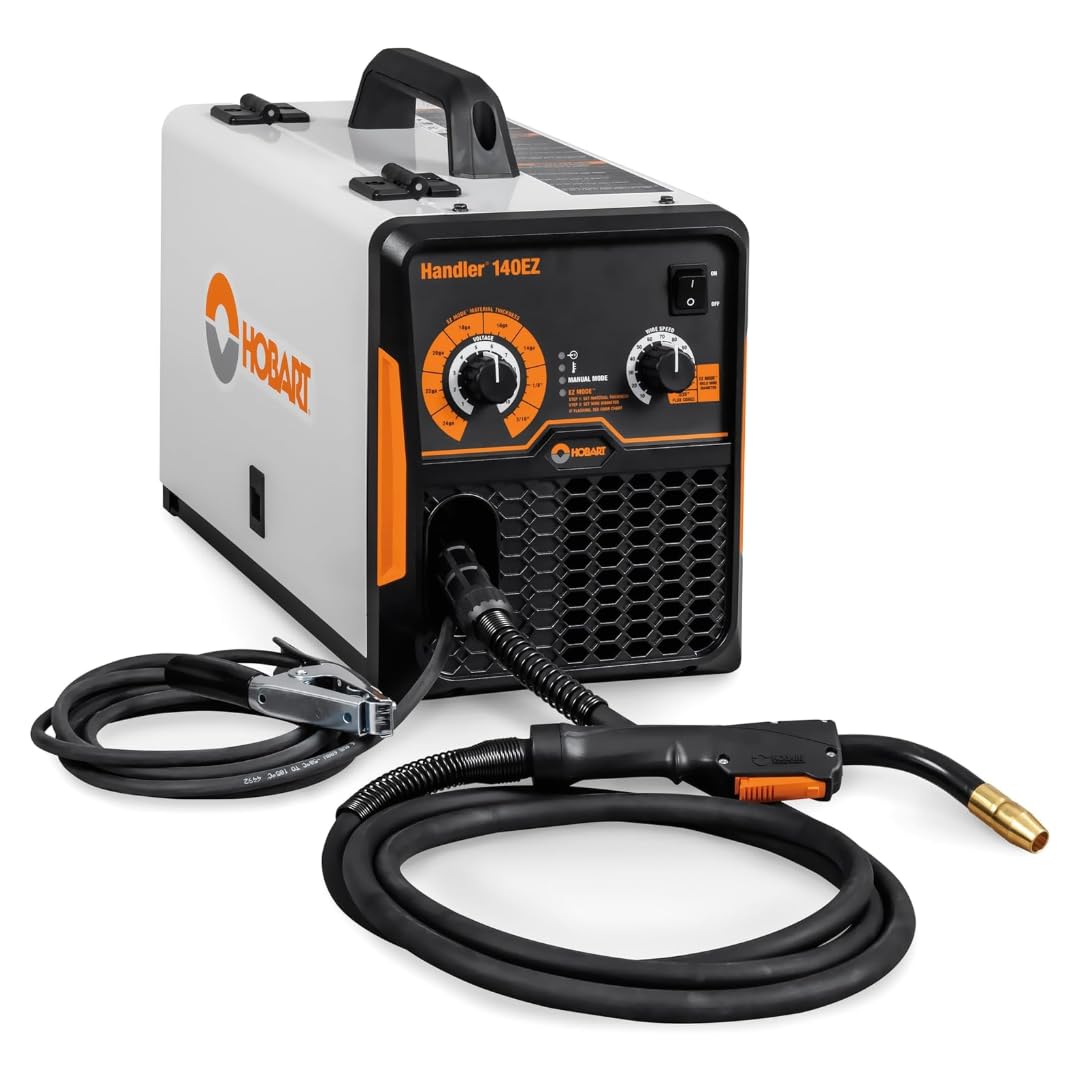
If you want a user-friendly welder for your first garage projects, this is a solid place to start. You get a compact 120V unit that handles light sheet metal, small repairs, hobby projects, and basic fabrication without requiring a dedicated 240V setup.
EZ Mode helps reduce setup guesswork when you are learning how voltage, wire speed, and material thickness affect the bead. For aluminum work, do not assume every package includes the same accessories. Confirm the current listing, compatible spool-gun setup, shielding gas, and contact tips before buying.
Why You’ll Like It
The biggest advantage is simplicity. Beginners often lose time trying to match settings to the material. EZ Mode helps make the first few projects less intimidating, while the 120V input keeps the machine easy to use in many home garages.
Who Should Buy This
Choose the Handler 140EZ if you want a first MIG/flux-core machine for light repairs, small fabrication, hobby projects, and basic garage welding.
Who Should Avoid This
Skip it if you expect to weld thick steel regularly, need frequent aluminum welding, or want stick and TIG capability. A 240V or multi-process model will give you more headroom.
What People Say
Buyer feedback commonly points to easy setup, straightforward controls, and dependable performance for light-duty projects. Some users still note a learning curve when fine-tuning settings for different metals, so plan on running test beads on scrap before welding your final workpiece.
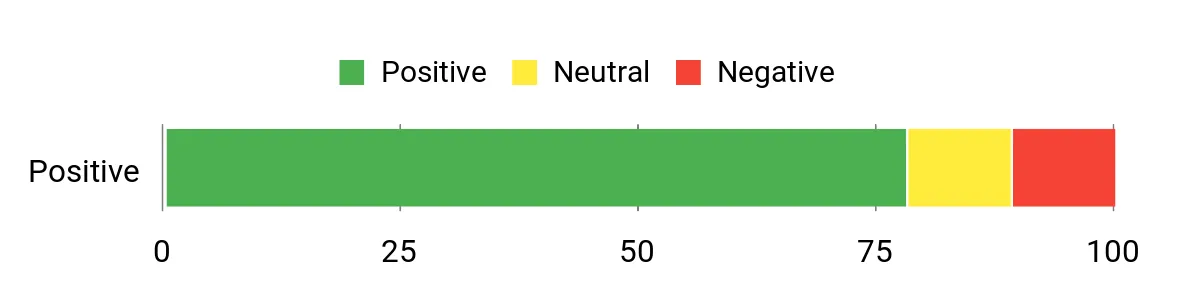
Overall Sentiment: Positive

Ease Of Use
|
Feature |
Ease Level |
|---|---|
|
Setup (EZ Mode) |
Very Easy |
|
120V Garage Use |
Easy |
|
Aluminum Setup |
Confirm compatible accessories first |
|
Portability |
Easy to Move |
Expertise Level
Beginner to Intermediate
Key Benefits
- EZ Mode for fast, beginner-friendly setup
- 30–140 A range for thin to light-gauge work
- Standard 120V input for many home garages
- Good fit for light repairs, hobby metal work, and practice beads
- Compact design compared with heavier shop welders
- Aluminum may be possible with the correct compatible setup, which should be confirmed before purchase
Check Current Amazon Availability

If you want one machine that covers a lot of ground as you learn, this is a great pick. You can start with MIG and flux-core, then move into stick or DC TIG without buying separate welders right away.
It’s handy for everyday shop work like metal repairs, brackets, gates, and auto body touchups, and it gives you more flexibility than a basic starter MIG. The MVP plug setup helps if you need to run on 120V in the garage now and 240V later for tougher jobs. For most beginners who want one flexible machine that will not feel limiting too quickly, this is one of the strongest choices here.
Why You’ll Like It
The Multi-Handler 200 gives you a broader learning path. You can begin with easier wire-feed welding and explore stick or DC TIG as your skill improves. That makes it a smart upgrade if you do not want to replace your first welder quickly.
Who Should Buy This
Choose it if you want a compact shop machine for mixed repairs, light fabrication, automotive work, brackets, gates, and general garage projects.
Who Should Avoid This
Skip it if you only need basic stick welding or if you want a dedicated heavy-duty MIG for frequent thick steel work. The IronMan 240 models are better for that role.
What People Say
Buyer feedback commonly highlights versatility, easy setup, steady weld quality, and useful included starter accessories. Some users wish more TIG accessories were included, so check the current package contents before buying if TIG is a priority.
Overall Sentiment: Positive

Ease Of Use
|
Feature |
Ease Level |
|---|---|
|
Setup (Color LCD & Quick Select) |
Easy |
|
Switching Processes (MIG/Stick/TIG/Flux) |
Easy |
|
Dual-Voltage Use |
Easy after setup |
|
TIG Accessories |
Confirm current package contents |
Expertise Level
Beginner to Intermediate
Key Benefits
- Multiprocess design for MIG, flux-core, stick, and DC TIG
- 200 A class output for a wide range of shop projects
- Color LCD and Quick Select controls for easier setup
- MVP dual-voltage support for 120V and 240V power options
- Good choice if you want one welder that can grow with your skills
- Useful for garage repairs, brackets, gates, and light fabrication
Check Current Amazon Availability
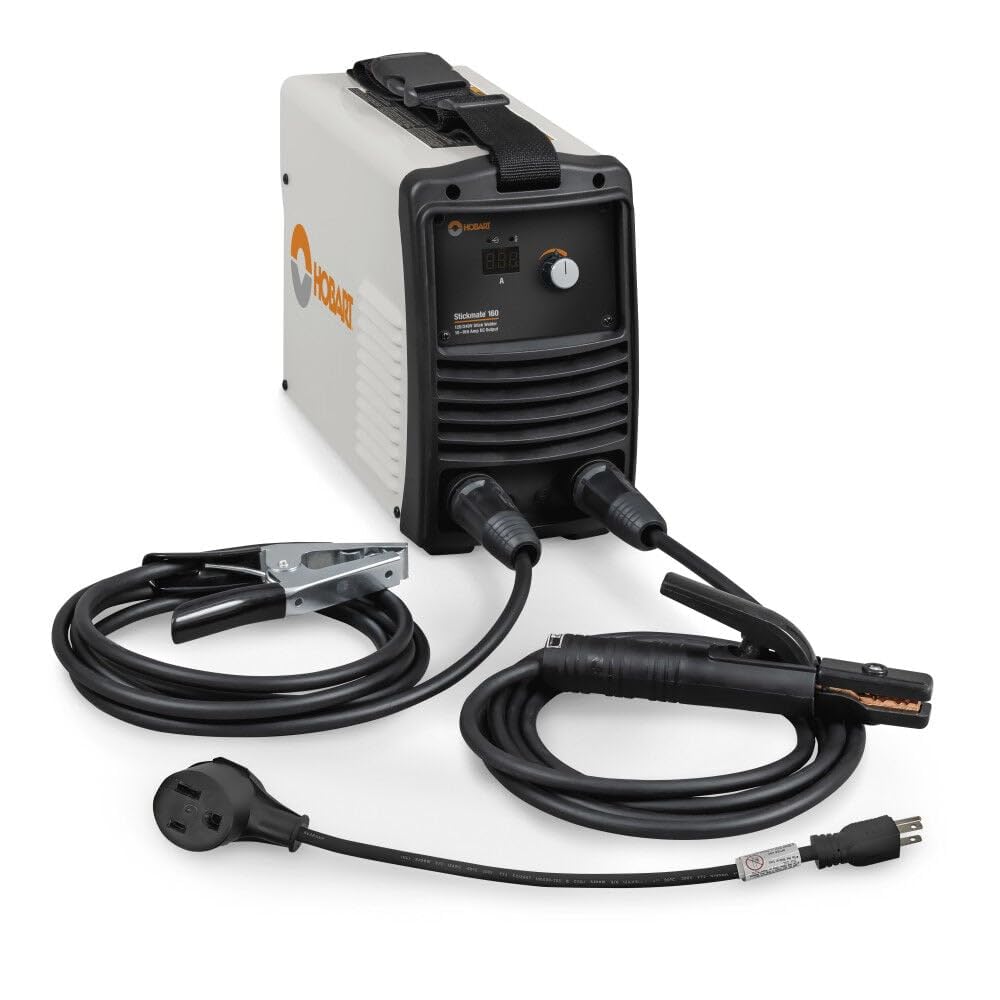
If you want a no-nonsense stick welder that’s easy to move around, this is worth a look. You can use it for repair jobs where wind, surface condition, and portability matter more than clean indoor MIG convenience.
It makes sense for routine maintenance, farm fixes, metal art, and weekend fabrication. Stick welding does take more practice than MIG for many beginners, but this type of machine is rugged, simple, and practical when you need to work outside or away from a full shop setup.
Why You’ll Like It
The Stickmate 160 keeps things simple. Stick welding works well outdoors and on repair work where shielding gas can be inconvenient. It is a focused pick for people who want a portable repair welder rather than a multi-process shop machine.
Who Should Buy This
Choose it if you want a lightweight machine for maintenance, farm repairs, outdoor fixes, and stick-only welding practice.
Who Should Avoid This
Skip it if you want MIG, flux-core, TIG, or aluminum spool-gun welding. This is a focused stick welder, not an all-in-one machine.
What People Say
Buyer feedback often highlights portability, simple controls, and useful dual-voltage flexibility. The main limitation is that it is intentionally focused on stick welding, so buyers expecting MIG-style convenience should choose a Handler or Multi-Handler model instead.
Overall Sentiment: Mixed

Ease Of Use
|
Feature |
Ease Level |
|---|---|
|
Setup (Dual-voltage adapter) |
Easy |
|
Portability |
Easy |
|
Amperage control |
Easy |
|
Outdoor Repair Use |
Easy with practice |
|
Learning Stick Technique |
Moderate |
Expertise Level
Beginner to Intermediate
Key Benefits
- Dual-voltage flexibility with the proper adapter setup
- Portable design for repair jobs away from a fixed shop
- Simple stick-welding focus with fewer process settings to manage
- Useful for outdoor maintenance, farm repairs, and rugged fixes
- Good way to practice stick technique without buying a larger welder
- Check the current listing for exact package weight and included leads
Check Current Amazon Availability

If you want a MIG machine that can carry you from weekend projects to heavier shop work, the IronMan 240 is built for that role. You get a broad output range and more control than smaller starter machines, so you can fine-tune the arc for thinner panels or thicker fabrication jobs.
It’s a hefty, shop-focused unit with running gear and cylinder support, so plan to keep it in a garage, farm shop, or fabrication area rather than carrying it from place to place. If you are starting out but want something that will not feel limiting as your projects get bigger, this is a strong long-term pick.
Why You’ll Like It
The IronMan 240 gives you more control and output than smaller 120V starter machines. It makes sense when your projects are moving beyond small repairs and into thicker material, longer welds, or a dedicated workshop setup.
Who Should Buy This
Choose it if you want a serious MIG welder for shop work, farm repairs, fabrication, and heavier steel projects.
Who Should Avoid This
Skip it if you need a carry-anywhere welder or only have standard 120V power. Its size, weight, and shop-focused setup make it better for a fixed workspace.
What People Say
Buyer feedback commonly praises the strong arc, fine-tuning control, and heavier shop capability. The main caution is practicality: this is not the easiest choice for small spaces or users who need to carry a welder between jobs.
Overall Sentiment: Positive

Ease Of Use
|
Feature |
Ease Level |
|---|---|
|
Initial setup (gas, spool hub, 240V power) |
Moderate |
|
Wire feed and drive roll adjustments |
Easy |
|
Voltage and feed tuning |
Moderate |
|
Changing wire spools |
Easy |
|
Moving the unit |
Hard |
Expertise Level
Beginner to Professional
Key Benefits
- Broad 30–280 A range for light to thicker steel projects
- Fine voltage and wire-feed control for better arc tuning
- Designed for heavier MIG work in a dedicated shop
- Spool-gun ready for aluminum when paired with the correct compatible setup
- Built-in running gear and cylinder rack for shop convenience
- Good long-term choice if your projects are likely to grow
Check Current Amazon Availability

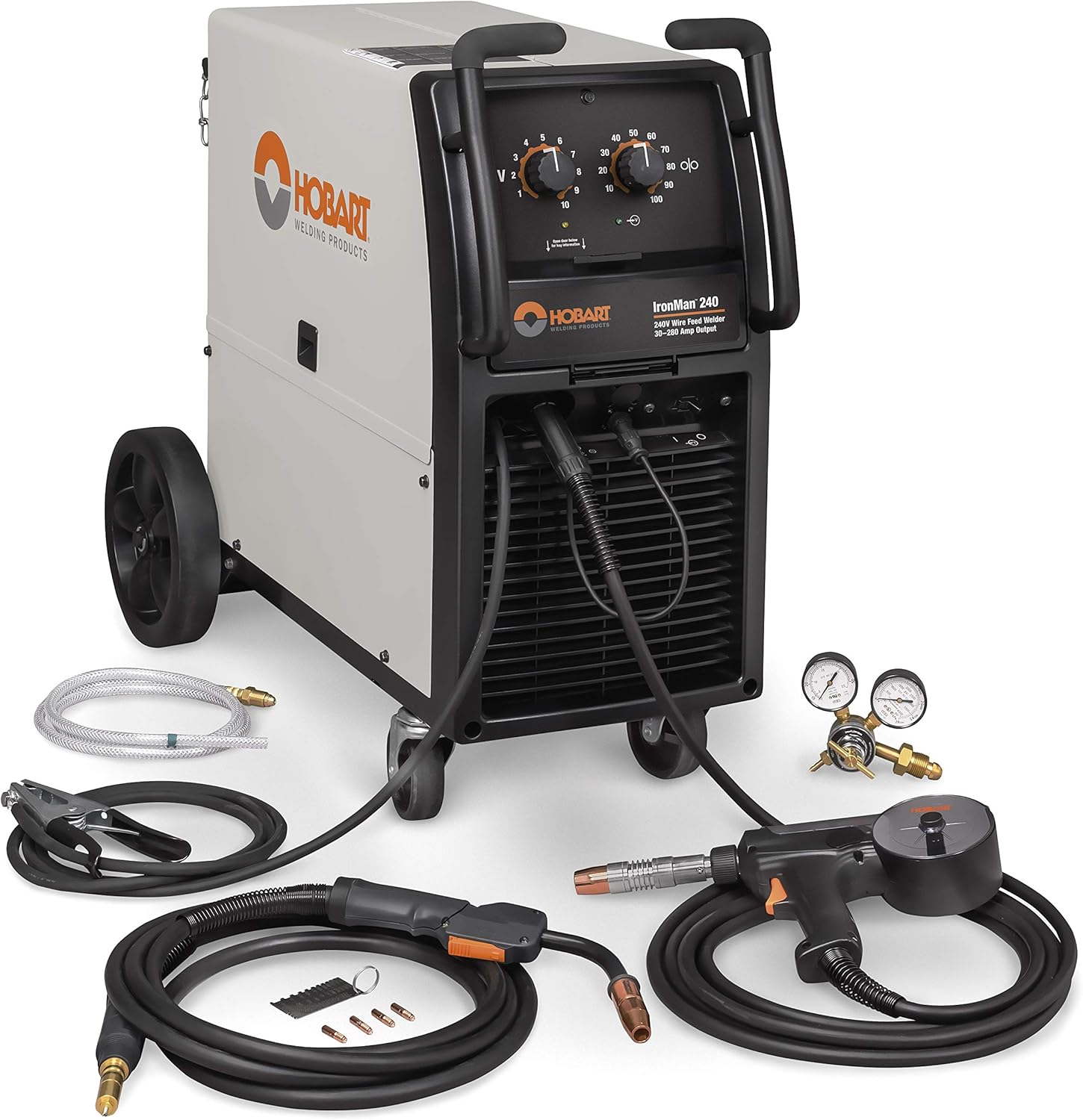
If aluminum is part of your plan, this IronMan 240 package is the one to study closely. The shop-sized output gives you room for heavier steel work, while the SpoolRunner-style setup helps reduce some of the wire-feeding frustration that can come with soft aluminum wire.
It’s still a heavy, dedicated-shop machine, so it makes the most sense for a garage, repair bay, or small fabrication area. Before buying, confirm the current listing includes the accessories you expect and check the required gas, wire size, contact tips, and setup instructions for aluminum.
Why You’ll Like It
This package makes the most sense if aluminum is a real part of your project list. The heavier MIG platform and spool-gun-focused setup can make aluminum work easier than trying to push soft wire through a standard long liner.
Who Should Buy This
Choose it if you want heavier MIG capability and expect to weld steel and aluminum in a dedicated garage, repair bay, or small shop.
Who Should Avoid This
Skip it if portability matters most or if you only do occasional light steel repairs. A smaller Handler or the Multi-Handler 200 will be easier to live with.
What People Say
Buyer feedback commonly highlights stable arc performance, adjustable wire feed, and the convenience of spool-gun compatibility for aluminum. Some users still mention service or heat-related concerns, so it is worth checking recent reviews and warranty details before buying.
Overall Sentiment: Positive
Ease Of Use
|
Feature |
Ease Level |
|---|---|
|
Initial setup (gas, spool hub, package contents) |
Moderate |
|
Wire feed and drive roll adjustments |
Easy |
|
Voltage and feed tuning |
Moderate |
|
Aluminum Setup |
Moderate; confirm gas and consumables |
|
Moving the unit |
Hard |
Expertise Level
Beginner to Professional
Key Benefits
- Wide 30–280 A class range for light to thicker steel projects
- Fine voltage and wire-feed controls help tune the arc
- Designed for dedicated shop welding rather than frequent carrying
- SpoolRunner-style setup can make aluminum feeding easier
- Good choice if both steel and aluminum are part of your plan
- Always confirm current package contents before purchase
Check Product Details on Amazon

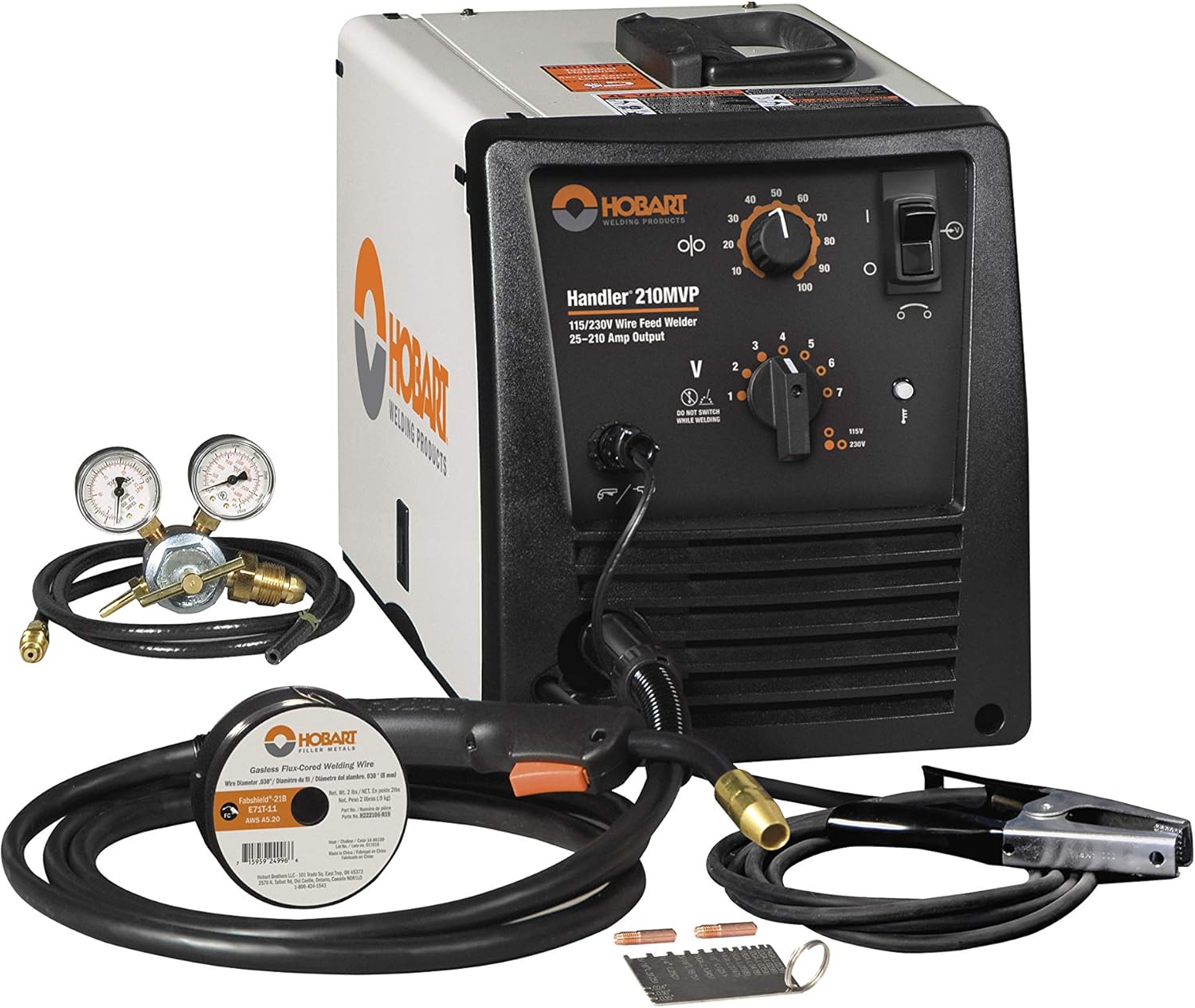
If you want a solid MIG that’s easy to live with, the Handler 210 MVP is a great pick. You can use lower-voltage power for lighter work and step up to 230V when your projects need more output.
It works well for thin auto-body panels, garage repairs, farm tasks, and moderate steel projects. The seven voltage settings and wire-feed control give you useful tuning without the complexity of a full multi-process machine. It is heavier than a small starter unit, but it gives you more room to grow.
Why You’ll Like It
The Handler 210 MVP is a practical middle ground. It gives you more capability than a small 120V machine, but it stays simpler than a multi-process unit. The MVP plug also helps if your power situation changes between home and shop use.
Who Should Buy This
Choose it if you want a MIG/flux-core machine that can start on lighter work and grow into thicker steel projects when 230V power is available.
Who Should Avoid This
Skip it if you need TIG or stick welding in the same box. The Multi-Handler 200 is the better choice for that.
What People Say
Buyer feedback often highlights versatility, sturdy build quality, and the convenience of the MVP plug. Common limitations include the unit’s weight and small accessory preferences, so check the current package details if the gun, clamp, or regulator setup matters to you.
Overall Sentiment: Positive

Ease Of Use
|
Feature |
Ease Level |
|---|---|
|
Changing MVP plug (115V ↔ 230V) |
Easy |
|
Initial setup (gas hookup, spool hub) |
Moderate |
|
Voltage and wire-feed tuning |
Moderate |
|
Changing wire spools / drive roll |
Easy |
|
Moving the unit |
Hard |
Expertise Level
Beginner to Intermediate
Key Benefits
- Multi-Voltage Plug design for 115V and 230V flexibility
- More growth room than a small 120V-only welder
- Seven output voltage settings for easier tuning
- Good fit for garage projects, farm repairs, and moderate steel work
- Spool-gun support may help with aluminum when paired with the correct setup
- Best for buyers who want MIG power without multi-process complexity
Check Product Details on Amazon

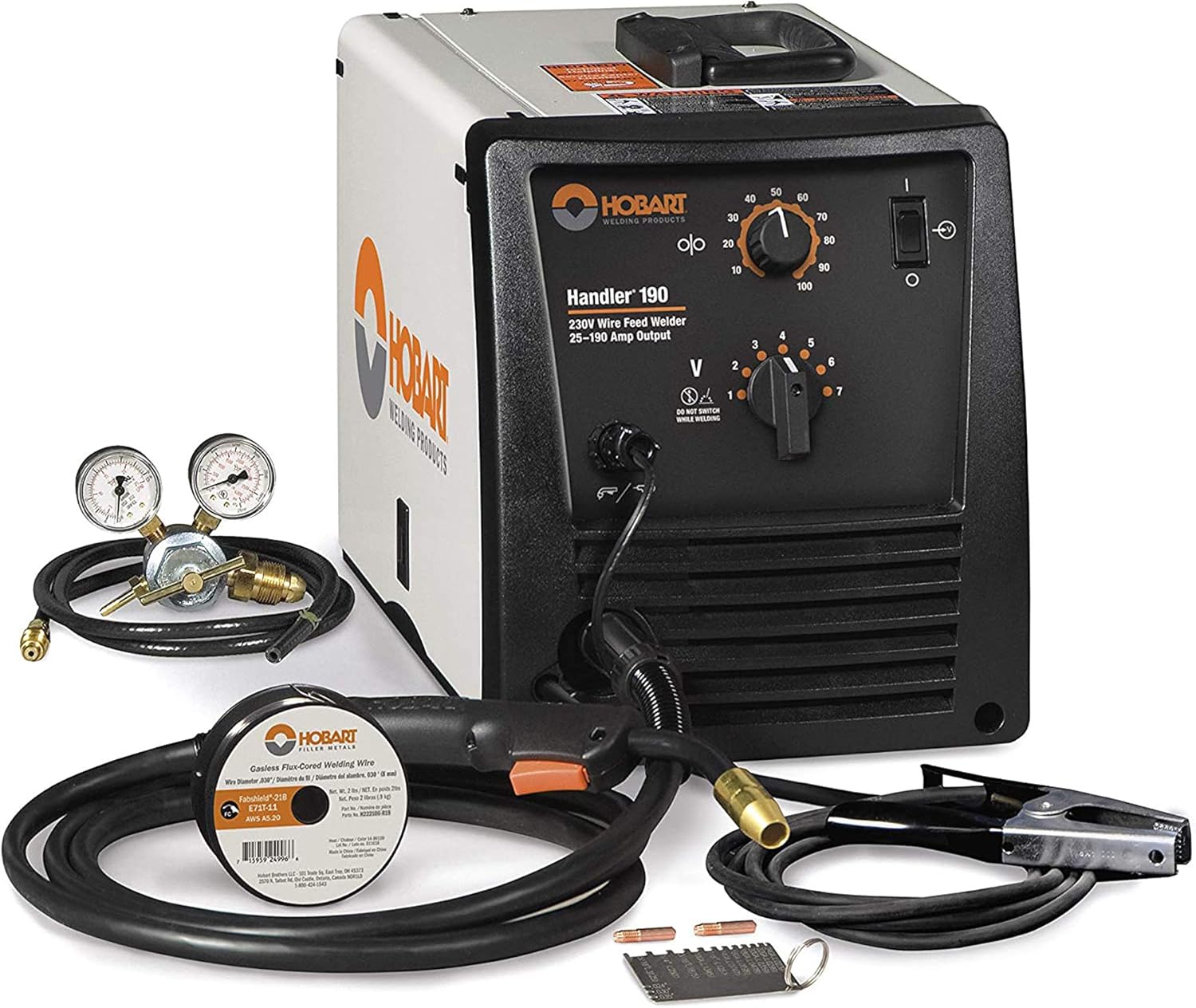
If you want a sturdy MIG that won’t feel like a toy as you learn, the Handler 190 is a smart choice. You can tackle everyday fixes, patch a trailer, repair a mower deck, or do light auto-body work while still having enough output for tougher garage and farm jobs.
The preset voltage choices and wire-feed control make it easier to find a good arc without endless trial and error. The built-in spool-gun-ready design also makes it a better fit for occasional aluminum than a basic steel-only starter, as long as you confirm the correct gun, gas, wire, and consumables.
It’s not the lightest unit and it requires 230V power, but if you want reliability and a machine that grows with your skills, this one fits that role well.
Why You’ll Like It
The Handler 190 is a clean choice for buyers who already have 230V power and want a straightforward MIG/flux-core machine. It avoids the complexity of multi-process controls while still giving you more welding range than smaller 120V units.
Who Should Buy This
Choose it if you want a reliable 230V MIG for garage fabrication, trailer work, mower deck repairs, and occasional aluminum projects with the right spool-gun setup.
Who Should Avoid This
Skip it if you need standard household power only. This model makes the most sense when 230V is already available.
What People Say
Buyer feedback commonly praises consistent performance, preset voltage settings, and reliable wire-feed behavior. Common cautions include the unit’s weight, basic accessory preferences, and the need for 230V power.
Overall Sentiment: Positive

Ease Of Use
|
Feature |
Ease Level |
|---|---|
|
Initial setup (unpack, mount spool, hook up cables) |
Moderate |
|
Selecting preset voltage and adjusting wire feed |
Easy |
|
Switching drive roll / changing wire spool |
Easy |
|
Attaching compatible spool gun |
Easy after confirming compatibility |
|
Moving the unit |
Hard |
Expertise Level
Beginner to Intermediate
Key Benefits
- 230V MIG/flux-core performance for more capable garage welding
- Preset voltage selections and wire-feed control for easier tuning
- Good fit for trailers, mower decks, farm repairs, and fabrication
- Spool-gun-ready design for aluminum with the right compatible setup
- Simpler than a multi-process machine for buyers focused on MIG
- Best for users who already have access to 230V power
Check Product Details on Amazon
How to Choose the Right Hobart Welder
The best Hobart welder for you depends on three things: the metal you weld, the power you have, and the process you want to learn. A beginner who wants quick garage repairs has different needs than someone building trailers, repairing farm equipment, or learning multiple welding processes.
Choose 120V for Simple Garage Use
A 120V machine is easier to plug in at home and works well for light repairs, thin steel, hobby projects, and learning MIG basics. The tradeoff is lower output on thicker steel and less room for long, high-amperage welding sessions.
Choose 240V for More Power
A 240V-capable welder gives you more headroom for thicker material and longer sessions. It also makes heavier steel and many aluminum projects easier because you have more amperage available.
Choose Multi-Process If You Want to Grow
A multi-process welder makes sense if you want to try MIG, flux-core, stick, and TIG without buying separate machines. It costs more upfront, but it can keep you from outgrowing your first welder too quickly.
Choose Stick for Outdoor Repair Work
Stick welding is useful for farm repair, maintenance, and outdoor work because it is less dependent on shielding gas. It takes practice, but it is rugged and portable.
Choose Spool-Gun Support for Aluminum
Aluminum wire is softer than steel wire, so feeding matters. If aluminum is on your project list, look for a machine that includes or supports a compatible spool gun and confirm the required gas, contact tips, wire size, and setup details before welding.
FAQ
Which Hobart Welder Is Best For A Beginner?
There is not a single best model for everyone because the right choice depends on your projects and power supply. If you want a simple, portable MIG/flux-core machine for light garage work, the Hobart Handler 140EZ is a strong entry point because it runs on standard household power and uses beginner-friendly setup features.
If you expect to grow into thicker metal or multiple processes, a multi-voltage unit like the Handler 210 MVP or the Multi-Handler 200 gives you more headroom. For stick welding and outdoor repair work, the Stickmate 160 is a better fit.
Focus on matching amp range, input power, process type, and duty cycle to the material thickness you plan to weld. If aluminum matters, confirm spool-gun compatibility and current package contents before buying.
Do I Need A Spool Gun Or 240V Power To Weld Aluminum?
You do not always need 240V for very thin aluminum, but many aluminum MIG projects become easier with more amperage and a compatible spool gun. Aluminum wire is soft and can tangle or birdnest in a long liner, so feeding it directly from a spool-gun-style setup can reduce frustration.
MIG aluminum typically needs pure argon shielding gas, the right wire size, the correct contact tip, proper polarity, and lighter feed tension. Always check the manual and current listing details for the specific Hobart model you are considering.
How Do I Set Up And Troubleshoot Common Problems Like Wire Feeding And Poor Weld Quality?
Start by following the parameter chart that comes with your Hobart machine and run test beads on scrap until you’re happy with penetration and bead shape. For wire-feed problems, check the drive roll groove size, feed tension, liner condition, spool orientation, and contact tip size.
For poor weld appearance, confirm you’re using the right wire type, correct polarity, proper gas flow for solid wire, and clean base metal. Rust, oil, paint, low gas flow, incorrect wire speed, or poor ground contact can all lead to spatter, porosity, or weak welds.
Keep an eye on duty cycle, allow cool-downs when needed, maintain a good ground connection, and wear proper PPE. If problems persist, check consumables and consult Hobart’s support or your manual for model-specific troubleshooting.
Is MIG Or Stick Better For A First Welder?
MIG is usually easier for clean indoor work, thin steel, and beginner practice because the wire feeds continuously and the arc is easier to manage. Stick can be better for outdoor work, rusty material, and repair jobs where portability matters. Choose MIG if you want smoother learning and cleaner garage welds; choose stick if your jobs are outdoors and rugged.
Should I Buy A 120V Or Dual-Voltage Hobart Welder?
Buy 120V if you only plan to weld light material and want simple plug-in convenience. Buy dual-voltage if you expect your projects to grow, you may move between home and shop power, or you want more flexibility with thicker steel. Dual-voltage costs more, but it gives you more room to improve.
What Buyers Prefer
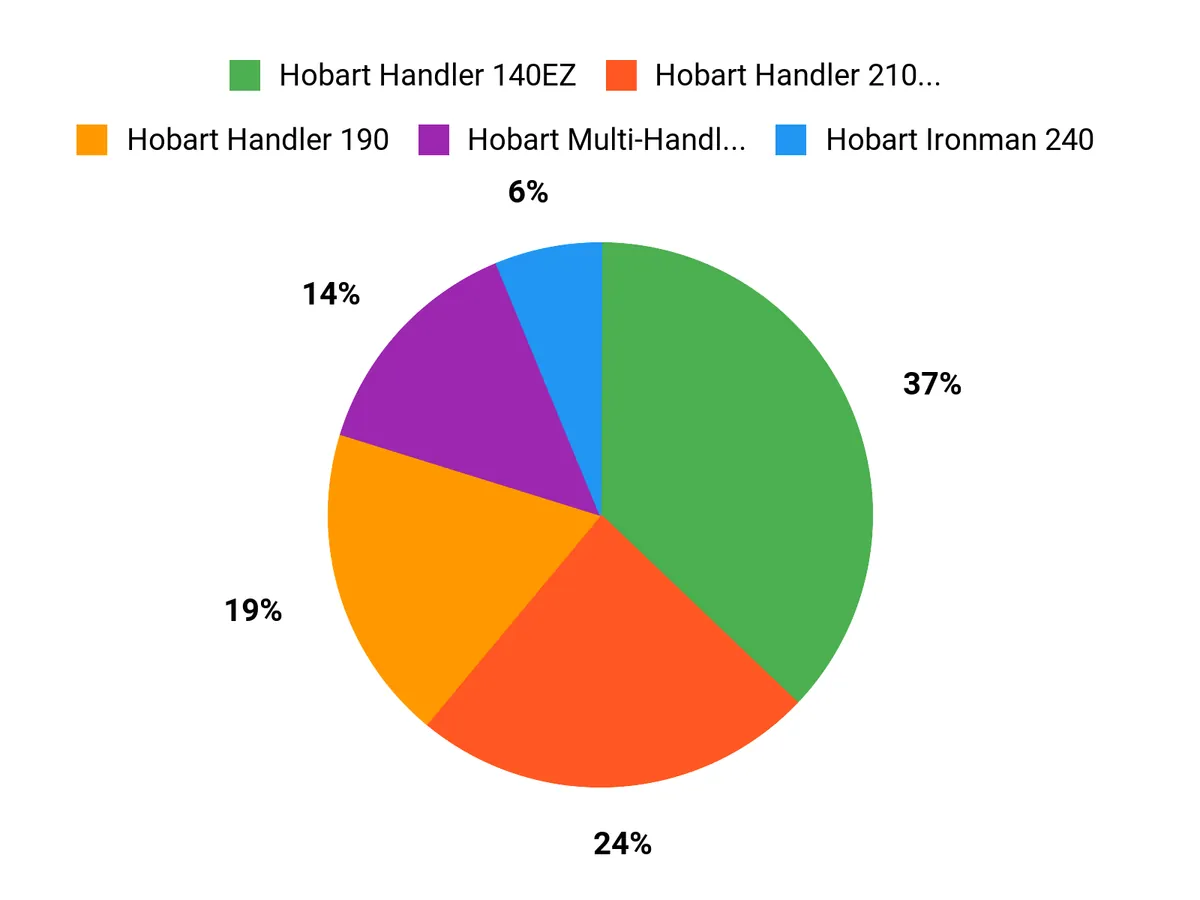
When choosing among the Hobart Handler 140EZ, Multi-Handler 200, and Stickmate 160, you typically prioritize ease of use, portability, power, material thickness, and whether you want multi-process versatility or a simple stick setup. You’ll lean toward the 140EZ for beginner-friendly plug-in MIG work, choose the Multi-Handler 200 when you need MIG/TIG/Stick flexibility, and pick the Stickmate 160 for rugged outdoor or stick-only repair jobs.
Final Recommendation
Choose the Handler 140EZ if you want the easiest beginner path for light MIG and flux-core work.
Choose the Multi-Handler 200 if you want one compact machine that lets you learn several welding processes.
Choose the Handler 210 MVP or Handler 190 if you want dependable MIG performance with more room than a small 120V machine.
Choose the IronMan 240 models if you have a dedicated shop space and want heavier MIG capability for larger projects.
Choose the IronMan 240 with SpoolRunner-style package if aluminum is a serious part of your plan and you want a shop-focused setup. Confirm current package contents before buying.
Wrapping Up
Pick the Hobart welder that fits how you’ll use it. If you want the easiest entry point, the Handler 140EZ gives simple 120V MIG/flux-core convenience. If you plan to experiment across processes, the Multi-Handler 200 gives the most flexibility. For light, carry-anywhere stick work, the Stickmate 160 is the practical pick.
The IronMan models deliver stronger shop power and arc control, with the SpoolRunner-focused option making the most sense when aluminum is part of your plan. The Handler 210 MVP and Handler 190 balance power and convenience for garage projects, farm repairs, and growing skills.
Choose based on the materials, processes, power supply, and portability you need, and you’ll make better, more consistent welds sooner.
| Product | Image | Process / Input | Best For | Key Detail To Confirm | Amazon |
|---|---|---|---|---|---|
| Hobart Handler 140EZ 120-Volt Wire Feed Welder |
 |
MIG / flux-core, 120V | Simple beginner garage welding | Current package contents and aluminum compatibility | Check Availability |
| Hobart 500578 Multi-Handler 200 |
 |
MIG / flux-core / stick / DC TIG, 120V/240V | Learning multiple welding processes | TIG accessories and current package contents | Check Availability |
| Hobart Stickmate 160 Portable Stick Welder Package |
 |
Stick, 120V/240V with proper setup | Outdoor repair and maintenance | Exact package weight and included leads | Check Availability |
| Hobart IronMan 240 |
 |
MIG / flux-core, 240V shop use | Heavier steel and dedicated shop welding | Circuit requirements and spool-gun compatibility | Check Availability |
| Hobart IronMan 240 with SpoolRunner 200 |
 |
MIG / flux-core, 240V shop use | Steel plus aluminum-focused shop work | SpoolRunner inclusion, gas, wire, and tips | Check Details |
| Hobart 500553 Handler 210 MVP MIG Welder |
 |
MIG / flux-core, 115V/230V | Power-to-price balance and growth room | Plug setup, circuit needs, and accessories | Check Details |
| Hobart 500554 Handler 190 MIG Welder 230V |
 |
MIG / flux-core, 230V | All-round 230V Handler performance | 230V access and compatible spool-gun setup | Check Details |
This Roundup is reader-supported. When you click through links we may earn a referral commission on qualifying purchases.