
When you need to repair cast iron, the filler you choose affects machinability, crack resistance, heat control and how well the repair suits the casting. This guide compares Nickel 99, Nickel 55, a contaminated-cast-iron specialty electrode and a TIG repair rod for shop repairs, home fixes, automotive castings, stoves, pumps, housings and hobby work. Match the alloy, diameter and welding process to the casting and the finish you need before you strike an arc.
Affiliate disclosure:. As an Amazon Associate I earn from qualifying purchases. This roundup is reader-supported. When you click through product links, we may earn a referral commission on qualifying purchases. Product sizes, pack contents and availability can change, so confirm the exact listing details before buying.
Quick Verdict
Choose Nickel 99 (ENi-CI) when maximum machinability is the priority, especially on many gray-cast-iron repairs that may need drilling, tapping, milling or clean dressing afterward.
Choose Nickel 55 (ENiFe-CI) when you want a stronger, more ductile nickel-iron deposit for many general repairs, heavier sections, ductile or malleable iron, and certain cast iron-to-steel joints. Nickel 55 can still be machinable, but Nickel 99 is generally easier to finish.
Choose a specialty electrode or TIG filler only when the job calls for it. Forney 43401 is intended for contaminated, oxidized or oil-impregnated castings where a hard, non-machinable deposit is acceptable. Blue Demon 5000T .063 is a nickel-free TIG repair rod for small, controlled cast-iron work, not a stick electrode.
Top Picks
|
Category |
Product |
Best For |
|---|---|---|
|
🏆 Best Overall |
Machinable general cast-iron repairs |
|
|
⭐ Best Machinable |
Clean finishing, tapping and grinding |
|
|
💰 Best Budget |
Affordable Ni-55 stick repairs |
|
|
🎯 Best TIG Repair Rod |
Small TIG repairs and touchups |
|
|
🔰 Best for Dirty Castings |
Contaminated castings; non-machinable repair or cladding |
|
|
💼 Best Small Pack |
Occasional Ni-55 repairs |
|
|
🎨 Best Precision |
Small controlled stick repairs |
|
|
💪 Most Versatile |
Frequent Ni-55 cast-iron repairs |
|
|
🚀 Best Heavy-Duty Supply |
Larger Ni-99 repair jobs |
|
|
🔧 Best Everyday Ni-99 |
Small machinable Ni-99 repairs |
How We Picked These Rods
You want filler metal that matches the casting, repair method, power source and finish you need. We prioritized alloy type, machinability, rod diameter, pack size, polarity or process guidance, repair use case and suitability for common stick or TIG setups.
We also weighed practical buying factors: whether a rod makes sense for one-off repairs, frequent shop use, contaminated castings, dissimilar-metal repairs or small precision work. Manufacturer guidance and current product information were favored where available. When a seller listing can vary by diameter or pack count, the article tells you to confirm the exact option before buying.
Before You Buy
- Need machining afterward? Start with Nickel 99.
- Need greater strength or ductility, a heavier repair, ductile iron or a cast iron-to-steel joint? Compare Nickel 55 options.
- Working on a dirty or oxidized casting? Consider a specialty rod, but expect a harder deposit.
- Doing small TIG repairs? A thin TIG filler can offer finer control than a covered stick electrode, but it requires a TIG setup and the filler manufacturer’s procedure.
- Repairing a safety-critical part? Follow a qualified repair procedure or consult a welding professional.
- Unsure about size? 3/32 in rods are often easier to control on smaller repairs, while 1/8 in rods can suit heavier sections and buildup work. Always match diameter and amperage to the electrode maker’s instructions and the casting thickness.
Safety Note: Cast-iron repair can involve hot work, fumes, sharp grinding debris and parts that may fail if repaired incorrectly. Use appropriate PPE and ventilation, follow the electrode or filler manufacturer’s procedure, and do not treat a general product roundup as a repair procedure for braking, steering, lifting, pressure-containing or other safety-critical parts.
Best Cast Iron Welding Rods Reviewed

If you want a dependable cast-iron rod for general repairs, WeldingCity ENi-CI is the first option to compare. The Nickel 99 chemistry is a strong fit when you need a repair that can be dressed, drilled, tapped or machined after welding. That makes it useful for cracked housings, stove parts, brackets, small engine castings and general shop repairs where the finished surface matters.
Like most cast-iron welding jobs, it still rewards patient prep. Clean the casting thoroughly, use short beads, control heat input and follow the manufacturer’s preheat and cooling guidance for the exact electrode you buy.
Why You’ll Like It
It solves the common problem of ending up with a hard, ugly repair that cannot be finished cleanly. If your repair needs post-weld cleanup, Nickel 99 is usually easier to work than many harder specialty deposits.
Who Should Buy This
Buy this if you want one reliable Ni-99 option for household, automotive and shop cast-iron repairs where machinability matters.
Who Should Avoid This
Skip it if you need the lowest-cost filler for non-machined repairs or if the casting is badly contaminated and needs a specialty cladding approach first.
Key Benefits
- Nickel 99 chemistry is a strong choice for machinable cast-iron repairs
- Useful for gray cast iron repairs and some cast iron-to-steel jobs
- Common diameters make it easier to match the repair size
- Good fit for brackets, housings, stove parts and small engine castings
- Works best with careful prep, short passes and controlled cooling
You’ll reach for Weldcote Nickel 99 when the finish matters. It is made for gray iron casting repair, and the high-nickel deposit is a practical choice when you expect to grind, tap, drill or machine the weld area afterward.
It is especially useful for broken vises, brackets, pump housings, manifolds and small engine castings. For larger or more stressed parts, take the time to preheat, use short beads and cool slowly so you reduce the risk of cracking.
Why You’ll Like It
It gives you a cleaner path from weld repair to finished part. When you do not want to fight a hard deposit after welding, this is one of the more sensible product types to compare.
Who Should Buy This
Buy this if your cast-iron repair needs a machinable finish or if you often repair gray iron castings in a shop setting.
Who Should Avoid This
Skip it if you need a specialty hard-facing deposit or if the repair will never be machined and cost is your main concern.
Key Benefits
- Nickel 99 chemistry is well suited to many gray cast iron repairs
- Useful when the finished weld needs machining or cleaner dressing
- Can help with cast iron-to-steel repair situations when used correctly
- Good fit for housings, brackets, manifolds, vises and pump parts
- Best results come from proper preheat, short beads and slow cooling
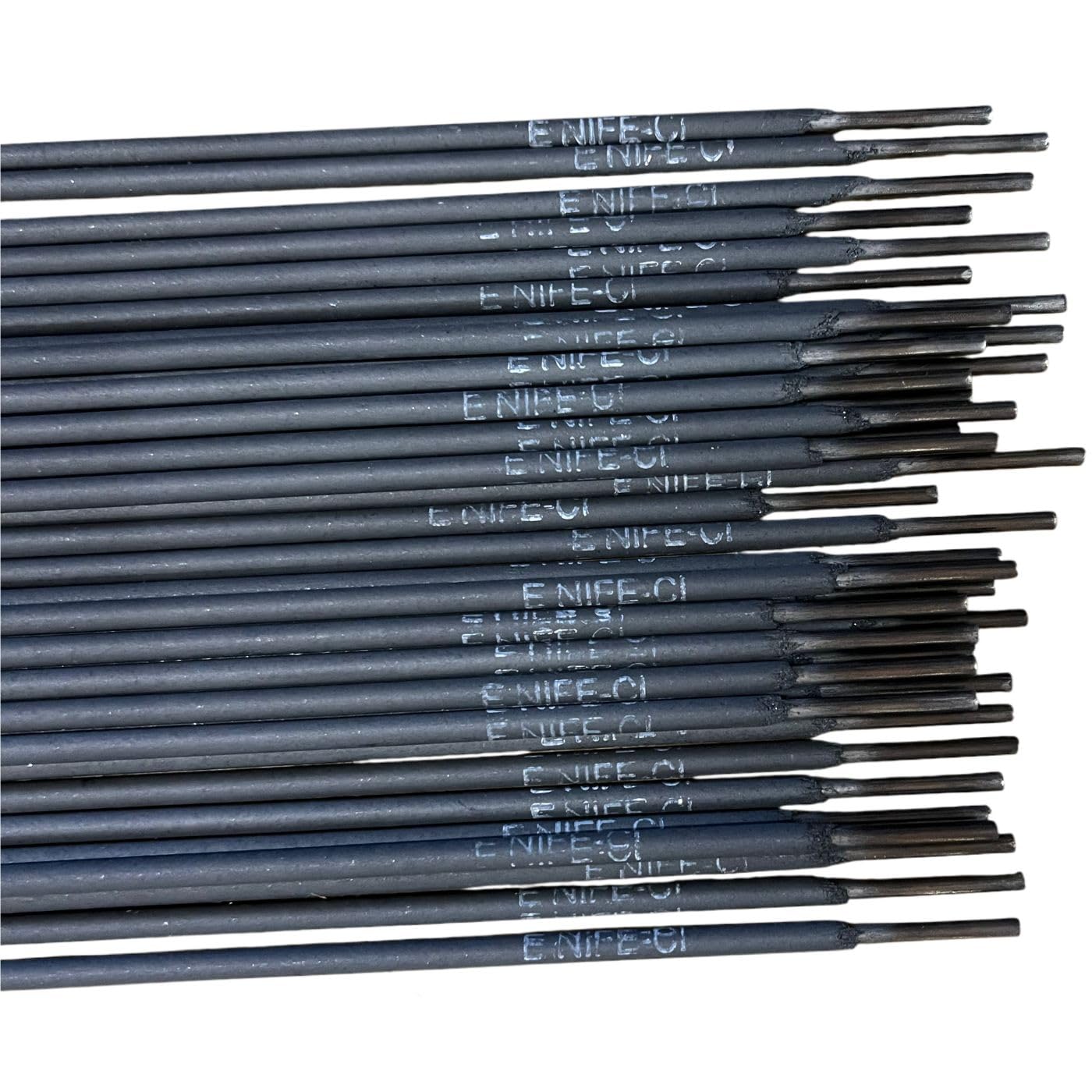
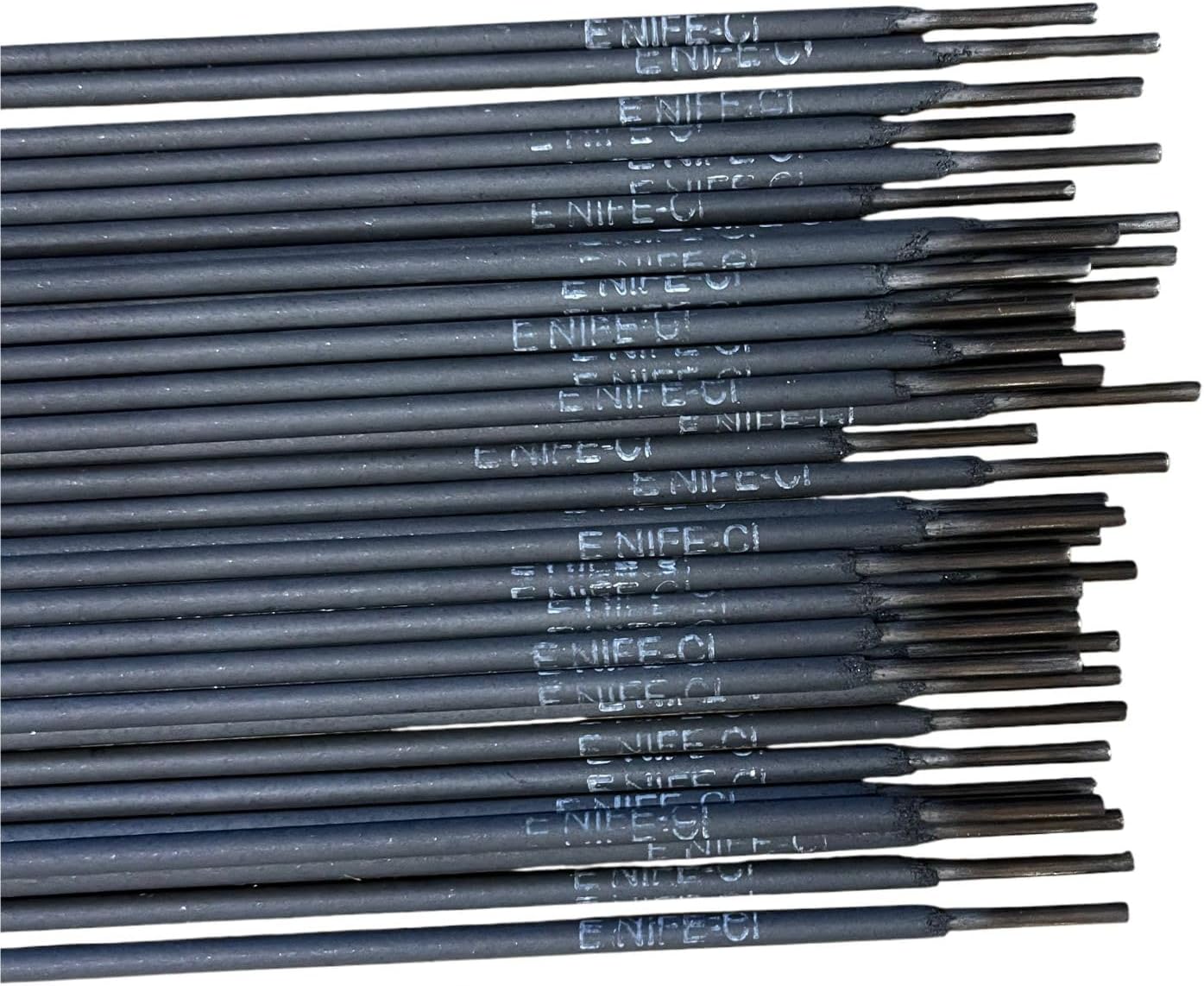
These Nickel 55 rods are a practical choice when you want a lower-cost cast-iron repair electrode for general shop and home fixes. Nickel 55 is often chosen when you want a stronger, more ductile nickel-iron deposit than Nickel 99, especially for heavier sections, ductile or malleable iron, and some cast iron-to-steel repairs. The deposit can be machinable, although Nickel 99 is generally the easier choice when maximum machinability is the main goal.
They make sense for cast pipe repairs, brackets, manifolds, bell housings and routine maintenance work where you can clean the casting, manage heat and use short, controlled passes.
Why You’ll Like It
It gives you a sensible Ni-55 option without overbuying a large supply. For occasional repairs, that can be more practical than paying for a bigger box of premium rods.
Who Should Buy This
Buy this if you want an affordable Nickel 55 rod for basic cast-iron repairs and light shop work.
Who Should Avoid This
Skip it if easy post-weld machining is your top priority. In that case, compare Nickel 99 first, while still following the repair procedure for the specific casting.
Key Benefits
- Nickel 55 chemistry is useful for many cast-iron surfacing and joining tasks
- Good fit for general repair work where toughness matters
- Can be useful for cast iron-to-steel repair situations when the procedure allows it
- Practical for shop, automotive and household castings
- Best used with clean prep, controlled amperage and slow cooling
If you need a smaller stick electrode for controlled cast-iron repairs, this WeldingCity Ni-55 3/32 in pack is a useful option. The smaller diameter helps when you are working on thinner sections, smaller cracks or tight spaces where a larger rod may put in too much heat too quickly.
Use it for stove parts, housings, railings, brackets and smaller automotive castings. As with any cast-iron repair, good cleaning, short beads and slow cooling matter more than rushing the job.
Why You’ll Like It
The 3/32 in size gives you better control for small repairs, while the Ni-55 chemistry helps with ductility and general repair strength.
Who Should Buy This
Buy this if you need a small pack of Ni-55 rods for controlled stick welding on small cast-iron repairs.
Who Should Avoid This
Skip it if you need a larger supply for frequent repairs or a Nickel 99 deposit for cleaner machining.
Key Benefits
- 3/32 in diameter helps with controlled heat input on smaller repairs
- Nickel 55 deposit is useful for many general cast-iron jobs
- Good fit for cast iron-to-steel repair situations when appropriate
- Small pack is practical for one-off repairs and testing technique
- Useful for short, controlled passes on household and shop castings
If you repair cast iron more than once in a while, this 1 lb WeldingCity Ni-55 option is easier to justify than a tiny pack. The 1/8 in diameter fits heavier sections and buildup work better than smaller rods, especially when you have enough material thickness to handle the heat.
It is a good candidate for housings, stove legs, railings, brackets and larger shop repairs where a ductile Nickel 55 deposit makes sense. For small cracks or thin sections, consider a smaller diameter instead.
Why You’ll Like It
It gives you a more useful supply for repeated repairs while staying in the Ni-55 category, which is often a practical balance of strength, ductility and cost.
Who Should Buy This
Buy this if you frequently repair cast iron or want a larger supply of Ni-55 rods for shop use.
Who Should Avoid This
Skip it if you only need a few rods or if your repair needs a highly machinable Nickel 99 finish.
Key Benefits
- 1/8 in diameter suits heavier cast-iron sections and buildup work
- Nickel 55 deposit is useful for many durable repair jobs
- Good fit for repeat shop use and routine maintenance repairs
- Can help with cast iron-to-steel repairs when the procedure allows it
- Better value for frequent use than very small packs

Fox Alloy ENiFe-CI is a useful compact-pack option when you want to keep a few Nickel 55 rods in the drawer without buying a larger box. The 3/32 in diameter is helpful for smaller repairs and controlled heat input. Confirm the current pack count on the listing because seller configurations can change.
Use it for occasional repairs on stove grates, small housings, brackets, pulleys and other castings where you want a ductile nickel-iron deposit.
Why You’ll Like It
It reduces the commitment. You can test your technique or handle one repair without buying more rods than you need.
Who Should Buy This
Buy this if you want a small pack of 3/32 in Ni-55 rods for occasional cast-iron repair.
Who Should Avoid This
Skip it if you need a large supply or if maximum post-weld machinability is your main priority; compare Nickel 99 first for that use case.
Key Benefits
- Compact pack format is practical for occasional repairs; confirm the current rod count before purchase
- 3/32 in diameter helps with controlled, smaller welds
- Nickel-iron chemistry suits many gray and nodular cast iron repairs
- Useful for cast iron-to-steel repair work when suitable
- Good way to test technique before buying a larger pack

If you need a rod for small TIG repairs or touchups, Blue Demon BD-5000T .063 is worth comparing. The 1/16 in diameter supports finer filler control than a larger covered stick electrode, and current product information identifies it as a cast-iron TIG repair rod.
This is not the first choice for heavy stick-welding buildup, and the resulting deposit is described as non-machinable by current specialty-welding listings. Use it only with the TIG process and operating guidance specified for this filler.
Why You’ll Like It
It gives TIG users a small-diameter filler option for controlled cast-iron repair work where a covered stick electrode would be too large or aggressive.
Who Should Buy This
Buy this if you already use TIG and need a small-diameter filler rod for controlled cast-iron repair or touchup work.
Who Should Avoid This
Skip it if you only have a stick welder or need to build up a large crack or heavy casting quickly.
Key Benefits
- .063 in diameter is useful for tight and precise work
- Designed for TIG repair rather than covered-electrode stick welding
- Nickel-free filler with a non-machinable deposit according to current specialty-welding listings
- Useful for small, controlled cast-iron touchups and detail work
- Best results still depend on clean prep and controlled cooling
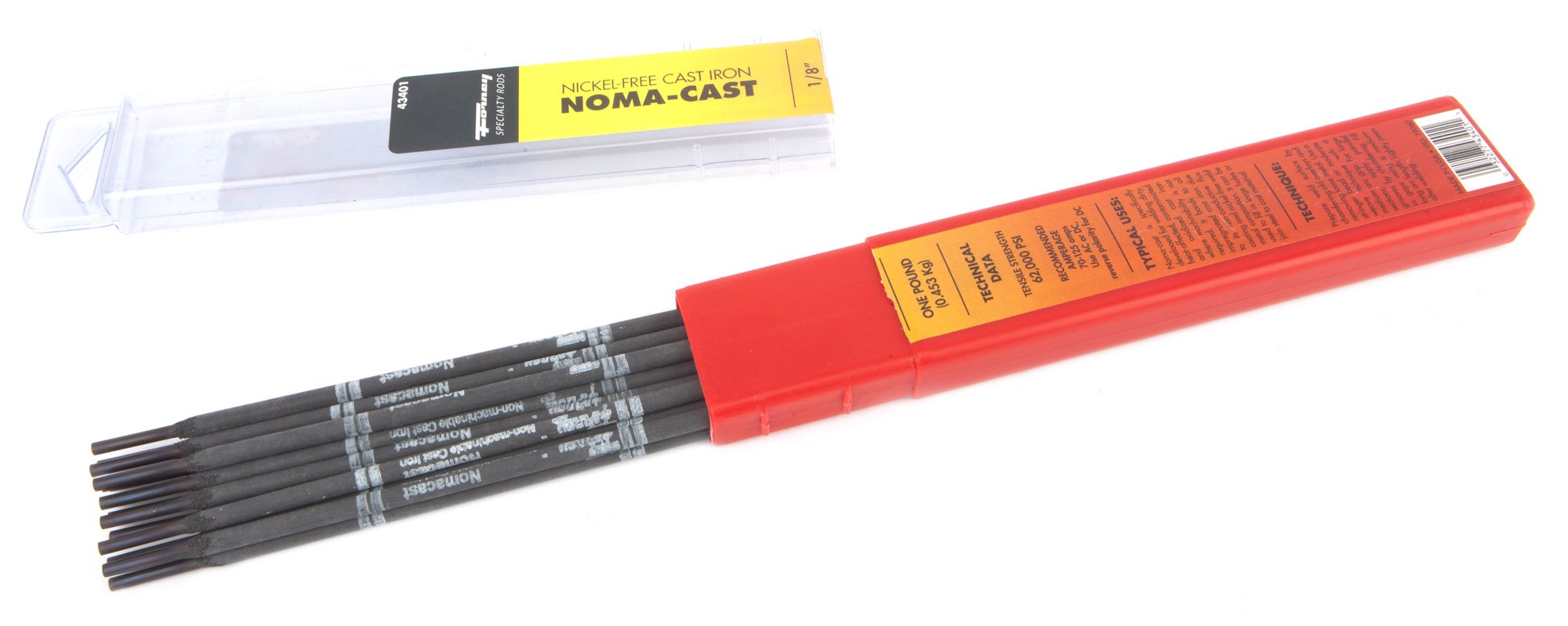
Forney 43401 is the specialty pick for contaminated castings. If the part is dirty, oxidized, oil-impregnated or heat affected, this electrode is designed to seal or clad contamination before finish welding with a suitable nickel alloy, or to make non-machined repairs where a hard deposit is acceptable.
The key limitation is important: this is not the rod to choose when you need a soft, machinable deposit. Use it for machine bases, stove parts, decorative castings and dirty repairs where hardness is acceptable, not for finely machined or high-cycle safety-critical parts.
Why You’ll Like It
It gives you a purpose-built option for contaminated or oxidized cast iron and can be used as a cladding step before a finish weld with a high-nickel filler.
Who Should Buy This
Buy this if you work on dirty, heat-affected or oxidized castings and do not need to machine the deposit afterward.
Who Should Avoid This
Skip it if your repair must be drilled, tapped or machined. Nickel 99 is usually the better starting point for that job.
Key Benefits
- Nickel-free specialty electrode for dirty, oxidized, heat-affected or oil-impregnated cast iron
- Hard, non-machinable deposit
- Useful for cladding contaminated castings before finish welding with a nickel alloy
- Manufacturer lists 1/8 in x 14 in size with DCEP or AC operation
- Best reserved for non-machined repairs and suitable non-critical applications
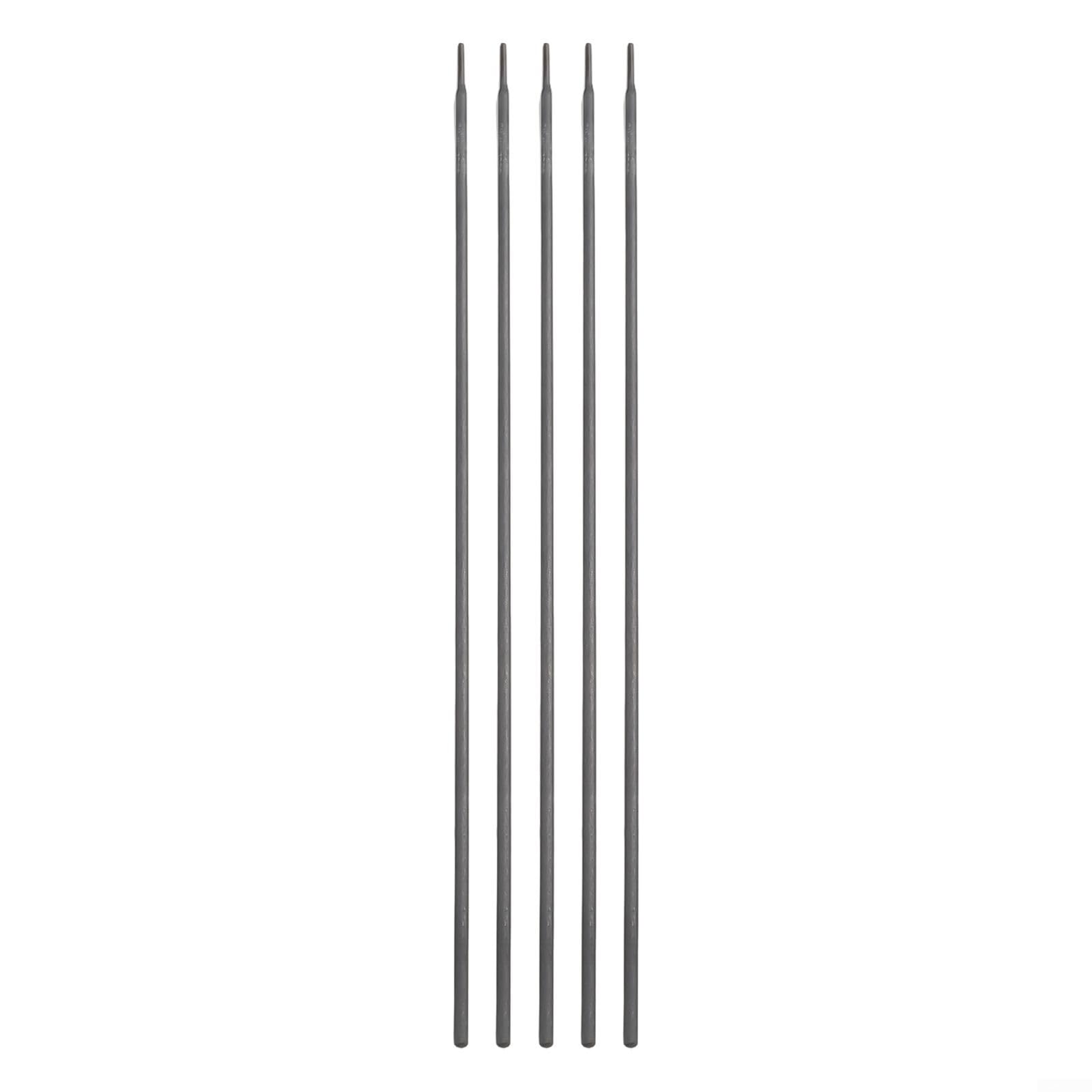
This ENi-CI 99 listing is a practical option to compare when you want a small-diameter Nickel 99 electrode without buying a large supply. A 2.5mm class rod can be easier to control on smaller repair areas, but the exact product configuration should be confirmed on the current listing.
Use it for gray cast iron repairs that may need grinding, shaping or light machining after welding. Confirm the exact listing details before purchase because rod dimensions and pack contents can vary by seller.
Why You’ll Like It
It gives you the machinability advantage of Nickel 99 in a smaller pack size, which is handy for home shops and occasional repairs.
Who Should Buy This
Buy this if you want a small Nickel 99 pack for controlled cast-iron repairs and post-weld finishing.
Who Should Avoid This
Skip it if you need a larger supply or if your repair is a dirty, non-machined casting where a specialty rod is more appropriate.
Key Benefits
- Nickel 99 chemistry is useful for machinable gray cast iron repairs
- 2.5mm size is helpful for smaller, controlled repair beads
- Small pack is practical for occasional use
- Good fit for brackets, housings, vises and small castings
- Works best with correct preheat, short beads and slow cooling
If you go through Nickel 99 rods regularly, this larger-pack listing is worth comparing. A bigger supply can make sense for repair shops, restoration projects and repeated work on gray castings where a more machinable nickel deposit is useful. Confirm the current package weight before purchase.
The 1/8 in diameter is better suited to heavier parts and buildup than very small cracks. For delicate castings, compare smaller diameters before buying.
Why You’ll Like It
It can be more practical than a tiny pack when you have several castings to repair or a larger buildup job, provided the current package quantity matches your needs.
Who Should Buy This
Buy this if you want a larger Nickel 99 supply for regular cast-iron repair work and have confirmed the current listing quantity.
Who Should Avoid This
Skip it if you only need a few rods or if the repair area is too small for a 1/8 in electrode.
Key Benefits
- Nickel 99 chemistry is useful for machinable cast-iron weld deposits
- 1/8 in diameter suits heavier sections and buildup work
- Larger supply is practical for repeat shop repairs
- Useful for housings, brackets, tool restorations and engine parts
- Best used with careful preheat, short beads and controlled cooling
Cast Iron Welding Rod Comparison
| Product | Image | Best For | Alloy / Type | Rod Diameter | Suitable Power Source | Amazon CTA |
|---|---|---|---|---|---|---|
| WeldingCity 1-lb Cast Iron Repair Stick Welding Electrode Rods ENi-CI (Nickel-99 Ni-99) 1/8"x14" |
 |
Best overall machinable repair pick | Nickel 99 / ENi-CI | 1/8 in shown; check listing for selected size | DC/AC | Check Price on Amazon |
| Weldcote Metals Nickel 99 Cast Iron Welding Electrode Repair 1/8" 1 lb. |
 |
Best for machining and finishing | Nickel 99 | 1/8 in listed | Check listing | Check Price on Amazon |
| Nickel 55 Cast Iron Welding Electrode Repair & Maintenance Rods |
 |
Best budget Ni-55 option | Nickel 55 / ENiFe-CI style | Check selected pack | Check listing | Check Price on Amazon |
| WeldingCity 5-pcs Cast Iron Repair Stick Welding Electrode Rods ENiFe-CI (Nickel-55 Ni-55) 3/32" |
|
Best precision stick pick | Nickel 55 / ENiFe-CI | 3/32 in | DC/AC | Check Price on Amazon |
| WeldingCity ENiFe-CI Ni-55 1/8" 1-Lb |
|
Best frequent-use Ni-55 supply | Nickel 55 / ENiFe-CI | 1/8 in | DC/AC | Check Price on Amazon |
| ENiFe-CI 55% Nickel Cast Iron Welding Electrode Rods, 3/32" |
 |
Best small pack | Nickel 55 / ENiFe-CI | 3/32 in | Check listing | Check Price on Amazon |
| Blue Demon BD-5000T-063-POP Cast Iron Repair .063 Diameter |
 |
Best TIG repair rod for small touchups | Nickel-free cast iron TIG repair rod | .063 in | DC TIG; follow filler manufacturer settings | Check Price on Amazon |
| Forney 43401 EST CI / Nomacast Contaminated Cast Iron Electrode, 1/8", 1 lb |
 |
Best for dirty or oxidized castings | Nickel-free contaminated-cast-iron electrode; non-machinable | 1/8 in | DCEP or AC | Check Price on Amazon |
| ENi-CI 99 (2.5mm) Small Pack |
 |
Best everyday Ni-99 small pack | Nickel 99 / ENi-CI | 2.5mm, about 3/32 in | Check listing | Check Price on Amazon |
| Nickel 99 1/8" Rod — Larger Pack |
 |
Best larger Ni-99 supply; confirm current pack weight | Nickel 99 / ENi-CI | 1/8 in | Check listing | Check Price on Amazon |
FAQ
Which Welding Rods Are Best For Cast Iron Repair?
There is no single best rod for every casting. Nickel 99 (ENi-CI) is a strong starting point for many gray-cast-iron repairs when maximum machinability is important. Nickel 55 (ENiFe-CI) is often preferred when greater strength and ductility matter, including many heavier repairs, ductile or malleable iron, and certain cast iron-to-steel joints.
For contaminated or oxidized castings, Forney 43401 is a specialty non-machinable electrode that can be used for repair or cladding before finish welding with a nickel alloy. For small TIG work, Blue Demon 5000T .063 is a nickel-free TIG repair rod, not a stick electrode.
How Do You Prepare Cast Iron Before Welding?
Clean the repair area thoroughly. Remove oil, paint, rust and scale, and grind or vee out cracks where appropriate. If the crack keeps spreading, stop-holes may help in some repairs. Always follow the electrode manufacturer’s procedure for preheat, interpass temperature, amperage, polarity and cooling.
Cast iron is sensitive to thermal shock, so short beads, peening where appropriate and slow cooling can reduce cracking risk. Avoid rushing the weld or dumping too much heat into one area.
What Size Rod Should You Use For Cast Iron?
Smaller covered electrodes such as 3/32 in or about 2.5mm are often easier to control on smaller repair areas, while 1/8 in electrodes can suit heavier sections and buildup work. Diameter is only one part of the setup: use the amperage range, polarity, preheat guidance and bead technique specified for the exact electrode and casting.
Can Nickel 55 Be Machined After Welding?
Often, yes. Nickel 55 deposits can be machinable, but they are generally harder to machine than Nickel 99 deposits. If easy drilling, tapping, milling or dressing is your main priority, Nickel 99 is usually the first alloy to compare. If strength, ductility, heavier sections or dissimilar-metal joining matter more, Nickel 55 may be the better fit.
Can You Weld Cast Iron Without Preheat?
Some small repairs may be possible with limited preheat depending on the rod, casting and process, but preheat is often recommended for cast iron because it helps reduce thermal shock and cracking. Follow the rod manufacturer’s guidance instead of assuming one temperature fits every casting.
Are Cast Iron Weld Repairs Safe For Critical Parts?
Use caution. Parts that handle braking, steering, lifting, pressure, engine stress or repeated thermal cycling may require a qualified repair procedure or professional evaluation. A general-purpose rod is not a substitute for proper engineering judgment on safety-critical components.
Wrapping Up
By choosing the right filler, you control how the repaired area behaves under heat, load and finishing. Nickel 99 is the better starting point when maximum machinability is the priority on many gray-cast-iron repairs. Nickel 55 is often a better fit when greater strength and ductility, heavier sections, ductile or malleable iron, or certain cast iron-to-steel joints matter more.
For contaminated castings, Forney 43401 gives you a purpose-built non-machinable repair or cladding option. For small TIG work, Blue Demon 5000T .063 is a nickel-free TIG filler. Match the product to the casting and process, follow the manufacturer’s heat and polarity guidance, and use a qualified repair procedure for safety-critical parts.
This Roundup is reader-supported. When you click through links we may earn a referral commission on qualifying purchases.