
If you do light industrial, garage, farm, or workshop welding, the right MIG welder can make your work cleaner, faster, and easier to repeat. These three Hobart Handler models cover the main choices most buyers compare: a flexible dual-voltage machine, a stronger dedicated 230V welder, and a dependable 115V shop workhorse.
You’ll learn which one fits your power setup, material thickness, portability needs, and aluminum plans, so you can spend less time guessing and more time laying consistent welds.
Disclosure: This roundup is reader-supported. When you click through Amazon links, we may earn a referral commission on qualifying purchases. As an Amazon Associate I earn from qualifying purchases.
Quick Verdict
Choose the Hobart Handler 210 MVP if you want the most flexible setup because it can run on 115V or 230V power.
Choose the Hobart Handler 190 if you already have a 230V circuit and want stronger output for thicker steel and regular shop repairs.
Choose the Hobart Handler 140 if you mostly weld on a standard 115V outlet and need a rugged machine for lighter fabrication, auto panels, and home repair work.
Top Picks
|
Category |
Product |
Score |
|---|---|---|
|
🔌 Best Multi-Voltage |
94/100 |
|
|
🚀 Best Power |
92/100 |
|
|
🎯 Best For Hobbyists |
90/100 |
How We Picked These MIG Welders
You want a welder that matches the jobs you do and the power available where you work. We focused on practical factors that matter in a shop or garage: input voltage, welding range, duty cycle, setup difficulty, wire-feed control, spool-gun readiness, portability, accessory support, and real-world usefulness for light fabrication, farm repairs, fixtures, frames, brackets, and auto body work.
We also looked for buyer-friendly traits such as clear controls, stable arc performance, low-spatter potential, easy polarity changes for flux-core work, and enough support for shielding gas when you want cleaner MIG welds.
Before You Buy
- Check your power first: A 115V welder is easier to plug in, but 230V gives you more output for thicker steel.
- Match the machine to your steel thickness: Do not buy only for the maximum rating. Choose the model that fits the thickness you weld most often.
- Plan for aluminum correctly: Aluminum usually needs the right spool gun or spool setup, clean prep, correct wire, and proper shielding gas.
- Watch duty cycle: If you weld longer beads or heavier material, cooling breaks matter.
- Budget for consumables: Keep spare contact tips, nozzles, wire, and shielding gas ready so you are not stopped mid-project.
- Use safe welding practices: Wear proper PPE, ventilate your work area, secure gas cylinders, and confirm breaker capacity before high-output welding.
Hobart MIG Welder Reviews

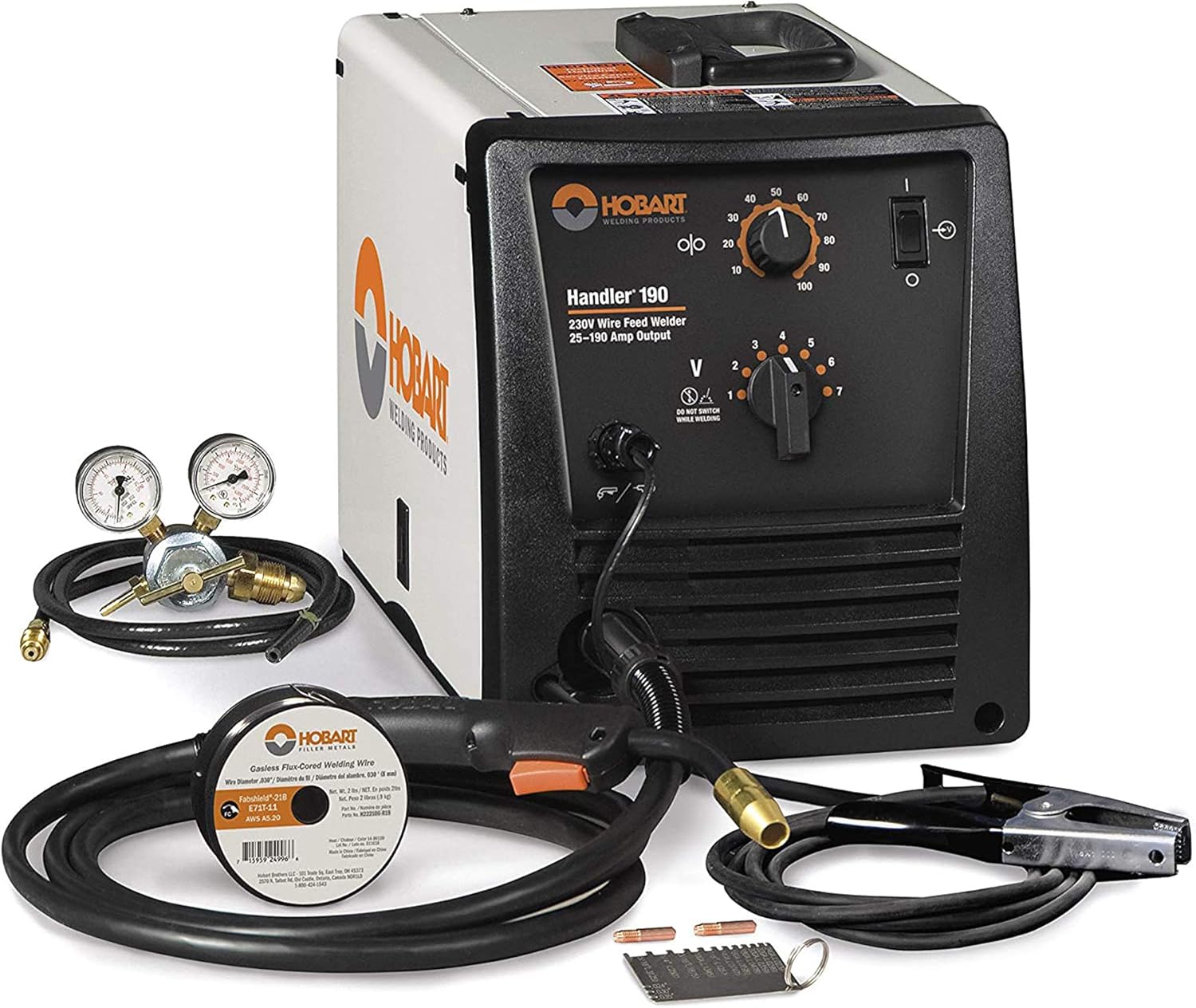
If you need a reliable, no-nonsense MIG welder for a dedicated 230V circuit, the Hobart Handler 190 is the stronger middle option in this lineup. You get 230V input, 25–190 amps, and a practical range for thin automotive panels up to about 5/16″ steel in a single pass when the machine is set up correctly.
The machine comes with useful starter accessories such as a gun, work cable and clamp, a small sample spool, contact tips, and gas equipment, so you can get started without hunting for every basic part separately. Always confirm the exact included accessories on the current Amazon listing before buying.
A major benefit is the built-in spool-gun circuitry. If you plan to add a SpoolRunner later for aluminum, the upgrade path is more straightforward than with a basic entry-level welder. It is a good fit for small fabrication, farm repairs, auto-body projects, and steady garage work where 230V power is already available.
Why You’ll Like It
The Handler 190 gives you more headroom than a 115V-only machine without stepping into a large industrial welder. It is especially helpful if you often weld brackets, frames, gate repairs, trailer parts, or thicker steel that would push a smaller machine too hard.
Who Should Buy This
Choose this model if you have a 230V circuit, want stronger output than the 140, and do not need dual-voltage flexibility. It is a smart choice for shop users who care more about steady welding power than plug-anywhere convenience.
Who Should Avoid This
Skip it if you only have standard 115V outlets or need to move between locations with unknown power. In that case, the Handler 210 MVP gives you more plug flexibility, while the Handler 140 is easier for standard household power.
What People Say
Buyer feedback commonly praises the Handler 190 for consistent welds, good penetration, and easier setup than cheaper machines. Users also like the preset voltage settings and included starter accessories.
Common concerns include the 230V-only requirement, weight, and the possibility of upgrading small items such as the ground clamp over time.
Overall Sentiment: Positive

|
Pros |
Cons |
|---|---|
|
✅ Strong amp range for shop repairs and light industrial jobs |
❌ Requires a 230V circuit |
|
✅ Easy-to-use preset voltage settings |
❌ Heavier than small 115V machines |
|
✅ Spool-gun ready for easier aluminum setup |
❌ Ground clamp quality may be worth upgrading for frequent use |
|
✅ Includes core starter accessories |
❌ You may want extra tips, wire, and gas before bigger jobs |
Situational Benefits
|
Situation |
How It Helps |
|---|---|
|
Auto body repairs |
Preset voltage settings and wire-feed control help you tune for cleaner sheet-metal welds with less trial and error. |
|
Farm equipment and heavier repairs |
The 230V output gives you more confidence on brackets, gates, frames, and repairs up to about 5/16″ steel. |
|
Small fabrication shop |
A steady arc and durable build help reduce frustration during repeat repair and fabrication work. |
|
Hobby projects and home garage |
It gives hobby users more power than a 115V-only welder, as long as a proper 230V circuit is available. |
Ease of Use
|
Feature |
Ease Level |
|---|---|
|
Preset Voltage Settings |
Easy |
|
Infinite Wire Feed Speed Control |
Moderate |
|
Built-in Spool-Gun Circuitry |
Easy |
|
Out-of-the-box Accessories |
Easy |
Key Benefits
- Strong welding range for thin to mid-thick steel
- Preset voltage selections make setup quicker
- Built-in spool-gun circuitry for easier aluminum work
- Durable build for regular garage, farm, and shop jobs
- Includes core accessories to help you get started

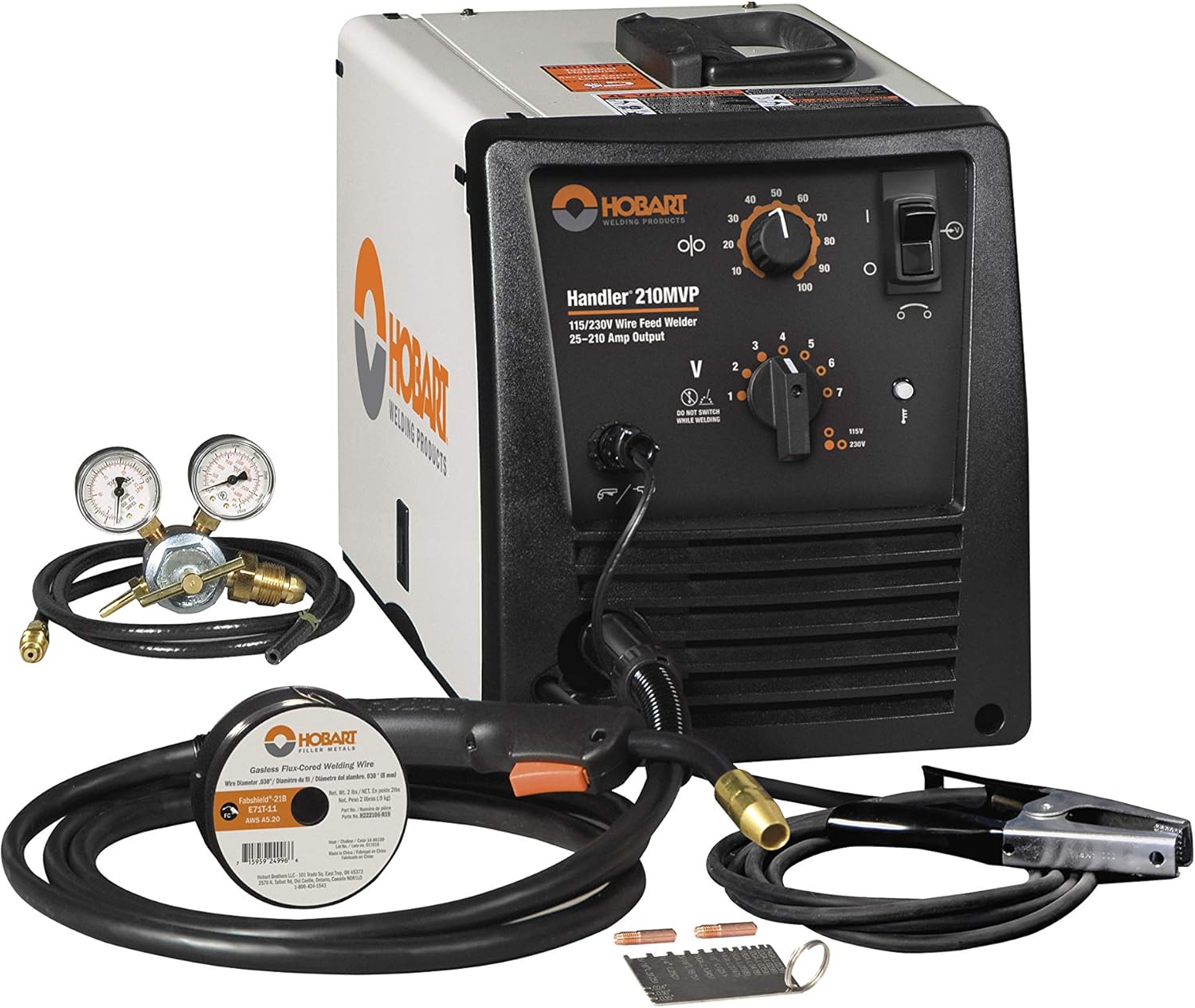
The Hobart Handler 210 MVP is the most flexible pick here because it can run on either 115V or 230V power with the MVP plug system. That matters if you move between a garage, a small shop, a job site, or a farm where power access changes from one project to the next.
On 230V, it gives you the strongest material-thickness range in this group, with capability for thin auto-body panels up to about 3/8″ steel in a single pass when properly set up. The seven voltage settings and infinite wire-feed control help you dial in a clean bead, while the dual-groove drive roll, spool hub, built-in gas solenoid, and regulator setup make it easier to run shielded MIG wire.
If you want one Hobart Handler that can handle both standard outlet work and higher-output shop work, this is the easiest model to recommend. Just remember that 115V power limits maximum output, so heavier steel and longer welds are better handled on 230V.
Why You’ll Like It
The MVP plug system reduces one of the biggest buying worries: whether the welder will work where you need it. You can use common 115V power for lighter work and switch to 230V when you need more output and better performance on thicker steel.
Who Should Buy This
Choose the Handler 210 MVP if you want one welder for multiple locations, mixed repair work, and future growth. It is the best fit if you value flexibility more than the lowest price or lightest weight.
Who Should Avoid This
Skip it if you only need a simple 115V machine for light hobby welding. It is also heavier than the Handler 140, so it is not the easiest option if you move the welder by hand often.
What People Say
Buyer feedback often highlights the Handler 210 MVP’s sturdy build, stable arc, and dual-voltage convenience. Many users like being able to plug into standard power for lighter jobs and 230V power for more demanding shop work.
Common complaints include the weight and small accessory upgrades some users make over time, such as changing the clamp or getting extra consumables.
Overall Sentiment: Positive

|
Pros |
Cons |
|---|---|
|
✅ Multi-voltage plug gives real flexibility between 115V and 230V |
❌ Fairly heavy to move on your own |
|
✅ Strong welding range for light industrial and repair work |
❌ Heavy welding capability is limited when running on 115V |
|
✅ Spool-gun ready so aluminum work is easier to add |
❌ MIG gun trigger feel may not suit every user |
|
✅ Solid build quality and reliable arc performance |
❌ Included clamp and small accessories may be worth upgrading for frequent work |
|
✅ Comes with essential accessories to get started |
Situational Benefits
|
Situation |
How It Helps |
|---|---|
|
Auto body and sheet metal |
Preset voltages and fine wire-feed control help you reach low-spatter settings faster for clean panel work. |
|
Farm and maintenance work |
On 230V power, the output range gives you more room for brackets, frames, and thicker repair work. |
|
Mobile or remote jobs |
The MVP plug lets you use common 115V power for lighter jobs when 230V is not available. |
|
Small fabrication shop |
Durable construction, reliable arc behavior, and spool-gun readiness make it easier to handle varied projects. |
Ease of Use
|
Feature |
Ease Level |
|---|---|
|
Multi-Voltage Plug (MVP) |
Easy |
|
Preset Voltage Selections |
Easy |
|
Infinite Wire-Feed Control |
Moderate |
|
Spool-Hub / Spool-Gun Readiness |
Easy |
Key Benefits
- Dual-voltage MVP plug for 115V or 230V convenience
- Welds 24-ga up to 3/8″ steel when set up correctly on 230V
- Seven voltage settings and smooth wire-feed control
- Spool-hub and spool-gun readiness for aluminum work
- Includes gun, work cable, regulator and basic consumables

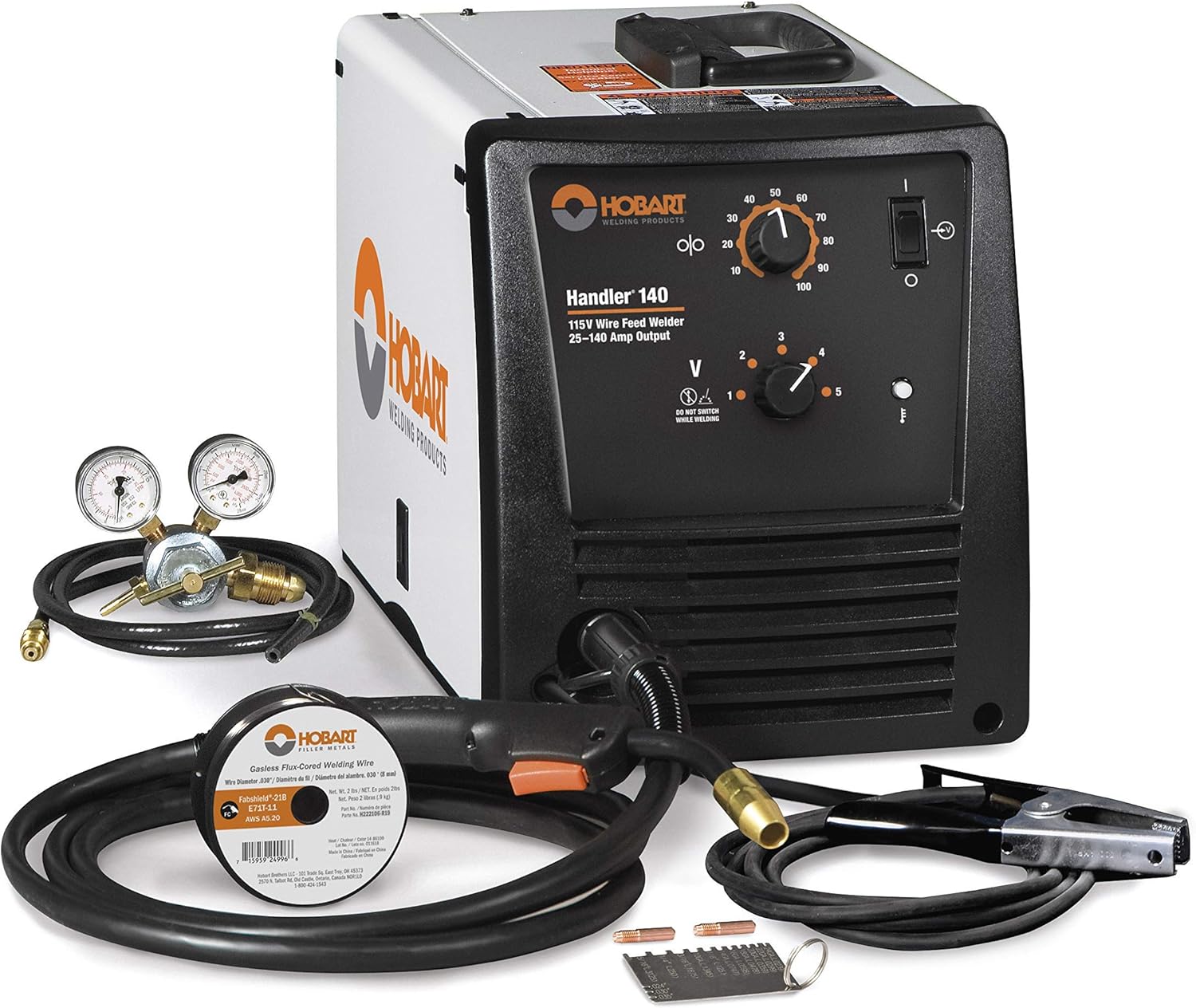
If you want a solid shop welder that is easier to plug in and move around, the Hobart Handler 140 is the best fit in this group. It runs on 120VAC power, so it is easier to use in a home garage than the 230V-only Handler 190.
You can tackle thin auto panels, small brackets, light fabrication, and mild steel up to about 1/4″ when the machine is set up correctly. The cast-aluminum drive system and Quick Select drive roll make wire changes easier, while the sloped control panel and clear regulator gauges help you dial in settings without feeling buried in controls.
This is not the machine to buy for frequent thick steel or long high-output welds. It is best for hobbyists, home repair, light farm work, auto-body practice, and small shop projects where a standard outlet matters more than maximum power.
Why You’ll Like It
The Handler 140 solves the power-access problem for many home users. You do not need a dedicated 230V circuit, and the machine still gives you enough capability for common garage repairs, sheet metal, carts, small frames, and practice welds.
Who Should Buy This
Choose this model if you mostly weld thinner material, want a user-friendly 115V setup, and prefer a smaller machine for a garage or home workshop.
Who Should Avoid This
Skip it if your projects regularly involve thick steel, production-style welding, or heavier aluminum work. For those jobs, the Handler 190 or Handler 210 MVP is a better match.
What People Say
Buyer feedback often praises the Handler 140 for its solid build, smooth wire feed, and simple setup. Users also like the sloped controls, regulator visibility, and Quick Select drive roll.
Common limitations include the small sample wire spool, the 115V power ceiling, and better results when using a proper gas setup instead of relying only on flux-core wire.
Overall Sentiment: Positive

|
Pros |
Cons |
|---|---|
|
✅ Sturdy construction for regular garage and shop use |
❌ Not ideal if you need to carry it long distances |
|
✅ Good for hobbyists and light industrial work up to about 1/4″ steel |
❌ Duty cycle limits sustained heavy welding |
|
✅ User-friendly setup with Quick Select drive roll |
❌ Comes with a small starter spool, so you will likely want more wire and gas |
|
✅ Includes regulator and useful starter accessories |
❌ 120VAC input limits maximum power compared with 230V models |
|
✅ Thermal overload and motor protections support reliability |
Situational Benefits
|
Situation |
How It Helps |
|---|---|
|
Auto body and panel work |
Fine wire-feed control and lighter output range make it easier to work on thin sheet metal. |
|
Home and farm repairs |
It handles common brackets, gates, fixtures, and light repairs without requiring 230V power. |
|
Small fabrication and hobby projects |
The durable build and simple controls make it approachable for furniture, carts, smokers, and practice projects. |
|
Portable job sites and garage work |
Standard outlet compatibility and a straightforward control layout help you get started faster. |
Ease of Use
|
Feature |
Ease Level |
|---|---|
|
Quick Select Drive Roll & Polarity Changeover |
Easy |
|
Sloped Control Panel and Dual-Gauge Regulator |
Easy |
|
Wire-Feed Adjustment |
Moderate |
|
Self-Resetting Motor/Thermal Protection |
Easy |
Key Benefits
- Reliable build and durable metal construction
- Welds mild steel up to about 1/4″ for many shop tasks
- Quick Select drive roll and easy polarity changeover
- Sloped control panel and clear regulator visibility
- Self-resetting motor protection for added reliability
FAQ
Which Hobart Welder Should You Choose For Light Industrial Work?
You should choose based on power access, material thickness, portability, and how often you weld. If you need the most flexible setup, the Hobart Handler 210 MVP is the best all-around choice because it can run on 115V or 230V power. Use 115V for lighter jobs and 230V when you need stronger performance.
If you already have a proper 230V circuit and want a straightforward machine for thicker steel, the Hobart Handler 190 is a strong pick. If you mostly weld at home on standard power and focus on lighter repairs or auto-body work, the Hobart Handler 140 is the easiest and most practical choice.
Can These Welders Handle Aluminum And Stainless Steel?
Yes, these welders can be used beyond mild steel with the right setup, but you need realistic expectations. For aluminum, you usually need a spool gun or correct spool setup, clean material, the right aluminum wire, and typically 100% argon shielding gas. The Handler 190 and Handler 210 MVP are better suited for adding aluminum capability because of their spool-gun readiness.
For stainless steel, use wire and shielding gas matched to the stainless grade and keep stainless tools separate from mild steel tools to reduce cross-contamination. If the weld is structural, critical, or unfamiliar, practice on scrap and consult the machine manual or a qualified welding professional.
Is 115V Enough For MIG Welding?
115V is enough for many light welding jobs, including thin sheet metal, light brackets, hobby projects, and small home repairs. It is not the best choice for frequent thick steel, long beads, or high-output work. If your projects often push beyond light material, a 230V machine such as the Handler 190 or Handler 210 MVP will give you more headroom.
What Practical Tips Help These Welders Perform Better?
Start with the setup chart, then fine-tune voltage and wire speed on scrap from the same material you plan to weld. Keep contact tips, nozzles, and liners clean, replace worn consumables, secure your gas cylinder, and make sure your circuit and breaker match the machine’s requirements.
Watch the duty cycle during heavier welds and allow cooling breaks when needed. Always wear proper welding PPE, protect your eyes and skin, and use good ventilation, especially when welding coated, painted, galvanized, or unknown materials.
What Customers Prefer
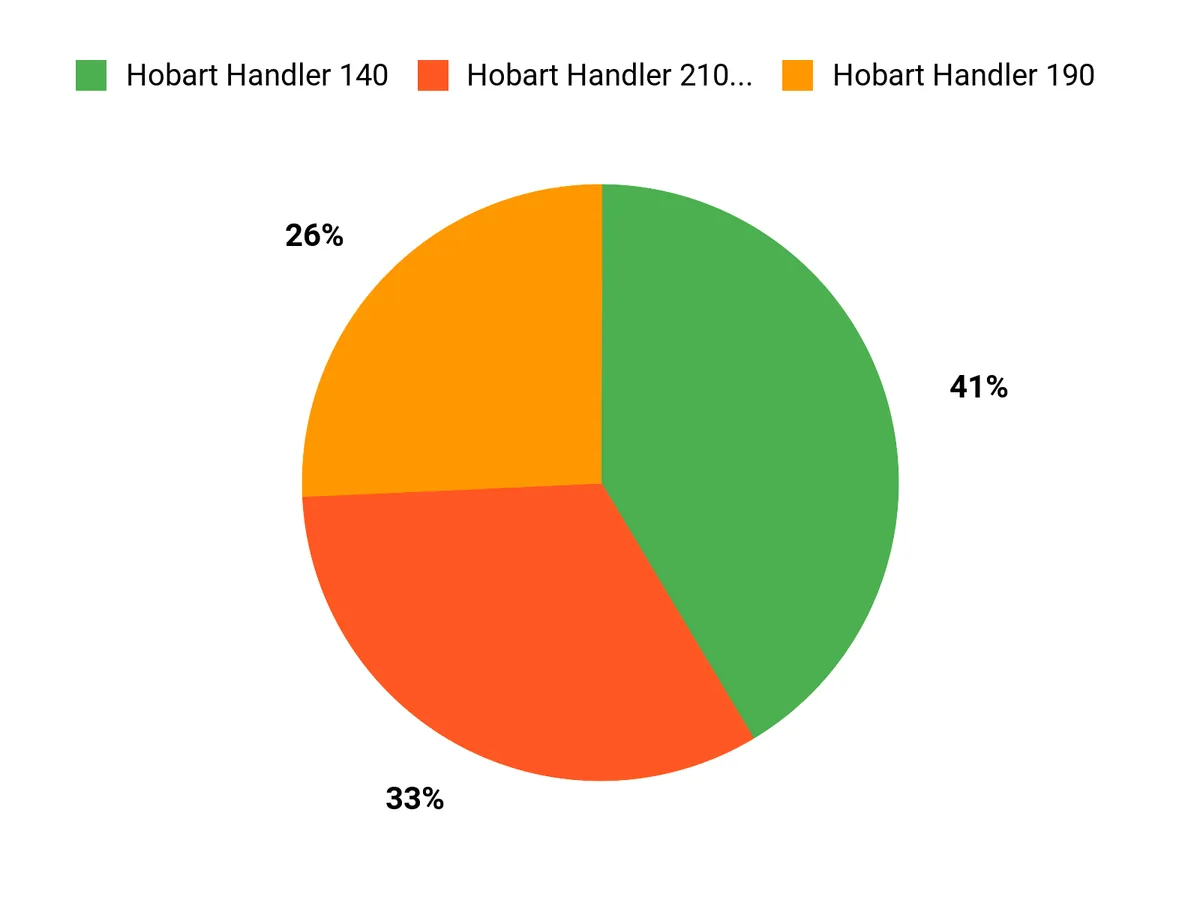
When choosing between the Hobart Handler 140, 190, and 210 MVP, buyers usually care most about power, plug compatibility, material thickness, portability, and future versatility. If you only need light hobby or garage repairs, the Handler 140 is simple and practical. If you need more power on a dedicated 230V circuit, the Handler 190 makes sense. If you want one machine that can move between 115V and 230V settings, the Handler 210 MVP is the most flexible choice.
Wrapping Up
Pick the Hobart welder that matches how you work most often. If you want dual-voltage flexibility for both jobsite and shop use, the Hobart Handler 210 MVP is the easiest recommendation. If you have a dedicated 230V circuit and want strong performance for thicker pieces, the Hobart Handler 190 is the better fit.
If you mostly weld at home, are learning, or want a rugged 115V machine for light fabrication and repairs, the Hobart Handler 140 is a reliable choice. Each model can help you spend less time guessing settings and more time making clean, useful welds.
Final Recommendation
Best overall for most buyers: Hobart Handler 210 MVP, because dual-voltage power makes it the most adaptable.
Best for dedicated shop power: Hobart Handler 190, because it gives you strong 230V performance without paying for dual-voltage flexibility.
Best for home garages: Hobart Handler 140, because it works from standard 115V power and handles many lighter repairs well.
| Hobart 500554 Handler 190 MIG Welder 230V | Hobart 500553 Handler 210 MVP MIG Welder | Hobart Handler 140 MIG Welder 115V (500559) | |
|---|---|---|---|
 |
 |
 |
|
| Best Fit | Dedicated 230V shop power and thicker steel repairs | Mixed 115V/230V use and maximum flexibility | Home garage, hobby welding, and lighter 115V repairs |
| Input Voltage | 230V | 115V/230V (Multi-Voltage Plug) | 115V |
| Material Thickness Range | 24 ga. to 5/16 in. steel | 24 ga. to 3/8 in. steel | 24 ga. to 1/4 in. steel |
| Portability Note | Portable, but best when kept near a 230V circuit | Most flexible, but heavier than the 140 | Easiest fit for standard household power |
| Check Product Details on Amazon | Check Product Details on Amazon | Check Product Details on Amazon |
This Roundup is reader-supported. When you click through links we may earn a referral commission on qualifying purchases.