
To keep a gaming laptop cool, start with the safest fixes: use it on a hard, flat surface, keep every intake and exhaust clear, raise the rear if the bottom vents need more space, clean dust, use a balanced performance mode, and reduce unnecessary CPU or GPU load. Cap FPS when the system is rendering more frames than you need, and use a cooling pad only when its airflow lines up with the laptop’s intake vents. Repasting or undervolting should come later, after basic fixes fail and only when your exact model supports the procedure safely.
Last updated: September 21, 2026 · Author: [VERIFY: add the real author/byline and credentials before publishing]
Quick Answer
Keep a gaming laptop cool by placing it on a hard surface, keeping vents unobstructed, raising the rear for better intake airflow, cleaning dust, switching away from unnecessarily aggressive power modes, adjusting supported fan curves, and capping FPS. Test each change under the same gaming conditions. Use a cooling pad if its fans align with the laptop’s intakes, and only repaste or undervolt when simpler fixes do not solve persistent throttling or instability.
Key Takeaways
- Start with a hard surface, clear vents, and better airflow before opening the laptop or changing advanced settings.
- Cooling pads help most when their fans line up with bottom intake vents; results vary by laptop design.
- Dust cleaning, FPS caps, background-load reduction, and balanced performance modes can reduce heat without hardware modification.
- Judge temperatures against your exact CPU, GPU, and laptop specifications rather than one universal temperature target.
- Repasting and undervolting are advanced options that depend on model support and should come after low-risk troubleshooting.
At a Glance
| Time Required | 10 minutes for basic fixes; longer if the laptop must be opened for cleaning or repasting |
| Difficulty | Easy for airflow and settings; moderate to advanced for internal service |
| Tools Needed | Stable laptop stand, optional cooling pad, compressed air, temperature-monitoring software, OEM control utility, and optional model-specific repaste tools |
| Cost | Free for placement and settings changes; additional cost only if you add a stand, cooling pad, cleaning supplies, or thermal material |
| Best Starting Point | Hard surface → clear vents → elevate rear → balanced mode → FPS/load reduction |
| How to Judge Success | Compare temperatures, clock behavior, FPS stability, and fan behavior under the same game and settings before and after each change |
How to Test Whether a Cooling Fix Works
Change one thing at a time. Use the same room, laptop performance mode, game, scene, graphics settings, and FPS target for each test. Let the system reach a repeatable gaming load, then compare CPU and GPU temperature, clock speed, FPS stability, and fan behavior. A lower peak temperature is useful, but stable clocks and fewer thermal-throttling symptoms are often more meaningful than one temperature number.
-
1. Use a Hard Surface and Elevate the Rear for Better Airflow
Start by putting the laptop on a hard, stable surface. Beds, blankets, couches, cushions, and other soft materials can restrict bottom or side vents. If your model pulls air through the underside, raising the rear a few centimeters can create more intake clearance and improve airflow during extended gaming sessions.
Dell recommends keeping air vents clear and using laptops on a flat, hard or sturdy surface because restricted airflow can contribute to overheating and performance loss.Dell Support
Pro Tip: Do not blindly raise the laptop as high as possible. Use a stable position that leaves the intake vents open without making the laptop slide or flex.
-
[Amazon Products Picked for You]

Whisper-Quiet Operation: Enjoy a noise-free and interference-free environment with super quiet fans, allowing you to focus on your work or entertainment without distractions.

【Adjustable & Ergonomic】:The laptop holder elevates your notebook from 4.34” to 6.59” height (6 level height) for a perfect eye level, letting you fix posture and reduce your neck fatigue, back pain and eye strain. Very comfortable for working in home, office and outdoor.(Please Note: The two support bars must be inserted into the slots at the same level to ensure balance on both sides)
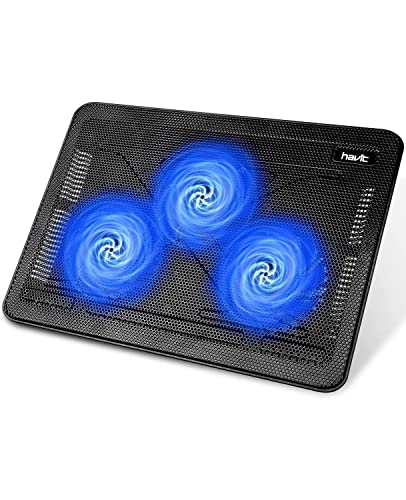
Ultra-Portable: Slim, portable, and light weight allowing you to protect your investment wherever you go
2. Use a Cooling Pad When It Matches the Intake Layout
A cooling pad adds active airflow under the chassis. It is most useful when your gaming laptop has bottom intake vents that can receive air directly from the pad’s fans. A pad cannot repair a failed internal fan, a clogged heatsink, or another hardware fault.
In one controlled Notebookcheck test, a cooling pad reduced average CPU temperature from 92 °C to 80 °C and GPU temperature from 76 °C to 70 °C while running The Witcher 3. The same test also measured more fan noise, and the result applied to one specific laptop and pad combination, so your result may be smaller or larger.Notebookcheck (2020-05-07)
Choose a cooling pad by intake alignment, not fan count alone. The pad’s airflow needs to reach the laptop’s actual intake openings.
Run the same gaming test before and after adding the pad. Keep the game, scene, graphics settings, FPS cap, power mode, and room conditions as consistent as possible.
-
[Amazon Products Picked for You]

👍【Triple Efficient Fans】TECKNET laptop cooling pad with 3 powerful fans works at 1200 RPM to pull in cool air from the bottom to prevent your laptop, notebook, netbook, Ultrabook, Apple MacBook Pro cool from overheating during extended use or intense gaming.

【12-Core Deep Cooling Fans】The Trullypine F12 Laptop Cooling Pad is equipped with 12 high-speed silent fans, providing excellent cooling effect and temperature control, 360 degrees all-round dynamic cooling; The large metal mesh provides great heat dissipation performance. Four diamond-shaped groove designs bring better heat dissipation space, being built to accelerate heat dissipation.At the same time, these high-end laptop cooling fans are all equipped with capacitor components to reduce working noise, very quiet and create a low noise environment for you!

Targeted Cooling Design:Feel like the airflow directly above the fans isn’t as strong as expected? Don’t worry — simply move your hand between the two fans and you’ll notice a surprisingly cool. The TECKNET cooling pad for laptop features two large fans paired with an internal channel design. This cleverly draws air from the sides and bottom, directing a concentrated, cool flow right to the center of your laptop — CPU gets hottest — for efficient, targeted cooling.It's a great gift as a work or gaming computer cooling pad
3. Keep Air Vents and Fans Clean
Dust restricts the airflow passing through vents, fans, and heatsink fins. As airflow falls, fans may become louder and components can reach their thermal limits sooner during gaming.
Inspect the vents periodically and clean them when you see buildup, fan noise increases, or temperatures begin rising under the same workload. Check more often in dusty rooms or where pet hair is common. Dell recommends shutting the computer down and using canned compressed air to remove debris from external vents.Dell Support
If external cleaning does not restore airflow and your service documentation permits internal access, follow the exact maintenance procedure for your laptop model rather than using a generic disassembly sequence.
Warning: Power the laptop down before cleaning. Do not use a household vacuum, blower, or moisture-producing method on internal electronics. Follow the laptop manufacturer’s service guidance before opening the chassis.
-
[Amazon Products Picked for You]
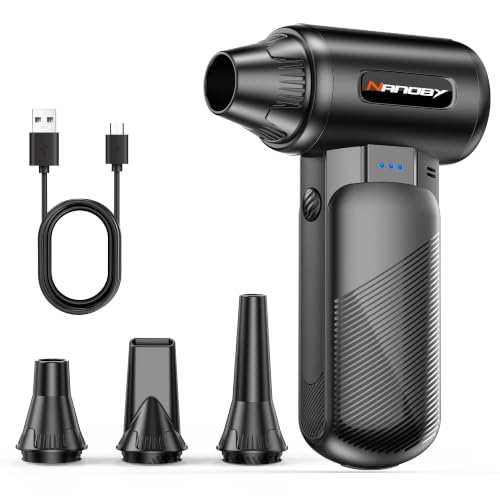
POWERFUL 130000RPM ELECTRIC AIR DUSTER: Equipped with a high-speed motor delivering up to 130000RPM airflow, this cordless compressed air duster provides strong air power to remove dust from keyboards, computers, cameras, and electronics. Ideal for PC cleaning, office equipment, and car interiors.
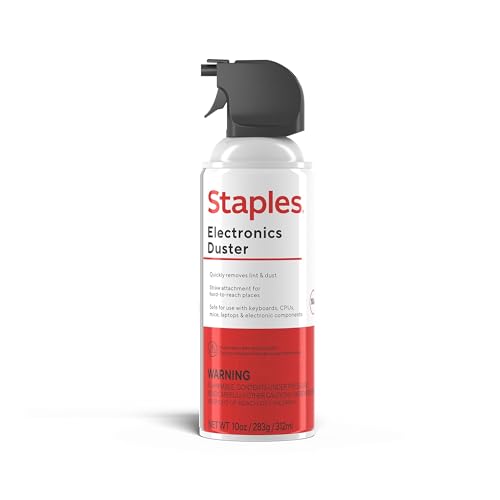
POWERFUL DUST REMOVAL FOR ELECTRONICS – Removes dust, dirt, and debris from keyboards, computers, laptops, printers, gaming consoles, and other sensitive electronics for optimal performance.

POWERFUL DUST REMOVAL FOR ELECTRONICS – Removes dust, dirt, and debris from keyboards, computers, laptops, printers, gaming consoles, and other sensitive electronics for optimal performance.
4. Adjust Performance Modes to Reduce Heat
Gaming-laptop utilities can change CPU and GPU power limits, fan behavior, and boost targets. Mode names vary by manufacturer, but the basic trade-off is similar: higher-performance modes can use more power and therefore produce more heat, while balanced or quiet modes reduce power in exchange for some peak performance.
ASUS Armoury Crate, for example, provides Silent, Performance, Turbo, Windows, and Manual modes. ASUS states that Performance balances power, temperature, and acoustics, while Turbo increases CPU and GPU power and can produce higher temperatures even with faster fans.ASUS ROG
For many games, start with your laptop’s balanced or normal gaming profile. Move to a higher-power mode only when you actually need the additional performance and the cooling system can handle it without persistent throttling.
Typical Mode Description Silent / Eco Lower power and noise; gaming performance may also be lower Balanced / Performance Middle ground between performance, temperature, and fan noise Turbo / High Higher CPU/GPU power and maximum-performance targets; heat and fan noise may increase Manual / Custom User-defined fan, power, or clock settings where the laptop supports them -
5. Customize Supported Fan Curves Carefully
Manual fan curves can increase airflow earlier under load while allowing quieter operation at lower temperatures. Availability depends on the laptop and its OEM software.
ASUS Armoury Crate Manual Mode, for example, lets supported systems set fan speeds at temperature points and adjust selected power or performance parameters.ASUS ROG Manual Mode
Make small changes and test after each one. Do not combine a higher power target with a fan curve that is too quiet, because the extra power can erase the cooling benefit. Watch temperatures, clock speeds, FPS stability, and fan noise while testing.
-
6. Limit FPS and Reduce Unnecessary CPU or GPU Load
An FPS cap can reduce unnecessary GPU work when a game would otherwise render more frames than you need. NVIDIA’s Max Frame Rate control can limit a game’s frame rate, and NVIDIA documents its use as part of a power-saving configuration that lowers GPU frequency and power use.NVIDIA
Try a limit that fits your game and display, such as 60, 90, 120, or a value slightly below the display’s maximum refresh rate when that matches your performance goal. Do not assume one number is best for every game.
Also check for unnecessary background applications consuming CPU resources. If the laptop still becomes unusually hot, reducing demanding graphics settings can lower the workload further. Dell includes closing unused applications and reducing graphics demands among its overheating-efficiency recommendations.Dell Support
Note: Compare FPS stability as well as temperature. A lower cap that produces stable frametimes can be more useful than chasing the highest possible frame rate while the laptop repeatedly hits thermal or power limits.
-
7. Repaste or Undervolt Only When Your Model Supports It
If airflow is clear and software changes do not solve persistent thermal problems, internal service may be the next step. Repasting requires opening the laptop, removing the heatsink, cleaning the existing thermal material correctly, and reassembling the cooling system with the proper procedure for that specific model.
iFixit’s general laptop-repaste guide emphasizes shutting the laptop down, disconnecting the battery, following ESD precautions, carefully removing the heatsink, and cleaning the contact surfaces before applying new thermal paste.iFixit
Do not replace standard thermal compound with liquid metal unless your laptop’s design and service documentation specifically support it. Liquid metal is electrically conductive and a mistake can damage surrounding components.
Important: Undervolting is not available on every laptop. The Plundervolt security issue led to Intel microcode and BIOS mitigations that can disable the undervolting interface on affected configurations. Use only controls your OEM exposes or explicitly supports, and stability-test any permitted voltage change.Plundervolt Advisory
Which Cooling Fix Should You Try First?
Use the lowest-risk fixes in order. First move the laptop to a hard surface, clear every vent, and create adequate intake space. Next clean visible dust, switch to a balanced performance profile, close unnecessary background work, and cap FPS where it makes sense. Test after each change under the same game conditions.
If temperatures, clocks, and FPS stabilize, you may not need anything else. Add a cooling pad only when its airflow matches the laptop’s intake layout. Consider opening the chassis, repasting, or model-supported undervolting only when simpler fixes fail. If the laptop still shuts down, loses substantial performance, reports a fan fault, smells abnormal, or shows battery swelling or chassis separation, stop gaming on it and follow the manufacturer’s service process.
Related Guides
Frequently Asked Questions
How do I keep laptop temperature low while gaming?
Start with a hard surface, unobstructed vents, and enough clearance under the intake. Then clean dust, use a balanced performance profile, reduce unnecessary background load, and cap FPS when the game is rendering more frames than you need. Test a cooling pad only if its airflow lines up with the laptop’s intake vents. Leave repasting and undervolting for situations where the basic fixes do not solve persistent throttling or instability.Dell
Can I cool my gaming laptop without a cooling pad?
Yes. Put the laptop on a hard surface, raise the rear if that improves intake clearance, keep vents clean, switch to a balanced power or thermal mode, close unnecessary background applications, and cap FPS when appropriate. A cooling pad is an optional airflow aid, not a requirement for every laptop.Dell
Does lowering FPS reduce gaming laptop temperature?
It can. An FPS cap can stop the GPU from rendering unnecessary frames, which may lower GPU frequency and power use when the game was previously pushing the hardware harder. The temperature change depends on the game, FPS limit, CPU/GPU bottleneck, laptop power mode, and cooling system.NVIDIA
What CPU temperature is OK while gaming?
There is no universal safe gaming temperature for every laptop CPU. Intel states that Tjunction Max varies by processor and is usually in the 100–110 °C range, so you should check the specification for your exact processor. More important warning signs are sustained operation near that limit together with thermal throttling, large clock reductions, instability, or shutdowns.Intel
Is 70 °C too hot for a gaming laptop?
A 70 °C CPU reading during gaming is not automatically an overheating condition. The correct limit depends on the exact processor and laptop design. Compare the reading with the processor’s documented thermal specification and watch whether performance stays stable rather than judging the laptop from one temperature value alone.Intel
Is 90 °C too hot for a gaming laptop CPU?
A 90 °C CPU reading is high, but it is not automatically beyond the processor’s specification. Check the exact CPU’s Tjunction or maximum operating temperature. Investigate more closely if the laptop remains near its limit, thermal throttling appears, clock speeds fall sharply, the game becomes unstable, or the computer shuts down.Intel
Safety & Compliance Notes
- Disassembly and repasting can damage connectors, screws, heat pipes, thermal pads, or other components if the procedure is wrong. Follow the service documentation for the exact laptop and use ESD precautions before internal work.iFixit
- Undervolting availability varies by CPU, BIOS, firmware, and manufacturer. Plundervolt-related Intel microcode and BIOS mitigations can disable the voltage-control interface on affected configurations.Plundervolt Advisory
- Liquid metal is electrically conductive and can damage electronics if it escapes the intended contact area. Do not use it unless the laptop’s design and service procedure specifically support it.
- Temperature limits are component-specific. Check the exact CPU, GPU, and laptop documentation instead of relying on one universal “safe” gaming temperature.Intel
Sources
- Dell Support — Laptop overheating, ventilation, cleaning, and workload guidance
- Notebookcheck — Controlled laptop cooling-pad test
- ASUS ROG — Armoury Crate operating modes
- ASUS ROG — Manual Mode and fan-curve controls
- NVIDIA — Max Frame Rate and power-saving behavior
- iFixit — General laptop repasting procedure and ESD precautions
- Plundervolt — Intel undervolting security advisory background
- Intel — Processor temperature and Tjunction Max guidance
