Laptop temperatures vary widely by processor, graphics hardware, chassis design, power mode, workload, and room temperature. A CPU reaching the 80s or even low 90s Celsius during gaming or rendering is not automatically overheating. The better test is whether the temperature stays below the hardware’s specified thermal limit without repeated throttling, crashes, or shutdowns.
Quick Answer
Most modern laptops are not automatically too hot at 85°C. Under heavy load, temperatures in the 80s and even low 90s can be normal. The real limit is the CPU or GPU’s model-specific thermal ceiling. Investigate temperatures that remain near that limit, reduce performance, or cause shutdowns.
Key Takeaways
- There is no single maximum safe temperature for every laptop CPU or GPU.
- Many laptops operate in the 70–90°C range during demanding workloads without being defective.
- Check your exact processor’s Tjmax or maximum operating temperature before judging a reading.
- High temperatures during light use, repeated throttling, abnormal fan behavior, crashes, and thermal shutdowns deserve investigation.
- Clear vents, a hard work surface, sensible power settings, current firmware, and a working cooling system matter more than chasing one universal temperature number.
What Laptop Temperature Is Too Hot?
A laptop is too hot when its CPU, GPU, or another component repeatedly reaches the thermal limit defined for that hardware and the system begins reducing performance or activating protective measures. A fixed cutoff such as 85°C or 95°C cannot accurately describe every laptop.
Intel explains that its processors have model-specific maximum operating temperatures and that the limit is commonly in the 100–110°C range. As the processor approaches its configured maximum junction temperature, internal thermal controls can reduce frequency and power. The exact value should be checked for the specific processor rather than assumed from a generic chart. See Intel’s processor temperature guidance.
AMD specifications follow the same model-specific approach. For example, the AMD Ryzen 7 8845HS has a maximum operating temperature, or Tjmax, of 100°C. That does not mean every AMD processor has the same limit.
A temperature reading only becomes meaningful when you compare it with the workload and the thermal specification of the exact processor or GPU.
Brief peaks near a processor’s thermal ceiling are also different from remaining there continuously. Modern processors use thermal-management mechanisms to reduce heat, and Intel notes that overheating damage is unlikely under normal operation because processors can throttle and, if necessary, shut down to protect themselves.
Note: Internal CPU or GPU sensor temperatures are not the same as the temperature of the laptop case. Apple specifically cautions that third-party sensor apps measure internal components rather than external case temperature.
[Amazon Products Picked for You]

👍【Triple Efficient Fans】TECKNET laptop cooling pad with 3 powerful fans works at 1200 RPM to pull in cool air from the bottom to prevent your laptop, notebook, netbook, Ultrabook, Apple MacBook Pro cool from overheating during extended use or intense gaming.

Targeted Cooling Design:Feel like the airflow directly above the fans isn’t as strong as expected? Don’t worry — simply move your hand between the two fans and you’ll notice a surprisingly cool. The TECKNET cooling pad for laptop features two large fans paired with an internal channel design. This cleverly draws air from the sides and bottom, directing a concentrated, cool flow right to the center of your laptop — CPU gets hottest — for efficient, targeted cooling.It's a great gift as a work or gaming computer cooling pad

New Upgraded Version-Cooling Gets Quiet and Quicker: Equipped with 5.5-inch large diameter turbo booster fan, combined sealed foam, ensures perfect cooling effect, 360 degrees all-round dynamic cooling, your laptop can reduce temperature by 44°C in 90 seconds (CPU+GPU), even during 4K rendering or AAA gaming, operating noise ≤70dB
What Are Normal Laptop Temperatures by Task?
There is no manufacturer-approved temperature chart that applies to every laptop, but workload-based ranges can still be useful as a rough troubleshooting guide. Thin ultrabooks, gaming laptops, fanless systems, high-performance processors, and different fan profiles can behave very differently.
| Workload | Common CPU Range | How to Interpret It |
|---|---|---|
| Idle | About 30–55°C | Often normal, but background activity and fan profiles can raise it. |
| Browsing, office work, streaming | About 40–70°C | Usually unremarkable if performance and fan behavior are normal. |
| Gaming, compiling, rendering | About 70–90°C | Common on performance laptops; compare with the exact processor limit. |
| 90°C and above | Model-dependent | Not automatically unsafe. Check Tjmax, workload, throttling, and whether the temperature remains high. |
| At or near the specified thermal limit | Varies by processor | Thermal controls may reduce performance. Persistent operation here deserves investigation. |
GPU temperatures also depend on the exact graphics processor and laptop manufacturer’s thermal design. Instead of treating 85°C or 90°C as a universal GPU limit, compare the reading with the GPU or laptop manufacturer’s specification and watch for clock-speed reductions, artifacts, instability, or unusually high temperatures during light use.
Why Do Laptop Temperatures Vary So Much?
Two laptops doing the same task can report substantially different temperatures without either one being defective. Important variables include:
- Processor power: Higher-performance CPUs and GPUs can generate more heat under load.
- Chassis thickness: Thin laptops have less physical space for heatsinks, heat pipes, and airflow.
- Fan profile: Quiet modes may allow higher temperatures before increasing fan speed.
- Power mode: Performance modes generally allow higher power consumption and heat output.
- Ambient temperature: A warmer room reduces the cooling system’s ability to move heat away from internal components.
- Vent placement: Blocked bottom or side vents can sharply reduce airflow.
- Dust and wear: Dust accumulation, damaged fans, or other cooling-system problems can reduce heat dissipation.
For example, Apple specifies an ambient operating range of 10–35°C for its Mac laptops and recommends using them on a stable surface with adequate ventilation. That environmental specification should not be confused with the temperature of the CPU itself. See Apple’s operating-temperature guidance.
How Can You Check Your Laptop Temperature?
The most useful approach is to identify the hardware first and then compare real sensor readings with the manufacturer’s specification.
- Identify the processor and GPU. On Windows, check Settings > System > About, Task Manager, Device Manager, or your manufacturer’s system-information utility.
- Find the thermal specification. For Intel processors, search the exact model on Intel’s specification pages and look for Tjunction, Tjunction Max, or maximum operating temperature. For AMD processors, open the exact processor’s product page and look for Max. Operating Temperature (Tjmax).
- Monitor temperatures under real workloads. CPUID HWMonitor reads supported CPU, GPU, storage, fan, power, and temperature sensors. Manufacturer utilities may also expose thermal information and performance modes.
- Compare idle and loaded behavior. Record the temperature after the laptop has been mostly idle and again during the workload that causes concern.
- Watch performance at the same time. A temperature near the thermal ceiling combined with falling clock speeds, stuttering, or reduced performance is more informative than the temperature alone.
Some BIOS or UEFI interfaces also expose temperature information, although availability varies by manufacturer. Remember that a BIOS reading represents a different workload from gaming, video editing, compiling, or other demanding tasks.
Pro Tip: Record the temperature, CPU/GPU utilization, clock speed, fan behavior, and workload together. A reading of 92°C during a demanding render means something very different from 92°C while the laptop is nearly idle.
[Amazon Products Picked for You]

【ADJUSTABLE TEMPERATURE AND BRIGHTNESS】Our video conference lights have 3 color temperatures (white light/warm light/natural light) which are 3200k-6800k, 5 levels of brightness adjustment, and 48 LED lamp beads with 10W brightness. Easily change your ideal lighting with the switch, to make your skin more perfect and more suitable your environment.

Adjustable Color Temperature & Brightness: ACMEZING video conference light has 5 color temperature: Warm warm, Warm white, Natural white, Daylight, Cold white, adjustable range is 3200K to 6500K. Equipped with 64 10W brightness lamp beads and 5 level brightness adjustment. This webcam light can meet your different lighting need under various occasions to help you look your best.

【Protect your Eyes】No screen glare, this monitor light bar adopts asymmetrical optical design only illuminates the keyboard and desk, eliminates reflective glare off the screen, no reflection and effectively protects your eyes, The 54 LED beads have a long lifespan which provide a soft and even lighting source and the lamp is designed to withstand daily wear and tear.
What Are the Signs Your Laptop Is Overheating?
Temperature readings should be considered together with the laptop’s behavior. Dell identifies slow performance, unexpected shutdowns, crashes, abnormal fan behavior, blocked ventilation, heavy resource use, and fan problems among common overheating symptoms and causes.
| Symptom | Possible Meaning | Recommended Check |
|---|---|---|
| Sudden shutdowns | Thermal protection or another hardware/power problem | Check temperatures, vents, fans, diagnostics, and OEM support guidance |
| Performance drops or stutter | Possible thermal or power throttling | Compare temperature with clock speed and processor limit |
| Constant loud fans during light use | High background load, dust, restricted airflow, firmware behavior, or fan issue | Check processes, vents, updates, and hardware diagnostics |
| Very high temperature at idle | Unexpected CPU/GPU load or reduced cooling performance | Check background activity and cooling system |
| Graphics artifacts or crashes | Possible GPU, driver, power, or thermal instability | Check GPU temperature, drivers, diagnostics, and manufacturer support |
A warm keyboard, palm rest, or underside alone does not prove that the laptop is overheating. Internal sensor readings and system behavior provide better evidence.
How Can You Cool Down Your Laptop?
If the laptop is running hotter than expected, start with simple airflow and workload checks before considering internal repairs.
- Move it to a hard, stable surface. Beds, blankets, pillows, couches, and other soft materials can restrict ventilation. HP specifically warns that blocked airflow can contribute to overheating.
- Check every intake and exhaust vent. Make sure nothing is covering them and leave enough space around the laptop for airflow.
- Reduce unnecessary workload. Close unwanted high-CPU or high-GPU applications and check Task Manager or your operating system’s activity monitor for runaway processes.
- Try a balanced or efficiency-oriented power mode. Reducing CPU/GPU power can reduce heat when maximum performance is unnecessary.
- Install manufacturer-approved BIOS, firmware, and driver updates. Thermal-management and fan-control behavior can depend on firmware and system software.
- Inspect the vents for dust. Dell and HP both identify dust accumulation and restricted airflow as common causes of cooling problems.
- Consider a cooling pad if airflow design suits it. A pad may improve airflow on some laptops, but results vary. It will not repair a failed fan, blocked heatsink, or other hardware fault.
- Seek service if the problem continues. Repeated thermal shutdowns, a fan that does not run correctly, persistent throttling during ordinary workloads, or abnormal temperatures after basic troubleshooting can justify professional diagnosis.
Warning: Power the laptop off and disconnect external power before cleaning its vents. Follow the laptop manufacturer’s instructions for compressed air, disassembly, fan access, or internal servicing. Opening a laptop unnecessarily can damage components and may affect warranty coverage.
There is no need to clean every laptop on one fixed three- or six-month schedule. Dust exposure differs greatly between homes, offices, workshops, pet environments, and travel use. Inspect the vents periodically and clean them when airflow is restricted, visible dust accumulates, or the manufacturer recommends maintenance.
[Amazon Products Picked for You]

【12-Core Deep Cooling Fans】The Trullypine F12 Laptop Cooling Pad is equipped with 12 high-speed silent fans, providing excellent cooling effect and temperature control, 360 degrees all-round dynamic cooling; The large metal mesh provides great heat dissipation performance. Four diamond-shaped groove designs bring better heat dissipation space, being built to accelerate heat dissipation.At the same time, these high-end laptop cooling fans are all equipped with capacitor components to reduce working noise, very quiet and create a low noise environment for you!

Intelligent AI Temperature Control with Myth.cool Software: Three smart modes (Low/Medium/High) auto-adjust fan speed to your laptop's workload. Download the latest version at “ llanolife.com/pages/support-download ” for seamless control, or go manual with the built-in scroller
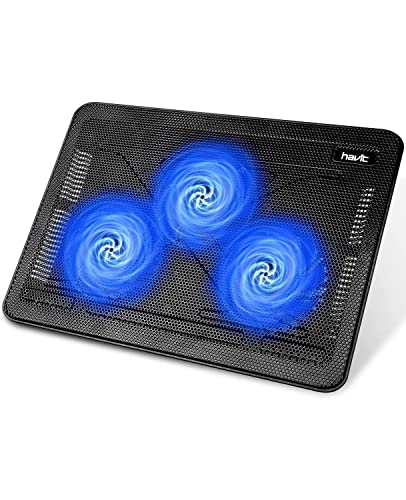
Ultra-Portable: Slim, portable, and light weight allowing you to protect your investment wherever you go
When Does a Hot Laptop Need Professional Repair?
High temperature during an intensive workload does not automatically mean the laptop needs repair. Service becomes more reasonable when one or more of these problems persist:
- The computer repeatedly shuts down during workloads it previously handled normally.
- The CPU or GPU remains near its specified thermal limit during light tasks.
- Performance falls sharply because of repeated thermal throttling.
- A cooling fan does not spin, makes abnormal mechanical noises, or repeatedly reports diagnostic errors.
- Cleaning accessible vents and restoring airflow does not improve the behavior.
- The manufacturer diagnostic tool reports a fan or thermal-system fault.
Internal jobs such as replacing fans, removing a heatsink, or replacing thermal interface material require model-specific procedures. If you are not experienced with laptop repair, use the manufacturer’s service documentation or a qualified technician instead of disassembling the system based on generic instructions.
Frequently Asked Questions
Is 70 Degrees Celsius Too Hot for a Laptop?
No. A CPU temperature of 70°C is generally unremarkable during gaming, video editing, compiling, or another moderate-to-heavy workload. During idle or very light use, however, an unexpected 70°C reading is worth comparing with CPU usage, fan behavior, room temperature, and the laptop’s normal baseline.
How Much Heat Is Safe for a Laptop?
There is no universal safe internal temperature for every laptop. Check the maximum operating temperature or Tjmax for the exact CPU and the applicable GPU or laptop-manufacturer specification. Staying below those limits without persistent throttling or shutdowns is more meaningful than following one generic temperature number.
Is 92 Degrees Hot for a CPU Laptop?
92°C is hot, but it is not automatically unsafe for every modern laptop CPU. Some processors have maximum junction temperatures around 100°C or higher. A brief 92°C peak during a heavy workload may be within design limits; 92°C during light activity or persistent throttling deserves investigation.
What Is the Maximum Temperature for a Laptop?
A laptop does not have one universal maximum temperature. Each CPU, GPU, battery, SSD, and other component has its own thermal specification. Intel says processor maximum operating temperatures vary by model and are commonly around 100–110°C, while individual AMD mobile processors may specify values such as 100°C.
Is 90°C Safe While Gaming on a Laptop?
It can be. High-performance laptops can reach around 90°C during demanding games without exceeding the processor’s specification. Check the exact thermal limit and watch for sustained throttling, instability, or temperatures that remain unusually high after the workload ends.
How Do I Find My Laptop CPU’s Maximum Temperature?
Find the exact CPU model first. For an Intel processor, look up that model in Intel’s specifications and find Tjunction or maximum operating temperature. For an AMD processor, open the exact product page and look for Max. Operating Temperature (Tjmax). Your laptop manufacturer’s documentation can also specify system-specific thermal behavior.
Conclusion
A laptop should not be judged by a universal 85°C or 95°C rule. Temperatures in the 70–90°C range are common during demanding work on many laptops, while some processors have thermal limits around 100°C or higher. The important questions are whether the reading remains below the exact hardware specification, whether performance is being throttled, and whether the laptop shows symptoms such as abnormal fan behavior, instability, or repeated shutdowns.
Monitor temperatures alongside workload and clock speed, keep vents unobstructed, use the laptop on a stable surface, maintain its cooling system, and follow manufacturer-specific thermal guidance. If temperatures remain near the hardware limit during light use or thermal problems continue after basic troubleshooting, professional diagnosis is more useful than relying on a generic temperature chart.
Sources
- Intel — Information About Temperature for Intel Processors — explains Tjunction Max, thermal controls, throttling, automatic shutdown, and model-specific limits.
- AMD — Ryzen 7 8845HS Specifications — example of a modern mobile processor with a 100°C maximum operating temperature.
- Dell — How to Prevent Overheating — airflow, dust, power settings, firmware, fan diagnostics, and overheating troubleshooting.
- HP — Notebook Fan and Vent Guidance — dust removal, ventilation, and hard-surface recommendations.
- Apple — Keep Your Mac Laptop Within Acceptable Operating Temperatures — ambient temperature, ventilation, internal sensors, and case-temperature guidance.
- CPUID — HWMonitor — official information about CPU, GPU, temperature, fan, power, and other hardware-sensor monitoring.
