
Understanding drone components helps you see how a drone lifts, stays balanced, follows your commands, and captures stable footage. Each part has a clear job, from the frame providing structure to the flight controller processing sensor data and adjusting motor output. When you know how these pieces work together, you can choose better parts, diagnose problems faster, and improve overall drone performance.
Quick Answer
A drone works through several connected systems: the frame holds everything together, motors and propellers create lift, the flight controller manages stability, sensors provide flight data, the battery supplies power, and the radio system keeps the pilot in control.
Key Takeaways
- The frame, motors, propellers, flight controller, ESCs, battery, sensors, and radio system all work as one connected flight platform.
- Motor size, propeller pitch, battery voltage, and drone weight must match each other for safe and efficient flight.
- Sensors such as gyroscopes, accelerometers, barometers, GPS modules, and obstacle sensors help the drone stay stable and navigate accurately.
- Cameras and gimbals are not required for flight, but they are essential for smooth aerial photos, video, mapping, and inspection work.
- Good maintenance, safe battery handling, and correct calibration can prevent many common drone problems.
The Frame: The Structural Backbone of a Drone
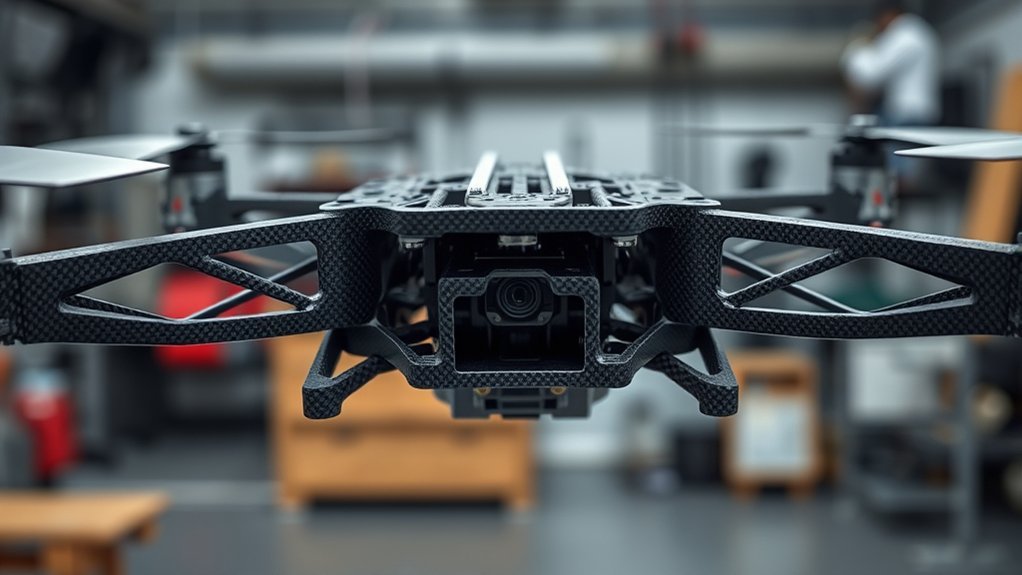
The frame acts as the structural backbone of a drone. It supports the motors, battery, flight controller, ESCs, camera, landing gear, and wiring. A strong frame protects these parts during normal flight, rough landings, and minor impacts.
Common frame materials include carbon fiber, plastic composites, aluminum, and molded polymer. Carbon fiber is popular in racing and freestyle drones because it offers excellent strength for its weight. Aluminum can work well for larger or specialized builds, while molded plastic helps keep many consumer drones compact and affordable.
The frame’s shape also affects aerodynamics, vibration, payload capacity, and maneuverability. A compact racing frame gives quick response and agility. A larger photography drone frame usually gives more room for a gimbal, camera, battery, and landing gear.
When considering frame size and configuration, you need to check compatibility with your motors, propellers, battery, and flight controller. If the frame is too small for the propellers, the props may strike the arms or body. If it is too weak for the payload, vibrations and flex can hurt flight stability.
A robust frame is, consequently, a fundamental component of any high-performing drone. It does more than hold parts together; it shapes how the drone handles, how much it can carry, and how well it survives regular use.
Motors and Propellers: The Powerhouse of Flight
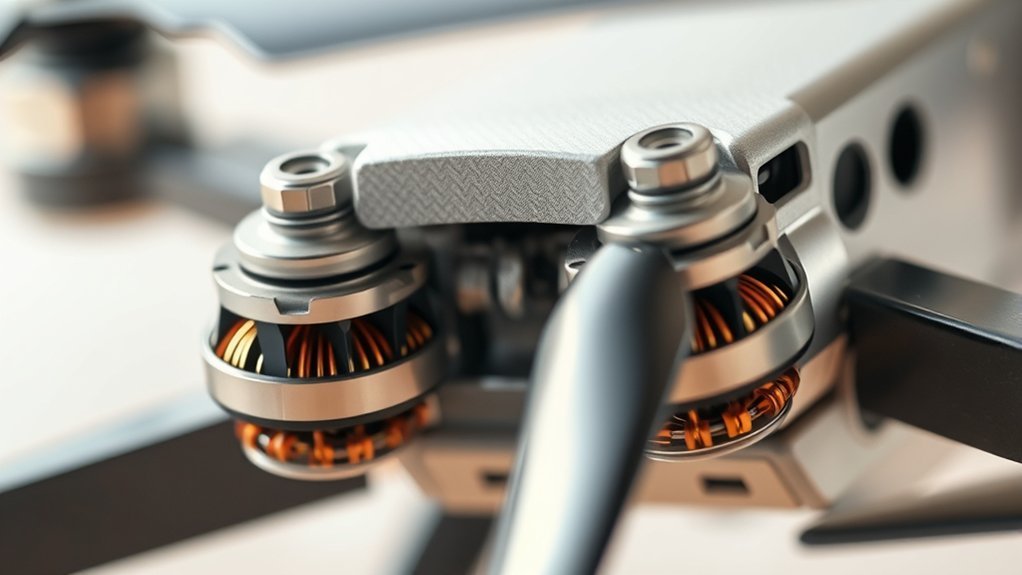
Motors and propellers are the main parts that turn electrical energy into lift. The motors spin the propellers, and the propellers push air downward. That downward airflow creates upward thrust, allowing the drone to take off, hover, climb, turn, and descend.
Most modern camera drones, racing drones, and hobby quadcopters use brushless motors. These motors are efficient, responsive, and durable compared with older brushed motors. Brushed motors still appear in small toy drones because they are simple and inexpensive, but they wear faster and usually deliver less performance.
Propellers strongly affect lift, flight time, noise, stability, and motor load. A propeller that is too large or too aggressive can overwork the motor and ESC. A propeller that is too small may not produce enough thrust for safe flight.
Motor Types Overview
While many components contribute to drone performance, the choice of motors and propellers stands as a crucial factor in achieving efficient flight.
Brushless motors dominate the market due to their superior efficiency, reliability, and low maintenance compared with brushed motors. When selecting motors, consider their kV rating, which indicates the motor’s approximate RPM per volt with no load. Higher kV motors often spin faster and suit smaller propellers, while lower kV motors usually pair better with larger propellers that need more torque.
In a quadcopter configuration, four brushless motors work together. Two normally rotate clockwise and two rotate counterclockwise. This opposing rotation helps balance torque and keeps the drone stable without needing a tail rotor.
The Electronic Speed Controller (ESC) plays a critical role by regulating power to each motor. The flight controller sends commands to the ESCs, and the ESCs change motor speed many times per second for precise and responsive flight performance.
Propeller Performance Factors
Understanding propeller performance factors is fundamental for improving drone flight. Size, pitch, blade count, material, and balance all influence efficiency and effectiveness.
Larger propellers typically generate more lift but demand higher power. Increased pitch can improve speed, but it can also reduce thrust efficiency if the motor and battery cannot support the added load.
The Angle of Attack (AOA) also affects lift. A higher AOA can increase lift, but too much angle causes airflow separation and may lead to a stall. In practical drone use, poor prop choice often appears as hot motors, short flight times, unstable throttle response, or excessive noise.
Efficiency is often judged by the thrust-to-power ratio. Well-designed propellers maximize thrust while minimizing energy consumption, helping extend flight time and reduce stress on the power system.
Additionally, ensuring propeller balance is essential to reduce vibrations, which can destabilize flight, blur camera footage, and damage components over time.
Finally, pairing your propeller with the right brushless motor based on kV rating, stator size, battery voltage, and drone weight is critical for ideal thrust generation.
Pro Tip: After changing propeller size or pitch, check motor temperature after a short test hover. Warm is normal, but motors that feel too hot to touch can signal an overloaded setup.
Electronic Speed Controllers: Motor Power Management
The Electronic Speed Controller, often called an ESC, manages how much electrical power goes to each motor. Without ESCs, the flight controller could not precisely change motor speed during flight.
Each ESC receives signals from the flight controller and adjusts motor output almost instantly. When the drone tilts forward, rolls, yaws, or corrects itself in wind, the ESCs change individual motor speeds to create the needed movement.
ESCs must match your motor and battery setup. Important factors include current rating, voltage rating, firmware support, cooling, and connector type. If an ESC is underrated for the motor’s current draw, it can overheat or fail during aggressive throttle changes.
Some drones use one ESC per arm, while many modern quadcopters use a compact 4-in-1 ESC board. A 4-in-1 ESC saves space and simplifies wiring, but a failure can require replacing the whole board rather than one individual ESC.
[Amazon Products Picked for You]

High Efficiency & Performance: This advanced 4IN1 electronic speed controller utilizes an 8-bit high-speed MCU for ultra-fast response and improved drive efficiency, delivering a continuous current of 45A across 4 channels with a maximum burst of 55A for 30 seconds.
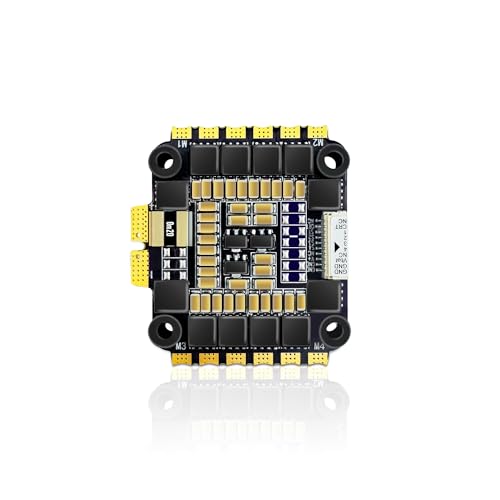
Powerful 55A 4-IN-1 ESC: 55A continuous current, 65A peak current, ready for your 3S-6S battery.

BL-S 60A 4-in-1 ESC, stable output, powerful flight
Flight Controller: The Brain Behind the Operation

The flight controller is essential for managing your drone’s movements and stability. It acts as the central processing unit, reading pilot commands, sensor data, and system feedback.
It integrates data from sensors and communicates with the electronic speed controllers to adjust motor speeds in real time. These fast adjustments keep the drone level, responsive, and predictable.
Understanding its functions, sensor integration process, and communication with transmitters will enhance your control and overall drone performance.
Functions of Flight Controller
At the heart of every drone, the flight controller orchestrates the complex interplay of commands and sensor data. It interprets your inputs and processes information from gyroscopes, accelerometers, barometers, GPS modules, and other sensors to maintain stability and control during flight.
The flight controller continuously monitors the drone’s orientation, movement, and altitude. In stabilized modes, it helps the drone self-level. In manual or acro modes, it gives skilled pilots more direct control.
Advanced models integrate GPS functionality, enabling position hold, return-to-home, waypoint navigation, and other assisted flight features. These features depend on proper calibration, satellite reception, and safe operating conditions.
It communicates with electronic speed controllers (ESCs) to adjust motor speeds, ensuring the drone responds accurately to your commands. Additionally, modern flight controllers may feature telemetry systems, relaying essential data such as battery voltage, altitude, signal strength, and GPS status back to you.
Sensor Integration Process
Effective sensor integration is essential for maximizing a drone’s operational capabilities. The flight controller acts as the central processing unit, interpreting commands and sensor data to keep flight stable.
Integrated sensors like gyroscopes and accelerometers deliver real-time data on orientation and movement. The flight controller uses this data to adjust motor speeds and maintain balanced flight.
GPS functionality further enhances your drone’s capabilities, allowing for accurate location tracking and autonomous flight paths based on pre-programmed coordinates. However, GPS does not replace pilot awareness. Tall buildings, trees, interference, and poor satellite visibility can still affect accuracy.
Communication With Transmitters
Communication with transmitters plays an essential role in a drone’s operational framework. The flight controller acts as the central processing unit, interpreting commands from the transmitter and adjusting motor speeds for stable flight.
It integrates sensors like gyroscopes and accelerometers to monitor orientation and movement, ensuring accurate responses to your inputs. Various communication protocols, such as PPM, SBUS, CRSF, and other digital serial systems, transmit commands to the flight controller.
The receiver connects directly to the flight controller through dedicated pads, plugs, or terminals. This connection enables control over throttle, yaw, pitch, roll, flight modes, arming, beepers, and other functions.
Additionally, signal and ground wires from the electronic speed controllers (ESCs) must connect to the flight controller, facilitating real-time motor control based on processed commands and sensor data.
Sensors: Enhancing Navigation and Stability
While flying a drone might seem straightforward, the technology behind it relies heavily on sensors that enhance navigation, stability, and safety. These sensors provide critical data for smooth flight operations.
| Sensor Type | Function |
|---|---|
| Gyroscopes | Measure orientation and angular velocity |
| Accelerometers | Detect acceleration, tilt, and movement changes |
| GPS | Provide precise location tracking and navigation support |
| Altitude Sensors | Measure height using barometric pressure, ultrasonic sensing, or other methods |
| Magnetometers | Help estimate heading, similar to a compass |
| Obstacle Sensors | Detect nearby objects and support collision avoidance on compatible drones |
Not every drone includes every sensor. Small toy drones may only include basic stabilization sensors. Advanced camera drones may include GPS, vision sensors, infrared sensors, barometers, and downward-facing cameras for landing assistance.
Warning: Do not rely on obstacle sensors as a guarantee against crashes. Thin branches, wires, glass, low light, and fast movement can still cause missed detections.
Cameras and Gimbals: Capturing Stunning Aerial Footage
Drones equipped with advanced cameras and gimbals have changed aerial photography, videography, inspection, mapping, and surveying. High-resolution cameras, often capable of 4K video and detailed still images, are standard on many consumer and professional drones.
Gimbals play an essential role by stabilizing the camera. A gimbal counteracts drone movement, vibration, and sudden angle changes to help produce smooth footage, even in wind or during slow tracking shots.
This stabilization allows you to achieve cinematic shots with precise control over camera angles and orientation. A 2-axis gimbal can stabilize tilt and roll, while a 3-axis gimbal adds yaw stabilization for smoother results.
Some professional drones feature multispectral cameras, enabling data collection beyond the visible spectrum for agricultural and environmental monitoring. These systems can help monitor crop health, vegetation stress, moisture patterns, and land changes.
High-end models may also include dual-camera systems, combining standard footage with specialized thermal or night-vision imaging. These setups are useful for search and rescue, roof inspections, wildlife monitoring, fire response, and industrial inspections.
Professional drones equipped with multispectral, thermal, and dual-camera systems can turn aerial footage into useful data for agriculture, inspection, emergency response, and environmental monitoring.
This versatility not only enhances your aerial data collection capabilities but also expands the potential for creative expression in your projects.
[Amazon Products Picked for You]
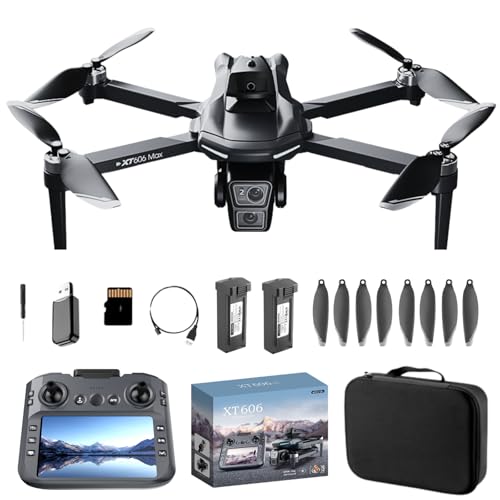
Dual HD Cameras with EIS Electronic Image Stabilization & Gimbal: Equipped with front wide‑angle HD Wi‑Fi camera and bottom optical flow camera, featuring servo gimbal stabilizer and EIS electronic anti‑shake for stable, clear aerial photos and videos

【1/2" 48MP CMOS & 3-Axis Gimbal】Equipped with a premium 1/2" 48MP CMOS sensor, this drone captures superior light and detail for stunning 8K photos and 4K/30fps video. The 3-axis brushless gimbal and EIS technology ensure ultra-smooth cinematic footage.

FPV Head Tracking for Immersive Control: Experience true first-person control with head tracking. When paired with compatible FPV goggles and VTX, the GM3 gimbal follows your head movements in real time, creating a natural, cockpit-like viewing experience for more intuitive flying
Communication Systems: Keeping Control at Your Fingertips
To maintain reliable control over your drone during flight, effective communication systems are essential. These systems include the transmitter, receiver, antennas, control protocol, video link, and telemetry link.
The transmitter is the controller in your hands. The receiver sits on the drone and passes commands to the flight controller. Together, they provide real-time control signal transmission and telemetry data reception.
Here are key components to take into account:
- Frequencies: Control and video systems commonly use bands such as 2.4 GHz or 5.8 GHz, depending on the drone and region. The right setup balances range, signal clarity, antenna design, and legal requirements.
- Digital Protocols: Modern drones often use protocols such as SBUS, CRSF, ELRS, or other digital serial systems. These can improve signal transmission speed, reliability, and latency compared with older systems.
- Integrated Systems: Some flight controllers combine the receiver and controller into one unit, streamlining setup and reducing wiring complexity.
- Telemetry Modules: Advanced systems provide real-time data on battery status, GPS position, altitude, distance, flight mode, and signal strength, boosting situational awareness during flight.
- Video Transmission: Camera drones and FPV drones also need a video link. This may be analog for low latency or digital for higher image quality.
Strong antennas, correct placement, and clear line of sight can improve reliability. Poor antenna mounting, damaged coaxial cables, low battery voltage, and interference can reduce range or cause failsafe events.
Power Supply: Fueling Drone Performance
Effective communication systems rely on a robust power supply to guarantee uninterrupted operation during flight. The primary power source for many drones is a lithium polymer battery, commonly called a LiPo battery. Many consumer camera drones use lithium-ion or lithium-polymer packs designed specifically for that model.
LiPo batteries are popular because they offer high power output for their weight. Battery performance is usually described by voltage, cell count, capacity, and discharge rate.
For instance, a 3,000mAh battery with a 30C rating can theoretically deliver 90A of current. In real-world use, battery age, temperature, connector quality, and voltage sag can reduce practical output.
Proper battery management is critical. Over-discharging can damage LiPo batteries, shorten their lifespan, and increase safety risks. Using a suitable charger, storage voltage, and safe charging area helps protect both the battery and your equipment.
Additionally, consider battery weight carefully. Lighter batteries may improve flight dynamics, while larger batteries can extend flight time but add weight. The best choice depends on your drone’s motors, propellers, payload, and flight style.
By understanding these factors, you can maximize your drone’s performance and efficiency, ensuring it operates at its finest during every flight.
Note: Always use the charger type recommended for your battery chemistry and pack design. A charger meant for one battery type may be unsafe for another.
Landing Gear and Mounts: Protecting the Drone
Landing gear protects the camera, gimbal, battery, and lower body during takeoff and landing. On camera drones, taller landing gear also keeps the gimbal away from dirt, grass, gravel, and uneven ground.
Some drones use fixed landing legs, while others use foldable or retractable landing gear. Retractable gear keeps the landing legs out of the camera frame during filming, but it adds complexity and weight.
Mounts also matter. Camera mounts, battery straps, GPS mounts, antenna mounts, and accessory mounts must hold parts firmly without adding unnecessary vibration. Loose mounts can cause shaky footage, poor GPS reception, or damaged wiring.
How Drone Components Work Together
A drone flies because all major components communicate in a fast loop. You move the control sticks on the transmitter. The receiver sends those commands to the flight controller. The flight controller compares your input with sensor data, then tells the ESCs how fast each motor should spin.
The motors spin the propellers, and the propellers create thrust. If one side needs to rise, the flight controller increases motor speed on that side or decreases speed on the opposite side. These small changes happen many times per second.
The battery supplies power to the ESCs, motors, flight controller, receiver, sensors, lights, and camera system. Telemetry sends useful information back to the pilot, such as battery voltage, signal strength, GPS status, altitude, and warnings.
This connected process is why one weak part can affect the whole drone. A damaged propeller can create vibration. Vibration can confuse sensors. Confused sensors can make the flight controller work harder. That can lead to unstable flight or poor footage.
Common Drone Component Problems and Fixes
Many drone problems come from simple component issues. Checking the basics first can save time and prevent unnecessary part replacement.
| Problem | Likely Component | What to Check |
|---|---|---|
| Drone shakes or wobbles | Propellers, motors, frame | Inspect for bent props, loose screws, cracked arms, or motor damage. |
| Short flight time | Battery, propellers, payload | Check battery health, prop size, added weight, and wind conditions. |
| Drone drifts while hovering | Sensors, GPS, calibration | Recalibrate if needed and avoid flying near magnetic interference. |
| Video looks shaky | Gimbal, props, frame | Check gimbal lock removal, prop balance, vibration dampers, and camera mount. |
| Failsafe or signal loss | Receiver, antennas, transmitter | Inspect antenna placement, battery voltage, interference, and failsafe settings. |
Basic Drone Maintenance Checklist
Regular maintenance keeps components working safely and helps you catch problems before they become crashes. You do not need advanced tools for basic checks, but you should be consistent.
- Check propellers before every flight: Look for chips, cracks, bends, and loose mounting points.
- Inspect the frame: Check arms, screws, landing gear, and motor mounts for cracks or looseness.
- Review battery condition: Do not use swollen, punctured, overheated, or damaged batteries.
- Clean sensors and cameras: Dust, fingerprints, and debris can affect obstacle sensing, image quality, and landing assistance.
- Confirm firmware settings: After updates, verify flight modes, failsafe behavior, compass settings, and controller calibration.
- Test controls before takeoff: Make sure pitch, roll, yaw, throttle, gimbal, and return-to-home settings respond correctly.
Choosing the Right Components for Your Drone
The right components depend on how you plan to use the drone. A racing drone needs fast motors, low weight, strong control links, and durable props. A camera drone needs stable flight, a good gimbal, reliable GPS, and longer battery life.
For beginner builds, start with proven component combinations rather than mixing random parts. Match motor kV, propeller size, ESC rating, battery voltage, and frame size as a system. This approach reduces overheating, poor throttle response, and unstable flight.
For photography, prioritize vibration control, camera quality, gimbal stability, and predictable flight modes. For inspection work, prioritize reliability, obstacle sensing, battery management, and clear telemetry.
For FPV freestyle or racing, prioritize low latency, strong frames, responsive motors, durable propellers, and a radio link with good range and failsafe behavior.
[Amazon Products Picked for You]

Smooth & Predictable Power: FPV brushless motor ensures consistent rotational force and reliable thrust for unparalleled flight stability and controlled performance.
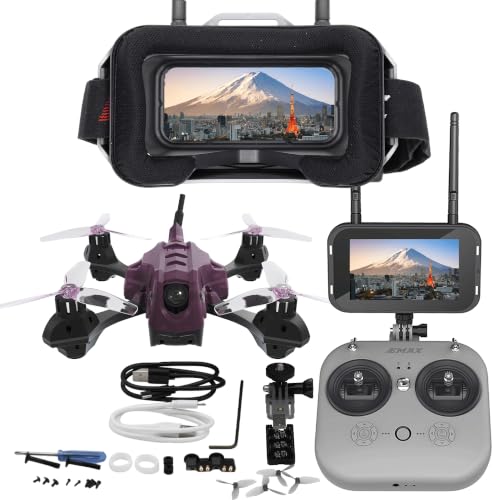
Easy to Fly and Perfect for beginners

2inch APEX FPV Drone Frame Kit Quadcopter for DJI O4 Air Unit F411 F722 F405 1103 1104 1202 1204 1206 Motor
Frequently Asked Questions
What are the major components of a drone?
The major components of a drone include the frame, motors, propellers, electronic speed controllers, flight controller, battery, receiver, sensors, GPS module, camera, gimbal, antennas, and landing gear. Each part contributes to lift, control, navigation, power, stability, or payload support.
Why did the U.S. restrict some DJI drones?
The U.S. has not created one simple universal ban on all DJI drone ownership. However, some federal agencies and procurement programs have restricted or scrutinized DJI products because of data-security, cybersecurity, supply-chain, and national-security concerns. Rules can vary by agency, use case, and funding source.
What are the key terminologies used in drone technology?
Key drone terms include UAV, UAS, flight controller, ESC, GPS, LiPo battery, telemetry, gimbal, transmitter, receiver, propeller pitch, kV rating, payload, return-to-home, and failsafe. Understanding these terms helps you troubleshoot, maintain, and operate drones more confidently.
How do drone components work?
Drone components work as a connected system. The transmitter sends pilot commands to the receiver. The flight controller reads those commands and sensor data, then tells the ESCs how fast to spin each motor. The motors turn the propellers, the battery supplies power, and sensors help maintain stable flight.
Which drone component affects flight time the most?
Battery capacity, drone weight, propeller efficiency, motor efficiency, payload, and wind all affect flight time. A larger battery can increase flight time, but only up to a point because extra battery weight also requires more power to lift.
Do all drones need GPS?
No. A drone can fly without GPS if it has a flight controller, motors, ESCs, propellers, battery, receiver, and stabilization sensors. GPS adds helpful features such as position hold, return-to-home, waypoint flight, and location tracking, but it is not required for basic manual flight.
Conclusion
Understanding drone components gives you a stronger grasp of how drones fly, respond, stabilize, record footage, and complete specialized tasks. The frame provides structure, motors and propellers create lift, ESCs manage motor power, the flight controller processes commands, sensors improve stability, and the battery fuels the entire system.
When these parts are matched correctly, a drone feels smoother, flies longer, and performs more reliably. When one part is mismatched or damaged, the whole system can suffer. That is why basic component knowledge is valuable for beginners, hobby pilots, content creators, and professionals.
By mastering these components, from the frame to the power supply, you can optimize your drone’s efficiency, troubleshoot with more confidence, and unlock its full potential for aerial photography, racing, inspection, mapping, and creative projects.
Sources
- Federal Aviation Administration UAS resources — general drone and UAS safety context.
- FAA Recreational Flyers and Community-Based Organizations — recreational drone operation guidance.
- FAA PackSafe lithium battery guidance — lithium battery handling and travel safety context.
- Electronic Code of Federal Regulations, Title 47 Part 15 — radio-frequency device rules relevant to many consumer wireless systems.
- NASA Glenn Research Center: Lift — basic aerodynamic lift principles.
