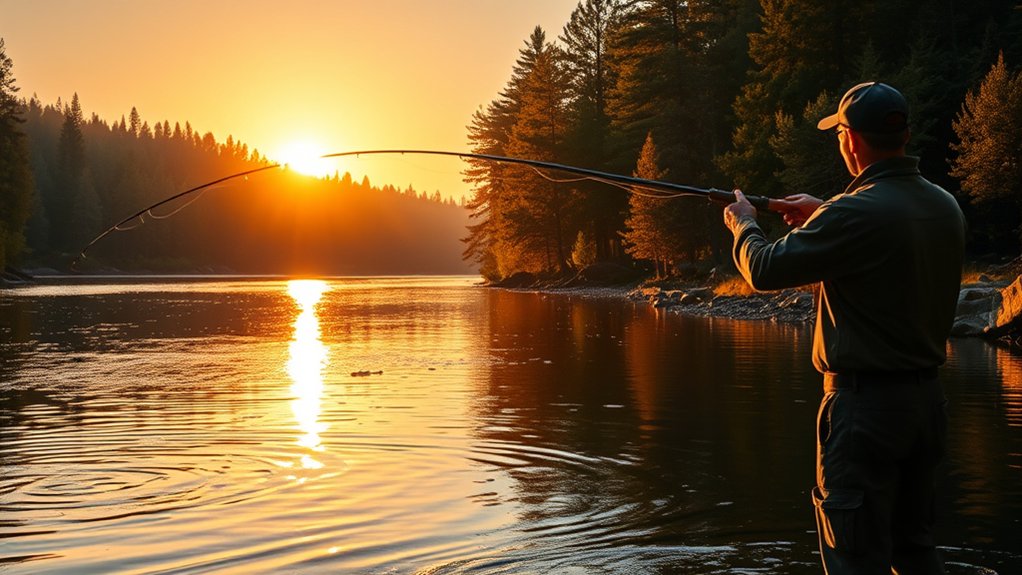
When you’re out on the water, casting accuracy can make or break your fishing trip. It is not just about getting your line out there. It is about placing your bait, lure, or fly precisely where fish are likely to hold. Better accuracy helps you reach pockets near cover, avoid spooking fish, manage your line more cleanly, and set the hook with more control. So, how do you fine-tune your skills and elevate your fishing game? Let’s walk through the casting habits, drills, stance adjustments, and equipment choices that help every cast land with purpose.
Quick Answer
To improve casting accuracy, pick a small target, keep your eyes on it, align your feet and shoulders, use a smooth rod path, and practice shorter controlled casts. Start with easy targets, then add distance, wind angles, and tighter landing zones as your control improves.
Key Takeaways
- Casting accuracy starts with a clear target, not with maximum distance.
- A stable stance and straight rod-tip path help your lure, bait, or fly land where you intend.
- Shorter casts often produce better control, cleaner presentations, and faster hook sets.
- Simple drills with plates, tennis balls, leaves, or tape marks build repeatable muscle memory.
- Matching your rod, reel, line, and lure weight improves control and reduces casting mistakes.
At a Glance
| Best Practice Time | 15 to 30 minutes per session |
| Difficulty | Beginner to intermediate |
| Tools Needed | Rod, reel, line, practice plug or yarn fly, paper plates, tennis balls, tape measure, or natural targets |
| Main Goal | Land your bait, lure, or fly near the target with less splash, fewer false casts, and better line control |
Importance of Accuracy in Fishing
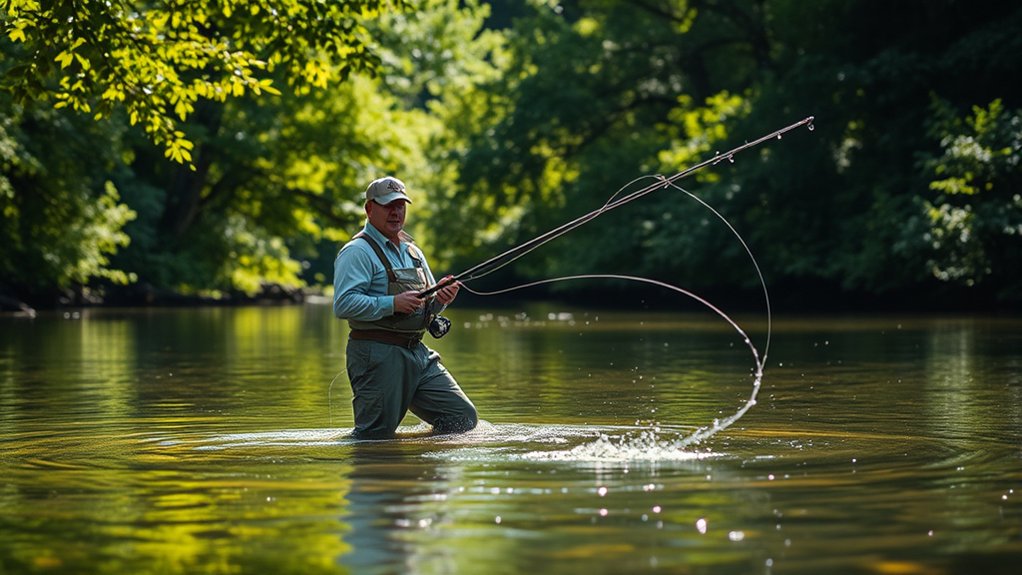
When you’re out on the water, the importance of accuracy in fishing becomes immediately apparent. Placing your lure exactly where fish are holding can make the difference between a successful catch and a frustrating day. Casting accuracy allows you to target specific locations, such as under overhanging branches, along weed edges, beside dock posts, near current seams, or around submerged structures where fish often hide.
The more precise your casting, the better your chances of presenting bait naturally without alarming nearby fish. A quiet, controlled entry matters because a hard splash can spook wary fish, especially in shallow water, clear water, or heavily pressured areas. Accuracy also improves line management, helps you reduce slack, and gives you a better chance to set the hook quickly when a fish strikes.
By focusing on accuracy, you minimize disturbances in the water and turn each cast into a planned presentation. You are no longer simply throwing toward open water. You are choosing a target, controlling your rod path, and placing your bait where it has the best chance to be noticed.
Note: Accuracy matters in both baitcasting and fly casting. The details change, but the core idea stays the same: aim small, control the rod path, and make the bait land naturally.
Techniques for Improving Casting Precision
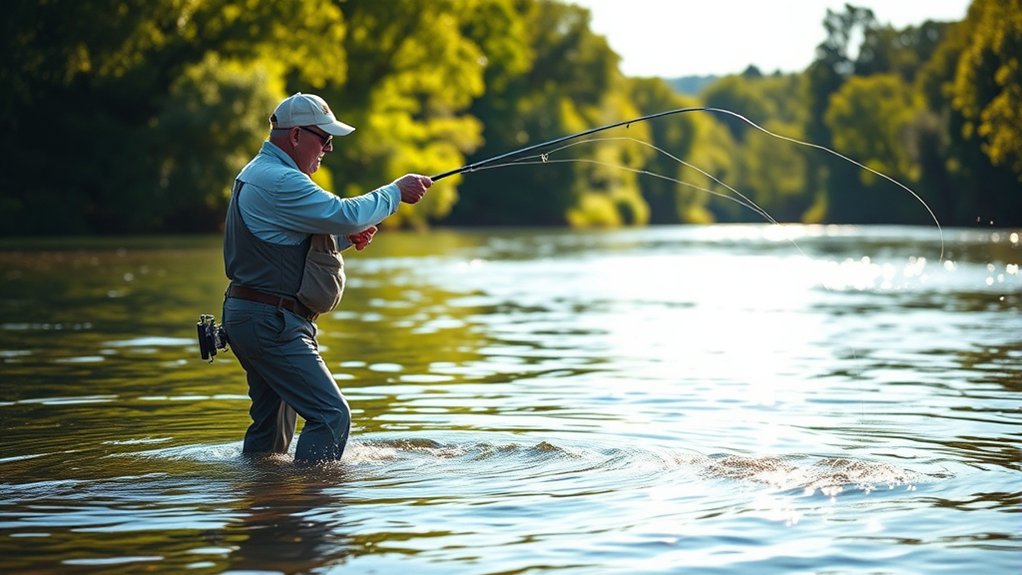
To improve your casting precision, start by focusing on a target about the size of a teacup. Keep your eyes locked on that target throughout the cast. A small target gives your brain a clear aim point, while a large target encourages lazy casts and loose control.
Your stance and grip should stay consistent because repetition creates muscle memory. When your body position changes on every cast, your rod path changes too. That makes accuracy harder to repeat. Practice with markers, paper plates, tennis balls, or natural objects to refine your accuracy and build confidence before you face real fishing conditions.
Target Focus Techniques
Focusing on a specific target, such as one the size of a tea cup, can significantly improve your casting accuracy. When you aim at a small point, even a slight miss may still land your fly, lure, or bait within a useful strike zone. This approach works better than aiming vaguely at a bank, log, dock, or patch of water.
Keep your visual alignment with the target throughout your cast. Turning your head, watching the rod tip too much, or looking at nearby obstacles can pull the cast off line. Wade or stand in a stable position before casting so your body does not drift during the motion. Incorporate target practice into your routine by using markers or natural objects at different distances.
You can also practice the “10 and 2” clock method to develop a smooth, controlled motion. This method helps many anglers keep the rod from traveling too far forward or backward. When your stroke becomes smoother, your line follows a cleaner path and your casting accuracy improves.
Stance and Alignment
Precision in casting hinges on your stance and alignment, which serve as the foundation for an accurate and effective cast. Align your eyes, shoulders, toes, and belt buckle with your target to create a straight path for the rod tip. This simple habit reduces side-to-side movement and gives your cast a cleaner direction.
If you’re right-handed, a square stance can enhance control and help maintain the rod tip path. For some short casts, a slightly closed stance may feel more stable. The exact stance can vary by fishing style, but the goal stays the same: stay balanced, face the target, and move the rod in the direction you want the line to travel.
Engage your entire body during the cast to reduce rocking motion, which can cause inaccurate casts. Tilt your head inward slightly if it helps line up your rod hand with your line of sight. Practicing this stance regularly builds consistency and makes your casting technique more dependable under pressure.
Practice Drills Essentials
Building on the importance of stance and alignment, practice drills play a vital role in honing your casting accuracy. Incorporate specific targets like paper plates or fluorescent tennis balls to improve pinpoint accuracy. Use the “pick a leaf” technique by aiming for small natural targets to refine your casting stroke.
Set up markers at varying distances, then challenge yourself with tight spots roughly the size of a teacup. This improves focus and teaches you how much power each distance requires. Record your sessions when possible so you can analyze performance, spot repeated misses, and adjust your grip, stance, or rod path.
| Drill Type | Target Size | Distance Challenge |
|---|---|---|
| Paper Plates | Small | 20-30 feet |
| Fluorescent Balls | Medium | 30-50 feet |
| Natural Leaves | Tiny | 10-20 feet |
| Tight Spots | Teacup-sized | Varying distances |
Focus on the Target During Casting
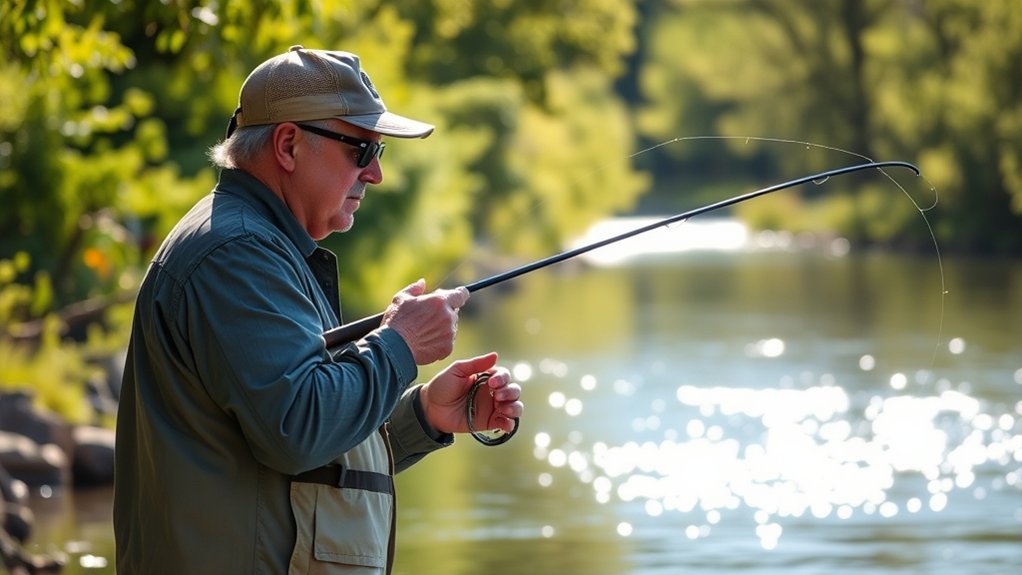
When you keep your eyes locked on the target during your cast, you greatly enhance your accuracy and effectiveness on the water. Focusing on a specific spot, ideally the size of a teacup, sharpens your aim and helps you judge casting distance more effectively.
When you look at the target, your body naturally aligns with it. That connection improves the relationship between your eye, hand, rod, and line. Many anglers lose precision by diverting their gaze to branches, rocks, their rod tip, or the lure in flight. Those small distractions can lead to missed opportunities.
Turning your head toward the target and tracking the line after release also helps with line mending, slack control, and follow-up movement. This matters when current, wind, or cover affects your presentation. A dedicated focus on the target turns every cast into a calculated effort rather than a hopeful throw.
Pro Tip: Say the target in your mind before you cast, such as “left side of the stump” or “front edge of the weed line.” A clear target helps your body aim with more purpose.
The Role of Stance and Alignment
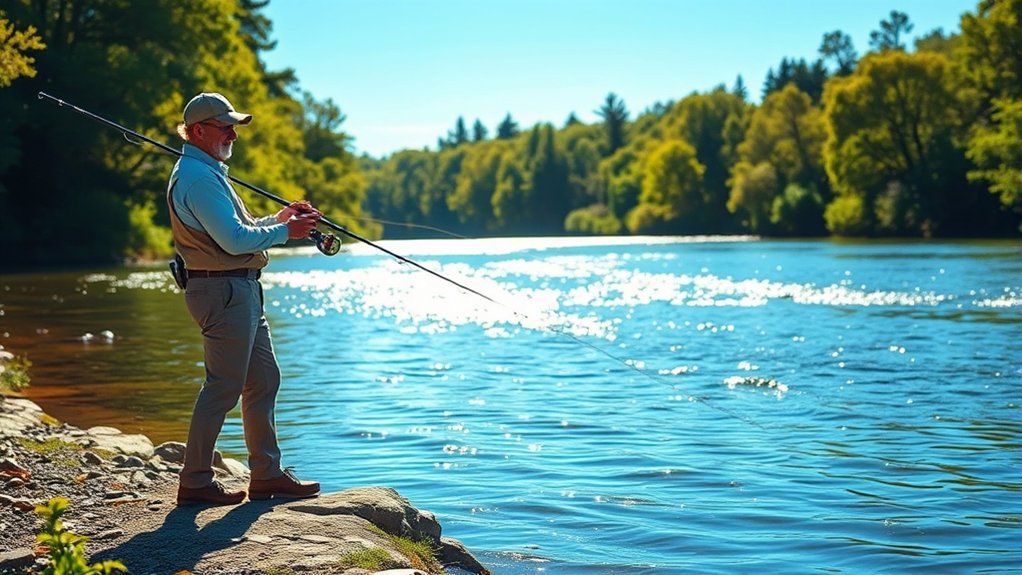
Focusing on the target is only part of the equation for achieving casting accuracy. Your stance and alignment play an essential role as well. Align your body squarely to the target, ensuring your eyes, shoulders, toes, and belt buckle point in the same direction. This setup helps the rod tip travel straight instead of drifting across your body.
For right-handed casters, a closed stance with the right foot slightly back can improve stability and control during some casts. Other anglers may prefer a square stance, especially when casting from open banks, docks, or boats. Choose the stance that keeps you balanced and lets the rod move cleanly toward the target.
Engage your full body to maintain a smooth rod path and reduce unnecessary rocking. If your shoulders, feet, and eyes point in different directions, the rod often follows a crooked path. Practicing your stance and alignment consistently will build muscle memory and improve your casting technique over time.
Here’s a quick reference table to illustrate key points:
| Aspect | Description | Benefit |
|---|---|---|
| Stance | Feet shoulder-width apart, right foot back | Stability in casting motion |
| Alignment | Eyes, shoulders, and toes aligned with target | Improved accuracy |
| Body Engagement | Use full body for the cast | Straight rod path |
Back Cast Technique for Better Accuracy
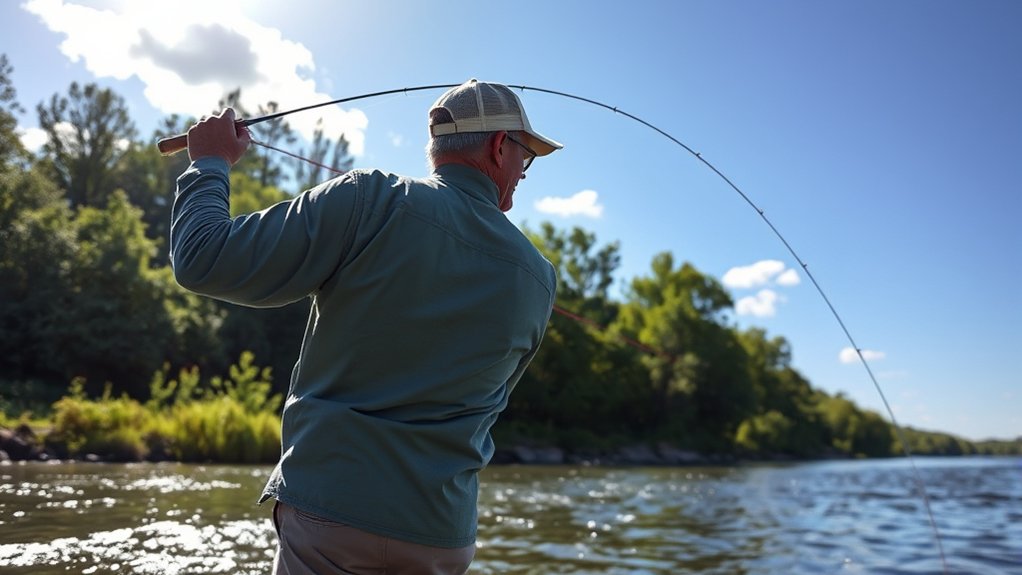
To master the back cast technique, focus on that essential 180-degree movement away from your target. A clean back cast sets up a clean forward cast. If the back cast drifts left, right, high, or low, the forward cast often follows that mistake.
Keeping your trajectory straight is key, whether you are aiming for a longer cast or adjusting your angle for shorter distances. By refining this technique, you enhance your accuracy and consistency, making every cast count.
180-Degree Movement Rule
Mastering the back cast technique is essential for achieving pinpoint accuracy in your fishing casts. To enhance your performance, maintain a 180-degree angle from your target during the back cast. This alignment allows for a straight rod tip path, which is vital for precise forward movement.
Focus on moving the rod straight back and straight forward. This consistency minimizes inaccuracies and helps the line travel along the same plane. For shorter casts, adopt a steeper downward angle in the back cast to improve control and keep the line from opening too wide.
By ensuring your line follows the 180-degree rule, you will improve your casting accuracy. Practice regularly with an emphasis on this technique, and you should see better fly, lure, or bait placement.
Trajectory and Angles
While executing the back cast, your understanding of trajectory and angles can greatly influence your casting accuracy. A high, uncontrolled back cast may collapse before the forward cast. A low side cast may hit nearby cover or drag the lure off line.
To enhance your technique, consider these key points:
- Aim for a 180-degree angle from your target to maximize line efficiency.
- Keep your back cast straight to avoid lateral movements that can disrupt trajectory.
- For shorter casts, adopt a steeper downward angle to maintain control and precision.
- Align your shoulders, eyes, and feet with the target to guarantee a straight rod tip path.
Consistent practice of these elements sharpens your back cast and directly affects the trajectory of your line. Once you control the angle, you can adjust for wind, cover, distance, and presentation with more confidence.
Short Cast Techniques
When you’re aiming for short casts, refining your back cast technique becomes vital for achieving pinpoint accuracy. Start by executing your back cast at a 180-degree angle from your target, ensuring the line travels directly. For shorter casts, tilt your rod tip downward at a steeper angle. This helps maintain control and precision.
Focus on straight back and straight forward movements to establish a consistent rod tip path. Proper alignment with your target is essential because even slight deviations can lead to missed opportunities. By practicing this back cast technique consistently, you enhance your overall casting accuracy and place your fly, lure, or bait more effectively in challenging fishing scenarios.
Shorter Casts for Increased Effectiveness
Casting shorter distances can greatly enhance your effectiveness on the water, especially when you focus on precision over distance. Many fish are caught within practical casting range, where control matters more than power. By keeping your casts under 35 feet when conditions allow, you can notice significant improvements in accuracy, energy transfer, and bait placement.
Casting shorter distances under 35 feet can improve control, accuracy, and energy transfer, making your fishing experience more effective and rewarding.
Consider these advantages of shorter casts:
- Better line management, making it easier to set the hook
- Enhanced control over your lure’s presentation
- Reduced potential for casting errors
- Increased ability to target specific spots, even in larger rivers
Shorter rods, particularly those around 7 to 8.5 feet, may further boost your accuracy and maneuverability in tight areas. You may find that when you prioritize shorter casts, you are more capable of placing your fly or lure exactly where the fish are likely to be. This strategy increases your chances of success and makes your time on the water more rewarding.
Warning: Do not force long casts around people, docks, trees, or power lines. Check your surroundings before every cast, especially when using heavy lures or multi-hook baits.
Practice Drills for Enhanced Skills
Improving your casting skills requires dedicated practice, and incorporating specific drills can make a significant difference. Start by using high-visibility cords or tape measures to gauge your casting distance. Set small, precise targets, such as tea cup-sized areas, to sharpen your casting accuracy. Mark lines at significant distances to create focused practice zones so you can track progress over time.
Use yarn flies during your drills if you fly fish, or use a casting plug if you practice with spinning or baitcasting gear. These safer practice tools simulate real fishing conditions without using sharp hooks. As your skills develop, aim for tighter loops in your casts, smoother acceleration, and cleaner landings.
Try a simple three-round practice session. First, make ten casts at a close target. Second, move the target farther away and make ten more casts. Third, return to the close target and focus on quiet landings. This routine trains distance control, accuracy, and touch without making practice feel complicated.
By consistently engaging in these practice drills, you will notice substantial improvements, making your time on the water more productive and enjoyable.
Equipment Considerations for Optimal Performance
Mastering your casting technique is only part of the equation. The right equipment plays an essential role in achieving peak performance on the water. Selecting the proper rod, reel, line, and lure weight can greatly enhance your accuracy and control.
Mastering your casting is key, but choosing the right rod and line helps turn good technique into consistent performance on the water.
Here are some key considerations:
- Rod Length: Shorter rods, often around 7-8.5 feet, can be ideal for precision in short-range fishing and tight casting lanes.
- Rod Power: Match your rod’s power to your lure’s weight. A rod that is too stiff or too soft can reduce control and accuracy.
- Line Type and Weight: Familiarize yourself with different line types because the right choice affects lure behavior, casting control, and sensitivity.
- Reel Maintenance: Regularly check your reel to make sure it is filled correctly, not overfilled, and adjusted for smooth line release.
Your equipment should match the type of fishing you do most. A compact rod may work better around brushy banks, creeks, docks, and small streams. A longer rod may help when you need more line control, longer drifts, or better leverage. The best setup is the one that lets you cast safely, consistently, and accurately in your actual fishing conditions.
Visual Alignment and Its Impact on Casting
When you cast, keeping your eyes locked on the target is vital for hitting the mark. Aligning your eyes, shoulders, and feet creates a direct path for your cast, enhancing accuracy and focus. Avoid the temptation to glance at your back cast too often. Doing so can throw off your alignment and reduce your chances of a successful landing.
Target Focus Importance
Although many factors contribute to successful casting, maintaining a sharp focus on your target is essential for achieving precision. When you hone your target focus, you align your eye-to-target line with your hand-to-target line, greatly enhancing your accuracy.
Here are some key points to remember:
- Aim for a small target, like the size of a teacup, to improve visual tracking.
- Keep your head turned towards the target throughout the cast to avoid misalignment.
- Regular practice of target alignment builds muscle memory for fly casters and conventional anglers.
- Minimize distractions by focusing solely on your target to improve placement.
Eye Alignment Techniques
To achieve precision in your casting, it is vital to keep your eye alignment steady. Maintaining a direct line of sight to your target improves accuracy by aligning your vision with the intended landing spot. As you prepare to cast, focus on that target instead of nearby distractions.
Tilt your head inward slightly if it helps keep your rod hand and target in the same visual lane. Visual markers on the water can also guide you during blind casting, especially when you are working along current seams, grass edges, or shaded pockets. By aligning your eyes, shoulders, and feet, you create a cohesive stance that supports a straight rod tip path, which is fundamental for accurate casts.
Common Mistakes to Avoid in Casting Accuracy
Even seasoned anglers can fall into common traps that undermine casting accuracy. Focusing too much on nearby obstacles, your rod, or the cast itself instead of the target can drastically reduce precision. Overpowering the cast, rushing the motion, and ignoring body alignment can also send your lure off course.
Here are some mistakes to watch out for:
- Ignoring the target: Keep your eyes locked on the target throughout the cast.
- Poor rod tip control: Make sure your rod tip path remains steady to avoid sending the line off angle.
- Wading while casting: Position yourself firmly before casting to maintain balance and improve technique.
- Overreaching: Resist the urge to cast beyond your skill level because shorter casts often yield better results.
- Using too much force: Smooth acceleration usually produces better accuracy than a hard, rushed cast.
- Skipping practice: Accuracy fades when you only practice during real fishing trips.
How to Adjust for Wind, Current, and Cover
Real fishing conditions are rarely perfect. Wind, current, low branches, boat movement, and shoreline cover all affect casting accuracy. Instead of fighting those conditions, adjust your target, angle, and power.
When casting into wind, lower your trajectory and use a smoother, more compact stroke. When the wind blows from the side, aim slightly upwind so your lure or fly can drift toward the target. Around cover, shorten your cast and reduce splash. In current, aim upstream or ahead of the holding area so the bait moves naturally into position.
Accuracy improves when you think about the whole presentation, not just where the lure lands. A perfect landing spot means little if the bait immediately drags unnaturally, snags, or moves away from the strike zone too fast.
How to Build a Simple Weekly Practice Routine
A simple weekly routine can help you improve without turning practice into a chore. Spend one session on close targets, one session on mid-range targets, and one session on accuracy under mild pressure. Keep each practice short enough that you stay focused.
Start each session with easy casts from 10 to 20 feet. Then move to 20 to 30 feet and aim for smaller targets. Finish by changing your stance, casting angle, or target direction. This teaches your body to adjust instead of relying on one perfect setup.
Track your results by counting how many casts land inside the target zone. For example, if six out of ten casts hit the plate this week, aim for seven or eight next week. Small gains add up quickly when you practice with a clear goal.
Related Guides
Frequently Asked Questions
What Is the 80/20 Rule in Fishing?
The 80/20 rule in fishing means that a large share of your success often comes from a smaller set of high-value habits. For casting accuracy, that means focusing on target selection, stance, rod path, and presentation instead of trying to fix everything at once.
How Do You Improve Casting Accuracy?
To improve casting accuracy, focus on a small target, practice shorter casts, maintain a stable stance, keep your rod path straight, and use markers for feedback. Keep your gaze steady, then adjust your grip, power, and alignment based on where your casts land.
Do You Cast Farther With Lighter Lines?
You may cast farther with lighter lines because they can reduce drag and wind resistance. However, the line still needs to match your lure, rod, and fishing conditions. A line that is too light can reduce control, increase breakage risk, and make hook sets harder.
How Much Money Do Fishing Guides Make?
Fishing guide income varies by location, experience, season, client demand, and trip type. Some guides work part time, while others build full-time businesses through trips, tips, repeat clients, teaching, and local reputation.
Is Distance More Important Than Accuracy?
Distance helps in some situations, but accuracy usually matters more when fish hold near structure, current seams, shade, docks, grass, or cover. A shorter accurate cast often catches more fish than a long cast that lands away from the strike zone.
How Often Should You Practice Casting?
Practice for 15 to 30 minutes a few times per week if you want steady improvement. Short, focused sessions usually work better than long unfocused sessions because accuracy depends on repetition, feedback, and clean technique.
Conclusion
Mastering casting accuracy is not only a technical skill. It is one of the best ways to make each fishing trip more productive and enjoyable. By improving your focus, stance, alignment, back cast, and practice habits, you can turn random casts into controlled presentations.
Remember, every cast is a brushstroke on the canvas of the water. Aim small, stay balanced, and let the rod move with purpose. When you place your bait, lure, or fly with confidence, you give yourself a better chance to reach fish before they see you, hear you, or feel something unnatural. Grab your gear, stay sharp, and make every cast count.