Artificial bait fishing helps you catch fish without live bait by using lures that imitate minnows, worms, insects, crawfish, or other prey. To get started, choose simple soft plastics, match your lure to the target species, and adjust your color, size, and retrieve based on water clarity, depth, weather, and fish activity. With the right gear and a few basic techniques, you can fish artificial bait with more confidence and better results.
Quick Answer
To fish with artificial bait, start with a soft plastic worm, grub, or swimbait on a simple jig head or weedless hook. Cast near cover, let the lure sink, then retrieve it with slow pauses, twitches, or steady movement so it looks like natural prey.
Key Takeaways
- Soft plastics are the easiest artificial baits for beginners because they are affordable, versatile, and simple to rig.
- Match lure size, color, and action to the fish you want to catch and the baitfish or insects in the water.
- Use natural colors in clear water and brighter or darker colors when the water is stained, muddy, or low-light.
- Change your retrieve speed before changing lures because fish often react to movement first.
- Keep your tackle simple at first: one rod, one reel, a few lure types, and basic terminal tackle are enough to begin.
At a Glance
| Time Required | 15 to 30 minutes to learn the basics, plus practice time on the water |
| Difficulty | Beginner-friendly |
| Tools Needed | Rod, reel, fishing line, soft plastics, jigs, plugs, spinners, hooks, weights, swivels, and tackle box |
| Cost | Low to moderate, depending on rod, reel, and lure selection |
Understanding Artificial Lures
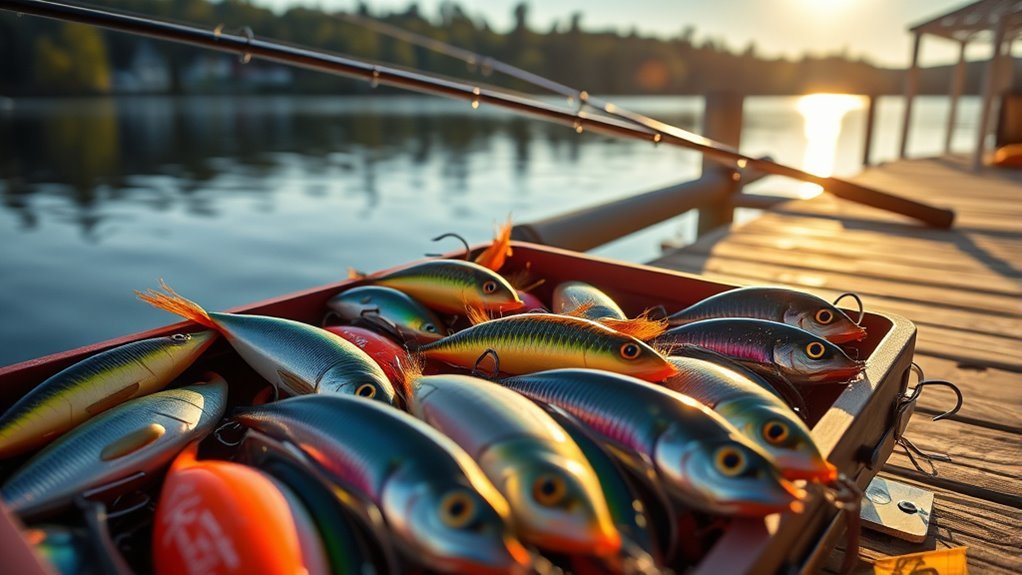
Artificial lures serve as the cornerstone of modern fishing techniques because they are designed to closely imitate the look, size, flash, vibration, and movement of natural prey. Instead of placing live bait on a hook, you use a lure to trigger a fish’s feeding instinct, curiosity, or reaction strike.
They come in different types, including hard baits like crankbaits and plugs, and soft baits such as worms, grubs, creature baits, and swimbaits. Each option works best under certain fishing conditions, depths, cover types, and target species.
Hard baits are typically more durable and can cover water quickly, making them useful when fish are chasing baitfish. Soft baits offer beginners a user-friendly option because they are easy to cast, easy to rig, and effective with slower presentations.
The effectiveness of artificial lures depends on matching the lure’s color, shape, size, and action to the species you’re targeting. You also need to consider environmental factors like water clarity, light level, temperature, depth, current, and nearby cover.
Understanding these basics is essential for successful fishing. The right fishing techniques can improve your catch rate because each lure type works best when you use it in the right place and retrieve it the right way. By mastering these basics, you’ll be well on your way to becoming a more proficient angler, equipped to attract fish effectively.
Note: Artificial bait does not need to smell or taste real to work. Many strikes happen because the lure looks vulnerable, moves naturally, flashes in the water, or passes close enough to make a fish react.
Types of Artificial Lures

When selecting the right lure for your fishing adventure, understanding the main types can greatly enhance your effectiveness on the water. The original three to learn first are jigs, plugs, and spinners, but soft plastics, spoons, topwater baits, and swimbaits also deserve a place in your tackle box.
Each of these artificial lures is designed to mimic different prey and attract various fish species. Some create vibration, some flash like baitfish, and others move slowly along the bottom like worms, insects, or crawfish.
Artificial lures work best when the size, color, depth, and action match what fish are already feeding on.
- Jigs: Weighted hooks with artificial bait, versatile for various depths and fishing techniques. Use them around rocks, docks, weeds, ledges, and bottom structure.
- Plugs: Hard baits that imitate injured or fleeing baitfish, ideal for targeting predatory species. Crankbaits, jerkbaits, and minnow-style plugs fit this group.
- Spinners: Incorporate rotating blades to create flash and vibration, particularly effective in murky waters, moving water, and low-light conditions.
- Soft plastics: Worms, grubs, tubes, craws, and swimbaits that can be rigged many ways. They are excellent for beginners because you can fish them fast, slow, shallow, or deep.
- Spoons: Curved metal lures that wobble and flash like wounded baitfish. They work well for casting, jigging, and trolling.
- Topwater lures: Floating plugs, poppers, frogs, and walking baits that create surface action. Use them when fish are feeding near the top or around shallow cover.
- Selection Factors: Consider target fish species, water conditions, depth, cover, light level, and your chosen fishing technique.
Choosing the right type of artificial lure based on these factors will increase your chances to catch fish. Bright, flashy colors often work well when fish need help finding the lure, while natural hues are often more effective in clear freshwater.
Make sure you adapt to the environment for the best results. A lure that works in shallow weeds may not work along deep rocks, and a lure that catches active fish may be too aggressive when fish are slow or pressured.
How to Match Lure Color, Size, and Action
Color matters, but it should not be your only decision. A lure that moves at the right depth and speed often catches more fish than a perfect-looking lure that never reaches the strike zone.
- Clear water: Use natural colors like green pumpkin, watermelon, silver, white, brown, pearl, or shad patterns.
- Stained water: Try brighter or stronger colors such as chartreuse, white, orange, gold, black, or blue.
- Sunny days: Flashy or reflective lures can imitate baitfish and help fish notice your bait.
- Cloudy days or low light: Darker profiles can stand out better against the sky or water surface.
- Small baitfish present: Downsize your lure so it matches the natural prey.
- Large baitfish or aggressive predators: Use a larger swimbait, plug, spoon, or spinner to draw bigger bites.
Action is the way a lure moves. Some lures wobble, some dart, some vibrate, and others glide or fall slowly. When fish are active, a fast-moving lure can work well. When fish are inactive, a slower lure with long pauses may look easier to catch.
Pro Tip: Before changing lures, try three retrieves with the same bait: steady, stop-and-go, and slow with pauses. You may find the right action without retying your line.
Techniques for Using Artificial Lures

Selecting the right type of artificial lure is just the beginning; mastering the techniques for using them is where the real skill comes into play.
When casting, smoothly launch your lure into the water and vary your retrieve speed to mimic prey movement. This approach can attract species like bass and trout because the lure looks alive instead of mechanical.
Jigging involves quick, short strokes of the rod to create an enticing up-and-down motion. Let the lure fall on a semi-slack line, watch for taps or sudden line movement, then reel down and set the hook.
Trolling allows you to drag the lure behind a moving boat, covering larger areas and targeting fish like salmon, trout, walleye, and tuna. The key is keeping the lure at the right depth and speed long enough for fish to notice it.
For bottom fishing, let your lure lightly drag, hop, or crawl along the substrate to entice fish that feed close to the bottom. This works well with jigs, soft plastics, tubes, and craw-style baits.
Remember to adjust your retrieve speed. Use a faster retrieve for active fish and a slow, steady retrieve for less aggressive fish. Small changes in speed, pause length, and rod tip movement can greatly increase your chances of a successful catch.
Master these techniques, and you’ll elevate your fishing game.
Step-by-Step Beginner Method
If you are new to artificial bait fishing, do not start with too many lures. Begin with one simple setup, learn how it feels in the water, and build from there.
- Choose a beginner lure. Start with a soft plastic worm, grub, paddle-tail swimbait, or curly-tail grub.
- Rig it simply. Use a jig head for open water or a weedless hook when fishing around grass, brush, or cover.
- Cast near fish-holding areas. Aim for docks, weed edges, rocks, current seams, shaded banks, drop-offs, or visible baitfish.
- Let the lure sink. Count a few seconds so the bait reaches the depth where fish may be feeding.
- Retrieve with pauses. Reel slowly, twitch the rod tip, and pause often so the lure looks injured or easy to catch.
- Watch your line. If the line jumps, stops, or moves sideways, reel down and set the hook.
- Repeat and adjust. If nothing bites, change depth, retrieve speed, color, or lure size.
This simple process works because it teaches you the most important parts of artificial lure fishing: location, depth, speed, and feel.
Warning: Always check local fishing rules before you fish. Some waters have special limits, lure restrictions, hook rules, seasonal closures, or protected areas.
Choosing the Right Lure
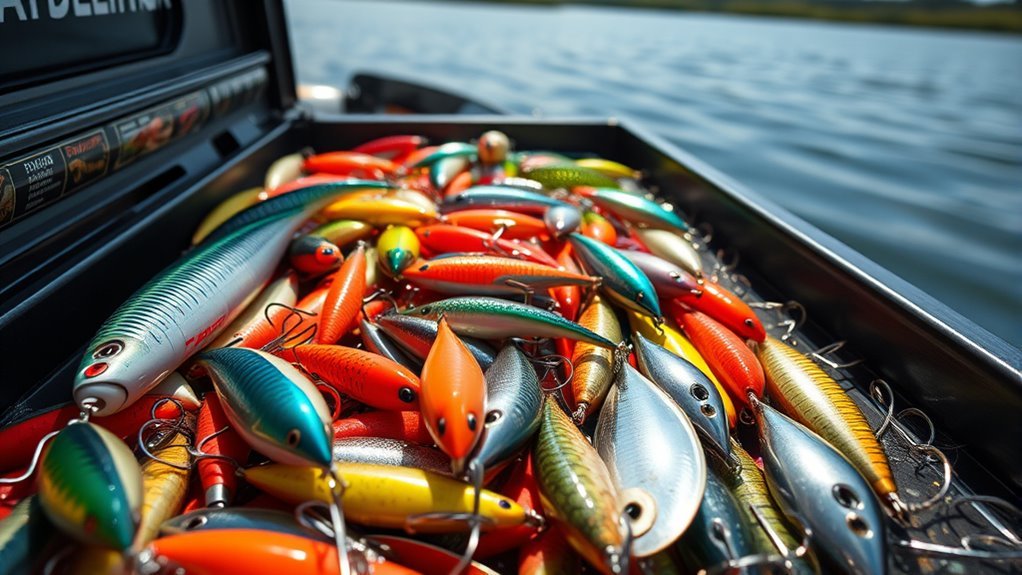
How do you choose the right lure for your fishing adventure? Selecting the perfect artificial lure involves understanding your target species and the current fishing conditions. Here’s a quick guide to help you:
Selecting the ideal lure requires knowledge of your target species and the fishing conditions for a successful adventure.
- Target Species: Saltwater fish often respond to flashy, bright-colored lures, while freshwater species may prefer natural-looking options when the water is clear.
- Lure Type: Start with soft plastic baits; they’re easy to handle and effective for various species.
- Water Clarity: In clear waters, opt for natural hues; in murky conditions, bright colors or high-contrast colors can enhance visibility.
- Food Sources: Match your lure to the local prey to greatly improve your chances of success.
- Depth: Use lighter lures for shallow water and heavier jigs, spoons, or deep-diving plugs when fish hold deeper.
- Cover: Use weedless rigs around grass, brush, and timber. Use open-hook jig heads when snagging is less likely.
Don’t hesitate to experiment with different types of fishing lures, like jigs, spinners, and plugs. This trial and error approach will help you identify what works best for targeting fish in your specific environment.
A helpful rule is to change one thing at a time. If you change the lure, color, size, and retrieve all at once, you will not know what made the difference. Start with retrieve speed, then depth, then color, then lure type.
Happy fishing!
Best Artificial Bait by Common Fish Species
Different fish feed in different ways, so your lure choice should match the species you want to catch. Use these beginner-friendly pairings as a starting point.
- Bass: Soft plastic worms, craws, jigs, spinnerbaits, crankbaits, frogs, and swimbaits.
- Trout: Small spinners, spoons, tiny jigs, small crankbaits, and soft plastic minnows.
- Crappie: Small tube jigs, curly-tail grubs, marabou jigs, and tiny soft plastic minnows.
- Bluegill and panfish: Micro jigs, small grubs, tiny spinners, and insect-style soft plastics.
- Walleye: Jigs with soft plastics, minnow-style plugs, blade baits, and trolling crankbaits.
- Pike and muskie: Large spoons, spinnerbaits, jerkbaits, swimbaits, and flashy plugs.
- Redfish and speckled trout: Paddle-tail swimbaits, spoons, shrimp-style soft plastics, and topwater plugs.
- Salmon and tuna: Spoons, plugs, jigs, trolling lures, and baitfish-style artificial lures.
These pairings are not strict rules. They simply help you narrow your choices so you can spend more time fishing and less time guessing.
Essential Gear for Artificial Lure Fishing
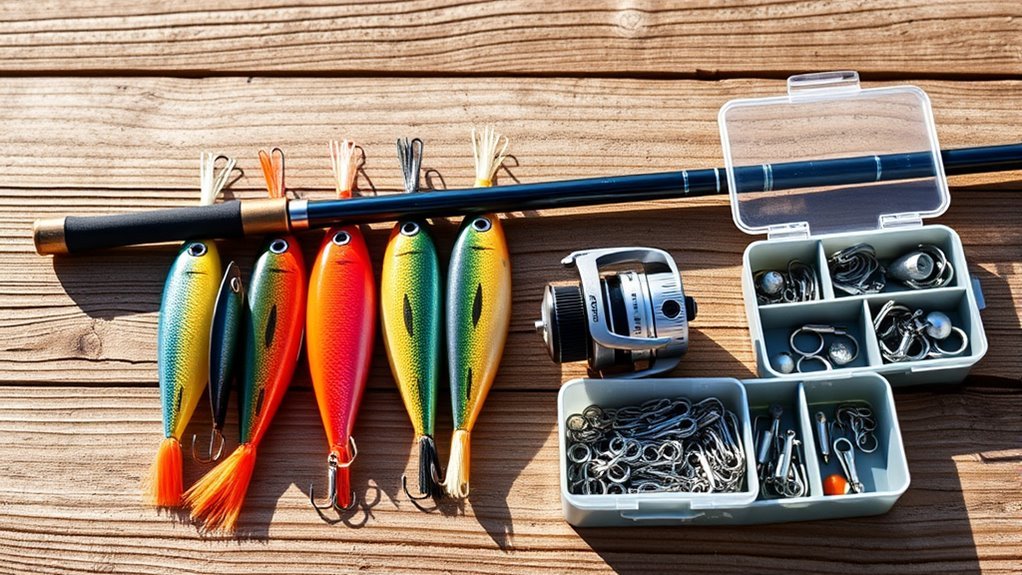
While you might be keen to hit the water with your artificial lures, having the right gear is important for maximizing your success. Start with a fishing rod that matches your lure’s weight and type; medium to medium-heavy action rods offer versatility for various species.
Spinning reels are perfect for beginners, providing ease of use and effectiveness with light to medium-weight lures, ideal for targeting bass, trout, panfish, and other common freshwater species.
Next, choose your fishing line wisely. Braided lines deliver strength and sensitivity for heavy baits or thick cover, while fluorocarbon lines offer low visibility in clear waters. Monofilament line remains a good beginner choice because it is affordable, easy to tie, and forgiving.
Don’t overlook terminal tackle, including hooks, weights, and swivels, as they’re essential for rigging lures effectively and enhancing your catch rates. Use the smallest weight that still lets you cast well and keep contact with the lure.
Finally, an organized tackle box helps you quickly adapt to changing fishing conditions, keeping your lures and terminal gear accessible when you need them most.
Basic Rigs for Artificial Bait
You do not need complicated rigs to catch fish with artificial bait. These simple setups cover most beginner situations.
- Jig head rig: Thread a soft plastic grub, worm, or swimbait onto a jig head. Cast it, let it sink, then swim, hop, or drag it back.
- Texas rig: Rig a soft plastic worm or craw weedless with a bullet weight. Use it around weeds, brush, wood, and shallow cover.
- Weightless rig: Rig a soft plastic stick bait or fluke without a weight. Let it fall slowly near docks, grass edges, or calm pockets.
- Drop shot rig: Place the weight below the hook so the lure hovers above the bottom. This is useful when fish are inactive or holding deeper.
- Inline spinner setup: Tie the spinner directly to your line or use a small snap. Cast and retrieve steadily so the blade spins.
Check your knot often when fishing artificial lures. Repeated casting, rocks, weeds, and fish teeth can weaken the line near the bait.
Common Mistakes to Avoid
Artificial bait fishing becomes easier when you avoid a few beginner mistakes. Most problems come from fishing too fast, using a lure that is too large, or failing to keep the bait in the right depth zone.
- Retrieving too quickly: Slow down if fish follow but do not bite, or if the water is cold, clear, or heavily pressured.
- Using too many lures: Learn a few proven baits before filling your tackle box with options you do not understand.
- Ignoring water clarity: A subtle lure may disappear in muddy water, while a loud or bright lure may spook fish in clear water.
- Fishing empty water: Cast near cover, structure, baitfish, shade, current, or depth changes where fish are more likely to feed.
- Not watching the line: Many bites feel light. Watch for jumps, twitches, slack, or sideways movement.
- Setting the hook too late: When you feel a solid tap or pressure, reel down first, then set the hook with control.
Safety and Fishing Etiquette
Artificial lures often have exposed hooks, treble hooks, or sharp jig points. Handle them carefully, especially when fishing near children, pets, or other anglers.
- Wear eye protection when casting, especially in windy conditions.
- Look behind you before every cast so you do not hook someone, a tree, or a dock rope.
- Use pliers to remove hooks safely from fish with teeth or deep hook placement.
- Pinch barbs or use single hooks when you want easier catch-and-release handling.
- Pack out old line, soft plastics, packaging, and broken lures.
- Respect other anglers by giving them room and avoiding casts across their lines.
Good habits protect fish, people, and the places you enjoy fishing.
Related Guides
Frequently Asked Questions
How to fish with artificial bait for beginners?
Start with soft baits like worms, grubs, or small swimbaits. Rig one on a jig head or weedless hook, cast near cover, let it sink, then retrieve it with slow turns of the reel, short twitches, and pauses. Experiment with colors and sizes, adjusting your retrieve speed based on water conditions. Observe fish behavior for better chances of success.
Is it hard to catch fish with fake bait?
Catching fish with fake bait isn’t necessarily hard, but it can be tricky at first. You’ll need to master lure selection, retrieval techniques, and adapt to environmental factors. With practice, you’ll improve your timing, feel more bites, and learn which lures work best in your local water.
How to choose artificial bait for fishing?
To choose artificial bait effectively, assess your target species’ preferences, match lure size to local prey, consider water clarity, and adapt to seasonal behavior. Use natural colors in clear water, stronger colors in stained water, smaller lures when fish are pressured, and larger lures when fish are feeding aggressively.
How to bait fish for beginners?
Start by choosing soft baits, then experiment with retrieval techniques. Observe water conditions and fish behavior closely, adjusting your approach to maximize your chances of success while staying organized with quality tackle. Patience helps because artificial lures often work after small changes in speed, depth, or pause length.
What artificial bait should I buy first?
A beginner should start with a few soft plastic worms, paddle-tail swimbaits, curly-tail grubs, jig heads, and one or two spinners. These lures are easy to use, work for many species, and teach you how depth, speed, and action affect bites.
Why do fish follow my lure but not bite?
Fish may follow without biting when the lure is too large, moving too fast, running at the wrong depth, or looking unnatural. Try pausing the lure, downsizing, switching to a more natural color, or making an erratic twitch right before the fish turns away.
Can artificial bait work in muddy water?
Yes, artificial bait can work in muddy water. Choose lures with vibration, flash, or a strong silhouette, such as spinners, chatter-style baits, dark soft plastics, bright swimbaits, or rattling plugs. Fish slower and closer to cover because visibility is limited.
Conclusion
As you begin your artificial bait fishing journey, remember that success comes from simple choices done well. Start with beginner-friendly soft plastics, learn how different lures move, and pay close attention to water clarity, depth, cover, and fish behavior.
Mastering these techniques transforms your experience from random casting into a more thoughtful approach. Let the lure work naturally, trust your observations, and adjust one detail at a time. With the right gear at your side, each trip teaches you something useful.
So, cast your worries aside and enjoy the thrill of the chase. There is always something new to learn beneath the surface, and every bite builds your confidence for the next cast.