Fluorocarbon is dense, relatively stiff, and commonly chosen when anglers want a low-visibility, abrasion-resistant leader or main line. The right knot depends on the connection. For a strong fixed connection from fluorocarbon to a hook, jig, swivel, or lure, the doubled or improved San Diego Jam Knot is a useful choice. A Palomar is simpler when the lure can pass through its loop, while an FG or Double Uni is designed for joining braid to a fluorocarbon leader.
Last updated: September 21, 2026
Quick Answer
For tying fluorocarbon directly to a hook or lure, the doubled San Diego Jam Knot is a strong fixed-connection option. Double the line, pass it through the eye, wrap the doubled working section neatly around the four parallel strands about 5 to 7 times, pass the doubled section through the lower and upper loops, wet the knot, and cinch it slowly. Use a Palomar when you want a simpler terminal knot, or an FG or Double Uni when joining braid to fluorocarbon.
Key Takeaways
- The doubled San Diego Jam Knot is a terminal knot for attaching fluorocarbon directly to hooks, jigs, swivels, and lures.
- Keep every wrap neat and beside the previous wrap; crossed coils create uneven pressure and make the knot harder to seat correctly.
- Use about 5 to 7 wraps as a practical starting range, then inspect the finished knot for a compact, even seat.
- Wet the knot and tighten it with controlled pressure instead of snapping it tight.
- Use an FG or Double Uni for braid-to-fluorocarbon connections rather than a terminal San Diego Jam.
Affiliate disclosure: This page may contain affiliate product links. If you buy through a qualifying link, the site may earn a commission at no extra cost to you.
At a Glance
| Time Required | About 30 to 60 seconds after practice |
| Difficulty | Beginner to intermediate |
| Tools Needed | Fluorocarbon line or leader, hook or lure, clean water or saliva for wetting, and line cutters |
| Best Use | Fixed fluorocarbon-to-terminal-tackle connection |
Which Fluorocarbon Knot Should You Use?
No single fishing knot is best for every fluorocarbon setup. First decide whether you are tying fluorocarbon directly to terminal tackle or joining it to another line. The table below separates those jobs.
| Knot | Best Use | Main Tradeoff |
|---|---|---|
| Doubled San Diego Jam | Fluorocarbon directly to a hook, jig, swivel, or lure | Strong fixed connection, but requires careful wrap control |
| Palomar | Simple terminal connection when the lure can pass through the loop | Easy to tie, but awkward with large or treble-hooked lures |
| FG Knot | Braid main line to fluorocarbon leader | Slim connection through guides, but takes more practice |
| Double Uni | Braid to fluorocarbon when easy tying matters | Simpler than an FG, but usually bulkier through guides |
| Loop Knot | Plugs or other presentations that benefit from freer lure movement | Creates movement instead of a fixed knot against the eye |
[Amazon Products Picked for You]

Aerospace-Grade Aluminum Construction:Crafted from aerospace-grade aluminum using CNC precision machining. Delivers superior strength, perfect balance, and long-lasting resistance to corrosion and wear. Ideal for both freshwater and saltwater use

Suitable size. The length of the line tie hook is 3.94 inches and the weight is 10g. It is small and convenient, easy to carry, making it an ideal addition to your fishing tools or fly fishing gear.
Overview of the Improved San Diego Jam Knot
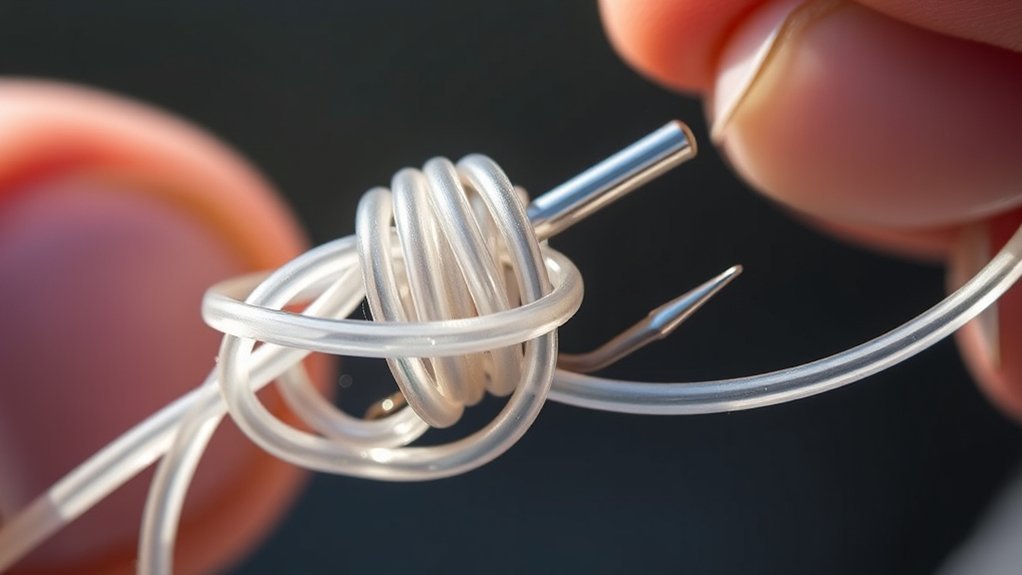
The Improved San Diego Jam Knot described in this guide is the doubled variation of the San Diego Jam. In a standard San Diego Jam, a single tag end passes through the tackle eye before wrapping around the standing line and tag section. In the doubled version, the connection is doubled at the eye and the working section is wrapped around multiple parallel strands.
The doubled version is useful for a fixed fluorocarbon-to-hook or fluorocarbon-to-lure connection. Its strength depends less on a universal percentage and more on the specific line, diameter, eye shape, wrap quality, and how completely the knot is seated.
The goal is a compact knot with smooth, adjacent coils. Crossed wraps, hard kinks, damaged line, or a knot that refuses to seat evenly are reasons to cut it off and start again.
For an additional manufacturer reference, Sunline’s fishing-knot guide also includes a Double San Diego Jam variation for fluorocarbon and nylon.
Note: Use clean water or saliva to wet fluorocarbon before the final cinch. The purpose is to help the wraps slide into position with less friction while you tighten them.
Step-by-Step Tying Process
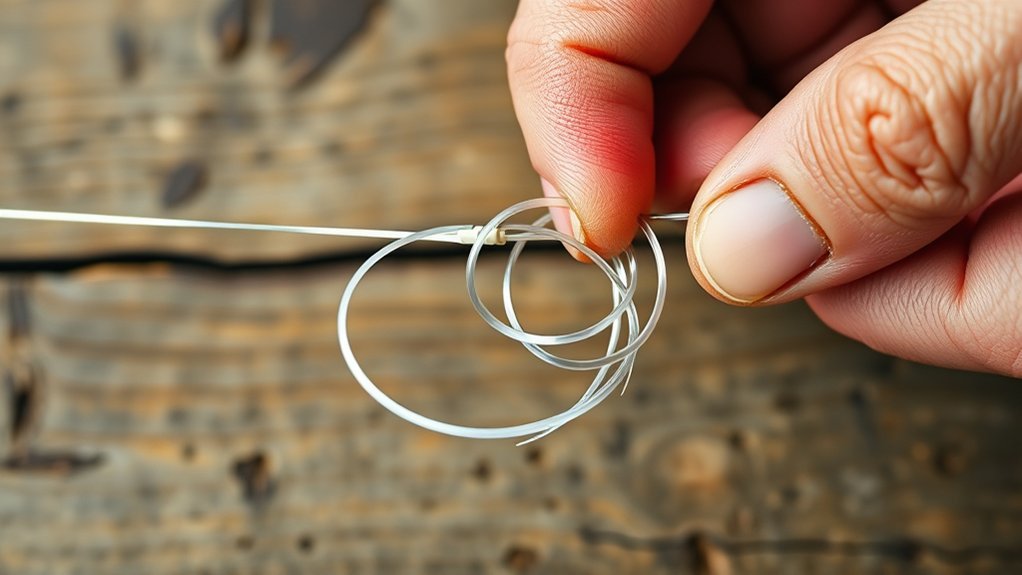
To tie the doubled San Diego Jam Knot, leave enough fluorocarbon to work without forcing short, tight wraps. The important detail is that the doubled working section wraps around the parallel doubled sections cleanly instead of crossing over itself.
- Double the line: Fold the fluorocarbon to create a doubled working section with several inches available for tying.
- Pass the doubled section through the eye: Run the doubled section through the hook, jig, swivel, or lure eye.
- Set the four strands: Bring the doubled working section alongside the doubled standing section and pinch them together above the eye.
- Make the wraps: Wrap the doubled working section around all four parallel strands about 5 to 7 times. Keep the coils side by side.
- Use the lower opening: Pass the doubled working section between the doubled lines in the opening near the eye.
- Use the upper loop: Bring the doubled working section back through the loop created at the top when you began wrapping.
- Wet the knot: Moisten the wraps before seating them.
- Cinch gradually: Apply slow, even tension while guiding the coils so they stay aligned and move toward the eye together.
- Seat and trim: Pull firmly enough to fully seat the knot, inspect it, then trim the excess without cutting into the knot itself.
The finished coils should form an orderly barrel rather than a pile of crossed line. If a wrap jumps over another wrap, the line develops a sharp kink, or part of the knot remains loose while the rest tightens, cut it off and retie.
Give the connection a steady pull test before casting. Also inspect the few inches of fluorocarbon immediately above the knot, because a perfect knot cannot compensate for a nicked leader.
Warning: Never snap-test fluorocarbon with a sudden jerk near your face or hands. Pull steadily and keep hooks pointed away from your body.
Cinching Techniques for Maximum Strength
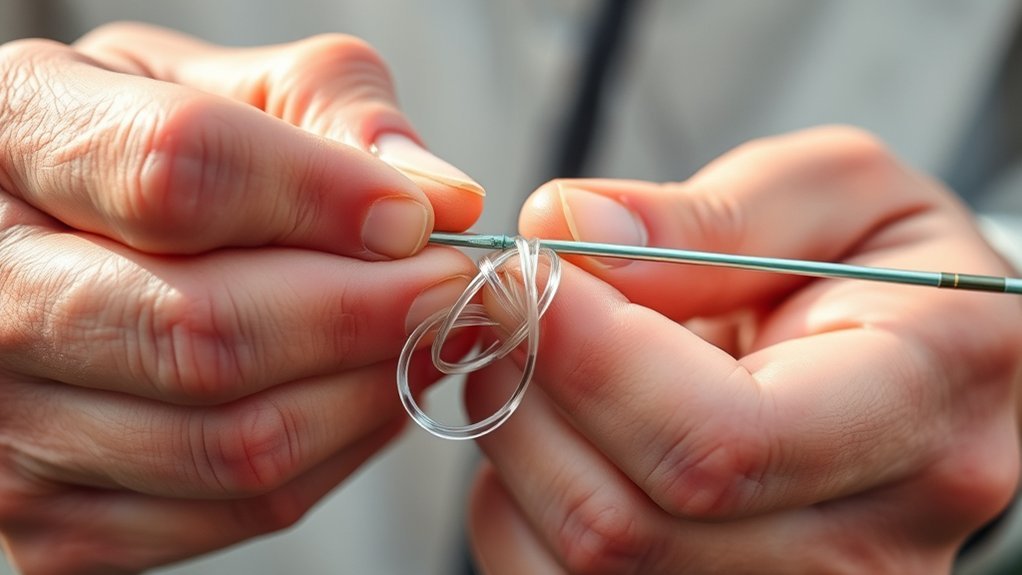
Cinching determines whether the wraps stay orderly or lock against one another unevenly. Wet the knot first, then use controlled pressure instead of a sudden yank.
Watch the wraps as they move toward the hook or lure eye. They should remain parallel and settle together. If one coil crosses another or the knot locks halfway down, stop rather than forcing it into place. Add moisture and try to guide the wraps; if the geometry is already distorted, retie.
Once the knot reaches the eye, apply firm, steady tension so it is fully seated. On light fluorocarbon, avoid shock-loading the knot with a sharp jerk. On heavier leader material, make sure every wrap has compressed into the finished knot before trimming.
After seating, trim the excess neatly while leaving enough material that you do not cut into the finished knot. Run your fingers over the leader above the knot and look for roughness, flattening, whitening, or a sharp bend.
Pro Tip: A good final inspection checks three things: even coils, a fully seated knot against the eye, and undamaged fluorocarbon immediately above the knot.
[Amazon Products Picked for You]

√ Quick Safe Easy - Suitable for anglers of all ages and experience - Never lose a fish from a faulty knot! Ideal for cold weather conditions, numb or arthritic fingers to the hands. Great to any tackle box!
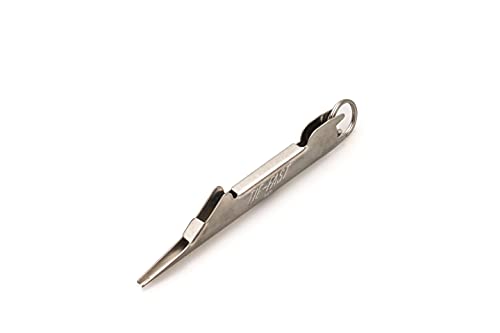
Easy Fast Safe Sure
Knot Maintenance and Best Practices
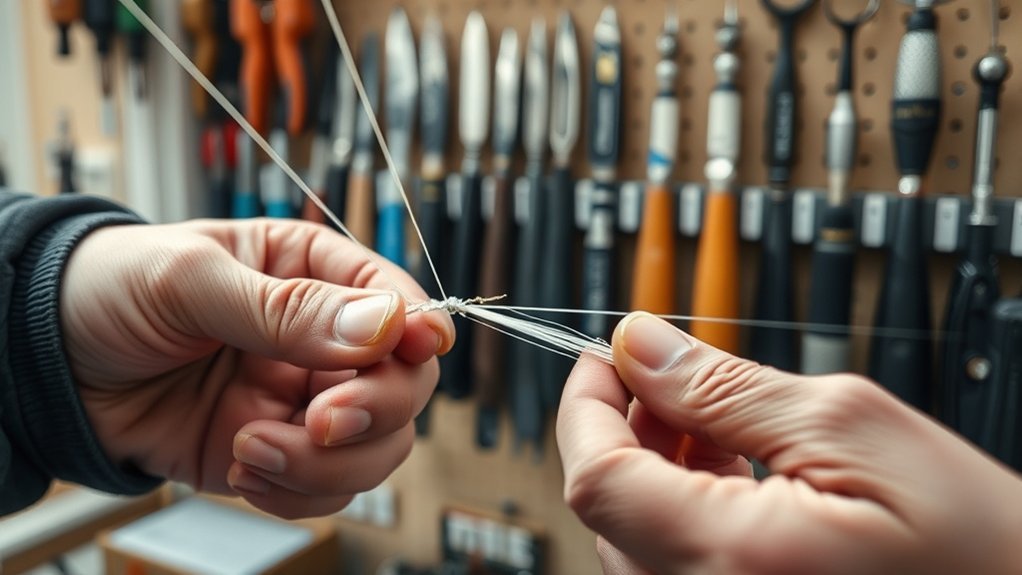
Fluorocarbon is commonly used around rocks, timber, shell, vegetation, dock hardware, and other abrasive cover, but no line is immune to damage. Check both the knot and the nearby leader instead of inspecting only the final coils.
- Retie after visible abrasion: Replace any section with nicks, roughness, flattening, deep whitening, or sharp kinks.
- Check after snags: A hard pull against rock, wood, or metal can damage line above an otherwise intact knot.
- Inspect the tackle eye: A rough eye, damaged split ring, or sharp metal edge can repeatedly weaken fresh knots.
- Pull-test after tying: Use steady pressure and retie if the wraps move, separate, or fail to remain seated.
- Do not rescue a malformed knot: Cutting off a questionable knot costs less line than losing a lure or fish.
[Amazon Products Picked for You]

This double structure 100% fluorocarbon boasts exceptional knot and tensile strength. It’s a top choice for braid to leader connections because it cinches easily for fail-safe knots
This double structure 100% fluorocarbon boasts exceptional knot and tensile strength. It’s a top choice for braid to leader connections because it cinches easily for fail-safe knots

100% FLUOROCARBON FISHING LEADER: KastKing Kovert Blue Water Fluorocarbon fishing leader is engineered using Japanese PVDF resin. Engineered for tough blue water fishing conditions, it has lower stretch and higher abrasion resistance. It is exceptional when used to be attached to your main fishing lin
Recommended Applications for Fluorocarbon Fishing
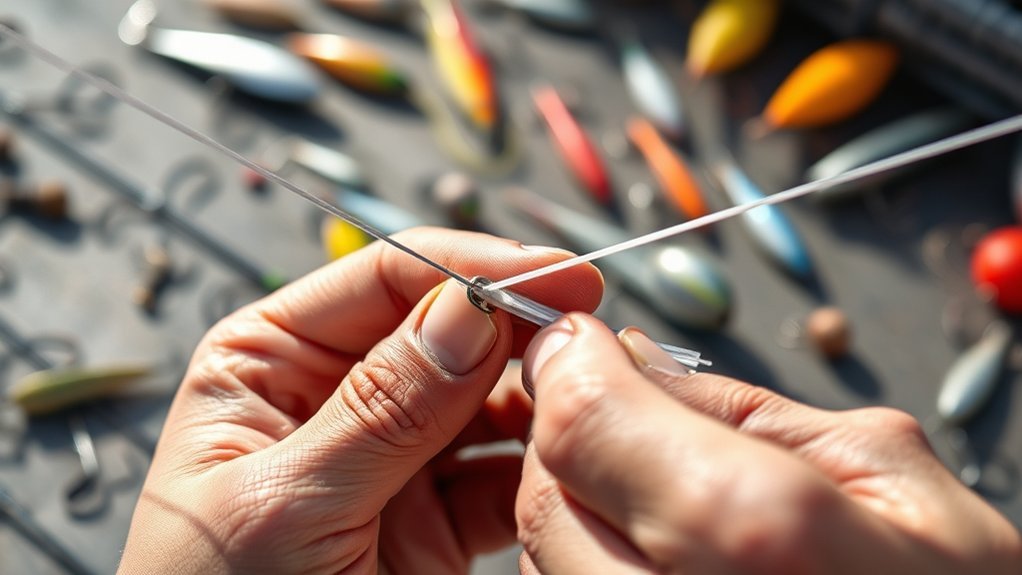
The doubled San Diego Jam is most useful when you want a fixed terminal connection rather than a loop knot or line-to-line connection. It can be tied to smooth hook eyes, jig heads, swivels, lure eyes, and suitable split rings.
| Technique | Connection | Why It Fits |
|---|---|---|
| Jigging | Fluorocarbon to jig or solid ring | Compact fixed terminal connection |
| Spinnerbaits | Fluorocarbon directly to the lure eye | Fixed connection without passing the entire lure through a Palomar loop |
| Texas Rigs | Fluorocarbon to hook | Strong fixed connection for direct hook attachment |
| Crankbaits | Fluorocarbon to lure eye or suitable ring | Compact option when a fixed connection is desired |
| Braid With Fluorocarbon Leader | Braid to fluorocarbon | Use an FG or Double Uni instead; this is a line-to-line connection |
When to Use a Different Fluorocarbon Knot
The doubled San Diego Jam is a useful terminal knot, but another knot may fit the connection better.
- Use a Palomar knot when you want a simple terminal knot and the hook or lure can pass through the doubled loop without becoming tangled.
- Use a loop knot when you intentionally want extra lure freedom rather than a fixed connection against the eye.
- Use an FG or Double Uni when joining braid to fluorocarbon. These are line-to-line connections, not substitutes for a hook or lure knot.
- Use a snell knot when the rig specifically calls for the line to wrap around a hook shank, such as certain straight-shank or bait-hook setups.
If your main line is braid, see the site’s fishing knots for braid guide for terminal and leader-connection options.
The practical rule is simple: choose a knot designed for the connection you are making, then use the knot you can tie consistently and inspect confidently.
Common Fluorocarbon Knot Mistakes
Small tying errors can weaken an otherwise suitable knot. Check for these problems before casting.
- Cinching dry: Dry wraps create more friction as they slide into position.
- Crossed wraps: Overlapping coils create uneven pressure and prevent the knot from seating cleanly.
- Using an arbitrary wrap count: Start with the recommended range for the knot, then confirm that the coils seat compactly with your line diameter and tackle eye.
- Forcing a malformed knot: Once wraps kink or lock unevenly, retie rather than trying to pull the problem out.
- Cutting into the knot: Trim excess only after the connection is fully seated.
- Ignoring damaged line: Inspect several inches above the knot for nicks, roughness, or flattening.
Frequently Asked Questions
What Is the Best Knot for Fluorocarbon Fishing Line?
There is no single best fluorocarbon knot for every connection. For attaching fluorocarbon directly to a hook, jig, swivel, or lure, the doubled San Diego Jam is a strong fixed-connection option. A Palomar is simpler when the tackle can pass through its loop. For joining braid to a fluorocarbon leader, use a line-to-line knot such as the FG or Double Uni.
What Is the Difference Between a San Diego Jam and a Double San Diego Jam?
A standard San Diego Jam begins with a single line through the tackle eye. The doubled version doubles the connection at the eye and works with a doubled section during tying. This article teaches the doubled or improved variation.
How Do You Tie a Fluorocarbon Leader to a Lure?
For the doubled San Diego Jam, double the fluorocarbon, pass the doubled section through the lure eye, wrap it around the four parallel strands about 5 to 7 times, pass the doubled working section through the lower opening and then the upper loop, wet the knot, and cinch it gradually until the coils seat cleanly against the eye.
Is a Palomar Knot Good for Fluorocarbon?
A Palomar can be a practical fluorocarbon terminal knot when it is tied cleanly and the hook or lure can pass through the loop. Check that the doubled strands are not crossed before tightening. For large or treble-hooked lures, a San Diego Jam-style connection can be easier to manage because the lure does not need to pass through a large loop.
What Knot Should You Use for Braid to Fluorocarbon?
Use a line-to-line knot rather than a terminal San Diego Jam. The FG knot creates a slim connection that works well when the leader knot must pass through rod guides. The Double Uni is easier for many anglers to tie but is generally bulkier.
How Many Wraps Should You Use for a Double San Diego Jam?
About 5 to 7 neat wraps is a practical starting range for the doubled San Diego Jam. Line diameter, stiffness, and tackle-eye size can affect how the finished knot seats, so inspect the knot rather than relying on wrap count alone. The coils should sit beside one another without crossing or bunching.
Should You Wet Fluorocarbon Knots Before Tightening?
Yes. Wetting the knot with clean water or saliva reduces friction while the wraps move into their final position. Tighten with controlled pressure and check that the coils remain orderly as the knot seats.
Conclusion
For a fixed fluorocarbon-to-hook or fluorocarbon-to-lure connection, the doubled San Diego Jam is worth learning because it does not require passing the entire lure through a large loop. The key is accurate geometry: double the connection, keep roughly 5 to 7 wraps orderly, use both finishing openings, wet the line, and seat the knot gradually.
Use a different knot when the connection changes. A Palomar offers a simpler terminal option, while an FG or Double Uni is intended for braid-to-fluorocarbon leader connections.
Before every cast after tying, check the coils, the tackle eye, and the line immediately above the knot. If you find crossed wraps, abrasion, a hard kink, or movement during a steady pull test, cut the knot off and retie it.