You’ll learn how to time the pre-spawn window, find productive staging areas, and choose lures that trigger aggressive strikes when bass begin moving shallow. Focus on water temperature trends, wind, water clarity, and structure instead of fishing by the calendar. When you match location and presentation to bass behavior, you can turn the next warming trend into more consistent bites.
Quick Answer
Pre-spawn bass fishing works best when water temperatures rise into the upper 40s through low 60s. Target creek channels, secondary points, flats, docks, rock, wood, and vegetation edges near deeper water. Use jerkbaits, crankbaits, spinnerbaits, jigs, and soft plastics, then adjust speed and depth as conditions change.
Key Takeaways
- Track water temperature trends daily because a small warmup can move bass from winter holding areas into staging zones.
- Start near creek channels, secondary points, ditches, docks, rock, wood, and vegetation edges close to spawning flats.
- Use moving baits when bass are active, then slow down with jigs, craws, Carolina rigs, or shaky heads when fish get pressured or cold fronts hit.
- Match lure color, profile, and retrieve speed to water clarity, wind, cover type, and bass activity level.
- Handle pre-spawn females carefully and follow local regulations, especially around closed seasons, slot limits, and bedding fish rules.
At a Glance
| Best Water Temperature | Upper 40s to low 60s, with the strongest movement often during stable warming trends. |
| Difficulty | Moderate. You need to read water temperature, structure, bait movement, and weather changes. |
| Best Lures | Suspending jerkbaits, squarebill crankbaits, medium-diving crankbaits, spinnerbaits, jigs, craws, lizards, and Carolina-rigged soft plastics. |
| Main Goal | Intercept bass as they move from deeper winter areas toward shallow spawning flats. |
Timing the Pre-Spawn Window: Water Temperatures and Weather Cues
When water temps climb into the low to mid-50s and keep trending upward, bass often shift from deep winter holding areas toward shallower staging zones. They are not always ready to spawn yet, but they begin feeding more often as they prepare for the next phase.
You should track water temperature every trip because the pre-spawn period can hinge on only a few degrees. Upper 40s to low 50s often start the movement and feeding push, while the upper 50s and low 60s can put more fish close to spawning areas.
Watch weather and water trends instead of one isolated temperature reading. Sunny, stable warming can move bait and bass shallow. Cold fronts, muddy inflow, or wind-driven mixing can push fish tighter to cover, deeper along breaks, or back toward the first secure staging area.
You adapt by reading local conditions, not calendars. Check main-lake areas, backs of creeks, protected pockets, and north-facing or sun-warmed banks. Note clarity and temperature gradients across the lake because one pocket may be several degrees warmer than another.
Bass behavior changes predictably with these cues, so you focus effort where temperatures lead. Warmer stained water may draw fish shallower. Clear, cold water may keep them suspended or holding deeper near points, channel swings, and rock transitions.
Stay free from guesswork. Use a thermometer, log trends, and let weather-driven patterns guide your timing.
Ditch guesswork. Track temperatures, record trends, and let weather patterns tell you when bass are ready to move.
That tactical discipline puts you on the water when bass are most vulnerable and most willing to strike.
Note: Surface temperature helps, but it does not tell the whole story. Check several areas, especially shallow pockets, creek arms, and wind-blown banks, before deciding where to commit.
Where to Find Pre-Spawn Bass: Key Habitats and Transitional Areas
Start by targeting the obvious shallow spots, including creeks, coves, pockets, and flats, because that’s where pre-spawn bass move as temperatures climb into the low to mid-50s. From there, focus on transition features like creek channels, secondary points, ditches, drains, and the edges of submerged vegetation where bass stage and ambush prey.
You’ll use changes in depth and structure to intercept fish moving from winter holding areas to spawning areas. Mark contour breaks and ledges with your Lowrance C-Map, then systematically work creek channels and nearby flats where feeding activity increases as water temperatures rise.
Don’t ignore docks, bridges, riprap, laydowns, stump fields, and bluff walls. These structures concentrate bait and give bass cover on their way to spawning pockets. Move with purpose: target irregular features where deeper water meets shallower zones, then push into micro-ambush points along vegetation edges.
Pay close attention to the first hard cover outside likely spawning water. A single dock post, isolated stump, grass point, or rock vein near a creek channel can reload with fish throughout the day. These spots let bass feed without traveling far from security.
Fish tactically, adjust retrieve speeds to match activity, and commit to spots showing consistent bait movement. That is how you build a reliable pre-spawn pattern instead of simply covering random banks.
Resident vs. Transitional Bass: Behavioral Differences and Targeting Tips
Shifting focus from where bass stage to how individual fish behave will sharpen your approach. Resident and transitional bass require different tactics because they use the same lake in different ways.
You’ll spot resident bass holding shallow near cover, food, and warmer water in creeks, ponds, coves, and flats. These fish often warm faster and may spawn earlier than deeper, roaming bass. They can be larger and more aggressive in the pre-spawn period, so you’ll use power fishing techniques such as flipping heavy cover, burning a spinnerbait, or deflecting a squarebill to trigger reaction strikes.
Migratory bass are moving toward spawning flats. You’ll find them on stationary ambush points like bridges, channel swings, ditches, secondary points, and drains where current and structure funnel fish. They may feed in short windows, then reposition quickly.
When migratory fish feel tentative, they often respond better to finesse presentations like shaky heads, light jigs, compact craws, and slow-dragged soft plastics. These slower baits help you keep the lure in front of fish that are not chasing.
Time your shifts by watching water temperatures, daily weather, wind direction, and bait movement. Those signals tell you when to favor resident bass near shallow cover or target migratory bass along travel routes. Adopt both sets of fishing techniques and move confidently when conditions change.
Top Lures for Pre-Spawn Bass: What Works and When
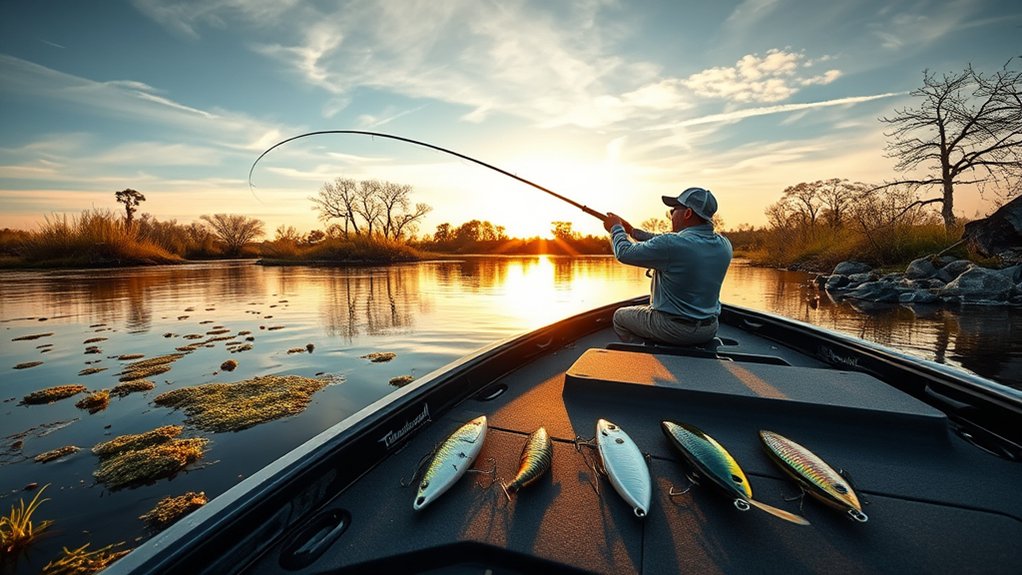
When water clears and fish start moving toward flats, twitch suspending jerkbaits with sharp snaps and deliberate pauses to trigger strikes from wary pre-spawn bass.
Use squarebill crankbaits that imitate crawfish for shallow, aggressive feeders. Run medium-diving crankbaits through 8 to 10 feet of water on 12 to 15 lb fluorocarbon when bass hold on deeper staging breaks.
Match spinnerbait and soft-plastic presentations to cover, water clarity, and fish mood, but prioritize jerkbaits and squarebills/crankbaits when you need to cover water and locate active fish.
Keep a simple rotation ready. Start with a moving bait to find fish, slow down with a jig or soft plastic after a missed strike, then return with a different angle or color once you know bass are using that area.
Jerkbaits — Twitch and Pause
Because bass are feeding to fuel the upcoming spawn, twitch-and-pause jerkbaits become a go-to tactic in clear to slightly stained water. Twitch the lure two or three times, then pause to mimic injured prey. A suspending jerkbait keeps the bait in the strike zone longer during that pause.
You’ll focus on transitional areas such as creek channels, secondary points, drains, and edges of submerged vegetation where bass are actively feeding and staging. Use a rod that lets you snap the bait cleanly, control slack, and keep trebles pinned when a fish swipes at the lure.
Twitch sharply, then let the bait sit still. The pause often catches the fish, especially after a cold front or in clear water. Choose natural colors in clear water and brighter or more visible finishes in stained water. Stay mobile, read structure, and commit to short, decisive retrieves that keep the bait near likely ambush points.
Squarebills & Crankbaits
Squarebills and medium-diving crankbaits are go-to tools for pre-spawn bass because they imitate crawfish and baitfish that bass key on now. Cast them around rock and wood cover, use a 7’2” rod to control the bait around structure, and work 8 to 10 feet of water with 12 to 15 lb fluorocarbon when you need depth, sensitivity, and control.
You’ll cover water aggressively with squarebill crankbaits, varying retrieve speed and forcing deflections to trigger feeding strikes. Stick to rock and wood edges, feel for hits on bumps, and keep casting with confidence. Fish fast when bass are roaming, then slow down when they sit tight after a front or under heavy pressure.
| Target | Tactic |
|---|---|
| Rock | Deflect |
| Wood | Slow-roll |
| Flats | Fast-crank |
| Ledges | Pause-strip |
Spinnerbaits, Jigs, and Soft Plastics
Spinnerbaits shine when wind, stain, or low light helps bass track vibration. Run them beside laydowns, riprap, grass lines, docks, and shallow points. Slow-roll a spinnerbait when the water is cold, then speed it up when bass chase bait during a warming trend.
Jigs and soft plastics help you pick apart cover after a moving bait shows you where fish live. Flip a jig into wood, drag a craw across rock, or work a lizard and brush-style bait through staging areas near spawning flats. These slower choices catch bass that follow a moving bait but refuse to commit.
Pro Tip: If a bass bumps a crankbait or follows a jerkbait without eating, make a follow-up cast with a jig, craw, or weightless soft plastic to the same target.
Presentation Techniques: How to Fish Jerkbaits, Crankbaits, Spinnerbaits, and Soft Plastics
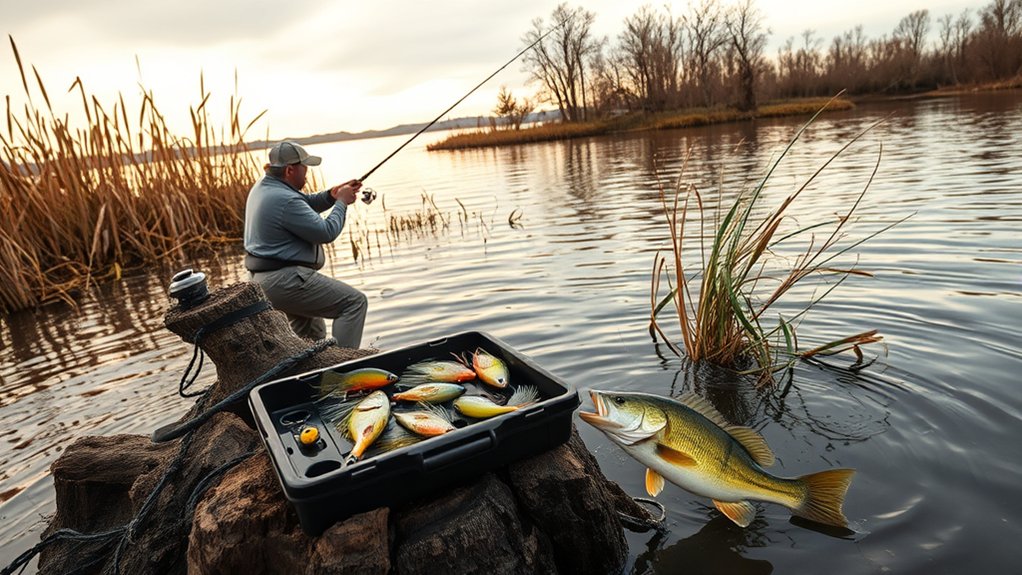
A solid presentation lets you trigger aggressive pre-spawn bass instead of hoping they’ll bite, so you need precise retrieves and the right rigging for each lure type.
For jerkbaits, use a twitch-pause-twitch cadence, often two or three twitches followed by a pause, to mimic wounded baitfish in clear to slightly stained water. In colder water, lengthen the pause. In warmer water, shorten it and make the bait look more urgent.
With crankbaits, cast to shallow flats, rock, wood, and transition banks. Let the bait deflect off rocks and structure. Tie on 12 to 15 lb fluorocarbon for sensitivity and control so you can feel bottom contact, detect strikes, and adjust depth.
Cast crankbaits to shallow flats, bounce them off rocks and structure, and fish 12 to 15 lb fluorocarbon when you need feel, depth control, and confidence around cover.
Spinnerbaits demand variable speed retrieves. Speed up or slow down to match water conditions, and run them tight to rocks, wood, grass, and visible structure to provoke follows and reaction bites.
For soft plastics like Zoom Brush Hogs and lizards, employ a Carolina rig to maintain bottom contact and present natural motion through cover. A Texas rig also works well when you need to slide through grass, brush, or dock posts without hanging up.
Master these techniques, stay decisive, and you’ll remove guesswork while putting more pre-spawn bass in the boat.
Crawfish Patterns and Cover-Specific Strategies
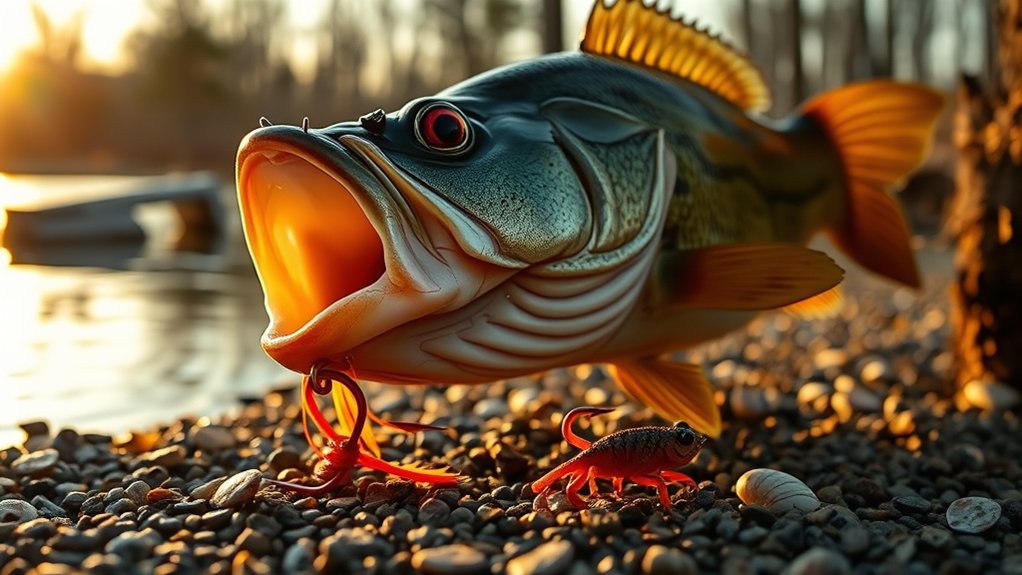
You’ll focus on crawfish-holding structure like rock piles, riprap, docks, jetties, laydowns, and submerged wood because those spots concentrate feeding pre-spawn bass.
Rig your baits for contact. Use 4” Yama Craws Texas- or Carolina-rigged for slow hops, and use square-bill crankbaits for deflecting off rock and timber. Then make precise casts tight to cover instead of simply fan-casting open water.
Use slow, controlled retrieves and short hops to mimic natural crawfish movement and trigger aggressive strikes. When the water warms, faster snaps and sudden direction changes can make the bait look like fleeing prey.
Crawfish-Holding Structure
When bass are keying on crawfish in the pre-spawn period, focus your efforts on rocky edges, riprap, jetties, chunk rock, clay-to-rock transitions, and any submerged brush that shelters forage.
You’ll find success where crawfish congregate: shallow waters adjacent to cover and structures that offer crevices, shade, and ambush points.
Target natural rock formations, fallen trees, dock posts, brush piles, and stump fields. These concentrate both food and protection, so bass often stack up there before moving to spawning beds.
Move deliberately, scan breaks between rocks and along riprap seams, and commit to spots where structure shifts into flats. A small change in bottom type can be enough to hold the best fish on the bank.
This approach frees you from scattershot casting because you’ll fish smart, not just hard.
Respect the pattern, concentrate on likely holds, and expect aggressive pre-spawn strikes from bass feeding heavily on crawfish.
Rigging and Presentation
If you’re fishing pre-spawn crawfish patterns, rig choice and presentation determine whether bass ignore or attack your bait.
You’ll rig soft plastics like a 4” Yama Craw on a Carolina rig to let the bait move naturally along rock and wood where crawfish hide. In shallow water during pre-spawn, focus on hard structure because bass often use these spots as feeding stations.
Vary retrieves. Slow drags imitate a crawfish crawling across bottom, while quick hops trigger reaction strikes. Don’t ignore deep water. Pitch or drag the same rig to outside edges, ledges, and channel swings where big females may stage before sliding shallow.
Be deliberate: match bait size to forage, adjust weight for wind or current, and fish cover-specific angles. This tactical approach forces the bass to make a decision: eat or let the bait escape.
Using Maps and Electronics to Locate Pre-Spawn Fish
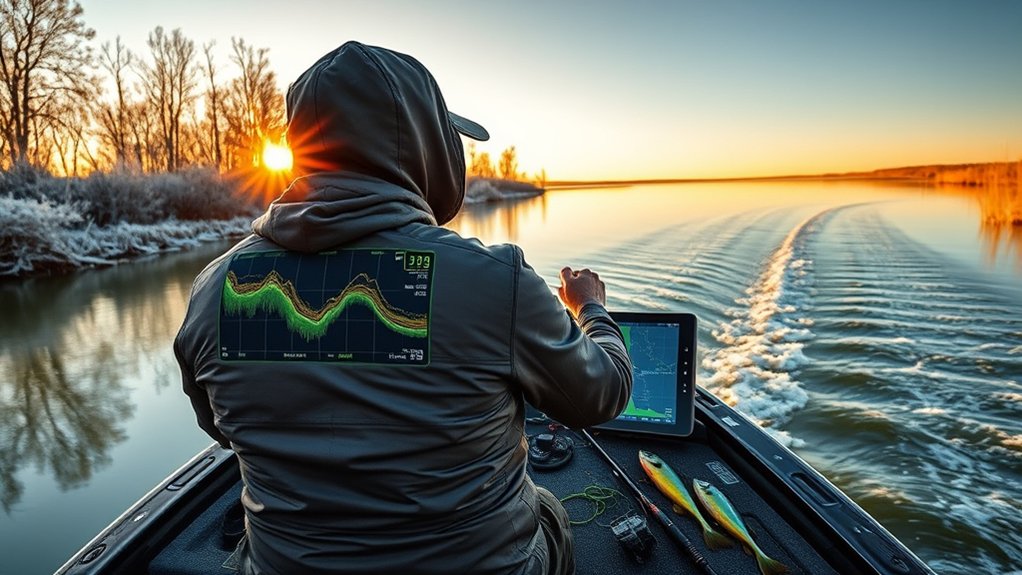
Maps and electronics are your tactical edge for finding pre-spawn bass. Use Lowrance C-Map and aerial/topo charts to mark contour breaks, creek channels, ditches, drains, and protected pockets that feed spawning flats. Then target irregular features like submerged vegetation edges, secondary points, inside turns, and isolated cover where deep water sits close to shallow flats.
You’ll use maps to plan routes and electronics to validate targets on the water. Lock onto contour changes, note where deep water hugs spawning flats, and flag those connection zones before you start fishing.
- Use Lowrance C-Map to mark contour lines and underwater structures that concentrate bass.
- Scan aerial/topo maps for creeks, ditches and drains that funnel fish toward spawning flats.
- Target irregular features—submerged vegetation edges and secondary points—where bass stage.
- Rely on electronics for real-time water temperature and depth confirmation before committing.
Also watch for bait balls, suspended fish, and subtle bottom changes. Side imaging can help you locate rock, brush, stumps, grass edges, and dock posts without driving directly over the fish.
You’re taking control: plan with maps, confirm with electronics, then execute decisively where water and structure converge on the spawn.
Adapting to Environmental Changes: Water Clarity, Temperature Shifts, and Timing
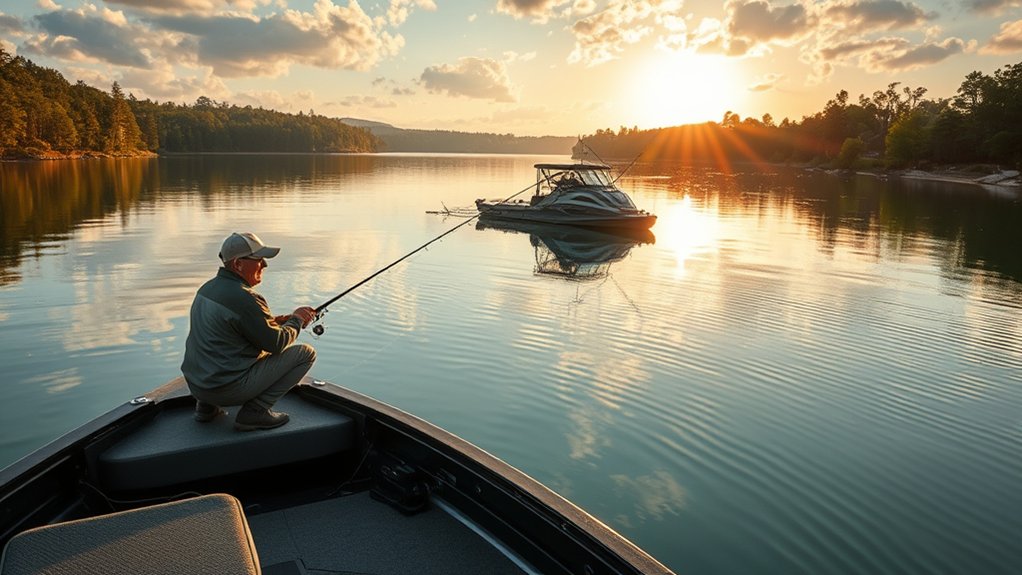
Because water clarity and temperature can change quickly, you’ve got to read the conditions and shift tactics fast. In murky water, push baits and jigs shallower where bass often compress around cover. In clear lakes, fish deeper, use longer casts, or switch to finesse presentations until temps rise.
You’ll monitor surface temps constantly because a 1 to 3°F uptick can flip bass from sluggish to aggressive. Match your approach: shallow, high-vibration profiles in low visibility; subtle, smaller offerings where clarity demands stealth.
Understand that spawning windows often open as water moves through the mid-50s into the 60s, but local temperature shifts mean pockets of fish may move early or late. Use maps and electronics to find staging areas, then pick the depth and presentation that water clarity and timing dictate.
Don’t get married to one spot or lure. Freedom on the water comes from adapting quickly. Read the cues, move smart, and strike when temperature and timing align for pre-spawn aggression.
Cold Fronts, Wind, and Muddy Water Adjustments
Cold fronts can slow the bite, but they do not make bass disappear. After a front, start near the same staging routes, then fish tighter to cover and slightly deeper. A suspending jerkbait with longer pauses, a compact jig, or a slow-dragged craw can keep you in the strike zone long enough to get bites.
Wind can help when it pushes bait against points, riprap, grass edges, and shallow flats. Fish the windy side with spinnerbaits, crankbaits, vibrating jigs, or jerkbaits when water clarity allows. If the wind muddies a bank too much, slide to the first cleaner water nearby.
Muddy water usually calls for shallower targets, darker silhouettes, stronger vibration, and repeated casts to key cover. Bass may hold inches from wood, grass, rock, or dock posts, so accuracy matters more than distance.
Warning: Pre-spawn and spawning rules can vary by state, lake, and season. Check local regulations before keeping fish, targeting bedding areas, or fishing waters with special bass limits.
Ethical Catch and Release for Pre-Spawn Bass
Pre-spawn females are valuable fish because they are carrying the next year-class of bass. If you plan to release your catch, handle each fish with care and keep it out of the water for the shortest time possible.
Wet your hands before touching the fish, support its belly if it is large, and avoid letting it hit carpet, dirt, or hot boat surfaces. Remove hooks with pliers, take quick photos, and place the fish back gently near the area where you caught it.
If a bass is deeply hooked, bleeding badly, or exhausted, follow your local rules and use your best judgment. Responsible handling protects the fishery and keeps the pre-spawn bite strong for future trips.
Frequently Asked Questions
What fly patterns work best for pre-spawn bass on small ponds?
Use streamers, woolly buggers, crawfish patterns, and baitfish imitations when bass are feeding below the surface. On warm afternoons, try poppers or divers around shallow cover. Favor darker or natural colors in stained water, then adjust retrieval speed with strips, twitches, and pauses until fish react.
Should I target banks with vegetation or open flats first?
Start with bank vegetation when it sits near deeper water, a creek channel, or a spawning pocket. Vegetation gives bass cover, warmth, and ambush points. After you check the grass edge, move to open flats, ditches, and secondary points as water warms and fish roam farther from cover.
How does moon phase affect pre-spawn bass activity?
Moon phase may influence timing, especially as water temperatures near the spawning range, but it should not be your only cue. Water temperature, daylight, weather stability, clarity, and available cover matter more day to day. Use the moon as one extra timing clue, not a fixed rule.
What rod and line setup is ideal for throwing jigs and soft plastics?
A 7’ medium-heavy, fast-action rod is a strong all-around choice for jigs and soft plastics. Match jig weight to depth and cover. Use fluorocarbon for sensitivity around rock and wood, or braid with a fluorocarbon leader when fishing grass, stained water, or heavier cover.
Can catch-and-release stress harm pre-spawn females?
Yes. Poor handling can stress any bass, and large pre-spawn females deserve extra care. Keep fish wet, support their weight, remove hooks quickly, avoid long photo sessions, and release them near the catch location. Careful handling helps protect spawning success and future fishing quality.
What is the best time of day to fish for pre-spawn bass?
Late morning through afternoon can be excellent during early pre-spawn because shallow water has time to warm. On stable warm days, low-light periods can also produce strong feeding windows. Let temperature trends, wind, and bait activity guide your timing more than the clock alone.
Should I fish shallow or deep during the pre-spawn?
Fish both, but focus on the routes between them. Start on deeper staging structure near spawning flats, then move shallower as the water warms. Bass may feed shallow during short windows, then slide back to points, ditches, creek channels, or cover when conditions change.
Conclusion
As the water warms and the lake begins to wake up, your boat becomes a tool for reading timing and terrain. Read temperatures like a clock, let maps and electronics act as your compass, and match lures to the moment. Treat shallow flats and creek mouths like highways and doorways: choose tactics that fit the traffic.
Pre-spawn bass fishing rewards anglers who stay observant. Track warming trends, follow bait, rotate between moving baits and slower presentations, and adjust to clarity, wind, and fronts. Stay adaptive, confident, and methodical, and the pre-spawn will reward the angler who leads instead of follows.

