Light, strong, and deceptively simple, monofilament looks basic but has useful traits every angler should understand. You’ll learn what it is made of, when its shock absorption helps you land fish, and when its stretch can work against you. You’ll also see how to choose the right pound test, line color, knots, spool setup, storage method, and fishing techniques so your line performs when it counts.
Quick Answer
Monofilament fishing line is a single-strand nylon line that works well for beginners, topwater lures, crankbaits, live bait, and general fishing. It casts easily, ties strong knots, floats better than fluorocarbon, and absorbs shock during hard strikes. Its main drawbacks are stretch, line memory, abrasion wear, and UV damage over time.
Key Takeaways
- Monofilament is a single strand of nylon that stays affordable, flexible, and easy to handle.
- Its stretch helps absorb shock, but it can reduce bite sensitivity and hook-setting power.
- Use lighter 2–6 lb mono for panfish and trout, 8–12 lb for many bass and walleye setups, and 15–30 lb for heavier cover or larger fish.
- Clear mono works well in clear water, while green, blue, or high-visibility line can help in stained water or line-watching techniques.
- Store mono away from heat and sunlight, inspect it often, and replace it when it becomes brittle, nicked, stiff, or heavily coiled.
At a Glance
| Best For | Beginners, topwater lures, crankbaits, live bait, panfish, trout, bass, and general freshwater fishing |
| Main Strength | Easy handling, forgiving stretch, strong knots, and low cost |
| Main Weakness | More stretch and memory than braid, plus gradual weakening from sunlight, heat, abrasion, and age |
| Care Level | Simple, but you should inspect it often and replace it regularly when worn |
What Is Monofilament Line and How It’s Made

Monofilament line is a single strand of nylon that has been a go-to choice for anglers since the 1930s because it is reliable, affordable, and easy to use. Unlike braided line, which uses woven fibers, mono uses one continuous strand. That simple design gives it a smooth feel, solid knot strength, and a forgiving stretch that helps during sudden strikes.
You’ll find monofilament fishing line made by melting nylon, extruding it through a small die, cooling it, stretching it for strength, and winding it onto spools. Manufacturers can adjust the material blend, diameter, color, softness, and finish to create lines for different fishing styles.
You choose breaking strains, often called pound test, based on your target fish, reel size, lure weight, and cover. Common freshwater sizes range from 2 to 30 pounds, though heavier mono also exists for saltwater and big-game fishing. The higher the pound test, the thicker and stronger the line usually becomes.
Mono’s shock absorption helps you land fish with fewer pulled hooks. When a fish surges, jumps, or shakes its head, the stretch gives your setup a small safety cushion. This trait helps with treble-hook lures, moving baits, and beginner hooksets.
You should also understand its trade-offs. Nylon stretches more than braid and fluorocarbon, so you may feel fewer subtle bites. Mono can also weaken from UV exposure, heat, abrasion, and age. That means you should check it often and replace it before it costs you a fish.
This clear, practical understanding of how monofilament is made and behaves lets you take decisive action on the water. When you know what mono does well and where it struggles, you can match it to the right technique instead of guessing.
Note: “Pound test” is a strength rating, not a perfect guarantee. Knots, abrasion, old line, drag pressure, and sudden shock can all reduce real-world breaking strength.
Advantages and Disadvantages of Monofilament
Because it balances ease of use, cost, and forgiving stretch, you’ll find mono a smart line for many anglers. It works especially well if you’re learning, fishing with kids, using moving baits, or switching between several simple techniques.
Monofilament fishing line delivers clear advantages: affordability, versatility across techniques, smooth casting, simple knot tying, and good shock absorption. Those strengths help beginners build confidence fast. Mono also handles well on spinning reels and baitcasting reels when you spool it correctly.
Its stretch gives you a cushion when fish make sudden runs or headshakes. That can protect light hooks, small trebles, and lighter rods from too much pressure. This is one reason many anglers like mono for crankbaits, topwater plugs, jerkbaits, and live bait rigs.
Mono’s buoyancy can also help. It does not sink as quickly as fluorocarbon, so it supports floating presentations and keeps topwater lures working naturally. If you fish poppers, walking baits, bobbers, or shallow crankbaits, that trait can improve lure action.
Still, you’ll face some disadvantages. Mono degrades with prolonged exposure to UV light, heat, and repeated stress, so you’ll need to replace it regularly to keep performance sharp. It also absorbs some water, which may change how it handles during a long day.
It has more stretch than alternatives, which can dull bite detection and make you miss subtle takes in finesse situations. The same stretch that protects you during a fight can also weaken hooksets at long casting distances or in deep water.
Line memory is another issue. If mono sits tightly coiled on a spool for too long, it may come off in loops. Those coils can reduce casting distance, increase tangles, and make light lures harder to control.
| Monofilament Strength | Why It Helps | Possible Drawback |
|---|---|---|
| Stretch | Absorbs shock during strikes and hard runs | Can reduce sensitivity and hook-setting power |
| Buoyancy | Works well with topwater lures and float rigs | May not help when you need a fast-sinking presentation |
| Easy knot tying | Helps beginners tie reliable knots quickly | Poorly tied knots can still slip, burn, or weaken |
| Low cost | Makes frequent replacement affordable | Cheaper line may have more memory or less abrasion resistance |
Choosing the Right Pound Test and Color
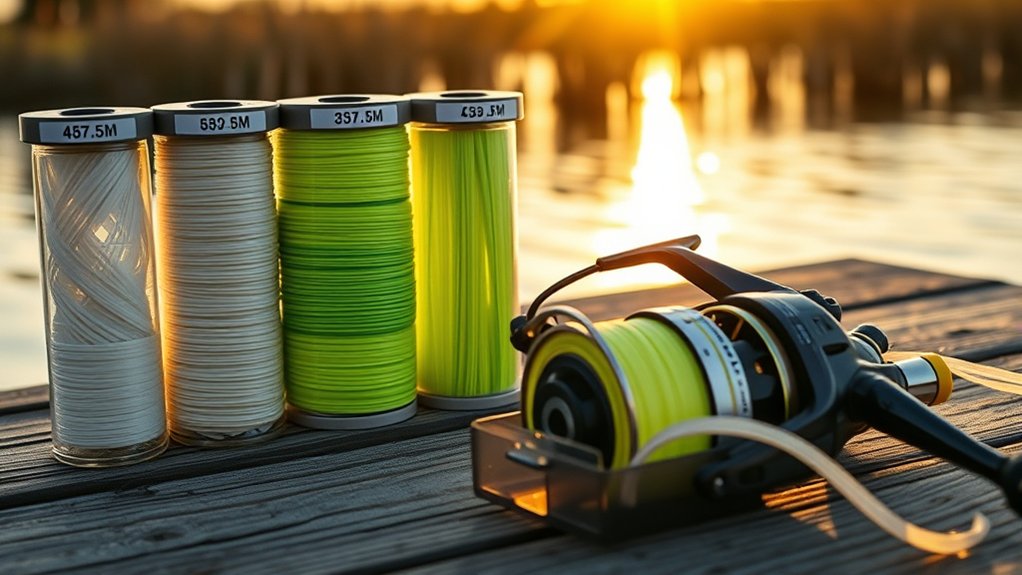
Pick a pound test that matches the fish you’re targeting and the cover you’re fishing through. Lighter 2–6 lb lines work well for panfish, trout, small jigs, and finesse presentations. Medium 8–12 lb mono fits many bass, walleye, and general freshwater setups. Heavier 15–30 lb mono is common for catfish, heavy cover, larger lures, and rough structure.
When choosing the right monofilament line, match the weight to the average size of your target fish and the places they live. Open water lets you fish lighter line. Rocks, weeds, dock posts, timber, shell beds, and bridge pilings usually call for stronger line with better abrasion resistance.
Line diameter matters as much as pound test. Thicker mono usually resists abrasion better, but it also creates more drag in the water and may reduce casting distance. Thinner mono casts smaller lures better and looks less visible, but it gives you less room for mistakes around cover.
Consider water clarity. In clear water, use clear monofilament to reduce visibility and keep pressured fish from spooking. In stained, green, or muddy water, green or blue mono can blend with the surroundings. In low light or when line watching matters, high-visibility yellow, orange, or chartreuse can help you see subtle movement.
Above-water detection matters, too. High-visibility lines let you see soft bites during jigging, float fishing, drop-shot-style presentations, or slow retrieves. If fish seem line-shy, you can pair a bright main line with a clear mono or fluorocarbon leader.
Balance abrasion resistance and breaking strength. A slightly heavier pound test can save a fight around rock, timber, weeds, docks, or current. However, going too heavy can hurt lure action and reduce bites in clear water.
Decide on colors and weight deliberately, not by habit, so you stay effective and free on the water. A good starting point is simple: go lighter in clear open water, stronger near cover, and more visible when you need to watch the line.
Pro Tip: If you’re unsure between two pound tests, choose the lighter line for clear open water and the heavier line for weeds, rocks, docks, or hard-fighting fish.
Monofilament vs. Braid vs. Fluorocarbon
Monofilament is not the only fishing line option, so it helps to know how it compares. Braid uses woven fibers, has very little stretch, and offers strong sensitivity. Fluorocarbon is denser, sinks faster, and often works well for leaders or bottom-contact presentations. Mono sits between them as the easiest and most forgiving choice for many everyday setups.
Choose mono when you want a simple, affordable, all-purpose line. Choose braid when you need long casts, high sensitivity, thin diameter, or strong hooksets through vegetation. Choose fluorocarbon when you want a sinking line or a harder-to-see leader for clear water.
| Line Type | Best Strength | Main Trade-Off | Good Uses |
|---|---|---|---|
| Monofilament | Easy handling and shock absorption | More stretch and memory | Topwater, crankbaits, live bait, beginner setups |
| Braid | Sensitivity and thin diameter | Low stretch and higher visibility | Vegetation, long casts, heavy hooksets, spinning reels with leaders |
| Fluorocarbon | Sinking presentations and leader use | Can be stiffer and less forgiving | Jigs, worms, clear water leaders, bottom-contact baits |
How to Spool and Care for Monofilament Line
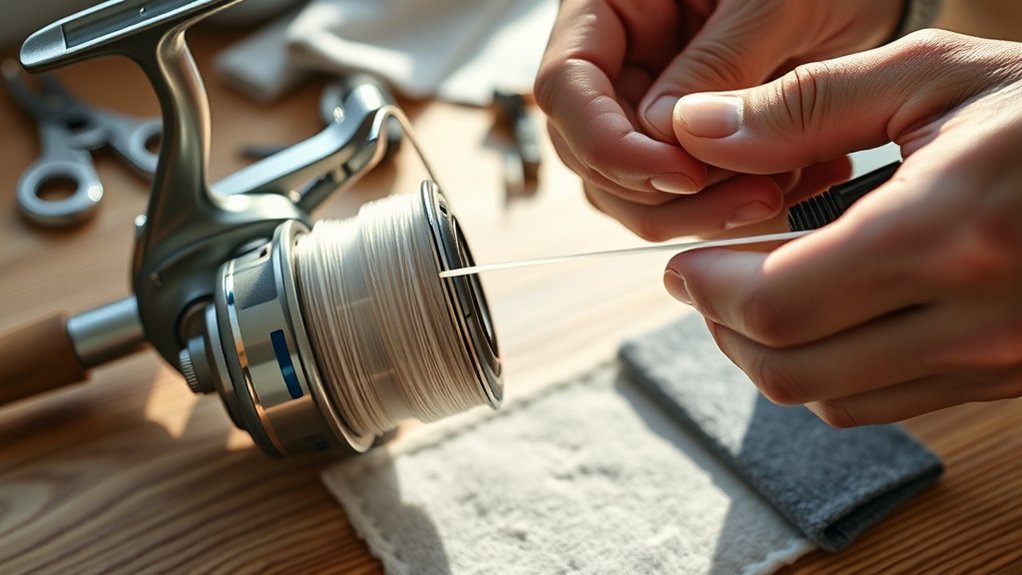
Start by tying the line to the reel spool with an arbor knot or another secure spool knot. A Palomar knot works well for many hooks and lures, but an arbor knot is usually the cleaner choice for attaching line to the reel spool. Make sure the line comes off the filler spool in a way that reduces twist, then hold light tension as you crank to prevent loose coils.
For spinning reels, lay the filler spool flat and watch the line as it goes onto the reel. If loops and twists appear, flip the filler spool over and continue. For baitcasting reels, run the line straight off the filler spool like an axle when possible. This helps the line stack smoothly.
Keep consistent tension while filling the spool to about 1/8 inch from the edge. Overfilling invites backlash, wind knots, loops, and poor casting. Underfilling can also reduce casting distance because the line has to climb over a deeper spool lip.
You want smooth, even layering so the mono feeds cleanly. Run the line through the rod guides before tying it to the reel. Close the bail by hand on spinning reels after each cast to reduce loops. On baitcasters, adjust spool tension and brakes before casting a lure.
Inspect your monofilament line regularly for signs of wear. Look for fraying, flat spots, cloudy sections, discoloration, stiffness, rough texture, or tiny nicks near the lure. Any visible damage reduces performance, especially around the last few feet of line.
Replace line every few months if you fish often, or sooner if you notice damage. Casual anglers may get more time from a spool stored well, but heavily used line needs more frequent replacement. Saltwater, rocks, sun, heat, and repeated snags shorten its life.
For proper care, store spools in a cool, dry place away from direct sunlight to avoid UV exposure that weakens fibers. Pack spools loosely to prevent kinks and avoid chemical contact from fuel, sunscreen, bug spray, solvents, and harsh cleaners.
Treat your line like a tool for freedom: maintain tension control, monitor wear, and practice disciplined storage so your gear stays reliable and your fishing stays uncompromised.
Warning: Never pull a snagged mono line with bare hands. Tight fishing line can cut skin. Wrap it around a tool handle, point the rod away from your face, and pull carefully.
Best Knots for Monofilament Line
Mono works with many common fishing knots because it grips well and tightens cleanly. Still, every knot can weaken line if you tie it poorly. Wet the line before cinching, pull it tight slowly, trim the tag end neatly, and test the knot before casting.
The improved clinch knot is a simple choice for hooks, swivels, and lures. The Palomar knot is another strong, beginner-friendly option for many terminal tackle setups. The loop knot can help small lures move more freely. The double uni knot works well when connecting mono to another line.
| Knot | Best Use | Simple Tip |
|---|---|---|
| Improved clinch knot | Hooks, swivels, and small lures | Use enough wraps and tighten slowly |
| Palomar knot | Hooks, jigs, and many lures | Do not cross the loop over the eye |
| Loop knot | Small plugs and natural lure action | Keep the loop small and neat |
| Double uni knot | Joining mono to another line | Pull both lines evenly until the knots seat together |
Best Uses and Techniques for Mono
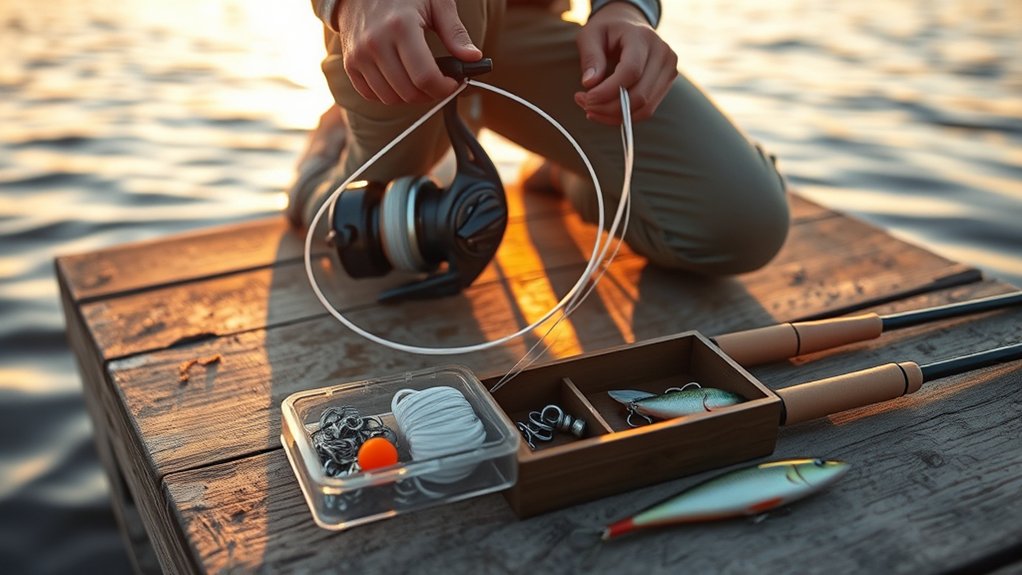
Monofilament shines when you want a forgiving, all-purpose line that is easy to cast and handles a range of techniques. You’ll find monofilament fishing line ideal in a beginner’s guide because its ease of use and versatility let you focus on learning, not fighting your gear.
Use 8–12 lb breaking strains for many bass and walleye setups, and 2–6 lb for panfish and trout. Its shock absorption and buoyancy make it excellent for topwater fishing and crankbaits, letting lures pop, wobble, and absorb hard runs without pulling hooks free.
Mono also works well with bobbers, slip floats, live bait, inline spinners, shallow jerkbaits, and small swimbaits. It gives beginners enough stretch to avoid breaking off during hard hooksets, but still provides enough control for most close- to mid-range fishing.
Low memory compared with some stiffer lines can reduce tangles when the line is fresh and properly spooled. You’ll cast smoother and spend less time fixing knots if you avoid overfilling the spool and replace old line before it coils badly.
| Technique | Recommended Test | Why it Works |
|---|---|---|
| Topwater fishing | 8–12 lb / 2–6 lb | Buoyant, great action |
| Crankbaits | 8–12 lb | Shock absorption |
| Panfish finesse | 2–6 lb | Less visible, forgiving |
Practice retrieves and hook-setting timing. Mono gives you freedom to experiment, but you still need to match your hookset to the technique. With treble hooks, sweep firmly instead of jerking hard. With single hooks, reel down first, then set with steady pressure.
Common Monofilament Line Problems and Fixes
Most mono problems come from twist, old line, poor spooling, or the wrong pound test. You can fix many issues before they ruin a trip by checking the line after each outing and making small adjustments.
If your line jumps off the spool in coils, it may be overfilled, twisted, or too old. Remove some line, flip the filler spool during spooling, or replace the line. If you keep breaking off, check for nicks near the lure and retie more often.
If you miss bites, your line may be too stretchy for the distance or technique. Try a stronger hookset, a lower-stretch line for bottom-contact fishing, or a more sensitive rod. If your lure action looks wrong, check whether the line is too heavy for the bait.
| Problem | Likely Cause | Fix |
|---|---|---|
| Line twist | Poor spooling or spinning lures | Use swivels when needed and spool with correct filler-spool direction |
| Wind knots | Loose coils or overfilled spool | Fill to about 1/8 inch below the rim and close the bail by hand |
| Random breakoffs | Nicks, weak knots, old line, or tight drag | Retie often, test the knot, inspect the first few feet, and adjust drag |
| Poor casting distance | Line too heavy, old, stiff, or underfilled | Use fresh line, match the pound test to the lure, and fill the spool correctly |
Related Guides
Frequently Asked Questions
How do you set up a fishing line for beginners?
Choose a reel-friendly monofilament line, run it through the rod guides, tie it to the reel spool, and fill the spool under light tension. Then tie on a hook, lure, swivel, or leader with a reliable knot. Start with simple tackle choices, easy fishing reels, clean spooling techniques, basic fishing knots, clear line visibility, steady casting methods, and regular line maintenance.
Is 10 lb braid stronger than 10 lb mono?
Both are rated at 10 lb, but braid often feels stronger in real fishing because it has a much thinner diameter, very little stretch, and high sensitivity. Braid advantages include casting distance and bite detection. Mono flexibility and stretch help with shock absorption, while line visibility, knot quality, abrasion, and fishing technique still affect real-world strength.
Is 20 lb mono too much for bass?
For most bass fishing, 20 lb mono is heavier than you need. Many anglers use 8–12 lb mono for open water and 12–17 lb around moderate cover. However, 20 lb mono can make sense for heavy grass, wood, docks, big topwater lures, or places where abrasion matters more than subtle presentation.
What is the best fishing line for beginners?
The best fishing line for most beginners is monofilament because it is affordable, easy to cast, easy to knot, and forgiving during fights. Start with 6–10 lb mono for many freshwater setups, then adjust line strength, fishing line diameter, fishing line color, line memory, and maintenance habits as you learn your local water.
How often should you replace monofilament fishing line?
Replace monofilament when it looks cloudy, feels rough, coils badly, breaks too easily, or shows nicks near the lure. Frequent anglers may need fresh line every few months. Casual anglers can often go longer if the line stays clean, smooth, and stored away from heat and sunlight.
Does monofilament line float or sink?
Monofilament is more buoyant than fluorocarbon and tends to stay higher in the water column. That makes it useful for topwater lures, bobbers, and shallow presentations. It can still sink slowly once wet or pulled under by lure weight, current, or retrieve speed.
Conclusion
By now you know monofilament’s strengths and limits: strong shock absorption, simple knot tying, easy handling, and a budget-friendly price, balanced against stretch, memory, abrasion wear, and UV sensitivity. Pick the right pound test, spool it with steady tension, match the color to your water, and store it out of sunlight.
Remember the old rule: measure twice, cut once. With routine care and the right technique, mono will serve you well on many trips. Trust your gear, retie after abrasion, replace line when in doubt, and you’ll catch more fish with less hassle.