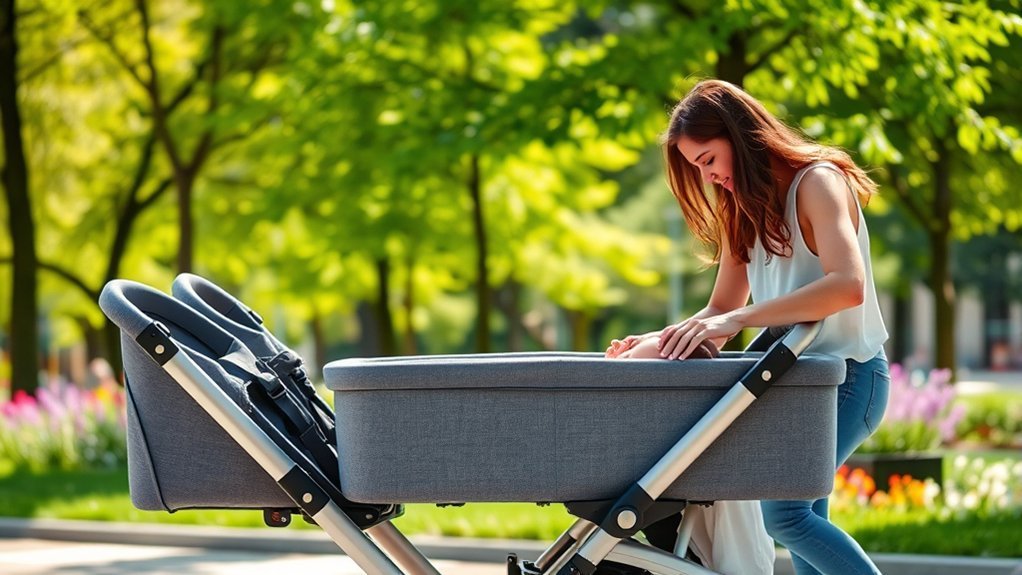
No. You do not need a bassinet for every stroller. A compatible bassinet is most useful for frequent newborn walks when you want a flat, manufacturer-approved newborn setup. You can often skip it if your stroller seat is explicitly approved for use from birth, you mostly take short car-based errands, or you prefer babywearing. Whatever setup you choose, follow the exact stroller, bassinet, adapter, and car-seat instructions.
Last updated: September 11, 2026. Safety guidance and manufacturer stop-use examples were rechecked against current CPSC, AAP/HealthyChildren, UPPAbaby, and Nuna information.
Quick Answer
You do not always need a bassinet for your stroller. Choose one if you expect frequent or longer newborn walks, want a flatter newborn riding setup, and have room to store the attachment. You may not need one if your stroller seat is specifically approved from birth and fits your routine. Do not assume that every flat-looking stroller attachment is approved for infant sleep.
Key Takeaways
Key Takeaways
- A stroller bassinet can be useful for newborns because it gives them a flat, enclosed riding area during walks.
- Stop using the bassinet when your exact manufacturer’s weight, height, age, or developmental stop-use rule says to stop.
- A bassinet is most useful if you walk often, use public transit, or expect longer stroller outings during the newborn months.
- You may not need one if you take mostly short trips, use a baby carrier, or already have a stroller seat explicitly approved for newborn use.
- A stroller seat is not a routine infant sleep space. Use a stroller bassinet for sleep only when the manufacturer approves that exact product and configuration for infant sleep.
Your routine matters more than whether a bassinet looks like a must-have accessory. If you walk most days, a bassinet can reduce transfers and give your newborn more room to lie flat. If you mainly drive, have limited storage, or already own a newborn-approved reclining stroller seat, the extra attachment may add more bulk than value.
Some parents also use a compatible infant car seat on the stroller frame for quick car-to-stroller transitions. That can be convenient for transport, but a car seat should not become a replacement for an approved infant sleep space. If your baby falls asleep in a stroller seat, car seat, swing, carrier, or similar sitting device, the American Academy of Pediatrics’ HealthyChildren guidance advises moving the baby to a firm sleep surface on their back as soon as possible.
Note: “Newborn-safe” does not mean every reclined stroller seat is right for every baby. Check the manual for age, weight, height, recline, harness or insert requirements, approved accessories, and any developmental limits before using the stroller from birth.
Bassinet Strollers Explained
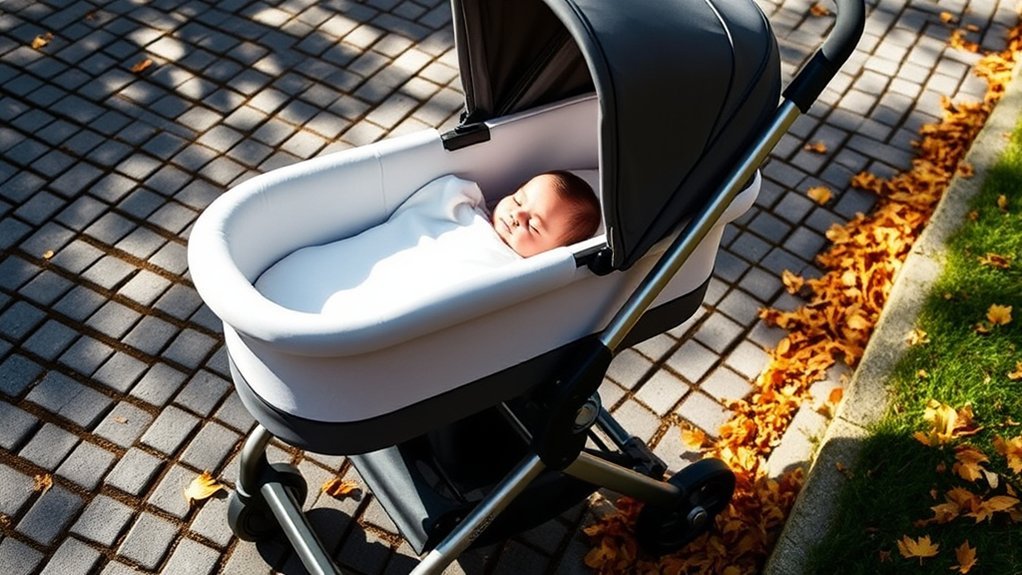
Bassinet strollers give young babies a flat, enclosed riding area that attaches securely to a stroller frame. Unlike a standard stroller seat, a bassinet normally lets your baby lie flat instead of remaining semi-seated. This makes it a practical newborn option before your baby is ready for the stroller’s regular seat.
A typical stroller bassinet has a firm base, side walls, canopy, ventilation, and the pad or mattress supplied for that exact product. Some detach from the stroller, but detaching one does not mean it can safely be placed anywhere. Use it off the stroller only as the manufacturer allows, and never put it on an unapproved soft or elevated surface such as a couch, bed, table, or counter.
For U.S. readers, the distinction between a transport accessory and a sleep product matters. The U.S. Consumer Product Safety Commission’s bassinet guidance defines regulated bassinets/cradles as infant sleeping accommodations with a sleep surface no more than 10 degrees from horizontal in the resting position. CPSC also requires products marketed or intended for infant sleep to meet an applicable federal infant-sleep standard.
Bassinet Attachment vs. Bassinet Mode
A true bassinet attachment and a stroller seat that converts into a flat-looking “bassinet mode,” “pramette,” or carriage position are not automatically the same thing. A converted seat may be approved for newborn transport without being approved as an infant sleep product. Check the exact product manual and official manufacturer wording instead of assuming that a flat appearance makes the setup suitable for routine or overnight sleep.
The main practical advantages of a bassinet are a flatter newborn riding position, more room for natural movement, and fewer transfers during walking-based outings. The value is greatest when you actually use the stroller often during the short newborn stage.
Warning: Do not treat every stroller bassinet, carriage mode, or flat-looking stroller attachment as an approved overnight sleep space. Use it for sleep only when the manufacturer clearly approves that exact product and configuration. Keep an approved infant sleep space firm, flat, and bare, with no pillows, loose blankets, toys, positioners, or added mattresses.
Do I Need a Bassinet for My Stroller?
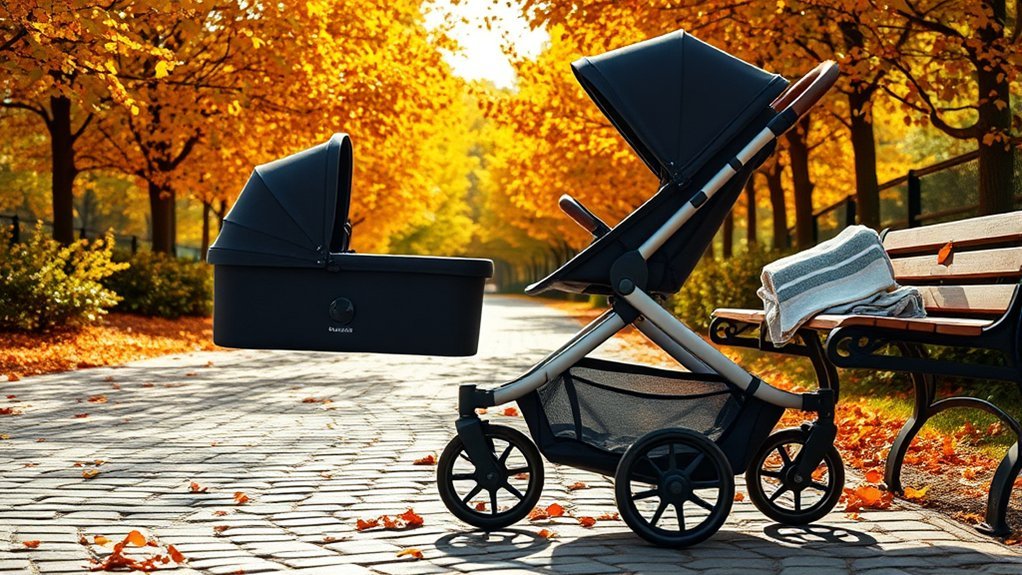
A bassinet stroller is useful but not necessary for every family. It makes the most sense when your stroller will be a regular part of newborn life: daily walks, public transit, school pickup, shopping on foot, or longer outdoor outings. In those situations, the bassinet gives your baby a flatter and roomier setup than a standard stroller seat that is not approved from birth.
You may get much less value from it if you drive most places, use the stroller only for quick errands, prefer babywearing, or already own a stroller whose regular seat is specifically approved for newborn use. Bassinets also have a limited use window, so storage and cost matter more than they do with a stroller seat you can use for years.
Three alternatives can work depending on your equipment: a stroller seat approved from birth, a compatible infant car seat used according to both manuals, or a properly fitted baby carrier. None should be treated as interchangeable simply because the baby fits. Use each product only for the purpose and age range its manufacturer specifies.
When to Consider a Bassinet Stroller

Consider a bassinet stroller if you expect frequent newborn outings, daily walks, or longer periods away from the car. It can reduce repeated transfers and give your baby more room to lie flat during walking-based trips.
A bassinet can be especially practical if you live in a walkable area. Parents who walk to stores, parks, daycare, school pickup, or public transit may use the bassinet often enough to justify its short lifespan. If most outings start and finish in a car, a bassinet may be used much less.
Do not choose a switch date based on age alone. Stop using the bassinet when your manufacturer says to stop because of weight, height, or a developmental milestone such as pushing up, rolling, or sitting. For example, UPPAbaby’s current bassinet guidance says to stop when the infant begins pushing up on hands and knees or reaches 20 lb, whichever comes first. Nuna’s MIXX series bassinet also lists a 20 lb maximum and additional size/developmental limits. Your own product may be different.
Pro Tip: Before buying, map one normal week. Count stroller walks, car errands, public-transit trips, and how much storage space you actually have. If the bassinet solves several recurring problems, it is much more likely to be worth the cost and bulk.
Pros and Cons of Bassinet Strollers
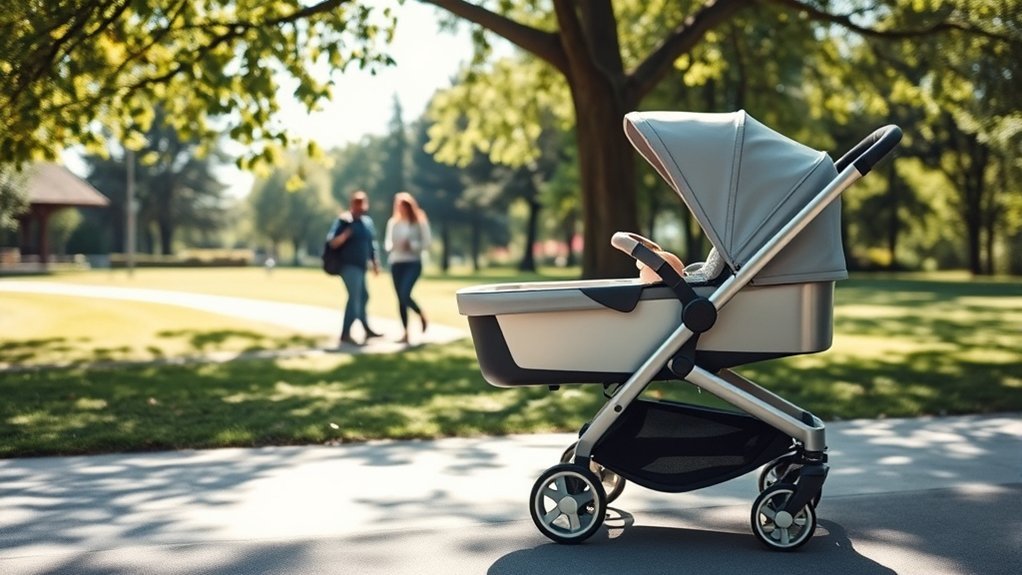
When considering a bassinet stroller, weigh the newborn-stage benefits against the short use window. It provides a flat, roomy riding position and can simplify walking-based routines, but the extra cost, storage needs, and separate attachment may not make sense for occasional stroller users.
Benefits of Bassinet Strollers
Bassinet strollers can make early outings easier because they let a newborn lie flat instead of using a standard upright seat that is not designed for birth. That extra room can also allow freer movement of the arms and legs during walks.
Another benefit is convenience. A detachable bassinet can simplify transitions when the manufacturer permits it to be used on an approved stand or other specified base. Parents who walk often may prefer one routine: place the baby in the bassinet, lock it onto the frame, check the attachment, and go.
Bassinet strollers can also improve weather protection and comfort. Many include canopies, ventilation panels, washable fabrics, and enclosed sides. These features do not replace supervision or safe temperature management, but they can make everyday walks easier.
Limitations of Bassinet Strollers
Bassinet strollers also have clear limits that can make them a poor value for some families.
| Limitation | Details |
|---|---|
| Short Usage Period | Use ends when your exact manufacturer’s weight, height, age, or developmental stop-use rule is reached. Do not rely on a generic age alone. |
| Bassinet Stability | Ride quality depends on the stroller frame and terrain. Always confirm the bassinet is fully locked before moving the stroller. |
| Alternatives Available | A manufacturer-approved newborn reclining seat, compatible infant car seat, or properly fitted carrier may suit some routines better. |
The biggest practical drawback is that a bassinet may become unnecessary quickly. Once your baby reaches the product’s stop-use criteria and is ready for the regular stroller seat, the bassinet becomes another item to store.
Cost is another factor. Some stroller systems include a bassinet, while others sell it separately. If you only take occasional stroller trips, you may get more long-term value from a stroller with the newborn compatibility, suspension, fold, storage, and seat features you will use beyond the first few months.
Bassinet Stroller vs. Car Seat vs. Reclining Stroller Seat
Parents often compare a bassinet stroller with an infant car seat attached to the stroller and a newborn-approved reclining stroller seat. Each solves a different problem.
| Option | Best For | Main Trade-Off |
| Bassinet stroller | Frequent walks, newborn comfort, walkable neighborhoods, more room to lie flat | Short use window, added cost and storage, and sleep approval varies by exact product/configuration |
| Infant car seat on stroller | Quick car-to-stroller transitions and errands | A car seat is a sitting device, not a routine sleep space; follow both manuals and safe-sleep guidance |
| Newborn-approved reclining stroller seat | Families who want fewer separate attachments and a setup that lasts longer | Newborn approval, recline, insert, harness, and sleep rules vary by model |
If you mostly drive, a compatible infant car seat attachment may be the easiest transport setup. If you mostly walk, a bassinet is more likely to earn its storage space. If you want fewer pieces of gear, a stroller seat specifically approved from birth may be the best middle ground.
What to Look for in a Bassinet Stroller
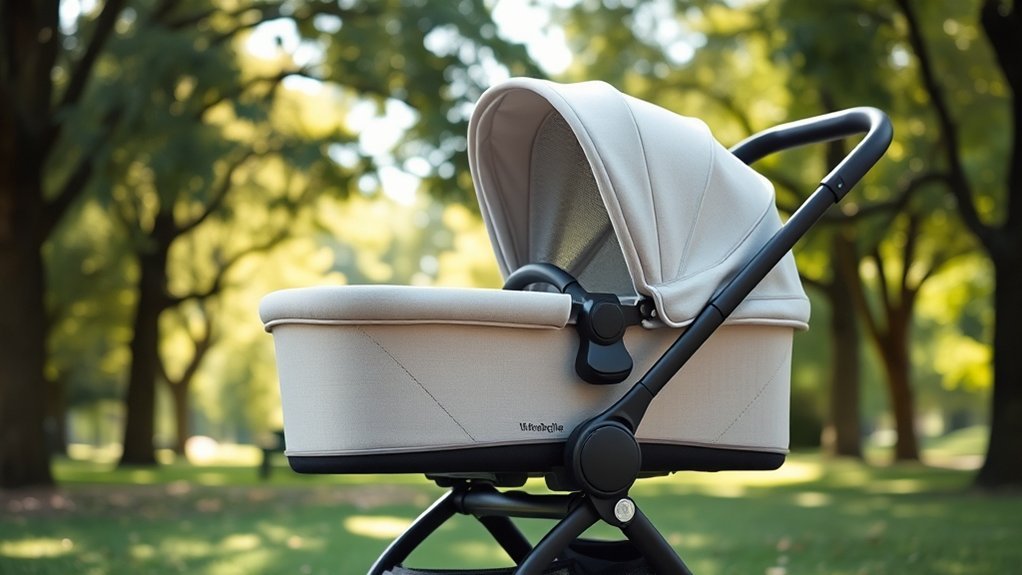
When choosing a bassinet stroller, safety and compatibility should come first. Look for clear manufacturer instructions, secure attachment points, appropriate airflow, and a firm manufacturer-supplied surface where applicable. Then compare the practical details: stroller weight, fold size, storage, cleaning, and compatibility with your other baby gear.
Safety Features Essential
Start with the parts and instructions supplied or approved by the manufacturer. Do not add extra mattresses, soft inserts, pillows, loose blankets, or sleep positioners to an infant sleep space because extra softness or gaps can create suffocation hazards. The CPSC’s safe-sleep guidance recommends a bare approved sleep space and placing babies on their backs for sleep.
Check the attachment system carefully. The bassinet should click or lock securely into the stroller frame, and the manual should explain how to verify the connection. Test the lock exactly as directed before placing your baby inside.
Ventilation also matters for comfort. Breathable panels, an adjustable canopy, and washable fabrics can help, but they do not replace supervision. Keep your baby’s face visible, maintain airflow, and check the baby regularly in warm weather.
Portability and Storage Options
Prioritize lightweight and compact designs if you carry the stroller upstairs, load it into a trunk, or store it in a small hallway or apartment.
Look at how the bassinet detaches from the stroller frame. A simple, secure release system can make everyday use easier, but carry or off-frame use must still follow the manufacturer’s instructions.
Also check the fold. Some strollers fold with a regular seat attached but require the bassinet to be removed. Measure your trunk, closet, or entryway before buying if storage is tight.
Compatibility With Baby Gear
Verify bassinet compatibility with your exact stroller frame and model year. Even products from the same brand can require a particular adapter or may not work across older generations.
If you want a travel system, also check whether the stroller accepts your exact infant car seat and adapter combination. Use only combinations approved by the manufacturers rather than relying on a connection that merely appears to fit.
Fabric care is another practical detail. Removable, washable covers are especially useful if your baby spits up often or you regularly walk in dusty, rainy, or muddy conditions.
Buying Secondhand? Check the Model and Recalls
Before buying a used bassinet or stroller, find the model name or number, manufacture date, and original instructions. Confirm that the frame, attachment points, locks, mattress or pad, and required adapters are complete and undamaged. Avoid improvised replacement parts or aftermarket padding that the manufacturer does not approve.
Then search the CPSC recalls and product-safety warnings database for the exact model. Recall history matters because stroller systems and stroller-bassinet accessories have been recalled for hazards including falls, entrapment, and unsafe sleep configurations.
How to Decide If You Need a Bassinet Stroller
Use your real routine instead of choosing the travel system with the most pieces. A bassinet is worth buying when it solves recurring newborn transportation problems.
At a Glance
| Time Required | 10 to 15 minutes to review your routine, stroller use, storage, and budget |
| Difficulty | Easy |
| Tools Needed | Stroller manual, bassinet manual, tape measure for trunk or storage space, and your weekly outing plan |
| Cost | Varies by stroller system; some include the bassinet, while others sell it separately |
Choose a bassinet stroller if you answer “yes” to several of these questions:
- You plan to take frequent walks with your newborn.
- You live in a walkable neighborhood or regularly use public transit.
- You expect longer stroller outings instead of mainly car-to-store transitions.
- You want a flat newborn riding setup rather than relying mostly on an infant car seat.
- You have enough storage space for the bassinet after your baby outgrows it.
- Your stroller frame is officially compatible with the exact bassinet you want.
You may skip the bassinet if you mostly take short car-based errands, have limited storage, prefer babywearing, or already own a stroller seat that the manufacturer explicitly approves for newborn use. In that case, follow its required recline, insert, harness, age, size, and developmental rules.
Related: See how to use a stroller for a newborn safely for setup and pre-walk checks, and read when a baby can sit forward in a stroller when you are planning the move out of the newborn setup.
Common Mistakes to Avoid
The first common mistake is buying a bassinet without checking exact compatibility. The bassinet, stroller frame, adapter, and model year must be an approved combination. A connection that merely looks secure is not enough.
Another mistake is using the bassinet beyond its limits. Stop when your baby reaches any applicable weight, height, age, or developmental stop-use rule in the manual. A baby may reach a milestone limit before reaching the listed maximum weight.
Do not assume every stroller bassinet or carriage position is a safe overnight sleep space. Some exact products are approved for infant sleep and others are not. Follow the manufacturer’s approved configuration and current safe-sleep guidance.
Also avoid placing a detachable bassinet on a bed, sofa, countertop, table, or other unapproved surface. A detachable attachment can tip, move, or become unsafe when used on a surface the manufacturer did not specify.
Finally, do not skip a recall check when buying used gear. Confirm the model and date labels, inspect every locking point and required component, and check current safety warnings before use.
Safety Sources Used in This Guide
- U.S. Consumer Product Safety Commission — Safe Sleep
- U.S. Consumer Product Safety Commission — Bassinets and Cradles
- American Academy of Pediatrics / HealthyChildren — Safe Sleep
- U.S. Consumer Product Safety Commission — Recalls and Product Safety Warnings
Related Guides
Frequently Asked Questions
Can I use a bassinet with any stroller model?
No. Check your stroller’s specifications for the exact bassinet, approved adapters, model-year compatibility, and child limits. A bassinet that appears to fit is not necessarily an approved or safe combination.
How long can my baby use the bassinet?
There is no single age that applies to every stroller bassinet. Follow your manufacturer’s weight, height, age, and developmental stop-use rules. Stop as soon as any applicable limit is reached, even if your baby has not reached the product’s maximum weight.
Are stroller bassinets safe for overnight sleeping?
Only when the manufacturer explicitly approves that exact bassinet and configuration for infant sleep or overnight sleep. Do not judge by appearance alone. Follow the manual, use only the approved mattress or pad, place your baby on their back, and keep the sleep space free of pillows, loose blankets, toys, positioners, and extra padding.
What is the weight limit for a stroller bassinet?
There is no universal stroller-bassinet weight limit. Follow the exact label and manual for your model. As current examples, UPPAbaby’s Bassinet V3 and Nuna’s MIXX series bassinet list a 20 lb maximum, along with additional developmental or size stop-use rules. Your bassinet may have different limits.
Do bassinets come with strollers or are they sold separately?
It depends on the stroller system. Some packages include a bassinet, while others sell it separately or require adapters. Check the exact box contents and compatibility list before buying.
Is a bassinet better than using an infant car seat on the stroller?
A bassinet is often more practical for families who take frequent or longer walks because it gives a newborn more room to lie flat. An infant car seat is convenient for quick car-to-stroller transitions. A car seat is not a routine infant sleep space, so follow the car-seat and stroller manuals plus current safe-sleep guidance.
Can I use a bassinet stroller for travel?
Yes, if the stroller and bassinet fit your transportation plan and are easy enough to carry and store. If you want to use the bassinet as a sleep space away from home, first confirm that the manufacturer approves your exact bassinet and support configuration for infant sleep.
Conclusion
A bassinet for your stroller is not a must-have for every family. It is most useful when you expect frequent newborn walks, rely heavily on the stroller, and want a flat newborn riding setup during the earliest months.
Before buying, confirm exact stroller compatibility, stop-use limits, storage needs, and whether the bassinet is actually approved for infant sleep if you intend to use it that way. If the bassinet fits your routine, it can be a useful part of your stroller system. If it does not, a manufacturer-approved newborn reclining seat, compatible infant car seat for transport, or properly fitted baby carrier may suit you better.
