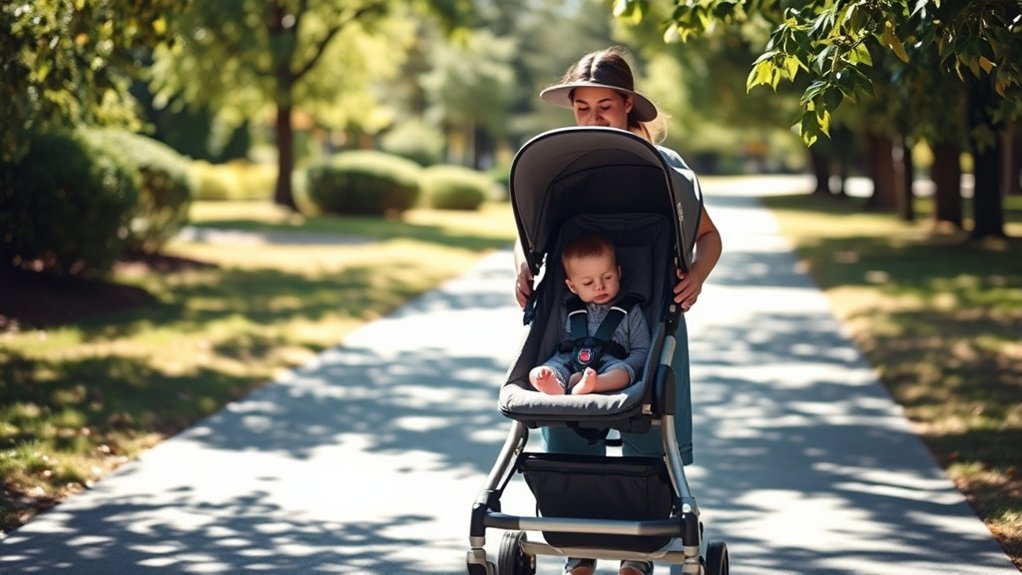
Using a stroller for your newborn can make daily walks and appointments easier, but safety comes first every time. Newborns cannot sit upright or control their head well, so they need a stroller setup that keeps them reclined, supported, and securely buckled. With the right stroller, careful setup, and regular safety checks, you can keep your baby comfortable while enjoying fresh air together.
Quick Answer
For a newborn, use a stroller that allows a flat or near-flat recline, a bassinet, or a compatible infant car seat. Always secure your baby with the harness, keep the airway clear, lock the brakes when stopped, and never leave your newborn unattended in the stroller.
Key Takeaways
- Newborns need a bassinet, infant car seat, or fully reclining stroller seat because they cannot safely sit upright yet.
- A 5-point harness, strong brakes, a stable frame, and clear age and weight limits are essential stroller safety features.
- Do not hang heavy bags from the handlebar, jog with a newborn, or let your baby sleep unsupervised in a stroller.
- Check the stroller before each outing for loose parts, worn straps, brake problems, and blocked wheels.
- Keep rides short, watch your baby’s position, and take breaks for feeding, diaper changes, and comfort.
At a Glance
| Time Required | 2 to 5 minutes for a pre-walk safety check |
| Difficulty | Easy, but requires careful setup every time |
| Tools Needed | Stroller manual, compatible infant insert or bassinet if needed, mild soap for cleaning |
| Cost | No added cost if your stroller is already newborn-compatible |
Understanding Newborn Stroller Safety
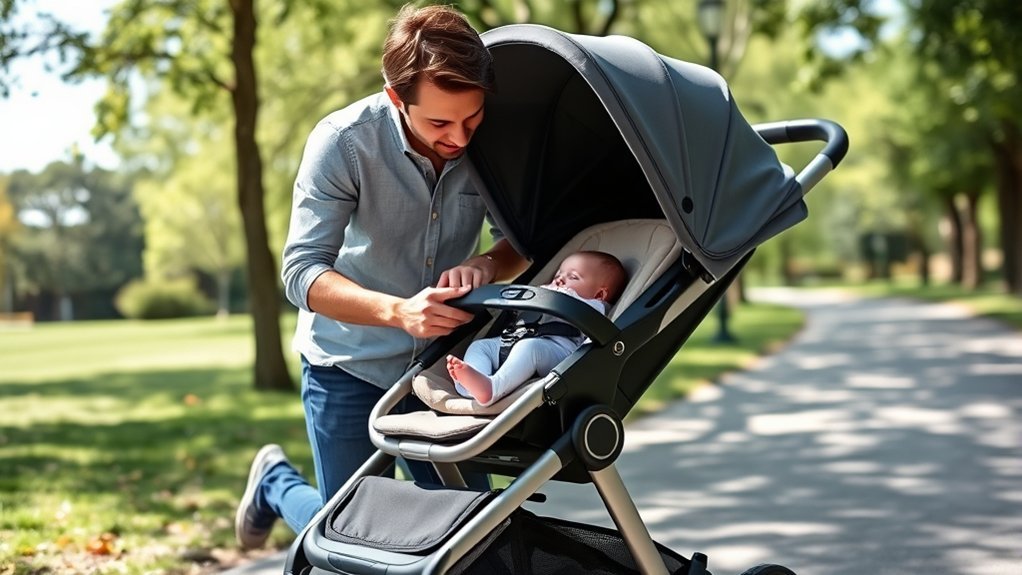
Newborn stroller safety starts with one simple rule: your baby must have proper head, neck, and airway support. A newborn’s head can fall forward easily if the stroller seat is too upright. That position may make breathing harder, especially during longer rides. For this reason, newborns should ride in a bassinet, an approved infant car seat attached to the stroller, or a stroller seat that reclines flat or nearly flat.
A 5-point harness helps keep your infant from sliding, slumping, or shifting into an unsafe position. The straps should sit snugly over the shoulders, around the waist, and between the legs without pressing into your baby’s neck or belly. Before each outing, check the stroller’s age, height, and weight limits, because not every stroller seat is safe from birth.
Always supervise your baby in the stroller, even during short stops. Engage the parking brake whenever you pause, place your hands on the stroller when near curbs or slopes, and avoid using the stroller as a substitute for a crib or bassinet at home.
Warning: Do not place pillows, loose blankets, rolled towels, or extra padding around a newborn in the stroller unless the stroller manufacturer specifically allows it. Soft items can shift and block your baby’s face or airway.
Choosing the Right Stroller for Your Newborn
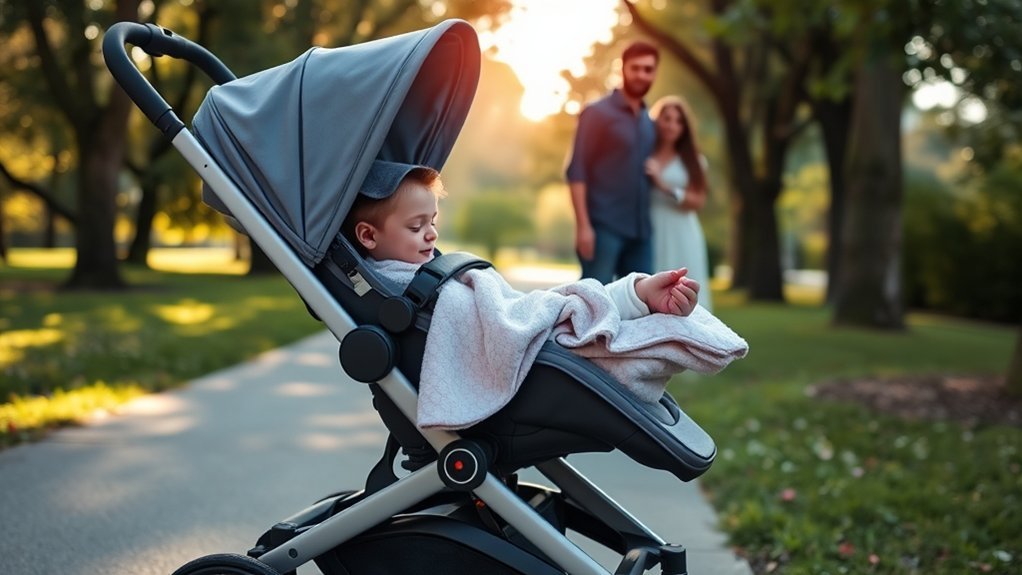
How do you choose the right stroller for your newborn? Start by looking for a model that is clearly labeled as suitable from birth. A newborn-safe stroller usually has a fully reclining seat, a bassinet option, or a travel-system setup that accepts a compatible infant car seat. These options help your baby rest in a flat or properly reclined position.
If you plan to use an infant car seat with the stroller, make sure the adapter is made for that exact stroller and car seat model. A car seat should click securely into place and should not wobble, tilt forward, or sit at an unsafe angle. Always follow both manuals because a setup that looks right may still be incorrect if the adapter is not approved.
Check the stroller’s age and weight specifications carefully. Many regular stroller seats are not recommended until a baby can sit with better head and neck control, often around 6 months. For the newborn stage, prioritize a snug infant seat insert only if it is made or approved by the stroller brand. Finally, choose a model with reliable safety features, including a 5-point harness, strong brakes, a stable frame, lockable wheels when needed, and a canopy for shade.
Newborn Stroller Safety Checklist Before Each Walk
A short safety check can prevent many common stroller problems. Before you place your newborn in the stroller, inspect the main parts and make sure the setup matches your baby’s age and size.
- Confirm the stroller is approved for newborn use or has a bassinet, infant car seat, or full recline.
- Make sure the frame is fully open and locked before placing your baby inside.
- Check that the wheels roll smoothly and are not cracked, loose, or blocked by debris.
- Test the brakes to make sure they hold the stroller still.
- Look for loose screws, damaged fabric, broken clips, or worn harness straps.
- Adjust the harness so it is snug but not tight against your baby’s body.
- Keep your baby’s chin off the chest and make sure the nose and mouth stay uncovered.
- Place items in the storage basket instead of hanging heavy bags from the handlebar.
- Use the canopy for shade, but leave enough airflow around your baby.
Pro Tip: Keep a small stroller safety routine: brake check, wheel check, harness check, airway check. Doing it in the same order each time makes it easier to remember when you are tired or in a hurry.
Proper Usage Guidelines for Newborns in Strollers
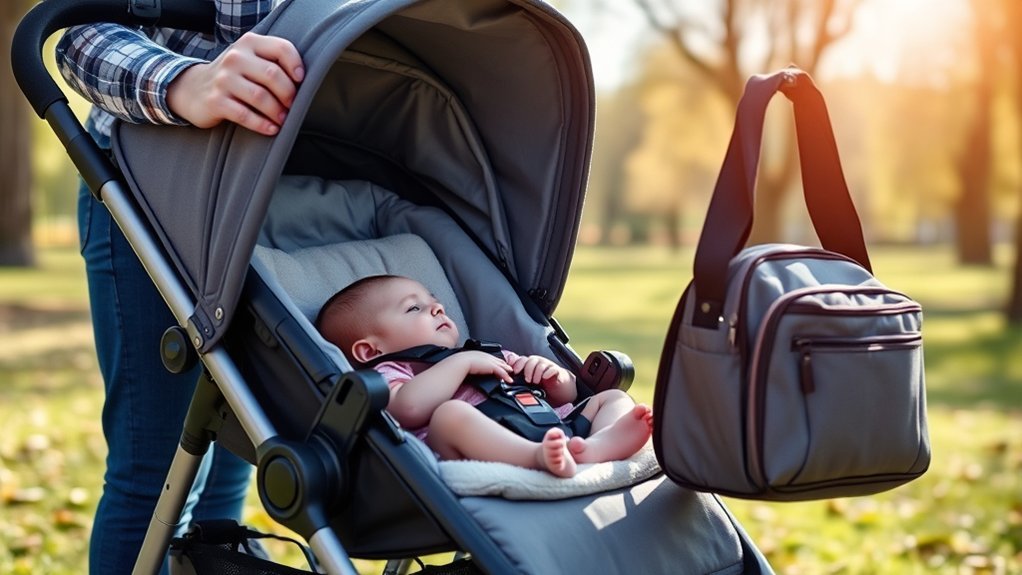
To protect your newborn’s safety and comfort during outings, follow proper stroller usage guidelines every time. Place your baby in a fully reclined seat, bassinet, or compatible infant car seat so the body is supported and the airway stays clear. Avoid sitting your newborn upright in a standard stroller seat unless the stroller instructions clearly allow newborn use in that position.
Secure your baby with a reliable 5-point harness. The harness should prevent slipping without forcing the baby into a curled position. If your stroller has an infant insert, use only the insert approved for that stroller. Extra cushions, aftermarket pads, and bulky blankets can change the fit and create safety risks.
Never leave your newborn unattended in the stroller. Always engage the parking brake when stationary, especially on sidewalks, ramps, driveways, and public transport platforms. When crossing a curb, tilt and lift the stroller carefully instead of pushing hard into the curb. Keep both hands close to the handle when moving through crowds, parking lots, or uneven paths.
Essential Features to Look for in a Newborn Stroller
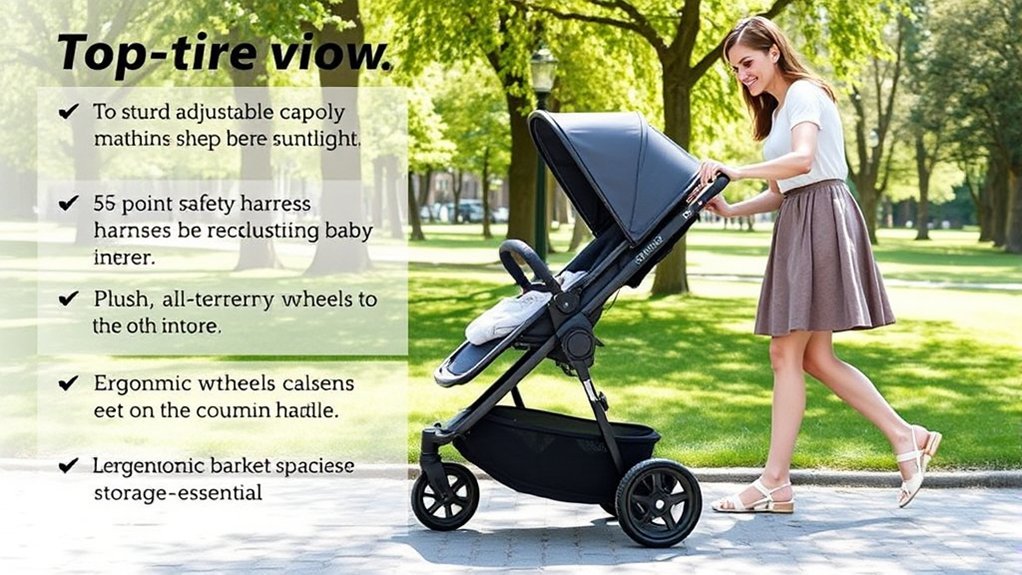
Selecting the right stroller for your newborn means focusing on features that improve both safety and daily comfort. A fully reclining seat or bassinet option is one of the most important features because it lets your baby lie flat or near-flat during the newborn stage. A secure 5-point harness system is also important because it helps prevent slipping, leaning, or falling.
Look for adjustable head and neck support only when it comes from the stroller brand or is listed as compatible in the manual. A wide wheelbase and sturdy frame can help reduce tipping. Strong, easy-to-use brakes matter because you will use them often during stops, loading, and unloading.
A newborn-friendly stroller should also include a large canopy for sun protection, breathable fabric, smooth steering, and a storage basket that keeps weight low. Avoid models that rely on handlebar storage for heavy items. Finally, always check the stroller’s age and weight limits before use and register the stroller with the manufacturer if registration is available, so you can receive recall or safety notices.
Common Newborn Stroller Mistakes to Avoid
Even a good stroller can become unsafe if it is used the wrong way. Watch for these common mistakes during the newborn stage:
- Using an upright toddler seat too early: Newborns need a flat or near-flat position, not a seat meant for older babies.
- Skipping the harness: Even a sleeping newborn should be buckled in securely.
- Covering the stroller with a thick blanket: This can trap heat and reduce airflow. Use the canopy or a breathable stroller cover made for that purpose.
- Hanging bags from the handlebar: Heavy bags can cause the stroller to tip backward.
- Leaving the stroller unlocked while stopped: Always press the brake before taking your hands away.
- Using unapproved accessories: Cup holders, ride-on boards, hooks, and inserts should match the stroller’s instructions.
- Letting a newborn nap unsupervised: A stroller is for transport and supervised outings, not unattended sleep.
Note: If your baby was born premature, has reflux, breathing concerns, low muscle tone, or any medical issue, ask your pediatrician for stroller positioning guidance before longer outings.
Tips for Maintaining Stroller Safety and Hygiene

Maintaining the safety and hygiene of your stroller is essential for your newborn’s well-being. Regular upkeep keeps the stroller cleaner, smoother, and safer to use. Newborns spend time close to the seat fabric and harness, so spit-up, milk, dust, and outdoor debris should be cleaned often.
- Regularly check for wear and tear to make sure all components are working properly.
- Clean the seat fabric, buckle area, and harness with the method recommended in the stroller manual.
- Use mild soap and water for routine cleaning unless the manufacturer allows another cleaner.
- Avoid harsh chemicals, strong fragrances, and bleach on areas that touch your baby’s skin.
- Always engage the stroller brakes when stationary to prevent rolling accidents.
- Store the stroller indoors in a cool, dry place to help prevent rust, mildew, and fabric damage.
- Use designated storage compartments for items; avoid hanging bags on handles to reduce tipping hazards.
- Check wheels after walks on sand, gravel, grass, or wet sidewalks because debris can affect steering and braking.
Safe Stroller Outings by Weather and Location
Newborns can become too hot or too cold faster than adults, so pay attention to weather and location. On warm days, choose shaded routes, use the canopy, and dress your baby in light layers. Avoid covering the stroller opening with a heavy blanket because heat can build up inside. On cool days, use fitted layers and a stroller footmuff if it is approved for your stroller, but keep your baby’s face clear.
For busy streets, parking lots, and stores, keep the stroller close and avoid letting others push it unless they understand the brake and harness. On uneven sidewalks, grass, gravel, or trails, move slowly and watch for tipping. If the stroller feels unstable on a surface, turn back or carry your baby in an approved carrier instead.
Frequently Asked Questions
Can I Use a Regular Stroller for My Newborn?
You should not use a regular upright stroller seat for a newborn unless the stroller manual says it is safe from birth. Choose a stroller with a bassinet, a compatible infant car seat, or a seat that reclines flat or nearly flat. Newborns need extra head, neck, and airway support.
How Do I Clean My Stroller Safely?
Clean your stroller by removing crumbs and debris, wiping hard surfaces with mild soap and water, and cleaning the fabric according to the manufacturer’s instructions. Avoid harsh chemicals on the seat, harness, and buckle area. Let all parts dry fully before using the stroller again.
What Should I Do if My Baby Cries in the Stroller?
If your baby cries in the stroller, stop in a safe place and check the basics first: hunger, diaper, temperature, harness fit, sun, wind, and body position. Try gentle rocking, quiet talking, or a short break from movement. If crying continues, end the outing and comfort your baby.
Is It Safe to Jog With a Newborn in a Stroller?
No, jogging with a newborn is not recommended. Newborns do not have the head and neck control needed for bouncing or sudden movement. Wait until your baby is older, has stronger head control, and your pediatrician says jogging is appropriate. Use only a jogging stroller that matches the child’s age and weight requirements.
How Long Can a Newborn Stay in a Stroller?
Keep newborn stroller rides reasonably short and take regular breaks. Many families find that 30 minutes to 2 hours is enough, depending on feeding, diaper needs, weather, and the baby’s comfort. Watch your baby’s position, breathing, temperature, and mood throughout the outing.
Can My Newborn Sleep in the Stroller?
A newborn may fall asleep during a supervised stroller walk, but a stroller should not replace a safe sleep space. Keep the baby positioned correctly, make sure the face stays uncovered, and move your baby to a firm, flat sleep surface when the outing is over.
Should I Use a Stroller Fan or Blanket Cover?
Use stroller fans and covers carefully. A fan should be made for stroller use, attached securely, and kept away from your baby’s fingers. Avoid thick blanket covers because they can trap heat and limit airflow. Use the stroller canopy or a breathable cover designed for the stroller instead.
Conclusion
Ensuring your newborn’s safety in a stroller comes down to the right setup and consistent habits. Choose a suitable stroller with a bassinet, infant car seat, or full recline, then use the harness, brakes, and manufacturer guidelines every time. Check your baby’s position often, keep the airway clear, and avoid risky shortcuts like heavy handlebar bags, loose padding, or jogging too early. With these proper usage guidelines, you can enjoy calmer, safer outings with your newborn.