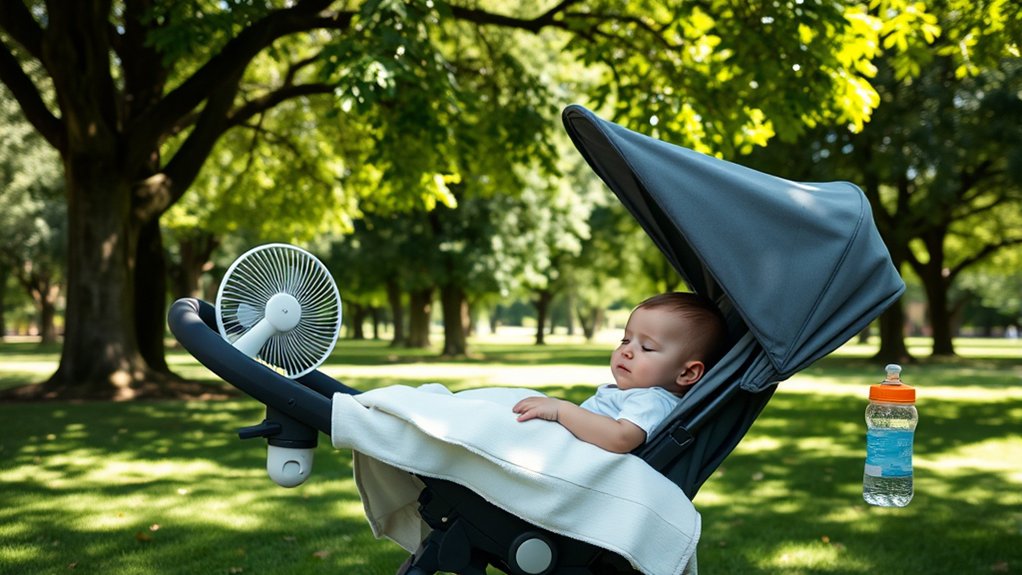
Keeping your baby cool in a stroller matters for comfort and safety, especially during warm weather, humid afternoons, or long outdoor walks. Babies can overheat faster than adults, so you need shade, airflow, breathable clothing, smart timing, and regular checks. With a few simple habits, you can make stroller outings safer and more comfortable without avoiding outdoor time completely.
Quick Answer
To keep your baby cool in a stroller, use a stroller with shade and ventilation, dress your baby in loose breathable clothing, avoid covering the stroller with blankets, add safe airflow with a stroller fan, offer age-appropriate fluids, and plan walks during cooler parts of the day.
Key Takeaways
- Choose shade and airflow over heavy coverings, since blankets can trap heat inside the stroller.
- Use breathable fabrics such as cotton, bamboo, or linen, and avoid thick layers in hot weather.
- Schedule walks before the strongest afternoon heat, and keep direct-sun outings short.
- Check your baby’s neck, face, behavior, and wet diapers often for early signs of overheating or dehydration.
- Call your child’s doctor or seek urgent care if your baby seems unusually sleepy, hard to wake, very hot, or dehydrated.
At a Glance
| Time Required | 5 minutes before each walk, plus quick checks during the outing |
| Difficulty | Easy |
| Tools Needed | Stroller canopy, breathable clothing, water for you, age-appropriate baby fluids, optional clip-on stroller fan, and a light muslin cloth for holding or wiping only |
| Cost | Usually free if your stroller already has shade; optional fans or sunshades may add a small extra cost |
Choose the Right Stroller
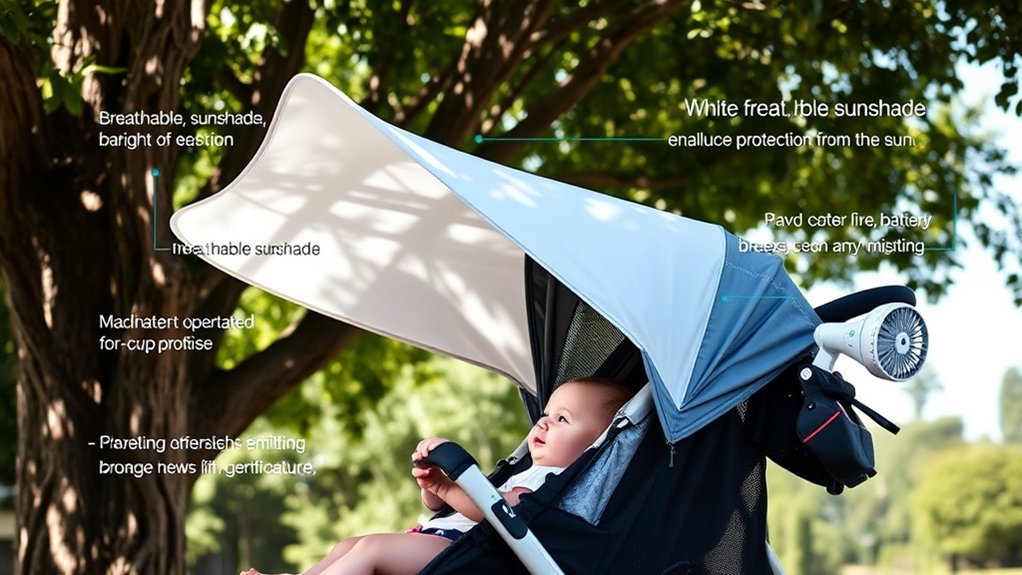
When you’re choosing a stroller for hot days, prioritize features that keep your baby shaded, ventilated, and easy to check. A large canopy helps block direct sunlight, while mesh panels, peek windows, or ventilation areas allow warmer air to escape. This combination is more helpful than shade alone because a covered seat can still feel stuffy without airflow.
Look for stroller fabrics that feel breathable and easy to clean. UPF-rated fabric can add extra sun protection, but it should not replace normal shade, clothing, and timing. Models like the Bēbee Lightweight Stroller may meet several of these needs when they include a roomy canopy, airy panels, and a lightweight frame.
Also think about practical cooling accessories. A bumper bar or snack tray may give you a safe spot to attach a small stroller fan, as long as the fan stays out of your baby’s reach. Choose a stroller that lets you see your baby easily, adjust shade quickly, and move into cooler areas without a struggle.
Note: A stroller that feels comfortable for you may still feel warm for your baby. Always check the seat area, not just the outside temperature.
Ensure Proper Shade
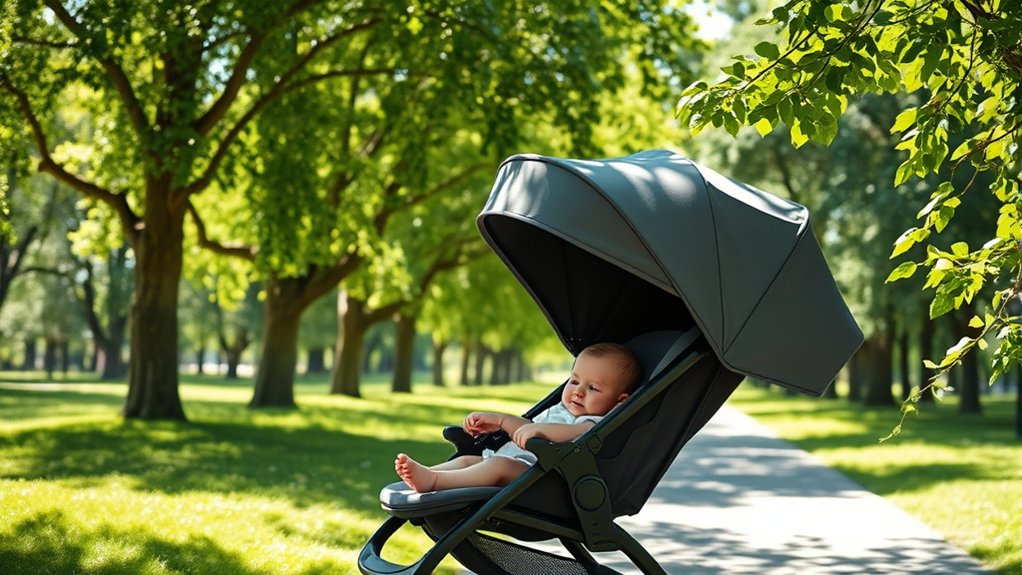
Ensuring proper shade for your baby in a stroller is essential on hot days. A stroller with a large canopy is a good start, but you may need an XL canopy extender, parasol, or UPF-rated stroller sunshade for extra coverage. The goal is to block direct sun while still letting air move freely around your baby.
Avoid covering the stroller with blankets, towels, jackets, or thick cloths. These can block airflow and trap heat inside the stroller, even when the fabric looks thin from the outside. Instead, use stroller accessories made for sun protection and adjust them as the sun moves.
Position your stroller in shaded areas whenever possible, especially during the strongest midday and afternoon sun. If you stop at a park, café, playground, or bus stop, choose a shaded spot with moving air rather than a sunny place with no breeze. Regularly check the stroller seat, straps, and your baby’s neck to make sure the shaded area is not still too warm.
Warning: Do not drape a blanket over the stroller opening to create shade. It can reduce ventilation and raise the temperature around your baby.
Dress Baby in Breathable Fabrics
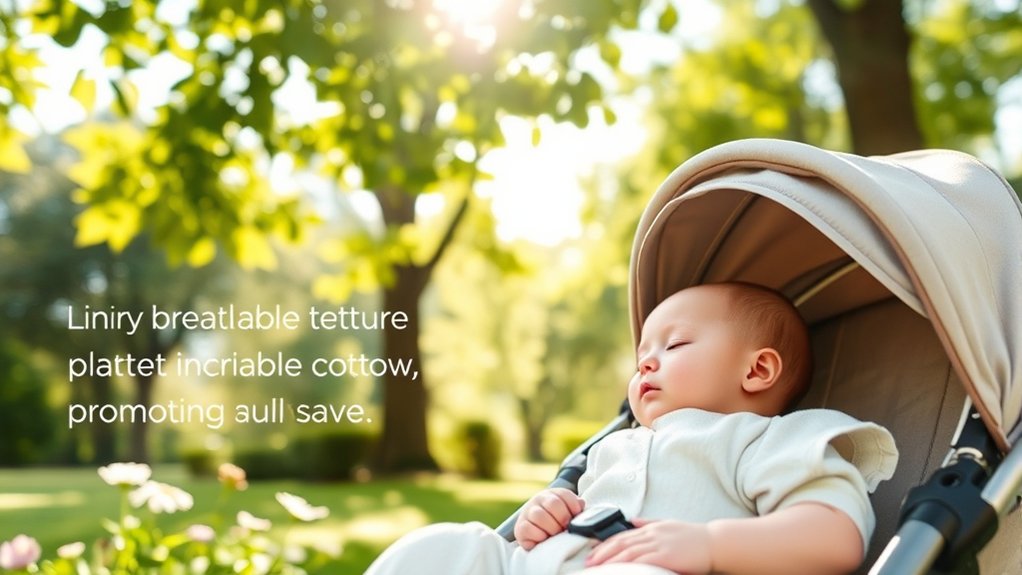
When dressing your baby for a stroll in warm weather, choose lightweight, breathable fabrics. Cotton, bamboo, linen, and other soft natural-feel fabrics help air move around the skin. Loose clothing usually feels cooler than tight clothing because it does not trap heat against your baby’s body.
Light-colored outfits can also help because they absorb less heat than dark colors. Use a brimmed baby hat for shade when your baby tolerates it, but remove it indoors or in very warm shaded spaces if it seems to make your baby hotter. Socks, shoes, and extra layers may not be needed during hot weather unless your baby’s feet feel cool.
Lightweight Fabric Choices
Choosing lightweight, breathable fabrics for your baby’s clothing is vital for keeping them comfortable in warm weather. Opt for materials like cotton, bamboo, or linen that promote fabric breathability, allowing air to flow more freely. Light-colored clothing is also useful because it reflects more sunlight than darker shades, which can absorb heat.
Avoid heavy or non-breathable materials that can trap warmth against your baby’s skin. Thick polyester, fleece, wool, and tight synthetic outfits can make your baby sweaty and uncomfortable. Regularly check your little one’s comfort level during outdoor activities and adjust their clothing as necessary.
Layering for Temperature Control
Layering your baby’s clothing is a smart strategy for maintaining comfort when the temperature changes. Use breathable fabrics like cotton or bamboo for the layer closest to the skin. Then add or remove one light layer as the weather changes, rather than dressing your baby in one thick outfit.
| Layer Type | Purpose |
|---|---|
| Base Layer | Lightweight, breathable, and loose |
| Mid Layer | Optional for cooler moments |
| Outer Layer | Protects from wind without bulk |
For hot stroller walks, the base layer may be enough. Keep an extra light layer in your bag for air-conditioned stores, sudden wind, or evening walks.
Avoid Heavy Materials
Keeping your baby comfortable during warm weather starts with selecting the right fabrics. Lightweight, breathable materials promote airflow and help reduce overheating. Here are some fabric types to consider:
- Cotton – Soft and natural, it allows good air circulation.
- Bamboo – Soft and often moisture-wicking, it can help keep skin drier.
- Linen – Lightweight and breathable, it helps air move around the body.
- Modal – Smooth and soft, it may feel comfortable on sensitive skin.
Avoid heavy materials like thick polyester, fleece, or wool during hot outings because they can trap heat. Choose loose-fitting clothing to improve air circulation. Layer with light garments that can be removed if temperatures rise. Check for sweat, flushed cheeks, damp hair, or fussiness, and adjust clothing when needed.
Utilize a Stroller Fan
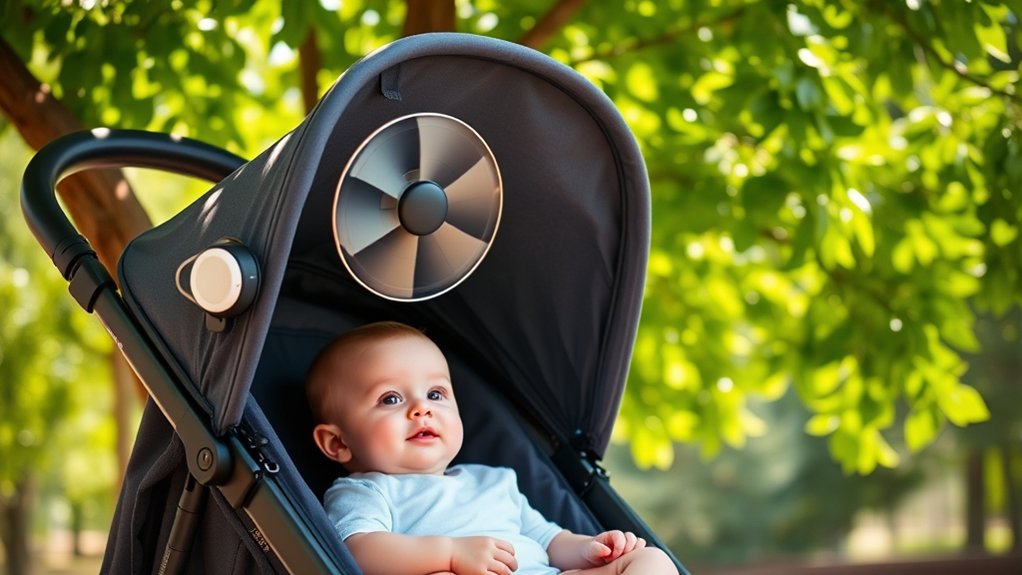
Using a stroller fan can improve your baby’s comfort on warm days by increasing airflow around the stroller seat. A fan works best when you already have shade, breathable clothing, and a ventilated stroller. It should not be the only cooling method during extreme heat.
Choose a fan designed with baby safety in mind. Look for covered blades, a secure clip, quiet operation, and adjustable speed settings. Keep the fan far enough away that your baby cannot grab it, chew it, or pull it loose. Check the clip often because stroller movement can loosen some accessories over time.
Types of Stroller Fans
When it comes to keeping your baby cool in a stroller, a good stroller fan can make a noticeable difference. You have several types to choose from, each with unique benefits:
- Clip-on fans: Attach to many stroller frames and provide targeted airflow.
- Flexible tripod fans: Wrap around a handle, bumper bar, or frame when attached securely.
- Battery-operated or rechargeable models: Work during walks without needing a power outlet.
- Misting fans: Add a cooling mist, but use them carefully so your baby does not become damp or chilled.
- Safety-focused fans: Use covered blades or soft-blade designs to reduce injury risk.
Benefits of Airflow
To help your baby stay comfortable during warm outings, a stroller fan can provide gentle airflow that reduces stuffiness around the seat. Babies do not regulate temperature as well as adults, so airflow can support your other cooling steps.
Many stroller fans are lightweight and easy to attach to different stroller models. Adjustable speeds let you lower the breeze when your baby is sleeping or increase it when the air feels still. Pairing a stroller fan with a proper canopy gives your baby both shade and ventilation, which creates a more comfortable stroller environment.
Placement for Maximum Effect
Positioning your stroller fan correctly can improve your baby’s comfort on hot days. Effective fan positioning keeps air moving without blowing too strongly into your baby’s eyes or face. Use these tips to maximize the fan’s effectiveness:
- Angle the airflow: Aim the breeze across the stroller seat rather than directly into your baby’s face for long periods.
- Use adjustability: Choose an adjustable fan so you can change the direction as the stroller moves.
- Keep it secure: Attach the fan firmly to the frame, handle, or bumper bar where it will not fall into the seat.
- Keep it out of reach: Make sure your baby cannot grab the fan, cord, charging port, or clip.
- Check the battery: Charge the fan before leaving and monitor the battery level during longer outings.
Pro Tip: Before placing your baby in the stroller, sit your hand in the seat area for a few seconds. If the seat, straps, or air inside feel hot to you, cool the stroller first.
Keep Baby Hydrated
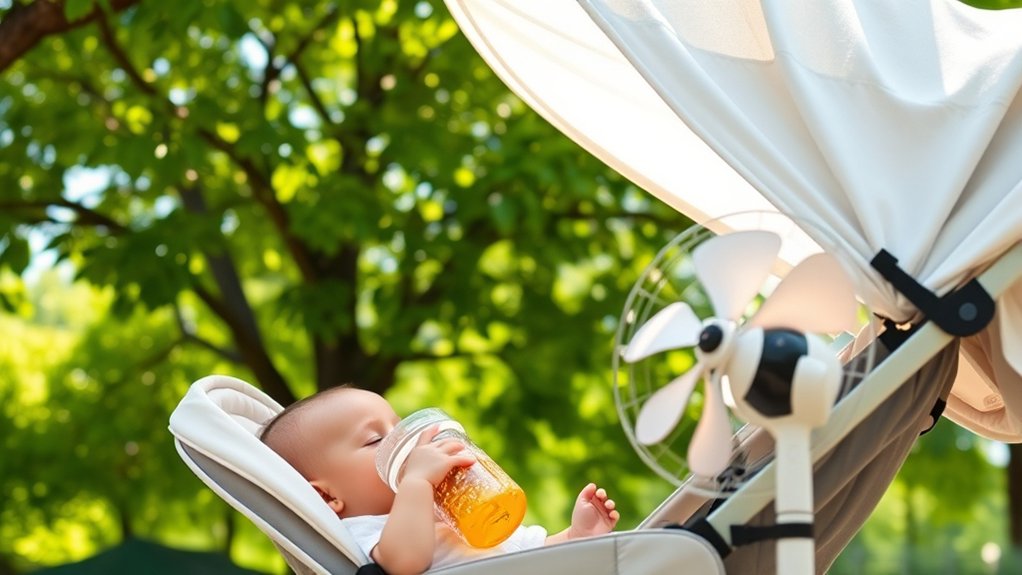
Keeping your baby hydrated is vital during hot weather. Babies can dehydrate faster than adults, so always plan ahead before leaving home. Bring enough fluids for your baby and water for yourself, since you also need to stay well hydrated while pushing the stroller.
For breastfed babies, offer breast milk more often during hot weather. For formula-fed babies, bring enough prepared formula for the outing and follow safe formula storage rules. For babies over six months, you can ask your pediatrician about small amounts of cooled, boiled water in hot conditions, especially if your baby has started solids.
Use wet diapers as one simple hydration clue. Fewer wet diapers than usual, very dark urine, dry mouth, no tears when crying, or a sunken soft spot can be warning signs. If you notice these signs, move your baby to a cooler place, offer age-appropriate fluids, and contact a healthcare professional if symptoms do not improve quickly.
Warning: Babies under six months usually should not drink plain water unless a healthcare professional tells you to give it. Use breast milk or formula as their main fluid source.
Schedule Outings Wisely
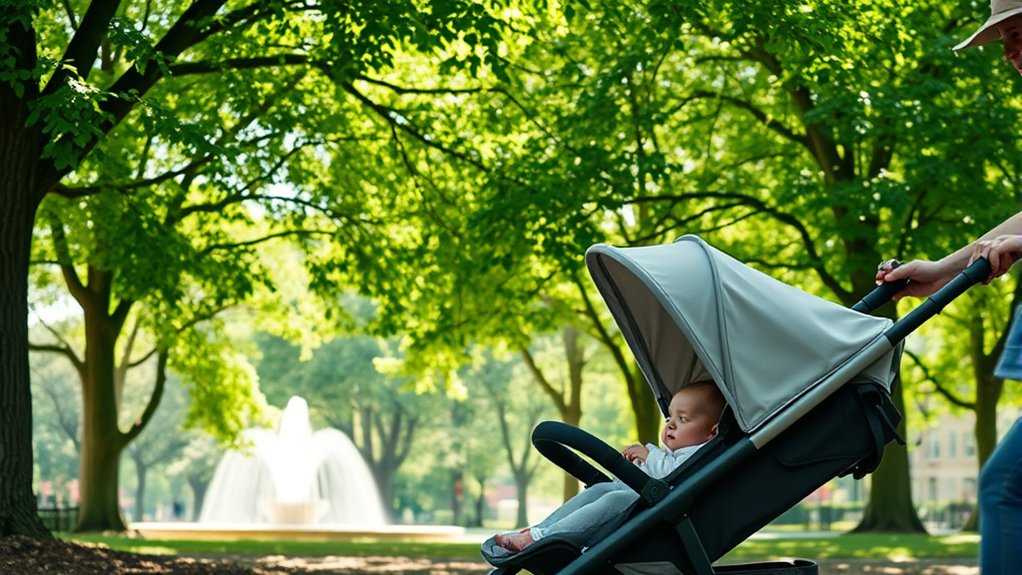
Planning your stroller outings wisely can greatly improve your baby’s comfort during hot weather. Heat, humidity, direct sun, and still air can all make a stroller feel warmer than expected. Before you leave, check the forecast, heat alerts, and how strong the sun feels outside your home.
- Timing: Schedule outings during cooler parts of the day, often early morning or later afternoon, instead of the strongest midday heat.
- Outing Duration: Keep direct-sun outings brief, especially when the air feels humid or the stroller route has little shade.
- Shaded Routes: Choose tree-lined paths, covered sidewalks, shaded parks, or indoor walking areas when possible.
- Weather Monitoring: Avoid unnecessary stroller walks during extreme heat warnings, poor air quality alerts, or very high humidity.
- Backup Plan: Know where you can cool down quickly, such as a library, store, community center, or your car with safe air conditioning.
If the outing is optional and the weather feels uncomfortable for you, it may be too hot for your baby. Choose a cooler time or an indoor activity instead.
Avoid Hot Surfaces and Parked Cars
Hot weather does not only affect the air around your baby. Stroller seats, buckles, metal frames, sidewalks, and car interiors can heat up quickly. Before placing your baby in the stroller, touch the seat fabric, harness buckle, tray, and any dark-colored surfaces. If they feel hot, move the stroller into shade and let it cool first.
Never leave your baby alone in a parked car, even for a short time. A car can become dangerously hot quickly, and cracking a window does not make it safe. If your walk includes a car ride, cool the vehicle before buckling your baby in and check that the car seat straps and buckles are not hot against their skin.
Monitor for Overheating Signs
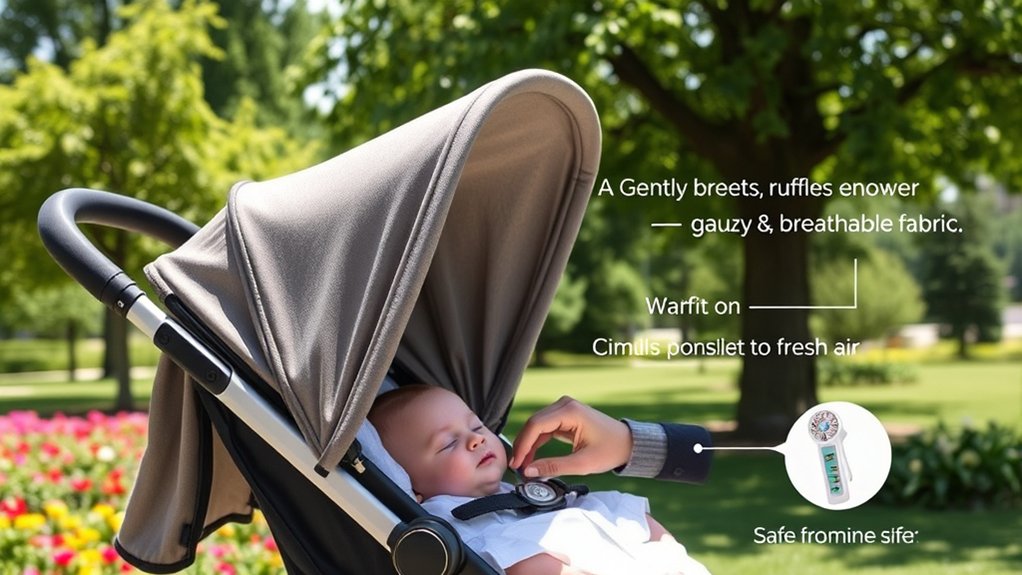
When you’re out with your baby in the stroller, stay alert for signs of overheating. Check your baby’s skin temperature, especially at the back of the neck or chest. Warm skin can be normal on a hot day, but very hot skin, sweating, flushed cheeks, or unusual fussiness can signal discomfort.
Watch your baby’s behavior. If your baby becomes fussier or more restless than usual, heat may be part of the problem. On the other hand, unusual lethargy or tiredness can also be a serious warning sign, especially if your baby is hard to wake or not feeding normally.
Pay attention to wet diapers during and after the outing. Fewer wet diapers may signal dehydration concerns. If your baby seems too hot, move to shade or air conditioning, remove extra layers, offer age-appropriate fluids, and cool your baby gently. Seek medical help quickly if symptoms seem severe or do not improve.
A cooler stroller setup uses three things together: shade, airflow, and frequent baby checks. One cooling step alone is not enough during very hot weather.
Make a Hot-Weather Stroller Checklist
A simple checklist helps you leave the house prepared instead of fixing problems after your baby is already uncomfortable. Keep the list near your stroller, diaper bag, or door during warm months.
- Check the forecast, heat index, humidity, and air quality before leaving.
- Dress your baby in loose, breathable clothing.
- Test the stroller seat, straps, and buckles for heat.
- Open canopy vents or mesh windows if your stroller has them.
- Pack enough breast milk, formula, or approved fluids for the outing.
- Bring water for yourself so you can stay hydrated too.
- Charge your stroller fan if you plan to use one.
- Choose a shaded route and identify a cooler backup location.
- Check your baby’s neck, cheeks, mood, and diaper output during the walk.
Related Guides
Frequently Asked Questions
What are the best materials for stroller liners in hot weather?
For hot weather, choose stroller liners made from breathable fabrics like cotton or bamboo. Moisture-wicking materials can also help keep your baby drier. Avoid thick, plush, or plastic-feeling liners that trap heat against your baby’s back.
Can I use an umbrella stroller for hot days?
Yes, you can use an umbrella stroller on hot days if it has enough shade, airflow, and support for your baby’s age and size. Many umbrella strollers are lightweight and easy to push, but some have small canopies. Add a safe stroller sunshade if needed, and avoid covering the opening with a blanket.
How do I clean a stroller after outdoor use?
Remove crumbs, dust, and outdoor debris first. Wipe hard surfaces with a damp cloth and mild detergent, then dry them well. Check the wheels for mud, sand, or leaves. For fabric areas, follow the stroller manufacturer’s cleaning instructions so you do not damage the seat or harness.
Are there stroller accessories that help with cooling?
Yes. Helpful cooling accessories include stroller sunshades, canopy extenders, breathable stroller liners, and clip-on stroller fans with covered blades. These accessories work best when you also choose shaded routes, breathable clothing, and cooler times of day.
What age is safe for a baby to use a stroller fan?
A stroller fan can be used when it is safely attached, out of reach, and not blowing too strongly at your baby. Many parents use one with older infants, but safety depends more on placement and design than age alone. Choose a fan with covered blades, secure it firmly, and check it often.
How can I tell if the stroller is too hot inside?
Place your hand inside the stroller seat area and feel the air, fabric, straps, and buckle. If they feel hot or stuffy, move the stroller to shade, open ventilation panels, remove extra layers, and wait before placing your baby back in the seat.
Should I put sunscreen on my baby during stroller walks?
For young babies, shade and protective clothing are usually the first choices. For older babies, sunscreen may be useful on exposed skin. Follow your pediatrician’s guidance and use stroller shade, hats, and timing to reduce direct sun exposure.
Conclusion
Keeping your baby cool in a stroller does not have to feel complicated. Focus on the basics first: shade, airflow, breathable clothing, hydration, and smart timing. These simple steps help lower the risk of overheating and make warm-weather outings more comfortable for both of you.
Before each walk, check the stroller seat, plan a shaded route, and watch your baby’s face, neck, mood, and diaper output. If your baby seems too hot, unusually sleepy, hard to wake, or dehydrated, move to a cooler place and get medical advice. A little planning can turn hot-day stroller walks into safer, calmer outings.
Sources
- American Academy of Pediatrics / HealthyChildren.org — heat safety guidance for children and parents.
- CDC Heat Health: Infants and Children — why infants and young children need extra heat protection.
- National Highway Traffic Safety Administration — parked-car heatstroke prevention and hot vehicle safety.
- NHS: Keeping Your Baby Safe in the Sun — baby sun safety and shade guidance.

