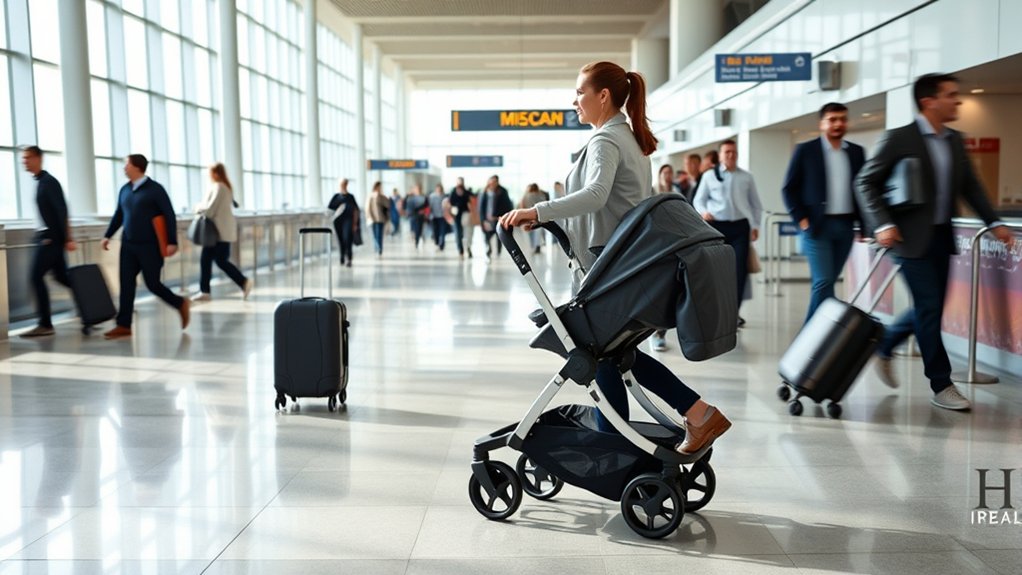
Traversing an airport with a child can feel like a race against time, but a stroller can make the whole trip calmer and easier to manage. You can use it through most airport areas, keep your child comfortable during long walks and lines, and often gate-check it before boarding. The key is knowing your airline’s stroller rules, security steps, size limits, and family boarding options before you arrive.
Quick Answer
Yes, you can usually use a stroller in the airport until boarding. Most airlines allow families to check or gate-check one stroller for free, but carry-on size rules vary. For the smoothest trip, use a lightweight stroller, label it clearly, confirm airline limits, and prepare to fold it at security.
Key Takeaways
- A stroller can help you move through terminals, lines, and long walks with less stress.
- Most airlines let you check or gate-check one stroller for free, but exact rules vary.
- Compact, lightweight strollers are usually easier for security, boarding, and overhead-bin rules.
- You may need to fold the stroller during TSA screening or allow it to be hand-inspected.
- Label your stroller, remove loose accessories, and ask gate staff about the return point after landing.
At a Glance
| Best Stroller Type | Lightweight, compact, easy-fold stroller |
| Airport Use | Usually allowed through the terminal and up to the gate |
| Security Step | Fold for X-ray screening when possible, or request hand inspection |
| Cost | Often free to check or gate-check, but airline rules should be confirmed |
Benefits of Using a Stroller in the Airport
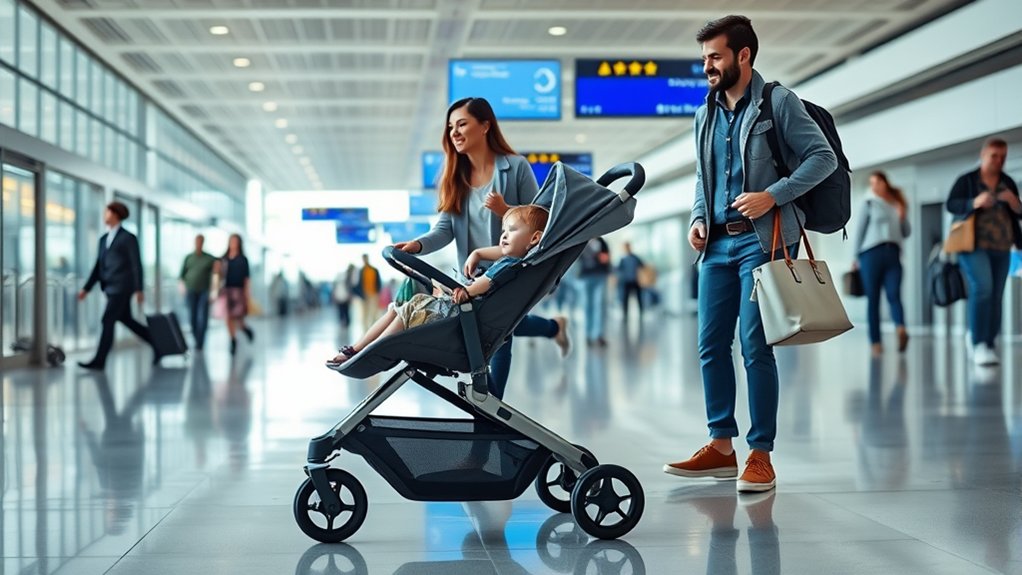
When you’re moving through busy airport terminals, using a stroller can make your journey much smoother. It gives your child a safe place to sit, helps you move faster through long corridors, and gives you a place to keep small travel essentials within reach.
Stroller types vary, but lightweight options are especially convenient for tight spaces, crowded boarding areas, elevators, and long security lines. These strollers can enhance mobility while supporting family comfort, letting your little one rest while you manage luggage, documents, snacks, and carry-ons.
Having your child secure in a familiar stroller can also reduce tiredness and irritability. Airports are loud, busy, and full of waiting, so a stroller can turn potential travel chaos into a more manageable experience.
A stroller gives your child a familiar place to rest while giving you more control during long airport walks, delays, and boarding lines.
Another major advantage is that many airlines allow you to gate-check your stroller. That means you can usually keep it until the last part of boarding, then pick it up again after landing, depending on the airline and airport process.
Airline Policies for Strollers
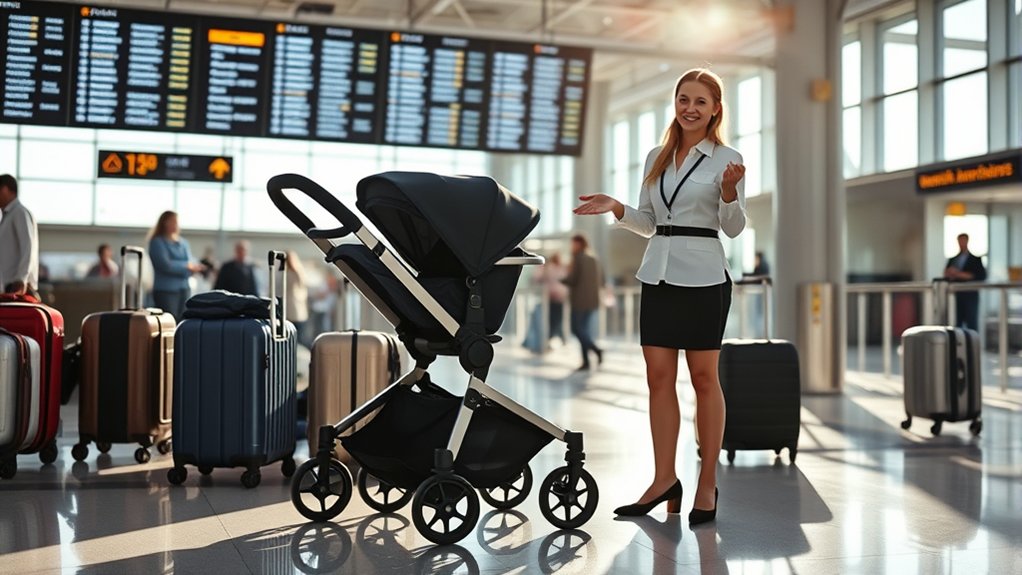
Using a stroller can greatly ease your travel experience, but understanding airline policies is just as important. Many airlines allow families to check one stroller for free, so it usually does not count against the standard baggage allowance. Still, policies can vary by airline, route, aircraft, and stroller size.
For added convenience, consider stroller types like compact models that you can gate-check or, in some cases, bring onboard if they meet carry-on size rules and fit in the overhead bin. Ultra-compact travel strollers are often easier to handle than full-size or jogging strollers.
Alaska and Delta Airlines both offer flexible options for stroller check-ins, while United provides priority boarding for families with young children on many flights. Southwest also supports smoother family travel by allowing free checking of strollers and car seats, though exact boarding order and gate procedures may depend on the airline’s current policy.
Note: Airline rules can change, and international flights may have different limits. Always check your airline’s stroller policy before travel, especially if you use a double stroller, wagon stroller, jogging stroller, or bulky travel system.
With these policies in mind, you can pack your travel accessories with more confidence and navigate the airport with less stress.
Gate-Checking Procedures for Strollers
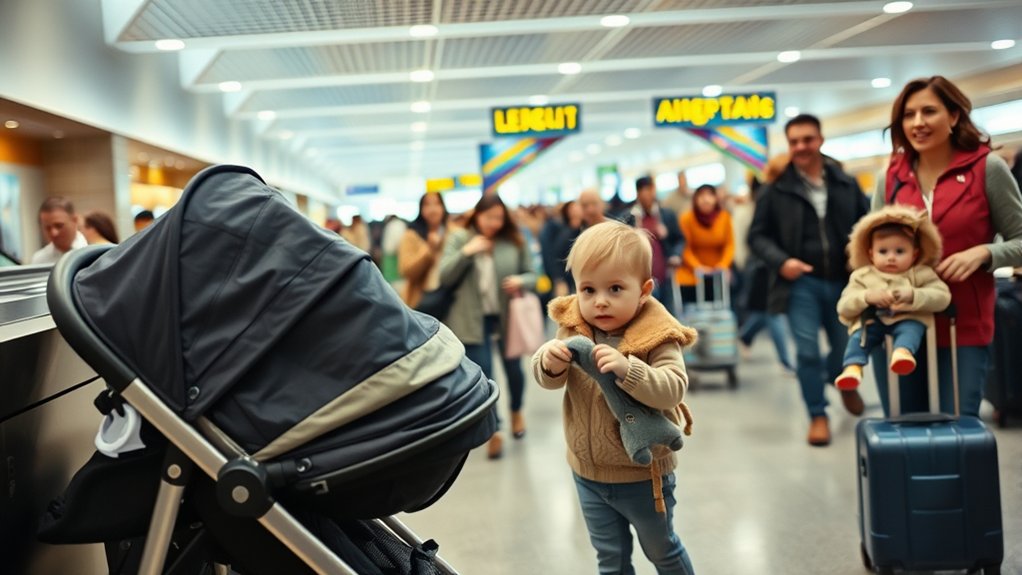
When you’re traveling with kids, gate-checking your stroller can be a game-changer. This process usually allows you to keep your stroller through the terminal and up to the aircraft door or boarding area.
That makes it easier to handle long walks, sleepy toddlers, diaper bags, and last-minute boarding delays. Let’s walk through how the process usually works and how to make it smooth and hassle-free.
Gate-Check Process Overview
Maneuvering through an airport with a stroller can be much easier when you know how gate-checking works. Most airlines allow you to gate-check one stroller free of charge, and it normally does not count as regular luggage.
When you reach the gate, tell the gate agent that you want to gate-check your stroller. You’ll usually receive a special tag for it. Attach the tag clearly so airport staff can identify it for safe storage during the flight.
Stroller types vary, but many standard strollers, compact strollers, and double strollers can be gate-checked. In many cases, you leave the stroller at the end of the jet bridge or near the aircraft door. After landing, it may be returned at the aircraft door, jet bridge, or baggage claim, depending on the airport and airline.
To avoid confusion, arrive early and ask your gate agent where the stroller will be returned after arrival.
Tips for Smooth Check
To guarantee a smooth gate-checking experience, prepare your stroller before you arrive at the airport. A little planning can prevent delays at the gate and reduce the chance of damage or missing parts.
- Check your airline’s stroller size and gate-check policy before your travel day.
- Use a luggage tag with your name, phone number, and destination.
- Remove cup holders, toys, snack trays, rain covers, and loose accessories before boarding.
- Fold the stroller before handing it to staff if the airline asks you to do so.
- Use a stroller travel bag if you want extra protection from dirt and scratches.
- Take a quick photo of the stroller before checking it in case you need to report damage.
Pro Tip: Keep your child, diaper bag, travel documents, and boarding passes organized before you reach the gate. Once the stroller is tagged and folded, you may need both hands free.
Size and Weight Restrictions for Strollers
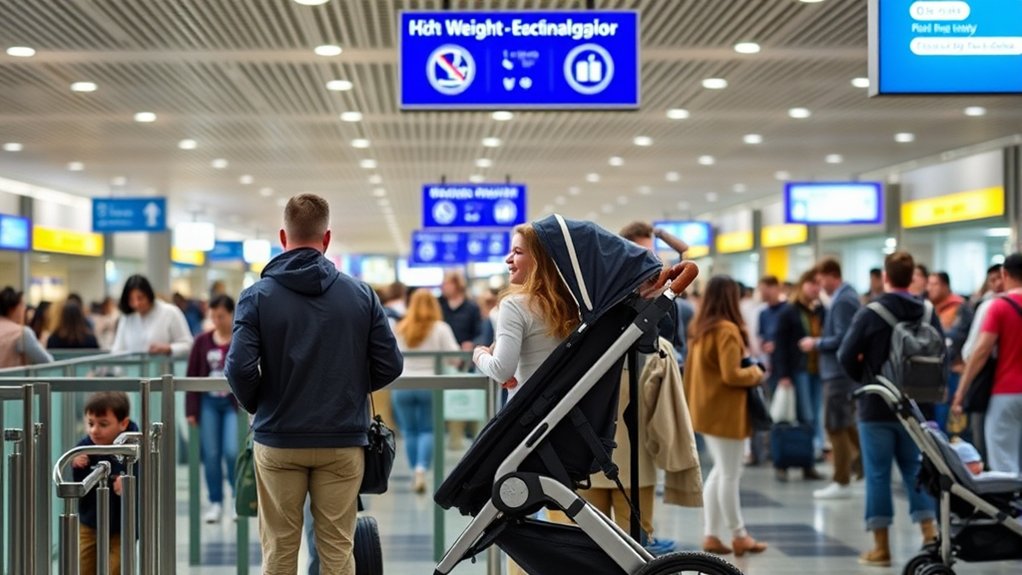
Maneuvering airport travel with a stroller requires attention to size and weight restrictions. Understanding these limits helps you avoid last-minute hassles and keeps your focus on getting your family to the gate comfortably.
Some compact strollers may qualify as carry-on items if they fit the airline’s overhead-bin dimensions. Larger strollers usually need to be checked at the ticket counter or gate-checked before boarding.
- Common carry-on size limits are often around 22 x 14 x 9 inches, but they vary by airline.
- Some airlines set stroller weight limits, especially for cabin storage.
- Larger strollers may need to be checked at the ticket counter or gate.
- Many airlines allow one stroller per child to be checked for free.
- Double strollers, jogging strollers, and wagon-style strollers may face extra limits.
- Always verify your stroller’s dimensions against your airline’s current guidelines.
Warning: Do not assume every compact stroller can go in the cabin. Overhead-bin space, aircraft size, and airline rules can affect whether your stroller must be checked.
Tips for Traveling With a Stroller
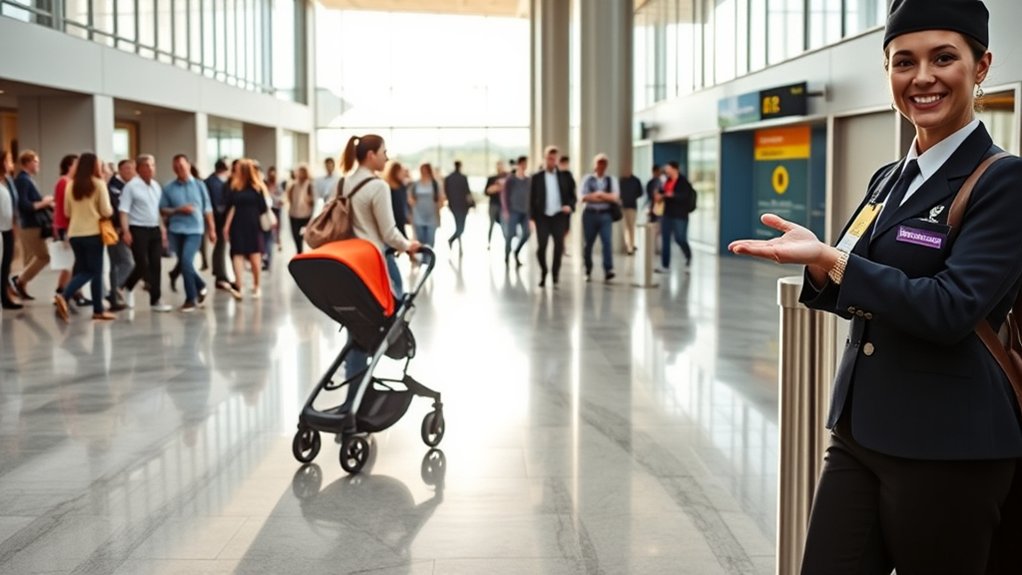
Traveling with a stroller can make your airport experience much easier, especially when you’re steering through crowds, long lines, and flight delays. The right setup can improve comfort, safety, and speed.
| Tip | Benefit |
|---|---|
| Use a Lightweight Stroller | Improves stroller safety and makes airline rules easier to meet |
| Gate-Check for Free | Lets you use the stroller until boarding on many airlines |
| Opt for a Travel System | Simplifies transitions from car to airport when used correctly |
Before you travel, practice folding the stroller with one hand if possible. Airports move quickly, and you may need to fold it while holding a child, managing a bag, or moving through security.
Also, avoid overloading the stroller handles with heavy bags. A stroller can tip backward if too much weight hangs from the handlebar, especially when your child is not seated inside.
Using a Stroller at Airport Security
Security screening is one of the most stressful parts of airport travel with children. In most cases, you can bring your stroller through the security checkpoint, but it may need to be folded and placed on the conveyor belt for X-ray screening.
If the stroller is too large for the X-ray machine, security officers may inspect it manually. You may also need to remove your child from the stroller before screening. Keep small items together so you do not lose toys, bottles, blankets, or travel documents during the process.
- Remove your child from the stroller before screening if instructed.
- Fold the stroller before reaching the belt to save time.
- Place loose accessories in your carry-on bag.
- Use a backpack instead of a shoulder bag to keep your hands free.
- Keep snacks, wipes, and documents easy to reach after screening.
If your child is sleeping, ask the officer what they need before moving too quickly. Procedures can vary by airport, but staying calm and prepared makes the process easier.
Alternatives for Navigating the Airport With Children
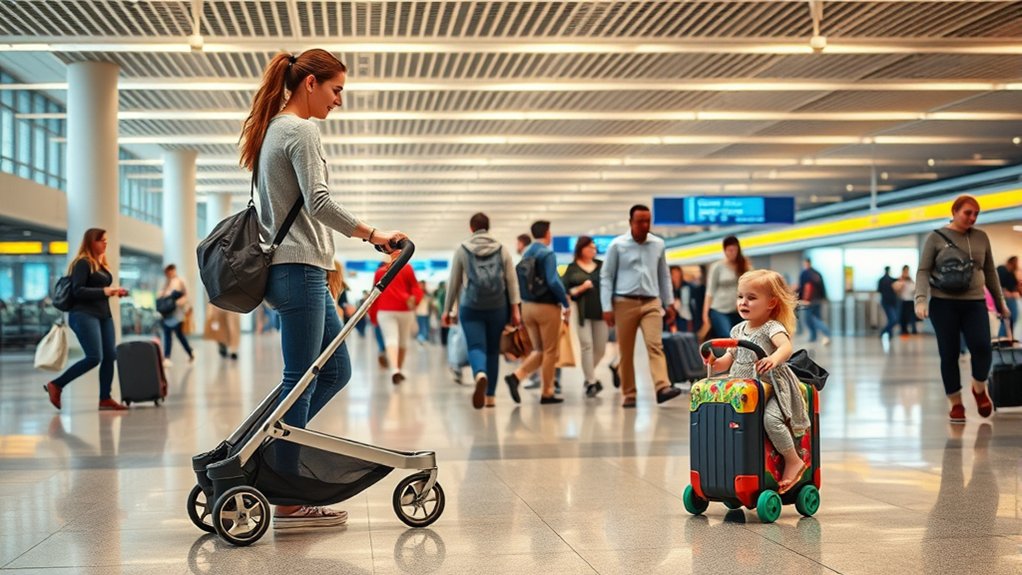
How can you guarantee a smooth airport experience while managing your little ones? Exploring stroller alternatives can make your journey more enjoyable, especially if you are traveling through a small airport, boarding a crowded flight, or handling several bags.
The best airport setup is the one that keeps your child safe, keeps your hands free, and matches the length of your travel day.
- Baby carriers: Keep your hands free and help your child stay close during security checks and boarding.
- Slings: Helpful for younger babies when you need comfort and closeness in crowded terminals.
- Lightweight strollers: Compact designs give you flexibility while staying easier to fold and check.
- TSA PreCheck: May help streamline security for eligible travelers and reduce some checkpoint stress.
- Portable play mats: Create a cleaner space for your kids to sit or stretch while waiting for your flight.
With these alternatives, maneuvering the airport with children can become easier, giving you more freedom to focus on your flight, your child’s comfort, and your family’s schedule.
Family Boarding Options and Benefits
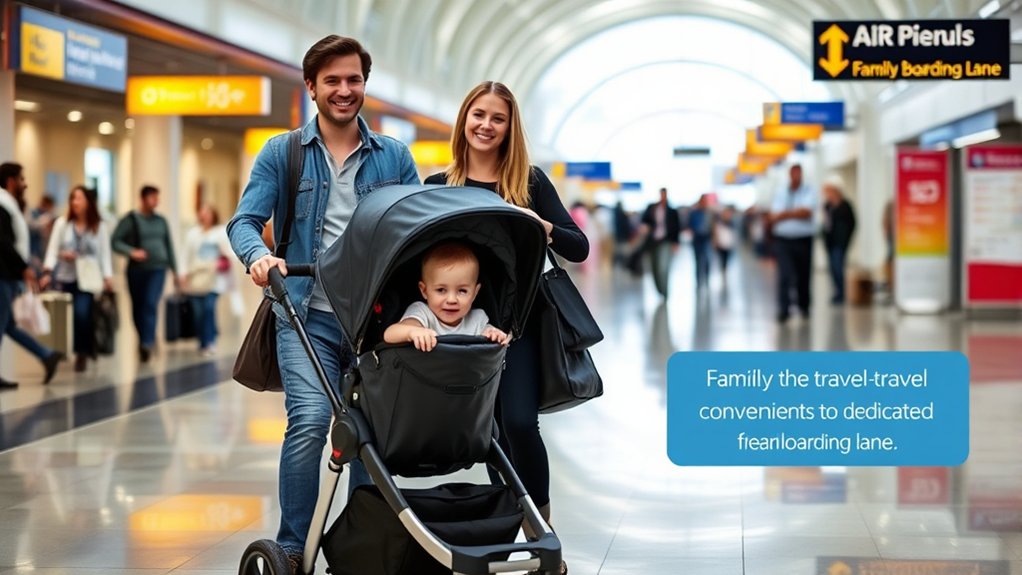
When you’re maneuvering through the airport with young children, taking advantage of family boarding options can greatly ease the process. Family boarding can give you extra time to fold the stroller, settle your child, store carry-ons, and install an approved child restraint if you are using one onboard.
Most airlines allow families with young children to board after priority passengers but before general boarding, though the exact timing varies. Arriving early at the gate and listening for announcements is key, as some airlines require you to request family boarding.
This option creates a smoother transition, letting you settle in without the rush of other passengers. For example, Southwest offers family boarding between groups, which can be helpful when traveling with small children and extra gear.
If your airline does not automatically announce family boarding, politely ask the gate agent whether early boarding is available for families with strollers or young children.
Common Challenges When Using a Stroller in the Airport
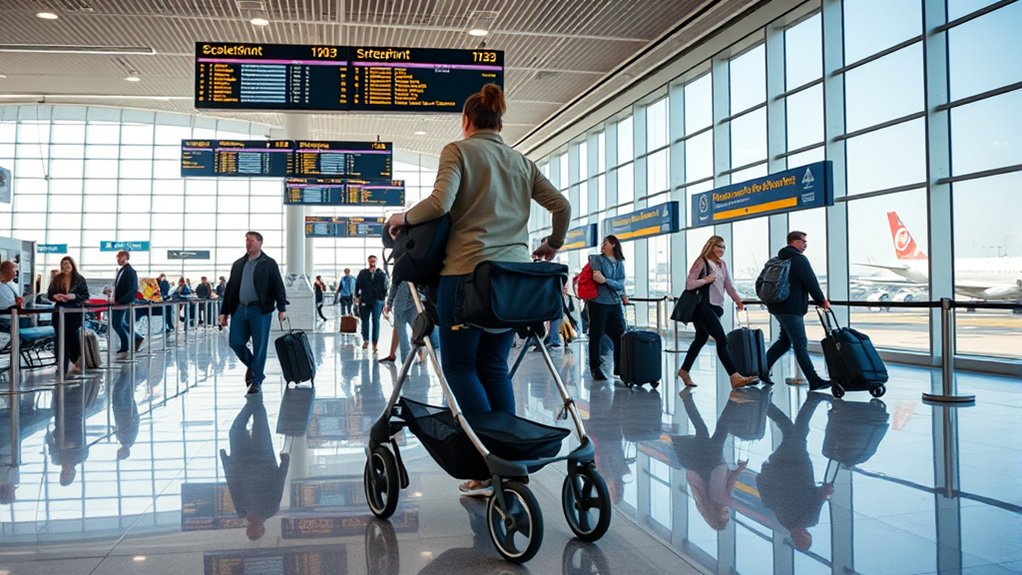
Maneuvering crowded terminals with a stroller can feel like an obstacle course. Narrow walkways, packed boarding areas, moving walkways, elevators, and rushed passengers can test your patience.
Add in the complex security screening process, and you may find yourself juggling time, luggage, and child care at once. Understanding airline policies on stroller size and gate-checking can also feel confusing when you need clear answers fast.
Navigating Crowded Terminals
While traveling with a stroller in a bustling airport terminal can be a challenge, it also gives you a practical way to move through crowds and long lines. By choosing the right stroller type and understanding terminal layouts, you can navigate more smoothly.
Here are some tips to improve your experience:
- Use stroller-friendly pathways and elevators to avoid stairs and escalators.
- Keep your child comfortable to reduce irritability during delays.
- Gate-check your stroller for easy transport up to boarding.
- Take advantage of TSA PreCheck if it fits your travel needs.
- Stay aware of your surroundings to avoid collisions with other travelers.
- Use elevators instead of escalators whenever possible.
- Keep the stroller brake locked when waiting in lines or at the gate.
Embrace the freedom a stroller brings while staying alert in crowded spaces. It can make your airport journey more enjoyable and manageable for both you and your child.
Security Screening Challenges
Security screening can present several challenges for parents using strollers at the airport. You may need to fold your stroller and place it on the conveyor belt while keeping an eye on your little one. To make this easier, practice stroller folding before your trip.
| Challenge | Strategy | Tip |
|---|---|---|
| Folding the stroller | Practice folding before travel | Know the lock and release points |
| Managing multiple items | Use a backpack for essentials | Keep hands free for kids |
| Large strollers require more inspection | Prepare for hand inspection | Arrive early to reduce stress |
| Keeping kids calm | Bring a small toy or snack | Engage them during screening |
With these security checkpoint strategies, you can navigate screening with less stress and fewer delays.
Airline Policy Confusion
After handling the challenges of security screening, the next hurdle parents often face is airline policy confusion regarding strollers. Each airline has its own rules about stroller types, sizes, checking, and boarding.
Here are some common points to consider:
- Many airlines allow gate-checking strollers for free, letting you use them until boarding.
- Compact strollers may qualify as carry-on only if they fit the airline’s cabin limits.
- Larger strollers generally need to be gate-checked or checked at the ticket counter.
- Double strollers and wagon-style strollers may have extra restrictions.
- Family boarding privileges may allow you to board early with your stroller.
- Policies can differ for domestic and international flights.
Navigating airline comparisons can be tricky, but knowing these details before you leave home can set you up for a smoother travel experience.
What to Pack With Your Airport Stroller
A stroller is more useful when you pack it wisely. Keep the essentials easy to reach, but avoid turning the stroller into your main luggage cart. Too much weight can make it harder to fold, harder to steer, and easier to tip.
- Stroller travel bag: Helps protect the stroller during gate-checking.
- Luggage tag: Makes identification easier if the stroller is misplaced.
- Small blanket: Helps your child rest during delays.
- Snacks and water: Useful for waiting at security, the gate, or baggage claim.
- Wipes and sanitizer: Helpful for tray tables, stroller handles, and airport surfaces.
- Rain cover or sun shade: Pack separately if it may detach during gate-checking.
- Small toy or book: Keeps your child occupied during lines and boarding.
Store important items such as passports, boarding passes, medicine, and electronics in your carry-on bag rather than the stroller basket. Once the stroller is checked, anything left inside may be difficult to access.
What to Do if Your Stroller Is Lost or Damaged
Even with good planning, strollers can sometimes get delayed, scratched, bent, or returned at a different pickup point. If your stroller does not appear after landing, ask the gate agent or baggage service office where gate-checked items are returned at that airport.
If your stroller is damaged, report it before leaving the airport. Take photos, keep your baggage tag or gate-check tag, and ask the airline how to file a damage claim. If you used a stroller travel bag, inspect the stroller before you exit the terminal.
- Check the stroller as soon as it is returned.
- Photograph damage from several angles.
- Keep the gate-check tag or baggage receipt.
- Report the issue at the airline baggage desk before leaving.
- Ask for a written claim reference or case number.
If you have travel insurance or stroller insurance coverage, review your policy to see whether repairs or replacement may be covered.
Related Guides
Frequently Asked Questions
Can I use my stroller during security checks?
Yes, you can usually use your stroller up to the security checkpoint. During screening, you may need to remove your child, fold the stroller, and place it on the conveyor belt. If it does not fit through the X-ray machine, security staff may inspect it by hand.
Are there stroller rental services at the airport?
Some airports offer stroller rental services, but availability varies widely. Check the airport’s official website before travel if you plan to rent one. If stroller access is essential, bringing your own compact stroller is usually more reliable.
What should I do if my stroller gets damaged?
Report the damage to the airline before leaving the airport. Take clear photos, keep your gate-check or baggage tag, and ask for claim instructions. If you have stroller insurance or travel insurance, review whether it covers repairs or replacement.
Can I bring a double stroller to the airport?
Yes, you can usually bring a double stroller to the airport, but it may need to be gate-checked or checked at the ticket counter. Double strollers are often too large for overhead bins, so confirm your airline’s size and check-in rules before travel.
How do I navigate escalators and elevators with a stroller?
Avoid using escalators with a stroller whenever possible. Elevators are safer and easier, especially with luggage or a sleeping child. Let others exit first, roll in carefully, lock the brake if you are waiting, and keep both hands on the stroller when the elevator moves.
Can I take a stroller on the plane?
Some ultra-compact strollers may be allowed onboard if they meet carry-on dimensions and there is overhead-bin space. Most standard strollers must be checked or gate-checked. Always confirm your airline’s current carry-on stroller policy before travel.
Is gate-checking a stroller free?
Many airlines allow stroller gate-checking for free, especially when traveling with a child. However, rules can vary by airline and route, so confirm the policy before your flight and ask the gate agent for the correct tag.
Conclusion
To sum up, using a stroller in the airport can make traveling with children easier, safer, and less stressful. You can navigate crowded terminals, keep your little one comfortable, and enjoy the convenience of gate-checking when your airline allows it.
Before your trip, confirm airline policies, measure your stroller if you plan to carry it onboard, prepare for security screening, and label the stroller clearly. With the right planning, your airport adventure can feel smoother, calmer, and more manageable for the whole family.

