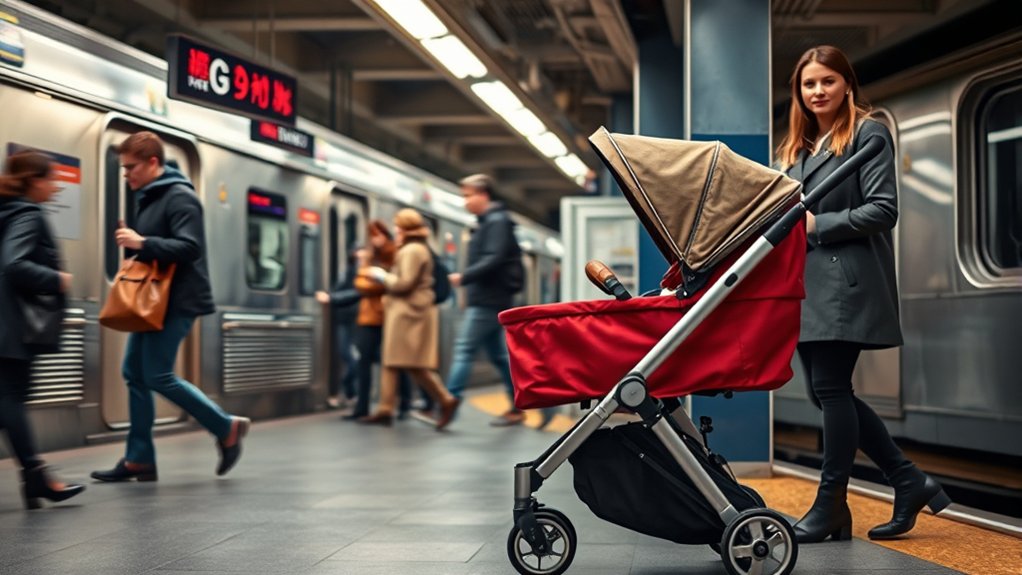
Finding your way through the bustling NYC subway with a stroller can feel confusing at first, especially when you are juggling a child, bags, stairs, elevators, turnstiles, and crowded trains. The good news is that you can bring a stroller on the NYC subway, and many families do it every day. The smoother your trip will be depends on how well you plan your route, choose accessible stations, avoid the busiest travel windows, and know when folding the stroller is the safer choice.
Quick Answer
Yes, you can take a stroller on the NYC subway. Use accessible entrances when available, check elevator status before you leave, keep your child secure near platforms, and fold the stroller when trains are crowded or when it blocks doors, aisles, or other riders.
Key Takeaways
- Strollers are allowed on NYC subways, but accessibility varies by station.
- Plan around elevators, accessible gates, and less crowded travel times whenever possible.
- You may need to fold your stroller on crowded trains, stairs, buses, or when space is limited.
- Use apps like the MTA app, Citymapper, and Moovit to check routes, service changes, and elevator status.
- Keep children close on platforms, lock stroller brakes when stopped, and never leave a stroller unattended near the platform edge.
At a Glance
| Best Travel Time | Mid-morning, early afternoon, or later evening when trains are usually less crowded. |
| Difficulty | Moderate, because not every station has elevators or step-free access. |
| Helpful Tools | MTA app, Citymapper, Moovit, a lightweight stroller, and a baby carrier for backup. |
| Cost | Regular subway fare for paying riders. Young children may ride free when they meet MTA height rules. |
Understanding Subway Accessibility for Strollers
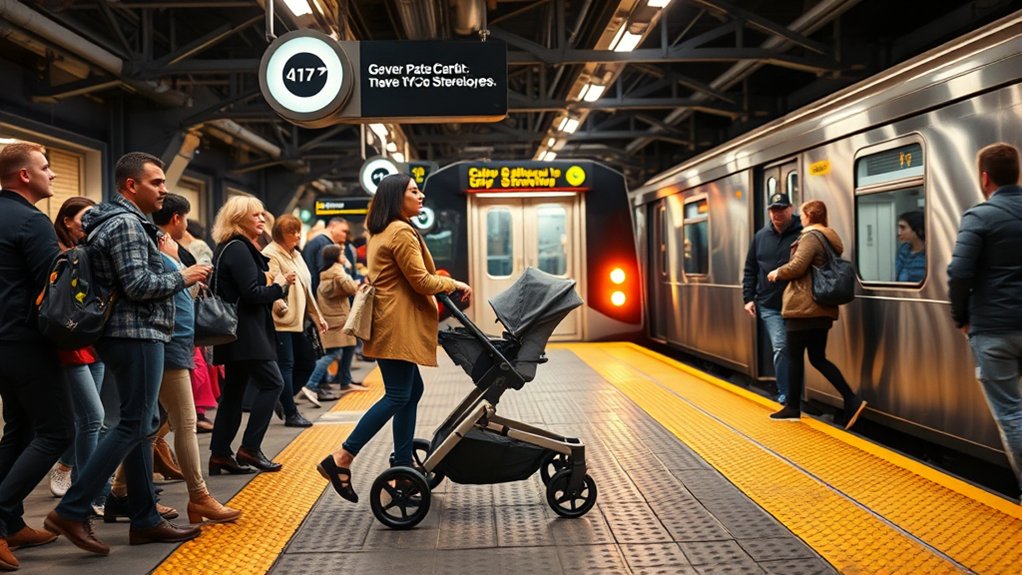
When you plan to navigate the NYC subway system with a stroller, understanding accessibility is one of the most important steps. The subway has hundreds of stations, but only some offer elevators or step-free access from street level to the platform. That means you should not assume every stop will be stroller-friendly just because it appears close on a map.
Before leaving, check whether your starting station, transfer station, and destination station have working elevators. A route that looks short may become difficult if it requires multiple stairways, long transfers, or an out-of-service elevator. The MTA app can help you check service changes, elevator status, and accessible route options before you commit to the trip.
Standard turnstiles often do not work well with strollers, especially wide, double, or travel-system models. Look for an accessible gate, AutoGate, service gate, or station attendant area where available. If you are traveling alone, give yourself extra time so you are not rushing through gates, stairs, or platforms while holding your child and stroller.
On the subway, you can often keep a stroller open when the train is not crowded and it is not blocking doors, aisles, or priority seating. During busy periods, however, folding the stroller may be safer and more considerate. On buses, stroller rules can be stricter depending on space, operator instructions, and whether the bus is part of an open-stroller program.
Note: Elevator availability can change during the day. Always check elevator status before leaving, then check again before your return trip.
Entering the Subway Station With a Stroller
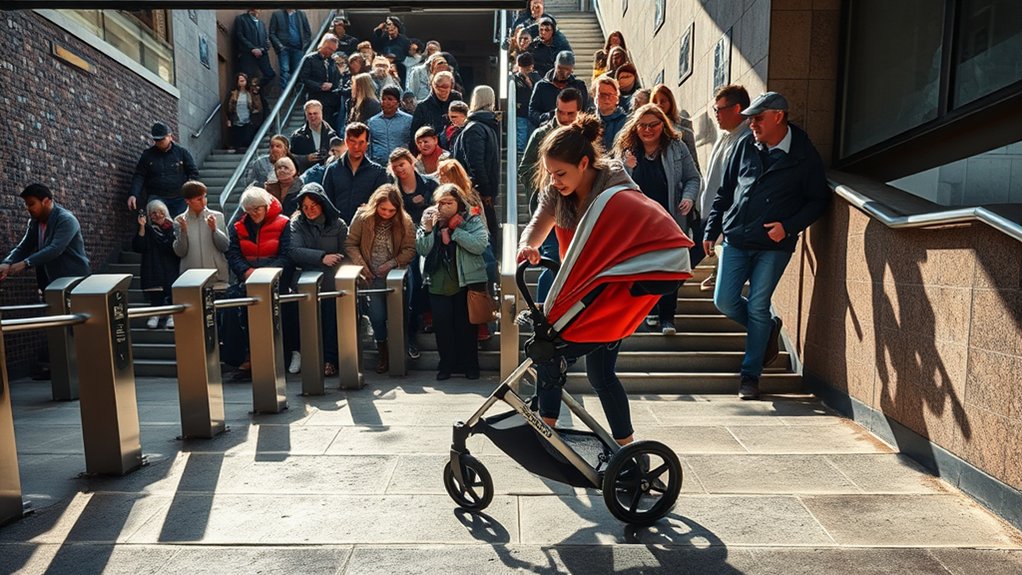
Entering a subway station with a stroller takes a little planning because many entrances still rely on stairs and narrow turnstiles. Start by looking for elevator signs, accessible entrance symbols, wide gates, or staffed areas. If the closest entrance has only stairs, check whether another entrance at the same station offers elevator access.
If a standard turnstile is too narrow for your stroller, use a service gate or accessible gate where available. In staffed stations, you may be able to ask an attendant for help after paying your fare. In unstaffed areas, you may need to fold the stroller, carry it through carefully, or use another station entrance that offers better access.
When using a wide gate, move slowly and keep one hand on the stroller. Keep your child buckled in if the stroller is open, and avoid letting older children walk ahead through the gate alone. If you need to fold the stroller, move to the side first so you are not blocking other riders.
Accessible doors may also serve as emergency exits, so use them properly and avoid forcing gates open. If you are unsure where to enter, look for station signage or use your app to confirm the accessible entrance before you arrive.
Pro Tip: A lightweight stroller or compact travel stroller is much easier to handle on stairs, elevators, crowded platforms, and narrow station gates.
Tips for Traveling With a Stroller on the Subway
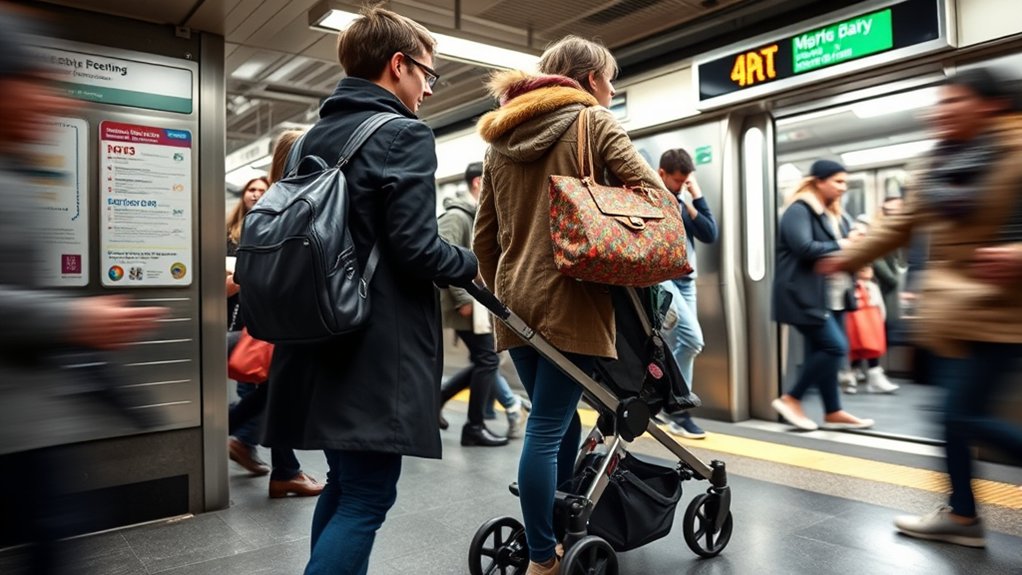
When traveling with a stroller on the subway, the best strategy is to plan your route before you leave and stay flexible once you are underground. Elevator locations, platform layouts, transfer paths, and crowd levels can make a big difference. A trip that is easy at noon may feel much harder during the morning or evening rush.
Choose accessible stations when possible, avoid tight transfers, and build in extra time for elevators or unexpected delays. If your child can safely walk for short stretches, consider combining a compact stroller with a baby carrier. That gives you more options if you run into stairs, packed train cars, or a broken elevator.
Inside the train, position the stroller so it does not block the doors. Keep the stroller close to you, lock the brakes when the train is stopped, and hold the stroller while the train is moving. If the car becomes too crowded, folding the stroller can help protect your child and make space for other passengers.
Elevator Locations and Access
Maneuvering the NYC subway with a stroller can be challenging, especially when it comes to finding accessible elevators. Not every station has elevator access, and not every elevator serves every platform direction. Some stations have elevators only at certain entrances or only between specific levels.
To make your journey smoother, use elevator mapping before you travel. Major hubs like Times Square, Grand Central Terminal, Fulton Center, and Atlantic Avenue-Barclays Center may offer more accessible transfer options, but large stations can also involve longer walks. Check the exact entrance and platform you need rather than relying only on the station name.
Familiarize yourself with station signage that indicates elevator and escalator locations. Remember, standard turnstiles may not accommodate strollers, so look for a wide gate or accessible entry point. For real-time elevator status and accessibility information, use the MTA app before and during your trip.
Folding Strollers on Buses
How do you make traveling with a stroller on NYC buses easier? Start by treating buses differently from subway trains. Buses have tighter aisles, smaller boarding areas, and fewer places to stand with an open stroller. Depending on the bus, route, crowding, and current program rules, you may be asked to fold your stroller or keep it in a designated space.
| Tip | Details | Notes |
|---|---|---|
| Fold When Needed | Fold during crowded times or when the operator asks. | Bus space is more limited than subway space. |
| Board Carefully | Enter through the correct door and keep control of the stroller. | Use brakes when stopped. |
| Request Kneeling | Ask the driver to lower the bus if you need easier boarding. | Helpful with heavier strollers or sleeping children. |
If you expect to use buses often, choose a stroller that folds quickly with one hand. Keep bags attached lightly or in a backpack so the stroller does not tip when your child gets out.
Off-Peak Travel Recommendations
Traveling with a stroller on the subway can be much smoother if you choose to go during off-peak hours. Trains, elevators, gates, and platforms are easier to manage when fewer riders are rushing to work, school, or events.
- Travel Mid-Morning or Early Afternoon: Aim for times when trains are less crowded, often after the morning rush and before the evening rush.
- Know Elevator Locations: Confirm which entrance has the elevator and whether it serves the platform direction you need.
- Use the MTA App: Check real-time schedules, elevator status, and service alerts before you leave.
- Allow Extra Time: Add a buffer for slow elevators, missed trains, diaper changes, feeding breaks, or a child who needs a moment.
Always pack essentials and allow extra time for boarding and exiting. By planning your travel during off-peak hours, you can enjoy a calmer and more comfortable subway experience.
Useful Apps for Subway Accessibility
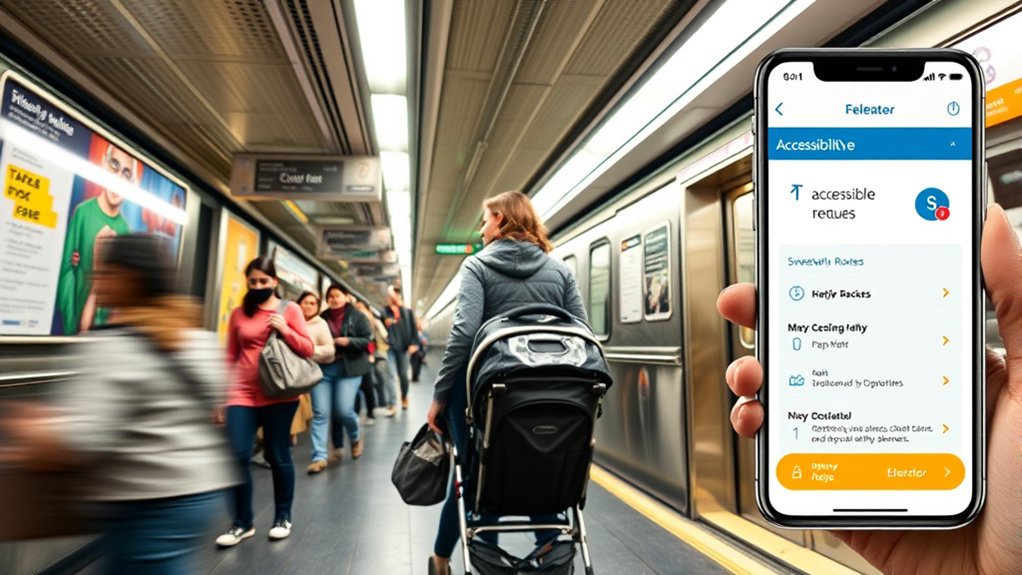
When you are maneuvering the NYC subway with a stroller, having the right apps can make a big difference. A good transit app can help you compare routes, avoid unnecessary stairs, check service changes, and see whether elevators are working before you arrive at the station.
Apps are especially helpful when your first-choice route changes. If an elevator is out, a train is delayed, or a station entrance is closed, you can quickly compare another accessible station, bus route, or rideshare option.
Real-time Subway Information
Maneuvering the NYC subway with a stroller can be intimidating, but several useful apps can ease the journey by providing real-time subway information. Here are three helpful subway apps:
- MTA App: Provides subway schedules, service alerts, trip planning, and elevator or escalator status where available.
- Citymapper: Offers step-by-step directions, route comparisons, walking details, and transit updates that can help you choose the simplest path.
- Moovit: Gives transit directions, service alerts, and live navigation features that can help families adjust when travel conditions change.
These subway apps give you better information before you enter the system, which is especially useful when you are traveling with a stroller, diaper bag, and young child.
Accessibility Navigation Features
Maneuvering the NYC subway can be challenging, especially with a stroller, but accessibility-focused features can help you plan a less stressful route. The MTA app can help you check station access and elevator status. Citymapper can show route options with walking and transfer details. Moovit can help with service alerts and live transit directions.
Some parents also use accessibility-focused tools and local maps to identify accessible stations, elevator entrances, and routes with fewer stairs. No app is perfect, so it is smart to double-check important trips, especially airport transfers, medical appointments, school pickups, or timed reservations.
For the best results, compare at least two options: the fastest route and the easiest stroller route. The easiest route may take a few extra minutes, but it can save you from carrying a stroller down multiple flights of stairs.
Alternative Transportation Options for Families
How can families navigate the busy streets of New York City while keeping little ones comfortable? The subway is often the fastest option, but it is not always the easiest with a stroller. Depending on your route, timing, weather, and child’s mood, another transportation option may work better.
Families can move around New York City more comfortably by choosing the transportation option that fits the route, stroller size, crowd level, and child’s needs.
- NYC Buses: Buses can be helpful when you want to avoid subway stairs. Some buses may allow open strollers in designated areas, but you should be ready to fold if space is limited or the operator instructs you to do so.
- Ride-Sharing Services: Services like Uber and Lyft can be useful for late nights, bad weather, airport trips, or routes with poor elevator access. Bring an appropriate child restraint when needed.
- Walking: In many Manhattan neighborhoods, walking 10 to 20 minutes may be easier than navigating stairs, transfers, and elevators.
- Biking Options: Family biking may be possible in some areas, but it requires proper child seats, helmets, safe routes, and comfort riding in city traffic.
- Stroller Rental Services: If you are visiting NYC, renting a lightweight travel stroller may be easier than bringing a heavy full-size model.
The best option may change from day to day. For short trips, walking or taking a bus may be less stressful. For longer trips with accessible stations at both ends, the subway can still be the fastest choice.
Navigating the Subway With Young Children
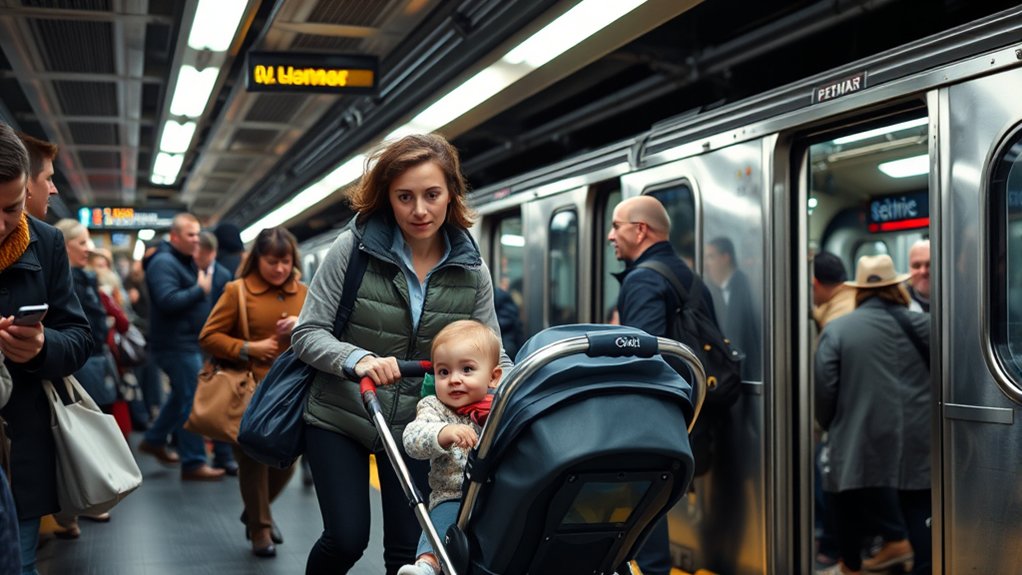
Maneuvering the NYC subway with young children can be manageable if you plan ahead and keep your setup simple. Before entering the station, decide who will carry the bags, who will hold the child’s hand, and whether the stroller will stay open or be folded.
Strollers should use accessible doors or wide gates when available because standard turnstiles may not accommodate them. If you have an older child walking beside you, keep them close when you pass through gates and when you wait on platforms. Subway stations can be loud and distracting, so give clear instructions before you enter.
During busy hours, fold your stroller if it blocks other riders or makes boarding unsafe. During less crowded times, you may be able to keep it open, but always stay near it and keep your child secure. Use the MTA app for real-time subway schedules, service alerts, and elevator statuses to improve your family travel experience.
While strollers are welcome on the subway, be prepared to fold them on buses or in crowded spaces. A baby carrier can be a helpful backup if your child falls asleep, the train is packed, or an elevator is unavailable.
Warning: Never park a stroller close to the platform edge. Keep one hand on the stroller, lock the brakes when stopped, and hold your child’s hand when boarding or exiting.
Safety Considerations When Riding the Subway
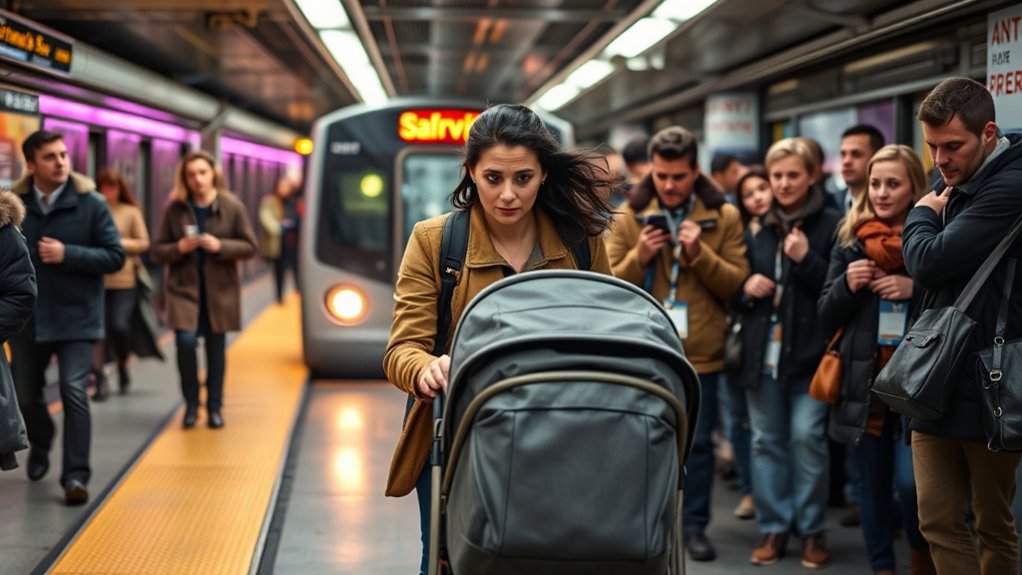
Riding the subway with young children can present safety challenges that require your full attention. Prioritizing stroller safety, platform awareness, and calm movement will help keep your family safer on public transport.
On platforms and trains, the safest stroller strategy is simple: stay back from the edge, keep your child close, control the stroller, and avoid rushing.
- Stay Close: Always keep children close and make sure they hold hands with a trusted adult while on platforms.
- Mind the Gap: Watch the space between the platform and the train. Help children step across carefully when boarding and exiting.
- Engage Brakes: Use stroller brakes when stopped, but still keep one hand on the stroller because trains and platforms can shift or become crowded.
- Do Not Block Doors: Keep the stroller clear of doors so passengers can enter and exit safely.
- Use Bright Clothing: Dress children in bright or easy-to-spot clothing, especially during busy travel times.
- Teach Simple Rules: Tell children to stay behind the platform edge, wait for your signal, and never run toward a train.
Also avoid hanging heavy bags from stroller handles, since that can cause tipping when your child moves or gets out. Keep valuables close to your body and keep essential items easy to reach.
Resources for Stroller Travel in NYC
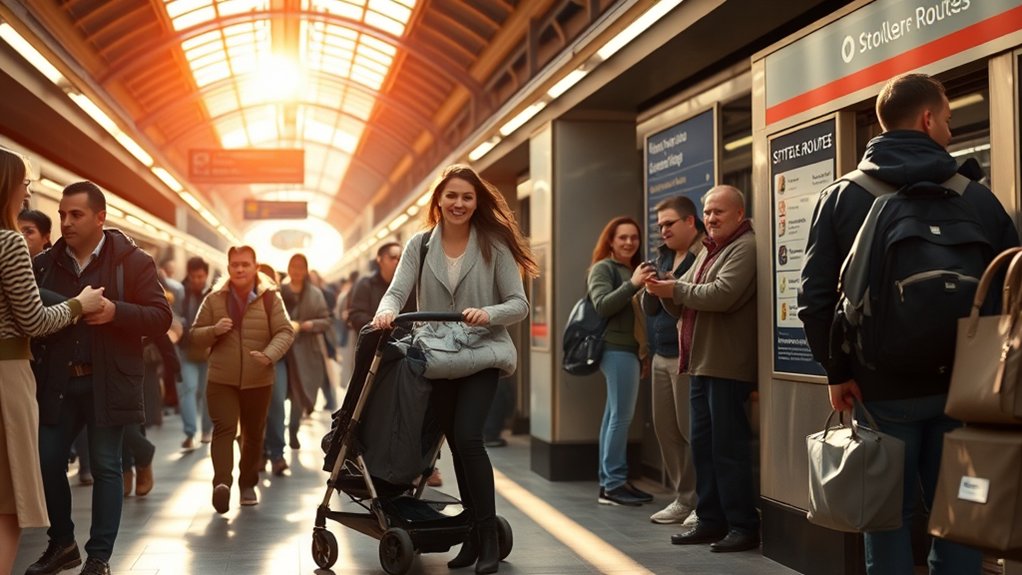
While maneuvering the NYC subway system with a stroller can be challenging, several resources can make your journey smoother. Start with the MTA app for subway schedules, service changes, and elevator status. You can also check MTA station information before leaving so you know which entrances are accessible.
Because not every station is fully accessible, it is essential to know which entrances accommodate strollers. You may need to use accessible doors, wide gates, or staffed entry points. Remember to fold your stroller when space is limited, especially on buses, stairs, and packed train cars.
For extra tips and community support, local parenting groups, neighborhood forums, and family travel accounts can be helpful. Parents often share which stations are easiest, which elevators are unreliable, and which routes feel less stressful with children.
Finally, consider investing in lightweight stroller brands and essential travel accessories. A compact stroller, backpack-style diaper bag, rain cover, snack pouch, and baby carrier can make city travel much easier.
Community Support and Family Travel Tips
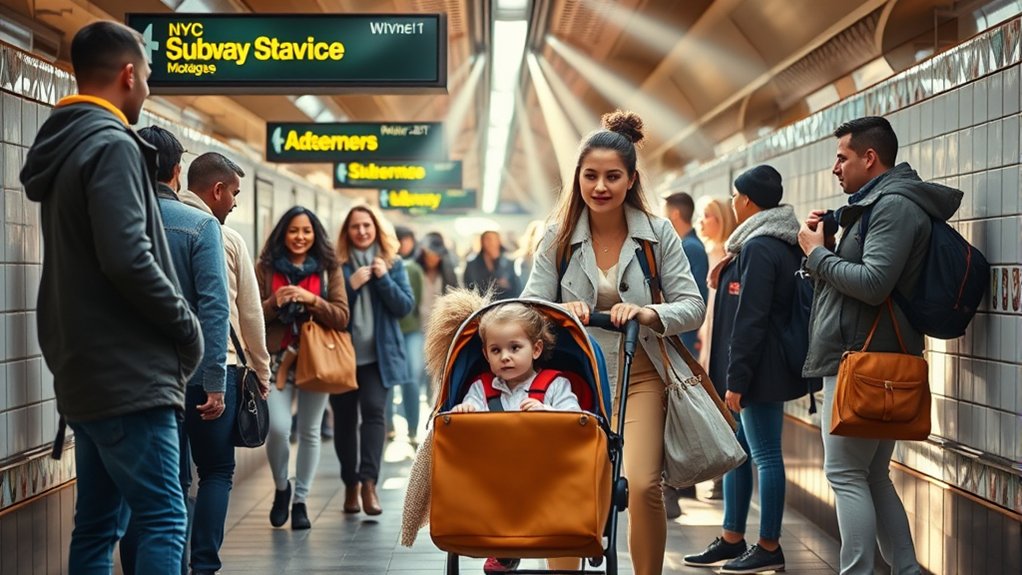
Maneuvering the subway with a stroller becomes much easier when you tap into community support and real family travel tips. Parents who use the subway regularly often know which entrances have working elevators, which transfers are easiest, and which stations are worth avoiding with a stroller.
- Engage in Family Networking: Join local parenting groups or online forums where you can share experiences and gather advice on traversing the subway with a stroller.
- Attend Stroller Meetups: Connect with other families who can offer firsthand insights and recommendations for stroller-friendly routes.
- Plan Wisely: Use apps like the MTA app and Citymapper to find accessible routes and monitor elevator status.
- Ask Other Parents: A quick local recommendation can save you from choosing a station with difficult stairs or confusing transfers.
- Practice Short Trips First: Try a simple one-stop or two-stop subway ride before attempting a long trip across multiple boroughs.
These community-driven resources can make NYC travel feel less overwhelming. With the right planning and realistic expectations, you can explore the city more confidently with your child and stroller.
Best Stroller Features for the NYC Subway
The stroller you choose can make subway travel much easier or much harder. Full-size strollers are comfortable, but they can be difficult on stairs, narrow gates, and crowded train cars. If you ride the subway often, focus on features that help with lifting, folding, and maneuvering.
- Lightweight Frame: Easier to carry up stairs or lift into buses when needed.
- One-Hand Fold: Helpful when you are holding your child or managing bags.
- Compact Width: Better for gates, elevators, train doors, and narrow sidewalks.
- Strong Brakes: Important for platforms, train stops, and sloped sidewalks.
- Shoulder Strap or Carry Handle: Useful when elevators are unavailable.
- Storage That Does Not Tip: Avoid overloaded handlebar bags that can make the stroller unstable.
If you use a double stroller, measure its width and practice folding it before your trip. Double strollers can work on the subway, but they require more space and more patience.
What to Pack for Subway Stroller Trips
Packing light makes a big difference when you are using the subway with a stroller. Bring what you need, but avoid loading the stroller with heavy bags that make it hard to fold or carry.
- Compact diaper bag or backpack so your hands stay free.
- Baby carrier in case you need to fold the stroller or use stairs.
- Snacks and water for delays or longer transfers.
- Small toy or book to keep your child calm on the train.
- Rain cover for wet sidewalks and station entrances.
- Hand wipes after touching rails, gates, elevator buttons, or seats.
- Light blanket or layer because subway platforms and train cars can vary in temperature.
Keep your fare payment method, phone, and essentials in an easy-to-reach pocket. Avoid digging through bags while standing near stairs, gates, or platform edges.
Related Guides
Frequently Asked Questions
Are there specific subway lines more accessible for strollers?
Yes, some routes are easier because they include more accessible stations or simpler transfers. Instead of choosing only by subway line, check the exact stations you plan to use and confirm elevator access before leaving.
Can I use a double stroller on the subway?
Yes, you can use a double stroller on the subway, but it may be harder to fit through gates, elevators, and crowded train cars. A narrow or foldable double stroller is usually easier than a wide side-by-side model.
What time is best to travel with a stroller?
Traveling with a stroller is usually easiest outside rush hour. Mid-morning, early afternoon, and later evening often feel calmer than weekday commute times. Avoid major event crowds when possible.
Are there weight limits for strollers on the subway?
The subway does not usually focus on stroller weight limits, but stroller size and control matter. Choose a stroller you can safely lift, fold, steer, and hold on platforms, stairs, and moving trains.
How do I handle stairs if elevators are unavailable?
If elevators are unavailable, move to the side, secure your child, and fold the stroller if you can do so safely. If the stroller is heavy or your child is sleeping, consider using another accessible station, a bus, or a rideshare instead.
Can I keep my child in the stroller on the train?
You can often keep your child in the stroller when the train is not crowded and the stroller is not blocking doors or aisles. Stay beside the stroller, hold it while the train moves, and be ready to fold it if conditions change.
Is a baby carrier better than a stroller for the NYC subway?
A baby carrier can be easier for short subway trips, stairs, and crowded trains. Many parents use both: a lightweight stroller for walking and a carrier as backup when folding or carrying the stroller becomes necessary.
Conclusion
In summary, traversing the NYC subway with a stroller can seem intimidating, but it is manageable with the right approach. While not all stations are accessible, knowing which ones have elevators or wide gates can save you time, stress, and unnecessary lifting.
Plan your route before leaving, check elevator status, travel during less crowded times when possible, and be ready to fold your stroller when space is tight. Keep your child close on platforms, avoid blocking doors, and use helpful apps to adjust your route if service changes. With preparation and patience, families can explore New York City confidently while using the subway with a stroller.

