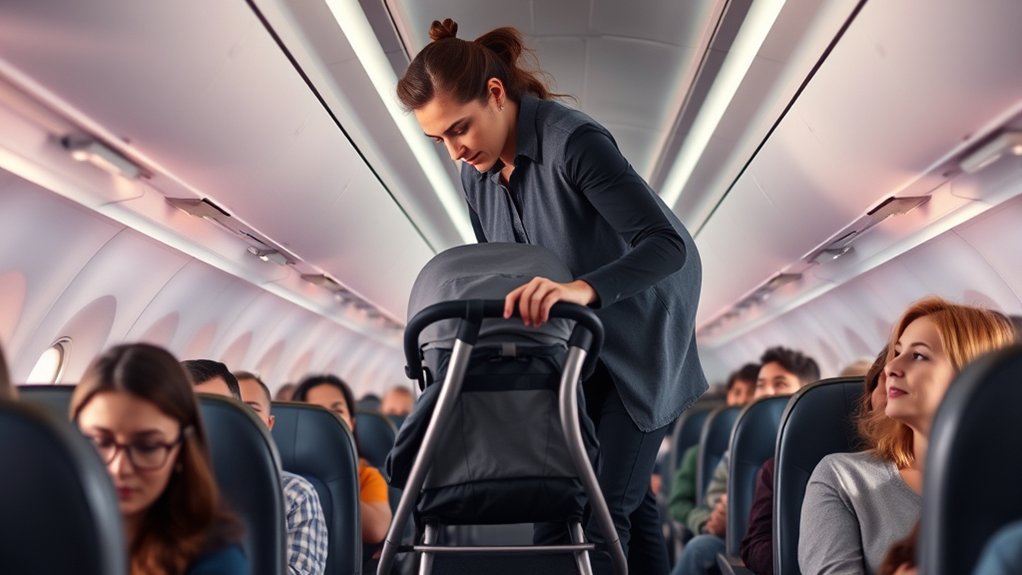
Flying with a stroller is usually allowed, and for many families it makes airport travel much easier. Most airlines let you check one stroller per child at no extra charge, either at the ticket counter or at the gate. The main thing is to check your airline’s stroller size rules before you leave, because carry-on, gate-check, and baggage-check options can vary.
Quick Answer
Yes, you can usually bring a stroller on a plane. Compact travel strollers may fit in the overhead bin if they meet carry-on limits, while larger strollers are usually gate-checked or checked at the ticket counter. Always confirm your airline’s current stroller policy before flying.
Key Takeaways
- Most airlines allow one stroller per child to be checked for free, but size and return rules vary.
- Small folding strollers may qualify as carry-on items if they fit the airline’s cabin baggage limits.
- Gate-checking lets you use your stroller through the airport until boarding.
- Label your stroller, remove loose accessories, and use a travel bag or cover to reduce damage risk.
- If you bring a car seat onboard, it should be FAA-approved and installed in an allowed seat location.
At a Glance
| Best Option | Gate-checking for larger strollers; carry-on only for compact models that meet airline limits |
| Difficulty | Easy with advance planning |
| Helpful Gear | Stroller travel bag, luggage tag, carabiner, small blanket, and baby carrier |
| Typical Cost | Usually free for one stroller per child, depending on the airline |
Airline Policies for Strollers and Car Seats
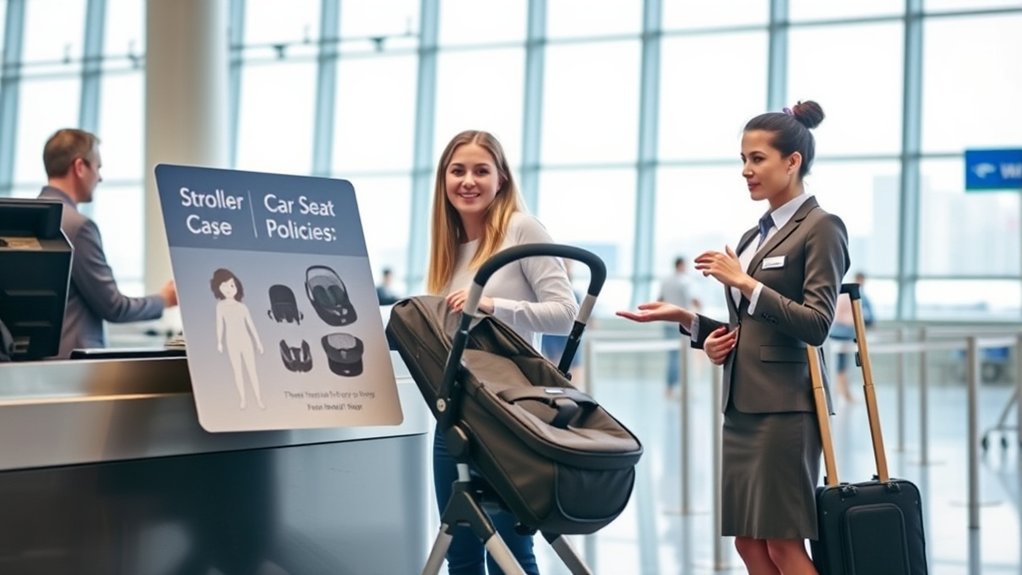
When traveling with a little one, understanding airline policies for strollers and car seats can make your journey smoother. Most U.S. airlines allow you to check one stroller per child for free, either at the gate or ticket counter. Compact, lightweight strollers may fit in overhead bins, but only if they meet the airline’s carry-on size limits. If your stroller is larger, you will probably need to check it and collect it at the aircraft door or baggage claim, depending on the airline and airport setup.
Gate-checked strollers are often returned near the aircraft door after landing, but this is not guaranteed on every route. Some airports return larger baby gear at oversized baggage claim. Many airlines may offer protective plastic bags or covers, but it is safer to bring your own stroller travel bag if you want better protection. Before travel day, review your airline’s stroller, car seat, and baby gear rules so you know exactly where to check each item.
Note: Airline stroller policies can change, and partner flights may follow a different carrier’s rules. Check the operating airline, not only the company that sold your ticket.
Benefits of Traveling With a Stroller
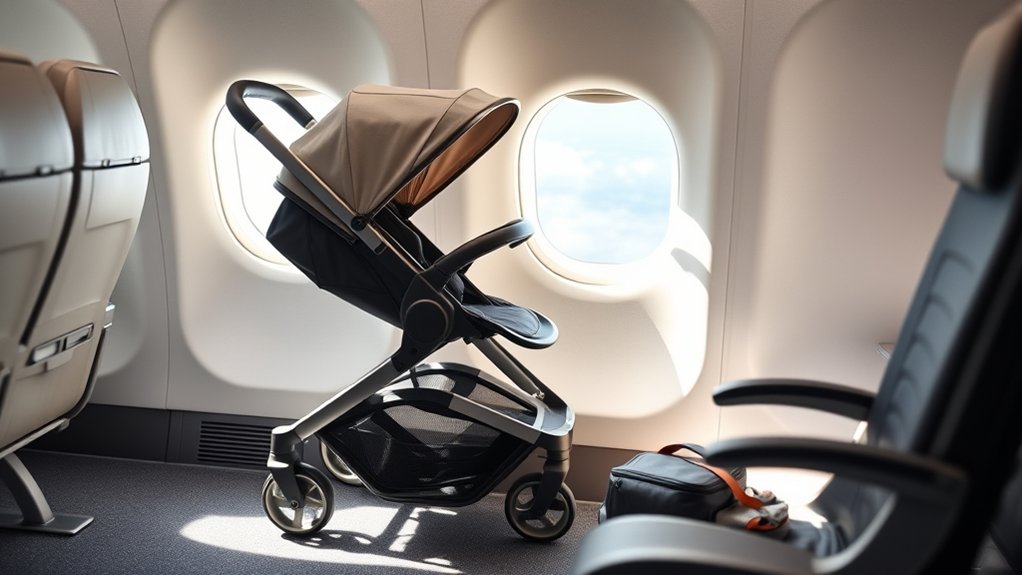
Traveling with a stroller makes getting through busy airports much easier. It gives your child a familiar place to sit, nap, and rest while you manage bags, boarding passes, and security lines. It can also help you move faster through long terminals without carrying your child the whole way.
Bringing your own stroller can also save money. Since many airlines allow one stroller per child to be checked for free, you may avoid rental costs at your destination. More importantly, your child already knows the stroller, and you know how to fold, brake, steer, and clean it.
Convenience in Airports
A stroller can transform your airport experience by making crowded terminals easier to manage. You can move through check-in lines, food courts, restrooms, and boarding areas while keeping your child secure. Lightweight strollers are especially useful because they are easier to lift, fold, and carry when needed.
If you gate-check your stroller, you can keep it until the last part of the boarding process. That means your child can rest while you wait, and you do not have to carry them through the whole airport. For parents traveling alone, this can make a major difference.
Familiarity Reduces Irritability
Airports can be loud, bright, and stressful for young children. A familiar stroller gives your child a small sense of normal routine in a busy place. When they sit in a stroller they already know, they may feel calmer during delays, layovers, and boarding waits.
Using your own stroller also means you avoid renting unfamiliar equipment that may not recline well, steer smoothly, or meet your cleanliness expectations. You already know how your stroller works, and your child already knows how it feels.
Cost-Effective Travel Solution
A stroller can be an invaluable asset when flying with young children. It works as both transportation and a rest spot, while also helping you avoid unnecessary rental fees. Because most airlines allow you to check a stroller at no extra cost, bringing your own can help keep your travel budget under control.
For the best experience, choose a stroller that matches your trip. A lightweight umbrella stroller may work well for quick city travel, while a compact travel stroller with recline may be better for long airport days or naps on the go.
Options for Taking a Stroller on a Plane
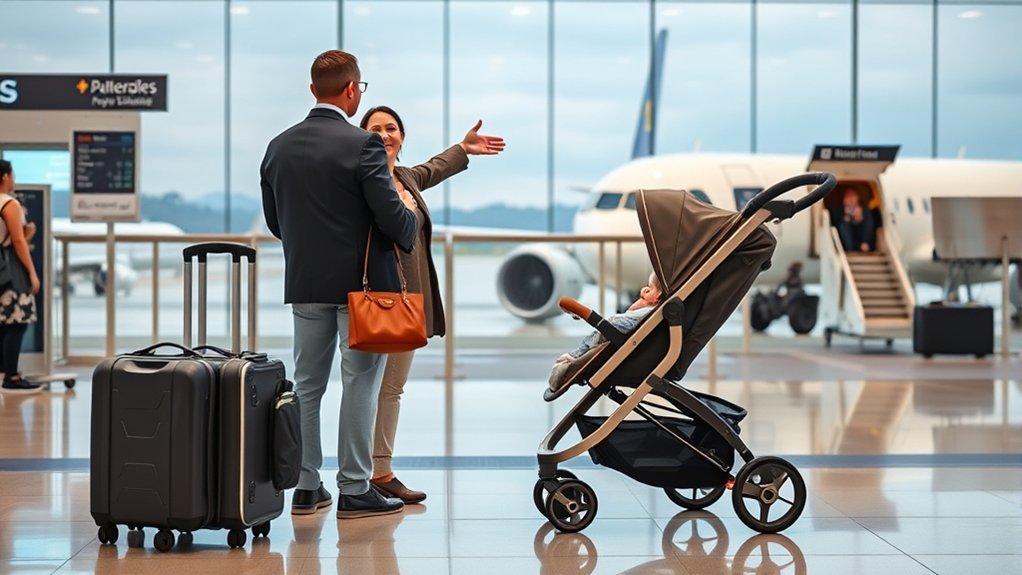
When you are preparing for air travel with a stroller, you usually have three choices: carry it onboard, gate-check it, or check it at the ticket counter. The best option depends on your stroller’s folded size, your airline’s rules, your child’s age, and how much help you need inside the airport.
A compact stroller may be convenient as a carry-on if it fits the airline’s cabin baggage limits. A larger stroller is usually easier to gate-check or check as baggage. Either way, prepare your stroller before leaving home so the airport process is faster.
Carry-On Stroller Guidelines
Taking a stroller into the cabin can be helpful, but not every stroller qualifies. To improve your chances, keep these points in mind:
- Lightweight strollers with compact folds are the most likely to fit in overhead bins if they meet the airline’s carry-on size limits.
- Some airlines list specific folded stroller dimensions, while others treat compact strollers like standard carry-on bags.
- If the overhead bins are full, airline staff may still require you to gate-check the stroller.
- Always practice folding your stroller with one hand before the trip so you can move quickly during boarding.
Do not assume a stroller is cabin-approved just because it is sold as a “travel stroller.” Always compare the folded dimensions with the airline’s published carry-on limits.
Gate-Check Process Explained
The gate-check process lets you use your stroller through the airport and hand it over close to boarding. First, ask airline staff at the gate for a gate-check tag. Attach the tag where it is easy to see, and make sure your stroller also has your name, phone number, and email address on a separate luggage tag.
Before handing over the stroller, remove cup holders, toys, snack trays, stroller hooks, loose rain covers, and anything else that could fall off. Fold the stroller securely and use a travel bag or strap if you have one. After landing, most gate-checked strollers are returned near the aircraft door, but some may be sent to baggage claim, especially on international routes or with larger stroller models.
Baggage Check Options
Checking your stroller at the ticket counter can be a better option if you have a large, heavy, or full-size stroller. This keeps your hands freer after check-in, but it also means you will need another way to carry your child through the airport.
- Gate Check: Best when you want to use the stroller until boarding.
- Overhead Bin: Best only for compact strollers that meet carry-on rules.
- Ticket Counter Check: Best for larger strollers that are too bulky for the gate or cabin.
- Free Check: Many airlines allow one stroller per child at no extra cost, but you should confirm before your flight.
If you check your stroller as baggage, use a padded bag when possible and keep a baby carrier available for long walks, delays, or baggage claim waits.
Pro Tip: Take a quick photo of your stroller before checking it. If it is damaged or misplaced, the photo can help when you file a report with the airline.
Packing Strollers for Air Travel
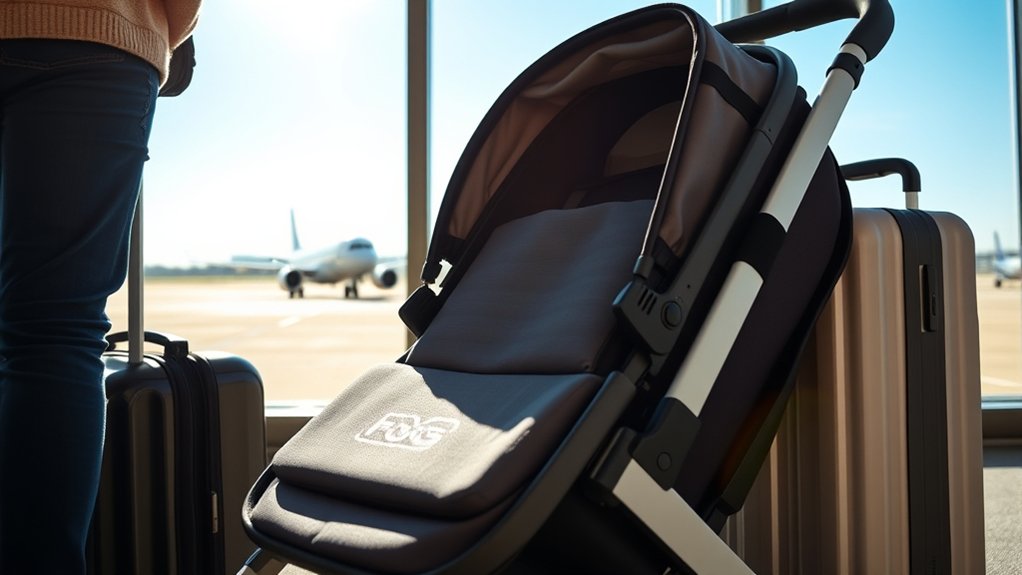
Packing a stroller for air travel does not have to be stressful. Start by choosing a lightweight, compact stroller if your trip involves flights, layovers, taxis, buses, or hotel transfers. If you have a larger model, fold it tightly and remove any loose parts that could get damaged during handling.
Use a stroller travel bag if you have one. A padded bag gives better protection, while a basic gate-check bag helps keep the stroller cleaner. If your airline provides a plastic cover, it can help protect against dirt, but it may not prevent scratches or impact damage.
Before heading to the airport, label your stroller clearly with your name and contact details. Place one label outside the bag and another label inside the stroller basket or travel bag. Keep small accessories in your carry-on instead of leaving them attached to the stroller.
Gate-Checking Strollers Explained
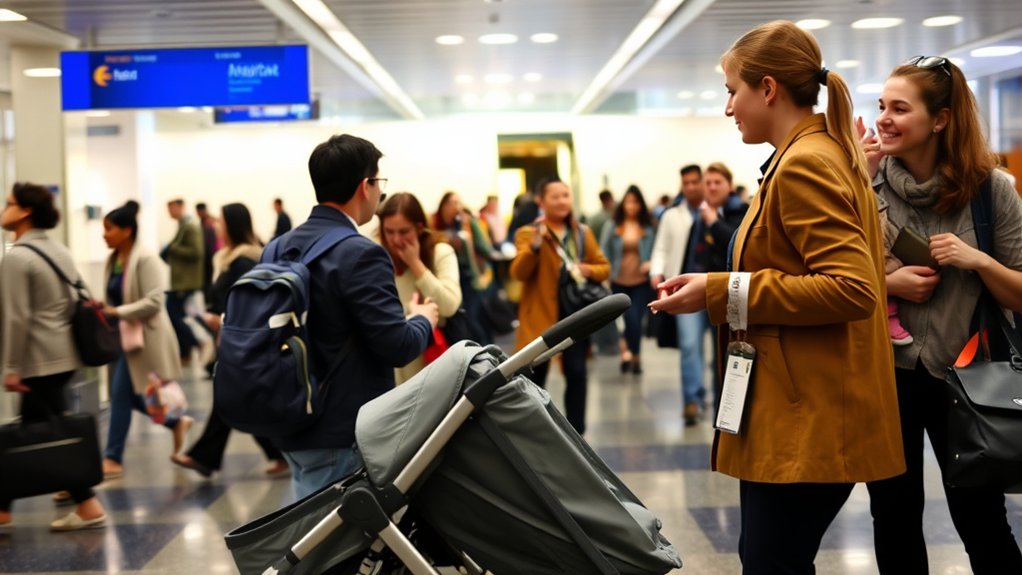
Gate-checking a stroller is one of the most popular options for parents because it lets you keep your stroller until the last moment before boarding. This can be especially helpful when traveling with infants, toddlers, or more than one child.
Here are the main advantages of gate-checking:
- Convenience: You can move through the airport with your child seated comfortably.
- Last-Minute Use: You can use the stroller while waiting at the gate, during delays, or before boarding.
- Quick Return: Many airlines return gate-checked strollers near the aircraft door after landing.
- Easier Transitions: Practicing your stroller fold before the trip helps you move faster when boarding begins.
Gate-checking is not always perfect, though. Strollers can still get scratched or delayed, and larger models may be sent to baggage claim. Check the airline’s rules ahead of time and ask the gate agent where your stroller will be returned after landing.
Tips for Flying With a Car Seat
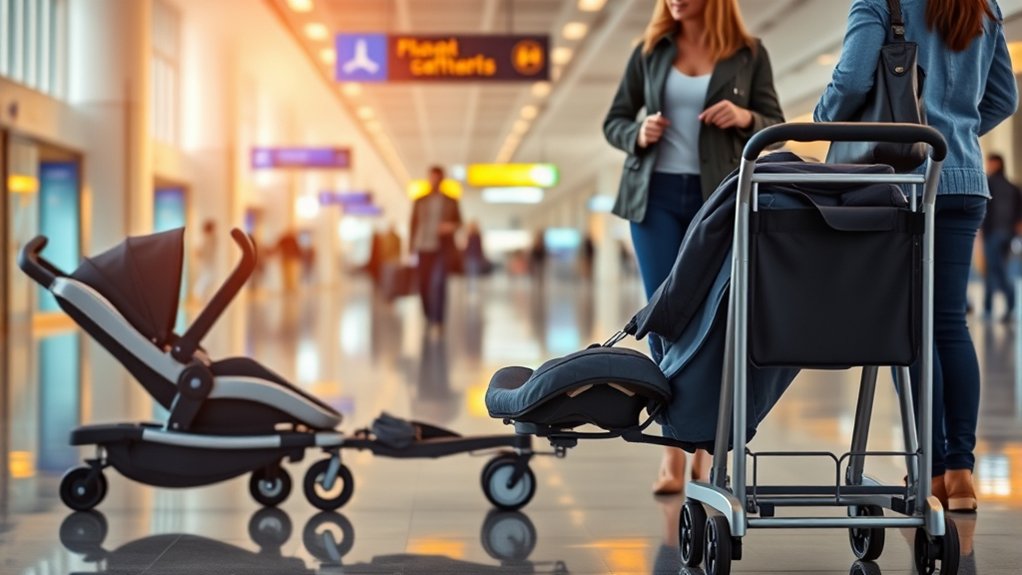
When you are flying with a young child, bringing a car seat can make the trip safer and more comfortable if your child has their own airplane seat. Before travel, check that the car seat has a label showing it is approved for use in aircraft. In the United States, many approved seats include wording that says the restraint is certified for use in motor vehicles and aircraft.
Car seats usually need to fit within the aircraft seat width, which can vary by plane and airline. Many economy seats are narrow, so check the airline’s guidance before travel. If you use a car seat onboard, it is usually installed in a window seat so it does not block another passenger’s path to the aisle.
| Tip | Benefit | Reminder |
|---|---|---|
| Check FAA approval | Helps confirm aircraft use | Look for the approval label before packing |
| Know airline rules | Avoids boarding surprises | Review seat width and placement rules |
| Install in a window seat | Keeps the aisle path clear | Follow the car seat manual and crew instructions |
Warning: Booster seats without a harness are not used the same way as aircraft-approved child restraint systems. Check the label and instructions before bringing any child restraint onboard.
Navigating Airports With Kids
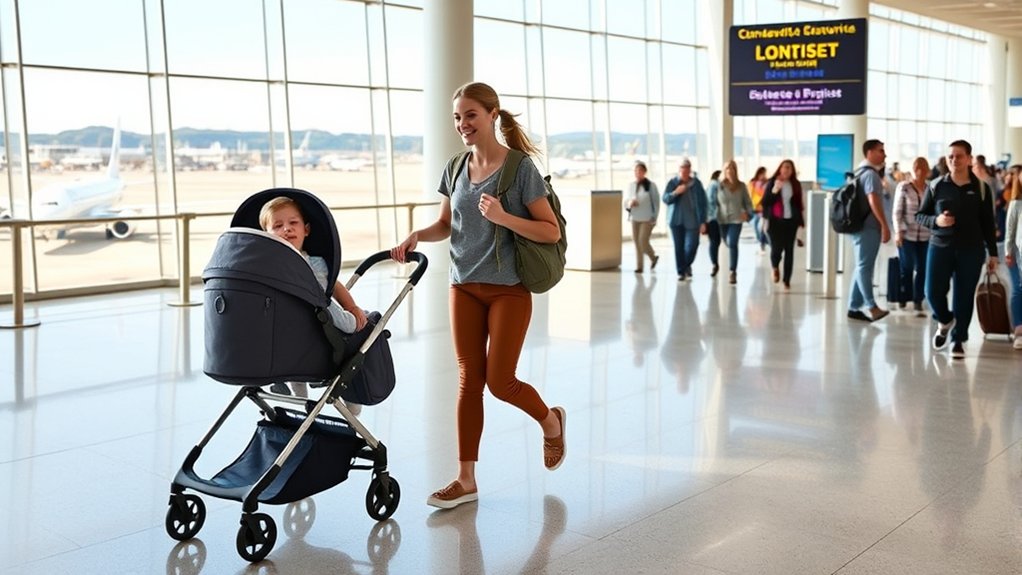
Traveling through an airport with kids can feel overwhelming, but a little planning makes the day easier. Give yourself more time than you think you need, especially if you are checking baby gear, going through security with milk or formula, or connecting through a large airport.
Use these tips for smoother airport travel:
- Choose lightweight gear such as a compact stroller or baby carrier for easier movement through terminals.
- Arrive early so you have time for check-in, security, restroom stops, snacks, and unexpected delays.
- Keep baby essentials in a small carry-on bag that fits under the seat, not deep inside a checked stroller bag.
- Ask the gate agent about stroller return location before boarding so you know what to expect after landing.
If your child is old enough, explain the airport steps in simple language before you arrive. Knowing what comes next can reduce stress for both children and parents.
What to Consider When Choosing a Travel Stroller
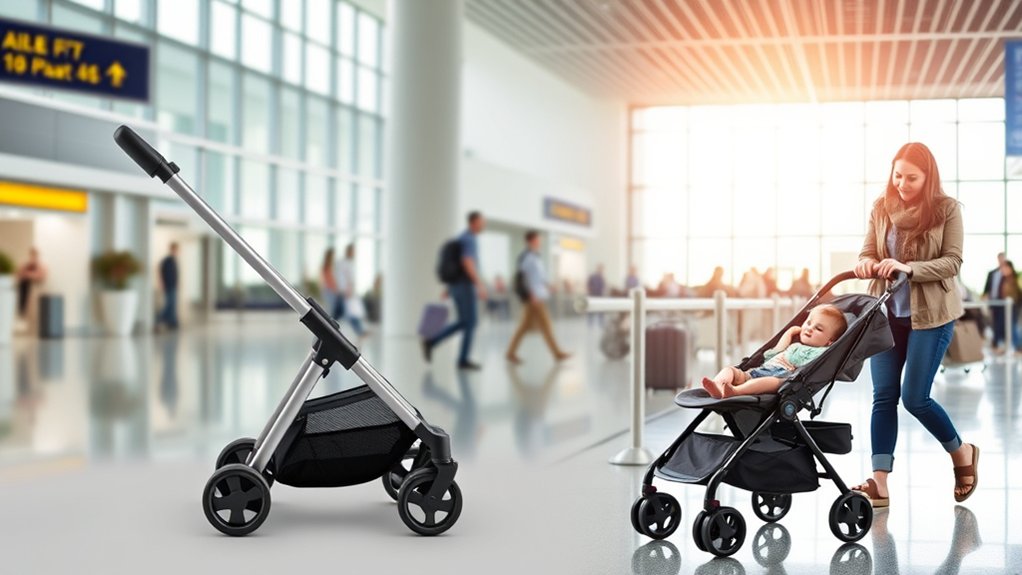
Choosing the right travel stroller starts with your child’s age, your destination, and your airline’s rules. A good travel stroller should be easy to fold, light enough to carry, and strong enough for airport handling. A one-hand fold mechanism is helpful when you are holding a child or carrying bags.
Look for a compact design if you want the best chance of using your stroller as a carry-on. A stroller under 15 pounds is usually easier to lift, but weight is not the only factor. You should also check folded dimensions, recline options, sun canopy coverage, wheel quality, brake design, and storage basket size.
For infants, make sure the stroller reclines enough or works with an approved infant seat or bassinet system. For toddlers, focus on a secure harness, shade, easy cleaning, and a comfortable seat. Wipeable fabrics are especially useful for snacks, spills, and long travel days.
Recommended Travel Strollers for Air Travel
Finding the right travel stroller can make your family’s flight experience much easier. When moving through busy terminals, you will appreciate lightweight features, a compact design, and a fold you can manage quickly. These stroller types are commonly chosen for air travel:
The best airplane stroller is not always the smallest one. It is the stroller that fits your airline rules, your child’s needs, and your real travel day.
- Babyzen YOYO2 6+ Complete Stroller – Weighing about 13.6 lbs, it folds compactly and offers multiple recline positions for your child’s comfort.
- Cybex Libelle 2 Lightweight Stroller – At about 13.7 lbs, its small fold is helpful for storage, and its UPF 50+ canopy adds sun protection.
- Joolz Aer+ Stroller – This ultra-compact stroller weighs about 13.2 lbs, has a fast fold, and often includes or supports a travel bag for protection.
- Chicco Bravo Quick-Fold Stroller – This option is easy to use and works well for families who want a practical fold and compatibility with different ages.
Before buying a stroller mainly for flying, compare its folded dimensions with the airlines you use most often. Also think about your destination. Cobblestones, public transportation, theme parks, beaches, and hotel stairs may all affect which stroller is best.
Related Guides
Frequently Asked Questions
Can I use my stroller during layovers?
Yes, you can usually use your stroller during layovers if it is returned to you after the first flight. If your stroller is checked through to your final destination, you may not get it during the layover, so ask the airline before boarding.
Are there size restrictions for gate-checked strollers?
Yes, some airlines have size or weight limits for gate-checked strollers. Larger strollers may need to be checked at the ticket counter or collected at baggage claim instead of the aircraft door.
Can I bring a double stroller on a plane?
Yes, many airlines allow double strollers, but they are usually too large for overhead bins. Most double strollers need to be gate-checked or checked at the ticket counter. Confirm your airline’s rules before travel.
What happens if my stroller gets damaged during travel?
Report the damage to the airline before leaving the airport. Take photos, keep your baggage tag, and ask how to file a damage claim. A stroller travel bag and photos from before the flight can help support your claim.
Do different airlines have varying stroller policies?
Yes, stroller policies vary by airline, aircraft, route, and airport. Some airlines are more flexible with compact strollers, while others require most strollers to be gate-checked or checked as baggage.
Should I bring a stroller bag for flying?
A stroller bag is a smart idea, especially if you are checking the stroller. It helps protect against dirt, scratches, and loose parts catching during handling. A padded bag offers better protection than a thin plastic cover.
Is a baby carrier better than a stroller at the airport?
A baby carrier can be easier during security, boarding, and baggage claim, but a stroller is more comfortable for long walks and delays. Many parents bring both: a compact stroller for the airport and a carrier for hands-free moments.
Conclusion
Flying with a stroller can make family travel easier, especially when you know your options before arriving at the airport. Compact strollers may work as carry-ons, while larger models are usually best for gate-checking or ticket-counter check-in. The right choice depends on your airline’s rules, your stroller’s folded size, and your child’s needs.
Before your trip, label the stroller, remove loose accessories, practice folding it, and check where it will be returned after landing. With a little planning, your stroller can be a reliable travel companion that helps your child rest, keeps your hands freer, and makes the airport feel much more manageable.
Sources
- Federal Aviation Administration — child safety guidance and approved child restraint use on aircraft
- Transportation Security Administration — stroller screening guidance for airport security
- Transportation Security Administration — traveling with children, formula, milk, and screening procedures
- U.S. Department of Transportation — general airline passenger rights and baggage complaint guidance

