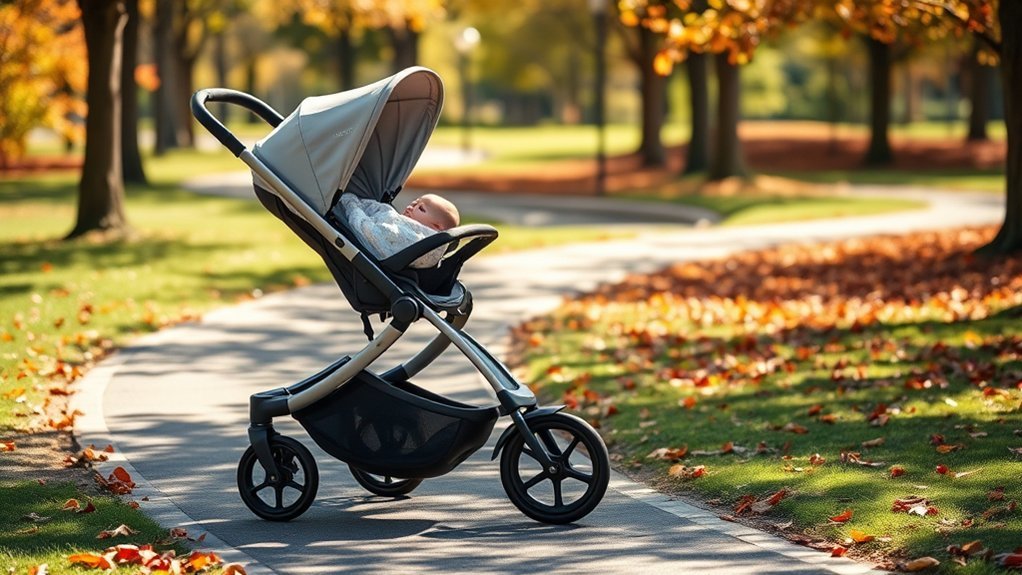
Picture yourself jogging through a sunlit park, the rhythmic sound of your feet hitting the pavement while your newborn rests comfortably nearby. Before you strap your infant into a jogging stroller and head for the trail, slow down and think about your baby’s age, head control, stroller support, and the surface you plan to use. Newborns are not ready for jogging because their neck, spine, and trunk strength are still developing. Walking is usually the safer choice until your baby is older and your pediatrician says jogging is appropriate.
Quick Answer
You should not jog with a newborn in a jogging stroller. Most babies need to wait until they have strong head and neck control, usually around 6 to 8 months. Walk instead, use a properly secured car seat or bassinet attachment only for walking, and ask your pediatrician before starting stroller jogging.
Key Takeaways
- Newborns should not be taken jogging because they do not yet have enough head, neck, and trunk control.
- Many babies become better candidates for stroller jogging around 6 to 8 months, but readiness depends on development, not age alone.
- A jogging stroller should have a locking front wheel, strong suspension, air-filled tires, a 5-point harness, parking brake, and wrist strap.
- Car seat and bassinet attachments are useful for walking, but they do not make jogging safe for a newborn.
- Ask your pediatrician before jogging with your baby, especially if your baby was premature or has any medical concerns.
At a Glance
| Safest Starting Point | Walk with your newborn instead of jogging. |
| Typical Jogging Age | Usually around 6 to 8 months, once your baby has strong head and neck control. |
| Stroller Needed | A true jogging stroller, not a regular stroller. |
| Key Safety Features | Locking front wheel, 5-point harness, suspension, air-filled tires, parking brake, and wrist strap. |
| Best First Route | Smooth, flat, low-traffic paths with no sharp bumps, curbs, gravel, or steep hills. |
Warning: Do not jog with a newborn in a regular stroller, jogging stroller, car seat attachment, or bassinet attachment. These setups may be fine for walking when used correctly, but jogging creates bouncing, vibration, and sudden movement that a newborn’s body is not ready to handle.
Understanding the Risks of Jogging With a Newborn
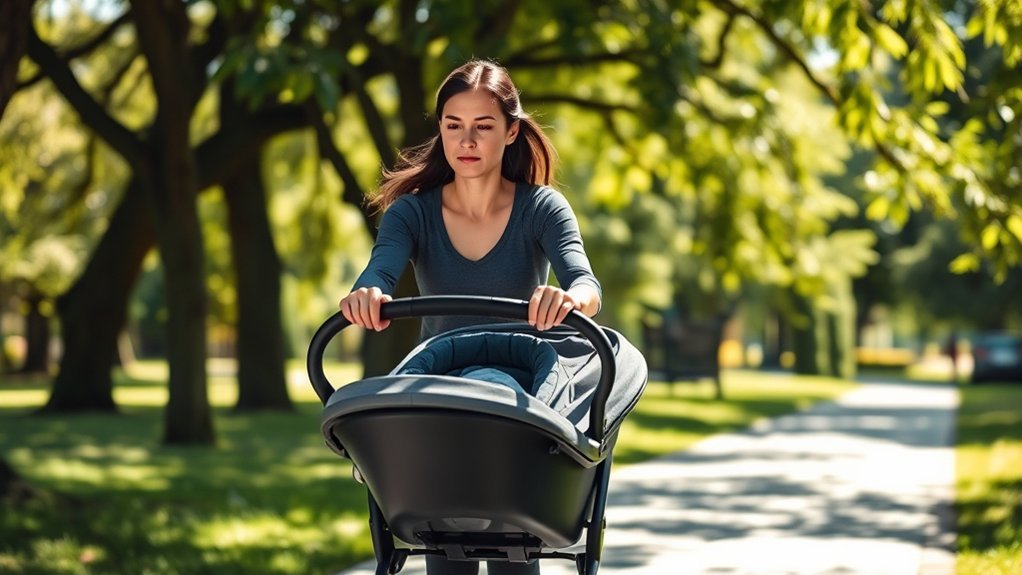
While you might be enthusiastic to hit the pavement with your newborn, it is essential to understand the risks first. A newborn’s head is large compared with the rest of the body, and their neck muscles are still weak. During jogging, bumps, quick turns, sudden stops, and stroller vibration can move a baby’s head and body more than they can safely control.
The biggest concern is lack of neck and trunk strength. Most babies develop stronger head control over the first several months, but newborns cannot stabilize themselves well in a fast-moving stroller. Without enough support, repeated jolts may strain the neck and spine. This is why many pediatric safety recommendations and stroller manufacturers advise waiting until a baby is older before jogging.
Jogging with a newborn is also different from walking. Walking keeps stroller movement slower and smoother. Jogging adds speed, bounce, side-to-side motion, and more force when the stroller hits uneven pavement. Even a small crack in the sidewalk can create a sharp jolt at jogging speed. For a newborn, that movement can be too much.
Using a car seat or bassinet attachment does not solve the problem. Those attachments may support your baby during walks, but they are not designed to remove all jogging forces. A car seat can also change the stroller’s center of gravity, which may affect stability at higher speeds. For newborn safety, save jogging until your baby is developmentally ready and your stroller is approved for jogging use.
Recommended Age for Using a Jogging Stroller
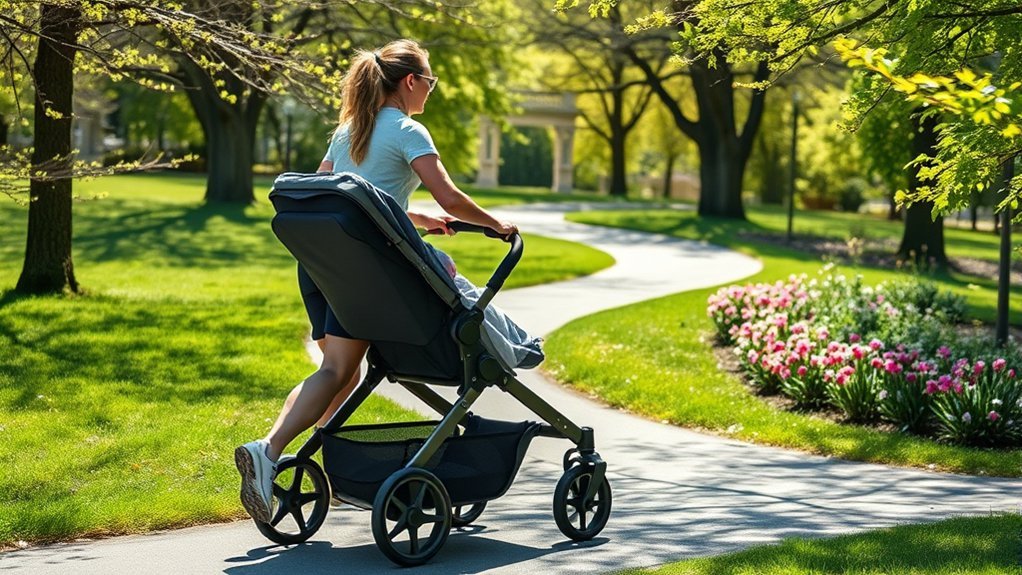
As you consider adding stroller jogging to your routine, the safest starting point is your baby’s development, not just their birthday. Many families hear that babies can begin around six months old, but some babies need longer. A safer range is often 6 to 8 months, once your baby has steady head and neck control, can sit with good support, and tolerates stroller rides comfortably.
Some jogging stroller manufacturers recommend waiting until a child is at least 8 months old before jogging. Others may list different age, weight, or development requirements. Always check your stroller manual because the correct answer can vary by model. If the manual says not to jog before a certain age, follow that instruction even if your baby seems strong.
For infants under six months, you can usually enjoy outdoor time by walking with a stroller that supports a car seat or bassinet attachment, as long as the attachment is installed correctly and approved by the stroller manufacturer. Walking gives you fresh air and movement without the same bounce and speed as jogging.
If your baby was born premature, has low muscle tone, has reflux that affects positioning, has a medical condition, or has any developmental delay, talk with your pediatrician before jogging. Your baby may need more time before riding in a jogging stroller at running speed.
Note: Six months is a common minimum guideline, not a guarantee. Your baby should have strong, steady head and neck control before you jog, and your stroller manual should allow jogging for your baby’s age and size.
Signs Your Baby May Be Ready for Stroller Jogging
Before you move from walking to jogging, look for clear signs that your baby can handle a more active stroller ride. Your baby should hold their head steady without bobbing, keep their upper body supported in the stroller seat, and remain comfortable in a properly tightened harness. They should not slump forward, lean heavily to one side, or need a car seat insert to stay positioned.
Your baby may be closer to ready if they can sit with support, turn their head with control, and stay alert without losing posture. They should also fit the jogging stroller seat according to the manufacturer’s height and weight rules. If your baby is too small for the seat or the harness cannot be adjusted snugly, wait longer.
Your own readiness matters too. You should feel comfortable steering the stroller with one hand while keeping the other near the handlebar, using the brake, locking the front wheel, and controlling speed downhill. If the stroller feels hard to manage while walking briskly, it is not time to jog with your baby yet.
Key Features of a Safe Jogging Stroller
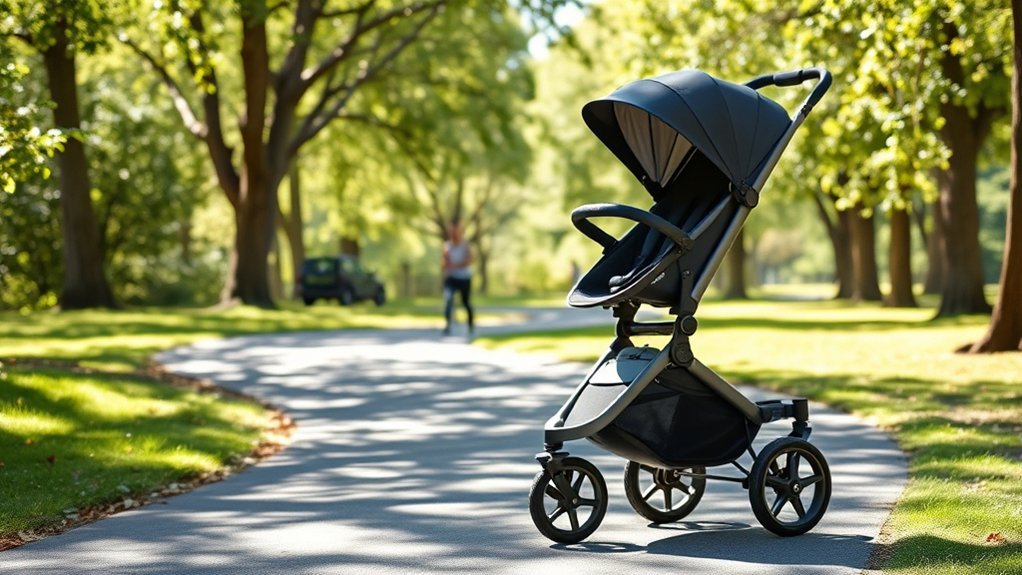
When you are ready to hit the pavement with your little one, choosing a safe jogging stroller is essential. A regular stroller is not designed for running. It may have small wheels, limited suspension, and a front wheel that can wobble at higher speeds. A true jogging stroller is built to roll more smoothly and stay more stable while you move faster.
Look for a locking front wheel. Many jogging strollers have a front wheel that swivels for walking and locks straight for jogging. Locking the wheel helps prevent wobbling and sudden sideways movement. This is especially important on long straight paths, rough sidewalks, and gentle downhill sections.
A reliable 5-point child harness system is also essential. It secures your child at the shoulders, waist, and between the legs, helping prevent sliding, tipping, or accidental ejection. The straps should lie flat, sit at the correct height, and feel snug without pinching.
A quality suspension system helps absorb impact from uneven surfaces. Air-filled tires can also improve shock absorption and handling compared with small hard plastic wheels. Larger rear wheels usually roll more easily over cracks and small bumps, giving your child a smoother ride.
Do not overlook parent-control features. A wrist strap helps keep the stroller attached to you if your hand slips. A parking brake keeps the stroller still when you stop. Some jogging strollers also include a hand brake, which can help control speed on hills. Choose a stroller that feels stable, easy to steer, and appropriate for the paths you use most often.
Jogging Stroller vs. Regular Stroller
A regular stroller is best for everyday walking, errands, indoor spaces, and smooth sidewalks. It is usually lighter, easier to fold, and easier to maneuver in tight spaces. However, it is not built for running. At jogging speed, small wheels may shake, the stroller may pull to one side, and the frame may not absorb impact well.
A jogging stroller is built for faster movement. It usually has three larger wheels, better suspension, a longer wheelbase, and a front wheel that locks. These features help with stability and control while jogging. The trade-off is that jogging strollers can be heavier, bulkier, and less convenient in small stores or narrow aisles.
If you only plan to walk with your newborn, a regular stroller or travel system may work well. If you plan to run once your baby is older, choose a jogging stroller that clearly says it is approved for jogging and check the manufacturer’s age recommendations before using it at running speed.
Transitioning From Walking to Jogging With a Stroller
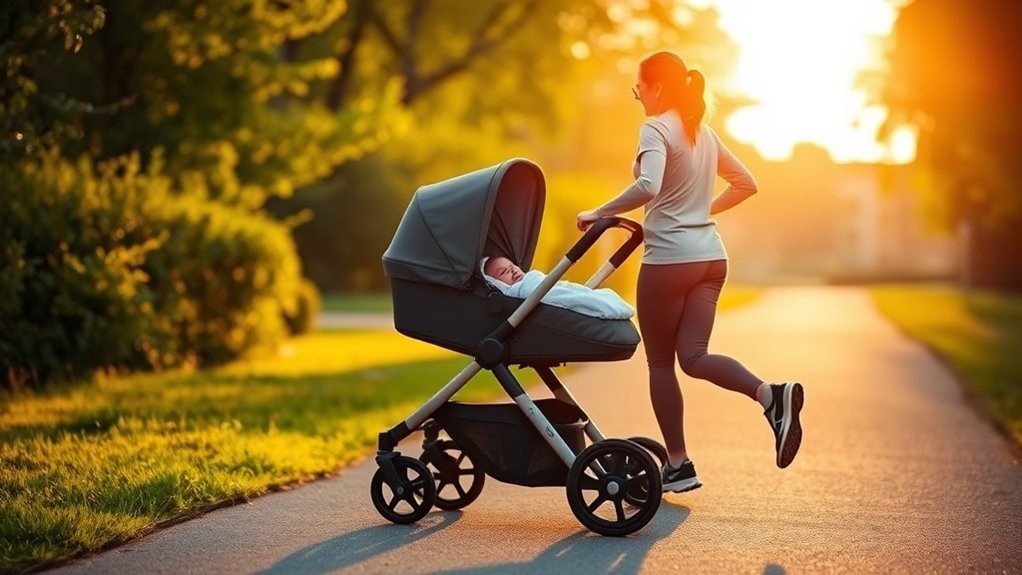
When you are ready to shift from walking to jogging with your stroller, start by evaluating your baby’s readiness, usually around six to eight months old. Gradually increase your jogging intervals to help both of you adapt, and always prioritize safety by making sure the stroller’s features are properly secured. Consulting with your doctor beforehand can also help confirm that you and your baby are ready for this new activity.
Assessing Baby’s Readiness
How can you tell if your baby is ready to shift from walking to jogging in a stroller? First, confirm your baby is at least 6 to 8 months old and has developed sufficient head and neck control. This is vital for stroller safety during jogging. Before starting, seek medical clearance from your pediatrician, especially if your baby has any health or development concerns.
When you begin jogging, start with short intervals after walking to build endurance for both you and your child. Always check that the stroller harness is snug, allowing only two fingers to fit between the straps and your baby. Your baby’s back should rest against the stroller seat, and their head should stay steady without bouncing forward.
Regular strollers are not designed for jogging. Use a jogging stroller with safety features such as a locking front wheel, strong suspension, air-filled tires, a wrist strap, and reliable brakes. If your baby looks uncomfortable, slumps, cries intensely, or cannot stay positioned, stop jogging and return to walking.
Gradual Progression to Jogging
As you prepare to shift from walking to jogging with your stroller, it is vital to make the transition slowly. Start by establishing a comfortable walking routine. Make sure your baby can support their head and neck, typically around 6 to 8 months. Begin with short jogging intervals, then gradually increase both duration and intensity while monitoring stroller stability and your baby’s comfort.
Always get medical clearance before starting, and familiarize yourself with your stroller’s features. Practice locking the front wheel, using the brake, adjusting the harness, folding and unfolding the stroller, and controlling it on turns before you jog with your baby inside.
| Jogging Frequency | Stroller Stability |
|---|---|
| Short intervals | Lock front wheel |
| Gradual increase | Check tire pressure |
| Monitor comfort | Adjust harness |
| Dress for weather | Confirm secure fit |
| Enjoy the journey | Stay focused |
This approach helps create a safe and enjoyable experience for both you and your baby. Keep the first few sessions short. For example, you might walk for 10 minutes, jog gently for 30 to 60 seconds, then return to walking. If your baby stays calm and well positioned, you can slowly build from there over multiple outings.
Safety Precautions During Transition
Moving from walking to jogging with your stroller requires careful attention to safety precautions. First, make sure your baby is at least 6 to 8 months old and has full head and neck control. Start by gradually increasing jogging duration, beginning with short intervals. Always secure your child in the stroller with the 5-point harness, adjusting the straps so two fingers fit comfortably beneath.
Lock the stroller’s front wheel in jog mode to improve stability and reduce wobbling. Regular stroller maintenance is essential; check tire pressure, wheel attachment, brake function, and harness condition before each jog. Wearing appropriate safety gear, like supportive running shoes, also helps you stay steady as you enjoy this activity with your little one.
Choose your route carefully. Avoid crowded paths, steep hills, gravel, loose sand, cracked sidewalks, curbs, and roads with traffic. Keep both hands close to the handlebar, slow down before turns, and never use headphones so loudly that you cannot hear people, bikes, cars, or your baby.
Pro Tip: Do a stroller safety check before every outing. Confirm the front wheel is locked, tires are firm, brakes work, the wrist strap is on, the harness is snug, and your baby is dressed for the weather.
Importance of Proper Child Securing Techniques
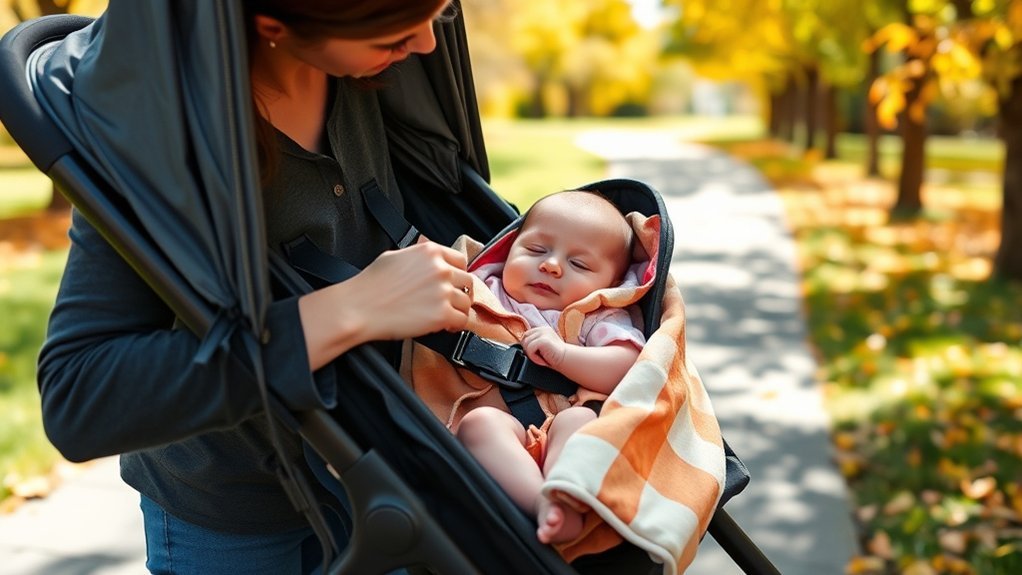
When it comes to jogging with a baby, using proper child securing techniques is vital for safety and comfort. Always secure your child with the stroller’s 5-point harness system. The straps should sit snugly above the shoulders, across the hips, and between the legs. A good fit allows only about two fingers under the straps.
Before strapping your baby in, engage the parking brake so the stroller cannot roll away. Place your child with their back against the seat, then fasten and tighten the harness. Make sure the straps are not twisted and that the buckle is fully clicked into place. If your baby wears bulky clothing, check the harness carefully because thick coats can make straps seem tighter than they really are.
Regular safety checks on the harness for wear and function are important. Look for frayed straps, weak buckles, loose stitching, and broken adjusters. As your child grows, make necessary harness adjustments to provide support without being overly tight. A harness that fit last month may be too low, too loose, or too tight now.
Never let your child ride unbuckled, even for a short walk. Sudden stops, bumps, or a quick reach for your water bottle can shift the stroller unexpectedly. A properly adjusted harness is one of the simplest ways to reduce risk during every stroller outing.
Tips for a Safe and Enjoyable Jogging Experience
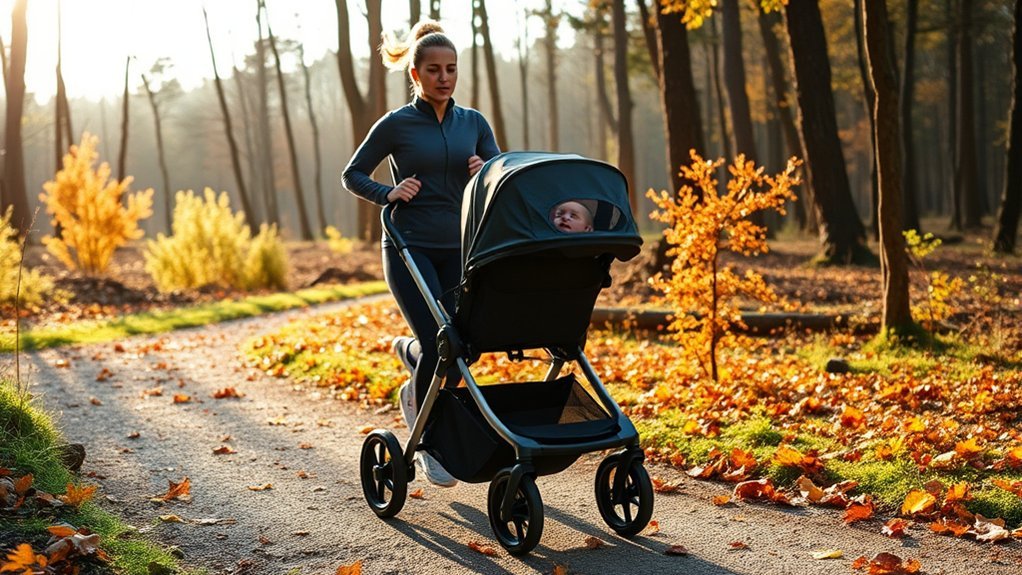
To help create a safe and enjoyable jogging experience with your baby, start with a solid foundation of preparation and awareness. First, consult your pediatrician to confirm your baby’s readiness, ideally waiting until they are at least six months old and have strong head and neck control. Always secure your child with a properly adjusted 5-point harness.
Choose a jogging stroller equipped with a locking front wheel, suspension system, and air-filled tires for a smoother ride. Start with short walking intervals, then gradually add gentle jogging as you both adjust. Keep your pace steady and controlled. A stroller run should feel smooth, not fast or bouncy.
Dress your baby for the weather, but avoid overheating. Babies can become warm quickly under stroller canopies or blankets. In cold weather, use layers that do not interfere with the harness. In sunny weather, use the canopy, breathable clothing, and shade when possible. Avoid jogging in extreme heat, icy conditions, heavy rain, poor visibility, or high wind.
Remember jogging stroller etiquette: respect other runners and pedestrians, pass slowly, call out before passing, and keep the stroller under control. Stay alert around dogs, bikes, scooters, and road crossings. Maintain your stroller according to the manual so the tires, brakes, frame, and harness stay in good working condition.
Where You Should and Should Not Jog With a Stroller
The best stroller jogging routes are smooth, flat, predictable, and separated from vehicle traffic. Paved park paths, wide sidewalks in good condition, and quiet greenway trails are often better choices than busy streets. A smooth route reduces bouncing and gives you more time to react to people, pets, bikes, and obstacles.
Avoid rough trails, loose gravel, steep downhills, cracked pavement, curbs, sand, mud, and crowded event paths. These conditions can make the stroller harder to control and may create more jolting for your baby. Even with a quality jogging stroller, rough surfaces can be uncomfortable and unsafe.
Be extra careful near intersections and driveways. Stop fully before crossing. Keep both hands on or near the handlebar when crossing streets, going downhill, or passing others. If the route requires constant steering around obstacles, choose a calmer path or walk instead.
Common Mistakes to Avoid
One common mistake is jogging too early because the baby “seems fine” in the stroller. A calm newborn still does not have the strength needed to handle jogging movement. Wait until your baby has the right development, your stroller is approved for jogging, and your pediatrician has no concerns.
Another mistake is leaving the front wheel in swivel mode while jogging. A swiveling front wheel can wobble or turn suddenly at higher speeds. Lock it straight before running. Also avoid hanging heavy bags from the handlebar, because that can make the stroller tip backward or become harder to steer.
Parents sometimes jog with loose harness straps, low tire pressure, or a stroller that has not been checked in months. These small problems can become bigger at jogging speed. Build a habit of checking the stroller before every outing, not only when something feels wrong.
Finally, avoid pushing for distance or pace. Stroller jogging with a baby is not the time to chase a personal record. Keep the ride smooth, controlled, and short enough that your baby stays comfortable.
Alternatives to Jogging With a Newborn
If you are considering alternatives to jogging with your newborn, walking with a car seat or using an infant carrier can be a better option. These methods allow you to enjoy fresh air while keeping your baby safer and more comfortable. Engaging in low-impact activities also gives your baby time to build strength and stability before shifting to jogging later.
Walking With Car Seat
Many parents find that walking with a car seat attached to a jogging stroller offers a convenient alternative to jogging with a newborn. This method can provide proper support for your baby during walks when the car seat and stroller are compatible and installed correctly. Many jogging stroller models include infant car seat adapters, improving stroller compatibility for a seamless walking setup.
For ideal car seat safety, always confirm that the car seat is securely fastened and the stroller is locked before heading out. Stick to smooth, flat surfaces for a comfortable ride for both you and your little one. Do not run with the car seat attached unless the stroller manufacturer clearly allows it, and even then, follow your pediatrician’s advice.
Remember, pediatricians and stroller brands often recommend shifting to jogging only after your baby is older and can support their head and neck independently. Until then, walking gives you movement, fresh air, and bonding time without the extra bouncing of jogging.
Using Infant Carrier Options
While jogging strollers provide an excellent way for parents to stay active later, using infant carriers can offer a safer alternative for transporting newborns before they reach the recommended age for jogging. A soft structured carrier or wrap can keep your baby close while you walk, as long as you follow the carrier’s weight limits and positioning instructions.
Make sure your baby’s airway stays clear, their chin is not pressed tightly to their chest, and their face remains visible. Keep the carrier snug and high enough that you can monitor your baby easily. Walking with a carrier is still exercise, but it gives you better control than jogging with a stroller too early.
Some strollers also offer a bassinet option, providing a cozy, flat space for infants during walks. Always consult the manufacturer’s guidelines for specific age and weight restrictions to help protect your baby during outdoor activities. This way, you can stay active while prioritizing your newborn’s well-being.
When to Stop or Turn Around
Even if your baby is old enough for stroller jogging, pay attention during the outing. Stop or turn around if your baby cries and does not settle, looks slumped, seems too hot or too cold, has trouble staying positioned, or appears uncomfortable. Your baby’s comfort should guide the session more than your planned distance.
You should also stop if the stroller starts pulling to one side, the front wheel shakes, a tire feels soft, the brake rubs, or the route becomes rough. Mechanical problems are easier to handle while walking slowly than while jogging. If something feels off, slow down and inspect the stroller before continuing.
Weather can also change your plan. High heat, strong sun, cold wind, rain, ice, and poor air quality can make outdoor exercise harder for babies. On those days, choose a short walk, an indoor walk, or a parent workout that does not involve stroller jogging.
Related Guides
Frequently Asked Questions
Can I jog with my newborn in a regular stroller?
No. You should not jog with your newborn in a regular stroller. Regular strollers are designed for walking, not running. They usually lack the wheel stability, suspension, and control features needed for jogging, and newborns do not have enough head and neck control for the bouncing motion.
What are the signs my baby is ready for jogging?
Your baby may be ready when they can hold their head steady, sit with good support, fit the jogging stroller seat correctly, and stay secure in the harness without slumping. This often happens around 6 to 8 months, but every baby develops differently.
How can I keep my baby safe while jogging?
Use a true jogging stroller with a 5-point harness, locking front wheel, suspension, air-filled tires, parking brake, and wrist strap. Keep the pace steady, choose smooth flat paths, avoid rough terrain, check the stroller before each run, and stop if your baby seems uncomfortable.
What should I do if my baby cries while jogging?
Slow down to a walk and check your baby’s comfort. Look for tight straps, sun in their face, hunger, tiredness, heat, cold, or an uncomfortable position. If your baby does not settle quickly, stop the jog and head home or continue with a gentle walk.
Are there specific jogging stroller brands recommended for infants?
Popular jogging stroller brands include BOB Gear, Thule, Baby Jogger, and Joovy, but the safest choice depends on your baby’s age, size, and the exact model instructions. Always check the stroller manual for jogging age limits, harness fit, car seat compatibility, and terrain guidance.
Can I jog with a car seat attached to a jogging stroller?
In most cases, you should use a car seat attachment for walking, not jogging. A car seat can help support a young baby during walks, but jogging still creates bouncing and vibration. Follow your stroller manual and ask your pediatrician before running with any infant setup.
Is walking with a newborn in a jogging stroller safe?
Walking can be safe when the stroller is used according to the manufacturer’s instructions and your newborn has the right approved attachment, such as a compatible car seat or bassinet. Keep the pace gentle, use smooth surfaces, and make sure your baby is secure and positioned correctly.
Conclusion
In conclusion, while the idea of jogging with your newborn may seem appealing, it is essential to prioritize their safety. Just like a delicate flower needs time to bloom, your baby needs time to build the strength and control required for stroller jogging. Wait until they can hold their head up steadily, usually around six to eight months, and confirm that your stroller is designed for jogging.
Until then, choose walking, a properly installed car seat attachment, a bassinet stroller setup, or a safe infant carrier for gentle outdoor time. When your baby is older, start slowly, use the right stroller features, choose smooth paths, and ask your pediatrician if you are unsure. Your little one’s safety matters more than pace, distance, or routine.