
For winter backpacking, a solo tent should do more than simply pack small. The priorities are a stable pole structure, reliable weather protection, manageable weight, ventilation for condensation control, and a design that fits the conditions you actually expect. This guide focuses on four single-person shelters that better match cold-weather backpacking than general fair-weather camping options.
Winter safety note: A tent mainly blocks wind and precipitation; your sleeping bag, insulated sleeping pad, clothing, site choice, and trip plan provide most of your warmth. A “4-season” product label also does not make a budget tent an expedition shelter. Avoid conditions that exceed the tent, your sleep system, or your experience.
Top Picks
|
Best For |
Product |
Why It Stands Out |
|---|---|---|
|
🏆 Best Overall |
Winter-oriented design with aluminum poles, full-cover rainfly, and a rollable snow skirt. |
|
|
🎒 Best Lightweight 4-Season Pick |
Long solo footprint, aluminum ridge pole, and a listed 3500–4000 mm waterproof rating. |
|
|
🌬️ Best Double-Wall Option |
Double-wall construction, 7001 aluminum poles, and a practical solo backpacking layout. |
|
|
💰 Best Budget for Mild Winter Trips |
Compact 2 kg shelter with PU3000 fabric and fast setup, but fiberglass poles limit severe-winter confidence. |
How We Picked These Winter Backpacking Tents
We prioritized one-person shelters that align with cold-weather backpacking rather than general camping. The main checks were season positioning, pole material and frame design, full-coverage weather protection, waterproof ratings and seam treatment, packed weight, ventilation, vestibule or gear space, setup simplicity, and winter-specific details such as a snow skirt.
We also treated manufacturer and seller claims conservatively. Waterproof ratings help compare fabric coatings, but they do not prove snow-load strength, warmth, or expedition performance. Where a listing makes broad “4-season” claims, the safer approach is to match the shelter to forecast, exposure, expected snow loading, and your ability to retreat.
1. Underwood Aggregator 1-Person 4-Season Tent — Best Overall

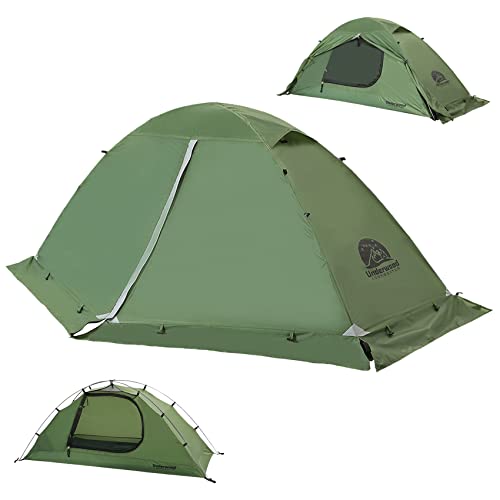


The Underwood Aggregator is the most purpose-built winter option here. Its full-coverage fly, aluminum frame, and snow-skirt design address cold-weather concerns more directly than the lighter general-purpose models. The compact footprint is useful when finding a protected winter site, while the vestibule keeps boots and selected gear outside the sleeping area.
The trade-off is space: this is a snug solo shelter, and bulky winter equipment may require disciplined packing. Condensation is still possible when the fly is closed in cold, humid conditions, so use the available ventilation and avoid blocking airflow. Treat it as a budget winter backpacking tent, not as a substitute for a technical mountaineering shelter in severe alpine weather.
Who Should Buy This
Solo backpackers who specifically want a winter-oriented tent with aluminum poles and a snow skirt, and who can accept a compact interior in exchange for stronger weather-focused features.
Who Should Avoid This
Campers expecting expedition-level snow loading, extended above-treeline exposure, or a roomy interior for large winter packs.
What People Say
Common owner-feedback themes in the available review data include quick setup, compact packing, waterproofing, useful vestibule space, and concerns about condensation and long-term stress around the pole crossing point. Current review totals and star ratings are not reproduced because they can change.
Situational Benefits
|
Situation |
How It Helps |
|---|---|
|
Protected Winter Backpacking |
The full-coverage fly, aluminum frame, and snow skirt are better aligned with cold-weather use than a typical 3-season dome. |
|
Bike or Motorcycle Touring |
The compact packed shape and solo footprint make it easier to fit among other travel gear. |
|
Cold, Wet Shoulder-Season Trips |
The PU5000 mm rainfly and covered design provide a strong wet-weather starting point when the forecast is cold and unsettled. |
|
Minimalist Weekend Camping |
A freestanding solo layout keeps setup straightforward while the vestibule separates wet gear from the sleeping space. |
Travel Friendliness
The listing positions this tent at about 4 lb with a compact packed size, making it portable for solo travel without pretending it is an ultralight shelter.
Key Benefits
- PU5000 mm rainfly for substantial rain protection
- Aluminum poles instead of budget fiberglass
- Rollable snow skirt for winter-oriented use
- Freestanding solo design with vestibule
- Compact packed format for backpacking and bike travel
- Ventilation features to help manage condensation
Check Current Amazon Availability
2. Camppal 1-Person 4-Season Tent — Best Lightweight 4-Season Pick


The Camppal is a practical option for backpackers who want a long solo shelter without carrying a large two-pole winter dome. Its single aluminum ridge pole keeps the structure simple, and the low profile can be useful in wind when the tent is correctly oriented, guyed, and staked.
The narrow interior is the main compromise. It provides useful length for taller sleepers, but there is limited room to spread out or bring bulky gear inside. The listing’s four-season positioning and waterproof rating are helpful indicators, yet neither proves suitability for heavy accumulated snow or severe exposed storms. Use it within conservative conditions and clear snow from the shelter when necessary.
Who Should Buy This
Solo backpackers who value a long floor, simple pitching, aluminum poles, and a lighter carry than many bulkier winter tents.
Who Should Avoid This
Campers who need a wide interior, large vestibule volume, or a shelter for sustained heavy snow and high-alpine exposure.
What People Say
Common owner-feedback themes in the available review data include easy pitching, a long floor, compact packing, and strong rain protection, along with a snug interior and possible condensation when ventilation is restricted. Exact star ratings and review counts are omitted because they are time-sensitive.

Situational Benefits
|
Situation |
How It Helps |
|---|---|
|
Solo Cold-Weather Backpacking |
The low-profile body, aluminum pole, and full rain protection make it more winter-oriented than a typical mesh-heavy 3-season tent. |
|
Tall Solo Sleepers |
The extended floor length gives taller campers more room to stretch out than many short solo domes. |
|
Bikepacking or Kayak Camping |
The narrow packed format is easier to fit into panniers, dry bags, or a boat hatch. |
|
Rainy Shoulder Seasons |
Taped seams and the listed 3500–4000 mm waterproof rating give it useful wet-weather protection. |
Travel Friendliness
The current product information lists a 1.23 kg item weight. Because sellers can use different definitions for item, trail, and package weight, verify the current Amazon listing if exact carry weight matters to your kit.
Key Benefits
- One-person, four-season positioning
- Aluminum ridge pole for a simple frame
- Listed 3500–4000 mm water resistance
- Extended floor length for taller sleepers
- Fast, straightforward setup
- Compact shape for backpacking and bike travel
Check Current Amazon Availability
3. MC TOMOUNT 1-Person Tent — Best Double-Wall Option


The MC TOMOUNT stands out because its double-wall construction gives it a better condensation-management starting point than a comparable single-wall budget tent. The aluminum pole system and full fly are also preferable for cold, wet conditions where wind and moisture are bigger concerns than in fair-weather camping.
At roughly 4.65 lb, it is not an ultralight choice. The benefit is a more substantial shelter layout with a breathable inner and outer weather layer. Seller pages describe it as a four-season tent, but the safest use is still conservative cold-weather backpacking rather than extreme alpine snow loading.
Who Should Buy This
Backpackers who prioritize a double-wall shelter, aluminum poles, and straightforward cold-weather versatility over minimum pack weight.
Who Should Avoid This
Ultralight hikers who count every ounce or winter campers who need a technical expedition tent with a documented snow-load design.
What People Say
Common owner-feedback themes in the available review data include setup, room for one person, ventilation, and wet-weather protection, with weight and component durability mentioned as trade-offs. Exact review totals and star ratings are intentionally omitted because they can change.

Situational Benefits
|
Situation |
How It Helps |
|---|---|
|
Cold, Damp Camps |
The mesh inner plus separate fly can make condensation management easier than in a basic single-wall tent. |
|
Windy Shoulder Seasons |
7001 aluminum poles offer a more confidence-inspiring structure than low-cost fiberglass alternatives. |
|
Weekend Backpacking |
The design balances weather protection and portability for shorter trips where a few extra ounces are acceptable. |
|
Backup or Emergency Shelter |
A waterproof floor, full fly, and compact storage bag make it useful as a general travel shelter. |
Travel Friendliness
At about 4.65 lb, it is travel-friendly for short backpacking trips, motorcycle touring, and car-based adventures, but it is heavier than true ultralight solo tents.
Key Benefits
- Double-wall design for ventilation and weather separation
- PU3000 mm waterproofing
- 7001 aluminum poles
- Reinforced Oxford floor
- Room for one person plus selected gear
- Compact carry bag for transport
Check Current Amazon Availability
4. Night Cat 1P Backpacking Tent — Best Budget for Mild Winter Trips

The Night Cat is the simplest budget choice in this shortlist. Its biggest advantages are compact packing, fast setup, and a one-person interior that still leaves room for basic gear. The manufacturer lists PU3000 rainproof fabric and taped seams, which are useful for wet trips.
The main limitation is the fiberglass pole system. Fiberglass is generally less desirable than aluminum for repeated high-wind or heavy-snow winter use, and the single-layer design is more prone to condensation. For that reason, this tent fits mild winter weekends and protected campsites better than exposed ridges or sustained snowfall.
Who Should Buy This
Budget-minded solo campers who want a compact, easy-to-pitch shelter for protected cold-weather trips, motorcycle travel, or general backpacking.
Who Should Avoid This
Campers expecting heavy snow, prolonged strong wind, or the condensation control of a true double-wall winter shelter.
What People Say
Common owner-feedback themes in the available review data include quick setup, compact packing, useful solo space, and good rain resistance, while pole durability and single-wall condensation are recurring concerns. Exact star ratings and review totals are not repeated because they are time-sensitive.
Situational Benefits
|
Situation |
How It Helps |
|---|---|
|
Protected Mild-Winter Camps |
The compact dome and taped PU3000 fabric provide basic wind and rain protection when conditions stay within the tent’s limitations. |
|
Motorcycle or Bike Travel |
Its roughly 16.5 × 4.7 × 4.7 in packed size fits easily into luggage or a larger pannier. |
|
Quick Overnight Trips |
A 1–2 minute setup reduces time spent pitching after dark or in poor weather. |
|
Budget Backpacking |
At about 2 kg, it is portable enough for short routes when price and simplicity matter more than ultralight weight. |
Travel Friendliness
At about 2 kg (4.4 lb) and roughly 16.5 × 4.7 × 4.7 in packed, it is compact for general backpacking, motorcycle travel, and weekend camping.
Key Benefits
- Fast 1–2 minute setup
- PU3000 mm rainproof fabric with taped seams
- Compact 2 kg package
- Room for one person plus basic gear
- Simple dome layout
- Budget-friendly entry point for protected cold-weather trips
Check Current Amazon Availability
Before You Buy a Single-Person Winter Backpacking Tent
- Match the tent to exposure: protected forest camps and high alpine ridges demand very different shelter strength.
- Prefer aluminum poles for harder winter use: they are generally a better choice than fiberglass when cold, wind, and repeated loading matter.
- Do not confuse waterproofing with snow strength: a high PU/mm coating helps with moisture but does not certify the frame for heavy snow.
- Plan for condensation: keep vents open when conditions allow and avoid pressing wet gear against the inner walls.
- Build a real winter sleep system: choose an insulated pad, temperature-appropriate sleeping bag or quilt, dry layers, and a conservative weather plan.
- Practice pitching before the trip: know the pole layout, guy points, and stake system before you need to set up in wind or darkness.
FAQ
How Do I Choose the Best Single-Person Winter Backpacking Tent?
Start with the conditions you actually plan to camp in. For mild winter and protected campsites, a compact weather-resistant solo tent may be enough. For colder, windier, or snowier trips, prioritize aluminum poles, full-coverage weather protection, strong guy points, good ventilation, and winter-specific features such as a snow skirt. Keep weight and packed size realistic for your route, but do not sacrifice the structure you need just to save a few ounces.
Does a Winter Tent Keep You Warm?
A tent can reduce wind and precipitation exposure, but it is not your primary insulation. Your sleeping pad, sleeping bag or quilt, clothing, food, hydration, and campsite selection have a much larger effect on overnight warmth. Never rely on tent fabric alone to make a sleep system suitable for freezing conditions.
Is a High Waterproof Rating Enough for Snow Camping?
No. A 3000–5000 mm waterproof coating can be useful for rain and wet snow, but it does not tell you how much snow load the pole structure can safely handle. Pole geometry, material, guying, site exposure, accumulation rate, and maintenance during the storm all matter.
How Do I Reduce Condensation in a Solo Winter Tent?
Use vents whenever weather allows, keep wet gear outside the sleeping area when possible, avoid touching the tent wall with your sleeping bag, and choose a campsite with some airflow without exposing yourself to severe wind. Single-wall tents generally require more active condensation management than double-wall designs.
How Should I Care for a Winter Backpacking Tent?
Dry the tent fully before storage, remove grit and salt, inspect seams and zippers, repair small tears early, and check poles and guy lines after difficult trips. A footprint can reduce floor abrasion, but it should not extend beyond the tent floor where it can collect rainwater.
Final Recommendation
If you want the most winter-focused design in this shortlist, the Underwood Aggregator offers the clearest combination of aluminum poles, a full rainfly, and a snow skirt. The Camppal is the better fit when long interior length and lower listed weight matter, while the MC TOMOUNT gives you a useful double-wall layout. The Night Cat is the simpler budget option for protected, mild-winter trips where fiberglass poles and single-wall condensation are acceptable trade-offs.
Whichever tent you choose, treat “4-season” as a starting point rather than a guarantee. Check the forecast, choose a protected site, carry a sleep system appropriate to the temperature, and turn back before conditions exceed your equipment or experience.
Quick Comparison
| Product | Image | Winter Profile | Listed Weight | Waterproofing | Main Trade-off | Amazon |
|---|---|---|---|---|---|---|
| Underwood Aggregator 1 Person Tent |
 |
4-season design with snow skirt and aluminum poles | About 4 lb | PU5000 mm | Snug interior; condensation still requires management | Check Amazon |
| Camppal 1 Person 4-Season Tent |
 |
4-season listing with aluminum ridge pole | Listed at 1.23 kg | 3500–4000 mm | Narrow interior and limited living space | Check Amazon |
| MC TOMOUNT 1-Person Tent |
 |
Double-wall cold-weather design with aluminum poles | About 4.65 lb | PU3000 mm | Heavier than ultralight solo tents | Check Amazon |
| Night Cat Backpacking Tent for One |
 |
Best for protected mild-winter use | 2 kg (4.4 lb) | PU3000 mm | Fiberglass poles and single-wall condensation | Check Amazon |
Affiliate disclosure: This roundup is reader-supported. When you click through Amazon links, we may earn a referral commission on qualifying purchases at no extra cost to you.