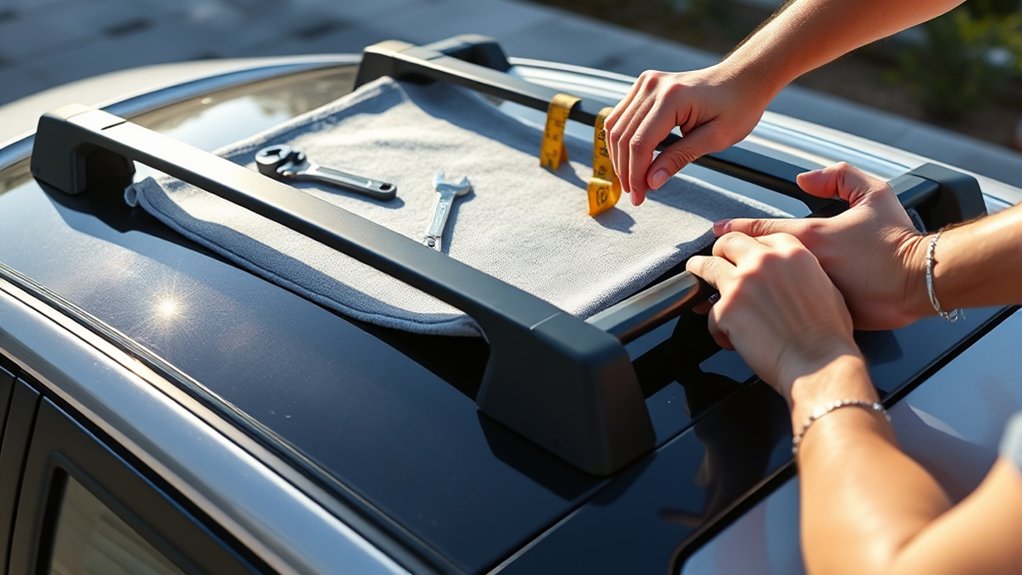
You may be able to readjust your Toyota RAV4 cross bars, but the correct method depends on the roof rails and cross-bar kit installed on your vehicle. Some bars can slide along raised rails, while many factory-style systems attach at designated mounting points and cannot be moved freely. Identify your system before loosening any hardware.
Quick Answer
Toyota RAV4 cross bars can be tightened, removed, or repositioned only when their mounting system allows it. Bars clamped to raised rails may offer limited movement. Factory-style bars attached to fixed mounting points usually must remain in their approved locations. Always follow the instructions for your exact model year and cross-bar part number.
Key Takeaways
- Identify whether your RAV4 has fixed-point mounts, flush rails, or raised rails before attempting an adjustment.
- Use the supplied key, Torx tool, hex key, or other tool named in the cross-bar instructions.
- Do not overtighten fasteners or assume that turning them clockwise without a torque specification is safe.
- Your usable roof load is controlled by the lowest limit among the vehicle, rails, cross bars, and attached carrier.
- Check moonroof, antenna, rear-hatch, and cargo clearance before driving.
At a Glance
| Time Required | About 10–20 minutes for inspection and tightening, or 20–45 minutes for removal and approved repositioning |
| Difficulty | Easy to moderate, depending on the mounting system |
| Tools Needed | The tool specified for your cross bars, commonly a supplied key, Torx tool, hex key, or torque-limiting handle; plus a clean cloth |
| Cost | Usually no cost for inspection or adjustment; replacement keys, covers, pads, fasteners, or damaged feet cost extra |
Can Toyota RAV4 Cross Bars Be Readjusted?
Whether you can move the bars depends on how they attach to the vehicle. Do not assume that every RAV4 uses the same system.
- Fixed-point cross bars: These attach to designated fittings or threaded mounting locations. You can normally remove and reinstall them, but you should not create a different mounting position or clamp them between the approved points.
- Cross bars on flush rails: These may use vehicle-specific feet positioned within approved zones. Movement may be limited by the rail design and installation instructions.
- Cross bars on raised rails: These wrap around rails with visible space underneath. Many can slide after their clamps are released, although the manufacturer may specify minimum and maximum bar spacing.
- Accessory carriers: A roof box, kayak carrier, ski holder, or bike rack may move along the cross bars even when the bars themselves remain fixed.
Use the vehicle’s model year, roof type, and accessory part number to locate the correct instructions. Toyota provides model-specific information through its owner’s manual portal, while the Toyota Genuine Parts portal allows you to check parts against a vehicle or VIN.
Note: A front cross bar positioned near the moonroof is not automatically defective. Its location may be determined by the approved mounting points. Confirm that the bar is facing the correct direction and that no attached carrier interferes with the glass.
Common Issues When Adjusting Roof Racks
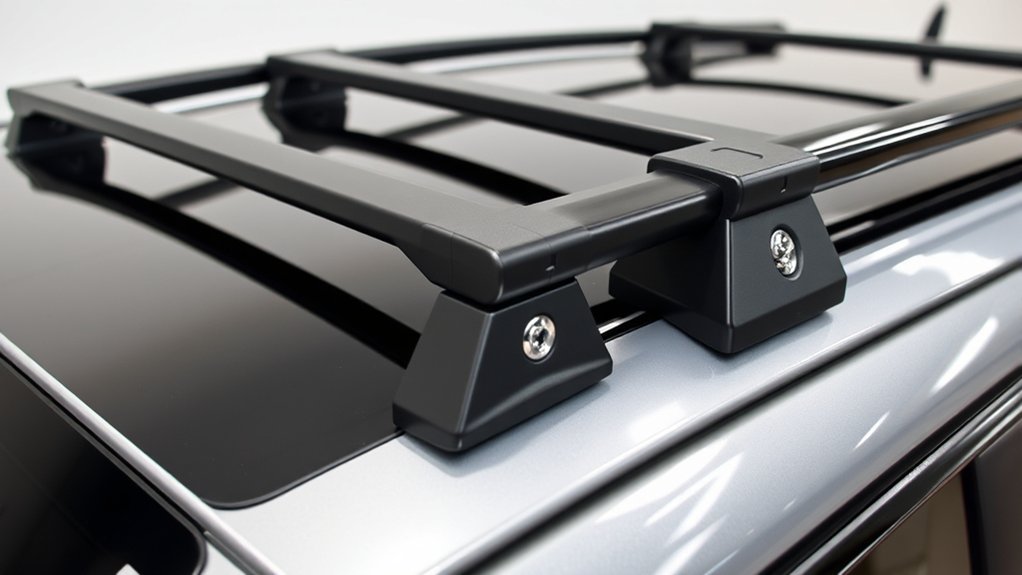
Several problems can make a RAV4 cross-bar adjustment more difficult than expected:
- The bar will not slide: It may use fixed mounting points, or the clamps may not be fully released.
- The front and rear bars have different heights: This can be normal because the roof and side rails are not perfectly level.
- The moonroof appears too close: The bar may be correctly positioned, but a low-mounted carrier or protruding clamp may interfere with the glass.
- The bar stays loose: A clamp, pad, fastener, foot, or rail adapter may be incorrectly seated, worn, missing, or incompatible.
- Wind noise increases: A bar may be reversed, an end cap may be loose, or a rubber channel strip may be missing or raised.
- The required spread cannot be achieved: The cross bars and the attached carrier may have incompatible spacing requirements.
Do not force a bar that will not move. First confirm whether the feet are designed to slide and whether the rail has marked or reinforced mounting zones.
What to Check Before Adjusting RAV4 Cross Bars
- Remove all cargo and carriers. Never loosen a cross bar while a roof box, bicycle, kayak, ladder, or other load is attached.
- Park on a level surface. Switch off the vehicle and keep the key with you so nobody operates the moonroof during the work.
- Identify the roof system. Look for raised rails, flush rails, fixed covers, threaded points, or position marks.
- Find the accessory part number. Check the bar, foot, installation paperwork, purchase record, or Toyota parts record.
- Read the correct instructions. Confirm the approved positions, bar orientation, tool, tightening sequence, and torque requirement.
- Inspect the components. Look for cracked feet, bent bars, stripped fasteners, missing pads, damaged locks, corrosion, or loose end caps.
- Clean the contact areas. Dirt trapped beneath a foot or pad can affect seating and scratch the rail.
Warning: Do not use pliers to force a lock cylinder, turn a decorative cover, or substitute for a missing cross-bar key. Obtain the correct replacement key or tool. Stop if a fastener spins, binds, or will not tighten normally.
How to Adjust Your RAV4 Roof Rack Easily
Use this general process only after confirming that your installed cross bars permit movement. The product instructions take priority whenever they specify a different sequence.
- Open or remove the foot covers. Use the supplied key or release mechanism. Place small covers and fasteners somewhere safe.
- Release each side gradually. Loosen the left and right feet in small, even amounts. Do not fully remove a fastener unless the instructions require it.
- Test whether the bar is designed to move. A sliding system should move without heavy force once both feet are released. A fixed-point system should remain at its designated mounts.
- Position the bar within the approved area. Keep both ends aligned and follow any rail marks, minimum spacing, or carrier spread requirements.
- Center the cross bar. Check that the overhang or foot placement is even on both sides when the design requires centering.
- Tighten each side evenly. Alternate between the left and right feet instead of fully tightening one side first.
- Use the specified torque or stop. Follow the printed torque value, torque-limiting handle click, or built-in indicator supplied by the manufacturer.
- Reinstall and lock the covers. Confirm that each cap is seated and each lock operates normally.
- Perform a firm hand check. Push and pull each bar at both feet. It should not slide, lift, rock, or click.
- Recheck after a short drive. Stop in a safe location and inspect the rack again before starting a long trip.
Pro Tip: Place a small piece of removable painter’s tape beside each approved foot position before loosening the bars. It gives you a reference point without permanently marking the rail.
| Action | Purpose | Important Limit |
|---|---|---|
| Confirm the rack type | Determine whether movement is allowed | Never force fixed-point feet to slide |
| Check bar spread | Match the attached carrier’s requirements | Stay inside the approved rail or mounting zones |
| Tighten evenly | Seat both feet correctly | Use the specified torque or tightening indicator |
| Check clearances | Protect the moonroof, antenna, and hatch | Test slowly with the rack unloaded |
| Perform a hand check | Confirm the bars cannot move | Do not load a bar that rocks, lifts, or slides |
Check Moonroof and Rear-Hatch Clearance
Cross-bar placement affects more than cargo support. A roof box, kayak carrier, or other attachment can interfere with moving vehicle parts even when the bars themselves appear clear.
- Remove all cargo before testing.
- Check that feet, clamps, bolts, and carrier hardware do not extend into the moonroof’s path.
- Operate the moonroof slowly while watching from outside the vehicle.
- Stop immediately if the glass, wind deflector, shade, or mechanism approaches any rack component.
- Open the rear hatch slowly and check its highest point against the roof box or long cargo.
- Confirm that the antenna and rear spoiler remain clear.
If an approved bar position does not provide enough clearance for your carrier, change the carrier configuration or use a different compatible system. Do not move fixed-point bars to an unapproved location.
Safety Tips for Securing Cargo on Your Roof Rack
Correct bar placement is only one part of safe roof transport. Follow these precautions whenever you load your RAV4:
- Find every published limit. Check the vehicle manual, rail instructions, cross-bar instructions, and carrier instructions.
- Use the lowest limit. A stronger carrier or aftermarket bar does not increase the limit of the vehicle roof or another weaker component.
- Include equipment weight. Subtract the weight of the cross bars, roof box, basket, bike carrier, or kayak carrier when the applicable instructions require those items to count toward the roof load.
- Distribute weight evenly. Center the load between the bars and avoid concentrating heavy cargo on one side.
- Use the correct carrier. Do not place a hard or sharp object directly on the roof or moonroof glass.
- Use rated straps. Replace frayed, cut, sun-damaged, or unreliable straps.
- Secure long cargo properly. Use the carrier manufacturer’s required tie-down points and add bow or stern lines when specified for kayaks or similar loads.
- Keep straps away from hot or moving parts. Do not route them across sharp edges, hinges, exhaust components, or areas that obstruct the driver.
- Drive conservatively. Roof cargo raises the vehicle’s center of gravity and increases its exposure to crosswinds.
- Recheck the load. Stop after the first short section of the trip and periodically during long journeys.
A rack’s advertised capacity never overrides a lower limit for the vehicle roof, side rails, cross bars, mounting feet, or cargo carrier.
Consider Aftermarket Roof Racks for Better Adjustment
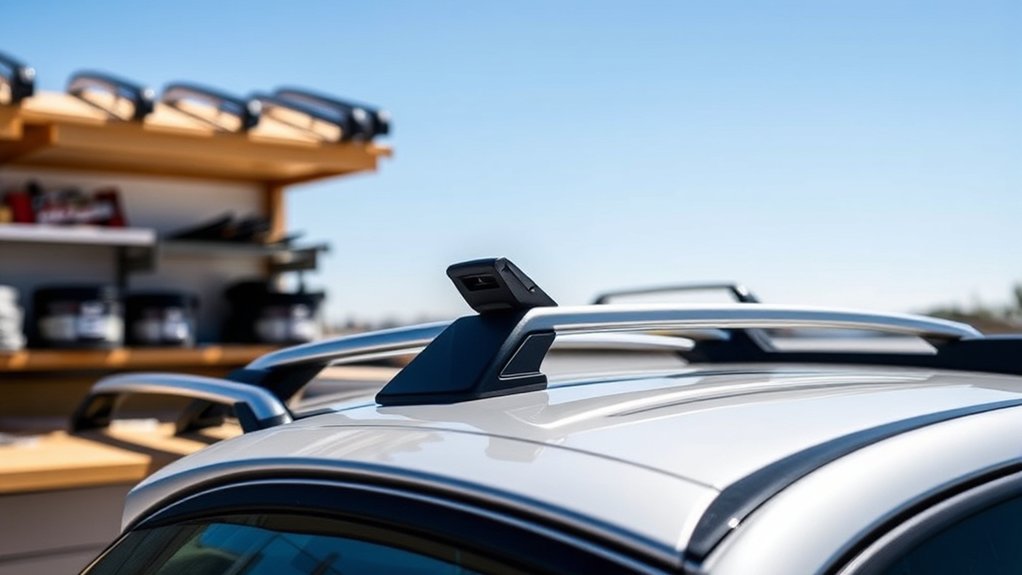
A vehicle-specific aftermarket rack may provide a different bar shape, accessory channel, bar spread, or mounting design. However, you should choose one through the manufacturer’s fit guide rather than relying only on a listing that says it fits a RAV4.
For example, Thule’s official roof-rack catalog distinguishes between confirmed, unconfirmed, and unsupported fits. Use a manufacturer’s vehicle selector and enter the exact model year, roof type, and trim before buying.
| Feature | Vehicle-Specific Aftermarket System | Toyota Factory-Style System |
|---|---|---|
| Cross-bar position | May allow movement within manufacturer-approved zones | Often determined by designated vehicle mounting locations |
| Accessory attachment | May offer T-slots or several bar profiles | Designed around Toyota-compatible accessories and fittings |
| Vehicle fitment | Must be confirmed for the exact roof and model year | Must be matched through the Toyota part number or VIN |
| Usable load | Limited by the lowest-rated system component | Limited by the lowest-rated system component |
| Installation | Varies by tower, clip, rail, and bar system | Uses the Toyota accessory’s prescribed mounting method |
Choose a system with documented RAV4 fitment, complete installation instructions, replacement parts, and a clear load rating. Avoid mixing feet, bars, clamps, adapters, or locks from unrelated systems unless the manufacturer explicitly approves the combination.
Troubleshooting RAV4 Cross-Bar Problems
The Cross Bar Will Not Move
Confirm that it is actually a sliding design. Release both feet evenly and check for hidden locking tabs or rail position stops. Do not pry against the rail or hammer the feet. A fixed-point bar should be removed and reinstalled only at its approved fittings.
The Bar Is Still Loose After Tightening
Remove the bar and inspect the foot, pad, adapter, fastener, and rail contact area. A missing rubber pad, incorrectly seated adapter, stripped thread, wrong fastener, or incompatible foot can prevent secure clamping. Replace damaged parts instead of applying more force.
The Rack Makes Whistling or Humming Sounds
Check the front and rear orientation marks, rubber channel strips, end caps, foot covers, and unused slots. Remove any loose strap ends. An aerodynamic aftermarket bar may reduce noise, but correct installation should come first.
The Key or Adjustment Tool Is Missing
Look for a key or lock number on the cylinder, paperwork, or original packaging. Order the correct replacement through Toyota, the rack manufacturer, or an authorized dealer. Do not force the lock with pliers or an unrelated key.
The Required Bar Spread Is Not Possible
Compare the approved bar positions with the minimum and maximum spread listed for your roof box or carrier. If the ranges do not overlap, the products are not compatible in that configuration. Use a different carrier or a confirmed vehicle-specific rack system.
Tips for Maintaining Your Roof Rack’s Performance
- Inspect before every loaded trip. Check each foot, cap, lock, bar, pad, and carrier attachment.
- Recheck after installation. Inspect the system after the first short drive and follow any manufacturer re-torque schedule.
- Clean the rails and feet. Remove dirt, road salt, leaves, and grit that can trap moisture or affect seating.
- Protect locks. Keep lock cylinders clean and use only a lubricant approved by the rack manufacturer.
- Watch for corrosion. Address damaged coatings and replace heavily corroded fasteners or components.
- Remove unused accessories when practical. This reduces wind noise, drag, weather exposure, and wear.
- Keep the instructions. Store the manual, part number, key number, torque tool, and spare parts together.
- Replace damaged components. Do not straighten a severely bent bar or reuse a cracked foot, stripped bolt, or torn pad.
Related Guides
Frequently Asked Questions
What tools are needed for adjusting a RAV4 cross bar?
Use the tool specified for the installed cross-bar kit. Depending on the system, this may be a supplied key, Torx tool, hex key, torque-limiting handle, or another proprietary tool. Do not assume that a socket wrench, screwdriver, or pliers is appropriate.
How often should I check the cross bars?
Inspect them before every loaded trip, after installation, after the first short drive, and periodically during long trips. Also check them after severe weather, automatic car-wash contact, low-clearance contact, or any event that may have shifted the rack.
Can I adjust a cross bar without the official key?
Do not force a lock or cover with pliers, a screwdriver, or an unrelated key. Use the lock number to order a replacement, contact a Toyota dealer or rack manufacturer, or ask a qualified rack installer to service it.
Are there weight limits for RAV4 cross bars?
Yes. Check the vehicle manual and the instructions for the rails, cross bars, and attached carrier. Use the lowest published limit and account for the weight of the rack and carrier when the applicable instructions require it. Do not assume one limit applies to every RAV4.
Is it safe to use non-Toyota cross bars?
A reputable aftermarket system can be suitable when the manufacturer confirms fitment for your exact RAV4 model year, roof type, and trim. Follow its complete installation instructions and do not mix unapproved components from different systems.
Can I move a RAV4 cross bar to clear the moonroof?
Only move it if the cross-bar instructions allow repositioning within an approved range. Do not relocate a fixed-point bar. Instead, adjust or replace the attached carrier if it interferes with the moonroof.
Does a higher-rated aftermarket rack increase the RAV4’s roof capacity?
No. The usable capacity is always controlled by the lowest-rated component in the complete system. A rack with a higher advertised rating cannot increase the limit assigned to the vehicle roof, rails, mounting points, or carrier.
Conclusion
You can tighten, remove, or reposition Toyota RAV4 cross bars only within the limits of their mounting design. Start by identifying the exact rack and checking its instructions. Use the proper tool, follow the specified tightening method, confirm moonroof and hatch clearance, and calculate the load from the lowest system limit. If a bar remains loose or requires force to move, stop and have the mounting system inspected before carrying cargo.
Sources
- Toyota Manuals and Warranties — model-specific owner information and vehicle operating guidance
- Toyota Genuine Parts and Accessories — vehicle and VIN-based accessory fitment
- Toyota Technical Information System — Toyota service and technical-document access
- Thule Roof Racks and Fit Guidance — vehicle-specific aftermarket fitment and rack-system information
