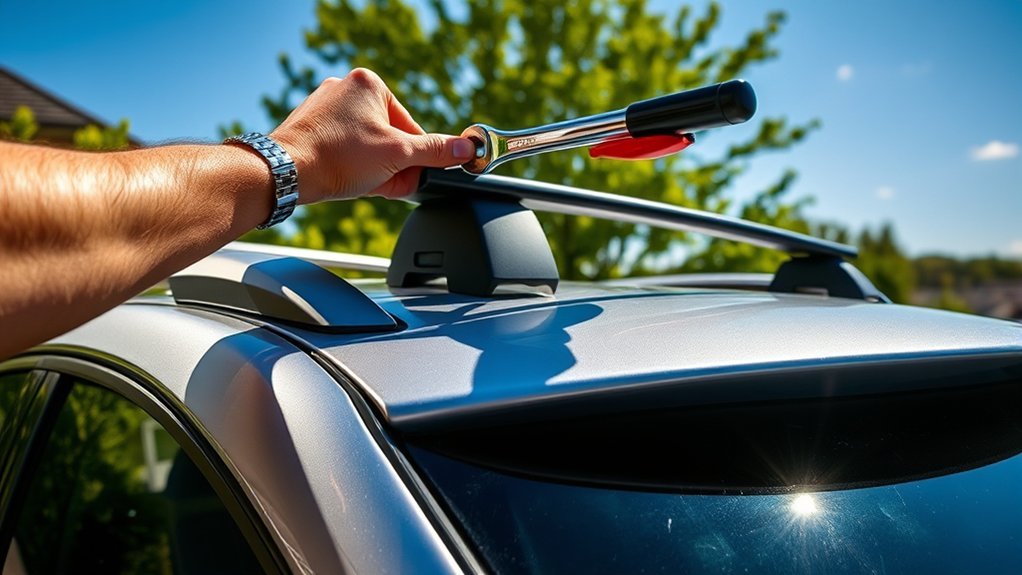
Whether you can adjust Toyota RAV4 roof rack crossbars depends on the crossbar system and your model year. Many genuine Toyota crossbars mount at designated points rather than sliding freely along the roof rails. Before moving, removing, or reinstalling them, identify your roof type and follow the instructions supplied with the exact crossbar kit.
Quick Answer
You usually cannot slide genuine RAV4 crossbars to any position you choose. Many kits attach at fixed or marked mounting points. You can often remove and reinstall them, while some aftermarket systems provide more adjustment. Always confirm fitment, torque, moonroof clearance, and load limits for your exact model year and rack.
Key Takeaways
- Factory crossbars may use fixed mounting points, so do not force them to slide or drill new roof holes.
- Confirm the vehicle year, trim, roof-rail type, and crossbar part number before following any installation steps.
- Use the lowest load limit stated for the vehicle, crossbars, cargo carrier, and attachment hardware.
- Check fasteners, pads, covers, cargo straps, moonroof clearance, and rear-hatch clearance before driving.
At a Glance
| Time Required | Varies by roof type and crossbar kit |
| Difficulty | Beginner to moderate, provided the correct instructions are available |
| Tools Needed | Only the tools specified for the exact kit, commonly an included key or hex tool and a torque tool when required |
| Cost | No cost for inspection; replacement parts or professional installation vary |
How to Position Your RAV4 Roof Rack Crossbars

Start by identifying the exact crossbar system on your RAV4. Genuine Toyota crossbars, factory raised rails, flush rails, and aftermarket towers do not use the same mounting method. The safest position is the one shown in the installation instructions for your vehicle year, roof type, and crossbar part number.
Many genuine systems use designated mounting areas. In that case, the bars are not meant to slide freely. The front and rear assemblies may also be different, so keep any front or rear labels facing the direction shown by the manufacturer.
Place every supplied pad, gasket, bracket, washer, and fastener exactly as instructed. These pieces protect the finish, help the feet sit correctly, and keep the assembly stable. Do not substitute hardware or leave protective pads out.
Warning: Never drill the RAV4 roof, alter factory mounting points, or force a crossbar beyond its designed position. Do not drill a cargo box unless the box manufacturer provides an approved drilling pattern for that exact model.
What You Need to Know About Your RAV4 Roof Rack
Your RAV4’s model year and roof configuration determine which crossbars fit and whether they offer any fore-and-aft adjustment. A guide written for a 2019 RAV4 may not apply to an earlier generation, a newer redesigned model, or a trim with a different rail system.
Crossbar Positioning Options
RAV4 crossbar systems generally fall into three groups: fixed-point factory systems, systems that clamp to raised rails, and aftermarket systems that use vehicle-specific feet or towers. Fixed-point systems offer little or no position adjustment. Raised-rail systems may allow movement within a limited range, while aftermarket systems vary by manufacturer.
Do not assume a bar is adjustable because its bolts are loose. Loose hardware may only allow the foot to seat correctly at its designated mounting point. Moving it outside the approved area can reduce clamping strength, damage the rails, or interfere with the moonroof, rear hatch, antenna, or cargo attachment.
For the U.S.-market 2019 RAV4, Toyota’s owner manual states that cargo on the roof luggage carrier must not exceed 176.4 pounds (80 kg). That is a vehicle roof-cargo limit, not an 80-pound allowance for each bar. Your usable capacity may be lower after accounting for the crossbars, cargo box, bike carrier, or other attachments.
Installation Challenges Overview
The most common problems come from using instructions for the wrong kit, reversing the front and rear assemblies, trapping a gasket, tightening one side fully before the other, or attaching cargo before checking clearances. A bar that looks uneven may be following the roof’s shape rather than indicating a defect.
Before loading anything, open the moonroof and rear hatch slowly while the vehicle is parked. Stop immediately if any part contacts the rack or cargo carrier. The 2019 RAV4 manual specifically warns owners to avoid scratching the moonroof or panoramic moonroof when loading roof cargo.
If a cargo box’s clamps do not line up with the approved crossbar spacing, use a compatible box, an approved adapter, or a different rack system. Modifying the vehicle or box without manufacturer approval can weaken the mounting system and may affect warranty coverage.
Where to Get Model-Specific Support
A Toyota dealer can use your VIN to confirm the correct genuine accessory and obtain the matching installation instructions. Toyota’s manuals and warranties portal also provides model-specific owner information, while Toyota’s Technical Information System contains service and accessory documentation.
For an aftermarket rack, use the manufacturer’s current vehicle-fit lookup rather than relying only on an online marketplace listing. Confirm the year, body style, roof type, rail type, and presence of a moonroof before ordering or installing parts.
Note: A rack that physically attaches to the vehicle is not automatically approved for every load. The crossbars, carrier, attachment, and vehicle each have separate limits and compatibility requirements.
How to Adjust Your RAV4 Roof Rack Crossbars During Installation
Use this process only after confirming that the kit fits your exact RAV4. Treat “adjustment” as correct seating and alignment within the approved mounting area, not permission to place the bars anywhere on the rails.
- Confirm the fit: Match the vehicle year, trim, roof type, and crossbar part number to the manufacturer’s instructions.
- Inspect the kit: Check that all feet, pads, gaskets, covers, keys, bolts, washers, and required tools are present and undamaged.
- Clean the mounting areas: Remove dirt and grit so the pads sit flat and do not grind debris into the paint or rail finish.
- Identify front and rear parts: Follow labels, arrows, measurements, or diagrams supplied with the kit. Do not assume the two bars are interchangeable.
- Set the bars in approved positions: Align the feet with the designated points or allowable rail range. Keep fasteners evenly engaged while you make small seating adjustments.
- Tighten in stages: Alternate between sides and use the exact torque or built-in torque indicator specified by the manufacturer. Do not guess a torque value.
- Fit covers and locks: Confirm that every cover is fully seated and every lock works before adding cargo.
- Check clearances: Slowly test the moonroof and rear hatch while parked, then confirm that the antenna and cargo attachments have adequate space.
- Perform a final stability check: Pull firmly on each bar and recheck every attachment before the first drive.
Pro Tip: Photograph the labels, mounting positions, and completed installation. The images make future removal and reinstallation easier and help you confirm that no part has shifted.
Challenges With Fixed Crossbar Positions and Their Impact on Cargo
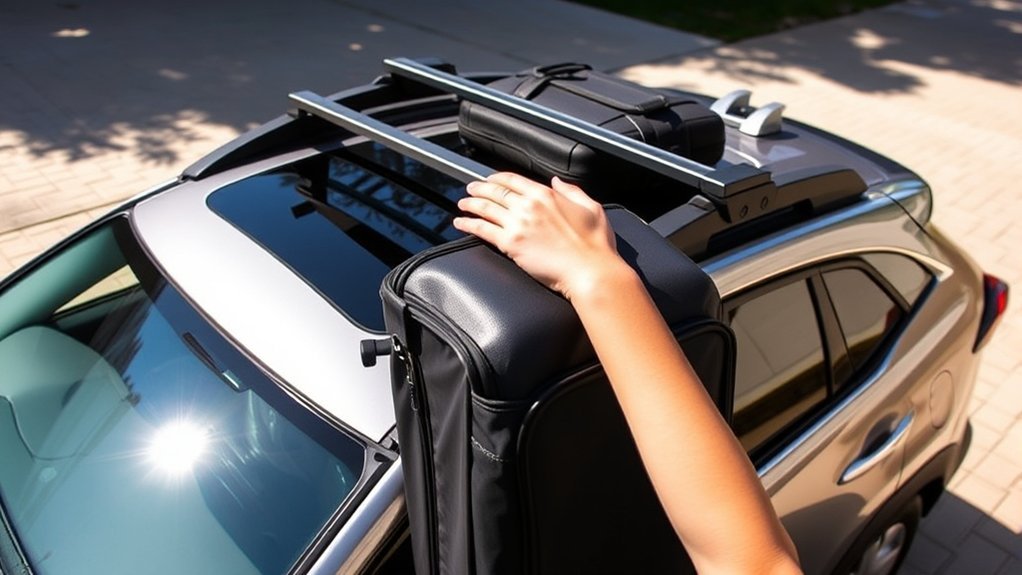
Fixed crossbar spacing can limit which cargo boxes, baskets, kayak saddles, and bike carriers will fit. The problem is usually attachment compatibility, not the roof’s total cargo area. Measure the center-to-center bar spread and compare it with the carrier manufacturer’s approved range.
Long cargo can also extend beyond the bars and create leverage during braking, turns, or crosswinds. Toyota instructs owners to distribute roof cargo evenly, secure it before driving, and avoid high speeds, sudden starts, sharp turns, sudden braking, and abrupt maneuvers because roof cargo raises the vehicle’s center of gravity.
Do not use the crossbars to carry an item that blocks the driver’s view, covers required lights or the license plate, interferes with the hatch, or extends beyond legal limits. Local overhang and flagging rules may apply to canoes, lumber, ladders, and similar loads.
The safe roof load is controlled by the lowest-rated part of the complete system, including the vehicle, crossbars, carrier, attachments, and cargo restraints.
What to Do About Fixed Crossbar Position Issues?
If the factory spacing does not work with your cargo, do not improvise with loose clamps, homemade spacers, or unauthorized holes. Use one of these safer options:
- Choose a compatible carrier: Select a box, basket, bike rack, or kayak mount whose approved bar-spread range matches your installed crossbars.
- Use a manufacturer-approved adapter: Some carrier brands offer fit kits that accommodate specific bar shapes or spacing.
- Switch to a vehicle-specific aftermarket system: A system designed for your RAV4’s exact roof type may provide a different approved bar spread or longer crossbars.
- Use another cargo location: A hitch-mounted carrier or interior cargo setup may suit items that cannot be secured safely on the roof.
- Ask a qualified installer: Professional help is appropriate when instructions are missing, parts do not seat correctly, or the rack contacts the moonroof, hatch, or body.
Whatever option you choose, compare the vehicle limit with every component rating. Never add two ratings together, and never assume an aftermarket rack increases the RAV4 roof’s permitted load.
How to Maintain Your Roof Rack Crossbars
Inspect the rack before carrying cargo, after installation, after the first short drive, and periodically during a long trip. Recheck it sooner after rough roads, heavy rain, car washes, temperature changes, or any impact. Follow the kit manufacturer’s stated inspection and retightening schedule instead of using an unsupported universal distance interval.
- Fasteners: Look for looseness, corrosion, damaged threads, or missing hardware. Retighten only to the specified setting.
- Pads and gaskets: Check for movement, splits, hardening, trapped dirt, or water paths.
- Bars and feet: Inspect for cracks, bends, dents, corrosion, or movement at the mounting points.
- Covers and locks: Confirm that covers close fully and keys or locks operate without forcing them.
- Cargo straps and mounts: Replace frayed straps and damaged clamps rather than trying to repair safety-critical parts.
Clean the bars and mounting areas with products approved for the rack finish. Remove road salt, insects, mud, and grit promptly. Avoid strong solvents unless the rack manufacturer specifically permits them.
If your crossbars are designed for easy removal, storing them indoors when not needed can reduce weather exposure and wind noise. Reinstall every pad and fastener in its original location, and repeat the full clearance and stability checks before carrying cargo again.
Aftermarket Height Adjustment Solutions
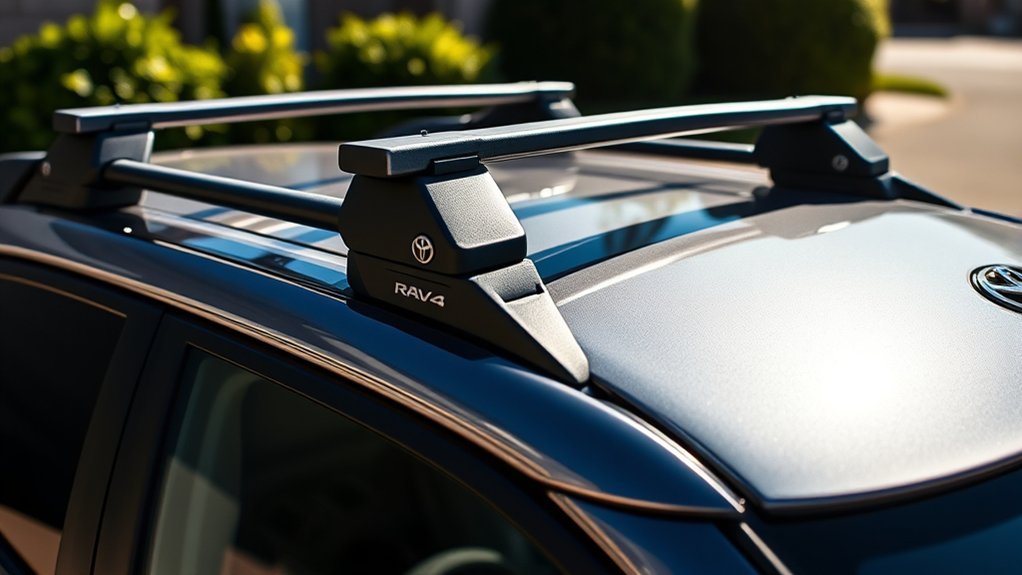
Aftermarket systems can provide different bar lengths, shapes, heights, or spacing, but “adjustable” does not mean universally compatible. A complete system normally includes vehicle-specific feet or towers, a fit kit, crossbars, and any carrier attachments.
Compare these points before buying:
- Verified vehicle fit: The manufacturer must list your exact RAV4 year and roof configuration.
- Approved mounting range: Confirm where the feet may sit and the permitted crossbar spread.
- Load ratings: Use the lowest limit among the RAV4, rack, fit kit, carrier, and attachments.
- Moonroof and hatch clearance: Check whether the manufacturer restricts opening either feature with the rack or cargo installed.
- Bar overhang: Longer bars may improve carrier spacing, but excessive overhang can create head-strike and clearance risks.
- On-road and off-road limits: Some manufacturers reduce the allowable load for rough-road use.
Do not select a rack only because it claims a high capacity. Fit, mounting strength, cargo shape, driving conditions, and the vehicle’s own roof limit matter just as much.
Sources
- 2019 Toyota RAV4 Owner’s Manual — roof-cargo capacity, load distribution, cargo securement, moonroof protection, and driving precautions.
- Toyota Manuals and Warranties: 2019 RAV4 — model-specific owner information and manuals.
- Toyota Genuine Parts and Accessories — official guidance on selecting parts designed for Toyota vehicle specifications.
- Toyota Technical Information System — service and accessory documentation for exact vehicle and part applications.
Related Guides
Frequently Asked Questions
Can I install crossbars on a RAV4 without professional help?
You may be able to install a compatible bolt-on or clamp-on kit yourself when you have the complete instructions and specified tools. Use professional installation if the kit is missing parts, requires trim removal, does not seat correctly, or provides unclear torque and positioning guidance.
What tools are needed for RAV4 roof rack installation?
The required tools depend on the crossbar kit. Some kits include a key or hex tool, while others require a torque wrench or manufacturer-specific torque indicator. Use only the tools and settings listed in the instructions for the exact part number.
Are there weight limits for the RAV4 roof rack crossbars?
Yes. The limit varies by model year, roof system, crossbars, and cargo carrier. The U.S. 2019 RAV4 manual sets an 80 kg (176.4 lb) maximum for cargo on the roof luggage carrier. Use a lower limit when any crossbar, carrier, or attachment is rated below the vehicle limit.
How often should I check the crossbars for security?
Check them before loading cargo, after installation, after the first short drive, and during longer trips. Inspect sooner after rough roads, severe weather, a car wash, or an impact. Follow the exact retightening interval in the crossbar manufacturer’s instructions.
Can I remove the crossbars when they are not in use?
Yes, when the installed system is designed to be removable. Keep all pads, fasteners, covers, and keys together in a dry place. Follow the same installation, torque, clearance, and stability checks each time you reinstall the bars.
Can I move genuine Toyota crossbars farther apart?
Only when the instructions for your exact Toyota crossbar kit show more than one approved position or an allowable adjustment range. If the kit mounts at fixed points, use a compatible cargo carrier or a vehicle-specific alternative rather than relocating the feet.
Conclusion
You can adjust some RAV4 crossbar systems, but many genuine Toyota setups use fixed or tightly controlled mounting positions. The correct approach is to identify the exact rack, follow its instructions, and work within the approved mounting range. Confirm the lowest load rating, tighten hardware as specified, secure the cargo, and check moonroof and hatch clearance before every trip.

1 thought on “Can You Adjust Toyota RAV4 Roof Rack Crossbar? Setup”