
Toyota RAV4 fuel economy varies by model year, powertrain, trim, drivetrain, wheels, tires, and driving conditions. The current 2026 RAV4 is especially efficient because U.S. models use hybrid or plug-in hybrid powertrains. Older gas-powered RAV4s can also deliver competitive mileage, but you need to compare the exact configuration rather than relying on one rating for every trim.
Quick Answer
Yes. Toyota RAV4s are generally good on gas for compact SUVs. Selected 2026 hybrid trims are listed at up to 47 city and 40 highway MPG. For comparison, the 2025 gas RAV4 LE FWD was rated at 27 city, 35 highway, and 30 combined MPG.
Key Takeaways
- The 2026 U.S. RAV4 lineup uses hybrid or plug-in hybrid powertrains rather than a conventional gas-only engine.
- Toyota lists selected 2026 hybrid trims at up to 47 city and 40 highway MPG.
- The 2025 gas LE FWD was rated at 27 city, 35 highway, and 30 combined MPG.
- AWD, all-terrain tires, larger wheels, cold weather, short trips, high speeds, and roof cargo can lower mileage.
- EPA or manufacturer estimates are comparison tools. Your actual fuel economy will depend on how and where you drive.
How Do Toyota RAV4 MPG Ratings Compare Across Model Years?
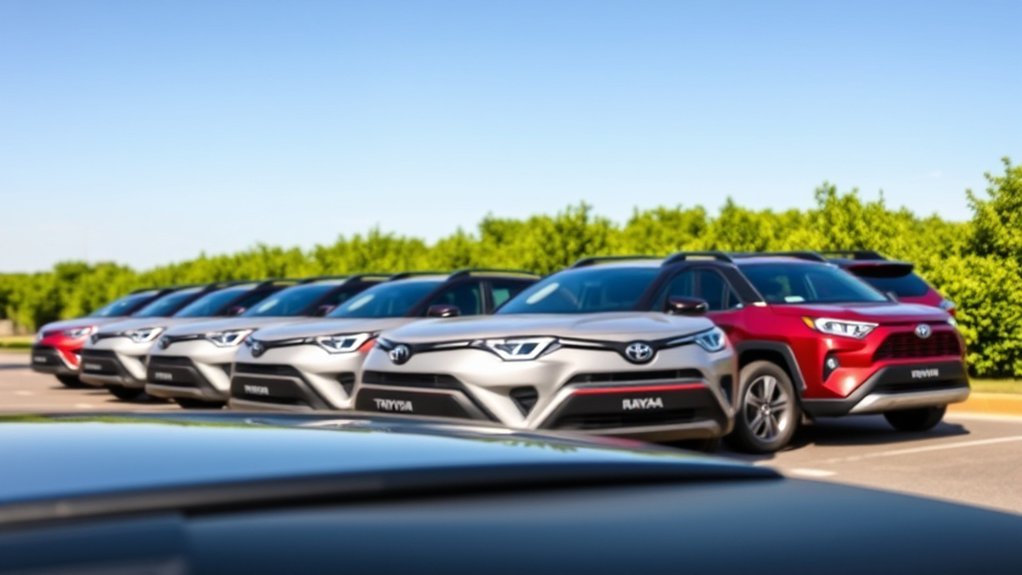
RAV4 fuel economy improved significantly when Toyota introduced the fifth-generation model for 2019. Another major change arrived for 2026, when the U.S. lineup moved to hybrid and plug-in hybrid powertrains.
The table below compares representative configurations. Ratings can differ within the same model year, so always check the original window sticker or official specifications for the exact trim and drivetrain.
| Model and Configuration | City MPG | Highway MPG | Combined MPG |
|---|---|---|---|
| 2026 RAV4 LE, SE, or XLE Premium base hybrid configuration | 47 | 40 | About 44* |
| 2026 RAV4 XSE or Limited base hybrid configuration | 43 | 37 | About 40* |
| 2026 RAV4 Woodland hybrid | 41 | 35 | About 38* |
| 2025 RAV4 Hybrid LE AWD | 41 | 38 | 39 |
| 2025 RAV4 gas LE FWD | 27 | 35 | 30 |
*Approximate combined figures: Toyota’s current trim page displays city and highway estimates for these 2026 configurations. The rounded combined figures are provided for easier comparison and should not replace the vehicle’s official fuel-economy label.
Note: Ratings from different model years are only comparable when you identify the powertrain, drivetrain, trim, wheel and tire package. “RAV4 MPG” is not one universal number.
[Amazon Products Picked for You]
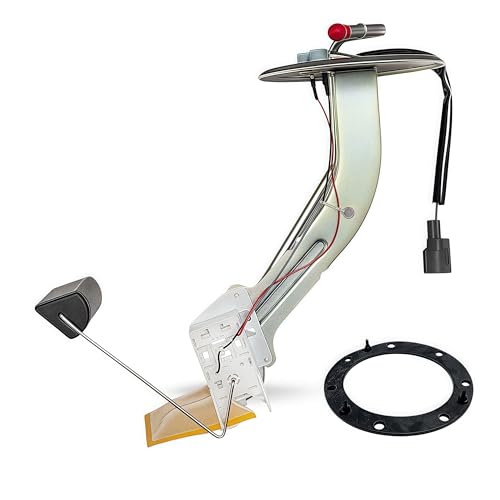
Compatible with 1996 1997 1998 1999 2000 Toyota Rav4 XA10
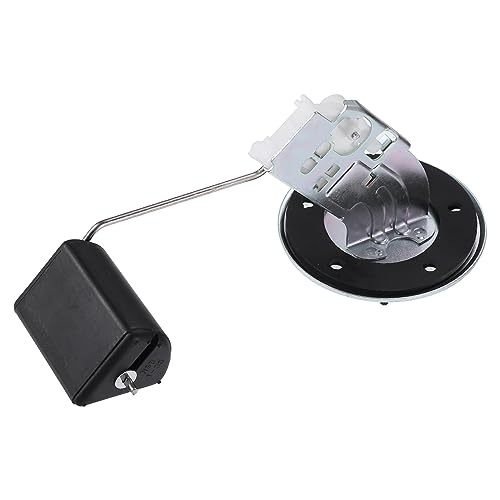
Fitment: for Lexus NX200t 2.0L 2015-2017 for Lexus NX300 2.0L 2018-2019 for Toyota RAV4 2.4L 2006-2008 for Toyota RAV4 2.5L Japan Built 2009-2018 for Toyota RAV4 V6 3.5L Japan Built 2009-2012 for Toyota RAV4 V6 3.5L 2006-2008.

Fitment: Compatible with Except Built in Japan, 2009-2012 Toyota RAV4 3.5L, 2013-2014 RAV4 2.5L FWD, 2015-2018 RAV4 FWD.
How Do Gas-Powered RAV4s Compare in Fuel Efficiency?
Gas-powered RAV4s remain relevant if you are shopping for a 2025 or older model. For 2025, Toyota offered conventional gas versions in LE, XLE, XLE Premium, and Limited grades. Adventure and TRD Off-Road gas grades were not offered for that model year.
[Amazon Products Picked for You]

Includes 60 fuel label stickers in 3 designs: Diesel Only, Gasoline Only, and Mixed Fuel Only. Each design comes with 20 pieces, making it easy to label multiple fuel cans, gas caps, tanks, trucks, tractors, and equipment.

5 1/2"W x 2 5/8"H size, 2 decals included.

1. 40 Fuel Stickers (20×Diesel Only, 20×Gasoline Only, 6"×2"): Prevent dangerous, costly fuel mix-ups by labeling fuel stations and heavy equipment to separate gasoline and diesel refueling.
2025 Gas Model MPG Ratings
The clearest benchmark is the 2025 RAV4 LE FWD, which Toyota rated at 27 city, 35 highway, and 30 combined MPG. Other gas configurations may receive lower estimates because of AWD hardware, wheels, tires, vehicle weight, or trim equipment.
Do not assume that every LE, XLE, or Limited has the same rating. When comparing used RAV4s, check the drivetrain and the fuel-economy label for that specific configuration.
AWD vs. FWD Efficiency
FWD versions usually have a small efficiency advantage because they carry less drivetrain hardware and have fewer mechanical losses. AWD can provide valuable traction, but that capability may reduce fuel economy slightly.
The difference is not always large enough to make FWD the automatic choice. Consider your climate, road conditions, towing needs, tire choice, and how often you genuinely need additional traction.
How Do Hybrid RAV4s Perform in Fuel Economy?
RAV4 Hybrids generally outperform comparable gas versions, especially in city traffic. Regenerative braking recovers some energy during deceleration, while the electric motor can reduce how often the gasoline engine must work at inefficient low speeds.
The 2025 RAV4 Hybrid LE AWD was rated at 41 city, 38 highway, and 39 combined MPG. For 2026, Toyota lists selected standard hybrid trims at up to 47 city and 40 highway MPG.
Rugged or highly equipped versions may return lower ratings. The 2026 Woodland, for example, is listed at 41 city and 35 highway MPG. Its all-terrain-focused equipment trades some efficiency for capability.
A hybrid badge alone does not determine fuel economy. Trim, drivetrain, wheels, tires, temperature, trip length, speed, and driving style all affect the result.
[Amazon Products Picked for You]

Fitment :The Center Console Cover fit for Toyota RAV4/RAV-4 Accessories 2019-2025 2020 2021 2022 2023 2024 with trim level: Adventure, LE, SE, XLE, XSE, Limited, Platinum, SE, Trail, XLE Premium, and TRD Off-Road; for Toyota RAV4 Prime Accessories 2021 2022 2023 2024 with trim level: SE, XSE; for Toyota RAV4 Hybrid Accessories 2020 2021 2022 2023 2024 with trim level: Hybrid LE, Hybrid XLE, Hybrid Woodland Edition, Hybrid XLE Premium, Hybrid SE, Hybrid XSE, Hybrid Limited.
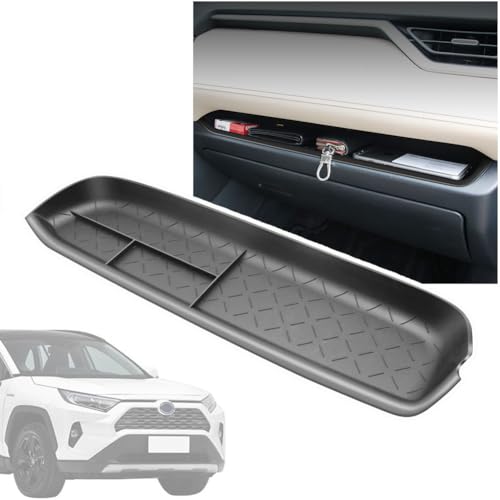
【Fitment】Glove Box Storage Organizer Tray Compatible with 2019 2020 2021 2022 2023 2024 2025 Toyota RAV4 Adventure/ Hybrid/ XLE/ LE/ Limited/ TRD Off-Road/Premium/ XLE Premium, Perfectly compatible with RAV4 accessories

Fitment: Specifically designed for Toyota RAV4 2019 2020 2021 2022 2023 2024 2025. This package includes 6 items: 1 armrest storage box, 1 dashboard organizer tray, 1 driver storage drawer, 1 passenger storage mat, 2 cup holder inserts for center console and rear seat
What About the RAV4 Plug-in Hybrid?
A RAV4 Plug-in Hybrid has a larger battery that you charge from an external power source. Its label includes MPGe for electric operation, electric driving range, and gasoline MPG for operation after the usable battery charge is depleted.
MPGe and MPG measure different things. MPGe converts electrical energy into a gasoline-equivalent figure, while MPG measures distance traveled per gallon of gasoline. A plug-in hybrid delivers its greatest fuel-saving benefit when you charge it regularly and complete many trips within its electric range.
The EPA’s fuel-economy testing guide explains how official MPG, MPGe, and range estimates are produced.
What Key Factors Affect RAV4 Fuel Economy?
EPA and manufacturer estimates come from standardized tests. They help you compare vehicles, but they cannot reproduce every commute, climate, traffic pattern, cargo load, or driving style.
| Factor | How It Can Affect MPG |
|---|---|
| Powertrain | Standard hybrids usually perform better in city traffic than comparable conventional gas models. |
| FWD or AWD | AWD hardware may add weight and mechanical losses, although the difference varies by configuration. |
| Wheels and tires | Larger wheels, aggressive tread, low pressure, or poor alignment can increase rolling resistance. |
| Speed and acceleration | Rapid acceleration, hard braking, and high highway speeds consume more fuel. |
| Trip length | Repeated short trips keep the engine and fluids below their most efficient operating temperatures. |
| Temperature | Cold weather increases warm-up time, lowers tire pressure, and can reduce hybrid-system efficiency. |
| Cargo and accessories | Roof boxes, racks, heavy cargo, and towing increase weight or aerodynamic drag. |
| Mechanical condition | Dragging brakes, alignment problems, warning-light faults, or overdue maintenance can reduce efficiency. |
The U.S. Department of Energy reports that aggressive driving can substantially reduce fuel economy. It also notes that MPG usually falls quickly at higher highway speeds, although each vehicle has a different most-efficient speed range.
Cold weather can have an especially noticeable effect on hybrids. Short trips, cabin heating, denser air, colder fluids, and reduced battery performance all contribute to seasonal MPG losses.
What Real-World RAV4 MPG Should You Expect?

Your real-world result may be above or below the official estimate. A warm, steady suburban trip can produce a very different number from a cold three-mile commute, a high-speed interstate drive, or a trip with a roof box.
Dashboard MPG readings are useful for identifying trends, but a short trip can produce an unusually high or low number. Tank-to-tank calculation gives you a better long-term picture.
How to Calculate Your RAV4’s Real-World MPG
- Fill the tank and reset the trip odometer.
- Drive normally for most or all of the tank.
- Refill the tank, preferably at the same pump and using a consistent filling method.
- Divide the miles driven by the gallons added.
- Repeat the calculation over several tanks before drawing a conclusion.
For example, driving 390 miles and adding 10 gallons gives you 39 MPG. One tank can still be affected by pump shutoff differences, weather, terrain, traffic, and remote-start use.
Note: Do not judge a hybrid by a five-minute trip display. Compare several full tanks driven under similar conditions.
What Can Cause a Sudden Drop in RAV4 MPG?
A gradual seasonal change is usually less concerning than a sharp, unexplained decline. Check these common causes:
- Low tire pressure or a recent switch to winter or all-terrain tires
- Colder weather and more short trips
- A roof rack, cargo box, trailer, or heavier load
- More idling, remote starting, or stop-and-go traffic
- Wheel-alignment problems or a dragging brake
- A check-engine light, misfire, thermostat problem, or sensor fault
- Overdue maintenance or an incorrect fluid or oil specification
Warning: Arrange a qualified inspection if the MPG drop comes with a warning light, rough running, overheating, a fuel smell, smoke, unusual braking resistance, or a noticeable loss of power.
How Can You Improve Toyota RAV4 MPG?
You cannot control every MPG variable, but a few consistent habits can reduce unnecessary fuel use:
- Accelerate smoothly: Avoid racing toward the next stop and then braking hard.
- Use steady, legal highway speeds: Aerodynamic drag rises quickly as speed increases.
- Look ahead: Ease off the accelerator early instead of making abrupt speed changes.
- Combine short errands: One warm trip is generally more efficient than several cold starts.
- Check tire pressure: Use the pressure on the driver-door placard or in the owner’s manual, not the maximum pressure molded into the tire sidewall.
- Remove unused roof accessories: Roof boxes and racks can add aerodynamic drag even when they are empty.
- Limit unnecessary cargo: Carrying extra weight requires additional energy.
- Follow the maintenance schedule: Use the specified engine oil and investigate warning lights promptly.
- Use cruise control selectively: It can help on flat, open highways but may be less efficient on steep or changing terrain.
- Drive hybrids progressively: Smooth braking gives regenerative braking more opportunity to recover energy.
Pro Tip: Record MPG, average temperature, tire pressure, and driving type for several tanks. A simple log helps you distinguish normal seasonal variation from a mechanical problem.
Related Guides
Frequently Asked Questions
What Is the Average Lifespan of a Toyota RAV4?
A RAV4 does not have one guaranteed lifespan. Many well-maintained examples reach high mileage, but longevity depends on the model year, service history, climate, corrosion, accident damage, and driving conditions. Follow the maintenance schedule for your exact vehicle rather than relying on a universal mileage promise.
Are There Any Known Issues That Can Reduce RAV4 Fuel Efficiency?
Low tire pressure, poor alignment, dragging brakes, misfires, thermostat faults, sensor problems, overdue maintenance, and incorrect tires can all reduce MPG. A sudden decline accompanied by a warning light or rough running deserves professional diagnosis.
How Do Driving Habits Affect RAV4 MPG?
Rapid acceleration, hard braking, high speeds, long idling periods, and repeated short trips can lower MPG. Smooth acceleration, early coasting, sensible speeds, and combined errands generally improve efficiency.
Do Different RAV4 Trims Affect Fuel Economy?
Yes. Trims can use different drivetrains, wheel sizes, tires, ride heights, and equipment. Rugged models with all-terrain tires may trade some fuel economy for traction and capability. Check the rating for the exact configuration you plan to buy.
What Does It Cost to Maintain a Fuel-Efficient RAV4?
Maintenance cost depends on the model year, mileage, labor rates, tires, and repairs needed. Routine oil, filter, fluid, brake, and tire service helps protect fuel economy. Use Toyota’s maintenance guide for your exact year instead of following a generic cost estimate.
Conclusion
Toyota RAV4s are generally fuel-efficient for compact SUVs, but the answer depends on the exact model. The current 2026 hybrid lineup offers the strongest standard RAV4 ratings, while the 2025 gas LE FWD provides a useful 30-combined-MPG benchmark for used-car shoppers.
Compare the certified configuration rather than the trim name alone. Then account for drivetrain, tires, temperature, trip length, speed, cargo, and maintenance when judging your real-world results.
Sources
- Toyota: 2026 RAV4 overview and trim estimates — current U.S. model lineup and listed city/highway MPG.
- Toyota USA Newsroom: 2026 Toyota RAV4 — sixth-generation powertrain and drivetrain information.
- Toyota USA Newsroom: 2025 Toyota RAV4 — 2025 gas and hybrid fuel-economy benchmarks.
- U.S. EPA: Fuel Economy and EV Range Testing — how MPG, MPGe, and range estimates are determined.
- FuelEconomy.gov: Driving More Efficiently — speed, acceleration, idling, cargo, and driving-habit guidance.
- FuelEconomy.gov: Fuel Economy in Cold Weather — seasonal effects on gas and hybrid vehicles.
