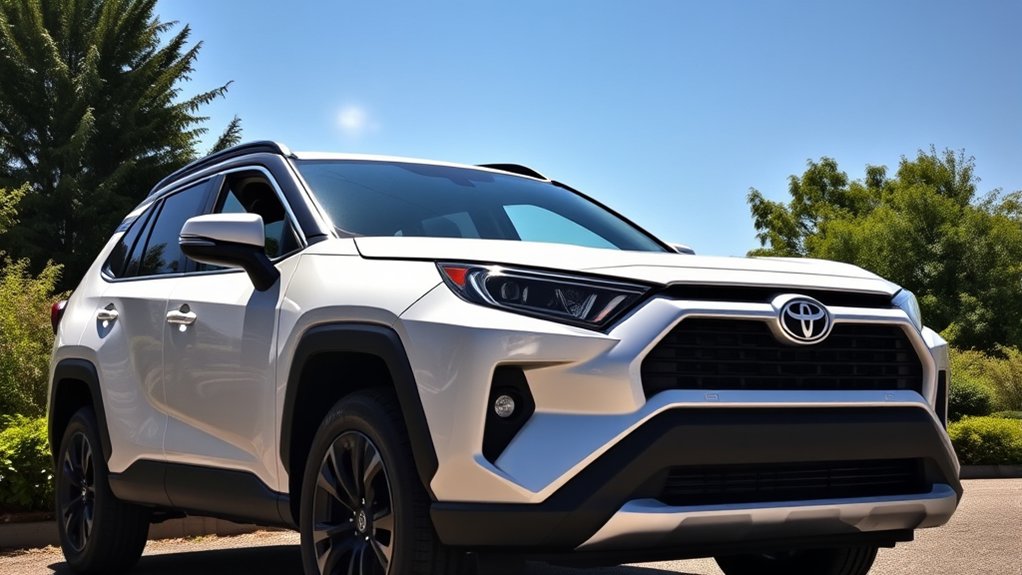
Toyota offered an optional V6 in the U.S.-market RAV4 from model years 2006 through 2012. The 3.5-liter 2GR-FE gave the third-generation RAV4 substantially more power than its four-cylinder counterpart, and properly equipped V6 models could tow up to 3,500 lbs. Toyota dropped the V6 when the redesigned 2013 RAV4 arrived, saying the compact-SUV segment was moving toward better fuel efficiency and that the larger Highlander served customers who needed more power.
Toyota’s later U.S. specifications rate the V6 at 269 horsepower and 246 lb-ft of torque. Early 2006 launch material listed 268 hp, which explains why both figures appear in older references. As of 2026, the U.S. RAV4 no longer offers any gas-only or V6 powertrain; the sixth-generation lineup consists of Hybrid and Plug-in Hybrid models.
Key Takeaways
- V6 years: The U.S.-market RAV4 offered the 3.5L V6 from 2006 through 2012.
- Output: Toyota’s later production specifications list 269 hp and 246 lb-ft; early 2006 launch material listed 268 hp.
- Performance: Toyota said the V6 RAV4 could reach 0–60 mph in about 6.3 seconds.
- Towing: A V6 RAV4 with the optional Tow Prep Package could tow up to 3,500 lbs.
- Why it ended: Toyota said the segment was moving toward greater fuel efficiency and pointed buyers needing more power toward the Highlander.
- 2026 status: The current U.S. RAV4 lineup is Hybrid and Plug-in Hybrid only, with no V6 or gas-only model.
The V6 Advantage: Performance and Towing Capacity
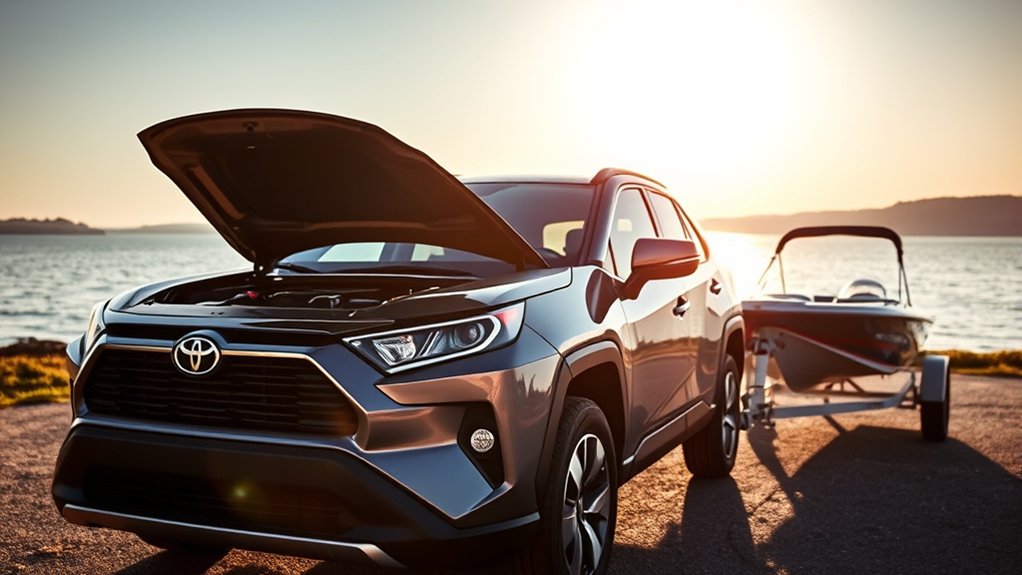
The third-generation RAV4’s optional 3.5-liter 2GR-FE V6 gave the compact crossover unusual performance for its era. Toyota’s 2012 specifications list 269 horsepower at 6,200 rpm and 246 lb-ft of torque at 4,700 rpm, paired exclusively with a five-speed automatic transmission.
Toyota also promoted acceleration as a major advantage. Its later historical material cited a roughly 6.3-second 0–60 mph time for the 2006–2012 RAV4 V6. That made straight-line performance one of the clearest differences between the V6 and the four-cylinder RAV4s sold alongside it.
The other major advantage was towing. With the optional Tow Prep Package, Toyota rated the V6 RAV4 for up to 3,500 lbs. The rating applies only to a properly equipped vehicle, so used buyers should confirm the exact factory equipment and follow the owner’s manual rather than assuming every V6 has the same towing capability.
Fuel consumption was the trade-off. For 2012, Toyota listed EPA estimates of 19 mpg city/27 mpg highway for front-wheel-drive V6 models and 19/26 mpg for four-wheel-drive V6 models.
Why do some sources say 268 hp instead of 269? Toyota’s preliminary 2006 launch specifications listed 268 horsepower, while later U.S. model-year material lists 269 horsepower. The small discrepancy comes from Toyota’s own historical specifications rather than from two different V6 engines.
How the RAV4 Evolved: A Look at the V6 Engine
The V6 appeared with the third-generation RAV4 for the 2006 model year and remained available through 2012. During that period, Toyota sold the RAV4 in Base, Sport, and Limited grades, with the V6 offered alongside four-cylinder versions.
For 2013, Toyota redesigned the RAV4 and eliminated the V6. The fourth-generation U.S. model launched with a 2.5-liter four-cylinder producing 176 hp and 172 lb-ft of torque, paired with a new six-speed automatic. Front-wheel-drive models were EPA-estimated at 24 mpg city/31 mpg highway, while all-wheel-drive versions were rated at 22/29 mpg.
That transition illustrates the trade Toyota made: less peak power than the outgoing V6, but a simpler powertrain lineup and significantly better fuel efficiency for the redesigned compact crossover.
Why Did Toyota Shift From V6 to Four-Cylinder Engines?
Toyota gave a direct explanation when it revealed the redesigned 2013 RAV4. The company said the compact-crossover segment was moving toward greater fuel efficiency and noted that the larger Highlander was meeting the needs of customers who wanted more power.
Fuel Economy Priorities
The numbers make that strategy clear. A 2012 V6 RAV4 was rated at 19 mpg city and 27 mpg highway with front-wheel drive. The redesigned 2013 four-cylinder RAV4 increased those figures to 24 mpg city and 31 mpg highway for front-wheel-drive models.
Toyota also replaced the previous four-speed automatic used with the four-cylinder engine with a six-speed automatic. Higher fifth and sixth gears helped reduce engine speed during highway driving and improve fuel economy.
Consumer Demand Trends
The transition did not stop with the 2013 four-cylinder model. Toyota introduced the first RAV4 Hybrid for the 2016 model year, expanded electrification during the fifth generation, and made the sixth-generation 2026 U.S. lineup fully electrified with Hybrid and Plug-in Hybrid powertrains.
| RAV4 Powertrain | Output | Efficiency / Key Capability |
|---|---|---|
| 2012 3.5L V6 | 269 hp | 19/27 mpg FWD; up to 3,500-lb towing with Tow Prep Package |
| 2013 2.5L 4-Cylinder | 176 hp | 24/31 mpg FWD; 1,500-lb towing capacity |
| 2026 RAV4 Hybrid | 226 hp FWD / 236 hp AWD | Up to 47/40/43 mpg city/highway/combined; selected AWD grades up to 3,500-lb towing |
| 2026 RAV4 Plug-in Hybrid | 324 hp | 0–60 mph in about 5.4 seconds; selected grades up to 3,500-lb towing |
Were Fuel-Economy Regulations the Main Reason?
Fuel-economy and emissions rules influenced the wider auto industry’s move toward more efficient powertrains, but they should not be presented as Toyota’s sole documented reason for eliminating the RAV4 V6. In Toyota’s public 2013 RAV4 presentation, the stated explanation was that the segment was moving toward better fuel efficiency and that the Highlander served customers who needed greater power.
That distinction matters: the redesigned RAV4 clearly improved fuel economy, but the most defensible explanation is the one Toyota itself gave at the time rather than an inferred regulatory motive.
Consumer Preferences: The Shift to Fuel Economy
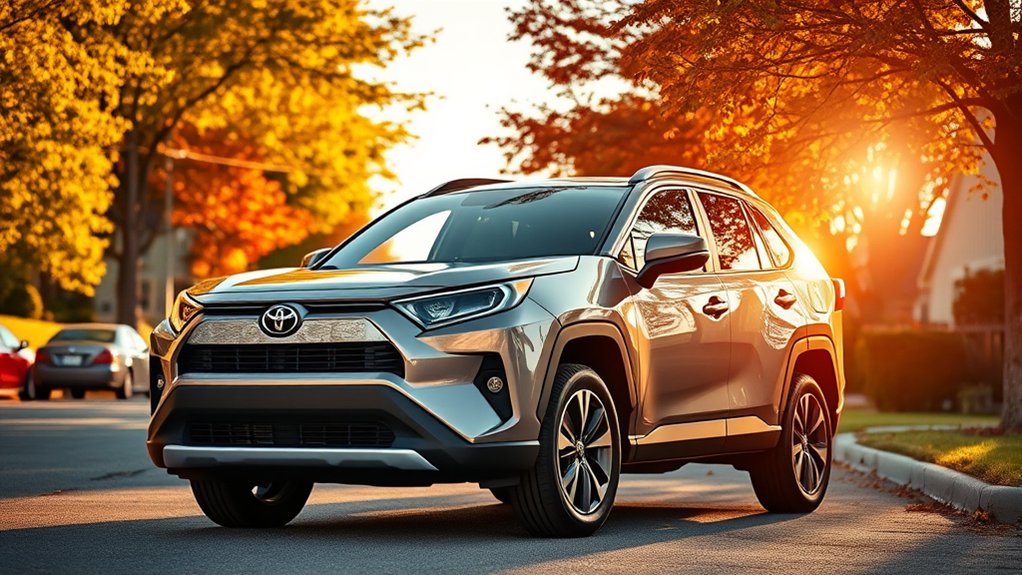
The RAV4’s powertrain history shows how Toyota changed the balance between power and fuel use. The 2012 V6 delivered 269 hp and strong acceleration but carried 19-mpg city ratings. The 2013 redesign sacrificed substantial horsepower while improving front-wheel-drive highway fuel economy to 31 mpg.
The 2026 RAV4 takes the strategy much further. There is no gas-only U.S. model: buyers choose a 2.5-liter four-cylinder Hybrid or Plug-in Hybrid. Hybrid output is 226 net combined hp with front-wheel drive or 236 hp with all-wheel drive, while Toyota lists up to 47/40/43 mpg city/highway/combined for the most efficient Hybrid configuration.
That means the modern RAV4 no longer has to trade all of the old V6’s capability for efficiency. Selected 2026 AWD grades are rated to tow as much as 3,500 lbs, matching the maximum rating of a properly equipped third-generation V6.
How Today’s RAV4 Replaces the V6’s Performance
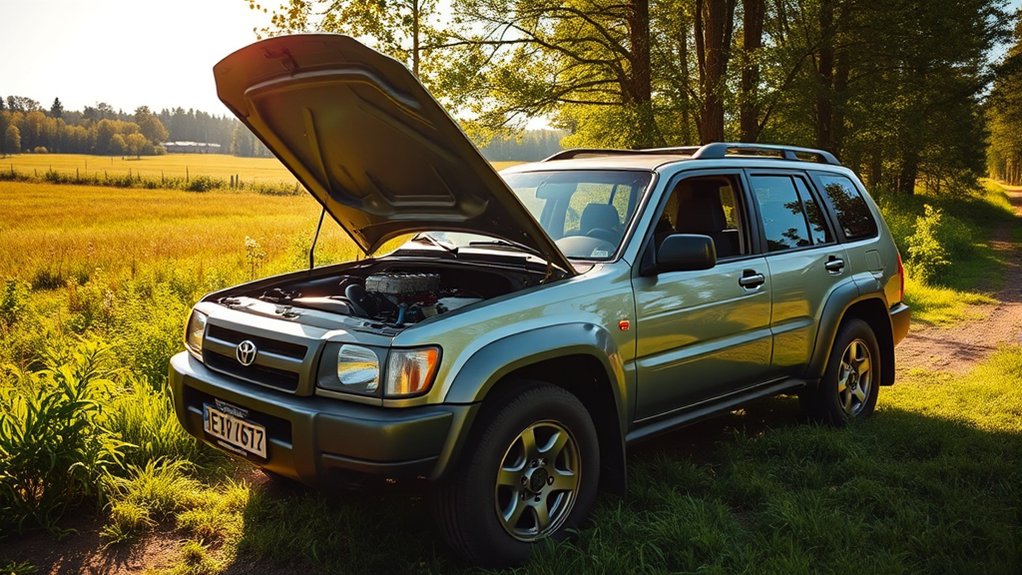
The Hybrid did not directly replace the V6 in 2013—the first RAV4 Hybrid arrived later—but electrification eventually gave Toyota a way to combine stronger performance with substantially better efficiency.
- 2026 Hybrid: The sixth-generation Hybrid produces 226 net combined hp with front-wheel drive and 236 hp with all-wheel drive.
- 2026 Plug-in Hybrid: Toyota rates the current PHEV at 324 net combined hp, exceeding the output of the old V6. Toyota lists a 0–60 mph time of about 5.4 seconds.
- Towing: Selected 2026 AWD Hybrid and Plug-in Hybrid grades are rated up to 3,500 lbs. Other configurations have lower limits, so grade and drivetrain must be checked individually.
The result is different from the old naturally aspirated V6 experience, but on paper the strongest current RAV4 now exceeds the V6 in horsepower and acceleration while selected configurations also match its maximum towing rating.
Used-Buyer Trade-Offs: Why the V6 Still Stands Out
A used 2006–2012 RAV4 V6 still offers a combination that later RAV4 generations did not immediately replicate: a naturally aspirated 3.5-liter six-cylinder engine, a five-speed automatic, quick acceleration, and up to 3,500 lbs of towing capacity when properly equipped.
The trade-offs are equally concrete. These vehicles are now more than a decade old, their fuel economy is substantially below that of modern RAV4 Hybrids, and maintenance history matters more than it would on a newer vehicle. A buyer should judge an individual V6 by its condition and records rather than assuming that the engine specification alone makes it a better purchase.
Buying a Used RAV4 V6: What Should You Check?
Start by confirming that the vehicle actually has the 3.5-liter 2GR-FE V6 and reviewing its maintenance records. For towing, verify the vehicle’s original equipment and consult the model-year owner’s manual rather than relying only on a seller’s description or an aftermarket hitch.
One documented service-history item deserves special attention. Toyota issued Limited Service Campaign 90K for certain vehicles equipped with the 2GR-FE, including certain 2006–2009 RAV4 V6 models. Toyota said the rubber portion of the VVT-i actuator oil-supply hose could degrade and leak oil. Toyota specifically described this as a limited service campaign rather than a safety recall.
Because that campaign’s original free-repair period has ended, a used buyer should check service records for the repair and inspect the vehicle for evidence of oil leakage or neglected maintenance. A pre-purchase inspection by a qualified technician is also sensible for any 2006–2012 vehicle because age-related condition can matter as much as model reputation.
Future Prospects: Will Toyota Reintroduce the V6 in the RAV4?
There is no announced V6 RAV4 in Toyota’s current U.S. lineup. The sixth-generation 2026 RAV4 launched exclusively with Hybrid and Plug-in Hybrid powertrains, both built around a 2.5-liter four-cylinder gasoline engine and electric motors.
- Current direction: The 2026 RAV4 is an electrified-only model in the United States.
- Performance no longer requires a V6: The 324-hp Plug-in Hybrid exceeds the old V6’s output and is quicker to 60 mph according to Toyota’s published figures.
- Utility has also caught up: Selected 2026 AWD configurations can tow up to 3,500 lbs, matching the maximum properly equipped V6 rating.
Toyota has not announced a future V6 return, so claims that it definitely will or never will return would be speculation. Based on the announced 2026 lineup, buyers looking for a new RAV4 choose between Hybrid and Plug-in Hybrid power rather than four- and six-cylinder gasoline engines.
Frequently Asked Questions
What years did the RAV4 offer a V6 engine option?
In the United States, the RAV4 offered the optional 3.5-liter V6 during the third generation, from model years 2006 through 2012. The redesigned 2013 RAV4 returned to a four-cylinder-only gasoline lineup. For information on today’s lineup, see the site’s guide to current RAV4 engine options.
How much horsepower did the RAV4 V6 generate?
Toyota’s later U.S. specifications list the 3.5-liter 2GR-FE V6 at 269 horsepower and 246 lb-ft of torque. Preliminary 2006 launch material listed 268 hp, which is why both figures appear in historical references.
What is the towing capacity of the RAV4 V6?
A properly equipped V6 RAV4 with Toyota’s optional Tow Prep Package could tow up to 3,500 lbs. Do not assume every V6 has the same towing equipment; verify the specific vehicle and follow its owner’s manual.
Did the V6 RAV4 have different trim levels?
Yes. In the U.S. lineup, Toyota offered V6 versions of the RAV4, Sport, and Limited grades during the third generation. Equipment and option availability varied by model year.
Why did Toyota discontinue the RAV4 V6?
At the 2013 RAV4 reveal, Toyota said the compact-crossover segment was moving toward greater fuel efficiency and that the Highlander was satisfying customers who needed more power. The redesigned 2013 RAV4 therefore launched with a 2.5-liter four-cylinder rather than an optional V6.
How does the V6 compare to the current RAV4 engines?
The 2026 RAV4 Hybrid produces 226 net combined hp with front-wheel drive or 236 hp with all-wheel drive. The 2026 RAV4 Plug-in Hybrid produces 324 net combined hp, exceeding the old V6’s 269 hp. Selected 2026 AWD grades are also rated to tow up to 3,500 lbs.
What should I check before buying a used RAV4 V6?
Confirm the engine and towing equipment, review maintenance records, and have the vehicle inspected for age-related problems. For certain 2006–2009 V6 models, also check whether the VVT-i oil-supply hose issue covered by Toyota Limited Service Campaign 90K was addressed.
Sources and Verification
- Toyota USA Newsroom: 2012 RAV4 specifications and V6 performance
- Toyota USA Newsroom: 2013 RAV4 reveal and explanation for discontinuing the V6
- Toyota: 2026 RAV4 Hybrid specifications
- Toyota: 2026 RAV4 Plug-in Hybrid specifications
- Toyota USA Newsroom: VVT-i oil-line Limited Service Campaign
Conclusion
The Toyota RAV4 V6 was a U.S.-market third-generation option from 2006 through 2012. Toyota’s later specifications rate its 3.5-liter 2GR-FE at 269 hp and 246 lb-ft of torque, and a properly equipped V6 could tow up to 3,500 lbs. Toyota eliminated the V6 for 2013 as the segment shifted toward greater fuel efficiency.
The 2026 RAV4 shows how far that transition has progressed: the U.S. lineup is now Hybrid and Plug-in Hybrid only, the strongest PHEV produces 324 hp, and selected AWD configurations can again tow as much as 3,500 lbs. If you are shopping for an older V6, focus on the individual vehicle’s maintenance history, towing equipment, VVT-i oil-hose service history where applicable, and a thorough pre-purchase inspection.

