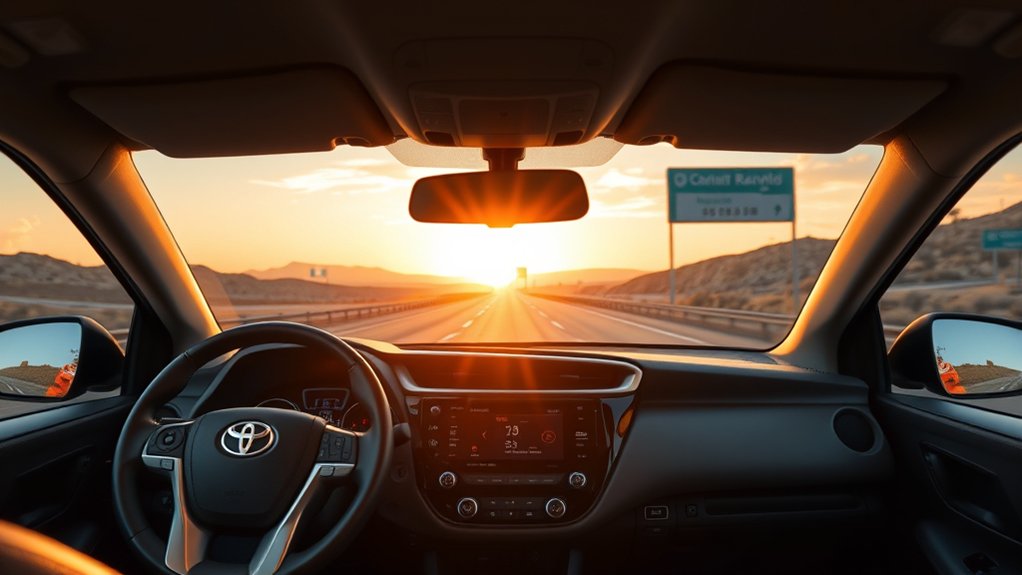
Yes. The Toyota RAV4 has cruise control, but the system depends on model year and market. In the United States, Toyota made Toyota Safety Sense P with Dynamic Radar Cruise Control (DRCC) standard on all 2017 RAV4 grades. For 2025, gas and hybrid RAV4 models use Toyota Safety Sense 2.5, while the 2025 RAV4 Plug-in Hybrid uses Toyota Safety Sense 2.5+; all include Full-Speed Range DRCC. The redesigned 2026 RAV4 lineup uses Toyota Safety Sense 4.0 with Full-Speed Range DRCC.
Last updated: September 19, 2026.
Quick Answer
Yes. U.S.-market RAV4s have had Dynamic Radar Cruise Control (DRCC) as standard equipment on every grade since the 2017 model year. The 2025 and 2026 RAV4 lineups use Full-Speed Range DRCC, which can adjust speed for detected traffic and operate down to a stop within system limits. Older RAV4s may use conventional cruise control or an earlier DRCC version, so check the owner’s manual for the exact controls and limitations.
Key Takeaways
- Toyota’s official abbreviation is DRCC, meaning Dynamic Radar Cruise Control.
- Toyota made TSS-P with DRCC standard on all U.S. RAV4 grades for 2017.
- For 2025, gas and hybrid RAV4 models use TSS 2.5, while the RAV4 Plug-in Hybrid uses TSS 2.5+; the redesigned 2026 lineup uses TSS 4.0.
- Full-Speed Range DRCC can adjust speed for a detected vehicle ahead and can operate down to a stop within system limits.
- Current Full-Speed Range DRCC systems are designed to be set at about 20 mph or higher; older systems may use different thresholds.
- DRCC is driver assistance, not self-driving technology. You must remain attentive and ready to brake or steer.
- The exact setting speed, restart behavior, buttons, and operating limits vary by model year.
Toyota RAV4 Cruise Control Options: What You Actually Get
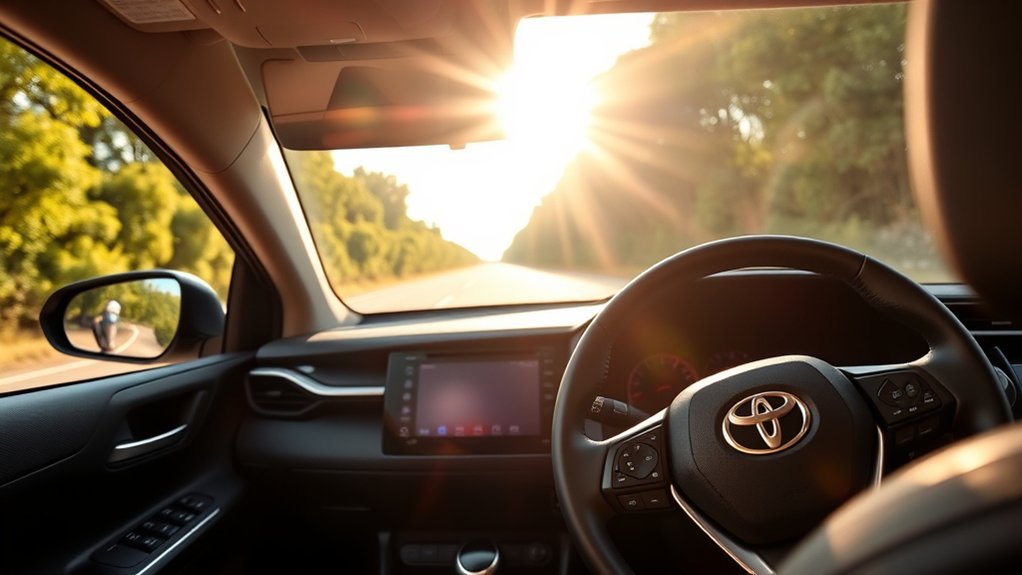
The Toyota RAV4’s cruise-control equipment has changed over time. Older models may have conventional cruise control, which holds a selected speed until the driver brakes, cancels the setting, or turns the system off. Toyota made Toyota Safety Sense P with Dynamic Radar Cruise Control standard on all U.S. RAV4 grades for 2017. Earlier availability varied by model year and equipment.
DRCC uses a forward-facing camera and radar sensor to detect a vehicle traveling ahead. When traffic slows, the system can reduce the RAV4’s speed to help maintain the selected vehicle-to-vehicle distance. When the road clears, it can accelerate toward the driver’s set speed.
According to Toyota, the 2025 U.S. RAV4 gas and hybrid lineup uses Toyota Safety Sense 2.5 with Full-Speed Range DRCC. The 2025 RAV4 Plug-in Hybrid uses Toyota Safety Sense 2.5+ with Full-Speed Range DRCC. The 2026 U.S. RAV4 moves to Toyota Safety Sense 4.0, which includes Full-Speed Range DRCC across the lineup.
| U.S. Model Year | Toyota Safety Sense | Cruise-Control System |
|---|---|---|
| 2017 | Toyota Safety Sense P | DRCC standard on all grades |
| 2025 gas / hybrid | Toyota Safety Sense 2.5 | Full-Speed Range DRCC |
| 2025 Plug-in Hybrid | Toyota Safety Sense 2.5+ | Full-Speed Range DRCC |
| 2026 | Toyota Safety Sense 4.0 | Full-Speed Range DRCC |
Note: Equipment can differ outside the United States and on older model years. Enter your vehicle’s year and model on Toyota’s owner’s manual lookup page before relying on a general guide.
How Standard Cruise Control Works in the RAV4
Conventional cruise control maintains a speed selected by the driver. It does not normally slow down because another vehicle enters your lane or traffic ahead loses speed.
A typical operating sequence is to turn on the cruise-control system, reach the desired road speed, and press the SET control. The RAV4 then attempts to hold that speed until you press the brake pedal, select CANCEL, switch off cruise control, or take another action described in the owner’s manual.
Conventional cruise control works best on open, relatively level highways with light traffic. It is less suitable when traffic speeds change frequently because the driver must repeatedly cancel, brake, and reset the system.
Some DRCC-equipped RAV4s also provide a constant-speed cruise mode. That mode behaves more like conventional cruise control and does not automatically maintain spacing behind a vehicle ahead. The method for selecting it varies, so do not assume the same button sequence applies to every model year.
Advantages and Limits of Dynamic Radar Cruise Control
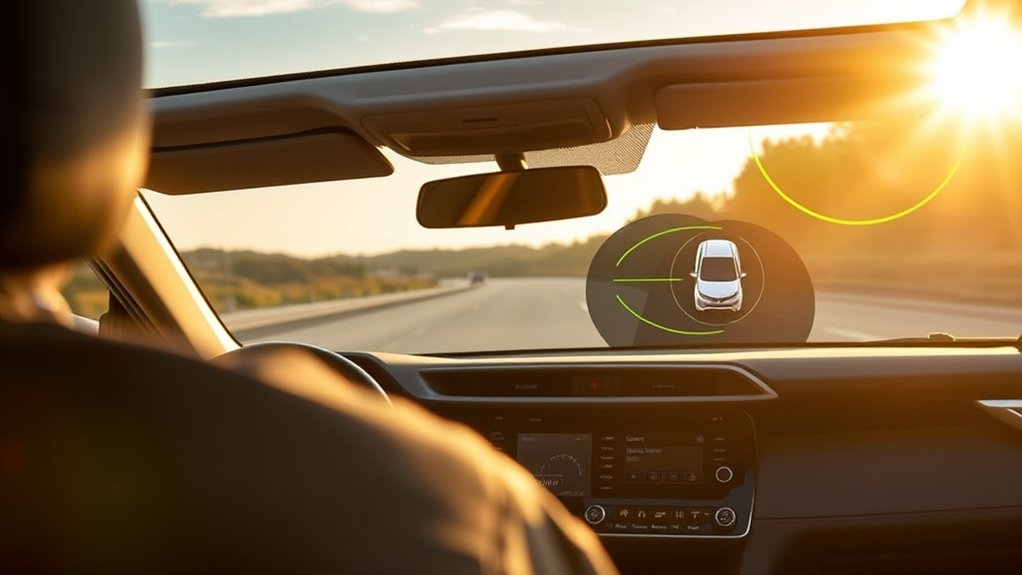
DRCC can make highway travel more comfortable by reducing repetitive accelerator and brake inputs. After you set a cruising speed and following-distance level, the system can respond to a slower vehicle detected in your lane.
Full-Speed Range DRCC may also follow a vehicle to a complete stop. When traffic begins moving again, the RAV4 may resume following automatically or may require the driver to press RES or lightly press the accelerator. The exact behavior can depend on the model year, how long the vehicle remains stopped, and whether the system continues detecting the vehicle ahead.
Many RAV4s let you choose from several following-distance settings. These settings change the target spacing used by DRCC, but they do not guarantee a safe gap. Rain, snow, ice, fog, curves, speed, tire condition, towing weight, and driver reaction time can all affect the distance needed to stop safely.
Warning: DRCC does not make the RAV4 self-driving. Keep your eyes on the road, keep your hands ready to steer, and be prepared to brake immediately. The system may not detect every vehicle, stopped object, pedestrian, curve, lane change, or road hazard.
Adaptive cruise control assists with speed and spacing; responsibility for steering, braking, and avoiding hazards always remains with the driver.
Standard vs. Dynamic Radar Cruise Control: How Do They Compare?
| Feature | Conventional Cruise Control | Full-Speed Range DRCC |
|---|---|---|
| Maintains a set speed | Yes | Yes, when traffic permits |
| Responds to a slower vehicle ahead | No | Yes, when the vehicle is detected within system limits |
| Selectable following distance | No | Yes |
| Can follow traffic to a stop | No | Full-speed versions may do so under suitable conditions |
| Driver must remain attentive | Always | Always |
Conventional cruise control is simple and predictable on an open road. DRCC is more useful when highway traffic changes speed, but it introduces sensors, operating limits, and situations in which the driver must intervene.
For a deeper look at following-distance behavior, operating modes, and model-year differences, see our Toyota RAV4 Dynamic Radar Cruise Control guide.
How to Use Dynamic Radar Cruise Control in Your RAV4
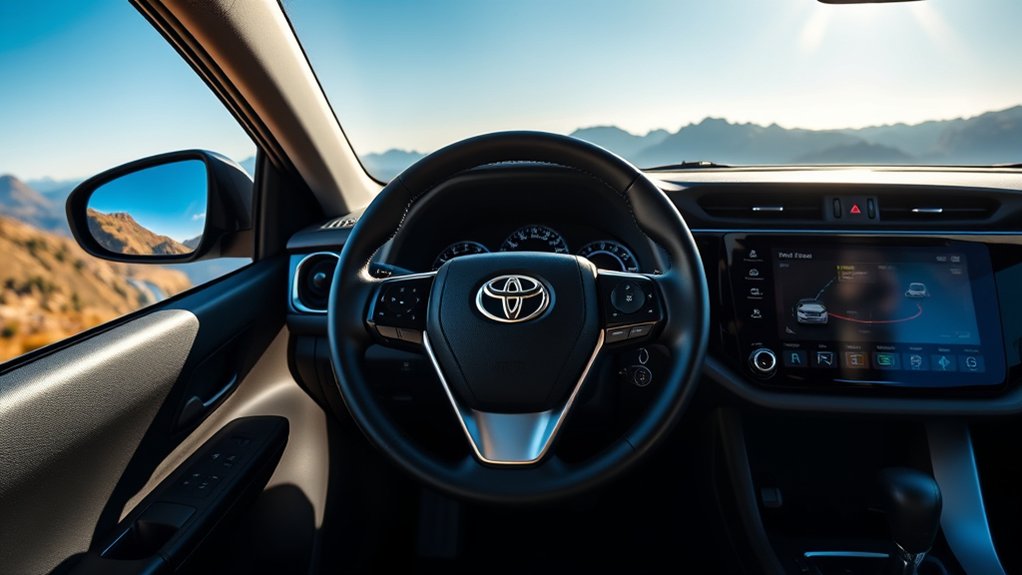
At a Glance
| Time Required | Review the controls before driving; setup uses the normal steering-wheel inputs described below |
| Difficulty | Easy, although buttons and behavior vary by model year |
| Tools Needed | No tools; keep the model-specific owner’s manual available |
| Cost | No tools or parts are required for normal operation; Full-Speed Range DRCC is standard equipment on 2025 and 2026 U.S. RAV4 models |
- Choose suitable conditions. Begin on a clear, dry, relatively straight highway with light traffic. Do not learn the controls in heavy traffic or poor weather.
- Turn on DRCC using your model-year controls. Use the cruise or driver-assist control identified in your owner’s manual, then confirm that the DRCC or adaptive-cruise indicator appears in the instrument display. Button labels and switch layouts differ by model year.
- Reach the required setting speed. Accelerate normally. Toyota describes Full-Speed Range DRCC on the 2025 and 2026 RAV4 as having a minimum set speed of about 20 mph, while older RAV4 systems may use a different threshold.
- Set your speed. Press the SET control when you reach the desired speed. Confirm the displayed set speed before easing pressure from the accelerator.
- Select a following-distance setting. Use the vehicle-to-vehicle distance button to cycle through the available levels. Choose more space when speed, traffic, visibility, or road conditions make a longer gap appropriate.
- Continue supervising the vehicle. Watch traffic and road conditions continuously. Brake, steer, or cancel DRCC whenever the system’s response is unsuitable.
- Cancel or resume. Press the brake pedal or CANCEL control to suspend cruise control. Use RES to return to the stored speed only when conditions are safe.
- Turn the system off when finished. Use the model-year cruise or driver-assist control to switch the system off, then confirm that the active cruise indicator is no longer shown.
Pro Tip: Begin with the longest available following-distance setting while learning DRCC. Shorter settings reduce the target spacing, but they do not improve the system’s ability to recognize hazards.
What Happens in Stop-and-Go Traffic?
If your RAV4 has Full-Speed Range DRCC, it may slow behind detected traffic and follow the vehicle ahead to a stop. Keep your foot ready to brake because the system may cancel, issue a warning, or require more braking than it can provide.
When traffic moves, some RAV4 versions resume after a brief stop. Others require the driver to press RES or lightly press the accelerator. Consult the exact manual rather than assuming the RAV4 will restart by itself.
How to Use Constant-Speed Mode
Some DRCC-equipped RAV4s allow the driver to select a constant-speed mode that does not adjust speed for traffic ahead. The selection procedure varies by model year and steering-wheel design. Follow the “constant speed control mode” instructions in your owner’s manual instead of relying on a universal button-hold sequence.
When Not to Use RAV4 Cruise Control
Cruise control is best reserved for predictable road and traffic conditions. Avoid relying on it when frequent manual speed changes or rapid intervention may be necessary.
- Snow, ice, standing water, or other slippery surfaces
- Heavy rain, fog, blowing snow, or poor visibility
- Sharp curves, winding roads, or narrow lanes
- Steep hills where the vehicle cannot maintain speed smoothly
- Construction zones or areas with changing lane markings
- Dense traffic that requires frequent braking or lane changes
- Any condition in which the radar or camera may be blocked
- Towing situations in which grades, trailer movement, or frequent transmission shifts require closer manual control
Troubleshooting: Why RAV4 DRCC May Be Unavailable
A temporary warning does not always mean the system has permanently failed. DRCC may become unavailable when its sensors cannot obtain a reliable view of the road or when operating requirements are not met.
Check the Sensor and Camera Areas
Dirt, snow, ice, road salt, stickers, accessories, or condensation can interfere with the radar sensor or forward-facing camera. Safely park the vehicle and clean only the areas identified in the owner’s manual. Do not strike, disassemble, paint, or reposition a sensor cover.
Consider Weather and Visibility
Heavy rain, snow, fog, glare, or spray from other vehicles may temporarily limit detection. Use manual speed control until conditions improve and the warning clears.
Confirm the Operating Mode
Make sure the cruise-control system is on, the correct mode is selected, and the RAV4 has reached the minimum speed required to set the system. Check the instrument display for an explanatory message.
When to Request Service
If a warning remains after the sensor areas are clean and driving conditions have improved, consult the owner’s manual. Arrange an inspection through a qualified Toyota service facility if the message persists or the system behaves unpredictably.
If the system still will not set, repeatedly cancels, or shows a warning after those checks, use our RAV4 cruise-control reset and diagnostic guide for a more detailed troubleshooting sequence.
Frequently Asked Questions
Which RAV4 years have adaptive cruise control?
For U.S.-market RAV4s, Toyota made Toyota Safety Sense P with DRCC standard on all grades for 2017. Later systems evolved to Full-Speed Range DRCC. Availability before 2017 varies by model year and equipment, so check the exact owner’s manual.
What is the minimum speed to set cruise control on a 2025 or 2026 RAV4?
Toyota describes Full-Speed Range DRCC on the 2025 and 2026 RAV4 as having a minimum set speed of approximately 20 mph. After it is set, full-speed operation can manage lower-speed following within system limits. Older RAV4 systems may use different thresholds.
Can I use cruise control in all driving conditions?
No. Cruise control is best used on clear, dry, predictable roads. Avoid relying on it on slippery surfaces, in poor visibility, through sharp curves, on difficult grades, or in traffic that requires frequent braking and lane changes.
Does cruise control improve fuel economy in the RAV4?
It can help on a relatively level highway by maintaining a steadier speed and limiting unnecessary acceleration. Savings are not guaranteed, however. Hills, traffic, wind, towing, and repeated automatic acceleration can reduce or eliminate the benefit.
Is cruise control available on all RAV4 trim levels?
Full-Speed Range DRCC is standard across the 2025 and 2026 U.S. RAV4 lineups as part of Toyota Safety Sense. Availability and system capability vary on older model years and vehicles sold in other markets.
How do I turn off cruise control in the RAV4?
Pressing the brake pedal or CANCEL control normally suspends the active speed setting. To turn the system off completely, use the cruise or driver-assist control shown in your model-year owner’s manual and confirm that the active cruise indicator is no longer shown.
Can cruise control be used while towing with the RAV4?
Use the guidance in the owner’s manual for your RAV4 and trailer setup. Even where cruise control is permitted, manual speed control is usually the safer choice on steep grades, winding roads, slippery surfaces, or whenever the trailer causes frequent speed or transmission changes.
Does Dynamic Radar Cruise Control steer the RAV4?
DRCC primarily manages speed and following distance. Some RAV4s pair it with Lane Tracing Assist, which can provide limited steering support when its requirements are met. The driver must still supervise the road and steer as necessary.
Why does my RAV4 not resume after traffic starts moving?
After a stop, some versions require the driver to press RES or lightly press the accelerator. The system may also remain stopped or cancel if it loses sight of the vehicle ahead, the stop lasts too long, or another operating condition is not satisfied.
Conclusion
The Toyota RAV4 does have cruise control, and the 2025 and 2026 U.S. lineups include Full-Speed Range Dynamic Radar Cruise Control as standard equipment. DRCC can hold a selected speed, adjust for detected traffic, and provide stop-and-go assistance within system limits, but its controls and capabilities differ by model year and driving conditions.
Treat the system as a convenience rather than an automatic driver. Confirm the controls in your RAV4’s owner’s manual, choose an appropriate following distance, and remain prepared to brake, steer, cancel, or take full control at any time.
Sources
- Toyota: 2017 RAV4 — Toyota Safety Sense P and DRCC standard on all U.S. grades
- Toyota Safety Sense — official DRCC terminology, system generations, setting speeds, and operating overview
- Toyota: 2025 RAV4 — Toyota Safety Sense 2.5 and Full-Speed Range DRCC equipment
- Toyota: 2025 RAV4 Plug-in Hybrid — Toyota Safety Sense 2.5+ and Full-Speed Range DRCC equipment
- Toyota: 2026 RAV4 — Toyota Safety Sense 4.0 and current RAV4 safety features
- Toyota Owner’s Manuals — model-year-specific controls, warnings, and operating limitations
- National Highway Traffic Safety Administration: Driver Assistance Technologies — adaptive-cruise definitions and driver-responsibility guidance
- FuelEconomy.gov: Driving More Efficiently — cruise control and steady-speed fuel-economy guidance

