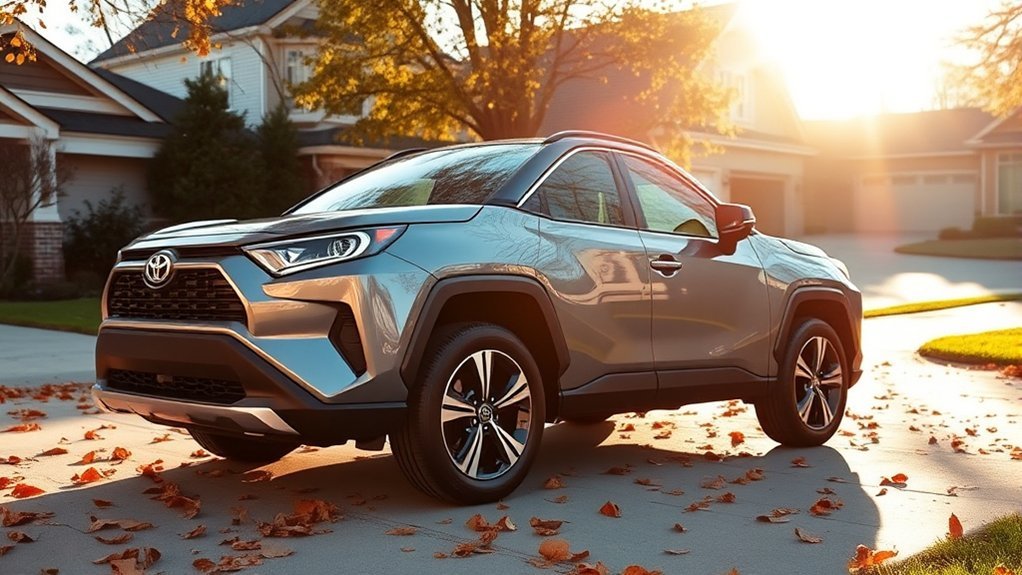
Yes. The Toyota RAV4 has strong resale value. As of September 19, 2026, iSeeCars’ current model-specific pages report about 25.4% five-year depreciation for the RAV4 and 24.6% for the RAV4 Hybrid, equal to roughly 74.6% and 75.4% retained value. A separate March 24, 2026 iSeeCars study grouped the RAV4/RAV4 Hybrid at 25.2% depreciation and ranked it first among the small SUVs in that study. Your exact selling price still depends on model year, powertrain, trim, mileage, condition, title history, location, and demand.
By Nathan Rhodes — GoMyReview writer covering practical automotive troubleshooting, vehicle maintenance, and consumer technology. Originally published January 19, 2026. Last updated: September 19, 2026.
Quick Answer
Yes. Current 2026 iSeeCars model pages put five-year retained value at about 74.6% for the RAV4 and 75.4% for the RAV4 Hybrid. In iSeeCars’ dated March 24, 2026 study, the combined RAV4/RAV4 Hybrid entry retained 74.8% and ranked first among the small SUVs listed. Treat those figures as market benchmarks, not as a VIN-specific appraisal.
Key Takeaways
- Current iSeeCars model pages show roughly 74.6% five-year retained value for the RAV4 and 75.4% for the RAV4 Hybrid; the March 2026 annual study grouped them at 74.8%.
- Mileage matters, but condition, accident history, title status, trim, powertrain, location, and maintenance records can matter just as much.
- There is no universally “best” used RAV4 year. Evaluate the exact VIN, service history, recall status, and mechanical condition.
- Trade-in, private-party, and dealer-retail values are different numbers, so compare multiple offers before selling.
Note: Depreciation percentages can differ between sources—and even between separate analyses from the same source—because datasets, mileage assumptions, price definitions, and modeling methods differ. Use one methodology consistently when comparing vehicles, and use current local offers to value a specific RAV4.
How Well Does the Toyota RAV4 Hold Its Value?
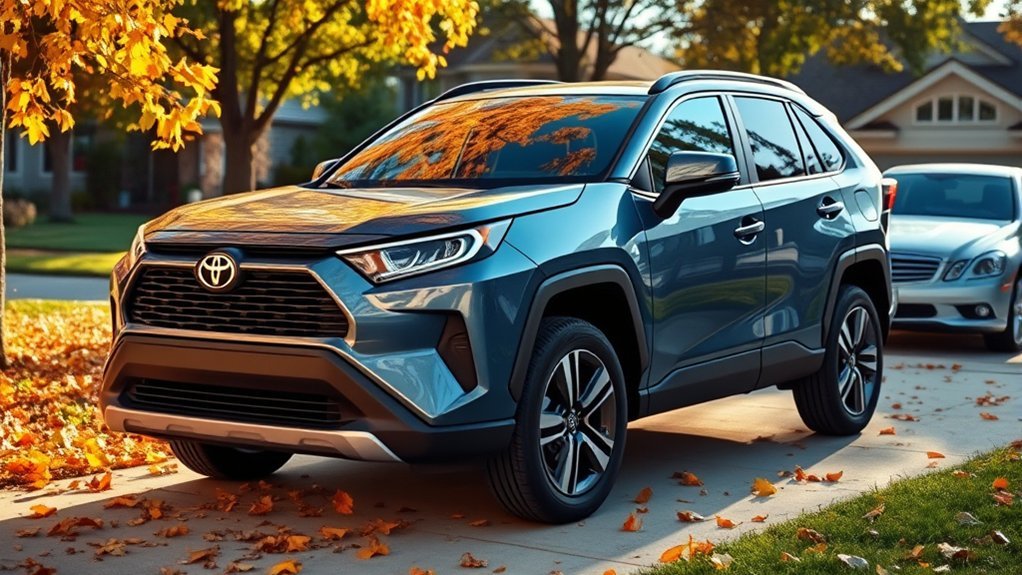
Depreciation is the difference between what a vehicle cost when new and what it is worth later. It is normally one of the largest ownership costs, even though it does not appear as a monthly bill.
Two iSeeCars views are useful here. Its current Toyota RAV4 resale-value page reports 25.4% five-year depreciation, while its current RAV4 Hybrid resale-value page reports 24.6%. Those figures correspond to about 74.6% and 75.4% retained value.
For a dated, same-method comparison across vehicles, the March 24, 2026 iSeeCars depreciation study analyzed more than 950,000 five-year-old used vehicles sold from March 2025 through February 2026. MSRPs were adjusted to 2026 dollars and compared with mathematically modeled used asking prices.
In that dated study, the Toyota RAV4 and RAV4 Hybrid were grouped at 25.2% depreciation after five years, or about 74.8% retained value. The overall vehicle average lost 41.8%, while the small-SUV average lost 41.7%. The slight difference from iSeeCars’ current model-specific pages is a reminder not to mix percentages from different analyses as if they were one dataset.
The RAV4/RAV4 Hybrid ranked ninth among all vehicles in the 2026 study and first among the small SUVs listed for five-year value retention.
| March 2026 Small-SUV Benchmark | 5-Year Depreciation | Approx. Retained Value |
|---|---|---|
| Toyota RAV4 / RAV4 Hybrid | 25.2% | 74.8% |
| Honda HR-V | 28.8% | 71.2% |
| Honda CR-V | 28.9% | 71.1% |
| Subaru Crosstrek | 29.1% | 70.9% |
| Subaru Forester | 32.6% | 67.4% |
| Small-SUV average | 41.7% | 58.3% |
The study’s average dollar difference from inflation-adjusted MSRP was $7,731. That is not a prediction that every RAV4 will lose exactly $7,731. A high-trim Hybrid, an older base model, a damaged vehicle, and a low-mileage one-owner RAV4 can produce very different results.
How Much Will Your RAV4 Be Worth After Five Years?
A five-year value cannot be calculated accurately from the model name alone. You need the original or comparable new price, exact trim and powertrain, current mileage, condition, history, location, and the market at the time of sale.
What Does 74.8% Retained Value Mean?
The March 2026 study’s 74.8% figure is useful for understanding the group average, but it is not a personal appraisal formula. The study first adjusted original MSRP to 2026 dollars. If you want to illustrate the study’s math, use the same inflation-adjusted basis:
Illustrative benchmark value = inflation-adjusted new-price basis × 0.748
| Hypothetical Inflation-Adjusted New-Price Basis | Value at 74.8% Retention |
|---|---|
| $35,000 | About $26,180 |
| $40,000 | About $29,920 |
These examples are not appraisals and should not be calculated from your old sticker price without the same inflation adjustment. The iSeeCars study compares inflation-adjusted MSRP with modeled asking prices; an owner may instead be comparing the actual transaction price with a trade-in or private-party offer. Those measurements are not interchangeable.
How to Get a More Accurate RAV4 Value
For a useful estimate, gather the following details before checking valuation tools or requesting offers:
- Exact year, trim, and powertrain: Gas, Hybrid, and Plug-in Hybrid versions can have different demand and pricing.
- Drivetrain and factory equipment: AWD, safety technology, premium packages, upgraded audio, and desirable convenience features may affect local demand.
- Mileage and condition: Use the actual odometer reading and describe cosmetic or mechanical defects honestly.
- Vehicle history: Accidents, branded titles, flood exposure, theft recovery, and number of owners can materially change value.
- ZIP code: Inventory, weather, fuel costs, taxes, and regional demand affect offers.
- Type of value: Compare trade-in, instant-purchase, private-party, and dealer-retail figures separately.
Request at least two or three real purchase offers. An online estimate can be useful, but a written offer shows what a buyer is willing to pay under current local conditions.
What Factors Affect a Toyota RAV4’s Resale Value?

The RAV4 nameplate provides a strong starting point, but buyers price the individual vehicle in front of them. Two RAV4s from the same model year can differ by thousands of dollars because of equipment, history, condition, and location.
Market Demand, Powertrain, Trim, and Location
Demand tends to be strongest for configurations that match local needs. AWD can be particularly attractive in regions with snow, steep roads, or frequent poor weather. Fuel-efficient Hybrid models may receive stronger interest where fuel prices are high or commuting distances are long.
The March 2026 iSeeCars study reported 25.3% five-year depreciation for the RAV4 Hybrid, making it the strongest-value hybrid in that study. iSeeCars’ current RAV4 Hybrid model page now shows 24.6%, which comes from a separate analysis. The practical lesson is the same: the Hybrid has strong resale performance, but compare actual local prices rather than assuming one powertrain always produces a fixed resale premium.
If you are deciding between powertrains rather than only estimating resale, see our Toyota RAV4 gas vs. hybrid cost, MPG, and performance comparison. For 2026 new models, Toyota no longer offers a gas-only U.S. RAV4.
Factory packages can increase resale appeal, but owners rarely recover the full original cost of every option. Features with broad everyday usefulness—such as AWD, driver-assistance technology, heated seats, a power liftgate, and a desirable infotainment system—may be easier for used buyers to value than highly personal accessories.
Vehicle Condition and Maintenance
Condition affects both the number of interested buyers and the deductions an appraiser applies. Important value factors include:
- Warning lights, fluid leaks, unusual noises, or unresolved mechanical problems
- Tire tread, wheel damage, windshield chips, and worn brakes
- Dents, scratches, mismatched paint, hail damage, or corrosion
- Stains, smoke or pet odors, torn upholstery, and missing interior pieces
- Missing keys, cargo covers, charging cables, manuals, or factory equipment
- Incomplete maintenance records or long gaps between services
Receipts and service records help buyers understand how the vehicle was cared for. They do not erase normal depreciation, but they can reduce uncertainty and support your asking price.
Accident, Title, and Recall History
Structural damage, airbag deployment, flood exposure, or a salvage, rebuilt, or lemon-law title can significantly reduce a vehicle’s value. Even a professionally repaired accident may produce a lower offer than a comparable no-accident RAV4.
Before buying or selling, use the NHTSA recall lookup to check the specific 17-character VIN for unrepaired safety recalls. A model-year search gives general information, but the VIN identifies whether a particular vehicle currently needs a recall repair.
Warning: A clean-looking vehicle and a history report are not substitutes for a mechanical inspection. The Federal Trade Commission recommends an independent inspection even when a used vehicle is advertised as certified or comes with a warranty.
How to Maximize Your Toyota RAV4 Resale Value
You cannot stop depreciation, but you can avoid preventable value deductions and make the vehicle easier to sell.
- Follow the correct maintenance schedule. Use the schedule for your exact model year and powertrain rather than a generic interval.
- Keep organized records. Save service invoices, recall-repair documentation, tire receipts, and major repair records.
- Fix warning lights and safety problems. Buyers and appraisers normally deduct more when they must diagnose an unresolved fault.
- Protect the exterior and interior. Wash road salt away, repair windshield damage promptly, clean spills, and avoid permanent odors.
- Keep original equipment. Retain both keys, manuals, cargo accessories, wheel-lock keys, charging equipment, and removable factory parts.
- Use quality, specification-compliant parts and fluids. Genuine Toyota parts may appeal to some buyers, but good documentation and correct specifications matter more than an unsupported promise of guaranteed reliability.
- Compare multiple selling channels. A trade-in is convenient, while a private sale may produce more money but requires advertising, communication, paperwork, and fraud precautions.
Pro Tip: Get real purchase offers before paying for cosmetic work. A professional detail or small repair may help, but an expensive repair does not always increase the offer by an equal amount.
There is no universal rule that the five-year mark is the perfect time to sell. Consider the remaining loan balance, warranty coverage, upcoming maintenance, current offers, replacement-vehicle cost, and how long you plan to keep the next vehicle.
Should You Buy a New or Used RAV4 for Resale Value?

A used RAV4 can reduce the amount of early depreciation you personally absorb, but the savings are not a fixed dollar amount. Prices depend on incentives, availability, interest rates, mileage, condition, trim, and the difference between the outgoing and redesigned generations.
The 2026 U.S. RAV4 also changes the comparison because it begins the sixth generation and is offered with Hybrid Electric Vehicle (HEV) or Plug-in Hybrid Electric Vehicle (PHEV) powertrains rather than a gas-only version. Many used 2019–2025 RAV4s are gas models, so a “new vs. used” decision can also be a generation and powertrain decision. Toyota confirms the 2026 lineup and drivetrain choices on its 2026 RAV4 overview.
| Consideration | New RAV4 | Used RAV4 |
|---|---|---|
| Purchase price | Usually higher, although incentives can narrow the gap | Usually lower, but late-model supply can be expensive |
| Depreciation | You absorb the vehicle’s depreciation from new | A previous owner has absorbed part of the depreciation |
| Warranty and maintenance | Full new-vehicle coverage and applicable ToyotaCare benefits | Coverage depends on age, mileage, certification, and remaining warranty |
| Condition and history | No prior-owner history | Requires history review and inspection |
| Features | Latest design, technology, and safety systems | Potentially lower cost but older technology |
A lightly used RAV4 can offer strong value, but only when its discount adequately compensates for its mileage, age, condition, financing terms, and reduced warranty coverage.
New Toyota vehicles may include applicable ToyotaCare scheduled-maintenance coverage. Toyota’s current U.S. materials list two years or 25,000 miles, whichever comes first, for the standard plan in applicable listings. Confirm the exact vehicle’s coverage and exclusions before using that benefit in your comparison.
Insurance should also be quoted for the exact vehicle. Premiums depend on the driver, garaging ZIP code, coverage, deductibles, claims history, annual use, insurer, and state rules—not simply whether the RAV4 is new or used.
How Mileage Affects Your Toyota RAV4 Resale Value
Mileage is a major valuation input because it serves as a rough indicator of use and future wear. However, there is no universal dollar penalty for a particular odometer reading. If you are shopping rather than selling, our guide to how many miles a used Toyota RAV4 should have explains how to judge mileage against age, records, and condition.
Appraisers normally consider mileage in relation to the vehicle’s age. A three-year-old RAV4 with 90,000 miles will usually be treated differently from a ten-year-old RAV4 with the same mileage. Local comparable listings also matter: a mileage level that is common in a rural market may stand out in an urban commuter market.
Lower mileage can support a higher price when two vehicles are otherwise comparable, but extremely low mileage does not excuse poor maintenance, old tires, fluid deterioration, rodent damage, corrosion, or long periods of improper storage.
Do not avoid necessary driving solely to protect a theoretical resale value. The more useful goal is to prevent avoidable wear:
- Keep tires correctly inflated and aligned.
- Avoid overloading or towing beyond the vehicle’s limits.
- Address fluid leaks, noises, vibration, and warning lights promptly.
- Use floor protection and cargo liners when carrying dirty equipment.
- Follow time-based maintenance even when annual mileage is low.
Does Maintenance Help a RAV4 Hold Its Resale Value?
Maintenance supports reliability and buyer confidence, but no fixed five-year maintenance cost applies to every RAV4. Costs vary by model year, gas or hybrid powertrain, mileage, labor rates, tires, driving conditions, and unexpected repairs.
Use Toyota’s manual and warranty portal to find the maintenance guide for the correct model year. Toyota’s maintenance requirements can change by model, powertrain, mileage, and operating conditions, so use the schedule and any special operating-condition notes written for the exact vehicle.
| Maintenance Aspect | Why It Matters at Resale |
|---|---|
| Scheduled maintenance | Reduces uncertainty about neglected fluids, filters, inspections, and wear items |
| Specification-compliant parts and fluids | Shows repairs were performed with appropriate materials rather than improvised substitutes |
| Service records | Give buyers and appraisers evidence of completed work |
| Recall completion | Removes unresolved safety concerns associated with the VIN |
| Interior and exterior care | Reduces visible deductions and improves the vehicle’s first impression |
Before listing the vehicle, remove personal data from the infotainment system, delete saved garage-door codes, collect both keys and accessories, clean the cargo area, check tire pressure, and gather the title, payoff information, manuals, and service documents.
How Should You Evaluate a Used RAV4 Before Buying?
A strong model-level resale record does not make every used RAV4 a good purchase. The best vehicle is one whose price accurately reflects its condition, equipment, history, and expected repair needs.
Choose a used RAV4 by its VIN, maintenance history, condition, inspection results, and price—not from a blanket list of “best years.”
Use this buying process:
- Compare the exact configuration. Match model year, trim, powertrain, drivetrain, mileage, and major options.
- Review the history. Look for accidents, title brands, flood records, theft recovery, ownership changes, and mileage inconsistencies.
- Check recalls by VIN. Confirm whether any safety recall remains unrepaired.
- Inspect the records. Look for evidence of regular maintenance and documented major repairs.
- Get an independent inspection. A history report may not reveal mechanical wear or a poor-quality repair.
- Test every feature. Check climate control, cameras, driver-assistance systems, windows, locks, liftgate, charging equipment, infotainment, and warning lights.
- Compare the full cost. Include taxes, registration, financing, insurance, immediate maintenance, tires, and dealer add-ons.
The Federal Trade Commission’s used-car guidance recommends obtaining the out-the-door price in writing, reviewing the Buyers Guide, checking warranty terms, getting a vehicle-history report, and arranging an independent inspection.
Frequently Asked Questions
What are the best years for buying a used RAV4?
There is no universally best model year. Newer RAV4s may offer updated safety and infotainment technology, while older vehicles can cost less. Compare the exact VIN’s maintenance records, accident and title history, recall status, mileage, condition, inspection results, and price. A well-maintained vehicle from a supposedly weaker year can be a better purchase than a neglected example from a popular year.
How does color affect a RAV4’s resale value?
Color is usually a secondary factor behind condition, mileage, trim, and history. An iSeeCars color study found that rare SUV colors such as orange, green, and yellow depreciated less on average than black and white. However, the result covered SUVs broadly, not only RAV4s, and local supply and buyer preferences can differ.
Are there common issues that affect RAV4 resale value?
Any unresolved mechanical fault, warning light, poor repair, accident damage, corrosion, title brand, missing maintenance record, or open recall can reduce value. Do not assume every RAV4 shares the same transmission or electrical problem. Research the specific model year and powertrain, check the VIN, review service records, and obtain an independent inspection.
How does mileage affect insurance rates for a RAV4?
Annual mileage may affect pricing with some insurers or usage-based programs because more time on the road can increase exposure to a claim. The odometer reading alone does not determine the premium. Rates also depend on the driver, ZIP code, claims history, coverage, deductibles, vehicle age, repair costs, insurer, and state rules. Request quotes for the exact vehicle and your expected annual use.
What features increase a RAV4’s resale appeal?
Features with broad everyday usefulness often attract the largest buyer pool. Depending on the region, these can include AWD, a Hybrid powertrain, modern driver-assistance technology, heated seats, a power liftgate, upgraded infotainment, and popular factory packages. Clean condition, two keys, complete accessories, and documented maintenance may be more valuable than heavily personalized aftermarket modifications.
Does the RAV4 Hybrid hold its value better than the gas model?
Current iSeeCars model-specific pages show very similar five-year retention: about 75.4% for the RAV4 Hybrid and 74.6% for the RAV4. The separate March 2026 annual study also showed the Hybrid and combined RAV4/RAV4 Hybrid figures within a tenth of a percentage point. Local fuel prices, trim availability, warranty coverage, mileage, condition, and regional demand can determine which version receives the stronger actual offer.
Why do RAV4 depreciation percentages differ between websites?
Sources can use different model years, mileage assumptions, transaction or asking prices, MSRP adjustments, geographic samples, and statistical models. Even iSeeCars’ March 2026 annual study and its current model-specific pages show slightly different RAV4 percentages. Compare vehicles within one methodology, then use current local offers for the specific VIN you plan to buy or sell.
Will a private sale pay more than a trade-in?
A private sale may produce a higher gross price because a dealer must allow for inspection, reconditioning, overhead, risk, and resale profit. A trade-in is faster and can simplify taxes and paperwork in some states. Compare the net amount after taxes, loan payoff, repairs, advertising, payment risk, and the value of your time.
Conclusion
The Toyota RAV4 has strong resale value relative to the broader vehicle and small-SUV markets. As of September 19, 2026, iSeeCars’ current model-specific pages show about 74.6% five-year retained value for the RAV4 and 75.4% for the RAV4 Hybrid, while its March 24, 2026 annual study grouped the two at 74.8%.
That model-level result is a useful benchmark, not a guaranteed price. The strongest individual resale results usually come from combining a desirable configuration with reasonable age-adjusted mileage, clean condition, a clear title, completed recalls, documented maintenance, complete equipment, and competitive timing. Whether you are buying or selling, compare the exact vehicle rather than relying on a universal model-year list or a fixed dollar prediction.
Sources
- iSeeCars: Toyota RAV4 Resale Value and Depreciation — current model-specific five-year depreciation and retained-value data.
- iSeeCars: Toyota RAV4 Hybrid Resale Value and Depreciation — current RAV4 Hybrid five-year depreciation data.
- iSeeCars: The Top Cars That Hold Their Value Best and Worst — March 24, 2026 five-year depreciation rates, rankings, segment comparisons, and methodology.
- Toyota USA Newsroom: 2026 Toyota RAV4 — sixth-generation U.S. powertrain and drivetrain overview.
- Toyota Manuals and Warranties — model-year-specific owner, warranty, and maintenance information.
- ToyotaCare and Maintenance Plans — current U.S. ToyotaCare coverage information.
- National Highway Traffic Safety Administration Recall Lookup — VIN-specific unrepaired safety-recall checks.
- Federal Trade Commission: Buying a Used Car From a Dealer — Buyers Guide, vehicle-history, warranty, pricing, and independent-inspection guidance.
- iSeeCars: Best and Worst Car Colors for Resale Value — vehicle- and SUV-color depreciation analysis.
