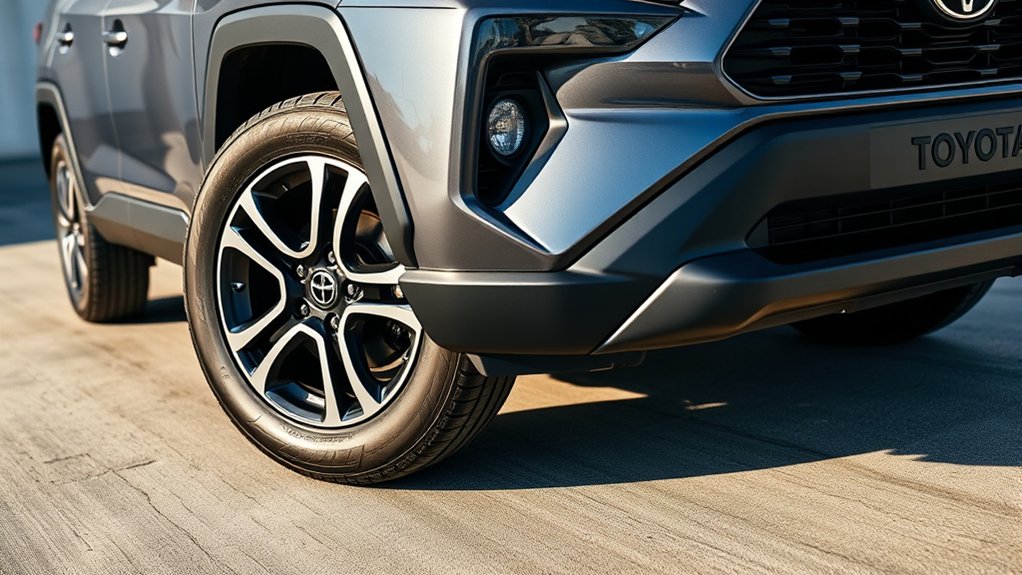
The Toyota RAV4’s front-wheel-drive system sends propulsion to the front wheels, making it a practical choice for paved commuting, highway travel, rain, and occasional light snow. The exact system depends on the model year, however: 2025 and earlier U.S. gas models use a conventional gasoline powertrain, while 2026 RAV4 FWD models use Toyota’s hybrid system.
Last updated: September 19, 2026. Current U.S. 2026 drivetrain, fuel-economy, towing, and warranty information was rechecked against Toyota sources, while tire and winter-driving guidance was rechecked against NHTSA.
Quick Answer
Toyota RAV4 FWD sends power only to the front wheels. It is efficient, predictable, and well suited to paved commuting, rain, and light snow when fitted with appropriate tires. AWD provides extra launch and climbing traction, but tires—not the number of driven wheels—remain critical for braking and cornering.
Key Takeaways
- The 2026 U.S. RAV4 FWD is a hybrid offered on the LE, XLE Premium, and SE grades.
- Toyota lists 226 combined horsepower and an EPA-estimated 47 city/40 highway/43 combined mpg for current LE, SE, and XLE Premium FWD models.
- FWD works well for normal paved driving, but AWD provides additional start-off and climbing traction when front-wheel grip is limited.
- AWD does not eliminate the need for suitable tires, slower speeds, or longer following distances in winter weather.
- Maintenance, towing limits, and warranty coverage must be checked against the exact model year and owner’s documentation.
Note: This guide focuses on U.S.-market RAV4 models. Specifications, drivetrain availability, service intervals, and towing limits may differ by year, trim, equipment, and country. Confirm important figures in the owner’s manual and maintenance guide for your vehicle identification number.
Evidence note: This guide is based on current Toyota U.S. specifications and NHTSA tire and winter-driving guidance. It does not claim independent instrumented snow, braking, fuel-economy, or off-road testing.
Understanding the Toyota RAV4 FWD System

Front-wheel drive means the vehicle’s propulsion is delivered through the front axle. The front tires therefore handle acceleration, steering, and a large share of the vehicle’s braking load.
On 2025 and earlier gas-powered RAV4 FWD models, a 2.5-liter gasoline engine sends power through an automatic transmission to the front drive shafts. On the redesigned 2026 RAV4 FWD, a 2.5-liter gasoline engine works with front motor-generators through a hybrid transaxle. Toyota describes this as a planetary-type continuously variable transmission that powers the front wheels and recovers energy during deceleration.
The 2026 AWD hybrid adds a dedicated rear electric motor. The FWD version does not have that powered rear axle, so it cannot send propulsion to the rear wheels when the front tires begin to slip.
Which RAV4 Models Have FWD?
| Model year | FWD powertrain | Key U.S. examples |
|---|---|---|
| 2025 | 2.5-liter gas engine with eight-speed automatic transmission | 203 horsepower; LE FWD rated at 27 city/35 highway/30 combined mpg and up to 1,500 pounds of towing |
| 2026 | Fifth-generation Toyota hybrid system with front motor-generators | LE, XLE Premium, and SE FWD; 226 combined horsepower; EPA-estimated 47/40/43 mpg; up to 1,750 pounds of towing |
The model-year change is significant. The 2025 gas FWD and redesigned 2026 hybrid FWD use different powertrain layouts, and the 2026 model increases combined output while delivering substantially higher rated fuel economy. Buyers comparing used and new RAV4s should therefore treat 2025 and 2026 FWD models as different powertrain generations rather than interchangeable versions of the same drivetrain.
Toyota’s plug-in-hybrid RAV4 models use AWD rather than FWD. Other trim and drivetrain combinations also vary, so confirm availability before comparing prices or ordering a vehicle.
If you are shopping for a used RAV4, verify the drivetrain on the original window sticker, Toyota vehicle-specification documentation, or VIN-linked records rather than relying only on an online listing or exterior badge.
What Makes the RAV4 FWD System Stand Out?
The strongest reason to choose a RAV4 FWD is efficiency without giving up the basic space and utility of a compact SUV. The current FWD hybrid produces 226 combined horsepower and uses both its gasoline engine and front electric motor to move the vehicle.
For the 2026 RAV4, Toyota lists an EPA-estimated 47 city/40 highway/43 combined mpg for LE, SE, and XLE Premium FWD models—one combined mpg higher than comparable LE and SE AWD versions.
FWD also avoids the rear traction motor used by the current AWD hybrid. That reduces the number of powered axles, although it does not mean every repair will be cheaper or that the FWD model has more passenger room. Maintenance cost depends on tire wear, service history, driving conditions, component failures, and the exact model year.
In normal dry-road driving, the RAV4 FWD should feel predictable rather than dramatically different from an AWD version. Steering response, ride quality, and cornering behavior also depend on tire size, tire condition, suspension tuning, vehicle load, alignment, and road surface.
How FWD Affects Fuel Efficiency and Maneuverability
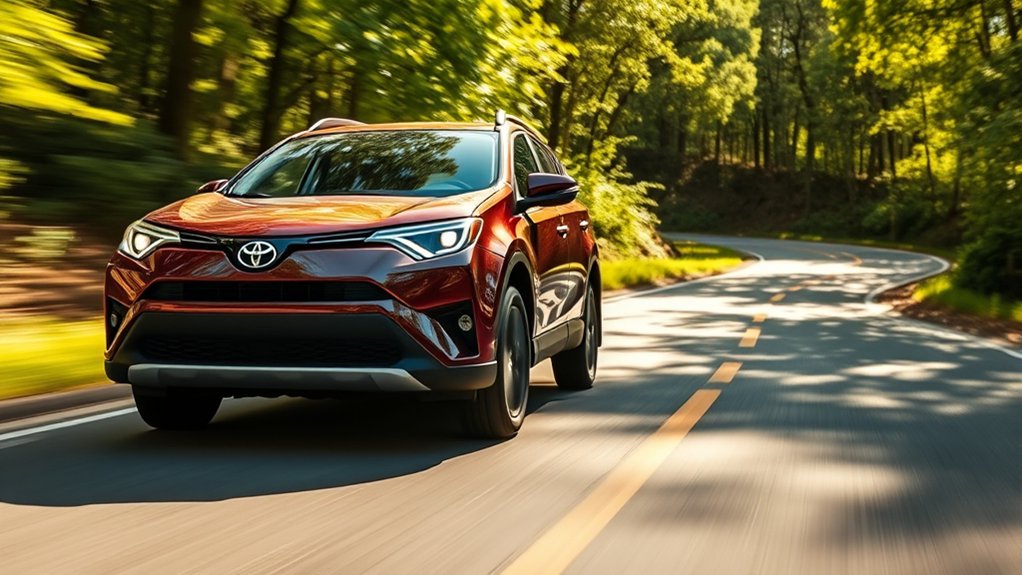
Driving only the front axle can reduce drivetrain mass and mechanical or electrical demand compared with an equivalent AWD configuration. The real fuel-economy difference is model-specific, however, and should be checked on the window label rather than assumed from the drivetrain name.
For the 2026 RAV4, Toyota’s current U.S. fuel-economy ratings list:
- FWD: EPA-estimated 47 city/40 highway/43 combined mpg for LE, SE, and XLE Premium FWD
- LE and SE AWD: 45 city/39 highway/42 combined mpg
- XLE Premium AWD: 45 city/38 highway/41 combined mpg
Those figures show that FWD can provide an efficiency advantage, but the difference between comparable trims is modest. Wheel size, temperature, speed, traffic, climate-control use, load, and driving style can produce a larger change in real-world economy.
The RAV4’s manageable exterior dimensions and steering assist make it suitable for urban traffic and parking. Those qualities come from the vehicle’s overall design, not solely from FWD.
RAV4 FWD vs. AWD: Pros and Cons
| Factor | RAV4 FWD | RAV4 AWD |
|---|---|---|
| Driven wheels | Front wheels only | Front wheels plus a powered rear axle when needed |
| Primary advantage | Efficiency and lower entry price | Additional launch, climbing, and low-traction acceleration capability |
| Rain and light snow | Capable with suitable tires and careful speed | Can reduce front-wheel spin by adding rear-wheel propulsion |
| Braking on snow or ice | Determined mainly by tires, road grip, brakes, and speed | AWD does not automatically shorten the stopping distance |
| 2026 towing | Up to 1,750 pounds | Up to 3,500 pounds on specified grades; LE AWD is rated lower |
| Best fit | Mostly paved roads, moderate weather, and fuel-conscious commuting | Frequent snow, loose grades, unpaved access roads, or higher towing needs |
Choose FWD when most trips are on maintained roads and efficiency or purchase price is the priority. Consider AWD when you regularly start on steep snowy roads, travel on loose surfaces, or need the higher towing rating offered by specific trims.
Do not buy AWD solely because you expect it to make the vehicle stop faster on ice. The extra driven axle helps the vehicle move; the tires still create the grip used for braking and turning.
RAV4 FWD Performance in Different Weather Conditions
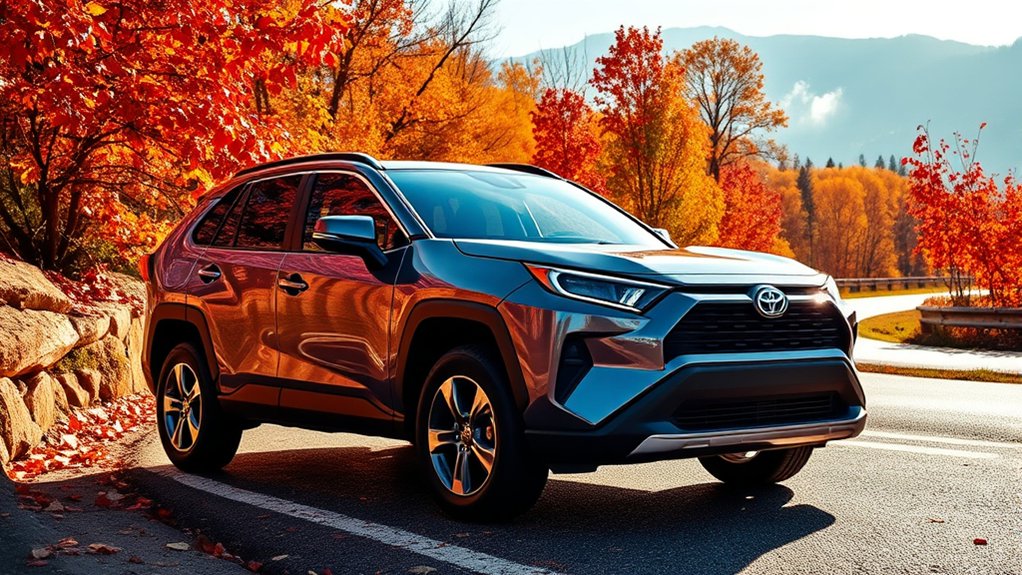
Rain
A RAV4 FWD is suitable for rainy roads when its tires have adequate tread and correct pressure. Reduce speed in standing water because any vehicle can hydroplane when the tires cannot move water away from the contact patch quickly enough.
Avoid abrupt steering, acceleration, or braking. Traction control may reduce wheel spin, but it cannot create grip where the tires have lost contact with the road.
Light Snow
FWD can work well in light snow because the engine and front-drive components place useful weight over the driven wheels. Quality all-season tires may be adequate where roads are regularly plowed and severe conditions are uncommon.
In colder areas with frequent snow or ice, four matching winter tires provide a more meaningful safety improvement than relying on drivetrain type alone. The National Highway Traffic Safety Administration notes that winter tires are more effective than all-season tires in deep snow.
Deep Snow, Ice, and Mud
Deep snow, loose mud, and steep unpaved grades expose the main limitation of FWD: only the front tires can propel the vehicle. If they lose grip or dig into a soft surface, the rear wheels cannot help push the vehicle forward.
Ground clearance also matters. A compact SUV can become stuck when packed snow or mud supports the underbody and reduces weight on the tires, regardless of drivetrain.
Warning: AWD and traction control cannot overcome excessive speed, worn tires, glare ice, or insufficient stopping distance. Slow down before curves, avoid cruise control on slippery roads, and increase the space between vehicles.
Driving Tips for RAV4 FWD in Snow and Rain
- Check tire pressure when the tires are cold. Use the pressure on the driver-door placard, not the maximum pressure molded into the tire sidewall.
- Inspect tread and damage. Replace tires with cuts, bulges, punctures, severe cracking, or inadequate tread.
- Use four matching winter tires when conditions justify them. Installing winter tires only on the front can create an unstable difference in front-to-rear grip.
- Accelerate smoothly. Sudden throttle can make the front tires spin and reduce steering control.
- Brake early. Begin slowing before a curve, intersection, bridge, shaded area, or downhill section.
- Increase following distance. Wet, snowy, and icy roads require more room to stop.
- Avoid deep ruts and unplowed drifts. Snow packed under the vehicle can leave the tires with little usable traction.
- Do not use cruise control on slippery roads. Maintain direct control of acceleration and deceleration.
Common Misconceptions About RAV4 FWD
Myth: FWD Is Unsafe in Winter
FWD can be suitable for winter use on maintained roads, particularly with appropriate tires. It is less capable than AWD when extra propulsion from the rear axle would help the vehicle start or climb, but drivetrain type alone does not determine winter safety.
Myth: AWD Always Stops Faster
AWD improves the ability to apply propulsion through more tires. Normal braking already acts at all four wheels, so stopping performance depends mainly on tire grip, brakes, speed, road surface, and electronic braking systems.
Myth: FWD Guarantees Longer Tire Life
There is no reliable basis for claiming that RAV4 FWD tires last 30% longer than AWD tires. The front tires on an FWD vehicle perform acceleration and steering duties and may wear faster than the rear tires. Pressure checks, alignment, balanced loads, and regular rotation are more important than the drivetrain label.
Myth: Choosing FWD Creates More RAV4 Cabin Space
FWD can simplify vehicle packaging in general, but buyers should not assume that selecting FWD changes the published passenger or cargo volume of a specific RAV4 trim. Compare Toyota’s dimensional specifications for the exact configurations.
Myth: A FWD RAV4 Can Be Converted to AWD Easily
An AWD conversion would require major drivetrain, suspension, electrical, control-module, cooling, and software changes. It is generally impractical, expensive, and unsupported compared with purchasing a factory-built AWD model.
Essential Maintenance Tips for Your RAV4 FWD
Toyota schedules 2026 RAV4 maintenance every 5,000 miles or six months, whichever comes first. The exact work due at each visit depends on mileage, time, and operating conditions.
: Confirm the engine-oil and filter replacement interval in the current 2026 RAV4 Hybrid Warranty & Maintenance Guide for the exact vehicle before publication. Live sources reviewed for this audit conflict on whether the redesigned 2026 model lists normal-use oil replacement at 5,000- or 10,000-mile intervals, so this article should not state either interval as settled until the current Toyota chart is checked directly.
- Rotate the tires every 5,000 miles or six months. This helps control the front-to-rear wear difference common in FWD vehicles.
- Replace the engine oil and filter at the interval shown in the exact model-year maintenance chart.
- Follow the special-operating-condition rows when they apply. Toyota’s maintenance schedule calls for additional or more frequent service under specified demanding operating conditions; use the requirements that match the vehicle’s actual use.
- Check tire pressure and tread monthly. Uneven wear can indicate incorrect pressure, alignment problems, damaged suspension parts, or delayed rotation.
- Inspect the brakes. Hybrid regenerative braking may reduce friction-brake use in some conditions, but pads, discs, fluid, and hardware still require inspection.
- Monitor fluid leaks. Have suspected engine, coolant, brake, or transaxle leaks inspected promptly.
- Keep the hybrid battery cooling intake clear on hybrid models. Follow the maintenance guide for inspection and cleaning requirements.
- Keep service records. Record the date, mileage, work performed, and parts used.
Pro Tip: Treat the 5,000-mile interval as a maintenance checkpoint, then use the exact model-year chart to determine which inspection and replacement items are actually due.
Signs Your RAV4 FWD Needs Inspection
- Clicking or popping while turning, which may indicate a worn CV joint
- Vibration that increases during acceleration
- A humming or growling sound that changes with road speed
- Steering pull or an off-center steering wheel
- Rapid or uneven front-tire wear
- Shuddering, hesitation, or unusual transaxle behavior
- ABS, traction-control, hybrid-system, or master-warning lights
- Fluid beneath the front of the vehicle
Stop driving and arrange professional assistance when a warning message instructs you to do so, the vehicle loses propulsion, steering or braking behavior changes suddenly, or a severe vibration develops.
Towing and Light Off-Road Use
A RAV4 FWD can tow within its model-specific rating. Toyota lists a maximum of 1,500 pounds for the 2025 RAV4 LE FWD and up to 1,750 pounds for 2026 FWD models. The rating includes the trailer and everything loaded in it.
Do not use the headline towing number by itself. Confirm:
- The exact model-year and trim rating
- Hitch and ball-mount ratings
- Trailer tongue weight
- Vehicle payload, including occupants and cargo
- Required lighting and braking equipment
- Maintenance requirements for towing or heavy loading
Warning: Exceeding the towing, hitch, axle, tire, or payload rating can reduce braking and steering control and damage the vehicle. Use the lowest applicable rating and follow the towing instructions in the exact owner’s manual.
For light unpaved-road use, FWD may be adequate on firm gravel or dry, level dirt. It is not intended to replace an AWD system on loose climbs, deep mud, sand, rutted trails, or unplowed snow. Tires and ground clearance should be evaluated before leaving maintained roads.
RAV4 Owner Experience: What to Evaluate
Owner impressions vary with climate, tire choice, traffic, road quality, and previous vehicles. Rather than treating unsourced anecdotes as proof, use a test drive to decide whether FWD suits your routine.
| Evaluate | Why FWD may appeal | When AWD may be preferable |
|---|---|---|
| Fuel economy | Current FWD versions have the highest listed RAV4 hybrid economy | The small economy difference matters less than traction needs |
| Acceleration | Responsive enough for normal commuting | Rear propulsion helps on slippery starts and loose grades |
| Weather | Suitable for mild climates and regularly maintained roads | Frequent deep snow, steep driveways, or unpaved routes |
| Towing | Enough for a small properly equipped trailer within the rating | Specified AWD grades offer up to 3,500 pounds |
| Purchase price | FWD is generally the lower-cost entry configuration | Added capability may justify the price difference |
During the test drive, include highway merging, low-speed turns, rough pavement, parking, and a moderate hill. Compare FWD and AWD versions on the same day when possible so tire, weather, and road differences do not distort the comparison.
Related Guides
Frequently Asked Questions
Which 2026 Toyota RAV4 trims offer FWD?
In the U.S., the 2026 RAV4 Hybrid LE, SE, and XLE Premium offer FWD. Other hybrid grades and the plug-in-hybrid lineup use AWD configurations. Verify the individual vehicle specification before purchase because drivetrain availability can vary by model year and market.
Can I tow with a RAV4 front-wheel-drive model?
Yes. Toyota lists up to 1,500 pounds for the 2025 RAV4 LE FWD and up to 1,750 pounds for 2026 FWD models. Verify the exact rating, payload, hitch, tongue-weight, and equipment requirements in your owner’s manual before towing.
Is the Toyota RAV4 FWD good in snow?
It can perform well in light snow on maintained roads when equipped with suitable tires. AWD is more helpful for starting and climbing when traction is limited, while four matching winter tires provide better snow and ice grip for acceleration, braking, and turning.
How does FWD affect off-road capability?
FWD is best limited to firm gravel, dry dirt, and mild access roads. It is more likely than AWD to lose propulsion on loose climbs, deep mud, sand, or snow because the rear wheels cannot help move the vehicle.
What warranty covers the RAV4 FWD system?
For the 2026 U.S. model, Toyota lists 36 months or 36,000 miles of basic coverage and 60 months or 60,000 miles of powertrain coverage. Applicable hybrid-related components are covered for 8 years or 100,000 miles, while the hybrid battery is covered for 10 years or 150,000 miles, subject to the warranty’s terms, exclusions, and applicable emissions coverage.
Does RAV4 FWD wear out tires faster than AWD?
Not necessarily overall, but the front tires may wear faster because they handle propulsion and steering. Tire life depends on pressure, alignment, rotation, tire design, road conditions, loading, and driving style. Toyota’s current maintenance schedule uses regular tire-rotation checkpoints.
What are the most useful upgrades for a RAV4 FWD?
The most useful upgrades are tires suited to the climate, quality replacement dampers when the originals wear out, proper alignment, and model-approved towing equipment. Avoid unverified powertrain modifications that may alter reliability, emissions compliance, braking balance, or warranty coverage.
Can a RAV4 FWD be converted to AWD?
A practical factory-equivalent conversion is not available. It would require extensive mechanical, electrical, control-system, suspension, and software changes. Buying a factory-built AWD RAV4 is normally safer and less expensive.
Conclusion
The Toyota RAV4 FWD is a strong fit for drivers who spend most of their time on maintained roads and value efficiency, predictable operation, and a lower entry price. The current 2026 hybrid FWD adds substantially better rated fuel economy than the previous gas model while retaining useful everyday performance.
Its limitations are straightforward: the rear wheels cannot add propulsion in deep snow, mud, or loose uphill conditions, and its towing capacity is lower than that of specified AWD grades. Choose tires for your climate, follow the exact maintenance guide, confirm model-year towing limits, and select AWD when your regular routes genuinely require the extra traction.
Sources
- Toyota USA Newsroom: 2026 RAV4 — current FWD availability, hybrid-system design, horsepower, fuel-economy estimates, AWD operation, and trim information
- Toyota USA Newsroom: 2025 RAV4 — previous-generation gas FWD configuration and model-year context
- Toyota 2026 RAV4 Warranty & Maintenance Guide — service intervals, tire rotation, warranty coverage, and special operating conditions
- NHTSA TireWise — tire types, tread, traction ratings, and winter-tire guidance
- NHTSA Winter Weather Driving Tips — tire inspections, cold-pressure checks, braking technique, and winter preparation

