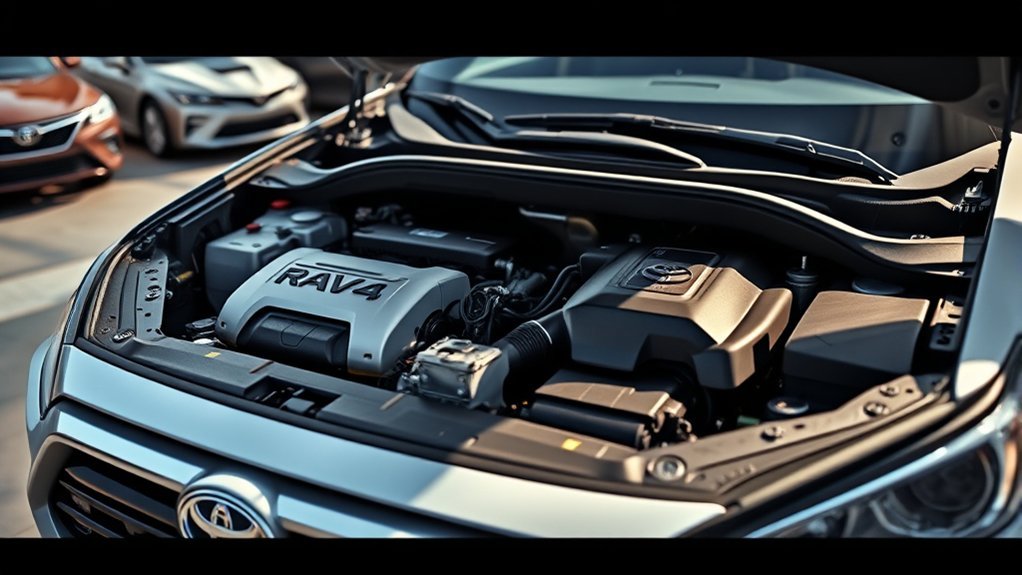
Most gasoline, hybrid, and plug-in-hybrid Toyota RAV4 models have a four-cylinder engine. The main U.S. gasoline exception is the third-generation RAV4 sold for model years 2006 through 2012, which offered an optional 3.5-liter V6 with six cylinders. Limited-production battery-electric RAV4 EV models have no gasoline engine, so they have no engine cylinders.
Last updated: September 19, 2026
Quick Answer
Most Toyota RAV4s have four cylinders. The 2026 U.S. RAV4 Hybrid and Plug-in Hybrid use a 2.5-liter inline-four gasoline engine. Some 2006–2012 third-generation RAV4s were sold with a 3.5-liter V6, giving those vehicles six cylinders. Battery-electric RAV4 EV models are the exception: they do not have a gasoline engine or engine cylinders.
Key Takeaways
- Most gasoline-powered RAV4 engines are inline-four designs with four cylinders.
- Certain 2006–2012 U.S. RAV4s offered a 3.5-liter V6 with six cylinders.
- Hybrid and plug-in-hybrid RAV4s still use a four-cylinder gasoline engine; electric motors do not add cylinders.
- Battery-electric RAV4 EV models have no internal-combustion engine and therefore no engine cylinders.
- The 2026 U.S. lineup consists of hybrid and plug-in-hybrid powertrains rather than a gas-only version.
- Check the VIN, emissions label, or owner’s documentation before buying engine-specific parts.
How Many Cylinders Does a Toyota RAV4 Have?
A typical Toyota RAV4 with a gasoline engine has four cylinders. Every RAV4 generation has included inline-four gasoline engines, and today’s hybrid and plug-in-hybrid models continue to use a four-cylinder gasoline engine alongside electric motors.
The important gasoline-engine exception is the third-generation RAV4. In the United States, buyers could choose an optional 3.5-liter V6 during the 2006–2012 model years. That engine has six cylinders rather than four.
There is also a less common electric exception. Toyota sold limited-production RAV4 EV models that use an electric motor instead of a gasoline engine. Because an electric motor does not contain combustion cylinders, a RAV4 EV has no engine cylinder count.
Engine displacement does not tell you the cylinder count by itself. A 2.5-liter RAV4 gasoline engine is an inline-four, while the older 3.5-liter RAV4 engine is a V6. The number before “liter” describes total engine displacement, not the number of cylinders.
Note: Engine choices varied by country. This guide uses U.S. model years for the main comparison while noting important global and battery-electric exceptions where relevant.
Toyota RAV4 Cylinder Count by Generation
Toyota introduced the RAV4 in 1994, and the gasoline-powered model reached the United States for the 1996 model year. The table below shows the main U.S. gasoline and hybrid engine choices and their cylinder counts.
| Generation | Main U.S. Model Years | Common Engine Choices | Cylinders |
|---|---|---|---|
| First generation | 1996–2000 | 2.0-liter inline-four | 4 |
| Second generation | 2001–2005 | 2.0- or 2.4-liter inline-four | 4 |
| Third generation | 2006–2012 | 2.4- or 2.5-liter inline-four; optional 3.5-liter V6 | 4 or 6 |
| Fourth generation | 2013–2018 | 2.5-liter inline-four; hybrid added later | 4 |
| Fifth generation | 2019–2025 | 2.5-liter inline-four in gas, hybrid, and plug-in-hybrid models | 4 |
| Sixth generation | 2026–present | 2.5-liter inline-four hybrid or plug-in hybrid | 4 |
Fast identification shortcut: A gasoline RAV4 from 1996–2005 is a four-cylinder. For a 2006–2012 gasoline RAV4, verify whether it has the inline-four or optional V6. From 2013 onward, U.S. RAV4 gasoline engines—including hybrid and plug-in-hybrid versions—use four cylinders. A battery-electric RAV4 EV has no gasoline-engine cylinders.
First Generation: Four Cylinders
The first gasoline-powered RAV4 launched in Japan in 1994 with a 2.0-liter, 16-valve four-cylinder engine. It reached the United States for the 1996 model year with an inline-four gasoline engine.
Toyota also developed an all-electric version during the first-generation era. The RAV4 EV is a separate powertrain case because its electric motor does not use combustion cylinders.
Second Generation: Four Cylinders
The second-generation gasoline RAV4 continued with four-cylinder engines. Depending on model year and market, Toyota offered gasoline displacements including 1.8, 2.0, and 2.4 liters.
U.S. gasoline versions used four-cylinder engines throughout this generation. Other global markets also received four-cylinder diesel choices.
Third Generation: Four or Six Cylinders
The third generation created the main gasoline-engine exception to the four-cylinder rule. U.S. buyers could choose a four-cylinder engine or an optional 3.5-liter V6. Toyota’s 2012 U.S. specifications listed a 2.5-liter four-cylinder and a 269-horsepower 3.5-liter V6, and Toyota confirmed that the V6 was discontinued when the redesigned 2013 RAV4 arrived.
The V6 uses six cylinders arranged in two banks and requires different engine-specific service parts from the four-cylinder version. For a deeper look at V6 specifications and used-vehicle checks, see which RAV4 years came with a six-cylinder engine.
Fourth and Fifth Generations: Four Cylinders and Hybrid Power
The fourth-generation RAV4 returned to an all-four-cylinder gasoline-engine lineup. Toyota later introduced a RAV4 Hybrid that combined a 2.5-liter four-cylinder gasoline engine with electric drive components.
The fifth generation continued using a 2.5-liter inline-four. Gas-only, hybrid, and plug-in-hybrid versions all retained four gasoline-engine cylinders.
How RAV4 Hybrid and Plug-In Hybrid Engines Work
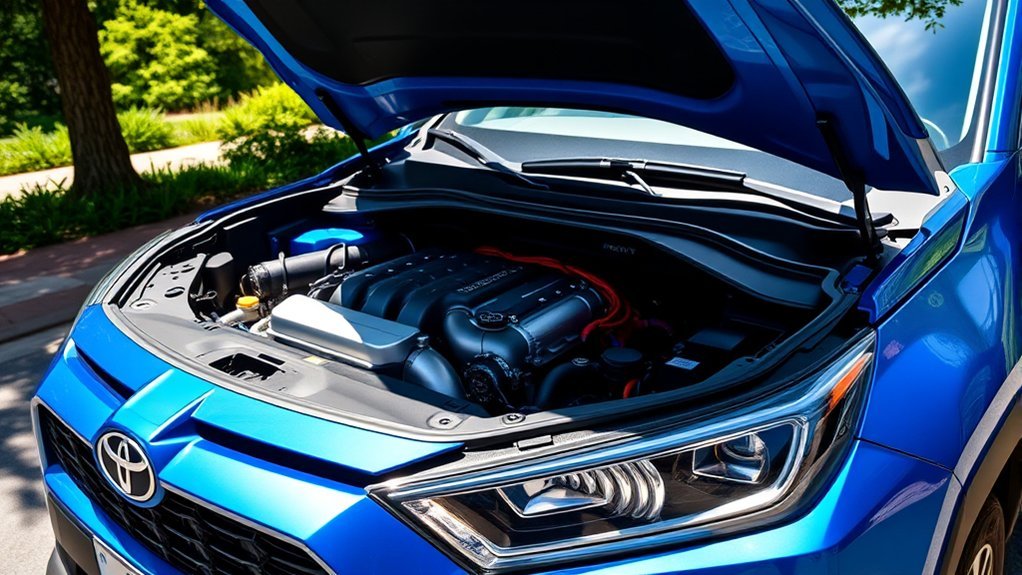
A RAV4 Hybrid combines a four-cylinder gasoline engine with motor-generators and a traction battery. An all-wheel-drive version also uses a dedicated rear electric motor to drive the rear wheels when needed.
The plug-in hybrid follows the same basic arrangement but uses a larger traction battery that can be charged from an external power source. Under suitable conditions, it can drive on electricity before operating as a gasoline-electric hybrid.
Electric motors do not add engine cylinders. A RAV4 Hybrid or Plug-in Hybrid still has a four-cylinder gasoline engine.
Hybrid-system horsepower is also different from gasoline-engine horsepower. Toyota’s combined output figure describes the coordinated output of the gasoline engine and electric drive system rather than the gasoline engine by itself.
[Amazon Products Picked for You]

Fit for: This black HV Battery Intake Filter fits for 2019-2024 Toyota RAV4 Hybrid, 2021-2024 RAV4 PRIME Hybrid, and 2021-2024 Toyota Venza Hybrid! Notice: Not Fit for 2021 Toyota Camry hybrid!!

Fitment & Compatibility – HV Battery Cooling Air Filter Compatible with 2019 2020 2021 2022 2023 2024 Toyota RAV4 Hybrid & RAV4 Prime | 2021 2022 2023 2024 Toyota Venza

*Select your vehicle above*
Current 2026 RAV4 Engine Options
For the 2026 U.S. model year, Toyota moved the RAV4 to a hybrid and plug-in-hybrid lineup rather than offering a conventional gas-only model. Toyota says the RAV4 Hybrid uses a 2.5-liter inline-four gasoline engine, and the current Plug-in Hybrid also uses a 2.5-liter four-cylinder engine.
The horsepower figures below are combined hybrid-system output. They do not change the gasoline engine’s four-cylinder layout.
| 2026 Powertrain | Gas Engine | Cylinders | Net Combined Output |
|---|---|---|---|
| Hybrid FWD | 2.5-liter inline-four | 4 | 226 hp |
| Hybrid AWD | 2.5-liter inline-four | 4 | 236 hp |
| Plug-in Hybrid AWD | 2.5-liter inline-four | 4 | 324 hp |
Toyota’s current U.S. specifications list an EPA-estimated all-electric range of up to 54 miles for the 2026 RAV4 Plug-in Hybrid SE. Electric range varies by grade and operating conditions.
The earlier fifth-generation plug-in model was introduced in the United States as the RAV4 Prime with 302 combined horsepower. Toyota uses the RAV4 Plug-in Hybrid name for the current model.
Pro Tip: When comparing horsepower, electric range, fuel economy, cargo space, or towing capacity, match the specification to the exact model year, grade, and drivetrain. Cylinder count alone does not determine these ratings.
[Amazon Products Picked for You]

GENUINE OEM: Original Toyota/Lexus factory oil filter part number 90915-YZZN1, ensuring perfect fit and optimal performance for your vehicle
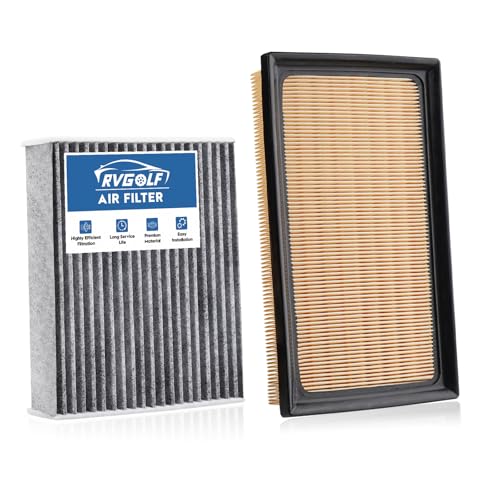
【Applicable Models】Air filter Set fits for 2019-2025 RAV4 Hybrid, 2018-2026 Camry Hybird, 2020-2025 Highlander Hybrid, 2024-2026 Grand Highlander Hybrid, 2021-2024 RAV4 Prime 2.5L, 2021-2025 Sienna Hybrid 2.5L, 2021-2024 Hybrid Venza 2.5L, 2019-2022 Avalon Hybrid 2.5L, 2019-2023 Corolla (Gas Engine ONLY), 2022-2023 Corolla Cross (Gas Engine ONLY). ONLY FOR 2.5L FULL HYBRID, PLUG-IN HYBRID EV-GAS (FHEV) MODELS
[Vehicle Fitment] Replacement for Toyota: Avalon Hybrid (2013-2018), Camry Hybrid (2012-2017), RAV4 Gas (2013-2018).
Was There Ever a V6 RAV4?
Yes. Toyota offered a 3.5-liter V6 in U.S.-market third-generation RAV4s from 2006 through 2012. Toyota’s 2012 RAV4 specifications list the 3.5-liter V6 at 269 horsepower, while Toyota’s 2013 RAV4 launch information confirms that the previous-generation V6 was discontinued.
The V6 was sold alongside four-cylinder versions, so two RAV4s from the same 2006–2012 model year can have different cylinder counts.
You can identify the engine through the vehicle specifications, emissions information, or VIN-based records rather than relying only on exterior trim or seller descriptions.
If you are deciding between the older powertrains rather than simply identifying them, see the dedicated RAV4 four-cylinder vs. V6 comparison.
What About the RAV4 EV?
A battery-electric RAV4 EV has no gasoline-engine cylinders. Toyota brought the first-generation RAV4 EV to the U.S. market in the late 1990s, and Toyota later launched another all-electric RAV4 EV in 2012.
These vehicles use an electric traction motor rather than a piston engine. Therefore, describing a RAV4 EV as a four-cylinder or six-cylinder vehicle is incorrect. “Cylinder count” applies to an internal-combustion engine, not to its electric motor.
How to Check Your RAV4’s Cylinder Count
- Start with the model year. A gasoline RAV4 from 1996–2005 is a four-cylinder. A 2006–2012 gasoline model may be a four-cylinder or V6. Later U.S. gasoline, hybrid, and plug-in-hybrid RAV4s use four-cylinder gasoline engines.
- Use Toyota’s VIN tool. Enter the 17-digit vehicle identification number in Toyota’s vehicle specification lookup to view vehicle-specific information.
- Read the under-hood emissions label. Its engine-family and displacement information can help identify the installed engine.
- Check the owner’s documentation. Toyota provides model-specific manuals and warranty guides.
- Recognize the EV exception. A battery-electric RAV4 EV has an electric powertrain rather than a gasoline engine, so it has no engine cylinders.
- Confirm before ordering parts. Engine-specific plugs, filters, gaskets, sensors, belts, and related components can differ between powertrains.
Warning: Do not order engine parts for a 2006–2012 RAV4 based on the model year alone. Confirm whether the vehicle has the four-cylinder engine or the optional V6.
Why RAV4 Engine Options Matter
Cylinder count affects engine layout, parts compatibility, and some service procedures. It can also relate to differences in power delivery and fuel use, but cylinder count is only one part of the complete powertrain.
Modern hybrid RAV4s can produce substantial total system power while retaining a four-cylinder gasoline engine because electric motors contribute additional propulsion.
Drivetrain, hybrid hardware, vehicle weight, gearing, aerodynamics, tires, and control software also affect performance. Cylinder count by itself does not tell you how quick, efficient, capable, or expensive to maintain a particular RAV4 will be.
[Amazon Products Picked for You]

Step-by-step procedures written from a complete teardown and rebuild, giving you the confidence to tackle repairs at any skill level.


Step-by-step procedures written from a complete teardown and rebuild, giving you the confidence to tackle repairs at any skill level.
RAV4 Maintenance and Reliability Considerations
Cylinder count alone does not predict repair costs or engine life. Maintenance history, mileage, operating conditions, cooling-system condition, and previous repairs can have a major effect on a used vehicle’s condition.
A conventional inline-four gasoline RAV4 has four cylinders in one bank, while the older V6 has six cylinders arranged in two banks. Engine layout changes parts access and the number of cylinder-specific components required for some maintenance jobs.
Hybrid and plug-in-hybrid RAV4s still require gasoline-engine maintenance. They also contain high-voltage hybrid components that should be maintained according to Toyota’s model-specific documentation.
For a used RAV4, review service records, check for unresolved recalls or service campaigns, inspect for fluid leaks and warning lights, and consider a pre-purchase inspection when the vehicle’s history or condition is uncertain.
What Does the Sixth-Generation RAV4 Use?
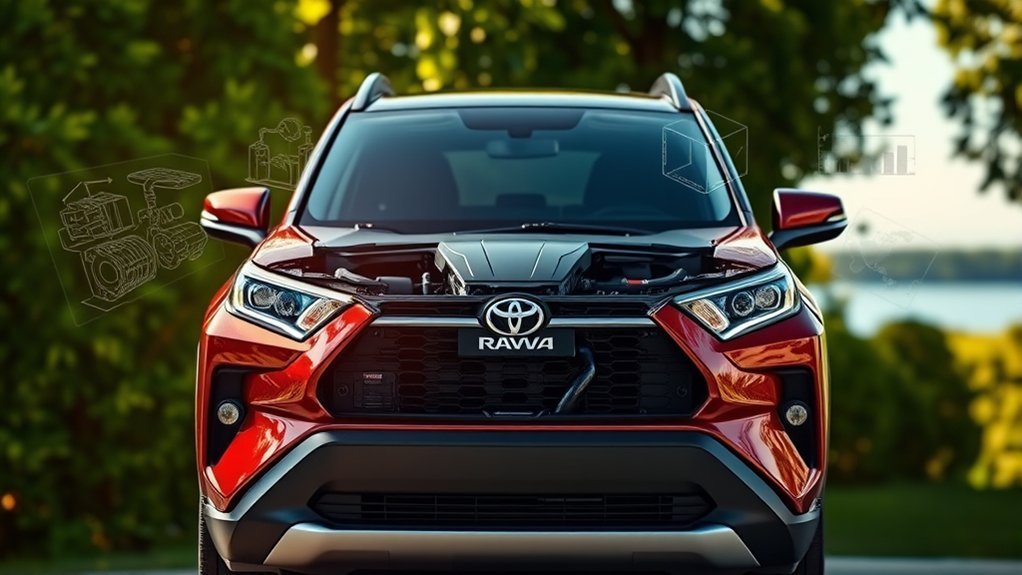
The sixth-generation U.S. RAV4 uses four-cylinder gasoline engines combined with electrified powertrains. For 2026, Toyota offers the RAV4 as a Hybrid or Plug-in Hybrid rather than with the previous conventional gas-only powertrain.
The Hybrid is available with front-wheel drive or electronic on-demand all-wheel drive depending on grade, while the Plug-in Hybrid uses all-wheel drive. Both powertrain families retain a 2.5-liter four-cylinder gasoline engine.
For future model years, use Toyota’s year-specific specifications rather than assuming engine choices, horsepower, range, or drivetrain availability will remain unchanged.
Frequently Asked Questions
Is every Toyota RAV4 a four-cylinder?
No. Most gasoline, hybrid, and plug-in-hybrid RAV4s use four-cylinder gasoline engines, but U.S. models from 2006–2012 could be ordered with a 3.5-liter V6. Battery-electric RAV4 EV models have no gasoline engine cylinders.
How does the RAV4 Hybrid improve fuel efficiency?
The hybrid system can use electric assistance during acceleration, recover energy through regenerative braking, and reduce gasoline-engine operation when conditions allow. The gasoline engine itself still has four cylinders.
Can the RAV4 Plug-in Hybrid drive only on electricity?
Yes. When the traction battery has sufficient charge and operating conditions allow it, the RAV4 Plug-in Hybrid can drive using electric power. It also carries a 2.5-liter four-cylinder gasoline engine for hybrid operation and longer trips.
Which Toyota RAV4 years offered a V6?
In the United States, Toyota offered an optional 3.5-liter V6 during the third generation, covering model years 2006 through 2012. Those gasoline-powered RAV4s have six cylinders.
Does a Toyota RAV4 EV have cylinders?
No. A battery-electric RAV4 EV uses an electric traction motor instead of an internal-combustion engine, so it does not have engine cylinders.
Do RAV4 maintenance costs depend on cylinder count?
Cylinder count can affect the number of engine-specific parts and access for some service jobs, but it does not determine total ownership cost. Vehicle condition, mileage, maintenance history, local labor rates, and the specific repair also matter.
Does RAV4 engine performance vary by trim?
Yes. Total system output can vary by powertrain and drivetrain even when the gasoline engine has the same four-cylinder layout. For 2026, the front-wheel-drive Hybrid, all-wheel-drive Hybrid, and Plug-in Hybrid have different combined system outputs.
How can I confirm how many cylinders my RAV4 has?
Check the VIN through Toyota’s vehicle specification tool, read the under-hood emissions information, or review the model-specific owner’s documentation. Confirmation is especially important for a 2006–2012 gasoline RAV4 because both four-cylinder and V6 versions were sold.
Conclusion
Most Toyota RAV4s with a gasoline engine have four cylinders. That includes current RAV4 Hybrid and Plug-in Hybrid models, which pair a 2.5-liter inline-four gasoline engine with electric drive components.
The main U.S. gasoline exception is the optional 3.5-liter V6 offered from 2006 through 2012, which has six cylinders. Battery-electric RAV4 EV models are a separate exception because they have no gasoline engine or engine cylinders. If you are buying parts or identifying a used RAV4, confirm the VIN and exact powertrain instead of relying on the model year alone.
Sources
- Toyota USA: 2026 RAV4 Plug-in Hybrid — current horsepower and EPA-estimated all-electric range information.
- Toyota USA: The Next Adventure Begins, 2026 RAV4 — sixth-generation Hybrid and Plug-in Hybrid powertrain and engine specifications.
- Toyota USA: 2012 Toyota RAV4 — 2.5-liter four-cylinder and 3.5-liter V6 specifications.
- Toyota USA: 2013 RAV4 Launch — confirms discontinuation of the previous-generation V6.
- Toyota USA: First-Generation RAV4 EV History — documents the earlier battery-electric RAV4 program.
- Toyota USA: 2012 RAV4 EV — all-electric RAV4 EV powertrain information.
- Toyota USA: 2021 RAV4 Prime — original RAV4 Prime four-cylinder plug-in-hybrid system and 302-horsepower combined output.
- Toyota Manuals and Warranties — model-specific owner’s manuals, warranty details, specifications, and maintenance guidance.
