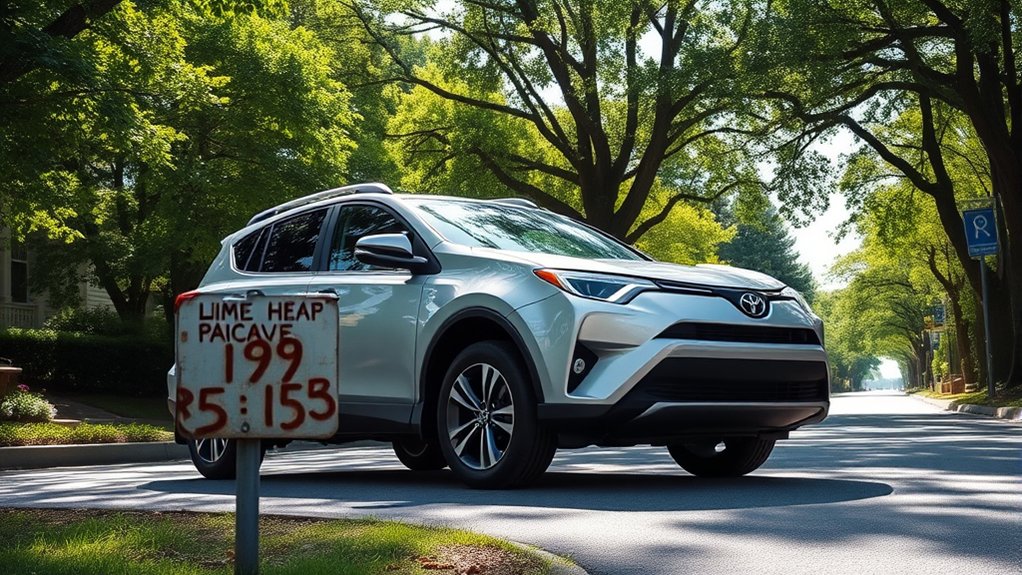
A Toyota RAV4 can remain dependable well past 200,000 miles, but no single mileage figure applies to every vehicle. Current longevity data estimates an average RAV4 lifespan near 171,000 miles, while careful maintenance can help a sound example reach 200,000 to 250,000 miles. Reaching 300,000 miles is possible, but it is an exceptional result rather than a normal expectation.
Quick Answer
A Toyota RAV4 may last about 170,000 to 200,000 miles based on current longevity data. A well-maintained vehicle can reach 200,000 to 250,000 miles, while 300,000 miles should be viewed as an exceptional outcome. Service history, rust, driving conditions, repairs, and model year matter more than the odometer alone.
Key Takeaways
- One current data model estimates the RAV4’s average lifespan at 170,762 miles and its chance of reaching 200,000 miles at 29.9%.
- A carefully maintained RAV4 can reach 200,000 to 250,000 miles, but that range is a reasonable goal rather than a guarantee.
- Toyota recommends scheduled maintenance every 5,000 miles or six months on recent RAV4 models.
- Service records, rust, accident history, overheating, fluid leaks, and driving conditions can matter more than mileage alone.
- Before buying a high-mileage RAV4, check its VIN, recall status, history report, diagnostic codes, and mechanical condition.
How Long Can a Toyota RAV4 Last?

A useful lifespan estimate needs three separate benchmarks: the statistical average, a realistic high-mileage target, and an exceptional result.
Current iSeeCars longevity data estimates that the Toyota RAV4 has an average lifespan of 170,762 miles. The same model gives it a 29.9% chance of reaching at least 200,000 miles.
Those figures do not set a mechanical expiration date. They reflect vehicles that leave service for many reasons, including accidents, rust, neglect, repair costs, ownership changes, and mechanical failure.
| Mileage benchmark | What it means |
|---|---|
| About 170,000 miles | A current data-based estimate of average usable lifespan, not a failure point. |
| 200,000 miles | A meaningful high-mileage milestone that many vehicles never reach. |
| 200,000–250,000 miles | A reasonable potential range for a sound RAV4 with strong maintenance and favorable conditions. |
| 300,000 miles or more | An exceptional result usually supported by careful ownership, extensive repairs, favorable use, or a combination of all three. |
Mileage tells you how far a RAV4 has traveled. Its service records and current condition tell you how much useful life may remain.
How Many Years Can a RAV4 Last?
The number of years depends on how far you drive annually. The following calculations show how long three mileage benchmarks would take.
| Annual mileage | 170,000 miles | 200,000 miles | 250,000 miles |
|---|---|---|---|
| 8,000 miles per year | About 21 years | 25 years | About 31 years |
| 12,000 miles per year | About 14 years | About 17 years | About 21 years |
| 15,000 miles per year | About 11 years | About 13 years | About 17 years |
Age introduces its own problems. Rubber seals, wiring, paint, suspension bushings, cooling-system parts, and corrosion can deteriorate even when annual mileage is low.
Factors That Influence RAV4 Longevity
Maintenance has a major effect on lifespan, but it is not the only factor. Two RAV4s with the same mileage can have very different mechanical conditions.
- Maintenance history: Timely oil service, tire rotations, brake inspections, fluid checks, cooling-system care, and prompt repairs reduce avoidable wear.
- Driving habits: Smooth acceleration and braking usually place less stress on the engine, transmission, tires, brakes, and suspension.
- Trip type: Repeated short trips may prevent the engine from reaching full operating temperature. Long highway trips can be easier on many components despite adding mileage quickly.
- Climate and rust: Road salt, coastal air, flooding, extreme heat, and prolonged moisture can shorten body and component life.
- Load and towing: Heavy loads, roof carriers, towing, mountain driving, and frequent stop-and-go use can trigger additional maintenance needs.
- Repair timing: A small coolant leak, torn CV boot, weak battery, or worn wheel bearing can cause more expensive damage when ignored.
- Accident history: Poorly repaired structural, suspension, electrical, or water damage can reduce reliability even when the odometer is low.
Pro Tip: Keep invoices and dated service records. A documented 170,000-mile RAV4 may be a safer choice than a neglected 100,000-mile vehicle with missing history.
Real-Life High-Mileage Toyota RAV4 Examples
Owners regularly discuss RAV4s that have traveled more than 200,000 miles. Individual stories can demonstrate what is possible, but they do not establish an average lifespan.
Specific figures sometimes repeated online include a 2019 RAV4 Hybrid at 286,000 miles, a 2008 model at 340,000 miles, and a 2016 Limited at 320,000 miles. Without VIN-linked records, dated service documentation, and an inspection, these examples should be treated as owner anecdotes rather than verified case studies.
A high odometer reading also does not prove that a vehicle reached that mileage without major work. A long-lasting RAV4 may have received replacement wheel bearings, suspension parts, water pumps, batteries, air-conditioning components, seals, or other repairs along the way.
What High-Mileage Stories Actually Show
High-mileage examples show that the RAV4 platform can remain serviceable for a long time. They do not guarantee the same outcome for every model year or owner.
Before using an owner story as buying evidence, look for:
- A dated odometer photo or verifiable listing
- Service records covering most of the vehicle’s life
- Disclosure of engine, transmission, hybrid-battery, or accident repairs
- Information about climate, towing, commercial use, and annual mileage
- Current inspection results rather than appearance alone
Maintenance Impact on Longevity
Regular maintenance reduces preventable failures, but it cannot stop every part from wearing out. The goal is to catch problems while they are still small and affordable.
Checking the engine-oil level is especially important on an older vehicle. Toyota’s recent maintenance guidance advises owners to check the level routinely and follow the oil interval listed for their vehicle and operating conditions.
Cooling-system care also matters. Repeated overheating can damage an engine quickly, regardless of how well the vehicle was maintained before the incident.
What Counts as High Mileage for a RAV4?
A RAV4 does not suddenly become unreliable at one mileage. Age, condition, use, and maintenance history determine whether the odometer reading is concerning.
| Mileage | General interpretation | What to examine |
|---|---|---|
| Under 100,000 miles | Not normally considered high mileage for an older RAV4. | Age-related deterioration, accident history, fluids, tires, and skipped services. |
| 100,000–150,000 miles | Mature mileage with significant usable life possible. | Cooling system, suspension, leaks, wheel bearings, brakes, and service history. |
| 150,000–200,000 miles | High mileage. | Oil consumption, transmission behavior, rust, steering, mounts, air conditioning, and warning codes. |
| Over 200,000 miles | Very high mileage and beyond the lifespan reached by most examples. | Complete inspection, repair history, compression or leak-down testing when justified, and near-term repair budget. |
A 150,000-mile vehicle driven mostly on highways may show less wear than a 90,000-mile vehicle used for short urban trips, towing, or harsh winter driving.
How to Maintain Your RAV4 for Longevity

Follow the maintenance guide for your exact model year, engine, and drivetrain. The table below summarizes guidance for a recent gasoline RAV4, but older models and hybrid versions may differ.
| Maintenance item | Typical recent-model guidance | Why it matters |
|---|---|---|
| Scheduled maintenance visit | Every 5,000 miles or six months, whichever comes first | Provides regular inspections and catches developing problems. |
| Engine oil and filter under normal service | Commonly every 10,000 miles or 12 months on recent models using the specified oil | Protects internal engine parts and removes contaminants. |
| Engine oil and filter under listed special conditions | Every 5,000 miles or six months when the vehicle is primarily used under qualifying conditions | Accounts for heavy loads, extensive idling, low-speed use, dirt roads, or repeated short cold-weather trips. |
| Tire rotation | Typically every 5,000 miles on recent models | Promotes even wear and gives the technician a chance to inspect tires and brakes. |
| Engine and cabin air filters | Follow the model-year chart; the 2025 guide lists replacement at 30,000 miles, with earlier service possible in dusty use | Maintains airflow and protects the engine and ventilation system from debris. |
| Engine coolant | Follow the exact guide; recent schedules may call for the first replacement near 100,000 miles or 120 months | Controls temperature and helps prevent corrosion and overheating. |
| Transmission, transfer-case, and differential fluids | Inspect or replace at the model- and use-specific interval | Lubricates expensive drivetrain components and reveals leaks or contamination. |
The Toyota Warranty and Maintenance Guide should take priority over a generic online schedule. Oil viscosity and service requirements can change by engine and year.
Note: A dashboard maintenance reminder does not measure oil condition or inspect the vehicle. Check fluid levels, tire pressure, warning lights, leaks, and unusual noises between scheduled visits.
RAV4 Hybrid Maintenance and Battery Coverage
A RAV4 Hybrid still needs engine oil, coolant, brake, tire, filter, and chassis maintenance. Its regenerative braking system may reduce friction-brake use, but the brakes still require inspection.
Keep the hybrid-battery cooling intake clear and avoid blocking it with luggage, dust, or pet hair. Warning messages, reduced fuel economy, or unusual battery-state swings should be diagnosed rather than ignored.
For Toyota hybrid vehicles beginning with model year 2020, Toyota states that the high-voltage battery warranty lasts 10 years or 150,000 miles from the original in-service date, whichever comes first. Other hybrid-related components generally have separate coverage terms. Review the Toyota warranty guide for the exact vehicle.
RAV4 Lifespan Compared to Other Toyotas
Comparisons should use the same dataset and mileage threshold. The current iSeeCars pages below estimate average lifespan and the probability of reaching at least 200,000 miles.
| Model | Estimated average lifespan | Chance of reaching 200,000 miles |
|---|---|---|
| Toyota RAV4 | 170,762 miles | 29.9% |
| Toyota Camry | 164,028 miles | 26.9% |
| Toyota Highlander | 173,660 miles | 33.5% |
| Toyota Prius | 172,207 miles | 31.3% |
These are proprietary statistical estimates, not warranties or mechanical limits. Differences between individual vehicles can be much larger than the gaps between model averages.
RAV4 vs. Camry Longevity
The current dataset does not support the original claim that the Camry clearly outlasts the RAV4. It estimates a slightly higher average lifespan and 200,000-mile probability for the RAV4.
The comparison still depends on vehicle type. A Camry may have simpler road use and lower weight, while a RAV4 may experience rough roads, cargo loads, towing, or all-wheel-drive maintenance.
Highlander Lifespan Comparison
The Highlander has a slightly higher estimated average lifespan and a higher probability of reaching 200,000 miles in the current dataset. However, its larger size and more complex configuration can also make some repairs more expensive.
Choose between the vehicles based on space, condition, service records, and total ownership needs rather than a small statistical difference.
Prius Durability Insights
The Prius and RAV4 have similar estimated average lifespans in the current data. The Prius has a somewhat higher estimated probability of reaching 200,000 miles.
Hybrid-battery condition, cooling-system cleanliness, driving history, and maintenance records remain important when evaluating either hybrid model.
Frequent Problems in Older RAV4s and Effective Solutions
Older RAV4 problems vary by generation, engine, drivetrain, climate, and previous repairs. A complaint affecting one model range should not be applied to every RAV4.
Oil Consumption in Certain 2006–2008 Models
Toyota technical and warranty material addressed excessive oil-consumption complaints in certain 2006–2008 RAV4s equipped with the 2AZ engine. The original claim that this was mainly a 2012-model problem was inaccurate.
If you are inspecting an affected vehicle, check the oil level, ask how often oil has been added, inspect for exhaust smoke and leaks, and review any oil-consumption test or engine-repair records. The Toyota service procedure published through NHTSA explains the affected engine repair process.
2013–2018 RAV4 Replacement-Battery Recall
Certain 2013–2018 RAV4s were recalled because an incorrectly sized replacement 12-volt battery could move and contact the hold-down bracket, increasing the risk of a short circuit and fire.
Warning: Check every used RAV4 by VIN at the NHTSA recall lookup. Do not assume a recall was completed because the vehicle has changed owners or was previously serviced by a dealer.
Other Age-Related Problems
An older or high-mileage RAV4 may develop problems with wheel bearings, suspension bushings, struts, water pumps, engine mounts, air-conditioning components, seals, sensors, CV boots, or exhaust parts. These are possible age-related repairs, not guaranteed defects.
EVAP-system warning codes can result from a loose fuel cap, damaged hose, purge valve, vent valve, charcoal canister, wiring problem, or leak. Read the diagnostic code and test the system before replacing parts.
Alignment complaints can result from worn suspension parts, tire damage, impact damage, incorrect tire pressure, or previous collision repairs. Alignment alone does not correct loose or bent components.
Signs a RAV4 May Be Nearing the End of Its Economical Life
- Severe structural rust or corrosion near suspension and subframe mounting points
- Repeated overheating or evidence of coolant mixing with engine oil
- Transmission slipping, delayed engagement, harsh shifting, or metal contamination
- Heavy oil consumption combined with low compression or persistent smoke
- Multiple warning systems active at the same time
- Major collision or flood damage with unresolved electrical problems
- Repair estimates that approach the cost of a sound replacement vehicle
- Frequent breakdowns that make the vehicle unsafe or unreliable for your needs
A single repair does not automatically make the vehicle uneconomical. Compare the repair cost, current market value, expected future work, insurance, replacement cost, and how long you intend to keep it.
Is Buying a High-Mileage RAV4 Worth It?

A high-mileage RAV4 can offer good value when its condition, history, and price reflect the remaining risk. A low purchase price does not help if the vehicle immediately needs an engine, transmission, hybrid battery, or major rust repair.
Possible Benefits
- Lower purchase cost: Mileage usually reduces market value, which can make a well-maintained example more affordable.
- Documented durability: A vehicle that has already traveled far with complete records may demonstrate consistent care.
- Newer features for the budget: A recent high-mileage RAV4 may include newer safety and convenience technology than an older low-mileage vehicle.
Possible Risks
- Several worn parts may need replacement close together.
- Deferred maintenance may be hidden by temporary repairs or cleared warning codes.
- Commercial, delivery, rental, towing, or rideshare use can create heavier wear.
- Rust and previous collision damage may be more serious than the mileage suggests.
- Resale value may remain limited even after expensive repairs.
High-Mileage RAV4 Inspection Checklist
- Decode the VIN: Confirm the year, drivetrain, engine, and trim.
- Check open recalls: Search the VIN through NHTSA.
- Obtain a history report: Review title status, mileage records, accidents, flood records, ownership changes, and reported service.
- Inspect it cold: Ask the seller not to warm the engine before you arrive. Listen for rattles, smoke, hard starting, or warning lights.
- Scan all modules: A professional scan can reveal stored, pending, or recently cleared trouble codes.
- Check fluids and leaks: Inspect engine oil, coolant, brake fluid, transmission areas, transfer case, and differentials when applicable.
- Inspect underneath: Look for structural rust, damaged shields, leaks, torn boots, bent parts, and poor collision repairs.
- Test-drive it fully: Include city speeds, highway speeds, braking, tight turns, hills, and rough pavement.
- Verify hybrid operation: On a hybrid, check warning history, battery behavior, cooling intake condition, and diagnostic data.
- Pay for an independent inspection: The FTC recommends an independent mechanical inspection even when a dealer calls the vehicle certified.
Pro Tip: Ask the mechanic to provide a written list of immediate repairs, likely repairs within one year, and cosmetic concerns. Use those estimates when deciding what the vehicle is worth.
The Value of a Long-Lasting RAV4 in Today’s Market
A long-lasting RAV4 can reduce the frequency of vehicle replacement and spread ownership costs across more years. Reliability also supports demand in the used market.
Current iSeeCars scoring gives the RAV4 strong value-retention marks, but no rating guarantees the resale value of an individual vehicle. Mileage, trim, drivetrain, color, region, accident history, rust, service records, tires, warning lights, and cosmetic condition all affect what a buyer will pay.
Maintaining the vehicle only makes financial sense when the repairs support safe and dependable use. Spending more than the vehicle’s market value can still be reasonable when replacement costs are high, but the decision should include future repair risk and your transportation needs.
Frequently Asked Questions
What is the average cost of repairs for a Toyota RAV4?
RepairPal currently estimates average annual RAV4 repair and maintenance costs at $429. Your actual cost can be much higher or lower depending on age, mileage, location, labor rates, condition, and which repairs become necessary.
How does driving style affect RAV4 lifespan?
Repeated hard acceleration, abrupt braking, high-speed driving, heavy loading, and neglected warm-up during extreme cold can increase wear. Smooth driving, correct tire pressure, sensible loading, and prompt attention to warning signs can reduce unnecessary stress.
What is the best RAV4 model year for reliability?
No single model year is best for every buyer. Compare the generation, engine, drivetrain, recalls, service history, accident history, rust, mileage, and inspection results. A well-maintained example from a less popular year can be safer than a neglected vehicle from a highly rated year.
Do RAV4s have good resale value over time?
RAV4s generally retain value well compared with many vehicles, but individual resale value depends on mileage, condition, trim, drivetrain, records, local demand, accident history, rust, and current market conditions.
Can aftermarket parts extend a RAV4’s lifespan?
Quality replacement parts can restore reliable operation when installed correctly. Performance exhausts, suspension modifications, oversized wheels, tuning, and other upgrades do not automatically extend lifespan. Some modifications can increase wear, change handling, affect emissions compliance, or complicate warranty claims.
Is 200,000 miles too much for a used RAV4?
Not automatically. A 200,000-mile RAV4 is a very high-mileage vehicle, so its price should reflect increased repair risk. Buy only after reviewing its history, checking recalls, inspecting rust and fluids, scanning its systems, and obtaining an independent mechanical inspection.
How long does a RAV4 Hybrid battery last?
Battery life varies with age, temperature, use, cooling, and individual condition. Toyota covers the high-voltage battery in model-year 2020 and newer hybrid vehicles for 10 years or 150,000 miles from the original in-service date, whichever comes first. Warranty length is not a prediction of the battery’s exact service life.
Conclusion
A Toyota RAV4 can provide long service, but 200,000 to 250,000 miles should be treated as achievable potential rather than a guaranteed average. Current data places the estimated average closer to 171,000 miles, with roughly three in ten RAV4s predicted to reach 200,000 miles.
Your best chance of reaching a high mileage comes from following the correct model-year maintenance guide, checking fluids between services, preventing overheating, controlling rust, repairing problems early, and keeping complete records. When buying used, judge the entire vehicle rather than relying on the odometer or the RAV4 name alone.
Sources
- Toyota 2025 RAV4 Warranty and Maintenance Guide — scheduled maintenance, oil intervals, filters, inspections, and special operating conditions.
- Toyota Manuals and Warranties — model-specific manuals, warranty terms, and hybrid battery coverage.
- iSeeCars Toyota RAV4 Reliability — current estimated average lifespan and probability of reaching 200,000 miles.
- Toyota 2AZ Engine Oil Consumption Repair Procedure — technical information covering certain older RAV4 engines.
- NHTSA Recall 23V-734 Remedy Notice — 2013–2018 RAV4 replacement-battery fire-risk recall.
- Federal Trade Commission Used-Car Buying Guide — vehicle-history reports, warranty disclosures, and independent inspections.

